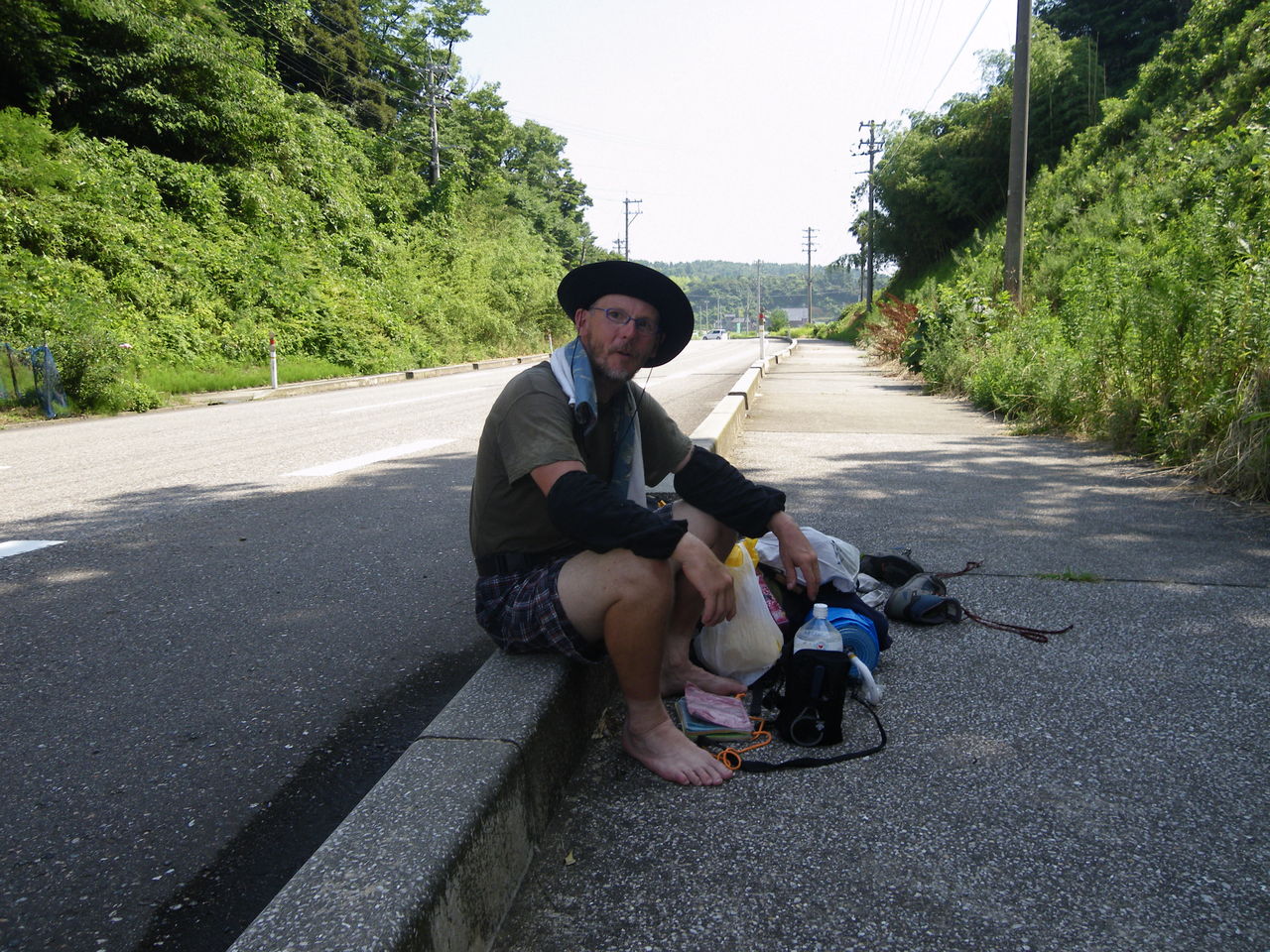
Michael Denis Crossey 'Irishman Wornout'
Part 0ne
An Introduction
It would be incomplete, if not impossible, to speak solely on my growing up in west (and later north) Belfast without, at times, touching on relevant points that refer to all of Belfast, and all of Ulster, if not all of Ireland, too. Nothing that is written here is biased in any way, shape, or form whatsoever. Or such is the rule that I like to adhere to in my writings the best I can. Therefore, anything written here should not be seen as leaning towards anything religious, be it Protestant, Catholic, Muslim, Jewish, Agnostic, or Pagan, or whatever it is that people follow or believe in through the course of their lives. For the most part, I make no bones about what I am and write in the only way that I know how, under an Atheistic light. Contradictory as this may appear, I am writing now about a time long before I came to be an Atheist, and will work hard to recall things with a non-bias open mind.
I recently read somewhere that memory can be viewed as a kind of mental time travel, giving us a way to picture not just the past, but also a glimpse into the future. Film director-cum screenwriter, Akira Kurosawa once said, “It is the power of memory that gives rise to the power of imagination.” All creative thinkers reach back in time, often as far as their childhood experiences, for inspirations. I am fortunate to be blessed with a good memory, and will therefore use it to the fullest. So what of my own past? I was from Belfast, and I knew that my name and ancestors were Irish. I knew only vaguely about most of my early genealogical strains, and not much more about those closer to me whom I should known about.
For most of my adult life, or from my penniless childhood days , to the present, I have been interested in walking ever since I could. Life on this planet began when I opened my eyes for the first time at the Mater Infirmary (Mother of the Sick) Hospital in Belfast on the twenty-fourth day of June, 1956. To cut to the chase, I do not remember much about my mother, nor much more about my father for that matter, other than he at that time worked as a diesel engine mechanic for some Protestant owned firm. Perhaps it was because of this lack of parental contact that I spent the first 10 years of my life in the home of my grandparents on my mother’s side, a time that turned out to be the happiest years of my young life, we were now in the home of people who were elegant, caring, principled, and wise.
It was a time when we all grew up together, not quickly or before our time by any means. One boy who lived at the end of our street, John Mc Goran, was my best friend. We did not have enemies, we all got along well in a happy-go-lucky unrestricted way. This was somewhat surprising considering the situation or lack of just about everything in those days. We grew up in the poverty and the hard times that fester around poverty. There was no misplaced sympathy, like, help the needy, or pity on the destitute sort of thing. People were basically all in the same boat and rowed the waves together. We all got along pretty well, especially the kids. We were shielded from the hard times, in that you learned not to miss what you did not have. To us, hard times were things grownups dealt with. Therefore, we did not see things the way they saw things. We were just too busy being kids, doing what kids did together, having fun. When I look back now, I feel sad that the 1950s and the 1960s ended. Or perhaps those times have not really ended, but hiding somewhere. Mmm!
In more recent years my writing builds around my vision, experiences, and feelings in Belfast as a scholar of Modern Irish History, and as an adult. Some comparison will be made between Belfast in the carefree peacetime of my youth and Belfast during the Troubles. What is penned here are first-hand experiences. In some areas where information proved lacking, extensive research took up where memory left off. In short, nothing contained in this book is in anyway mere hearsay or gossip. Last, but not least, I would like to thank from my heart Tami Borchard in America, and Yumiko Takeda in Japan, for the many hours that she spent reading and rereading, editing and reediting the drafts of the manuscripts to make this book possible. Forever indebted!
Last, but not least, I would like to apologize in advance to anyone who is offended by what they read below, for nothing could be further from my heart.
My Lost Past and Present: 1950s to 2016
For the kids of many Catholic and Protestant families in the Belfast I knew before and during the 1960s there was no other way to get about than to walk. Or to run as was the case for us who found it hard to sit still even for a minute. It was a little before my sixth birthday when my grandmother took me on a trolleybus ride that headed along the Falls road into the city centre. It was also the first time I saw all sorts of interesting looking shops proliferated along the thoroughfares.
That was my first visit to the busy heart of Belfast and the very first time on wheels. Noiseless and often crowded with passengers, the trolleybuses arrived from all directions and terminated at the city center. Than after a short stop they would make their way back over the roads again from whence the had come.
When we got off the trolleybus on Castle Street we walked uptown along High Street past a big church to Victoria Street. On our way down Victoria Street I remember that we stopped at quite a number of shop windows to look at the things being sold. Sadly I have no recollection of what we actually saw in the shop windows. If fact, if it was not for the assistance of a good city map, I more than like would not have remembered the names of the streets we walk along that day all those years ago.
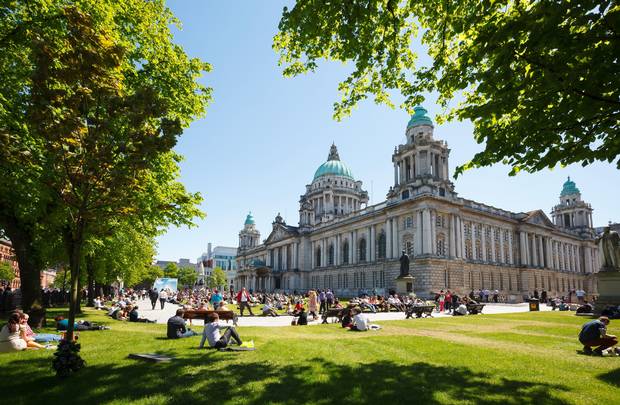
The Belfast City Hall
We took our time walking and stopping along Victoria Street before turning right on Chichester Street, which took us into Donegall Square (North) in the heart of Belfast city center. We stopped to look across at the City Hall, the offices of government. The great white building stood majestic, for to me, it was the most splendidly designed structure that my young eyes had ever seen in this eccentric city.
As with many cities in the world, Belfast started as a small settlement. Then a Royal charter in 1613 elevated Belfast to township status. Because of the ideal location to the sea, Belfast soon became busy port town and manufacturing center that drew people to it. By the end of the nineteenth-century Belfast was granted the title of city by Queen Victoria in 1888. By then the new city was already an industrial powerhouse for tobacco and textile (linen) industries, as well as, engineering, rope-making, and shipbuilding where some of the most famous ships in the world were built.
The city abounded with life! There were all sorts of people of different sizes and shapes, and ages. Woman pushing perambulators, laden with tiny sleeping and awake infants in them, and young children holding onto the bars of the prams or onto their mother's cardigans and coats. Other slightly older children chased after their mothers for fear of being left behind. Others people waited at bus-stops with full shopping bags on the pavement by their feet. I remember wondering if they were returning home to prepare lunch for their families. On the roads, the odd cyclist weaved in and out of the slow moving traffic. Nothing and no one seemed to be in a hurry, not even the people.
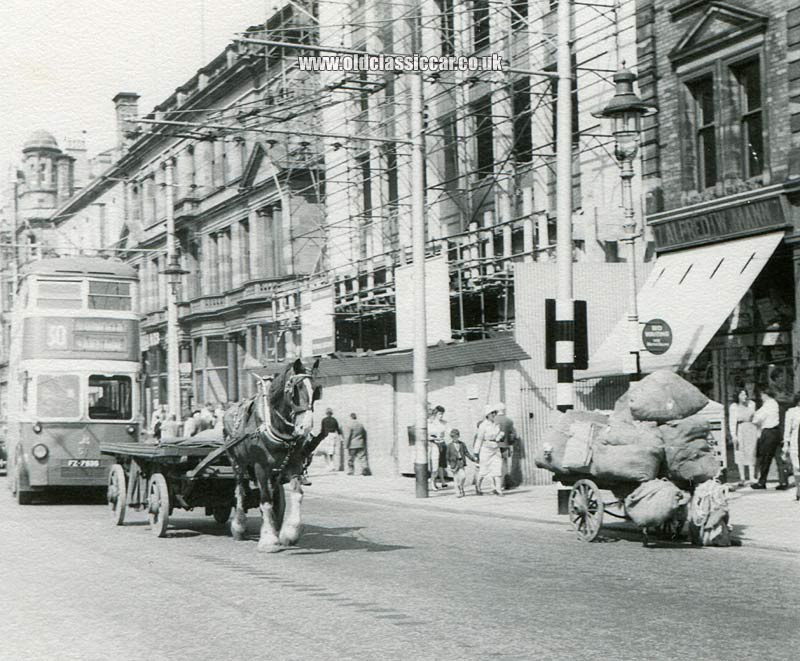
What I remembered most about my first ride on the trolleybus when we got off was that it was not easy for pedestrians in the bustling Belfast City Centre during the early 1960s. For life or death, residents shopping in downtown Belfast had to negotiate all sorts of oncoming traffic from cyclists, motorbikes, cars, lorries, and even and horse-drawn carts that were still widely used, and all crisscrossed the city with pedestrians. The nuisances alone would have been enough to have taxed the patience of a nun.
This was clearly a reason why the trolleybuses that ferried passengers to and from the city centre at near walking pace. Note from the photo below how the trolleybus appears to be moving out to overtake the slow moving horse-drawn rag & bone cart. At the curbside the hand-propelled cart loaded up with sacks is parked directly alongside a "No Waiting" sign. For good or for bad, the trolleybuses ended service in 1969 in favor for low pollution vehicles.
My heart had been won over by the thrill of going to places that I had never been to before. Belfast had many interesting places to see and streets to explore, which I was determined to do whenever I grew up. This was the true birth of an adventurous spirit that would never ever leave me. Sadly, before I had quite grown up the whole of the Belfast City centre would be greatly changed by the presence of armed police and British soldiers, and with entire areas closed of to traffic for fear of bombs and bomb scares.
Of course, I cannot recall how long we spent in the city center that day, or why my grandma went there to do. What does stick in my mind were the many advertisements on giant bill-boards that seemed to be in every direction I looked. Some of the stuff being advertised, like Heinz baked beans, Cadbury’s milk chocolate, Nestle’s milk, and so forth, as they were often advertised on the telly and were more or less household names, whilst there were many new things that I had never saw before nor thought about. I was particularly struck by how often we passed by bill boards advertising one brand-name of cigarette or another. In those days, a lot of people, mainly men, on our street smoked, but for the most part they rolled up their own.
Somehow they did not look anything like those portrayed in the bill boards, nor on the films neither. The bigger boys also smoked the odd fag when they were fortunate enough to comedy one. Though it went without saying you never squealed on anyone. In those days packets of cigarettes came inn packs of 5s, 10s, and 20s. and it was also possible for the shop keeper to break a pack and sell them in ones or twos, depending on how much the customer had on him. Most of the cigarettes were plain, or non-filter tipped, since filter tipped had not yet come onto the market or reached the local shops, though it would not be very long afterwards when they did.
Some of the shop owners, I recall, sold cigarettes to some of the older boys who were in their early teens if that. These transactions were usually performed without too much questioning. The boys in turn would say something like: “It’s for ma da!” The countless times I overheard one of the bigger boys telling someone that they bought the cigarette they were smoking at Mr, Boyles who was himself a pleasant middle-aged man who ran a little local shop on our street.
Whenever I look back over this period in my life, I do not think that they were bad kids, just that everyone was kind of in a hurry to grow up. Smoking made them feel that they were bigger men than they really were. Their were few people to idolize other than the Hollywood stars we watched on the telly or big screen, many of whom always seemed to have a fag hanging from their mouths. In this mindset, the smoking youths could for a while enter into the world of imagination, to portray among their peers to be someone they were not. This was a time long before the big wide Web, and a world of laptops, iPads, smart phones, and of course drugs. Or all sorts of stuff that occupied the bodies and minds of the today’s youth.
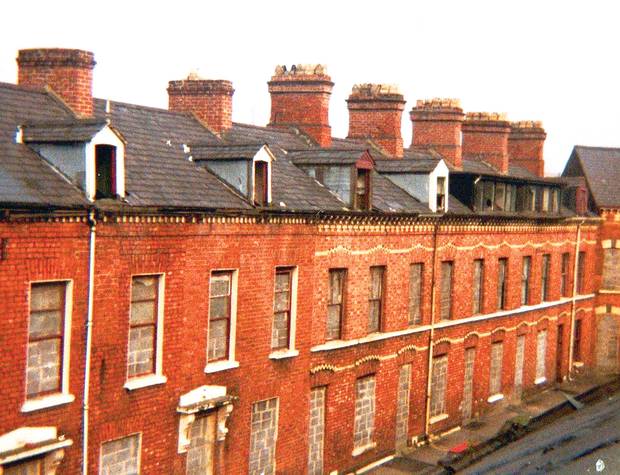
Belfast’s working class population has typically lived in red brick terraced similar to these in the photos below in south Belfast. The Belfast that I grew up in has all but disappeared. In today’s Belfast, the traditional Victorian era rows of red-brick terraces has virtually vanished, replaced by a bland style of architecture that could be anywhere in the world. One thing influences another and that is what has happened to Belfast over the years. Such is this unsought of progress that entire areas of streets of traditional terraced housing has been flattened, leaving wastelands, even right in the centre of the city center. This has contributed to the depopulation of Belfast, not to mention the reduction of customers that would otherwise support corner shops.
These days there are fewer children going to school, thus school closures. Fewer people, too, need to travel in and out of the area so there is less need of the bus service that once ruled the roads. A few years ago, a map was published entitled, 'Missing City Map' that showed where former neighborhoods once stood, and which have literally vanished. The same thing is still going on with the redevelopment of the entire city. In other words, the replacement houses are of a lesser architectural and urban design standard than the ones being demolished. I guess it is easy to sound nostalgic, but I am what I am, saddened for their loss!
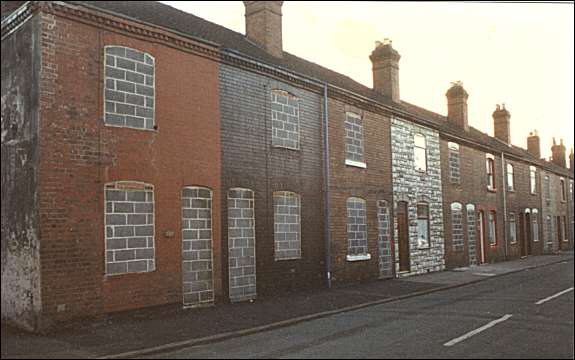
The houses on our street were built in the post-war years around 1949. Fortunately, granddad was able to get work on some of these building sites as a glazer. In those days the glass was among the last of the things to be measured, cut, and fitted into the window frames of the newly built houses. Unlike today, of course, all the fitted windowpanes come straight from the factories. For most of the Catholics living in Ulster finding jobs was limited to experience, if not to education.
Therefore, limited in experience and education, many of them tended to gravitate in the direction of the trades that had jobs to offer. The building industry was were work or the learning of trades could be got. As for my granddad, Denis McAleese, with his austerity of character, he was a silent steadfast man whom people looked to with respect. As for myself, I recall granddad as personable, of lively intelligence. Perhaps he was the most amiable man whom I had ever known. After leaving school at the grand old age of 13 and worked at a number of different kinds of jobs, somehow granddad became a skilled glazier. During the 1950s, the UK had come close to achieving its dreams of full employment. Therefore, in the postwar years much of the North was experiencing a building boom to house the growing population to the cities. Or likeHarold Macmillan, the new British Prime Minister at the time put it: "You've never had it so good.” The statement was from the Conservative Party’s sweeping victory in the 1959 general election under the slogan that: "Life's Better Under the Conservatives” In truth, things began to look better for blue-collar workers during Churchill’s time in office when wages began to rise in 1951.
This was a gala period of work and wages, even for many Catholics. Regardless, the situation was that about 25 percent of Catholics to about 6% of Protestants were unemployed, a disparity that would go unchallenged until the civil rights marches in 1968. The near rudimentary conditions for work within or near Belfast stimulated Catholics men like my granddad to search for work in the outer regions. The young men, or fathers on our street had the passion and grit to work, the stamina necessary for succeeding, or rather for providing for their families in the best way they could in a climate of uncertainty, when Catholics distrusted the Establishment. Even during those years of work, the physical situation for many, if not most Catholics remained dire. In the case of granddad, the work he got was not exactly near at hand. Rather, a lorry (like the one in the picture below), would pick him up at the house at around six o'clock each morning.
Usually we would not yet be up and ready for school when granddad had shaved and washed his hands and face, and eaten the breakfast that grandma had prepared for him each morning. Then we would not see him again until he was dropped off at the front door at around ten in the evenings carrying his billycan that he took with him everyday for boiling water to make tea in. The countless times my sister Anna and me giggled as we watched him nodding off to sleep while eating.
Soon granddad would be fast asleep at the table, and more times than not before he had finished his dinner with his head resting on top of it. He was so worn-out from the long days at work that all grandma could do was to wipe his face with a damp cloth, and place a pillow on the table for his head to rest upon. Then after a while, we often heard granddad's footsteps on the stairs as he made his way up to bed. With each passing day, granddad seemed to be working further and further away from home. A lot has happened since granddad’s days. Today Belfast is one of the most connected cities in Europe, with one of the fastest growing economies, too, in both technology and innovation.
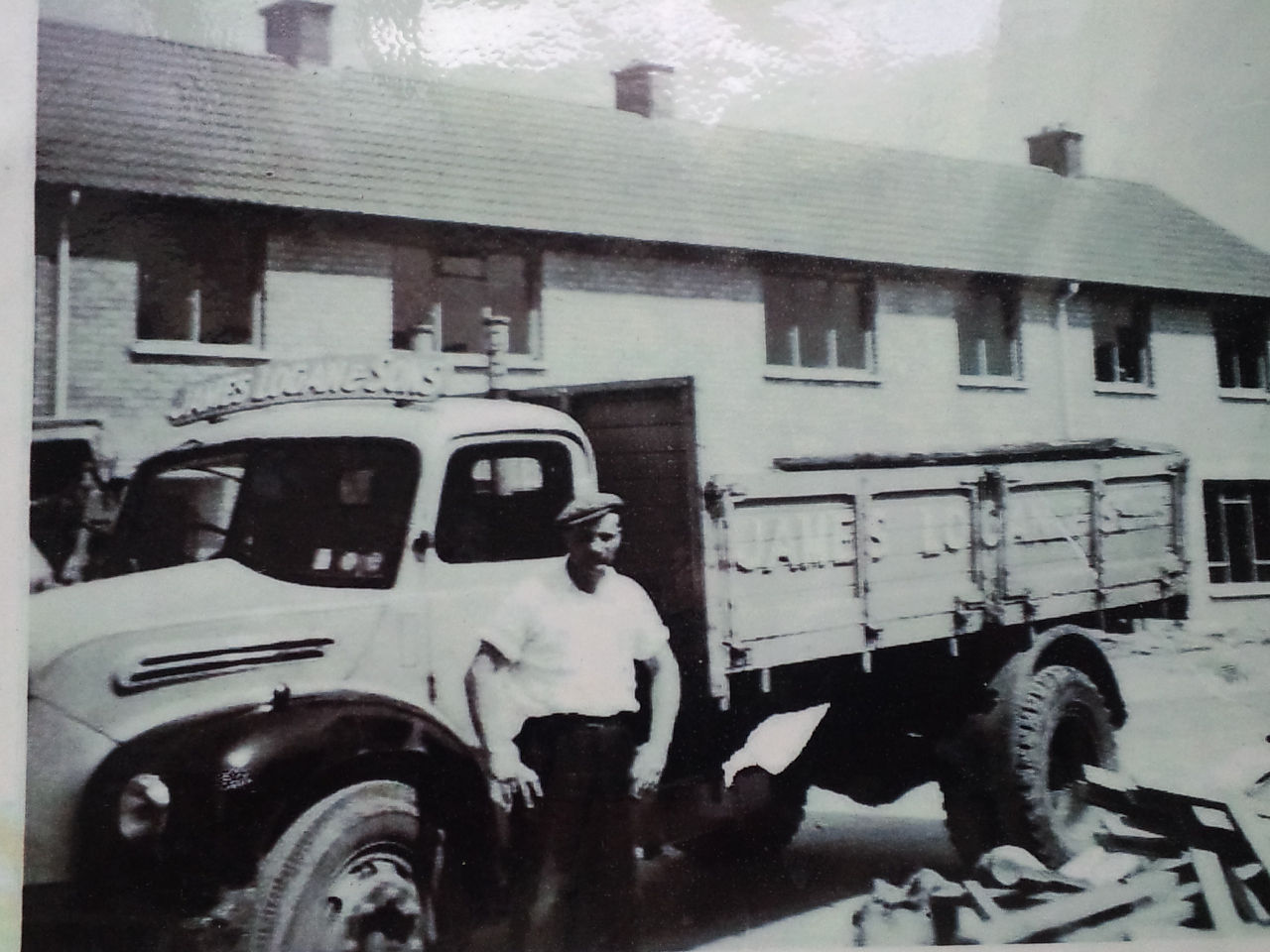
Granddad on a building site, Summer 1949
During the Second World War cities in Ulster had taken a hammering from German bombers, a price paid for the Unionist government's contribution to the war effort. Areas of Belfast were completely devastated as a result. Ireland at large was of great strategic importance for the Battle of the Atlantic. Already British and American military bases and training centers were built throughout the six of the nine counties of Ulster. Factories and their workers were going all out in industrial production for the war effort. In fact, unemployment rates declined considerably during the war years. Last, but not least, in the absence of conscription, and Eamon de Valera's persistence with neutrality, still thousands of Irish volunteers, Protestant and Catholic, were sent to allied campaigns in North Africa and in Europe.
Not exactly a comfortless house, 62 Saint Katherine Road where I lived for the first ten years of my life, was just about the same as all the other houses in the surrounding streets. The structures were not very different from the ones occupied by residents of an earlier area. The rows of red-brick houses with front windows that faced one another, and where privacy came by the drawing down of a venetian blinds or the drawing of the curtains. It was the last street of red-bricked houses to be built in the late-1940s. These houses were considered more than enough for the inhabitants of the area.
Most of the houses in my area were red-bricked, two-up, two-down adjoining structures with tiny gardens in the front and a yard at the back with an outdoor toilet in the far corner. The front gardens were surrounded by a wall, or a fence, or a henge, and were often home to the rubbish bins with the house numbers crudely painted on them. The backyard door led out to yet another tiny garden space with fences and walls. Perhaps because of the lack of sunlight or dinginess that alleyways imply, the tiny back gardens were mostly neglected. Here a narrow back alleyway ran parallel the length of rows of houses and streets they divided.
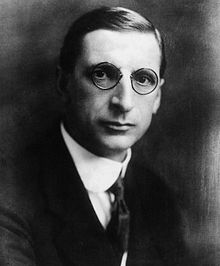
Eamon de Valera
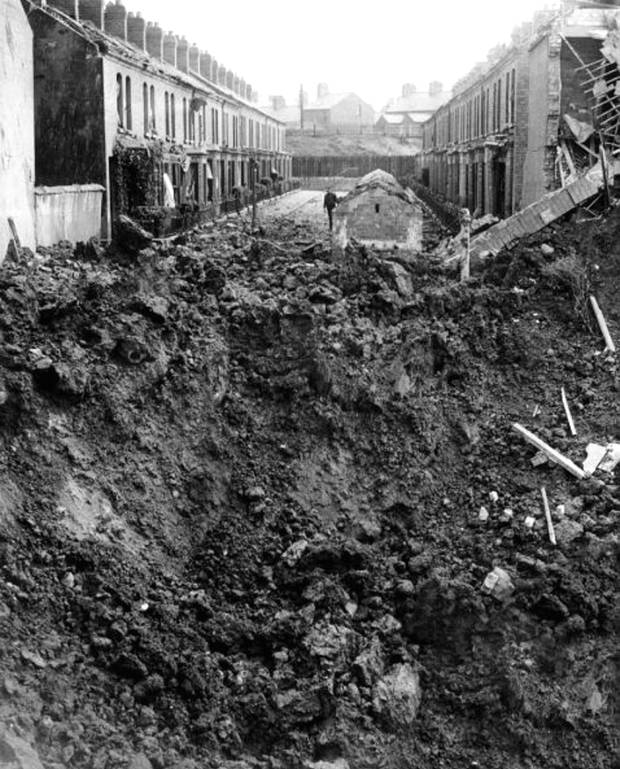
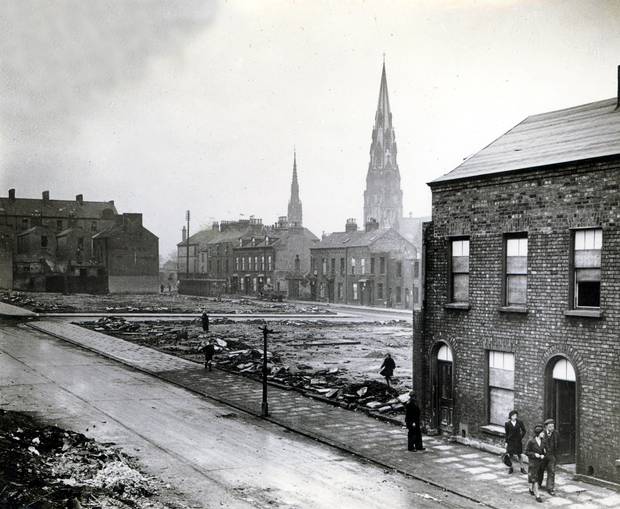
Belfast, the city in which I was born and bread was prone to floods. Our street, and those around had experienced flooding on a good number of occasions. Unlike in the early days when there was no warning, flood warning signs have now become a "permanent fixture” on the streets and roads in a good number areas. It was believed by some in public office that parts of the city were so prone to floods that only a large project could alleviate any risk in the future. The Rivers Agency's Strategic Flood Map gives information on areas that are susceptible to flooding in Northern Ireland.
Others however, believed it was more feasible to mop up afterwards than implement some costly venture that might not even work. One example was the Glenmachan Sewer Project designed to alleviate the level of pollution into Belfast streams, which flowed into the River Lagan. One purpose of this project was to reduce the risk of flooding to surrounding areas. Although the flood risk was somewhat reduced, it far from guaranteed that it would be eliminated altogether. Public transportation and traffic along the major roads were also affected by strong winds, heavy rain, and needless to say, by the flooding.
One of the reasons for this was that Belfast was built over a series of now hidden rivers that still flow deep below the city's streets. It was from one of these rivers that Belfast got its name, Béal feirste, or the mouth of the Farset. In Gaelic, Farset means ‘sandbar’. Surely if something serious was undertaken to put matters right it would certainly benefit the city's residents and wildlife. In its heyday, the River Farset powered the linen mills on the Crumlin and Falls Roads. The linen trade, a source of employed for thousands of local people, played a pivotal role in the social and economic development of Belfast. By the late 19th century Belfast was the linen capital of the world. Further more, by 1891, Belfast outstripped Dublin in terms of population and size, which was largely due to the growth of the linen industry.
There are other defining waterways running under the streets of Belfast: Blackstaff River, flows under where the main bus station stands, under the Europa Hotel, most bombed hotel in Europe, if not the world. Also it passes quietly under the BBC Blackstaff Studios and the gas works on its way to meet the River Lagan.
The Knock and Loop rivers are mentioned in one of Van Morrison’s songs, Brown Eyed Girl. Today both rivers join the Connswater River, which flows into the sea via Belfast Lough. Scientific interest in this area has made some progress in protecting the birds and mud flats there. Also, the raised river bank with an abundance in wild flowers acts as a giant sponge against the floodwaters, thus protecting resident houses. In the Victorian era (1837-1901), two-thirds of the whiskey that was exported from Ireland came from Belfast, about half of which came from two distilleries, namely, the Connswater distillery and the Avoneil distillery.bAt various times, these rivers left Belfast susceptible to flooding.
Today, Belfast is an extraordinarily beautiful city, with its rugged geography of winding streets, the Black Mountain to the rear, and Belfast Lough to the right that opens out onto the North Channel and the Irish Sea. The Black Mountain, a giant basalt and limestone hill some 389 meters high, is one of the most prominent features and overlooked most of west Belfast.
The summit offers stunning views southwards over the city. On a clear day there are views of Strangford Lough, Carrickfergus, the Mountains of Mourne and the Sperrin Mountains, as well as Donegal, the Mull of Galloway in Scotland, and the Isle of Man, among a host of other places. In recent years lobbing for the preservation has been underway, in and effort to halt years of quarrying on Cave Hill for the basalt from that is used mainly for roads. Ulster is renowned for its epic landscapes and coastal scenery, with a fascinating history and cultural heritage, and only a short distance away from Belfast.
Belfast is considered one of Europe’s most friendly and fashionable capitals. The city has been described by Lonely Planet as a ‘must-see visitor destination’. The cobblestoned streets of the Cathedral Quarter, home to bustling restaurants, lively pubs and various art venues, such as, modern street art and live music create the legendary Belfast buzz. The beauty and places of interest are easy and safe to explore. In fact, Belfast is best explored on foot or by bike, not that any of us had much of a choice when we were young.
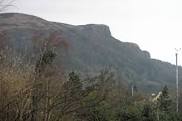
Napoleon's Nose, Cave Hill
The Black Mountain was also home to much of Ulster’s past. Cave Hill got its name from the caves on the cliffs, which are believed to be early iron mines. There are five in total and the walker with a keen eye should be able to spot at least three of them. The caves also served as a retreat in early times and to keep and eye out for invaders approaching from the direction of Belfast Lough. Remains of early settlements have been uncovered on the summit dating back to the New Stone Age (4500-2500 BC), and the early Christian times (400-1200AD).
It is thought that the inhabitants of McArt’s Fort used these caves to store food in during the winter and may even have served as a refuge from attack. McArt's Fort was once a defensive fort built on the promontory at the front of Cave hill. Little remains of the original fort, although today its moat can still be distinguished. The crowning stone, Giant's Chair of the O'Neill clan, was sited on Cave Hill summit until 1896, and from which the nearby Throne Hospital got its name.
Cave Hill is also referred to as Napoleon's Nose, for its silhouette resembles a gigantic profile staring upwards, whilst McArt’s Fort forms the emperor's distinctive tricorn hat. Dean Jonathan Swift made a trip to Belfast in the summer of 1720. A good number of years have passed since I read his classic work Gulliver’s Travels, and which was first published just six years after that visit in 1726. “Mmm!” Surely he saw that bulging big nose that poked about the cliff face. Therefore, I could not help but wonder if Napoleon’s Nose on Cave Hill sparked the idea in his head to start work on the book.
It has also been said that Wolfe Tone and fellow United Irishmen met on the summit of Cave Hill in 1795 to pledge allegiance to their cause, to launch the Rebellion of 1798. Henry Joy McCracken was captured on Cave Hill in 1798. Between 1840 and 1896, limestone was quarried from the hills southern slopes and transported to the docks by rail. Cave Hill Country Park, Belfast Zoo, and Belfast Castle are magnets for locals and tourists alike. In the 18th century many Belfasters and people from surrounding areas visited on Easter Monday for the Cave Hill fete, near a spring known as the 'Volunteers Well'.
The Cave Hill is ablaze with seasonal colors, a rich tapestry of wild spring plants and flowers flourished in abundance, the purple heather in late summer, and the dramatic autumn foliage made the paths a popular and pleasant experience for reinvigorated hikers or devout excursionists. The autumn weather in Ulster could resemble that of much of the greater Tokyo with the heavy downpours. The wide array of woodland planted at the close of the 19th century, the mighty oak, sycamore, pine, larch, and elms, greatly enhanced the beauty of the city.
During World War Two a bomb was prematurely dropped on Cave Hill during a German raid over Belfast and caused a huge crater near the grounds of Belfast Castle. The RAF Bomber Command was situated on Cave Hill during the early years of the war, but moved to Castle Archdale in County Fermanagh. Therefore, some thinkers believe that the bomb was intentional. If that was not enough, on 1 June 1944, an American Air Force B-17 Flying Fortress bomber crashed into Cave Hill during heavy fog, killing all ten of the crew instantly. This incident inspired Richard Attenborough’s 2007 film, ‘Closing the Ring’. Some of the scenes were shot on Cave Hill.
We all grew out of a somewhat precarious existence from the time we were born. So people tended to be jacks of all trades, and relied on one another to get by. Being a glazier by trade granddad was called on to replace a broken window from time to time. This was in an environment I knew well and dearly miss. Of few pretensions and where people accommodated themselves to their humble situations. Of course, most people did not live in grim poverty, nor ragged and destitute with emancipated faces, like many Catholic Irish did in earlier years. Still, living conditions were woefully inadequate as it was, with shortages of all sorts of daily household items and necessities, including proper toilet paper. To this day I still never found out how granddad came by the newspapers that he cut up and hung with a string on the toilet door, for few people could afford to read them. It was only a few steps to the outdoor toilet located in the far corner of the yard.
During the cold winter months in the freezing sweeps of Irish rain, those daily visits were not for the faint hearted. The weather was so cold at times that it would freeze the balls of a brass monkey. Even as children, we could not help feel that our outhouses seemed somewhat out of place as did our bare backsides. Therefore, since my youthful days to the present, I have always held a cherished place in my heart for a good, clean, private, and comfortable place to relieve myself. It goes without saying clogged up drains and pipes were a constant cause of concern with people up and down the street.
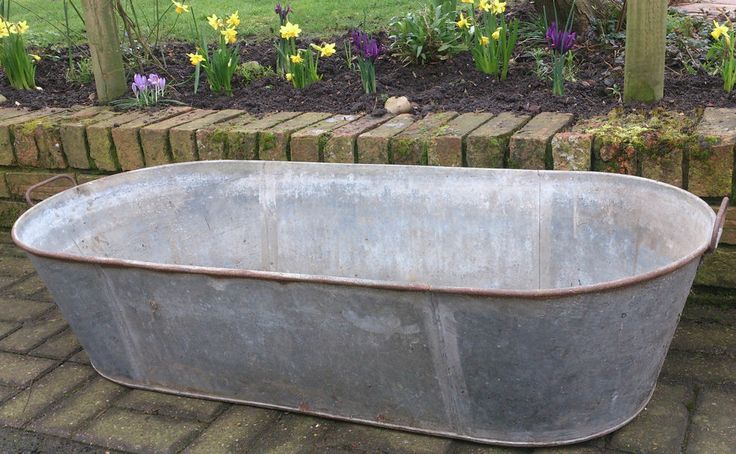
One thing that I absolutely loathed when I was a child growing up in Belfast was having to get ready for the Saturday evening bath time. Many of my friends felt that personal hygiene was something best left to the adults to deal with. Even still, most of the houses on our street, and the streets around, had a tin bathtub (similar to the one below) hanging from a whitewashed wall in the backyard where the outdoor toilet was. Many of my friends back in those days had never been to the seaside, nor to a swimming pool.
We had never been in water over our heads, so having to step even into the bathtub was something that surmounted to anxiety and fear. It did not help any having to share the bath with my elder sister, Anna, who took great pleasure in splashing the water over my face. Even now I find soaking in a hot bath for any lengthy time an alien, if not treacherous waste of time. A good number notable people in history were also anti-bathing, including one of my favorite authors, Ernest Hemingway, who I should add used to wash himself using an alcohol-soaked cloth. Therefore, a two or three minute stint under the shower was more than enough time for me to get the job done.
In all of Belfast prior to the 1970s non of the homes housing entire families had bathrooms or showers, let alone indoor toilets. All the same, and always at around 6:00 P.M. granddad would unhook the old-fashioned tin bathtub from the yard wall and place it in front of the open fire, where a large kettle had been placed earlier on top of the hot coals. The living rooms in all of the houses contained either a brick-, wooden-, or marble-hearth, fireplace grate, not to mention the necessary accessaries and tools, such as, bellows, iron poker, a tiny narrow shovel, and a set of tongs all hanging from an iron rack at the side of the hearth next to the coal scuttle.
Just about every house on our street placed a fireguard in front of the open fires, for just about every family had young children running about. They were also designed to prevent all kinds of fire related accidents from occurring. Especially during the winter months, the open fires were particularly popular for the heat they radiated. When well started, the open fire in the living room could easily heat up the whole of the house. There were even open fires hearths in the bedrooms, but I do not recall them ever being ever lit, since the cost of the coal back in those days was a constant concern for most of the families, if not all. Those who could afford it in the winter months kept their living room open fire going for hours.
In the winter months a sack or coal was delivered to our house about once a week. In fact, the coal man was our neighbor, Mr. Ogle, a huge man who used to shoulder a dirty massive sack of coal though the living room and empty it into a tiny alcove below the stairway casing located in the tiny kitchen at the back of the house. Perhaps because of the importance of his job, he was the only man with something regular to do. On the whole, Mr. Ogle was a popular man about the street, and the sight of him sitting upon his horse-drawn cart is something that I can still picture in my mind like it was yesterday. In a way he was a gentle giant, not one to use his powerful size for his advantage over anyone.
Needless to say, our living room open hearth fire did not burn all day long. Nothing ever seemed to get wasted in our house, if not in every house on the entire street! Thanks to the coal man, there always seemed to be plenty of ‘coal-slack’, or small pieces of coal and coal dust. Of course, a sack of coal slack was much cheaper than the actual coal, but just as hot. An open fire packed tightly with coal-slack seemed to last much longer than one that burned larger pieces of coal. The use of coal-slack had been used for donkey’s years. (The earliest use of the term ‘slack’ is found in a 17th-century poem by Michael Drayton (1536–1631)). Often when slack burned low, the hearth fire possessed a redolence not so very different from the coal fire.
Grandma was always the first to rise early in the winter mornings to get the fire going. Everywhere would be nice and warm when we set down at the table to eat breakfast. Breakfast was often a bowl of thick porridge, or a boiled egg with toast; at other times we had toast and jam. Regardless of what we ate for breakfast back then, there was always a mug of piping hot tea with two teaspoons of sugar in it for good measure placed on the table in front of us. A coal-slack fire was a great place to boil water on and cook over, a thing that my grandmother sometimes needed to resort to when money was scarce for paying the gas bills. Likewise, we were by no means the only family to use the open fire in the living room for something other than keeping warm.
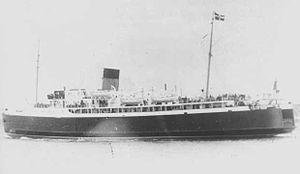
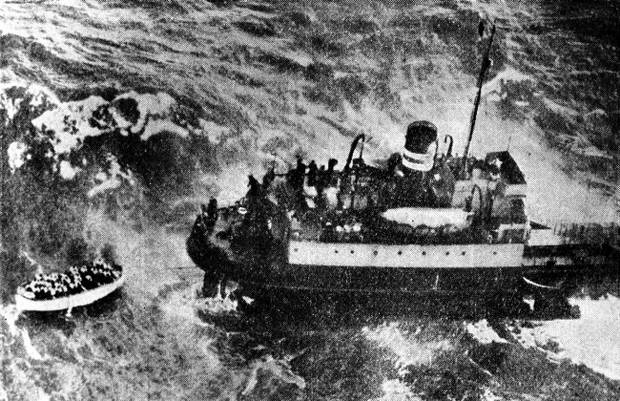
The first time I ever sat eyes on the open sea before was during a day trip to Bangor, which our Grandma and Aunt Lila took us on in the summer of 1961. The next time that I set eyes on the sea was aboard a ferry out of Larne bound for Stranraer, Scotland in 1969. The ferries that ran to and fro were as numerous as they proved essential. On a stormy day, the Irish Sea was as treacherous as any of the world’s worst seas. My fathers’s mother, Granny Crossey, had made the same crossing on a ferry bound for Stranraer in 1953, two weeks after which the ferry sank in a storm. More than sixty years has now passed since the MV Princess Victoria sank in Northern Ireland’s coastal waters during a severe storm. It was one of the worst post-war tragedies at sea, with 133 lives lost (among them was the Deputy Prime Minister of Northern Ireland, Maynard Sinclair, including as the MP for North Down, Sir Walter Smiles).
Built in 1947, MV Princess Victoria was one of the first roll-on-roll-off Stranraer to Larne ferries to operate in the Irish Sea and British coastal waters. The ferry was also built to hold up to 1,500 passengers, with sleeping accommodation for 54. Therefore, it begs the question if the state of the winds, if not the state of MV Princess Victoria itself, permitted Captain James Ferguson to even consider setting sail that day? Apparently, the ferry's 'guillotine door' had not long been fitted after a previous incident at sea; but was not used since it took too much time to lower into place. For the most part, doors on ships are designed around the movement and protection of the passengers. However, some doors, such on ferries, are also designed and built to protect the vehicles and the cargo. Therefore, had the guillotine door been properly used on the MV Princess Victoria it would have given extra support for the sliding stern doors.
Bangor is a seaside resort located in County Down in the eastern part of Ulster. Bangor is also on the southern side of Belfast Lough and part of the Belfast Metropolitan Area. Throughout the 1960s Banger was known as the tourist capital of Ulster, if not in all of the country. The beach took on the normal aspect of crowded beaches with the deck chair and colorful parasols, the surrounding souvenir shops, restaurants and bars, and other places of interest that people frequent when time and money allows. Like much of Ulster, Bangor has a mild maritime climate, in fact, the mildest in the entire country, with few extremes. For example, the average maximum temperature during the summer months is 21 degrees Celsius, whilst snowfall and subzero temperatures are uncommon.
The most famous of buildings in the city is Bangor Abbey, which was built in 558 AD. Though throughout its history, the abbey was destroyed and rebuilt a number of times, and the current building dates to the 14th century. Thankfully, Bangor escaped much of the onslaught of the Troubles. Tourism remains important to the local economy, particularly in the summer months.
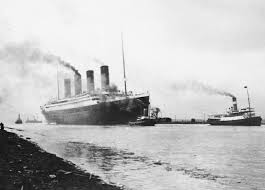
More than a hundred years earlier the RMS Titanic sailed from Belfast Lough past this very beach I stood on as a child. It was from here this great ship turned out into the deeper reaches of the Irish Sea and on to Southampton to pickup more supplies, more crew-members, and more passengers. After stopping at Cherbourg, France to do the same, the Titanic then steered south to Queenstown (or Cohb), near the city of Cork located on the very south of Ireland. This was her final stop before sailing across the great Atlantic Ocean so celebrated in countless Irish ballads.
In more recent times plans were underway for the redevelopment of the Bangor seafront, among other things. The water surrounding the island of Ireland, not to mention its inland rivers, has long been recognized as one of the Worlds premier sea angling destinations. It was not until more recent times, too, that I would learn more about the diverse nature of the Irish coastline, its inshore waters warmed by the North Atlantic Drift, thanks to the Gulf Stream from Mexico means that the native marine life is extremely rich and varied. The 3000 kilometers of coastline that makes up Ireland is among the most varied and spectacular in the northern hemisphere; with its hundreds of tranquil bays and backwaters, its roaring surf beaches, and its miles of awe inspiring cliffs overlooking the coastline has inspired many a writer and poet to date. Still, for the people on our street, if not on just about every street in Belfast holidays were few and far between. At least I would have to wait until my teenage years before I would sample such an experience.
Even to this day I have no idea how the money was got to cart us all of to the seaside, even if it was only for the day. People had to be careful with all things associated with the expenditure of money. In developed countries today, holidays are often expected, whilst they were usually quite out of the question in the part of Belfast that I grew up in. To make matters worse, granddad chose not to go along with us and decided to remain at home with Uncle Jim, who had Down syndrome. Furthermore, granddad was forced to retire from his already unsteady job as a glazier because of a bad heart. He was just 57 years old at that time! To help make ends-meet, grandma was on the lookout for some kind of job about this time, too.
Indeed, there are many things people cannot recall from their past, or choose not to for one reason or another. Recently I asked my sister, Anna, if she remembered that day trip we made to Bangor all those years ago. Sadly, she could not! However, she told me that grandma worked at some place in Bangor washing dishes for sometime about then. To this day I still have no idea if job hunting was one of the reasons for the day trip to see the sea. Even though my own ability for remembering things from yesteryears at times surprises even myself, I have no recollection whatsoever of how we got our arses to Banger.
What I do recall clearly was standing barefooted on the sandy beach looking out over the incoming Irish Sea. For a tiny moment, I recall wondering if my eyes were deceiving me. It was more than my overheated young brain could assimilate. Then I began to wonder how could there be so much water in one place? How could such a might body of water be kept a secret from me? The Irish Sea handled an immense amount of traffic from dawn to nightfall, if not beyond. The whole panorama was made even more excitingly delightful at the sight of the tiny boats coming and going in all directions. I remembered wondering where they were headed to as they made their way on that continent-wide expanse of salty water. It was love at first sight! A love that has lasted to this day.
While I stood amazed at the mighty size and power of so much water in one place, and the boats to and from the interior and other seaports, I then noticed a little ways off that some women and children were crowded around something with an outboard engine that was almost as big as the contraption it was attached to. The nosy child I was, I drew nearer to investigate what the commotion was all about. I could see Aunt Lila and my sister among them. Most of them seemed to be waiting patiently, whilst a few others appeared to be haggling about something, which I latter found out was the cost for a little spin on the sea in what turned out to be a tiny wooden fishing boat.
A number of other fishing boats had also been hauled up onto the beach out of the reach of the strong white tide that rolled in and out. In comparison, I remember noticing the vastly superior condition of these other wooden crafts, their newish-clean look, or freshly painted sides, and the giant outboard engines at the rear, all raised off the sand.
A glance across the way, everyone was gathered around the other boat, and I wondered why? Some were still haggling with the young fellow who seemed to be in charge of the older and dirtier boat. Then I tried to attract Aunt Lila's attention to ask her if we could not get into one of the nice boats instead. Apparently it had something to do with the less exorbitant rates a ride should cost. High or low, money, or lack of it, had nothing to do with me or the other children, who where now eagerly waiting to scramble aboard for the thrill of a lifetime. Regardless, the boats were there to be observed as well as enjoyed!
At last the issue was settled and everyone was soon cramped shoulder to shoulder into this wooden craft that even then I can still recall feeling had seen better days. It has long been said that the best way to learn is from experience, but this seemed to be pushing the borderline over the safety mark. Most visitors to the seaside in those days came from towns and cities, therefore, many of us were totally unacquainted with anything to do with the sea. Ironically, Alka Bilk was playing his beautiful clarinet hit tune 'Strangers on the Shore' around this time, 1961. That was exactly what we all were, strangers on the shore. No one even knew to make mention of such a thing as the availability of life jackets, not that they did those onboard the RMS Titanic any good. So successful was this tune that it literally went sky high when the crew of Apollo 10 took 'Stranger on the Shore' on their mission in to space in May 1969.
Now I can also recall the excitement I felt at the boat being pushed away from the beach and turning to head further out into the open sea. It was not long before everyone was exposed aboard to the wind and spray that it became nearly impossible to avoid getting drenched. Although all of the children just gloated at the thrill of it all, the adults among us were short of being furious at the state of their best clothes when the boat was landed on the beachfront five or so minutes later.
People who knew about the sea tended to wait for the winds to come right before venturing out into it. So I cannot help but wonder what the young man in charge of that tiny wooden craft that day really know. Nonetheless, I still cannot make sense of the racket of making money from hapless day trippers, which most of the people were on the beach that day, over safety. Fortunately everyone survived to live their lives for where ever it would no doubt lead them.
The Japanese have a long history of sanitation, from the Shoguns to the present times. In today's Japan (where my mission on foot currently lies), a country of both modern and traditional values, not to mention, superstitions, is also a country where everything has its place. In the homes having to slip into a pair of 'toilet slippers' before entering the toilet never failed to be a topic for discussion among many new arrivals to the country.
Perhaps one thing many foreigner visitors failed to notice was that most toilets in Japanese homes were installed in the part of the house that faced north. It is from the North where the bitter cold winds make Japanese winters close to unbearable. Adding credence to the superstition, many sick people were placed in rooms that faced north. Regardless of the reasons, it was (and still is) believed that a toilet located in the wrong part of a house could be considered dangerous, or lead to misfortune.
Bathing has been called the 'Grand Passion of the Japanese'. Japan was host to about 20,000 thermal springs. However, it is not easy to research a solid history about the discovery and subsequent use of thermal springs the way they are enjoyed, if not loved today. In the northern island of Hokkaido, where the final stages of my mission on foot around the country will take me, is also home to the indigenous Ainu, a people of supposed Caucasoid origin. Ancient Ainu legends are associated with many thermal areas where they used hot springs for healing purposes. Consequently, records also show that in the early 1900s the Ainu did not bathe at all.
It might surprise some people to learn that Ireland, too, has some warm, if not overly hot thermal springs of its own. Of course, as children growing up in Belfast we never imagined anything beyond the gas heated water that came from the hot water tap at the kitchen sink. There are ten thermal springs in the Ireland, with eight of them in the Kildare-Meath border region. Sunday’s Well in Clane, St. Peter's Well in Donadea, and St. Patrick's Well at Ardrass, and where the temperature of the water is around 13 to 23 degrees Celsius, are some examples of that there is in Ireland. In recent times a renewed interest awakened in the use of natural warm water, led to a good number of hotel spa resorts being opened up to attract tourists and health conscious people to them. Still, I am not sure if the Irish will ever come to have a passion for the spa like the Japanese.
Circumstances in Belfast of the 1960s, or lack of positive ones, caused people to borrow a half cup of this, or a half cup of that just to make ends meet, or until their husbands got paid. Sharing food things with others was an old Irish custom that I surmise has run its course in more recent times. However, even during the early days, I still recall the evenings we sometimes went to bed hungry. We were by no means the only family on the street to do so either. Some things were thought of as luxury items, such as coffee, or even tobacco. But tea and sugar were, I think, very much part of the household. I recently read, that items such as tea and sugar, including tobacco, were supplied as indulgences to convicts, or what they could purchase in the convict colonies of Australia from extra earnings. In the early 1960s, the Robinson family at the end of our street packed up their belongings and moved to Australia to live. Of course, I was too young to understand why people, or entire families, did such things, but I could not help even then envying them. Of course, the colonies of Land Down Under in the first half of the nineteenth-century was not be very attractive, it certainly was to many in the 1960s.
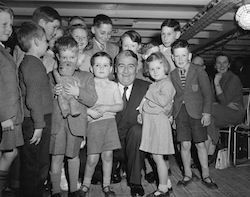
The first families arrive under the 'Bring Out A Briton' migration scheme, on the Oronsay, 1957. (Courtesy National Archives of Australia).
During the post-Second World War (1939–45) the Australian government committed to its immigration program to meet labour shortages, and create prosperity for everyone. Also, opening up its doors to outsiders was a way to protect Australian shores from any external threat, for the Japanese attack on Darwin on 19 February, 1942, was still fresh in the minds of many. As a result, Australia's population nearly doubled from 7.5 million to 13 million from 1945 to 1975. In fact, 1.5 million British immigrants who arrived in Australia, between 1945 to 1975, came as a result of the heavily promoted assisted passage scheme, ‘Bring Out a Briton’ that was launched in 1957. Also, in the 1960s Australia government promoted its campaign throughout Britain, together with the 'Nest Egg Scheme’, which gave assisted passage to any family who had more than £500 to their name. Somehow, I guess the Robinson’s qualified and left with much fanfare and sorrow.
On the whole, hardships were never talked about in front of children and in some ways we kind of grew up being sheltered from them. Regardless of these circumstances, there was a strong sense of communal spirit whereby people on our street still treated one another with an equal share or civility, respect, and affection. Nothing undermined the strong communal spirit of the people on our street. What was not scarce was the natural vivacity and lightheartedness among the people in those days.
At school we never really learned about the reasons or meanings of words like, 'segregation' or 'oppression', which was how it was for Catholics (and some Protestants) living in six of the nine counties of Ulster. The local cultures on both sides of the divide passed on their misbegotten bigotry to the children, and to their children's children. It was somehow drilled into us in our earliest of years that there were two kinds of people, namely, Protestant, Loyalist, Unionists on one side, with Catholics on the other side.
The Catholics were sometimes referred to as Papists by those on the other side of the divide. Scorn and ridicule was not solely between the Catholic and the Protestants. Across the Irish Sea in England the Irish were at times referred to by the decretory terms, 'Mick' or ‘Paddy’. Incidentally, both words were British creations and at times used to portray the Irish as the butt of their jokes down through the years.
During the early years there were no British soldiers on our streets like there would be in the years to come. Nor was there much concern about organizations like the Irish Republican Army (IRA) or the Ulster Volunteer Force (UVF), even though they already existed. The only really noticeable activities that raised people's blood pressure during that period were the years celebrations when the Protestant bands ceremoniously flaunted their dominance throughout much of Ulster.
Sometimes away to the sides, defiant Catholic nationalists, likewise, marched along just as proudly to the beating of their own drums under the fluttering of the tricolor Irish flags chanting, “This country is our’s, and no one better say otherwise”. Just a decade earlier during the Second World War, may thousands of Ulster Catholic and Protestant, men and women, joined the British ranks and marched off to war, where many fought and died together.
Ulster factories supported the war effort supplying warships fitted out with armor plating, gun-mountings and turrets, as well as, bombers, tanks, guns, and ammunition of all kinds. Some historians hold that without the part Ulster played, Great Britain could not have stood along against Hitler in the darkest hours of the war. This was done Eamon de Valera remained neutral despite pressure from Churchill and Roosevelt. Many Protestant Orangemen, Unionists and Loyalists took this pride with them each year to the streets of Belfast.
Many Protestant and Catholic expat Irish living around the world today are painfully aware that Ireland remains politically, economically, and culturally divided. With religious divisions, the line between hate and harm is very thin. It is no secret that violent attacks have been made by both groups against each other. This has happen down through the years, and no doubt will continue into the years to come, too. And each year when the preparations are going on for the marches, tension once again presents its ugly face.
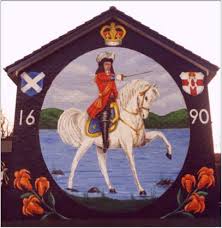
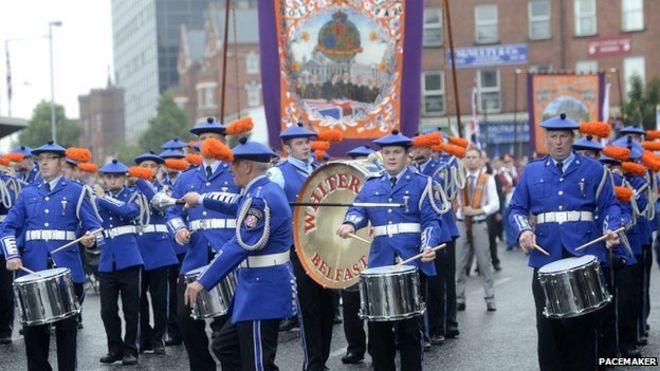
Each year the 12 July, or 'the Glorious Twelfth' as many Protestants liked to call it, brought the different Orange Lodges and Ulster Loyalists and thousands of others out onto the roads and streets to celebrate a historical victory. In 1690, the Protestant King William of Orange defeated the Catholic King James II at the Battle of the Boyne. In Belfast, thousands of Union Jacks come to life fluttering proudly in the wind from the upstair windows of just about every red-bricked house in the Protestant areas of the city. A house with our its flagpole would appear out of place.
Many of the marchers were decked out in their Sunday-best, with bowler hats on their heads and white gloves on their hands. A good number of them proudly wore the sash from their Orange lodges. The most elite of lodges, 'The Royal Black Order', led the way. The Apprentice Boys, and others, were all just as proud of the part their ancestors played in Irish history, as they were in close step to the sound of the Lambegs, bag-pipes, and penny tin-whistles they carried along with them. Nothing could, nor would dare to dissuade them from having their day!
The Apprentice Boys is a Protestant fraternal society that was founded in 1814 and based in the city of Derry in Ulster. The society’s aim is to commemorate the 1689 Siege of Derry when the army of Catholic James II of England (VII of Scotland) laid siege to the walled city which was then in Protestant stronghold. The Apprentice Boys are commemorated for shutting the gates thus preventing the king’s army from entering the city.
Shankill history mural
Above the thousands of marchers and onlooking crowds who numbered as many again, colorful banners, streamers, and buntings stretched out overhead across the famous Shankill Road, which runs westwards for about 2.5 kilometers. The red-brick houses along the many side streets that branch off the Shankill Road are home to predominantly loyalist working class people. Other giant colorful banners attached to poles protruded high from among the thick columns as they marched in military fashion. The colorful words and pictures on each and every one of them had their own story to tell.
In a militant air of triumphalist, valor, and jauntiness in their movements, every drum, pipe, and flute bands was with gusto. They churned out loyalist tunes, such as, 'The Green Beret', 'The Sash', and 'The Old Derry Walls', among other stuff. Everyone seemed eager then next to be heard as they played away on their instruments. The robust among them strained under the wight of the big Lambeg drums they carried along the road.
The celebrations were often accompanied by bouts of violence, and many Catholics saw them as being sectarian and supremacist in nature. I can even recall the faces on segments of young men on both sides of the divid seem like they had some unsettled scores to put right. Undoubtedly, a number of people, still possessed a virulent memory of previous conflict that only they knew about. The marches continued even during the Troubles when violence worsened. Even with its militant air about it, the marches for the most part tend to pass off peacefully.
Living deep in the Catholic areas we could not help but hear and see the ruckus kicked up the marches. Often we made our way through the side-streets on foot, as children do to investigate. Often it was a sight to behold to see the marchers celebrating in all their glory as if they were part of that historical victory over the Catholic Jacobite armies of James II.
Even right into my late-teens I sometimes wondered why it was so necessary for the Protestants to cling so dearly to that distant victory on the banks of the River Boyne, and embraced so often in colorful their murals. Later in my life I would read more in depth about the period that surrounded the battle, and about the Willamette army under the command of Baron von Ginkel in the Battle of Aughrim (12 July, 1690), which to me seemed much more significant, than the one thrown in our faces every year.
Decisive or not, not many of us as children had heard of the Battle of Aughrim. We heard so much about the Battle of the Boyne, and how King Billy and his armies had given the Catholic Irish a good kicking and sent them running for their lives. Therefore, the ruckus kicked up by the annual marches made it hard for us to forget!
Looking back, I wonder how many of the people on our street knew that the Catholic king was reluctant to lead what he saw as being a revanchist Catholic Irish crusade. Indeed, the Old Irish wanted to reverse territorial losses incurred on them. Though, I am less sure if the political climate was such that they sought to wrest religious toleration and independence from Westminster, into the bargain.
Bigotry has always existed in Ulster, as it has just about anywhere in the world for that matter. It ran rampant throughout King James II's new army, which he encouraged. Not one of the king's advisors came from the Old Irish stock, and most of his officers who accompanied him on the campaign to Ireland were of Old English stock. This makeup of adventurers was greatly resented by the Old Irish. As things turned out, the Catholic king even had the audacity to blame his defeat in battle on his Irish subjects.
The Old Irish were ancestors of Modern Irish! The people residing in Ulster today are of various national identities; mainly from Ireland, Scotland, Wales, and England, or some combination because of intermarriage. Those who came to settle in Ulster brought their own or previous world with them. Each ethnic group, therefore, has their own customs, identity, language, culture, music, dance, cuisine, and mythology, and so forth.

There was not much by way of celebrations among the Catholics, that I can recall anything worth writing home about. Not even the Saint Patrick's Day celebrations, which falls each year on 17 March, the date when he died (c.AD 385-461). According to legend, Saint Patrick, the Patron Saint of Ireland, is believed to have used the three-leaved clover, the shamrock, to help him explain the Holy Trinity to Irish pagans.
Even though it is a public holiday throughout Ireland, this day is mainly celebrated by the Irish diaspora in other countries, particularly in America where countless public parades and festivals are held. Still, today's St Patrick's Day celebrations in Dublin, for example, is greatly influenced by those that grew from the Irish diaspora in North America. Saint Patrick’s Day parades are held in many locations across Japan. The first parade took place in Tokyo in 1992.
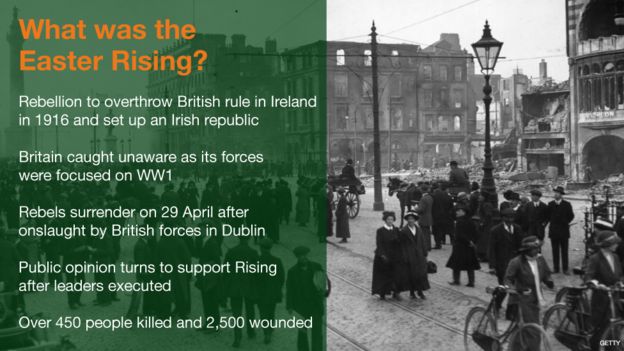
In Dublin, hundreds of thousands of people lined the streets where a parade marked the 100th anniversary of the 1916 Easter Rising. The military parade was the largest ever staged in the Republic of Ireland, and with a fly-past over the city centre by the Irish Air Corps.
Each year the Easter holidays commemorate the 1916 Rising, and the Feast of Our Lady's Assumption into Heaven fell on or around 15 August. A Christian belief whereby God raised the Virgin Mary up to Heaven following her death. It is celebrated in many countries, particularly in parts of Europe and South America. What I remembered most was bonfire night, when many giant towering bonfires were lit. The bonfires burned almost on the same grounds that the Protestants lit theirs.
Just about every youth available was collecting all kinds of things imaginable for the massive bonfires that would burn themselves out on the nearest piece of wasteland in their area. The bonfires were usually lit when it was our bedtime, so I do not have any great nor lengthy remembrance of them burning. It was always quite a task collecting the fuel for them, old motorcar tires, all kinds of wood were welcomed, and even old mattresses that were secured at the sides, added to the thrill. Indeed, it was a grand endeavor to be apart of this great event, or kind of like a feather in our youthful caps. Everyone looked forward to watching their hard work literally go up in smoke. Therefore, during those early years it really seemed the end of the world for me and for some of my friends, for most of the bonfires we helped with, would burn while we would be in our beds.
The Protestant bonfires were lit on 11 July, before the marches and street parties began the next day. To add to the excitement, effigies of the Pope, or the Virgin Mary, and other Irish nationalist symbols were burned on top to the massive bonfires. One thing both sides of the divide had to do was to organize parties for youths to collect fuel for the bonfires. Being a child this was something we really enjoyed to the fullest, for it was a badge of honor to find or contribute something massive and burnable. It was also a time when things of importance or value seemed to suddenly disappear from people's gardens or yards without permission from the owners.
Even the bonfires themselves needed to be watched for fear of reprisals by youth from across the divide, such as setting them on fire before their time. One incident, I well recall, was some days before the 11 July. I had been playing with my brother elder Paul near the site in North Belfast being prepared for a bonfire. A massive heap of stuff had already been piled up high by Protestant youths around 16 to 18 years old.
It was summertime 1966, a little before my tenth birthday, while my brother Paul was around 13 years old. As we were playing by ourselves whilst careful to keep our distance for fear of being asked what our religion was, I remembered overhearing some reference about some of the youth going home for lunch, whilst some of the others would head off somewhere to see what else they might pick up for the bonfire.
Apart from the odd figure walking on the surrounding streets, the nearest of which was a good 200 meters away from where we played, we were absolutely alone. It was then that my brother Paul produced a box of matches, and telling me to stop where I was, made his way quickly over to the massive pile of wood and old tires, and God knows what. But being the inquisitive child I was, I followed him, with a greater interest in knowing where he got the matches, than in what he was going to do with them, which somehow did not quite click in my head just then.
By the time we reached the houses on streets with the blue, white, and red marking on the pavement edges, which told visitors they were in a Loyalist area, a a little smoke was raising from the pile. By the time we had retraced our steps over to where I was living in those years, in Torrens Parade, just off the Oldpark Road we could see the thick black smoke towering over the roofs of the houses that blocked out our view of the bonfire, now fully ablaze. By the time we reached the family house we could hear the sound of fire engines and the loud angry voices of people.
The Catholics burned effigies of the Queen and King Billy. The main fuel for the bonfires were old car tires and all kind of burnable junk we could gather up and pile into place for the big evening. The bonfire events on both sides of the divide have been condemned for the sectarian, ethnic hatred, anti-social behavior, and for the damage and pollution caused by them. In fact, I can even recall how most of our back garden fence that granddad had just erected not long before was stollen. No doubt our fence ended up on one of the bonfires.
Around this time, the Union Jacks fluttered throughout the Protestant areas of Belfast, as did the Irish tricolor in the Catholic areas. I do not think a single Catholic cared for, or heard much about, the Flags and Emblems Act of 1954, which forbid the displaying of the tricolor. Regardless, the Green, White, and Orange of the Irish flag went up it the thousands that the RUC felt it impossible to enforce the Act. Even though they did their best to patrol the Catholic areas! All of this seemed somewhat strange to me when I was a child, for during the 1960s a tolerance existed between both communities for just about every other time of the year.
The Irish Republican Army had been active from December 1956 to February, 1962, a time when 19 people died as a result. The IRA were dedicated to establishing an independent republic.The general public opinion at large remained unsympathetic towards the IRA cause.
*
There was nothing happier than growing up and feeling part of the McAleese family, even if we were called Crossey. It was also at our grandparent’s home were Anna and I learned what it meant to feel welcome and loved. Not only those wonderful childhood memories we got of growing up there, but also those mental and moral qualities so distinctive to what made us respectful of others.
Our lives in the early years did not venture much beyond the front door. Our world went no further than both ends of the street or on the edge of the bog-meadow nearby. In those days mothers kept a mindful eye on their children, and were quick to point a finger if any of use stepped across the line. The people in the other houses also welcomed and embraced us when we were small, and we made many friends with the other kids. I do not think I was ever more content in my life than when I was a child growing up in Belfast. After all, Anna and myself were children from a failed marriage. This was in a climate when divorce was prohibited and people of broken marriages were stigmatized by the Catholic Church.
It burns into me still when I think of the times I used to tell grand mum that when I grew up I would buy her a house she could call her own. As it turned out, she was the one who should be credited with providing a roof over our heads. How might things have turned out if I had of found my destiny in Belfast, or somewhere in Ireland, like most of my old friends had done. They stayed to make a life for themselves, where they raised children who would finally go on to universities, which was just about unheard of in our day. Some of my friends did quite well for themselves and their families, with nice homes and jobs. Of course, some of them divorced, too. This was in a climate when people of broken marriages were stigmatized by the Catholic Church.
With some sadness, too, I must add that I never felt at home anywhere since my childhood days on St Katherine Road. Not even in Tokyo where I have lived for more than 30 years. From the early days to the present, it was never hard to resist calling the places I lived in as ‘lodgings’, rather than use the word, ‘home’. There was some sadness here, still this may have been one of the reasons why I seldom stayed at one place more than a couple of years. Happy at the prospect of one day settling down, I would not say that I was sick and tired of the moving to a new place either. Like the ghost that wondered the earth having failed to find a place in Heaven, I guess I had failed to find a place in Tokyo to hang my hat and call home.
In fact, I often found interest and warmth away from my own dwelling place. For example, when I first landed in Tokyo in May 1979, I remember being impressed by the bulk of the place. The Ginza area in particular soon became my favorite place in Tokyo. Soon I became captivated by the great department stores, Mitsukoshi, Matsuzakaya, and Matsuya that has been located in Ginza since 1925.
The last time I ever felt this way was the time when my grandmother took me on a bus ride to Belfast City center. Woolworth was the store that still sticks in my mind, a favorite place for many children lucky enough to betaken to in those early days. Of course, I liked to dander around the large toy section and to see all sorts of toys that I would never have. Christmas shopping seems to appear earlier and earlier these days. And which I think competed with birthdays as a child’s favorite day in the year, not that we got much of anything regardless.
In my part of the world, Frank Winfield Woolworth created the retail phenomenon of the twentieth century. ‘Wollies', as it was fondly called by just about every body, sold factory made goods at rock bottom prices. Of course, this made shopping possible for the masses. It was also the first brand to go global, building to more than 3,000 near identical stores across the world. Woolworths was also famous for its "pick 'n' mix" sweet selections. In 1972 the store in Belfast burnt down, a victim of the Troubles.
The Wako Department Store, its iconic old building with a clock tower, opened to business at its present location since 1947, sold ostentatiously costly and luxurious items, such as, clocks and watches, the latest range of men's and women's clothing and accessories, and jewelry. It was at Wako that I bought my ex-wife’s wedding ring for close to half a million yen. Unlike the other department stores, it does not sell any food. Almost every building in Ginza echoed welcome to the countless people who passed by them. And why now? People had money to spend in the Bubble Economy days! How I used to enjoy strolling along the crowded streets window shopping, for I had no money to spend. The countless classy and opulent shops all of which, like the department stores, lined the prime real-estate locations in Tokyo in an effort to outdo each other in elegance and chic.
Typified by its grand, long-established department stores and haute couture clothing, Ginza has remained the go-to-place since the early 1900s. Today, Ginza still draws thousands of tourists from all over Japan and Asia. One reason being its reputation of elegance and expensive, fashionable clothes produced by leading fashion houses. As well as having regular shops and stores, Ginza is also dotted with hundreds of small art galleries. As well as regular stores, the area also provides its “G Free” or Ginza Free WiFi service to visitors.
Always I stopped at the floors that sold furniture, where I would stop to ponder the a suit or a table or a writing desk, or whatever it was that caught my eye. How I wished I could buy something and have it delivered to the home I dreamt about, but never had.
Being interested in a place like Ginza in the 1980s was strange since I never cared much for shopping. Somehow I fell in love with the place, and still consider it my favorite part of Tokyo. Perhaps it was the kind of people who visited Ginza or to shop at the stores, who I liked to watch, unobserved of course. It has been said that there are benefits to being observant, though I am not sure what I got out of it. Observing people and using your findings could help you land your next job, I guess apart from being a good pastime when the time was tree to kill, there was also something romantic about it.
Or perhaps it was the memorable, if not passing encounters of those I once loved and dinned with in Ginza. Mmm! Where are you now? Many years ago while sitting in a cafe at the Imperial Hotel in Hibuya, just a stroll away from Ginza, I could not help notice an attractive Asian lady at the next table. She was flicking through the pages of a magazine, pausing from time to time to read something. A couple of weeks earlier my relationship with fine woman had ended and I was still feeling depressed about the parting of our ways.
Shyness was a quality that seemed to follow me all through my life, especially when it came to meeting people of the opposite sex. So I surprised myself when I turned and asked the lady at the next table if the magazine was interesting? That moment of uncertainty was such a long time ago now that I cannot remember if I asked her in Japanese or in English. I do recall how she placed the magazine on her lap and looked at me head-on.
For a while my question circled around my head that I was beginning to feel that maybe I should of asked something more intelligent or perhaps said nothing at all. Then came the short reply with a most delightful smile. “Yes!” The ice had been broken, from which a long lasting relationship would develop. My Korean friend, Sabena and I still remain on good terms today!
Being a Caucasian living in Tokyo you still felt an outsider. Being employed at different schools on a series of yearly contracts made it impossible to look deep into the future or make longterm plans, like buying a house. Even if a foreigner married a Japanese, and many did and continue to, it came with drawbacks. Foreigners were not allowed to vote, applying for citizenship was nearly impossible, a thing that I never wanted nor tried to do. I still liked to call myself an Irishman, even if I got Sweet Fanny Adams from my country of birth. Still, the so called best I got from my years in Japan was permanent residency status.
On an added note, according to the Health, Labor and Welfare Ministry, there are more foreigners working in Japan than ever before. By 2013 the number of foreigners working in Japan stood at 717,504, which was a 5.1 percent increase from the previous number. One of the reasons for this increase was internationalizing, like workplaces in other countries were doing. This I found hard to believe. It was no secret that Japan is still far behind most advanced countries in the percentage of foreign workers. According to an article I read in Japan Times recently, the foreign percentage of Japan’s labor force stands at around 1 percent, compared to 36 percent in Singapore. Today, Britain has 4.26 million foreign-born workers.
That said, it was in our house at 62 Saint Katherine Road that our young lives were to take a course that I could not have imagined. Granddad’s death! Although I visited the house when the chance allowed, I could not pop the question about living here again. Even when a student majoring in Modern History at Queen’s University, Belfast (QUB) I had itchy feet, too. In the three or so years I spent in Belfast in those days I lived at three different locations before finally graduating. Including a graduation ceremony I did not hang around for. The biggest problem for me then was having to finance my education, which caused me to use the services of a local solicitor to challenge why I was being charged the same as an international students when I was born in Belfast. The outcome of this little matter was not what I was hoping for. According to legalities, it was not my nationality that was being challenged, but my residence status. I had not lived and worked in Belfast, nor anywhere in Ireland, nor Europe for that matter in recent years. Therefore, at QUB I was seen as an international. In the end, I just had to bit the bullet, shut up and knuckle down to my studies, which I did.
Granddad had not been led to rest six months when my brother Paul put a match to the Protestant bonfire. Paul did not really know the grandparent’s on our mother’s side, whom sadly, because of circumstances, we both did not know. My elder brothers, John and Paul were raised by our father’s mother at her home on Ardilea Street. Grandfather Crossey died in 1957, and I have no recollection of him what soever other than he trained horses in Canada and in Ireland.
Ardilea Street, where granny Crossy lived, was not far from Torrens Parade, both of which touched the Oldpark Road in north Belfast. By the time granddad McAleese died in 1966, John and Paul were now living with our father and his wife Kay Courtney, in a large house on Torrens Parade. Because of the power of the Catholic Church in those days, divorce was not an option, so it would not be for many years before they would eventually allowed to get married. Dad had been separated from our mother for ten years. I knew that Kay was already married, but have no idea what caused her to leave her husband and two children to set up home with dad.
For economic reasons, it became difficult for Anna and myself to remain in our grandmother’s home on Saint Katherine Road in west Belfast. Besides, our father seemed keen to bring us all back together under one roof, and granddad’s death seemed as good a time as any to do just that. The new house on Torrens Parade looked so nice, when compared to the red-brick job we lived in for nearly ten years. Kay had kept it spotlessly clean and tidy, which I guess when looking back was probably the only thing I ever learned from her. Still, I well recall how Anna and I both felt excited about being with our dad again, if a bit apprehensive about Kay, who we did know know at all. During our time with dad and Kay, no one talked about the relationship-cum pretense at being married, which was generally kept a secret.
Even though Anna was eleven and I was not quite ten, we were in a way strangers to our elder brothers, John and Paul, who were themselves around fourteen and thirteen ten years old at the time. Even when we were living on Saint Katherine Road in west Belfast we never saw much of our father for his work. He and Kay had a few years earlier opened up a tiny firm that made and fitted car seat covers. Cozy Car, as the firm was called was just off the Antrim Road in north Belfast. When granddad McAleese was ill in bed, I remember once visiting Cozy Car with grandma. I do not remember why we went there, but I surmise it had something to do with what was best for my sister Anna and myself, and where we would live once granddad died.
When we did finally move, it was shortly after granddad’s death in February 1966. Already the Protestant youths were out scavenging for fuel for their bonfires. The Protestant Loyalist, Orange Order marches, and the anxiousness that they brought with them, were not so far way. It was also around that time when my brother Paul and I took a walk along the Oldpark Road where we crossed into the Protestant area and on to a patch of wasteland to take a look at how things were coming along with the bonfire there.
If there was a single thing both communities in the North could be said to share it must surely be music, especially country and western. The American singer Jim Reeves’s songs were forever being played on the radio. Already he was riding high in the singles and albums charts and was one of the most popular singers in any genre. Jim Reeves, the smooth-as-velvet Texan balladeer, embarked on a short concert tour of Ireland and Northern Ireland. The tour took him to various venues in counties Cork, Mayo, Galway, Sligo and Donegal, as well as in Derry, Portstewart, Ballymena, Omagh, and of course in Belfast. For the most part, Jim gave polished performances most of the time, which according to the press, satisfied the demands and expectations of the majority of audiences.
Incidentally while visiting Ulster, Jim Reeves performed at Saint Columb's Hall, Derry, in early-June of 1963. This sellout venue was managed by the, young Catholic curate Edward Daly who was destined to become the Bishop of Derry in 1974. Bishop Dr. Edward Daly would hold the post until is retirement in 1994. (For the records, Bishop Daly's favorite Jim Reeves song was ‘Welcome To My World’).
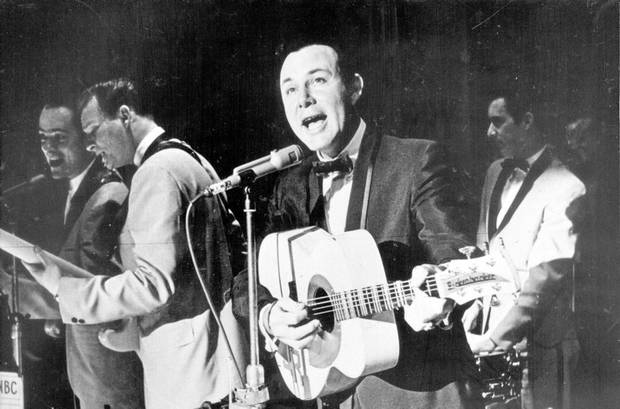
Jim’s fan base had grown rapidly, particularly across Ireland where there was an almost insatiable appetite for anything country sounding, especially sentimental songs. Grandma McAleese loved Jim Reeves’s voice. Just about every one on our street loved his soft and gentle sounding baritone voice. His works were still sought after, mainly because his singing style, that soft baritone voice singing songs that proved timeless. Even in 1966, when Beatlemania was taking the world by storm, Jim Reeves’s single ‘Distant Drums’ reached number one in the United Kingdom.
Jim Reeves was one of the most popular recording artists to perform across Ireland. He had no less that eleven songs in the Irish charts from 1962 to 1967. In those years, three songs reached number one in the Irish charts: ‘Welcome to My World’, ‘I Love You Because’, and ‘I Won’t Forget You’. Also, he recorded two Irish ballads, ‘Danny Boy’, and ‘Maureen’. ‘He'll Have to Go’ was his most popular song and remained at number one on the charts for months during 1960.
My brother was not exactly a big fan, as such, but I do recall him sometimes singing as we walked along together a rather naughty-cum rude version of, ‘He’ll Have To Go’, which never failed to make me laugh. In the song, Jim Reeves sings: “I’ll tell the man to turn the jukebox way down low,…” Whilst, my brother’s version went: “I’ll tell the man to shove the jukebox way up his hole,…” This was by no means anything original on my brother’s part, but I had heard it sung by other youths here and there in those days.
The big news on our black and white telly, not to mention talk about the streets, was the sad and untimely death of Jim Reeves. A year had hardly passed since the Irish tour, when Jim and his manager, Dean Manuel, were both killed in a plane crash. Apparently, Jim was flying a single-engine plane when they encountered a violent thunderstorm, causing the plane to crash in Brentwood, Tennessee. Their bodies were found in the wreckage after a two-day search. Even now long after the tragedy of Jim Reeves’s death in 1964, he can still be heard on easy listening and country radio stations throughout the world.
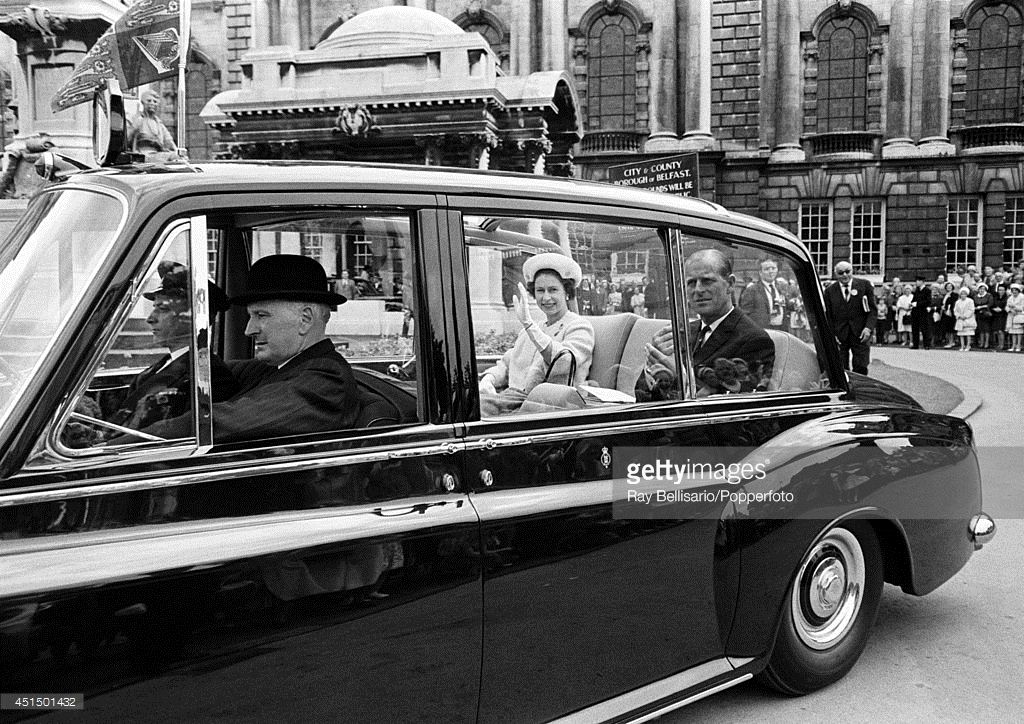
There was some unease about whether or not Ulster was fit for a royal visit. There was the IRA bombing of Nelson’s Pillar, a large granite column where a statue of Horatio Nelson in the center of Dublin was distorted by a large explosion on 8 March, 1966. This was about six weeks before the queen’s birthday, not that that had anything to do with the planning. Still, in July 1966, Queen Elizabeth II made her fourth visit to Belfast. This was a great day for the Protestant Unionists, who saw the visit as a ultimate symbol of their allegiance to the monarchy and United Kingdom. The Queen received an enthusiastic welcome from thousands of mainly Protestant people who lined Great Victoria Street that led into the city centre on that warm sunny day.
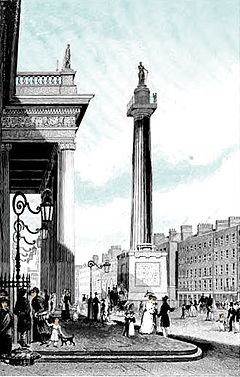
The Queen’s first visit to Belfast was shortly after the coronation in July 1953. The newly crowned Queen came again in August 1954 to launch the passenger liner 'Southern Cross' at the Harland & Wolff shipyard, near where RMS Titanic was launched in 1912.
The Governor of Northern Ireland at that time, Lord Wakehurst, declared a public holiday for the occasion, so that everyone had a chance to see the new monarch. As a result, cheering crowds of well-wishers came out onto the streets in the thousands to see the royal visitors, whilst many more lined the railroad tracks from Lisburn to Lisahally, near Derry (Londonderry). A special Royal Train was lead on to transport the couple through the countryside and scenic northern coastline.
The third visit to Ulster was in August 1961 aboard the royal yacht, Britannia, which dropped anchor in Belfast Lough. Then the Queen was accompanied by her husband and three children, Prince Philip, Prince Charles, and Princess Anne whose birthday also fell in August. Considering the things I can recall about those early days, I cannot recall for the life of me a single thing about the Queen’s 1961 visit. Then again, few Catholic or Protestant five year old boys back then showed little interest of anything outside their own tiny sphere of interest and play about their respective streets.
In fact, it was by shear chance that I was there at that day and time for I had no idea that the queen was paying a visit to Belfast. For some long forgotten reason I happened to be in the city center with my stepmother. Of course, with all the people there it did not take long for the penny to drop. I do not think that Kay knew anything about the visit either, but she was the only Irish Catholic woman I knew then (or since) that held royalty in great awe. Come to think of it. she never said a good nor positive thing about anything Irish. Kay was born and bread in the working class part of Belfast, she absolutely loathed her roots. Come to think of it, even her accent was rather mild. The times she commented on the Belfast brogue as being suitable for commoners.
Besides the countless times she chastised us for the way we talked, she did little else to be a loving mother. Dad, too, was more wrapped up in accumulating money that he had little time for any of us. And what time he did have they spent together away from us. After all, children should be seen and not heard, as the Victorian saying went. To this day I cannot recall what she did for us as a family. What money there was now coming in went towards enriching the house with luxurious carpets and all sorts of pretty stuff. There was the time when dad bought Kay a new washing machine, and gorgeous suit of furniture for the sitting room.
It was a beautiful house, but never a loving home with a family of kids as such. Come to think of it, it was the was while living there that I first became used to the Japanese custom of removing me shoes and leaving them in a shoe stand before entering. Dad, whom I loved and respected, agreed thoroughly with her principles. That said, I do not recall him ever leaving his shoes at the front door. However, soon after he would fall asleep in an armchair, Kay was always quick to remove them and place his feet on the footstool, or pouffe as Kay preferred to call it.
In all the main rooms, baring the bedroom I shared with my two brothers before they moved out, contained every conceivable luxurious article of furniture to mingle and interweave with the other expensive bit and pieces previously purchased. The two china cabinets in the living room, and a third in the hallway as you entered by the front door.
A visitor to the house, though I cannot recall any, would surely have felt they were visiting a museum, than a home. Not a day went by when I did not see Kay wearing one of the gold medallions or expensive trinkets that dad bought for her, not to mention those she picked up for herself. One interest or hobby she had, was collecting gold coins. Heavy as they were, the coins would be added to others on gold chains she wore on both wrists. We used to hear her coming before we saw her!
Our lives as children changed little from the first to the final day in that loveless house. Every weekend, for example, I used to gather up my dirty washing into a large plastic bag or pillowcase and carry it on my shoulder to the local coin laundry to wash and dry. By then, I was now the only child remaining at home. My two elder brother’s and sister were all gone by the time they turned sixteen. On top of the many other run-ins I myself had with Kay, she never ceased reminding dad of our ingratitude for all she had done for us. It was near impossible for any of us to even talk to day about anything. We had to go through Kay to reach him. "I'll tell him about it." she used to say to whichever of use had something to say about something. Of course, we usually never heard anymore on the matter, and in time forgot about whatever it was about ourselves.
Having come from a street of love and play, I was during that time at a loss to understand what kind of a woman was this? I used think to myself that of the millions of women living in the world how could dad have become so involved with this witch in sheep’s clothing? And now here I was standing next to this woman, as the woman she idolized sped by in a dark shinny car bigger than any one that I had ever seen before in all my life.
As I see things now, I know that no one should be ashamed of their voice, their accent, their culture. Accent is part of our roots, the people we grew up with. Our family and our friends leave a huge I'm print on who we are. Therefore, we should cherish the sound of those from our past, if not present. Today I consider the Belfast brogue among my favorites. One reason being that I seem to have, unintentionally, lost much of my own.
As I stood among the cheering crowds on that warm July day in 1966, I watched in edgy wonderment. I felt adventurous at being there in the midst of so many protestants without the permission of anyone. My tenth birthday was less then two weeks earlier, not that I got anything special that caused me to remember it. Still, I felt old enough to take myself further away from home, which was what I did. Granddad had been lead to rest in the Mill Town Cemetery on the Falls Road a few months earlier by then, and my sister Anna and me were moved to another house to live with our father and step-mother.
The new house was located on Torrens Parade, just off the Oldpark Road in north Belfast. It was a move that meant changing school, which for Anna and myself was not a happy thing for the friends we grew up with we would now leave behind us. Even though Belfast was by no means a big city, the tiniest of moves for the tiniest of reasons was a massive event for young children.
In truth, I had no idea that the Queen was visiting Belfast that day, and found myself standing amongst the crowds more my chance than not. Of course, it did not take me very long to realize what was happening, or why the massive crowds of excited people of all ages, shapes, and sizes were standing there that day. So many of the people held or waved Union Jacks. I cannot recall how long I waited there when suddenly everyone began to cheer as the big limousines approached along the road. We were entering into a new and uncertain world of sorts. It was also a move that would lead to other moves and no doubt create in me a restlessness that would remain with me for the rest of my life.
The thought of any danger itself stars the imagination. Tensions were building in Ulster around this time, and when anti-British feelings came to the forefront with some waving the Irish tricolor and shouting stuff that I could not make out. The Royal car moved, not so slowly, along Great Victoria Street not far from where I stood. Then suddenly, a concrete-block appeared from out of no where hitting the front of the car.
I cannot recall how I felt when the Queen's car passed by, but it was nothing like the crowds must have been feeling that day. The Queen was sitting in the righthand side of the limousine, so I could not see her very well for the waving hands and flags around me. I could see Prince Philip straining his neck to look back, as if he was looking at me. "That's him, that's the boy who through the stone! Grab him!"
Whenever I look back at the concrete-block happening, there was the view that it fell from some scaffolding as the limousine passed. How strange it now seems why a single concrete-block landed right on the car the Queen was in, when it might have appeared much easier for it to have landed on one of the thousands of heads of those looking on that day. The concrete block happening did not hinder the possession and the Queen went on to open a bridge named after her, which spanned the River Lagan. The Queen of England would visit Ulster 20 times during her reign.
Baring the preparations for Christmas and Easter, the four main events on our street were birth, marriage, death, and burial, since they were considered family matters. In the Catholic dominated Irish Republic large families were the norm, whilst in the North they were certainly common, if not the norm. Therefore, families were poor, even if the father worked to put food on the table, let alone provide the money to pay for the above mentioned. Those who could afford to buy a packet of cigarettes often smoked them down to nothing with the aid of a pin to get the most out of every 'fag butt' they put into their mouths. Many of the male adults I saw had dark or burnt fingertips, for the years of puffing the life out of their cigarettes.
Most of the older boys on our street back then attended the new Saint Thomas’s Secondary Intermediate School up on the Whiterock Road in the upper Fall’s Road in west Belfast. There the noted writer, Michael McLaverty was the principle. The poet Seamus Heaney was a teacher there, too, for a spell. St. Thomas’ was opened in 1957 in the troubled republican stronghold area of Ballymurphy of Belfast. The school developed a strong relationship with the local community it suddenly closed its doors for the last time in 1988.
Though many notable minds have passed through the doors of St. Thomas’, many more left school with little or no specialized training, and therefore, entered into the big world with few or no job skills. However, when I was a young boy I still recall one young man on the street (related to our neighbor and coal-man, Mr. Ogle), who went to Queen's University, Belfast, where he majored in French literature. He was a tall handsome fellow with flowing fair hair, and needless to say was popular among the young woman.
My earliest memories of those days was when he popped into our house for a chat and was quickly asked by my Aunt Lila and her friends to translate the words of a very popular song at the time. Around 1963, the Singing Nun 'Dominique', a French-language song topped the charts in just about everywhere, including America. The Beatles, too, in their more innovative ways, were about to take the world by storm. My first and only real introduction with them was the time I set through 'A Hard Day's Night' at the Saturday morning matinees when even a translator would have been of little use.
For the entire duration of the film I was absolutely unable to hear a single word from the screen for the screaming girls, whom of course dominated the audience that day. Of course, I am not sure, but I think I suffered from a headache for the next couple of days. That said, it was still a treat to find ourselves at the Saturday matinees, for pocket money was something we never heard of, and most of us did not have two pennies to rub together. Therefore, we made our own priceless form of entertainment the best we could.
There was a bog meadows, an earthly paradise or sorts, just a short walk to the south or our street. Turf, or peat found in a bog was composed from ancient fallen trees partially carbonized just short of becoming coal. That said, I do not recall anyone cutting the turf or peat from the bog meadows with a loy or spade, like they did in other parts of Ireland. This might have been because coal was available, as expected under a British system.
In the winter months a lake in the center of the bog meadow froze over creating a natural iceskating arena, drawing people from the surrounding areas to practice their skills on. Not having ice-skates, of course, the best thing we could do, was to run on the ice as fast as we cold without falling on our arses and then slide along it as far as our effort would take us. Playing in the damn of the winter air that often brought on colds and respiratory illness among the weak and elderly, tended to pass us by.
Apart from the odd broken bone from a bad fall, or something less serious, like, a wart on a finger, none of us found ourselves in need of medical treatment for any serious complaint. All the year round, we usually we wore short trousers and short sleeves shirts, so baring the odd cold and runny nose, I guess we should consider ourselves lucky that no one came down with pneumonia.
We possessed an astounding energy! In rain, in sleet, or in snow, we always seemed to be running to somewhere, across the farmers fields, to the bog meadows to play among the bull rushes, and the other gifts of nature that were so essential to our aimless and carefree lives. The bog meadows was our barony, where we were all kings, knights, chieftains, and sometimes cowboys and Indians, too, or whatever it was that took our fancy at the time. On sunny days when we got bored with playing we picked wild berries from bushes that grew about the fields. The fun we got from climbing the trees to steel and bitter tasting apples that belonged to the farmer.
Saint Kevin’s Primary School was where most of the children on our street went when they were old enough to receive an education, and Roman Catholic indoctrination. I do not suppose any of us knew that Saint Kevin was the rigorously caste saint of Glendalough in County Wicklow when we began our new lives at the school. For my own part, I certainly still did not know when I left there to move to another primary school in the Oldpark area of the city. Only in my adulthood did I bother by arse to do some research on the name and place. Needless to say, Google and Wikipedia were good places to begin. Glendalough, means the Glen of two Lakes. Today it is one of the most important, if not visited sites of the monastic ruins in Ireland. Before the arrival of St. Kevin the glen would have been a desolate and remote place to pass through, which needless to say, was the sort of place I would just love to live in now.
In the good weather we used to take a short cut through farmland on our way up to Saint Kevin's Primary School located up on the famous Fall's Road. Making our way to school in the early months before the holidays took us a little way south past grazing cows that did not seem to notice us by the edge of the bog meadows. Then a little further southeast, which took us past the back of Saint Louise's Girl's Comprehensive School and then to our school.
To our local primary school a number of sons of working class Irish where sent to receive a comprehensive education, of sorts, with a fair amount of theology thrown in for good measure. It was the kind of place where they beat the education into you. “Mmm!” The number of times when a teacher hit me on the head with a Bible for not remembering a passage properly. "Mmm!" This causes me to wonder how much things changed over the years. As a seventeen year old student (in 1840), Thomas Francis Meagher rehearsed a part in King Lear, an effort for which his teacher, the Reverend William Johnson, struck him on the back of the head with a manuscript copy of the play, and said: “That frightful [Irish] brogue of yours will never do for Shakespeare…”.
A good flogging, or in our case, a good canning at the primary and secondary school was commonly accepted by the educational authorities through Ireland and the UK in the 1960s. The clergy were seen by many as living angles, and the teachers were not too far behind them. At least it did not take many of us to wake up to reality. As I would soon learn, many of the teachers took pains to ensure that the canings were properly administered. A number of the less unfortunate pupils among us got six of the best once a week on average. For my part, I do not think I got punished so often, but when I did, I certainly remembered it for a good while afterwards.
Often our families warned us from taking this shortcut in bad weather, or when it was raining, for fear of getting our shoes clothes dirty. Of course, we were forbidden at anytime by the farmer who accused us of damaging his land and hurting the farm animals. Apart from grabbing some blackberries and blueberries from some over hanging bushes, or steeling some apples, the only real damage that had been done was to ourselves, when some of my friends accidentally stepped into freshly deposited cow manure. An only too frequent happening that never failed to make one hell of a mess of the socks and shoes, which needless to say, we laughed about all the way to school.
At school dirty shoes or soiled clothes could result in a thorough caning, which some of the teachers took delight in implementing. Ever since Ireland's conversion to Christianity, like the early Irish missionaries, the Catholic teachers have continued to exert great influence over their students. No doubt the same thing was true at the Protestant schools.
Usually on the rainy or snowy days we did listen to our parents and made the correct correct way up to school. This was along St.Jame’s Crescent, then left onto St. James’s Road that took us up to the Fall’s Rd. Then left on the Fall’s Rd, passed the mainly Protestant, City Cemetery, but not as far as Milltown Cemetery were Catholics were buried. Also just past St. Kevin’s Primary School stood an old dilapidated building where the Milltown Training School for boys once stood. Not exactly a borstal, but rather an industrial school, before it closed its doors in the mid -or late-1960s. A couple of other names come to mind, namely, Saint Patrick’s (Milltown), Belfast (1911-1966), or the Malone Reformatory (Training School) in Belfast (1860-1968), that had been founded by a body of citizen volunteers.
Sadly, I cannot recall which of these schools I am talking about, other than the fact it stood very close to Saint Kevin’s Primary where we attended. We were told that bad boys went to the place, and that if we did not behave ourselves we would end up there, too. So I guess an element of fear was planted in many of us every time we passed it. Industrial schools had been created to educate both female and male Catholic and Protestant children who had been neglected, and in need of social and moral instruction and discipline. Not to exclude youth thought to be in danger of falling into a life of crime. In the North, such children were admitted either to prison, orr to a Workhouse in the late-1800s. These places were also referred to as “Ragged Schools” for the ragged clothes the poor children wore.
Industrial schools were established in other parts of Ireland under the Industrial Schools Act of 1868 to care for "neglected, orphaned and abandoned children". And, by 1884, these institutions were home to more that 5,000 children throughout the Ireland. The old industrial and reformatory schools in the South have been replaced by what are now officially called Children Detention Schools. In the North, the old name has been changed to the Juvenile Justice Centre, of which there is only one such institution at Rathgael not far from Bangor. It is now North's only children's detention centre following the closure of St Patrick's in Belfast, and Lisnevin in Millisle, both also formerly known as training schools.
Caning and verbal abuse was not only a day-to-day form of punishment in primary and secondary schools in the North, but also in the single borstals in Northern Ireland. Canning at borstals was not authorized in England, Scotland or Wales.” (Wikipedia). Cases of systematic failures in the Northern Ireland have recently come to light. According to one comprehensive report, the police were just as guilty of a “catalogue of failures” over the abuse of young boys at a Belfast care home overseen by a paedophile ring. It was found that a Royal Ulster Constabulary (RUC) investigation into sexual abuse at a care home in east Belfast was “inept, inadequate and far from thorough”. The report even went on to criticize an order of Catholic nuns, the Sisters of Nazareth, which ran homes in Belfast and in Derry: “In each of the four homes, some nuns engaged in physical and emotional abuse against children. Emotional abuse was widespread in all homes.” Some of this abuse dated back decades.
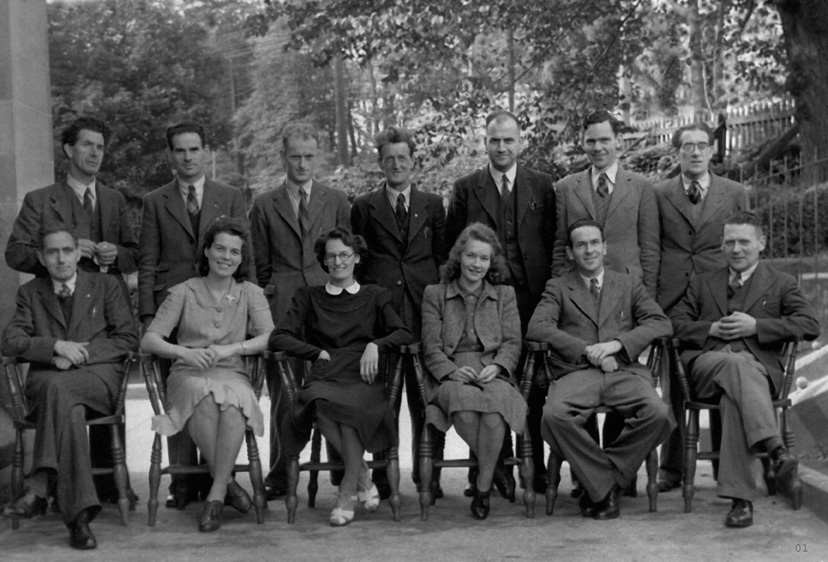
Even having dirty fingernails at our school, or not having a clean handkerchief in your pocket would also lead to a thrashing. First thing each morning was to line up with our arms stretched out for the teacher to check if our fingernails and hands were clean. At the same time handkerchiefs had to be hanging from our pockets for the teacher to see, and those of us who failed to do so were caned. Usually the punishment was administered there and then, whilst the continuous offenders would be told to report to Mr Mount, the principle's office after class.