'Pages from the Road: Irishman Walking'
by Michael D. Crossey
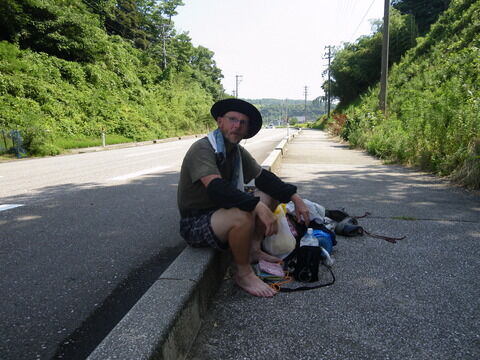
(by MDC)
Stage 1 Chapter 1: On the main and coastal roads around Japan. Summer 2009.
*
Dear Readers:
'Pages from Irishman Walking' is about my walking the main and coastal roads around Japan, in a seri es of spring, summer, autumn, and winter stages. It took me eight-years to complete my mission. Baring Benten-jima, a tiny uninhabited island that poked about 20 meters above the sea (viewed from Sōya), my mission (Stage 1), began on July 14, 2009, at Sōya-misaki, in Hokkaidō, the northernmost t ip of Japan. Hokkaidō was the second largest of the four main islands of Japan. The Japanese archipelago consisted of 6,852 islands, with 430 of them inhabited. An island was defined as being land with more than 100-meters in circumference. The five main islands, from north to south, were Hokkaidō, Honshu, Shikoku, Kyushu, and Okinawa. Honshu was the largest, and was often referred to as the Japanese mainland. After about 49-days on the road, and the trials and tribulations that went with it, the stage was fi nally concluded on 27 August, 2009, at Noshiro City in Akita prefecture, along the northwestern coa s tline of Honshu, the largest of Japan's mainland islands. Noshiro grew as a port town on the shores of the Nihon Kai, on a flat coastal plain. The port had been involved in trade with neighboring islands and areas, since 771 AD. Today, the local economy was based on commercial fishing and agriculture, among other things. Noshiro appeared in the ancient Chronicles of Japan (the Nihongi). Completed in 720 AD, it was the second oldest book of early Japanese history, behind the Kojiki, com pleted in 711 AD. The region had a humid subtropical climate — hot, humid summers, from cold to mild winters, at times Severe. Both July and August, like the present, were the hottest months. Rain fell at anytime throughout the year, but it was heaviest through August to October. In fact, it rained a good 80-percent of the time I spent on the road.
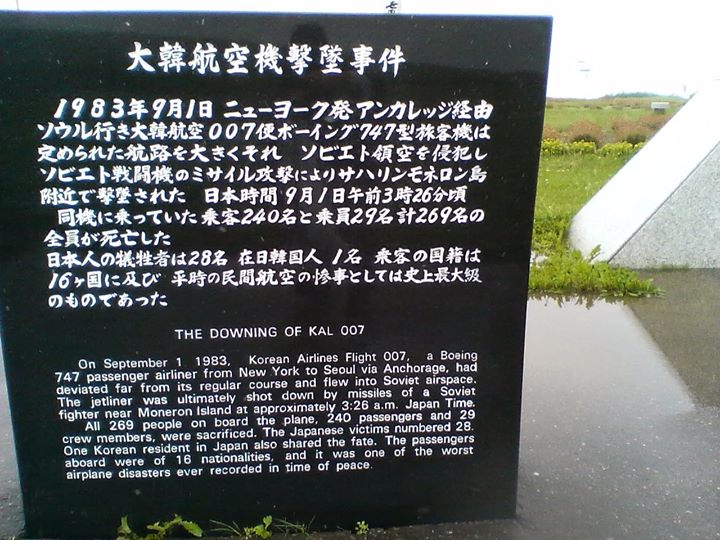
My three-days at Sōya-misaki, as I waited for the heavy rain to let-up, allowed me a chance to look about the place. Sōya-misaki was a cape of monuments. The area, or surrounding waters (Nihon Kai and Sea of Oskhotsk), was a hot place during the Pacific War -- the sinking of Japanese merchant ships, targeted by American submarines, particularly the USS Wahoo (SS-238). The Wahoo, a Gato-class submarine, took part in the Pacific theatre, in 1942. After a number of successful patrols, the sub was finally sunk, in 1943. It became the last US sub to enter the Nihon Kai, for nearly two-years, until an advanced mine-detec ting device became available. The resting place of the Wahoo and her crew was confirmed by divers, in 2006. A Korean Air Liner (Flight 007) was shot down in the area, in 1983, by a Soviet fighter jet. It crashed into the Nihon Kai, west of Sakhalin. All the passengers and crew died. The flight-recorders were recovered by the Soviets, but were not made available to the wider world f or about 10-years (1993). Today, a tall monument to the disaster towered over the heights that looked out over the Sōya coastl I.
When the time finally came for me to hit the road properly, I was more than ready. Last, but not least, I felt it important to add a word or two about my choice of photographs for thi S book. I needed to consider the expense and also the space, particularly with a view to the publishers' obj ectives -- to reach a wider audience. Therefore, only a small number of the many original photos that I took during the different stages o f my mission, could be reproduced here. My hope was that the photos would not just complement the text, but draw my readers deeper into my l ife on the road, and stop with me while to smell the flowers and enjoy natures aesthetic pleasures. I had long been fascinated by the science of walking. If the following pages could in anyway stimulate some of my readers to earnestly get outside and wal k, or become life-long enthusiasts for self-health, then my efforts would not have been penned in v A In. Over the years of my mission and the many hours spent editing my road-notes, I had benefitted enormo usly from the help of many friends. Above all, I felt indebted to the many local people I met along the course of my mission -- their ki ndness, helpfulness and knowledge on the physical fabric of the areas I tramped through. Last, but not least, my road-note journal should be used with a realization of its limitations.
Be happy, keep smiling!
Yours sincerely
Michael Denis Crossey
*
From Sōya-misaki in Hokkaidō to Noshiro in Akita
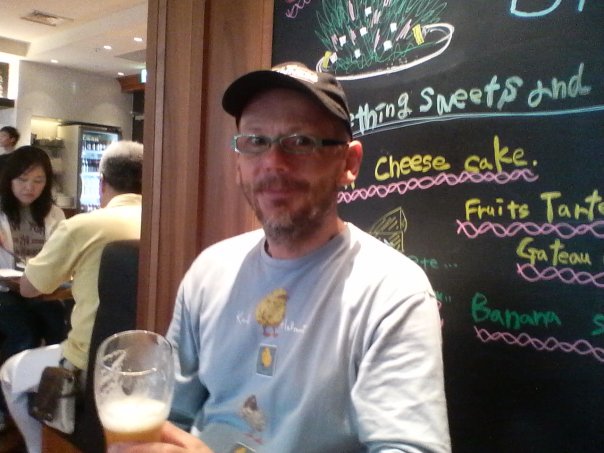
(by MDC)
*
"Consciously or unconsciously, men are proud of their firmness, steadyfastness of purpose, directnes s of aim. They go straight towards their desire, to the achievement of virtue—sometimes of crime—in an uplifti ng persuasion of their firmness. They walk the road of life, the road fenced in by their tastes, prejudices, disdains or enthusiasms, generally honest, invariably stupid, and are proud of never losing their way. If they do stop, it is to look for a moment over the hedges that make them safe, to look at the mist y valleys, at the distant peaks, at cliffs and morasses, at the dark forests and the hazy plains wh e re other human beings grope their days painfully away, stumbling over the bones of the wise, over th e unburied remains of their predecessors who died alone, in gloom or in sunshine, halfway from a n ywh Ere. The man of purpose does not understand and goes on full of contempt. He never loses his way. He knows where he is going and what he wants. Traveling on, he achieves great length without any breadth, and battered, besmirched, and weary, he touches the goal at last; he grasps the reward of his perseverance, of his virtue, of his healthy op timism: an untrueful tombstone over a dark and soon forgotten grave." ('An Outcast of the Islands', by Joseph Conrad).
*
14-18 Jul, 2009: On Sunday, July 12, I took a trial run to Haneda Airport in Tokyo. As was often the case before embarking on any long journey, I was plagued by anxiety and apprehensio N. My journey began with a brisk 15-minute walk to Yotsuya JR Station. Naturally, this was followed by a quick stop at the ticket machine, a breeze through the ticket gate s, and a descent to platform 3. The fare to Haneda was ¥630. As luck would have it, a Sobu Line train bound for Akihabara—the famous electric town—had just pulled in. The platform clock read exactly 09:30. Even though it was the tail end of the morning rush-hour, finding a seat was nearly impossible. At Akihabara, I simply followed the sea of commuters down to the platform for Hamamatsucho Station, w hich was served by both the Yamanote and Keihin-Tohoku lines. The carriage was relatively crowded with people heading to work, but the train arrived at Hamamatsuc ho sooner than expected. Climbing up the concrete steps towards the Tokyo Monorail wasn't too grueling. Finally, the big day arrived: Tuesday, 14 July. This was the day I had designated for my 'big tramp' to commence at Sōya-misaki in Hokkaidō. Upon arriving at the airport, my priority was to check in my heavy backpack. The process was swift. I handed my ticket to the agent, who verified it and returned it along with a boarding pass featurin g my name written in katakana. The ticket displayed my destination: 'WAKKANAI, Flight ANA 573, Seat Number 8H.' I was also handed my baggage claim ticket 'No. 437 713'. Then, clutching the documents tightly against my chest, I made my way towards the departure gate. On my way to the departure lounge, a strange fear that something might go wrong, added to my apprehe Nsion. During the trail run to the airport two days earlier, the shops and restaurants were less busy—or ha lf-full at best. Now, the vacant seats did not stay empty for long. My friend, Riko-san, had accompanied me to the airport to see me off. We sat at a table in 'West Park Cafe' and ordered a glass of Yebisu beer, which cost ¥480. For some reason, there was a 20-percent discount on beer. My friend, who loathed the sight of beer, ordered a cup of coffee. The coffee cost ¥420 yen, with no discount. The coffee came with a free refill, which put a smile on her face. As things turned out, my trip to Haneda two days prior had been a waste of time and money. This was also Riko's second visit to the airport in many days. A second glass of beer was ordered. The time came too soon for me to make my way through the series of gates and checks. At the final gate to the departure lounge, I gave Riko a kiss on the cheek and thanked her for her h Elp. After waving goodbye, I turned and made my way past Gate C for Flight 573 for Wakkanait in HokKaidō. The walk took me along the full length of a concourse to a second gate, Gate 68. To my surprise, two attractive young female staff in uniform met me. My backpack lay on a table, unopened. "Lighter, lighter! No, no!" one of them said. "Mmm! What on earth was this all about? I thought to myself. Her English ability was a bit on the wonky side. Then again, my Japanese was nothing to write home about.
Done
At first, I thought she meant my backpack was too heavy and that I needed to discard a few items, or perhaps see if I could stuff them into my carry-on. The encounter happened so fast that it only fueled my anxiety. Still a little confused about what was happening, I unfastened the backpack, pulled out a few pieces of old clothing, and laid them on the table. No, no, no! Can't, can't, can't!' the other attendant interjected in a firm voice. By this point, the girls looked even more perplexed than I was. What's the issue? I asked. Finally, one of the girls stepped closer to the open bag and pointed to three cigarette lighters bes ide a pair of socks, and a small gas canister wedged next to some folded T-shirts. 'Abunai desu!' she said, her voice raised once more. Actually, I had purchased the lighters and canister a few weeks ago. They informed me that these items were strictly prohibited on board. The loss set me back over ¥1,000, not to mention the hassle of replacing them once I arrived in Hokk Aido. For some reason, they allowed me to keep one lighter, but only after I signed a confiscation form. My discarded belongings were then tossed into a large, clear plastic bin. With the threat of terrorism still a fresh concern in Japan, I didn't take the loss too hard. I chalked the experience up to part of my mission, besides things could have been worse. Because of the terrorist threat, harsh airport 'pat-downs' had become a necessary evil the world over. It often probed into areas of the body where the sun doesn't shine. My bum had not long been planted in seat H8 when a smiling female cabin attendant asked me if I would like to change seats. She may have felt the move would allow more space for me and the young lady in the next seat. A quick glance around a half-empty cabin told me that most of the passengers seemed alone—so move I did. As the flight was short, food was not served. There was an assortment of soft drinks and beverages, from a drink trolleys were pushed along the ai sles by attractive young flight attendants. The coffee I ordered was served in a half-filled paper cup. Thankfully, it included a refill, which was served some minutes later. Another flight attendant came by with a pile of newspapers, all in Japanese. Perhaps because of my facial expression, she returned moments later with two newspapers -- The Japan Times and The Daily Yomiuri. As I was about to take both of them, her eyes montioned to another seat further along the isle. So, I happily settled for the Times. The paper caused me to recall a Filipino friend, Cesar, who had worked at the paper in Tokyo for many years, until his retirement, in the late 1990s. After retirement, Cesar moved back to Manila to be close to his family. And here I was alone, with no family around, on a short flight from Haneda Airport to Wakkanai in Ho kkaidō For much of the flight, today's newspaper (Tuesday, 14 July 2009) lay practically untouched b eside an unopened book I had picked up at a Haneda bookstore. The book, "Modern Japan: A Short Introduction" by Christopher Goto-Jones, cost ¥1,660. Although I was not one to judge a book by its cover, it looked like my cup of tea; almost anything t o do with the past was a topic I could get my mind around in the evenings.
Done
The book was light and not so bulky. The main headlines in the newspaper that day were: "Also sets Aug. 30 poll after metro drubbing", "Democrats may probe secret CIA program", "Alien'wakame' terrorizes California water", and "Kids under 15 can give organs." As I had no idea what the weather would be like tonight, I decided to hang on to the paper. It would be something to place under my mat in the tent for added warmth. One thing that entertained me on the short flight was jotting down the opening sentences for a numbe r of postcards I had promised to mail to several people when the chance allowed. Some of the openings went something like this: "Greetings... As I was about to board my flight at Haneda for Wakkanai in Hokkaidō, I was asked to remove some ite ms deemed dangerous from my backpack. The power of the X-Ray machine can really get under your skin." Another postcard began: "Greetings... The flight time was really too short to even think about going to the toilet." Just before touchdown at Wakkanai Airport, I stuffed the newspaper into my carry-on luggage under my Seat. Regardless, a couple of times I walked to the back of the plane, more to stretch my legs than anythi ng ing else. A couple of times, I peeked out of a tiny window to get some idea of the weather that was awaited me . The sky had a dull, grayish look about it. When the plane touched down and taxied to a stop, any anxiousness and aprehension in me had all but gone. As I was in no particular hurry, I found myself the last off the plane. A large tour group of pensioners waited patiently in the baggage claim area. As I had time on my hands, I saunted across to the public toilets to point Percy at the porcelain. To my dismay, however, two long lines had formed at the entrances of the ladies and the gents. Rather than wait, I retraced my steps. By now the bags were on the move. Five minutes had passed, and still there was no sign of my backpack. So, I headed back across to the gents. This time the lines had disappeared. The gents were so empty there was no one around to even hear a fart. Back at the baggage reclaim area, my eyes caught the tail end of my backpack disappearing down the c hute and out of sight. After a few minutes, it reaped at the far end of the conveyor belt. Soon the backpack was easily retrieved and fastened to my back, so I made for the exit gate. "God!" I mumbled to myself, for the backpack was heavy. My time in Tokyo may have softened me up a little. For a short time, I thought about the gear in the backpack, and what I had decided to leave behind. My backpack and I were about to become quite acquainted on the road over the coming weeks. As I made my way through the arrival lounge, my mind turned to the unnecessary weight I needed to purge from my pack. Nearby, a gathering of pensioners stood with disciplined patience around the luggage reclaim carouse l, waiting for a tour guide who had yet to appear. They had been on their feet for too long, a physical toll that manifested in a low chorus of feable groans, vague murmurs, and hushed, indecipherable whispers. Yet, like stoic soldiers, the majority held their ground in respectful silence.
Done
Some conversed with eyes cast downward, entirely oblivious to the approach of two sharply uniformed Women. The moment the guides arrived, the flags held aloft, the crowd instantly synchronized, forming a nea t qu eue with their trolley cases trailing behind like obedient shadows. They filed through the exit doors in an impeccable, orderly procession. There were so many of them—enough to fill at least two large coaches. I watched them go, thinking how pleasant a lifted ride to the cape would have been. A fleeting, wishful thought. Their itinerary almost certainly included a stop at Sōya-misaki, the northernmost edge of the countr y, but picking up a hitchhiker would violate strict corporate policy. Japan was a society governed inexorably by rules, where little to nothing came without a price, a cu ltural truth that persisted even during the dizzying heights of the bubble economy. These elderly travelers had paid dearly for a seamless, predictable journey, likely costing them a s mall fortune. Outside, the weather was utterly dismal, but I hoped the coming adventure would lift their spirits. For myself, nothing grated on my nerves quite like a plan going awry. Around me, there was only lighthearted chatter and laughter. The other passengers were clearly eager to escape the confines of the airport and set off on their t our of Hokkaido. A couple of them struggled to keep up with the rest. Before long, everyone had filtered outside, filtering out under a heavy, threatening gray sky. Nobody spoke English at the information desk. "Sōya-misaki ikitai desu!" I said, trying to find out if there was a bus heading towards the cape. "Nai desu!" came a sharp, flat refusal. Oh dear, I thought, anxiety instantly tightening in my chest. "Mmm!" This was not what I had planned. I thought. The clerk suggested a taxi, informing me that the fare to the cape would run around ¥10,000, and poi nted towards a taxi rank just outside the terminal entrance. "Taxi mo iidesu-ga... Noritaku nai desu,” I replied. (A taxi might fine, but... I don't want to take one.) I was prepared to walk if I had to, but I didn't plan to start my mission on foot from an airport. Besides, it went against my official plans. Commencing this journey from an airport terminal felt hollow; it carried none of the symbolism of st arting from the northernmost point of the country. Although my Japanese was far from perfect, I liked to think it was good enough to navigate the essen tials. But a ¥10,000 taxi ride was a shockingly steep price to swallow. My one-way flight to Wakkanai had already set me back nearly ¥30,000, and I was fiercely determined to keep a sharp eye on my budget. My anxiety began to creep back in. "Sōya-misaki iki no basu wa arimasu-yone?" I said, grasping for hope. (Surely there's a bus to Sōya-misaki, right?) The young lady behind the desk looked at me. There was a bus, she admitted, but I had just missed it. It was the last one of the day. There wouldn't be another until morning. I felt myself filling up with anxiousness and apprehension again. Oh dear, what was to be done? I asked her in Japanese. She suggested that I take the bus to Wakkanai City, and from there another bus to the cape.
Done
The advice seemed reasonable under the circumstances. So, I politely thanked the young lady and headed for the entrance. There was a bus nearby which was about to leave for the city—a ride that took about 20 minutes. The ticket cost ¥590. A public bus journey in Tokyo cost ¥200, regardless of the distance. Most people drove their own cars to get about, so the public buses were almost empty. The young girl who had sat next to me on the flight now sat across from me on the bus. But only for a few minutes, as I moved to another seat for a better view. In one respect, I was sorry that I moved. She was an attractive girl, clad in plain clothing that was not particularly fashionable. Why she appeared a little troubled, I would never know. Perhaps she was on her way back to her parental home—a retreat from something that had not worked ou t for her in Tokyo. Mmm!" He who fights and runs away, may live to fight another day..." if I may be so bold as to play with O liver Goldsmith's words. Clearly, my imagination had run away with me, a losing battle in itself, for people were such comple x human beings. The bus ride was like the weather: dull and dreary. At last, the bus pulled up outside the Wakkanai Bus Terminal, where I got off. The building had an air of unimportance about it. With my backpack shouldered, I headed in the direction of the lobby to see about a bus to the cape. The time was past three o'clock in the afternoon. There were two buses to the cape, at four-twenty and seven o'clock. The girl behind the counter, who could not speak a word of English, told me that I could take either Bus. So, I bought a ticket for the seven o'clock bus, a privilege that set me back 1,350 yen. The later bus allowed me time for a wee look about Wakkanai before I headed off into the sunset. Wakkanai was the northernmost city on the island in Japan. From Wakkanai on a clear day, the island of Sakhalin, about 43 to 65 kilometers away, depending on w here you stood, can be seen. According to tourist brochures, Hokkaidō was blessed with its own distinct seasons. The abundance of flowers in full bloom during the summer months was a major tourist attraction. The sea urchin from local waters around Wakkanai was believed to be of the highest quality. Among the region's many delicacies were its well-known crabs—Hairy crab in spring, and King crab in Winter. Wakkanai was also famous for its prime steak, although the local cows are a unique Wagyu-Holstein cr oss rather than Black Angus. Milk was another of the area's chief dairy products. Not long after I left the bus terminal to stroll down the road, I decided to stop at a cafe called ' Gino' for something to eat. A stout lady sat behind the counter. "Irasshaimase!" she said as I entered. There was a portly male customer on a stool by the counter. The four tables were neatly covered with blue, pink, and flowery patterned cotton tablecloths. The menu had different sections of food—pizza, spaghetti, sandwiches, and "meal," whatever that means. The menu also had salad, soft drinks, hot and cold drinks, and alcohlic drinks. In the end, I settled on a kind of fried rice from the 'meal' section of the menu.
Done
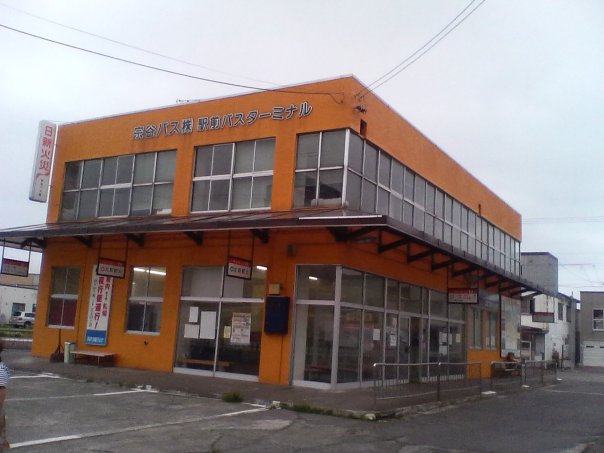
(by MDC)
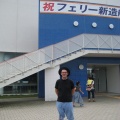
Wakkanai Bus Terminal (July, 2009)
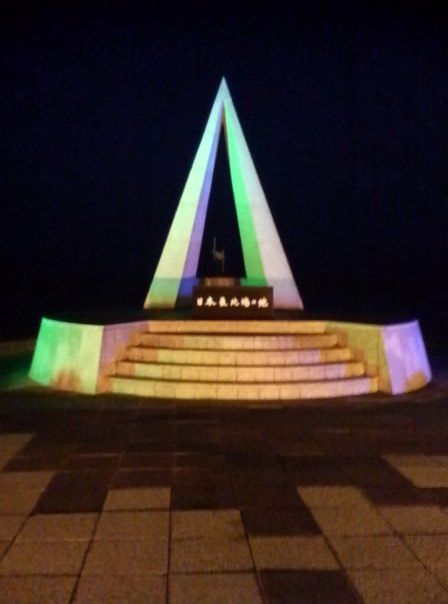
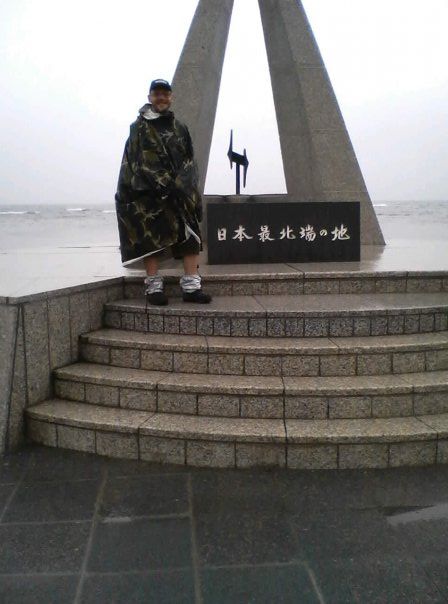
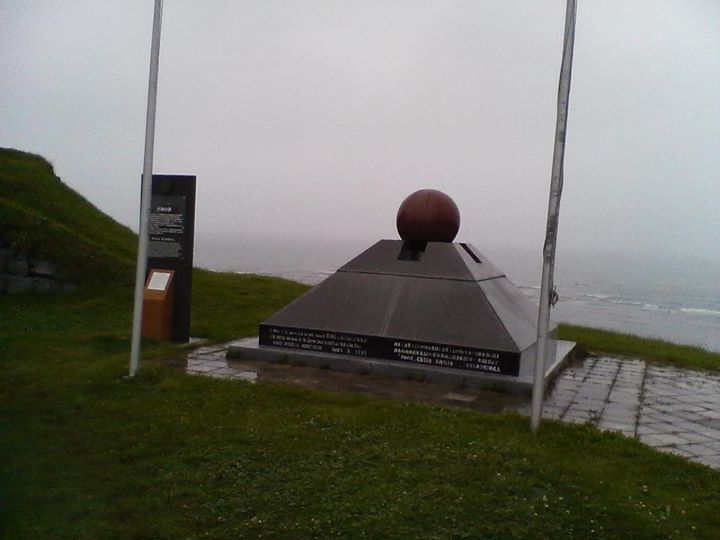
Now, with a little protein in me, I set off to look about the neighboring area of the city. It struck me to see that the road and shop signs were in Japanese and Russian. Wakkanai was a small city, with a population of over 55,000. There were a good number of hotels and inns around the bus terminal area. The dismal layout of the city reminded me of many of the towns in America that I had passed through, donkey's years ago. Like the towns and cities in America, the streets in Wakkanai were wide, with buildings far apart. I didn't know much about architecture, but everything seemed out of proportion. Although the shops were open for business, they seemed to be void of clientele. Many of the buildings and shops had a appearance of neglect. No doubt, the businesses suffered from the collapse of the economic recession. "Mmm!" I thought, as I past the shops. There was a somberness about the streets. The only sign of life were a few people who passed the shops, myself among them -- a tramp that I could not end fast enough. Now I began to regret that I had not taken the earlier bus. Of course, such thoughts were pointless, for the damage was done. My bus was scheduled to leave at seven o'clock sharp. According to the timetable, the bus ride took around 52-minutes, with stops along the way. In due course, my bus arrived, and I got on. The sky above looked dull and overcast, and felt it would rain. My walk about the local streets had ended quickly, more from boredom than not. When I waited for the bus to arrive, a drowsy feeling hit me. An old bicycle-clock I had on me told me the time was 5:55, or early evening. The sky remained unchanged — dull and overcast. The terminal was by no means busy. Many minutes elapsed between the buses that arrived and departed. My last hour at the terminal seemed the longest. To occupy my head, I thought about the chance of rain, and hoped that it would not be too heavy to h inder my mission plans. Or the prospect of having to pitch a tent in a downpour. People who stopped at Wakkanai usually went the extra mile to visit Sōya-misaki (Cape Sōya), the nor tern most point. Someone once told me that Cape Sōya was more like the end of the world than the end of Japan. This might be because of the often-bleak, windswept appearance of the cape. The attractions of interest in the area seemed limited, with little to do but visit the souvenir sho ps or stop at one of the cafes huddled close along the roadside. It was suggested in some tourist leaflets that a 30-minute stop at the cape was more than sufficient To enjoy the experience. For me, to be held up by torential rainfall for any length of time would not only stretch my experie nce at the cape, but my nerves, too. The famous monument was the first thing I saw when I got off at the Sōya-misaki bus stop. The monument was originally built in 1968, and stood 4.53 meters tall to match its latitude — 45 degrees, 31 minutes. In 1988, it was moved 20 meters closer to the sea. The triangular-pyramid monument now stands at about 5.44 meters tall, shaped to symbolize a ray of P olaris, the North Star. Its circular base represented 'peace and cooperation'. According to a tourist leaflet, the 'Japan's Northernmost Point Monument' stood at a point of latitu de of 45 degrees 31 minutes. Another leaflet read that on a sunny day, it was possible to see all the way to Sakhalin in Russia.
Done
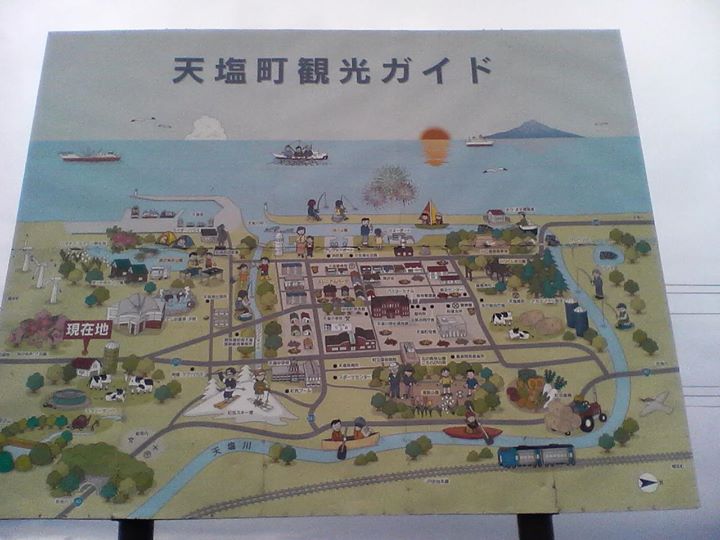
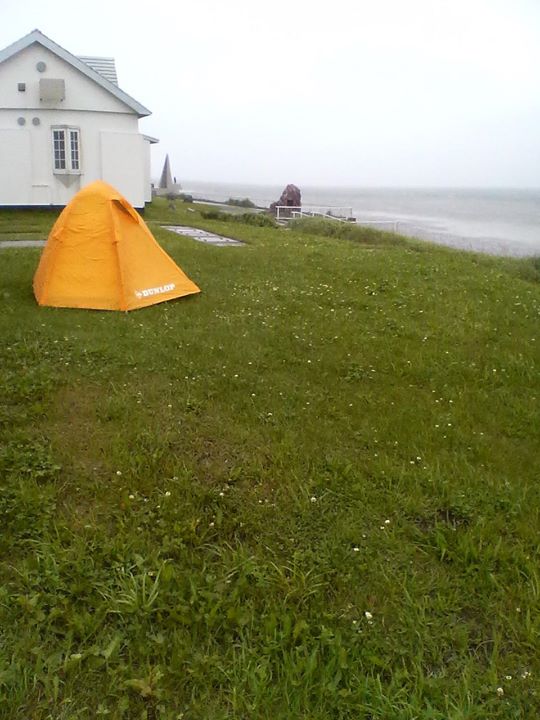
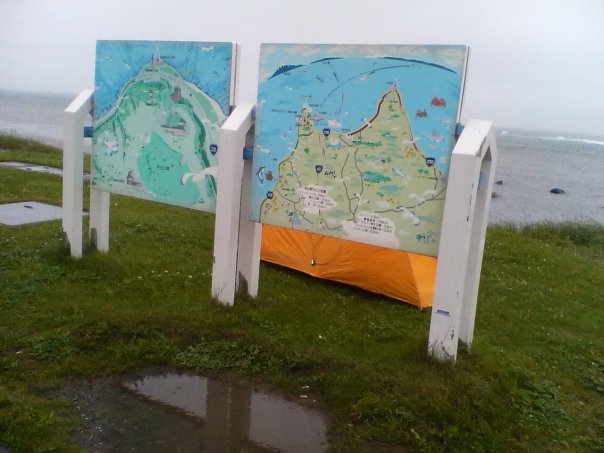
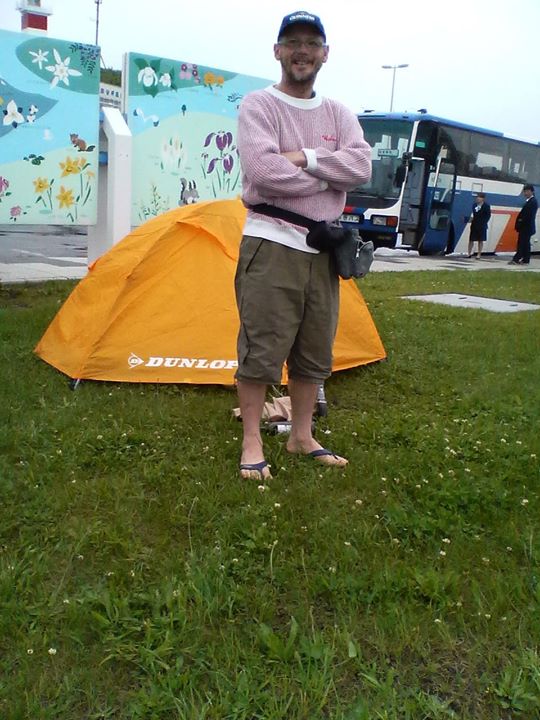
It was the height of the tourist season, when the monument became a popular spot for group snapshots for tour coach passengers. This was the first day of my mission—my tramp around the Land of the Rising Sun on its main and coas tal roads. Before I hit the road properly, I hoped to get a view of the sun rays through the monument arch. Unfortunately, the heavy sky had other plans. A young couple gazed out over the Sōya Strait, when a light drizzle began to fall. (Little did I know that it was a precursor to a heavy downpour that would keep me tied down for the Next four days.) After taking an evening look around this famous monument and its surrounding area, I searched for a suitable spot to pitch my tent for the night. I found a windswept grassy patch beside a tourist map of the northern coastline region, about 15 met ers from the monument, in the cool, damp evening air. Fortunately, the area was well lit, and the task was done in little time. There was a freshwater tap and a well-maintained public toilet nearby. The carpark was home to a large number of campervans. Soon I would spend the first night of my mission, about 50 meters from the seafront. The Sōya Strait remained calm and eerily silent. I wished the rain to stop, so I could look forward to the rest of my foot-journey down along the Coa St. The Ainu name of the island was said to mean 'Grass Island' or 'Black Island.' These disputed Kuril Islands had been occupied by the Soviets since the embers of the Pacific War grew cold, a geopolitical reality the Russian government firmly intended to maintain. (Indeed, just a year later, in 2010, President Dmitry Medvedev would become the first Russian leader to set foot on the islands, sparking a diplomatic uproar in Japan.) Today, Kunashiri remains home to some 7,000 inhabitants. Rich in gold and silver, the Kurils sit anchored in waters teeming with marine life. But that evening, geopolitics felt worlds away. It had been an exhausting day; my mind was too spent to think straight, let alone mentally prepare for the grand trek I hoped to begin the following morning. Instead, the old, familiar ghosts of anxiety and apprehension crept back in. As I lay sheltered inside my tent, a young boy of about twelve walked past. The rain fell cold and relentless, soaking the young fellow to the bone, yet he seemed entirely unfazed. He appeared to be searching for someone or something, but I was simply too drained to engage. As he passed, he called out something through the canvas. He spoke with a thick, heavy accent—perhaps local—and my tired brain failed to grasp his words. Yet, amidst the static of my exhaustion, I managed to catch a mention of Kumamoto, followed by a que stion: was I American? "Hi! America kara kimashita. My reply, of course, could not have been further from the truth. Almost as abruptly as he had appeared, the boy turned and retraced his steps, vanishing back across The wet grass. Once the fog in my mind began to lift, the memory of that brief encounter lingered, tinged with regr Et. He had been such a polite, well-manned child. A quiet guilt washed over me; it felt wrong to have brushed him off so carelessly, leaving him with a lie born only of my own fatigue.
Done
In a way, the young fellow reminded me of my own childhood, long, long ago. Back then, the rain or cold never bothered me as I ran about the wet Belfast streets with my friends . We learned back then that dishonesty leaves a bitter taste in your mouth. For a moment, I told myself that if I saw the boy again, I would put him right—perhaps even give him a wee rundown on my mission. Alas, our paths never crossed again. The rain poured throughout the night, and the wind picked up. Each time I woke up, I worried about the actual strength of the tent. The sides swayed from side to side so much that if the gear and I had not been there, it would have flown away. Although the pegs were hammered firmly into the wet, grassy ground, a few had loosened. Previously, my trusty wee tent had never let me down. Then again, it had not been hit by such winds before. As I was no longer able to drift into the world of sleep, I propped myself up on one elbow and tried to contemplate other sounds besides the wind and rain. But I soon gave up due to more pressing concerns. It was not easy to decide if I should hit the road or wait for the weather to let up. The rain and wind shook the tent fabric continuously. From time to time, the sound of rain was supplanted by a sudden boom of distant thunder.
The sound of the thunder caused my brain to work overtime. "Mmm!" If there was no smoke without fire, I momentarily thought, then surely there was no thunder without Lightning. Lightning was electricity. I knew from my school days that it was the result of strong up-and-down air currents building up in the heavy cumulonimbus clouds. The lightning was the most spectacular part of the storm—a massive spark that ripped open the sky an d birthed the thunder. Although they happened almost simultaneously, the lightning always broke first, outrunning the speed of sound. Crouched there, the 1983 Thin Lizzy album Thunder and Lightning drifted into my head. Phil Lynott, the band's brilliant co-founder, singer, and bassist, would pass away just a few years after its release. I smiled to myself, wondering if the album title drew inspiration from Santa's reindeer, Donner and Blitzen—the Dutch and German words for thunder and lightning. Later, I made an early morning stroll over the saturated grass towards the public toilet, hoping to d o some laundry. My timing could not have been worse. Just as I reached the entrance, a tour coach hissed to a stop. A heavy stream of elderly tourists stepped down, marching straight for the facilities. It was a modest block: two flush toilets, one accessible stall, and four urinals—or 'standup jobs' f or those who need to point Percy at the porcelain, to use the Australian slang. In no time, a desperate queue of elderly men materialized. To make matters worse, the entire place shared a single sink with a lone cold-water tap. Given the highway location, the planners should have anticipated higher volume and installed a few m Ore basins. With my laundry plans thoroughly dashed, I turned back to camp to check over my gear and see what ne eded fixing. Soon, the elderly men began to pop in and out of the toilet in greater numbers.
Done
Done
The women working the floor smiled warmly at every turn—a level of effortless professionalism and ho spitality I rarely, if ever, encountered in my usual Tokyo haunts. I scanned the menu and settled on a steaming bowl of miso ramen. Aside from a couple of vitamins and a scoop of protein powder I had swallowed at dawn, I hadn't eaten n n n n all day. The rich, hot broth and heavy noodles were an absolute salvation. As I ate, the fury of the wind and rain began to ease, tapering off into a fragile quiet. But as I stared out at the glass, I couldn't help but wonder how long the truce would last. If only the sky would finally break, I thought, and let the sun back in. By midday, the tour coaches and cars stopping near the monument had increased. Once again, I thought it was a good time to hit the road—Route 238. Another heavy downpour, however, quickly quashed the idea. Trapped inside, I turned to my postcards and began repeating similar sentences: "I pitched my tent c lose to the monument at Cape Sōya just as the rain began to fall and the wind picked up. Before leaving Tokyo, someone told me that there was no rainy season in Hokkaidō. What was all this rain and wind, then?" A few weeks before setting off on my big tramp, I had bought two packets of fifty plain postcards. This was at a ¥100 store in Saitama, where most items actually cost ¥105 once consumer tax was tacked on. Within the cramped confines of my trusty tent, fueled by the fading belief that the weather would so on improve, writing out these cards helped to less the boredom and keep the old brain active. Staring at the blank paper, my mind drifted to how deeply intertwined writing and isolation have always been. I thought of Ireland, where the population was believed to be fully literate after Christianity arri ved in the fifth century. The earliest recorded Irish writing was penned by lonely monks in the seventh century, working away in quiet scriptoriums. Centuries later, the English language was introduced via the Norman Invasion in the thirteenth centu ry, though Gaelic remained dominant in literature until the nineteenth century. As the use of English grew among Anglo-Irish and Ulster-Scots writers, the eighteenth century eventu ally became celebrated as the great age of letter-writing in Ireland—not unlike what I was trying t o do now. My thoughts then shifted to the history of the script of the land I was currently walking across. Writing came to Japan around the fourth century AD and was widespread by the fifth century. Many of the kanji characters used today originally came from China, later paired with native Japanes e characters called kokuji. Today, modern Japanese writing seamlessly includes forms of hiragana and katakana to delineate natio nal and foreign words. Sitting in the rain at the edge of Hokkaido, copying lines onto cheap Saitama paper, I felt a strange kinship with those ancient writers, using the written word to map out a lonely world, my world. The times had changed, as pen to paper had become a thing of the past. The 1980s were the last time that I had written, and received, letters of substance—letters that car ried the physical weight of the sender's touch across oceans. The times had changed, as pen to paper had become a thing of the past.
Done
The 1980s were the last time that I had written and received, letters of substance—letters that carr ied the physical weight of the sender's touch across oceans. Now, the world moved at the speed of digital friction, but out here on the edge of my world, time felt sluggish and heavy. My tent stood firmly on a patch of resilient, wind-whipped grass high above the asphalt. I was perched precariously between the grey, churning waters of the Sōya Kaikyō—the La Pérouse Strait—and the empty main drag that I hoped to conquer soon. The strait is a primary marine gateway connecting the Nihon Kai to the Sea of Okhotsk. Even by the bleak standards of a northern Japanese maritime climate, the weather was atrocious. The wind tore off the sea in bitter, biting sheets. Yet, like clockwork, the massive, brightly painted tour coaches continued to roll in. They paused just long enough to dispense their victims into the gale. Hooded and shivering, the tourists flocked like lost sheep around the stone monument marking Cape Sōya—Japan's northernmost point. A couple of frantic minutes, a dozen digital snapshots against the gray void, and the visitors scur ied back to the climate-controlled sanctuary of their buses. Within moments, the diesel engines roared, and they left for the next predetermined point of touristy interest, leaving the cape to the wind and to me. Down in the harbor, the local fishing fleet remained tightly moored in the dock, their captains wise ly r efusing to chance fortune on a rough, unforgiving sea. With nowhere to go, I crawled into my sleeping bag. At around two o'clock, just before the phantom hour of afternoon tea, I settled in for a bit of shut Eye. The rhythmic, violent drumming of the nylon tent walls lulled me into a world of vivid dreams for a couple of hours. I have never been a man who can rest easily while traveling; sleep eludes me on trains, planes, or buses. But shut up inside the claustrophobic canvas of a tent, isolated from the world, it was an entirely different matter. I could have slept until dusk, but my bladder argued otherwise. I woke up, unzipped the tent, and ventured across the wet, sponge-like grass towards the concrete public toilet building. This time, my timing was immaculate. The tarmac was empty; no coachloads of tourists were in sight. The silence was a relief. Inside, I stood before the mirror and began to brush my teeth, listening to the plastic bristles aga inst my enamel. Then, the automatic door slid open with a soft hiss. In stepped an attractive young lady. She didn't look like a tourist. She was clad in a pair of spotlessly clean, forest-green overalls, cinched at the waist, and wore a a pair of bright, neon-yellow rubber gloves that went halfway up her forearms. Mmm. It looked like if the opening scene of something decidedly kinky was about to unfold right there in municipal facilities of Hokkaido. Or, at least, that was the absurd, momentary thought that flashed through my starved mind. I quickly glanced up at the fluorescent lights on the ceiling, trying desperately to mask the broad, involuntary smile spreading across my face. Fortunately for my dignity, any perverted thoughts that entertained my brain evaporated in a sharp b urst of reality.
Done
The young woman walked past me, ignored my existence entirely, and unlatched a toilet cubicle door. She swung it open to reveal her afternoon's work: a ceramic toilet basin unapologetically caked in s Hit. This must be the busiest public toilet in Hokkaidō. The time was around two o'clock. On the top part of her overalls hung a tiny, rectangular name tag with her photo. Not a word passed between us as she gave the urinals a once-over with a damp rag. Unperturbed, I turned and said, in my best construed Japanese, "Taihen desu ne?" (Hard work, isn't it?). "Ie, daijobu desu" (No, it's fine), she replied. Later, I was unsure if she had misunderstood my words—referring to the dirty toilet or the bad weath Er. The rain battered against the toilet windows. I realized, with some embarrasssment, that she needed to get on with her work and move on to the nex t job, or the next public toilet. Before I headed back out the door, I asked about tomorrow's weather in the hope she had heard something ing ing ing ing ing ing good on the TV news. "Ashita no tenki wa? "Ashita mo, taihen desu," came a firm but friendly reply. Needless to say, it was the kind of information I didn't want to hear. There was a sign on the path that led past the toilets to the monument which read: 'May Peace Prevail on Earth'. There was little else to do but retrace my steps along the path and over the wet, windswept grass wh ere my tent stood supreme. The wind and rain hammered against the canvas all night long. It was a wonder that I slept at all. When morning came, the sky remained dark and threatening. The wind howled and whistled, as if it wanted to communicate a message: "Go back to where you came f rom, you are not welcome here. Then there was the swash, splash and roar of the waves. I would hate to be out on the sea at this time. By midday, the wind continued to blow hard. The rain splashed into large puddles that had formed in the night near the tent. Thanks to the Shinto god of water, Suijin, the puddles did not seep under the tent. Somehow, I dozed off again. When I finally woke up, I lay in the sleeping bag for some time and listened to the madness of the e lements. It was impossible not to hate the miserable weather. All that I wanted was for the rain just to let up. A glance across the road at the restaurants reminded me that it was almost lunchtime. The tour coaches continued to stop, but only temporarily. Not all the passengers on board cared to brave the rain to get some close-up snapshots of the monument. All in all, there were not many tourists about, with or without umbrellas. It didn't seem like the height of summer. The restaurants and souvenir shops were not busy. Hunger pangs began to hit me once again. Within a few minutes, I was out of the snug, warm confines of the sleeping bag. Then it was into a pair of army shorts, and ready to face the world. With my sturdy little tent zipped up, I headed in the direction of the same restaurant where I ate b reakfast. The heat inside the restaurant welcomed me when I entered. It felt good to leave the damp, cold air outside for a while as the door slid closed behind me. Like this morning, the restaurant was almost void of customers.
Done
An elderly couple occupied a table close to the counter. The counter separated the restaurant space from the kitchen. The window table where I had breakfast this morning was empty, so I sat down. From my window, I had a clear view of the roadside tent. A waitress balanced two steaming bowls of ramen, carrying them over to an elderly couple. The wife must have been famished; she made short work of her noodles. Her husband, by contrast, preferred dividing his attention, engaging in lighthearted banter with the staff as he ate. In fact, I had never seen anyone juggle eating, drinking, and smoking with such synchronized dexteri ty—chopsticks gripped in one hand, while the other alternated seamlessly between a glass of beer and A lit cigarette. Is such a feat even possible? I wondered, watching in quiet amusement. The man spoke in a booming, confident voice, possessing that distinct cadenceof a Japanese boss add ressing his underlings. While the couple spoke with thick regional accents, I hadn't the foggiest idea which corner of Japan they hailed from. "There was nothing to be done about it!" the man bellowed. "Well, it's all in the hands of God, isn't it?" The waitresses erupted into laughter, and his wife smiled along. "It even rained when we passed through here on our honeymoon, all those years ago. Didn't it?" he added, throwing a knowing glance at his partner. "Did it? My, I can't remember a thing!" At this, the entire place burst into shared laughter, the husband laughing loudest of all. Her playful dismissal brought a smile to my face. His boisterous philosophy was clearly fueled by alcohol; a small porcelain flask of warm sake soon f ollowed the beer, which he dispatched with effortless ease. Being in no mood for socialization myself, I kept my eyes lowered, doing my best to avoid eye contact. The man continued to chain-smoke, leaving a heavy, nostalgic aroma lingering in the air long after t heir bowls were emptied and the table was cleared. The couple continued not to take much notice of me. This was just as well, as I was still in no mood to be drawn into a conversation. Something told me that I would regret it later. In way, it was good that I had bought a book at Haneda, even if at the present time, I was in no m o od to turn a page. I might even have headed back to the tent if the restaurant was completely empty. So, I guess a part of me was happy to see a little life and laughter about the place. After a while, I stood up and made my way past some tables to the toilet. A glance through the window told me that things were good with the tent. "Don't worry! It is still there," the elderly man said, in Japanese, with a smile. Everyone looked at me, then at the tent, and then at me again. "Oh! Good! Thank you!" I replied, in Japanese, with a smile. "Mmm!" As I passed their table, I wondered if they felt sorry for me. Then, I smiled at the waitresses and ordered a second bottle of beer. When I ate a bowl of shio ramen earlier, it was washed down with a bottle of Sapporo—a beer that I h ad recently grown accustomed to. So, I was a little disappointed to find a bottle of Asahi Super Dry on the table when I returned.
Done
Japan was historically more a producer of sake, or rice wine, than noted for its beers. Beer first arrived in Japan during the Tokugawa period. Around that time, a beer hall had been opened for Dutch sailors. Later, artisans from Germany arrived in the country to introduce ways to brew beer. Today, beer is the most popular alcoholic drink in Japan. According to 2006 statistics, about nine billion liters of alcoholic beverages were consumed in Japan, dominated by the major brewers: Asahi, Kirin, Sapporo, and Suntory. There were also many smaller local breweries across the country, each boasting its own distinct taste. In recent years, a less expensive, beer-like, low-malt drink called happōshu had grown in popularity. Looking up from these thoughts, I noticed the \\man was on his cellphone when I returned from the toilet. From the loud tone of his voice, I surmised it was a family member on the line. He said that he was happy to see many Harley-Davidson motorcycles and camper vans on the road today, adding that torrential rain was not much fun for the riders. Being stuckn a tiny tent for three days was not much fun either. The rain beat against the window so heavily that I could hardly see my own tent outside. Such was the beautiful wickedness of nature; it had literally made me its prisoner. Worse still, I had not the foggiest notion of how long my sentence would last. Lost time had not been factored into my plans. Eventually, the elderly couple got to their feet to leave the restaurant. The bill was soon paid, accompanied by hearty waves of farewell and salutations uttered from all directions. The couple made their way past the sliding door and into the heavy rain in high spirits. An elderly cook, who had just emerged from the kitchen, confirmed what a young waitress had told me earlier—more rain tomorrow. Later, a short let-up in the rain gave me a chance to look around the area. The houses and businesses were spread some distance apart. The space between the buildings reminded me of the many remote towns I had visited in America years earlier. Any positive upturn in the weather could not have come sooner; hopefully, I could break camp and hit the road properly. Yet a part of me feared the heavy rain would start up again at any minute. Needless to say, I could not have been better rested, having enjoyed a plenitude of nutrition from the local restaurants. Another part of me was even prepared to tramp through the night just to make up lost ground. Just as I was about to break camp, however, the weather changed again. The drizzle was a mere precursor to a series of heavy downpours that lasted for the remainder of the day. The rain dictated exactly where my head would lay for a second night—on that windswept, grassy spot on Cape Sōya (Sōya-misaki). When morning came, I woke up to the same dismal sound of rain drumming against the sides of the tent. The day became one of momentary let-ups. At such times, birds could be heard. This northern area was home to a wide variety of wildlife; Hokkaidō at large is home to countless species of birds, alpine wildflowers, coastal sand dunes, marshlands, rugged sea cliffs, and high mountain peaks.
Done
The region was also famous for the Wakkanai Dog-Sled Race—the biggest dog-sled competition in Japan, featuring events for kids. Back inside the restaurant, the staff told me that the weather was not expected to improve anytime soon—not the kind of news I wanted to hear. It made me think of yesterday, when breakfast had consisted of a hot bowl of ramen. Today's meal followed along similar lines, but this time with two bottles of Sapporo to wash the food down. It was a nice surprise to notice pictures on the wall of other dishes I had failed to see on earlier visits. They included "curry rice," as the Japanese called it, and chahan, a plate of fried rice. By now, noodles were coming out of my ears, so this time I settled on a bowl of chahan. The friendliness of the staff made the food taste all the more delicious. Each time I ate, the elderly female proprietor placed a mug of hot coffee on the table. "Dōzo, dōzo! Soto wa samui desu" (Please, please! It's cold outside), she would say—as if I didn't know. More than two decades earlier, I had cycled around the island of Hokkaidō. Back then, I recalled, the people did not seem so friendly. At the time, there was a massive rift between the Japanese and American governments over whaling, and Japanese whaling ships could not leave the docks. Whale hunting had been a pillar of the local economy for centuries, and many of the people I came into contact with during that trip seemed deeply unhappy. Japan had remained steadily protective of its right to hunt whales for commercial—and later, scientific—purposes, facing fierce condemnation from the International Whaling Commission (IWC) and various foreign governments for overexploitation. Though the IWC had passed a moratorium in 1986, it was by 1988 that commercial whaling operations officially ground to a halt under intense economic pressure from the United States. Because of these deep cultural and political differences, it was nearly impossible for a foreigner to get a room at an inn in Hokkaidō that year. I vividly remembered one incident when a middle-aged female proprietor at a minshuku (inn) watched me walk up the long path, only to slam the sliding door shut right as I drew near. Not a single word was uttered. When my ferry finally pulled away from its moorings back then, heading out to sea bound for Tokyo, I had clasped my hands to my lips and yelled at the top of my voice: "I'll never return to this hole of a place again!" Little did I know at the time that I would one day return to Hokkaidō to begin my mission. Back in the present, a sudden let-up in the rain gave me a chance to wash a few clothes, though any hope I had of airing them dry was short-lived. At a souvenir shop about 100 meters from my tent, I bought a small bell for ¥840. The bell was similar in shape and size to one I had picked up in Tokyo, though the quality wasn't quite as good. Still, I liked the colorful printed picture on the side: "Japan's Northernmost Point Monument." It added a sense of significance to the token. "Mmm," I muttered to myself. I wondered if it would really keep the bears away. A few people back in Tokyo had warned me about the brown bears of Hokkaidō.
Done
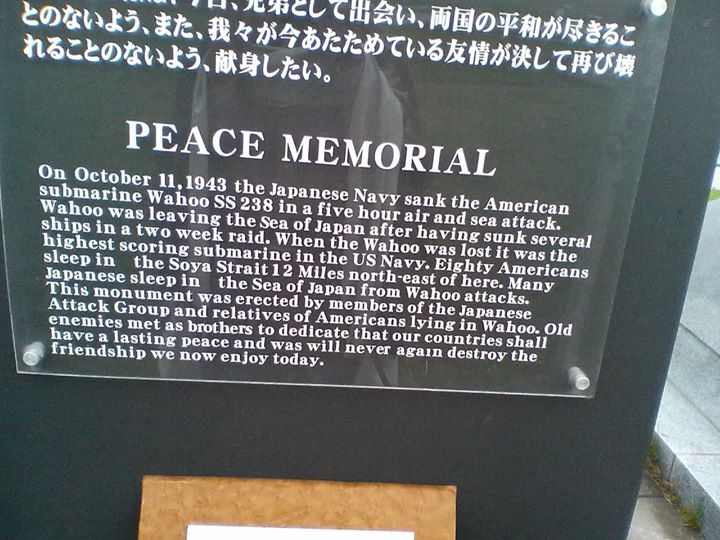
Bears were usually found in mountainous areas. In recent times, however, a number of them had been spotted in the lowlands and countryside in search of food, both prior to and right after hibernation. Manmade encroachment into these mountainous zones didn't help either; due to land development and indiscriminate hunting, the bears' natural habitat had been greatly diminished. On the western side of the Shiretoko Peninsula, dozens of brown bear sightings had been reported. Visitors to the Shiretoko Goko Lakes between May and July—a time when the bears became highly active—were advised to join guided groups. Though tourism peaked from August to October, the lakes had been designated a UNESCO World Natural Heritage site back in 2005. Brief safety courses were available for a fee, teaching visitors exactly what to do should they encounter a bear. Of course, I hoped the sound of my wee bell would be more than enough to make a bear leg it. In my case, an encounter could prove fatal to my entire journey. To quote a poster in the souvenir shop window where I bought the token: "The higuma is the most fierce wild animal in Hokkaidō." The life of a bear depended entirely on luck and where it lived; under healthy circumstances, they could live to the ripe old age of 30. Only a few, however, ever died of natural causes. Danger lurked in many places along the road for bears and humans alike. High on the hills overlooking the main drag of Route 238 stood a large Peace Monument—coincidentally sharing the same hull number as the famous American submarine, the USS Wahoo (SS-238). The road skirted along the coastline past the cape, stretching in the direction of Wakkanai City, where I hoped to tramp through sooner rather than later. According to history, on October 11, 1943, the Japanese sank the Wahoo, a Gato-class sub that became one of the most famous vessels in the Pacific War. Prior to its operations in Japanese waters, the Wahoo had single-handedly destroyed a convoy of four Japanese ships near Papua New Guinea. It was also one of the first US submarines to enter the Nihon Kai (Sea of Japan) in 1943. Later, the Wahoo attempted to exit through the Sōya Strait after sinking several ships in a matter of hours. On the day of her fatal voyage, she was the most successful submarine in the American Navy. The sub and her crew of 80 now rest in the Sōya Strait, roughly 19 kilometers northeast of the monument. The surrounding waters also became the final resting place for the crews of the Japanese ships sunk by the Wahoo. A memorial to the submarine and all the lives lost was jointly erected by the families of the Wahoo crew and surviving members of the Japanese attack groups. An inscription on the monument reads: "Old enemies met as brothers to dedicate that our countries should have a lasting peace and will never again destroy the friendship we now enjoy today." Once again, it fascinated me to note that Route 238 shared its number with that 95-meter-long submarine. Gato-class subs were equipped for long missions of up to 10,000 miles, carrying crews of up to 80 men. By the time the war ended, a total of 52 American submarines had been lost.
(by MDC)
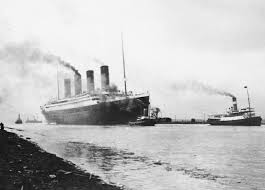
Out on the asphalt, the tour coaches continued to pull up to the cape. After the tourists snapped their quick photos at the monument marking Japan's northernmost point, a few of them made a curious detour right past my tent. Among them was a pleasant elderly chap who stopped to chat. He was on a tour of Hokkaidō all the way from Tokyo. He told me that his wife had died a little while back, and that this was his first time traveling anywhere without her. His group had just got off one of the coaches. All day long, those tour buses pulled up near my tent. The visitors seemed keen to get their snapshots of the monument, and often a few stopped to chat, subjecting me to the usual gauntlet of who-what-when-why-where questions; and a host of other queries, too. All in all, I welcomed their interest and had grown well accustomed to the questions. In this case, there was something so gentle and honest about the elderly man. Our little encounter left me with a guilty feeling when he left to rejoin the others on the coach. He had asked me where I was from, and I had replied, "New York." I wasn't quite sure why New York had entered my mind. I had spent nearly a yeasr in the Big Apple, in the late 1970s. It was there that the seeds of travel had first begun to grow in me. It had been my first giant step away from my roots. Back then, the blockbusters 'Star Wars' and 'Saturday Night Fever' dominated the cinemas. However, I never bothered my arse to watch either—a rule that has lasted to this day. The man had wanted to take a photo of me next to the tent, but just then it started to rain. Mmm. I wondered how the Japanese adventurer Mamiya Rinzō (1775–1844) felt on the eve of his great adventure. He had explored the northern islands and mapped Karafuto Island, now called Sakhalin. A funny feeling told me that Rinzō would not have waited for the rain to stop. The miserable weather showed no signs of letting up, and I loathed the possibility that I might need to pack up camp in the downpour. If it came to that, then it had to be done; I had hung around here long enough. The weather could be so unpredictable, playing tricks on my mind. I even worried that I might never get off the cape—that I’d lose my heart entirely and just return to Tokyo. As the rain continued to bucket down, boredom began to set in. To break the monotony, I sauntered over to the monument for the umpteenth time. The path led me past two large stones flanking another marker—a musical monument that played the 1976 hit ballad "Sōya-misaki." Mmm. The monument caused me to wonder if the northernmost point in Ireland—Banba's Crown at the tip of Malin Head in County Donegal—had a musical monument of its own. Why not? Ireland was just as famous for its music and poetry, among other things. And what about Cape Sata in Kyushu, the southernmost point of mainland Japan? Brow Head in County Cork was the southernmost point in Ireland, situated not terribly far from where the RMS Titanic had made her final tragic port of call. Just a short distance away, a cyclist stood by his bicycle, silently gazing out over the grey sea.
Done
The cyclist appeared completely drenched by the rain. Mmm. A penny for your thoughts, I mumbled to myself. At first, I thought he was a foreign traveler, but he told me he was Japanese. He was on a cycling trip around much of the country, utilizing the ferries whenever necessary. He told me he had disembarked from the ferry at Otaru just two days ago. He appeared to be a strong-minded, independent fellow—essential attributes for life on the road. I was not sure what the difference was between "strong-minded" and "hard-headed," or which of the two adjectives best suited me. Still, we shared a number of similarities, a deep love for the outdoors among them. We stood and chatted in the heavy rain for about thirty minutes, soaked to the bone. He was clad in knee-length trousers, a dirty white T-shirt, and a pair of brightly colored cycling shoes. The torrential downpour didn't seem to bother him in the slightest, which caused me to feel a little ashamed. When I had first left Tokyo to embark on my foot-mission around Japan, I was in incredibly high spirits. So, what had happened to that great explorer in me? The cyclist possessed a joyful mood that I deeply admired. Normally, I was a cheerful, positive-minded man, but the weather had finally gotten the better of me. I was happy to snap a quick photo of him to place among my collection for future reflection. Our encounter was short, for he still had many kilometers to pedal through the rain before stopping for the night. "The road was calling me," he said. As a keen long-distance cyclist myself, I understood that "call" perfectly. What I needed was a little bit of his gung-ho character to rub off on me. The usual salutations were uttered, and then he headed south along the main drag, tracing the Okhotsk Sea coastline for a good distance. When I walked back to my tent, a thousand thoughts raced through my head. The short encounter had reawakened my usual optimism. No longer did I feel bored or depressed; the cyclist's jovial character had rubbed off on me after all. Nearby, the groups of tourists also appeared boisterous, entirely unperturbed by the rain. One group even sat right down on the wet benches under the pouring skies just to get their group photo. The coaches continued to arrive, and countless photos were taken in front of the monument. Some of the people at the front held a long, narrow board displaying the name of their tour group, gripping it tightly for fear the wind would blow it away. Most of the tourists stood patiently behind the benches and waited. "Say cheese!" the cameraman called out. Everybody smiled, and then it was a mad dash back to the coach. Every single tour group posed in front of the northernmost monument for their official photos, though most groups didn't bother using the wet benches. Occasionally, the benches were moved entirely out of the way, depending on the angle the cameraman wanted to get. Each time, the tour guides and coach drivers would stand proudly at the sides of their groups, a sign proudly displayed at the front proclaiming their assigned group name. The moment the photos were snapped, everyone rushed across the road to the souvenir shops—that was, if they hadn't stopped there already.
Done
The coaches never stayed for very long, so everyone always seemed to be in a frantic hurry. In no time at all, it was off to the next place of interest. All in all, I had long been an advocate of that frivolous preoccupation: watching people go by, unnoticed by them. My favorite pastime, however, didn't feel quite the same here at the cape as it did in other places. The various groups of tourists all seemed to share one thing in common: I was the one being watched. As they hurried past my tent, a few would pause to snap a photo before moving on toward the souvenir shops. Others did the exact same on their way back to their tour buses or cars. This was my fourth visit to the restaurant. I ordered a donburi bowl—savory beef and vegetables simmered with egg over rice—and washed it down with two 500-milliliter cans of Sapporo. The kindness of the staff here was beyond measure. I finished the meal quickly, then sat back to enjoy the second beer, which nicely oiled the gears of my mind. For a while, my thoughts flowed effortlessly onto the pages of my notebook. Without warning, the elderly cook approached and placed a plate of sliced, juicy, bright red tomatoes on my table. “Dozo! Dozo!” she smiled. “Ah! Arigato gozaimasu,” I replied. Earlier that morning, when I was having chahan for breakfast at the same spot, one of the waitresses had surprised me with a hot cup of coffee on the house. It went down beautifully against the chill outside. Another waitress asked if I was freezing in the tent at night. “No! Not at all,” I lied in Japanese. “Honto, atatakai desu.” In truth, the weather was nowhere near summer-like, and my sleeping bag was meant for much warmer nights. I lost count of how many times I woke up in the dead of night, shivering to the howling wind and driving rain, sometimes literally holding onto the tent walls just to keep the whole thing from collapsing. But all things run their course, including three days of miserable weather on Cape Sōya. I told the owner I was hitting the road for Wakkanai in the morning, rain or shine, drenched gear and all. Looking out the window, the rain continued to bucket down, bouncing violently off the dark asphalt with no sign of stopping. The relentless drumming of the storm made my resolve begin to sink. The thought of calling it quits and retreating to the comforts of my Tokyo apartment crossed my mind—if only to take the blunt edge off the embarrassment of giving up. It was no use feeling sorry for myself or nursing grievances. 'The lady's not for turning,' as the British Prime Minister famously put it at the 1980 Conservative Party Conference. Thankfully, the breaks in the rain were lasting longer now—a welcome sign that things were finally looking up. It was about time I started acting like a true adventurer and left my mark on the world. I asked what time the restaurant opened in the morning. Shichi-ji desu,' the waitress replied. 'OK, good! I'll stop by early, hopefully with my pack on.'
'Dozo! Dozo! Watashitachi wa machimasu,' she smiled. Please! Please! We’ll be waiting. Though I knew next to nothing about business, the restaurant seemed to occupy a prime piece of real estate.
Done
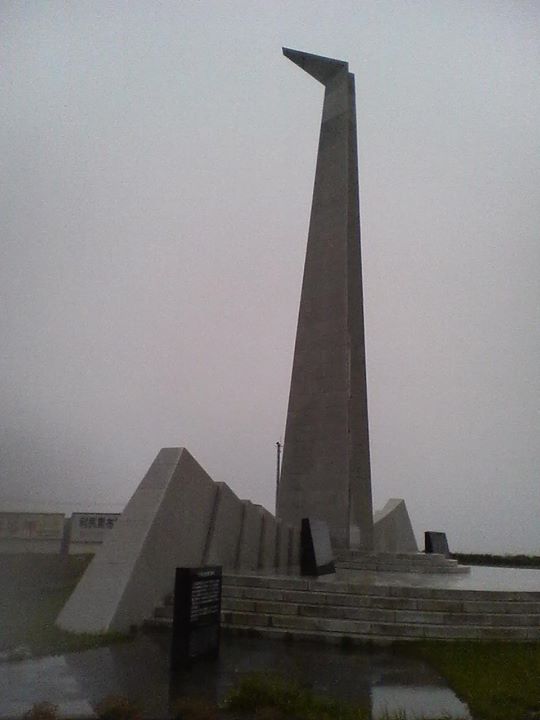
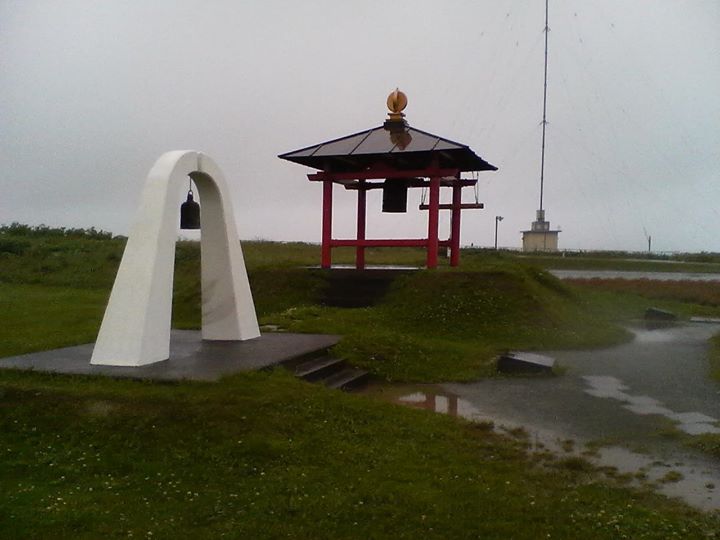
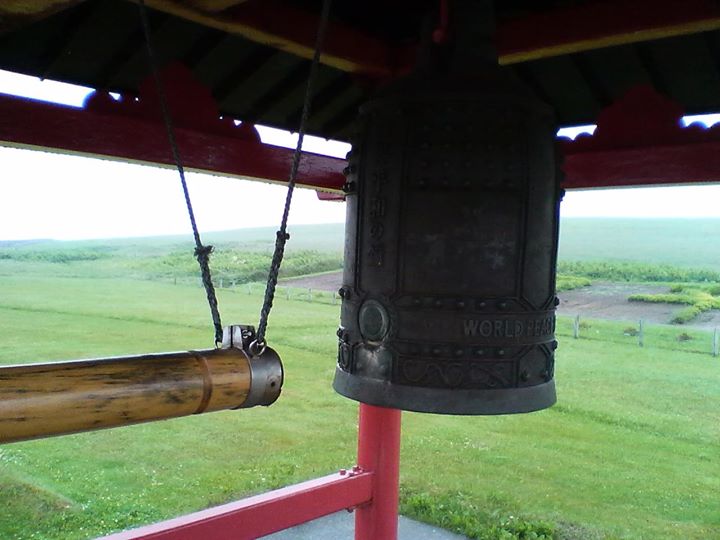
They say 'location, location, location' are the three most important words in property, but what I would remember most fondly about my time at the cape was the sheer kindness of the staff. Their warmth completely won me over. I could only surmise that the wretched weather had kept other tourists at bay. This marked my final day on Sōya-misaki—at least until I completed my mission somewhere down the line. After a final breakfast of chahan, I took a brisk walk to limber up the old bones before hitting the road in earnest. My path took me to the crest of the hill overlooking the stark coastline, an area heavy with emotion and history. The concrete shell of an old Imperial naval lookout post still stood there, a grim relic of Japan's militaristic past, though its interior was closed to the public. Just across from the bunker hung a large bell bearing the inscription: 'Peace Bell.' I paused a moment to ring it, the sound trailing off into the wind. Nearby stood a towering monument pointing like a needle into the sky. It was dedicated to the 269 passengers and crew of the ill-fated Korean Airliner Flight 007, shot down by a Soviet fighter jet in 1983. The plane had plunged into the Sea of Okhotsk, leaving behind a wake of conspiracy theories and unanswered questions. Even after the secret recovery of the flight recorders was finally disclosed years later, the tragedy felt shrouded in mystery. I walked up to the plaque listing the victims from sixteen different nations. One name leapt out, sending a sudden shiver straight up my spine: Susan Campbell. 'Fucking hell,' I whispered to the wind. My mind raced, wondering if it could truly be the Susan Campbell—the young New Zealand woman who used to sneak sandwiches out to me from her hotel along the Sinai Peninsula. That was back in the late 1970s, during my days hitchhiking from Eilat down to Ras Muhammad at the southernmost tip of the Sinai Desert. The world suddenly felt terrifyingly small. The Sinai boasted a sixth-century monastery, St. Catherine's, and Mount Sinai itself—perhaps more renowned nowadays for its sunrise views than its Biblical significance. Coincidentally, St. Catherine’s was also the name of the road in Belfast where I spent the first ten years of my life. A happy time. I paused momentarily, wondering if that childhood road had taken its name from the monastery or from the saint herself, whose martyrdom is forever marked by the spinning fireworks we call 'Catherine Wheels.' Back when I first met Susan, my tent was pitched just a short distance from the hotel where she spent her summer working. It was the late 1970s, and I was hitchhiking through the Middle East, living largely like a desert rat—scavenging for food and water wherever they could be found. Susan had been a schoolteacher in Wellington before deciding to take a long break to see the world. During our two weeks together, we loved tramping through the surrounding hills, a time when our friendship truly deepened. Then came the day for our sad goodbyes. Our plan was to reunite in London, where she hoped to find work. In those days before computers and smartphones, when communication meant static-filled phone calls or handwritten letters, Susan told me she would leave a message for me at the New Zealand embassy. That was the plan.
Done
My lust for the road was an insatiable thing; I didn't return to London for another ten years. Even when I found myself in Christchurch a couple of years after the Sinai, my attempts to track Susan down came to nothing. Our paths simply never crossed again. Today, the most enduring connection I have to New Zealand is that single word I still favor in my road notes: 'tramping.' To me, it is the ultimate word of words—surpassing backpacking, hiking, hill walking, rambling, or trekking, and such like. A T-shirt displayed in a souvenir shop window broke my reverie. It featured a few facts about the brown bear, an animal I'd long had a personal interest in. As the largest land mammal in Japan, these bears had recently been spotted venturing close to local towns. Curious, I stepped inside to browse the shelves, hoping also to find a gift for my daughter, Anna, back in Tokyo, and mail it out before leaving the cape. One shirt I picked up bore a civic-minded slogan: 'Cut it out if it's bad for nature. We should do something good for the next generation.' But it was a different shirt that caught my eye: a medium, jet-black T-shirt featuring a striking pair of vicious-looking eyes and a row of frightfully sharp teeth. For some reason, looking at the features made a vision of my father's wife, Kay, flash instantly into my mind. It was a dark memory, the kind of psychological weight that likely accelerated my drift toward atheism. Though my father and Kay came from strict Roman Catholic stock, they rarely attended mass. Yet the mental apparition of Kay felt terrifyingly close in that moment, so sharp that I thought I could hear her angry voice echoing in my ears. None of my siblings ever truly escaped that woman's wrath. The old English proverb, 'Children should be seen and not heard,' was one of her personal favorites. Kay was born and bred in Belfast, like everyone else in my world back then. Yet she possessed distinct Anglophile tendencies, carrying herself more like the daughter of a devout Irish Protestant family. I once overheard her telling someone how much she detested the Belfast dialect, claiming it sounded ugly. She was a hard, cold woman; I don’t believe she possessed a single charitable or humanitarian vein in her entire body. What I remember most vividly was her obsession with expensive jewelry. Gold trinkets, gold-coin bracelets, and heavy gemstone rings constantly adorned her neck, wrists, and fingers. As my brother Paul used to say, 'You heard her before you saw her.' In a way, she was a fierce believer in self-improvement—strictly her own. The six miserable years I spent living with Dad and Kay were no bed of roses. It’s telling that an exact anagram for 'mother-in-law' happens to spell 'woman Hitler.' But on that day, bears mattered more than ghosts. The graphic on the black T-shirt featured two wide, staring eyes and a row of jagged teeth belonging to the Hokkaido Ezo brown bear—the most lethal predator in Japan. I spent my final hours on the cape holed up in my tent, penning a stack of postcards. I wanted them in the mail before I officially hit the road.
Done
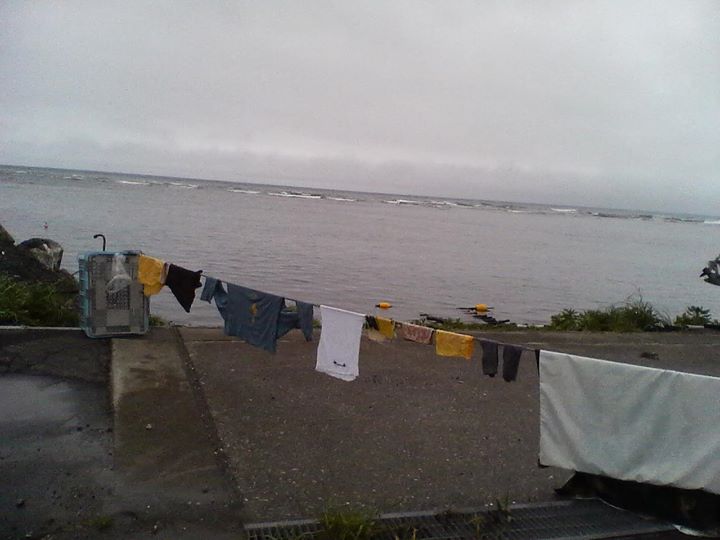
Most of them opened with the same explanation: 'When I landed at the airport on Tuesday, July 14th, there was no direct bus to Cape Sōya where my big tramp was supposed to begin. Instead, I had to take a bus into Wakkanai City and transfer to a local route out to the cape. The delay made the hair on the back of my neck stand up—the transfer alone took an hour. By the time I finally pitched my tent, the rain had started and the wind was kicking up. Two days later, on July 16th, I tried to do some laundry, but the downpour returned. Someone told me Hokkaido doesn't have a rainy season. If that’s true, what the hell have I been sitting in since I got here? Rain or shine, I’m starting my big tramp tomorrow, July 17th.' I wondered what had happened to the boundless optimism I’d carried out of Tokyo. My initial gung-ho spirit had dwindled to sporadic bursts of enthusiasm, but the urge to finally pull my finger out was gaining strength. Suddenly, determination flooded my veins again. I was resolved to make a break for it, once and for all. I had grown thoroughly restless—both with my own stagnation and with the fact that I’d become a local tourist novelty. People couldn't seem to pass my tent without pointing a camera at me. It was the perfect cue for action, regardless of the elements. The wretched weather had tested my resolve, making me wonder what kind of tramper I might have been under fairer skies. They say the first step is always the hardest, but a sudden wave of euphoria washed through my brain. I felt as though some massive, unstoppable force was about to sweep me up and propel me forward. Part of me feared it was just wishful thinking, but the coming hours would prove it one way or the other. Soon, it would be time to put my money where my mouth was. With the writing done, all I needed now was to get stamps. The rain had finally ceased, but I wondered for how long. A dry wind prompted me to wash a few clothes and hang them across a nearby rope, ignoring a Japanese sign that read 'keep out.' Across the water, the fishing boats that had been moored last night were already gone. I had heard their noisy outboard engines in the dark, early hours. Ironically, that steady, mechanical put-put-put was far less grating than the relentless drumming of the rain on previous days. The prior evening had brought one of the heaviest downpours yet, though the light drizzle that followed ultimately came to nothing. Now, at long last, it was time to tear down my canvas home and uproot it from its grassy foundation. Through days of mist and rain, this tiny plot of land had overlooked the grey expanse of the Sea of Okhotsk. My laundry fluttered briskly in the breeze, though it would be quite some time before any of it was dry enough to wear. I made one final stop at the small noodle restaurant that had become my sanctuary over the last few days. 'A bit of fuel in me wouldn't hurt,' I muttered, stepping across the road. I wasn't particularly hungry, but with no idea when I’d eat next or how long the trek to Wakkanai City would take, skipping a meal was a luxury I couldn't afford. A bowl of chahan would do the trick, providing the necessary calories to set me comfortably on my way.
Done
(by MDC)
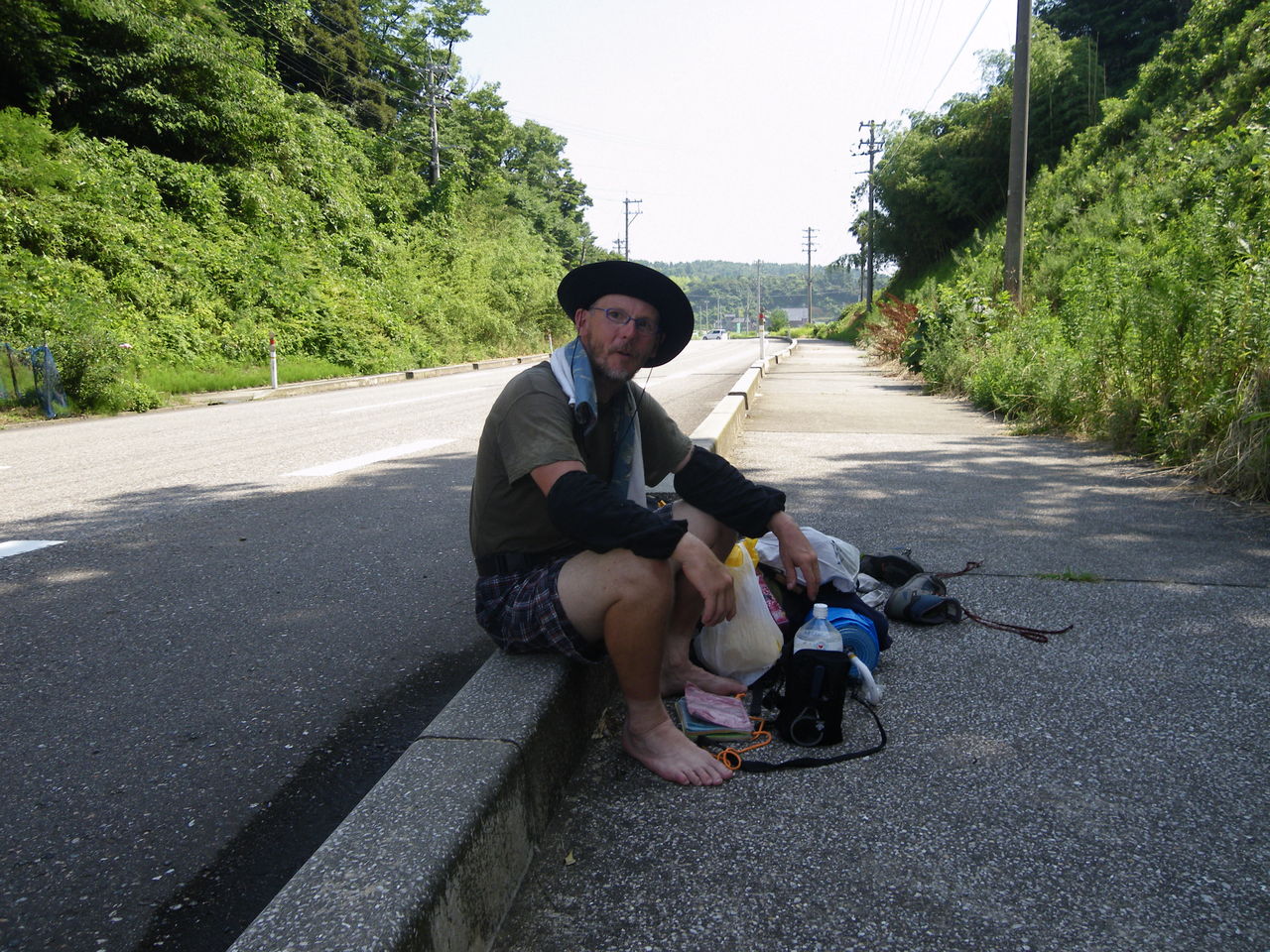
As I waited for the food, the elderly cook kindly placed a steaming cup of hot coffee on the table. Life on the road required a fair amount of pen-pushing; my days were punctuated by the constant scratching of a pen in my notebook and the steady production of postcards. The final batch was now finished, lined up on the table and ready for the mail. Each carried a variation of the same parting words. Looking out the window from where I sat, I could see a red postbox standing just a short distance away. With luck, the cards would be en route by afternoon. On the eve of pulling up stakes and leaving Cape Sōya behind, I had written a final note and sealed it inside an empty wine bottle—the last drops of the cheap vintage that had kept me company through the stormy nights having been drained in the hours earlier. I planned to bury it near the tent site just before sunrise to lessen the chance of being spotted by lingering eyes. The message left to the earth read: July 17, 2009. Greetings fellow travelers: I camped right next to the spot where you found this bottle. My name is Michael Denis Crossey—an Irishman, from Belfast at birth, but an Internationalist at heart. You are welcome to try and find me. Sincerely, Michael Crossey.' By Friday morning, the weather finally broke. A glimpse of weak, subdued sunlight signaled that this was my chance to hit the road. A chilly wind bit at my face as I dismantled my damp gear. If my laundry possessed a mind of its own, I’m sure it would have forgiven me; I simply couldn't afford to wait any longer for it to dry. The rain had had its way with me for long enough. It turned out to be a spectacular day for tramping. Brilliant morning sunshine occasionally ducked behind fluffy clouds, roadside wildflowers were in full bloom, and a sweet, briny breeze rolled off the sea. The surrounding landscape still wore a drenched, monochromatic gray, and the tarmac was dotted with deep puddles. Mmm, I muttered to myself, stepping carefully to keep my pristine new walking boots from getting soaked. It felt entirely surreal—this was, after all, the absolute height of summer. My stride took me through the gravel carpark and straight onto the main drag, Route 238. My mammoth trek along the coastal highways of the Land of the Rising Sun was officially underway. My first target was Wakkanai City, where I had caught the local bus out to the cape three days prior. It felt slightly absurd to be walking right back toward my starting point, but I had no intention of lingering there. Looking at my maps, only a few major towns lay ahead on this stretch—Rumoi and Otaru—with vast expanses of nothingness in between. Route 238 was to be my sole companion for the next 35 kilometers. I hoped to cover that distance before nightfall. I desperately needed a win; up to this point, a cloud of misfortune had hung over the entire endeavor. My headspace was a volatile mix of lingering frustration and nervous excitement as I cast a final, heavy gaze around the cape. This was the genesis of a mission that had been swelling inside me for years. The seeds had been planted long ago by Alan Booth’s The Roads to Sata—in my opinion, the finest of his works.
Done
Yet Booth’s legendary walk from Cape Sōya to Cape Sata was only half the story. My ambition was to hug the coastline as tightly as possible, traversing the roads that trace the physical contours of the Japanese archipelago. Japan boasts the sixth-largest coastline in the world, stretching nearly thirty thousand kilometers. Like Booth, my journey began at Sōya-misaki, but unlike him, I intended to complete the full circle and finish here, too. With my resolve restored, I knew this trek demanded absolute mental clarity. The way a seasoned sailor respects the volatile sea is exactly how I view the open road. Just as I stepped onto the main road, a young girl walked past with a large dog on a lead. 'Nice dog!' I called out. She offered a brief smile but remained silent. She looked strikingly like one of the waitresses from the noodle shop, but I didn't pause to check. What was the point? The road was pulling me forward. A lone motorcyclist throttled past, heading south. The rider offered a casual wave, and I returned it enthusiastically. It was the first genuine gesture of human connection I’d received in days. Moments later, a police cruiser glided by, its roof lights flashing silently like mad, offering neither a siren nor a greeting. But it didn't matter. It felt magnificent to be liberated from the nylon walls of my tent and those three days of wretched isolation. Truly, if the weather had not improved when it did, I would have gone mad. Now, a fresh feeling penetrated my heart with every step I took. Two motorcycles passed, and the riders waved. Two tour coaches, each loaded with passengers, sped past in opposite directions. At Wakkanai Airport, a waiting plane's vertical stabilizer pointed proudly up to the sky. "Mmm!" Momentarily, I wondered where the plane was headed. Far in the distance, the turbine blades of giant windmills appeared hard at work. Clouds covered the sky, hiding the mountain range that flanked the windmills. I stopped at a convenience store (Seicomart), where I picked up a sushi lunchbox and a 500-milliliter carton of Meiji milk for ¥100. Up ahead, I spotted a small post office which looked to be open. Two elderly people, whom I took to be husband and wife, appeared to run the tiny place. They looked up when I entered. Something on their faces told me that a language barrier was about to present itself. As I was not the kind of person to waste time if I could help it, I placed the T-shirt for my daughter on the small counter. "Kore o Tokyo ni okuritai no desu ga" (I would like to send this to Tokyo), I told the elderly couple in polite Japanese. They listened attentively. Then, I picked up a pen to write the address details down on the wrapper. The expression on their faces told me that this would not do. They were clearly right; the souvenir shop's wrapping paper was thin and easily torn. After a little deliberation together, the woman turned to me and suggested I rewrap the T-shirt usin g the souvenir shop's trendy plastic carrier bag. "Iidesu ne!" (That sounds good!), I replied with a smile. The woman kindly folded the bag with the T-shirt inside quite neatly. Her husband disappeared into a backroom, then re-emerged with a roll of packaging tape. "Kousureba iidesu yo!" (This should do the trick), he said, placing the tape on the counter.
Done
At last, the wrapping was complete. The lady then produced a small piece of white paper and a brown magic marker for me to write the address on. Because of their kind help, my package was soon ready to mail. The stamps came to ¥280. Of course, I thanked the couple for their help. My problem had turned out to be a delightful wee encounter. With a hearty goodbye, I headed out the door and merrily on my way in a westerly direction along Route 238. About two hours later, the road took an upward slope. It was a great road for its scenery and snaps. However, such things seemed secondary to me, perhaps because it was still early days. Much of the uphill segment of my tramp was occupied with short stops, mainly to rearrange the straps on my backpack. Not long after I left Sōya-misaki, the weight I carried became noticeable, and the straps dug into my shoulders. On the downhill part of the road, I made a momentary stop to enjoy the beautiful view of a dormant volcano called Rishiri-to, rising 1,721 meters high. Rishirifuji was the name of a town located on the island where the volcano stood, with a population of over 2,500. Mount Rishiri was, for me, just as majestic as the more famous Mount Fuji—or Fuji-san, as it was affectionately known. Now, Rishiri-to poked out from a calm, blue, northern Nihon Kai (Sea of Japan). The view of the volcano remained with me for some days. Rishiri-shima was a remote island, sitting about 20 kilometers off the northern tip of Hokkaidō. It was part of the Rishiri-Rebun-Sarobetsu National Park (spanning over 21,000 hectares), driven by an economy of tourism and fishing. Both Rebun and Rishiri Islands could be seen clearly on a good day. Interestingly, while their names originate from Ainu words, the phonetic kanji characters chosen for them literally translate to "elegant/polite writing" and "profitable backside" (利尻). Truly, very different meanings were perhaps more descriptive of the actual landscape and terrain. Rishiri was a perfectly round, volcanic island, while Rebun was long, narrow, and flat. The islands attracted countless tourists yearly, particularly for their alpine wildflowers. The striking cone of Mt. Rishiri was a prominent feature on postcards and brochures promoting Hokkaidō's northern frontier. Both islands boasted attractive scenic spots, hiking paths, and youth hostels. Unfortunately, they were not on my schedule—a omission that would weigh heavily on my mind later on. In a way, the miserable weather that had held me up at Sōya-misaki for three days had dented my time line enough that I really needed to focus on making up lost ground. It wouldn't be long before I reached Wakkanai City, and I had no intention of camping there if I could help it. In the distance, the lonely whistle of a train echoed. It may have been leaving Wakkanai to headsouth—exactly as I hoped to do soon. The distance covered on the road had worn me out, yet it carried a distinct ring of triumph. It had been a highly successful day in terms of mileage. The sun was just touching the horizon when I tramped through Wakkanai. My body felt utterly depleted, and I knew I should make camp soon, but just not here.
Done
Three days prior, I had spent a few hours exploring the city to kill time while waiting for the bus to Sōya-misaki. That had been time enough. Thankfully, Cape Noshappu and Wakkanai were well behind me when I finally made camp. This northern cape juts proudly into the Soya Strait, acting as a boundary where the Sea of Japan (Nihon Kai) and the Sea of Okhotsk churn together. It didn't take long to erect the tent, and soon the rest of my gear was safely tossed inside. My smelly boots were quickly swapped for a pair of flip-flops—my favorite camp luxury. The temperature rapidly dropped to just below 10 °C, where it would stay through the night and into the early morning hours. One excellent benefit of camping on a northern beach was the abundant supply of driftwood. Bleached by the sea, the wood was dry, light, and easy to gather—absolutely ideal for a campfire. The sharp dip in temperature was as good a reason as any to spark a blaze. In no time at all, the kindling caught nicely. Eventually, the larger logs blazed away like there was no tomorrow, radiating a deeply comforting heat. It wasn't long before my eyes began to blink sleepily at the flames. The profound quiet of the lonely beach might have caused the hairs on the back of my neck to stand up if I hadn't been so utterly exhausted. The gleaming embers cast eerie, shifting shadow patterns across the sand. The dancing shapes seemed to move in perfect harmony with the waves crashing rhythmically against the rocks. In a little while, the heavy dizziness of slumber—and a little red wine—possessed me. The gentle whistle of the coastal wind no longer felt like a strange or eerie intrusion. My mind grew entirely calm, the silent symphony of nature acting as sweet music to my ears. Any thoughts of tomorrow became impossible; the morning would come soon enough. My brain simply surrendered to the night. Almost subconsciously, I crawled into my sleeping bag and drifted off. It was a sleep that any exhausted foot soldier would be glad of. This was only four days away from Tokyo. By the time I broke camp, the clock had passed 06:00 AM. With Cape Noshappu now behind me, I continued south towards Bakkai. It seemed logical to hit the road as early as possible; at the very least, it allowed me to get more kilometers under my belt—or so I hoped. An early start also gave me a chance to see how my mind and body would stand up to more grueling hours on the road. Back when I was planning this mission, my mind had been stacked with all kinds of positive ideas, full of the glamour and romance of life on the road. So many people fail to find a mission in life and end up miserable because of it. "Mmm!" Had I truly discovered my mission? It is often said that walking is an excellent form of exercise, especially when done properly. But how does that theory hold up when it involves covering around 35 kilometers on a daily basis? My first proper day on the road had nearly shattered me. According to a study I read by the Rush University Medical Center in Chicago, having a purpose in life keeps the brain mentally sharp, particularly as it ages.
Done
The researchers claimed that people with clear intentions and goals were less likely to develop Alzheimer's disease. Yet yesterday, when I finally called it a day and pitched the tent, the harsh realities of life on the road hit me with full force—cramp, muscle aches, and an overarching stiffness throughout my entire body. Earlier, I had been forced to stop multiple times along the roadside to treat blisters on the soles of my feet, not to mention a collection of cuts and scratches. The heavy rain didn't just hold me up at Sōya-misaki for three days; it had mentally wound me down to the point where I was on the absolute verge of throwing in the towel and returning to Tokyo. My anti-bear bell, now fastened to the bottom of my backpack, chimed away in rhythmic sequence with my steps. Discarded litter, likely thrown from passing motorists, rotted by the roadside. Just as I passed a particular pile of trash, a sudden realization struck me: I had lost my cooking pot, along with a fresh toilet roll I had kept inside it. "Mmm!" No doubt this loss was my own inadvertent contribution to the tons of litter I had been passing. Needless to say, I felt furious at my own carelessness. Just as I was pondering how on earth I might replace the pot, a motorbike sped by. The shadow of the motorcycle cut through the tall roadside grass like a fast-moving scythe. In a way, that shadow was a welcoming sign—it meant the sun was finally breaking through the heavy clouds. Like a gasoline-powered lawn mower, the bike left a pungent trail of spent fuel behind it. Only minutes later, a second motorcycle roared past in the opposite direction, leaving a similar wake. Try as I might, I couldn't get the foolish loss of my gear out of my head. "Mmm!” The pot must have fallen off the backpack just a little ways back. Deciding it was worth a shot, I stashed my heavy backpack behind some roadside bushes and retraced my steps for a couple of kilometers. Alas, the effort proved fruitless. Defeated, I turned back to retrieve my gear. "Hi!" a lone female cyclist, clad in tight-fitting athletic gear, called out to me as she sped past. She was heading north towards Wakkanai City, the very place from whence I had just come. No sooner had the girl disappeared from sight than a guy buzzed past on a wee 50cc scooter. It was weighed down with camping gear that looked almost as large as the contraption itself. Moments later, a black Harley-Davidson thundered by, ridden by a middle-aged man clad in tight-fitting black leather. There was no wave—only a cold glance in my direction. Perhaps he's a Sunday rider, destined to return to his office cubicle sharp, when Monday morning came. Mmm! Peaple like that always had bosses. As I watched the Harley vanish into the distance, thoughts of the big man Elvis inexplicably entered my mind. As luck would have it, the female cyclist who had overtaken me earlier in the day was squatted by a vending machine down the road. She was enjoying a cool soft drink. The toilets at the Michi-no-Eki—a government-designated roadside stop—were, as always, clean and well-stocked with toilet paper.
Doner
Route 106, the Wakkanai–Teshio Line, runs roughly 65 kilometers along the northwestern coast of Hokkaidō, flanked by the Sea of Japan to the west and the vast peat bogs of the Sarobetsu Plain to the east. Peatland account for only about 1.2% of Japan's total land area, whereas, roughly both jurisdictions on the island of Ireland is roughly 20% of the island's total landmass. On a clear day, Rishiri Island and Mount Rishiri could be seen rising directly from the water. There were close to 120 Michi-no-Eki rest stops scattered across Hokkaidō, and over 900 throughout Japan. The larger ones tended to house restaurants and shops, though today a fresh water tap to replenish my bottles was all I wanted from this world. After a visit to "the john," I walked over to the cyclist for a chat. I asked her the standard who-what-when-where-why questions—the very same ones tourists had thrown at me numerous times since Sōya-misaki. She told me she was on a 50-kilometer jaunt, less than a couple of hours' ride. A keen cyclist sporting an expensive-looking racing bike, she explained that she rode mainly on weekends when time permitted. She wasn't quite as young as I had first assumed, though her hobby had gifted her a well-proportioned, muscular physique. Then came the warning: there wouldn't be another Michi-no-Eki or anywhere to eat for the next 20 to 25 kilometers. Looking at my pack, she asked if I was hitchhiking. When I told her I was walking the main and coastal roads all the way around Japan, her face flashed with utter surprise. About an hour—and five kilometers—after saying goodbye to her, the reality of her warning set in as the long, arrow-straight asphalt stretched out ahead of me. My feet began to burn. The blisters on the soles of my feet had worsened significantly, leaving me no choice but to sit down at a bend in the road to attend to them with a knife. This was one of the most desolate yet beautiful coastal stretches in Japan, offering sweeping ocean views and vast, unpopulated wilderness as far as the eye could see. As I sat there performing highway surgery, a pack of four Harleys roared past. For some reason, a tiny American flag had been fastened to the rear of each bike, the Stars and Stripes fluttering madly in the slipstream as they sped toward the horizon. With the blisters burst, cleaned, and tightly bandaged, a wave of relief washed over me. After a short rest, I was back on my feet, pushing forward along the asphalt. Up ahead, I caught sight of a parked motorcycle and a figure standing beside it. At first glance, I thought it might be a woman, though I couldn't be sure. "Mmm!" Perhaps the rider had stopped to rest. Experience had taught me that riding a motorcycle can be far more mentally and physically demanding than driving a car. As I drew closer, the scent of cigarette smoke hit the air, and I realized the rider was a man well into his twilight years, standing beside another Harley-Davidson. He had clearly pulled over just to take in the scenery—and for good reason, as the view of the coastline along this stretch of road was breathtaking. We exchanged greetings and passing words of encouragement. Seizing the moment, I asked if he would mind taking my photo with my cellphone camera. He was happy to oblige. I smiled for the lens, grateful for the favor; up until that point, I had accumulated very few photos of myself on this journey, having mostly shot road signs. Some time later, another cyclist passed me. Unfortunately, this time it wasn't a woman, but a middle-aged man. He pedaled down the road for a short distance before making a U-turn and heading back in my direction. As before, greetings were exchanged and photos taken. The man complimented me on how well I spoke Japanese, then asked if I worked for a Japanese company—to which I answered in the negative
Done