2016年05月

Who is Michael Denis Crossey 'Irishman Walking'? (Japanese Version) Part One!

IMGP1620


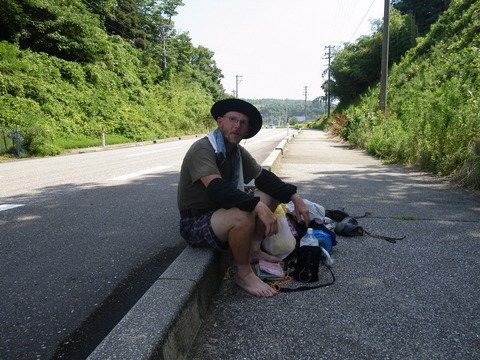
マイケル・デニス・クロッシィ「アイリッシュマン ウォーンアウト(疲労困憊)」


まえがき


自分の自己紹介をするにあたって、ベルファスト西部(後に北部へ)での子供時代の話だけでは十分ではないと思いました。その当時のアイルランド全域について書いているわけではありませんが、アルスター地方ならびにベルファストの話をしないことには、完結しないと思ったからです。ここに書かれていることは、決して、ある特定の偏見に基づいて書かれたものではないことだけは、申し上げておきます。そうならないように、信念をもって、書いたつもりです。従って、ここに書かれていることは、人々が人生において従い、信仰している宗教、例えば、プロテスタント、カトリック、イスラム教、ユダヤ教、無神論、他の宗教などあらゆる宗教と、全く関係がありません。ほとんどの部分は、自分についてというよりも、無神論者としての自分の立場から、知っていることだけを書きました。このことは前に申しあげたことと矛盾するかもしれませんが、ここに出てくる時代は、私が無神論者になるずっと前のことですので、なるべく偏りがなく、広い心で書くように努めました。


最近私はどこかで、「記憶というのは一種の精神的な時間旅行で、過去を見る方法としてだけではなく、未来の一部として見ることができる」という文を読みました。映画監督で脚本家でもある黒澤明氏はかつて、「創造とは記憶である」と言っています。全ての創造力のある思想家はインスピレーションを得るために、子供時代の経験へと記憶をさかのぼっているのです。私も記憶力は良い方ですので、その能力を十分活用したいと思います。私自身の過去とは何か。私はベルファスト出身で、私の名字と先祖はアイルランド人だということがわかっています。私は自分の幼少時の系図についてだけおぼろげに覚えていましたが、自分が知らなければいけない身近な人たちについてはあまりよく知りませんでした。


成人期の大部分、あるいは貧しかった子供時代から現在まで、私は歩くこと(Walking)に興味がありました。この世での人生は、1956年6月24日ベルファストのメイター病院で初めて目を開けた時より始まりました。正直に言うと、私は自分の母親や、その当時ディーゼルエンジンの整備士としてプロテスタント信者の会社で働いていた父親のことはよく覚えていません。その結果、人生の最初の10年間は、母方の祖父母の家で育ちました。私の人生で一番幸せな年月で、洗練されて、優しくて、節操のある、賢い人々に囲まれて育ちました。


近所の友達も含めて、皆一緒に育った時でした。同じ通りの端に住んでいたジョン・マックゴランは私の親友でした。敵などいなくて、のんきに自由にみんなで仲良く過ごしていました。物が不足して、ない時代だったことを考えると、不思議に思います。私たちは貧困と厳しい時代の中で育ちました。それでも、子供たちはみんな仲良くやっていました。殆どの部分で、子供たちは、厳しさから守られていて、持っていないものを欲しがらないように教えられました。私たち子どもにとって、つらかったのは、成長の問題で、大人が見るように物事を見てはいませんでした。毎日子供らしく、皆と一緒に何かをしたり、遊んだりして、忙しかったです。今振り返ってみると、50年代と60年代が終わったことを悲しく思います。それらの時代は終わったのではなく、どこかに潜んでいるだけかもしれませんが!


最近になって、現代アイルランド史の研究者として、またひとりの大人として、私が故郷ベルファストで見たもの、経験したもの、感じたものについて書き始めました。平和だった幼少期と北アイルランド紛争時代の比較をしてみたいと思います。ここに書いてあるのは、私が直接体験したことです。もしかしたら情報が不足していたり、記憶が飛んで、さらに調べる必要があったりするかもしれません。つまり、聞き伝えや噂で語られてきたことではないということです。最後に、私の下書きを何回も読んで、編集を担当してくれたアメリカのタミ・ボーチャード氏と日本の武田裕美子氏には深く心から感謝申し上げます。


最後に、下記の文を読んで、気分を害した方がいらっしゃった場合は、決してそのような意図で書いたものでないことだけは、前もって申し上げておきます。


第一部

失われた過去:1950年代~1969年


1960年代、あるいはそれ以前のアイルランド・ベルファストの多くのカトリックの家の子供にとって、動き回る唯一の方法は歩くことでした。少しの間でもじっとしていることが難しかった私たちにとっては、走ることでした。6歳の誕生日を迎えようという時に、祖母がフォールズ通りを通って、街の中心地までトロリーバスに乗って連れて行ってくれました。それは大通り沿いに増えるあらゆる種類の面白い店を見た最初の時でした。


それは私がベルファストの中心地まで車に乗っていった初めての時でした。静かで、乗客がいっぱいの時などよくありましたが、トロリーバスはあらゆる方向から来て、街の中心地まで走っていました。乗客を降ろすとすぐにバスはまた同じ道を走って行ったのです。


キャッスル通りでトロリーバスから降りて、目抜き通り沿いの大きな教会を抜けて、ヴィクトリア通りまで歩きました。ヴィクトリア通りからの帰り道で覚えていることは、多くの店のショーウィンドーの前に立ち止まって、何が売られているか見ました。悲しいことに、店のウィンドーで実際何を見たのか全く覚えていません。街の地図の助けがなかったら、その当時歩いた通りの名前さえも憶えていなかったことでしょう。
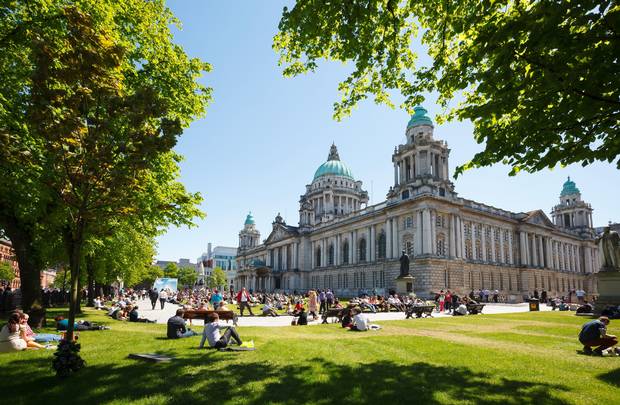

fast City Hall

ベルファスト市庁舎 (Wikipedia)
 

ヴィクトリア通り沿いを歩いたり、立ち止まったりしてからチチェスター通りを右折して、ベルファスト市の中心にあるベルファスト ドネゴール・スクエア北まで来ました。政府の事務室であった市庁舎を見ようと立ち止まりました。白くて偉大な建物は、堂々と立っており、幼い自分にとって、この風変わりな都市の中でも、最も素晴らしく設計された構造に見えました。


世界の多くの都市と同じように、ベルファストもまた最初は人口の少ない街でした。1613年の勅許状で、町区に昇格しました。海から理想的な場所に位置していたため、ベルファストはすぐに忙しい港町となり、工業中心地として人々を惹きつけました。19世紀の終わりまでには、ベルファストは1888年ヴィクトリア女王によって、市の称号を与えられました。その時までにこの新しい都市は、たばこ産業や繊維(リネン)産業、工学、綱打ちや、世界で最も有名な船のいくつかが作られた造船業などの産業の中心地となっていました。


市は富で栄えました!大きさや姿かたち、年齢が異なる全ての種類の人々がいました。女性は寝起きする小さな乳幼児を載せて、乳母車を押し、小さな子供たちは乳母車のバーや母親のカーディガンやコートにつかまっていました。もう少し年上の子供たちは、置いてきぼりにされないように母親の後を追いかけていました。買い物バッグをいっぱいに持って、道の上の足元に買い物かごを置いて、バス停で待っている人たちもいました。この人たちは家族のために、昼食を準備しに帰宅するのかと不思議に思っていたことを思い出します。道の上では、風変わりな自転車に乗った人たちが、人通りの往来する中を縫うように出入りしていました。誰も急いでいるようには見えませんでした。


初めて、トロリーバスに乗って降りた時のことで、一番覚えていることは、1960年代初期の込み合うベルファストの中心部は、歩行者にとって、簡単な場所ではなかったということです。生きるか死ぬかの駆け引きのために、ベルファストの下町で買い物をする住民は、自転車、バイク、車、トラックやその頃幅広く使われていた馬車が、歩行者を交差して走っている中を、上手に通り抜けて、歩いていかなければなりませんでした。修道女さえも我慢しきれない思いをしなければならなかったのは同じでした。


街の中心を走るトロリーバスが、歩く速度に近い速さで乗客を運んでいたのは、明らかにそのためでした。下の写真で、トロリーバスが、ゆっくり走るおんぼろ馬車を追い越そうとしているのがわかるでしょうか。歩道側には、「待たないで」の標識のすぐ横に、袋が山積みになった手押し車が置いてありました。良し悪しは別として、トロリーバスは1969年に廃止され、低公害車に変わりました。


今まで行ったことがない場所に行ったことで、気持ちが高揚していました。ベルファストは面白い場所が沢山あったので、大人になったら、それらを見学したり、通りを探検したりしようと心に決めました。これが私の心に芽生えた冒険心の始まりでした。悲しいことに、大人になる前にベルファスト市の中心部は武装警官と英国の兵士の存在によって、大きく変化し、爆弾と爆弾の恐怖のために全ての地域の交通が遮断されてしまうことになるのでした。


もちろん、その日都心でどのくらい過ごしたのか、祖母が何のために行ったのか思い出せません。今でも胸に焼き付いて忘れられないのは、巨大な広告板の上に沢山の広告が見渡す限り全ての方向にあったことでした。ハインツのベイクドビーンズや、キャドバリーのミルクチョコレート、ネスレのミルクなどテレビでよく宣伝されていて、名前の知られたブランドもありましたが、前に見たことがない新しいものも沢山ありました。タバコのブランドを宣伝した広告板をいくつも通り過ぎたことには、特に衝撃を受けました。その頃の私の家の通りでは、主に男性ですが、多くの人がタバコを吸っていましたが、殆どが手巻きタバコでした。


タバコを吸っている人たちは、広告や映画で見るのとは全く異なって見えました。年上の男の子たちも面白がって吸っていました。言うまでもありませんが、誰もそれに対して何か言い立てることはありませんでした。その当時、タバコ一箱は5セント、10セントや20セントしました。お客の懐具合に応じて、店主が封を破って、1,2本売ることもありました。タバコの殆どは、簡素なもので、フィルターがなく、フィルター付きのものはまだ市場に出回っていなくて、近くの店に届いていませんでしたが、その後すぐにフィルター付きのタバコが手に入るようになりました。


店主の一部は10代の前半の少年にタバコを売っていたと記憶しています。店でのやり取りは質問もなく、簡素なもので、少年たちは「僕のパパのために!」というのが決まりでした。大きな少年の1人が、タバコを買って、ボイルさんの店で吸っていたと話をしていたのを聞いたことがあります。ボイルさんは親切な中年の男性で、通りで小さな店をやっていました。


人生のこの時期に思いをはせる時はいつも、タバコを吸っていた少年たちは悪ガキだったとは思いません。みんな早く大人になりたかったのだと思います。タバコを吸うことで、実際の年齢よりも大人だと感じられたからでしょう。テレビや映画館の大きなスクリーンに出てくるハリウッドスターたちがいつも口にタバコをくわえていたのにうっとりする以外に憧れの対象はほとんどいませんでした。少年たちはタバコを吸うことで、自分たちの想像の世界では、同年代の子たちとは違うというところを見せつけたかったのです。これは現代の若者たちの身体と心を占めている巨大なインターネットやノートパソコン、iPad、スマートフォンの世界や薬物が登場するよりもずいぶんと前の時代の話でした。
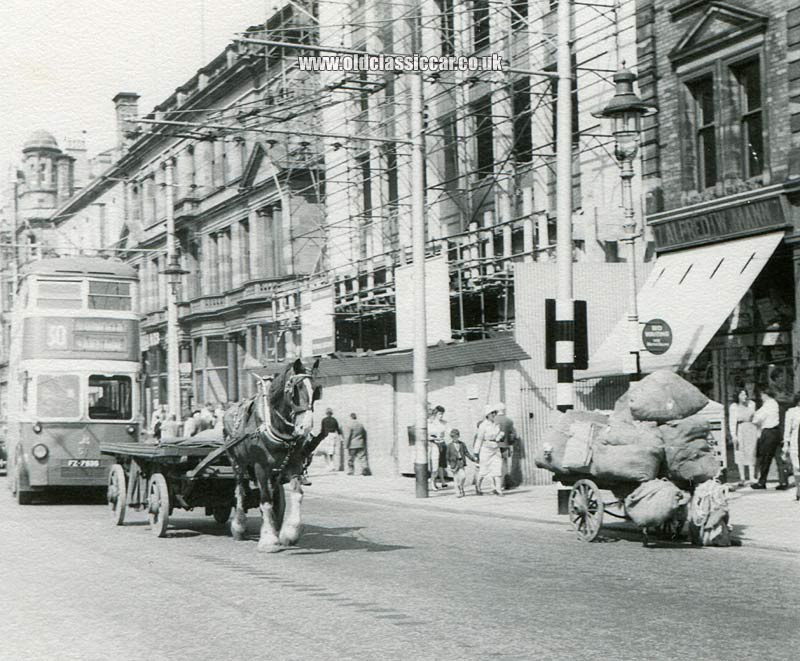


aec

ベルファスト ドネゴール・スクエア北(1960年)(Wikipedia)


ベルファストの労働者階級の人たちは一般的には、下のベルファスト南部の赤いレンガ造りの長屋と似た建物に住んでいました。私が育ったベルファストはもう存在していません。現代のベルファストでは、ヴィクトリア時代の赤いレンガの長屋住宅は事実上無くなり、世界のどこでも見られる建物に取って代わりました。長年ベルファストで起こっていたのは、荒れ地と市の中心部を残して、全ての地域や通りの伝統的な長屋住宅が低くなったことです。このことにより、ベルファストは過疎化の傾向を辿り、小さな商店で買い物をする人たちも減ったのは言うまでもありません。


この頃、学校に通学している子供は今よりも少なかったので、学校も閉鎖されました。人が少なくなったので、かつては道路を占領していたバスの需要も減ったために、ベルファスト市内や市外を行ったり来たりする必要がありました。数年前に、「消滅した市の地図」というタイトルの地図が発行され、昔建っていて、消滅した近所の建物が載っていました。ベルファスト市全体の再開発はまだ進行中です。言い換えれば、代わりに建てられた家は、解体された家よりも、建築や都市設計基準が低いということです。昔を懐かしく思うことは簡単ですが、私は私のままだし、このような家が無くなってしまったことは本当に悲しいです!


私たちの通りの家は戦後1949年ごろに建てられました。幸運なことに、私の祖父はガラス職人として、建築現場の一部に携わることができました。その頃のガラスは、新築の家が建てられてから大きさを測り、切って、家の窓枠にはめられた最後に加えられるもののうちのひとつでした。今日と違い、サイズの合った窓ガラスは工場から直接運ばれました。アルスター地方に住む大部分のカトリック信者にとって、職探しは、教育よりも経験がある者に限られていました。


経験と教育が限られた多くの人たちは、仕事のオファーがある取引の方向に引き寄せられる傾向にありました。建設業はそのうちのひとつでした。私の祖父デニス・マッカリーズは厳格な性格の持ち主でしたが、物静かで実直な男だったため、人々は尊敬の眼差しで彼を見ていました。13歳で学校を出た後、いくつかの異なる職を経て、熟練したガラス職人になりました。戦後アルスター地方の多くの場所では、増え続ける人口に対応するために建設ブームが起こっていました。


この時は多くのカトリック信者にとっても、仕事と賃金があふれた特別な時期でした。ベルファスト市内や近辺の粗末と言っていいほどの労働条件のために、祖父を含めてカトリック信者はベルファストの外の地域で仕事を探すようになりました。若者や通りの父親たちは、仕事に対する意欲にあふれ、成功に必要な根気を持ち、カトリック信者が政府の体制に不信を抱いていた不安定な情勢の中で、自分たちの家族にできる限りの経済的支援を与えようとがんばっていました。このような時代の仕事において、殆どのカトリック信者労働者の健康状態は悲惨なものでした。祖父を例にとると、彼がしていた仕事はいつもあるわけではなく、下の写真にあるようなトラック毎朝6時に家の前で彼を乗せて、職場に行くという状態でした。


祖父がひげを剃り、手と顔を洗い、祖母が用意した朝食を食べる時は、自分たちはたいていまだ寝ていて、学校に行く準備さえもできていませんでした。紅茶を沸かすために毎日持参していた湯沸し容器を持って、夜の10時ごろに祖父が玄関でトラックから降ろされて、帰宅するまで会うことはありませんでした。祖父が夕飯を食べている途中でうたた寝をしているのを見て、姉のアンナと私は何回もくすくす笑ったものです。


すぐに祖父はテーブルの上でぐっすりと眠ってしまい、夕飯を食べ終わる前に、頭を置いて、寝ていたことがよくありました。長時間にわたる仕事で疲れ切っていたので、祖母は、濡れ布巾で顔を拭いて、頭が休めるように枕をテーブルの上に置くことしかできませんでした。しばらくすると、自分のベッドまで階段を上っていく祖父の足音をよく聞いたものです。日を追うごとに、祖父は家からもっと遠いところまで働きに出かけていたようでした。
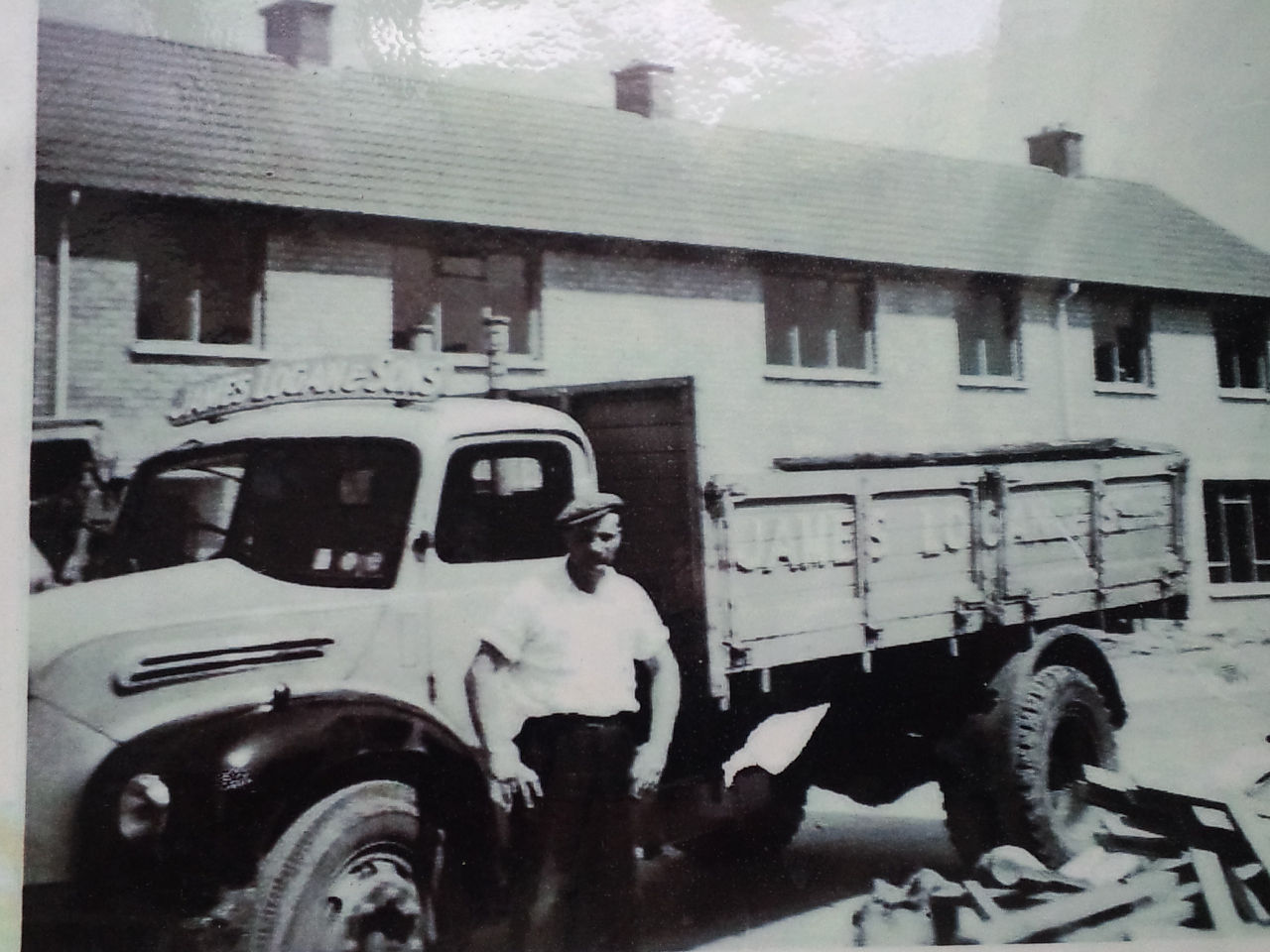

CA3H0159

建設現場の祖父(1949年夏) 


第二次世界大戦中は、アルスター地方の都市はドイツ軍より爆撃を受け、ユニオニスト政府に戦争への貢献に支払った代償でした。ベルファスト周辺は、結果として多大な被害をこうむりました。アイルランドは全体として、大西洋の戦いにおいて、軍事的に非常に重要な立場にありました。英国や米国の軍事基地や訓練所がアルスター地方の9つの州のうち6州で建設されていました。工場や工場の労働者たちは、皆、戦争のために工業用品を生産するのに外に出ていました。実際、戦争中における失業率はかなり減少していました。大事なことをひとつ言い残しましたが、徴兵制がない中、プロテスタントもカトリックも含めて何千人というアイルランド人の志願兵が、北アフリカやヨーロッパに、大西洋の戦いの連合軍として送られていたにもかかわらず、アイルランド第3代大統領であるエイモン・デ・ヴァレラ(Eamon de Valera)は中立の立場を断固としてとっていました。


私が人生の最初の10年を過ごした聖キャサリン通りの侘しい家は、周辺の通りの他の家と同じでした。前面の窓がお互い向き合っていたため、ブラインドやカーテンを閉めることでプライバシーを保っていた赤いレンガ造りの家並みは、1940年代の終わりに建てられたものでした。地域の住民にとっては十分すぎるほどでした。


私が住んでいた地域の家の殆どは、赤いレンガ造りで、2階建てで、1階、2階ともに、2部屋ずつあり、前に小さな庭、裏に端に屋外トイレがある裏庭がありました。家の前の庭は、壁やフェンスや生け垣に囲まれて、家の番地がペンキで粗野に描かれたごみ箱が置いてありました。家の裏のドアはフェンスと壁に囲まれた小さな庭に通じていました。路地という言葉が意味するように、太陽の光が届かず、薄汚いこともあり、小さな裏庭は手入れされることはあまりありませんでした。狭い裏の路地が、家並みと通りの長さに並行して、分けるように、走っていました。
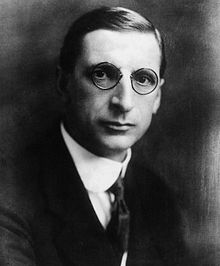

220px-Éamon_de_Valera


エイモン・デ・ヴァレラ (Wikipedia)


2015-11-05_new_14319144_I1

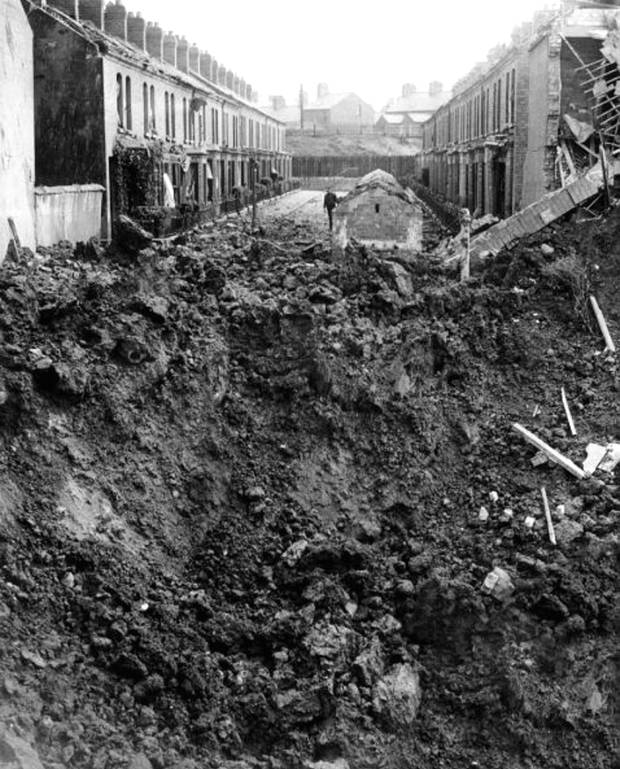
爆撃の痕の巨大な穴

ベルファスト ニュータウナーズ通りの脇道ラヴェンズクロフト通り1941年
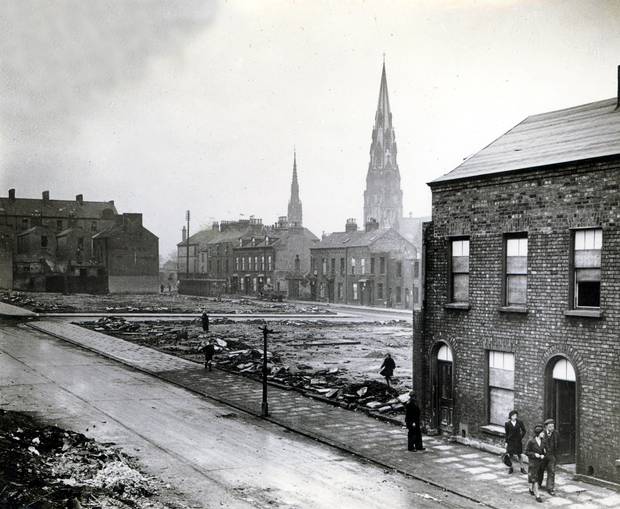
 

Bombs on Belfast AR 70

ベルファスト エグリントン通りとカーライル通り(1941年5月)  


私たちは生まれた時より、周りの人に頼って生きていく存在と言っていいかもしれません。人々が気取らずに質素な生活に順応していかなければならない環境がまさにこれでした。もちろんほとんどの人は、例えば初期の頃のアイルランドのカトリックがそうであったように、みすぼらしい恰好で、自由に満ちた表情をして、極貧の生活を送っていたわけではありません。それでも、日々の家財道具やトイレットペーパーなど生活必需品に事欠くほど、生活環境はひどく不十分でした。新聞を買って読むことのできる人はほとんどいなかったのに、どのようにして祖父が新聞を手に入れ、小さく切ってトイレのドアにかけていたのかわかりません。庭の端にある屋外のトイレまではほんの数歩でした。


アイルランドの冷たい雨が降りつける寒い冬の間は、トイレに毎日行くのさえ、気が弱いと行けませんでした。あまりにも寒くて、あそこが凍えてしまうかと思ったほどです。子供心に、屋外にあるトイレは、場違いな感じがしました。そのため、幼少期より現在まで、良質で清潔な他の人に邪魔されない場所を、自分が落ち着ける場所として、自分の心の中で大切にしまってきました。


ベルファストでの子供時代で、本当に嫌だったことのひとつが、土曜日の夜のお風呂の時間でした。私の友達の多くは、体を清潔に保つことは、大人に任せておけばいいと思っていました。それでもなお、通りの多くの家には、下の写真にあるのと同じようなブリキ製の浴槽があり、裏庭のトイレの白い壁にぶら下がっていました。当時の友達の多くは、海やプールには一度も行ったことがありませんでした。


頭から水をかぶったことがないので、浴槽に入るということは、不安と恐怖を意味しました。姉のアンナは私の顔に水をかけて、とても楽しんでいたので、姉と一緒にお風呂に入らなければいけないことは全く助けにはなりませんでした。今でもなお、熱い風呂につかるとよそ者のように感じますし、私にとっては、危険で、時間の無駄であることに変わりはありません。歴史上有名な人の多くは、風呂が嫌いでした。私の好きな作家のひとりであるアーネスト・ヘミングウェイもそうで、アルコールを含ませた布で体を拭いていたということです。2,3分シャワーにつかるのが、私にとっては十分なのです。


夕方6時頃になるといつも祖父は、古い浴槽を庭の壁のフックより外して、熱い石炭の上に大きなやかんが載っていた暖炉の前に置いてくれました。熱い石炭は、レンガ、木材、あるいは大理石の暖炉や火格子の中に置かれていました。ふいご、鉄ポーカー、細長いシャベル、火箸のセットなどその他必要な道具は、暖炉の横の小さな鉄の棚の上に掛けてありました。


どこの家でも、小さな子供たちが走り回っていたので、通りの全ての家が暖炉の前に熱よけ衝立を置くようになりました。それは、火の事故が起きないようにするためでもありました。暖炉は、冬の間は暖かいので、特によく使われました。暖炉の調子が良ければ、リビングの暖炉は家全体を暖めてくれました。寝室にも暖炉がありましたが、石炭の値段は、全部の家とは言いませんが、ほとんどの家庭の家計の悩みの種だったため、使われたことは一度もなかったと記憶しています。家計に余裕がある家では、冬の間は、リビングの暖炉はずっとついたままでした。


冬の間、石炭を配達する人が、週に一回家にやって来ました。実はその人は近所のオーグルおじさんでした。体の大きな男の人で、汚い大きな石炭の袋を肩に担いで、リビングを通り、家の裏手の小さな台所にある階段の下の狭い引き出しにしまっていました。彼はとても大切な仕事をしていたので、その仕事を定期的にできるのは、彼しかいませんでした。オーグルおじさんは、通りでは人気がある人で、馬車の上に座っていた姿を、まるで昨日のことのように、まだ思い浮かべることができます。彼は優しくて、大きな体をしていましたが、大きな体を自分の都合の良いように使う人ではありませんでした。


言うまでもありませんが、家のリビングの暖炉は一日中ついていることはありませんでした。私たちの家では、無駄使いをすることは決してありませんでした。オーグルさんのお蔭で、粉炭や石炭の小さな塊や炭じんが、家には沢山ありました。もちろん粉炭は石炭よりもずっと安かったですが、暖かさは同じでした。きちんと封がしてある一袋の粉炭は大きな塊の石炭よりもずっと長持ちしました。粉炭は非常に長い間使われていて、一番早いもので、17世紀の英国の詩人マイケル・ドレイトン(1536–1631)の詩に「粉炭」という言葉が出てきます。粉炭は小さく燃えていても、石炭の火と同じ匂いがしました。


祖母はいつも一番早く起きて、暖炉の火をつけてくれていました。朝食を食べる時間には、家中がちょうどよい具合に暖かかったです。朝食は、大抵は濃い粥(ポリッジ)、トーストと目玉焼きでしたが、トーストとジャムの時もありました。朝食に何を食べたかにかかわらず、沸きたての熱い紅茶が入ったマグカップとスプーン二杯分の砂糖を入れるための計量スプーンが、いつも目の前に置かれていました。粉炭の暖炉は、お湯を沸かしたり、料理を煮込んだりするのに最適で、祖母はガス代を払うのにお金が足りない時はよく使っていました。リビングの暖炉を、暖める以外に使っていたのは、他の家族も同様でした。


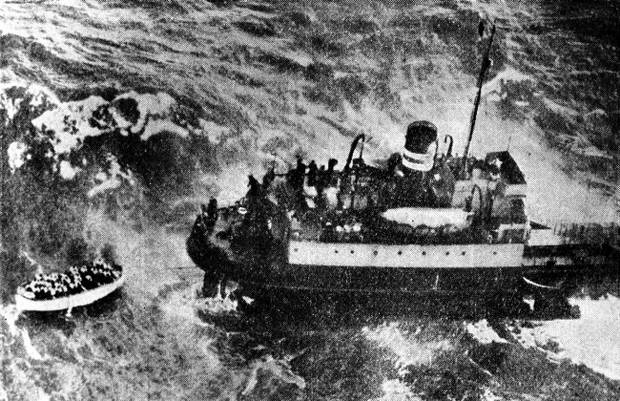
初めて海を見たのは、1961年夏にライラ叔母さんがバンガーに日帰りで連れて行ってくれた時です。次に海を見たのは、1969年にラーンから、スコットランド ストランラー行きのフェリーに乗った時です。フェリーは一日に何回も往復して、非常に重宝されていました。嵐の日などは、アイリッシュ海は、他の荒い海と同様、危険な場所でした。祖父の母、クロッシィお祖母さんは、1953年にストランラーまでフェリーで渡りましたが、嵐でフェリーが海に沈んだ2週間後でした。プリンセス・ヴィクトリア号がひどい嵐のせいで、北アイルランドの沿岸水域で沈んでから60年以上の年月が経ちました。戦後最悪の海難事故のひとつで、133人の命が奪われ、志望者の中には北アイルランド副首相であったメイナード・シンクレア氏とノース・ダウン区選出の国会議員ウォルター・スマイルズ卿が含まれていました。


1947年に造船されたプリンセス・ヴィクトリア号は、車に乗ったまま上船下船ができるストランラーとラーンの間を結ぶアイリッシュ海と英国の沿岸水域で運行されていたフェリーでした。最大で、1500人の乗客を乗せることができ、54室の寝室がありました。その日フェリーを運航させるかどうかは、ジェームズ・ファーガソン船長が風の吹き具合、あるいはプリンセス・ヴィクトリア号の状態を確認してからだったのでしょうか?フェリーの「ギロチンドア」は、前の海難事故以来、長い間合わないままでした。正しい場所に降ろすのにはあまりにも多くの時間が必要だったからです。船内のドアは、乗客の動きと守るために設計されるのが普通です。しかしながら、フェリーのドアは、船舶と積み荷を守るためにも設計されます。ギロチンドアがプリンセス・ヴィクトリア号において、適切に使用されていたならば、船尾の引き戸の大きな代わりとなっていたことでしょう。
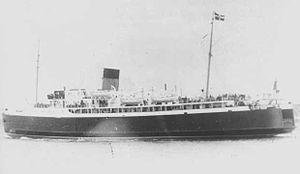
 

 ferry


プリンセス・ヴィクトリア号 (Wikipedia)


New Image_12

嵐に襲われたプリンセス・ヴィクトリア号から救命ボートが出る様子 (Wikipedia)


バンガーはアルスター地方東側のダウン州に位置する海岸リゾートです。バンガーはベルファスト湾の南岸にあり、ベルファスト都市圏の一部です。1960年代を通して、バンガーは、北アイルランド全体だけでなく、アルスター地方の観光の中心地として知られていました。デッキチェアと色とりどりのパラソルと人で賑わう普通の浜辺で、周りには、お土産屋、レストラン、バー、他の名所など時間とお金がある人々がよく行く場所です。大部分のアルスター地方の他の場所と同じく、バンガーは温暖な海洋性気候をもち、実際、一部の極端な日を除いて、国全体でも一番温暖なところです。例えば、夏の平均最低気温は摂氏21℃で、降雪や氷点下の気温はまれです。


市で一番有名な建物は、バンガー大聖堂で、西暦558年に建てられました。大聖堂は今まで何回も破壊されたり、再建されたりしており、現在の建物は14世紀に建てられたものです。バンガーは北アイルランド紛争では、ほとんど攻撃を受けませんでした。特に夏は、観光は地元経済の大きな収入源です。


100年以上前、タイタニック号がベルファスト湾より出航し、私が子供の頃立っていたまさにこの(バンガーの)浜辺を通って行きました。ここよりこの豪華客船がアイリッシュ海の深い海原へと出航し、英国南部の都市サウサンプトンでさらに多くの食糧と船員、乗客を乗せていったのでした。フランスのシェルブールでも食料と船員、乗客を乗せ、タイタニック号はアイルランド南部のコーク市の近くのクイーンズタウン(コーヴ)に向けて南へ進んでいきました。クイーンズタウン(コーヴ)は大西洋を横断する前の最後の寄港地だったため、アイルランドの民謡が何回も演奏され、タイタニック号の出航を祝ったのでした。
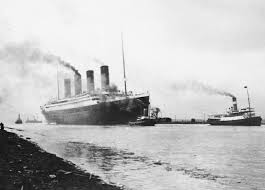

images-1

タイタニック号 (Wikipedia)


最近まで、バンガーの臨海地区の再開発が、他の計画と併せて進行中でした。アイルランドの島全体を囲んでいる海水や内陸河川は、世界でも最良の海釣り地のひとつとして評価されてきました。アイルランドの海岸線の多様な自然についてもっと学ぼうとしたのはつい最近のことで、沿岸海域は、メキシコ湾流のお蔭で、北大西洋海流によって暖められたということは、自然の海洋生物がいかに豊かで多彩かということを意味します。アイルランドを形作る3千キロメートルの海岸線は、北半球においては、最も多彩で壮観で、何百もの静かな湾や入り江、唸るような波のサーフィンができるビーチ、海岸線を見下ろす何マイルにも及ぶ神々しい崖は、多くの作家や詩人を現在まで魅了し続けてきました。


現在に至るまで、日帰り旅行とは言っても、どうやってお金の工面をしたのか見当もつきません。お金を使うことに関しては、人々は慎重にならざるを得ませんでした。現在の先進国では、休暇を過ごすことは当たり前のことですが、私が育った当時のベルファストでは、思いもよらないことでした。さらに都合が悪いことに、祖父は私たちと一緒に行かないで、家で叔父のジムと過ごすことを選びました。ジムはダウン症でした。祖父は心臓に持病があったために、ガラス職人としての不安定な仕事をすでに辞めていました。その時、祖父はまだ57歳でした!生活をやりくりするために、祖母もこの時仕事を探さなければなりませんでした。


過去の出来事で思い出せないことや、思い出さないように選択したことは、確かに多くあります。最近、姉のアンナにバンガーへの日帰り旅行について、何か覚えているか、尋ねました。悲しいことに、覚えていないということでした!しかし、祖母がこの時バンガーのどこかで皿洗いの仕事をしていたと教えてくれました。現在に至るまで、仕事を探すことがバンガーに日帰りで海を見に行った理由の一つだということが、いまだによくわかりません。記憶力が良いことには、自分でも驚きますが、この時どうやってバンガーに行くことになったのか、今でも全く思い出せません。


はっきりと思い出すのは、裸足で砂の上に立って、アイリッシュ海を眺めていたことです。ほんの少しの間でしたが、自分の目で見ていることが信じられませんでした。それは、幼い頭で考えられる量をはるかに超えていました。一か所にこんなに沢山の量の水があるなんて、このような巨大な水のかたまりについて何も知らなかったなんて、と不思議に思い始めました。アイリッシュ海では、夜明けから日没まで膨大な量の船が行き来していました。小さな船があらゆる方向に行ったり来たりするパノラマのような光景に、さらに心が躍りました。ヨーロッパ大陸ほどの幅の海水のどこに船は向かっていくのだろうかと、不思議に思っていたことを思い出します。それはまさに一目ぼれでした!海への愛は今でもまだ持ち続けています。


海の巨大な大きさと、一か所にこんなにも沢山の水が集まっているという力強さと、船が内陸から他の港へ動いていく様に圧倒されて立ちすくんでいる間に、女性や子供たちが、巧妙な機械装置の大きさのものにくっついている船外機が付いたあるものの周りに群がっているのに気が付きました。うるさい子供だった私は、騒ぎの原因は何か確かめるために、近くに寄って見ました。ライラ叔母さんと姉が、その中にいるのが見えました。ほとんどの人たちは、我慢強く待っていましたが、何人かが値段の交渉をしていました。あとでそれは、海の上で回転する小さなもの、つまり木製の漁船に乗せてもらうためだとわかりました。


打ち付ける強い白波を避けるように、沢山の漁船が海岸へ引き上げられていました。その一方で、新しくきれいな外見で、側面がペンキ塗りたてで、大きな船外機を後部に載せた非常に良い状態の木製の船が、砂の上に浮き上がるように置いてあるのに、気が付いたことを覚えています。


向かい側を見ると、みんなが他の船の周りに集まっていたので、どうしたのかと思いました。若い男と、古くて汚い船の値段の交渉をしている人はまだいました。それから私は、ライラ叔母さんの気を引いて、素敵な船に乗せてもらえないか、頼もうとしました。明らかにそれは、一乗りがそれほど法外な値段ではなかったからです。高かろうが、安かろうが、お金が足りなかろうが、私や他の子供たちにとってはどうでもよいことで、人生一回きりのスリルを味わうために、早く乗りたい気持ちでいっぱいでした。船は見るためだけではなく、楽しむためにありました!


値段の交渉がついに終わって、みんなはすぐに、小さな木製の船に肩を寄せ合って乗り込みました。良い時代だったと思います。学ぶのに最も良い方法は、経験することだ、とよく言われますが、これは安全標識を乗り越えて、境界線を押しのけて進むことのようでした。この頃海岸に来ていた人たちのほとんどは、町に住んでいたので、海のことはよくわかっていませんでした。皮肉なことに、1961年にアッカー・ビルク(Acker Bilk)が、「Stranger on the Shore(白い渚のブルース)」という美しいクラリネットの歌を演奏し、この頃ヒットしていました。海岸のことは何もわかっていなのが私たちでした。救命胴衣はタイタニック号ではあまり役には立ちませんでしたが、救命胴衣を用意してもらうことを口にすることさえ誰も思いつきませんでした。「白い渚のブルース」は1969年5月に、アポロ10号の乗組員が宇宙に飛び立つときに持って行った音楽として選ばれたほどヒットしました。


船が海岸より押し出されて、海の真ん中に向かって進んでいった時のワクワクした気持ちは、今でも思い出すことができます。風と水しぶきにまみれてびしょ濡れになるのに、時間はかかりませんでした。子供たちは皆、船に乗るスリルを味わって、ほくそ笑んでいましたが、大人たちは、5分後に海辺に着いた時は、お気に入りの洋服が台無しになったことに、カンカンに怒っていました。


海について詳しい人たちは、船に乗る前に風が来るのを待つものです。それなので、当時小さな木の船を捜査していた若い男がどれだけ海のことを知っていたのか不思議に思わざるを得ません。それでもなお、哀れな日帰り旅行者たちからお金を受け取り、金もうけをしていたことがいまだに理解できません。殆どの人たちは安全にビーチで遊んでいたからです。災害も起きず、皆無事だったのは、幸運ことでした。


.日本人は武家の時代より現在まで、長い間清潔な民族として知られてきました。私の徒歩旅行の使命の舞台である現在の日本では、現代的な価値観と伝統的な価値観、迷信が混在しています。トイレに入るには、トイレ用のスリッパを履かなければいけませんが、日本に新しく来た外国人の間では議論の種になっています。


多分、日本に来る外国人が気が付かないことのひとつは、日本の家のトイレが北の方角に設置されていることです。 北から吹く非常に冷たい風のせいで、日本の冬は耐えがたいものになっています。迷信ということに加えて、多くの病人は、北向きの部屋に寝かされていました。 理由はともあれ、家の間違った場所に位置するトイレは、過去より現在に至るまで、不幸を招く危険なものとして、過去より現在まで信じられてきました。


入浴は、日本人が大好きなことでも有名です。日本にはかつて、約2万もの温泉がありました。現在人々に愛され、楽しまれている温泉の正確な歴史について調べることは、容易ではありません。私の徒歩旅行の最後の土地である北海道は、西洋人がルーツとされるアイヌ民族の故郷です。古代アイヌの伝説によると、温泉の多くは治療に使われてきました。1900年代の初め、アイヌ人は全くお風呂に入っていなかったと記録にあります。


意外に思われるでしょうが、アイルランドにも、温かく、時には暑すぎるくらいの温泉があります。ベルファストで幼少時代を過ごした私たちアイルランド人にとって、台所の流しより出てくる熱湯を沸かすガスで温められたもの以外に想像できるものはありませんでした。アイルランドには10の温泉があり、そのうちの8つは、キルデア州・ミーズ州の境の地域にあります。アイルランドの温泉の例としては、クレーンのサンデーズ・ウェル(日曜日の源泉の意味)、ドナデアのセント・ピーターズ・ウェル、アードロスのセント・パトリックス・ウェルが挙げられますが、お湯の温度は摂氏13度から23度です。最近では、天然の温水を利用することに関心が高まっており、温泉リゾート地が観光客や健康に関心が深い人々を惹きつけるために、オープンされています。いまだに私はアイルランド人が日本人のように温泉を好きになれるのか、わかりませんがね。


1960年代のベルファストでは、経済的に困った状況ゆえに、夫の給料が支払われるまでは、人々は生活に必要なものをお互いに貸し借りしていました。他人と食料を分け合うことは、アイルランドの古い習慣で、最近まで存在していました。そのような小さい頃でさえ、お腹を空かした状態で眠りについたことを今でも思い出します。そのような状態だったのは、通りでは、私の家族だけではありませんでした。


生活の苦しさについて、子供たちの前で大人が話すことは、決してありませんでしたし、話題にならないように大人たちが気を使って育ててくれていたのかもしれません。そのような状況でしたが、近所の人は皆平等に分け合い、礼節と尊敬、そして愛情をもってお互い接していました。私の住む通りでは、助け合いの精神は、何があっても崩れることはありませんでした。生まれ持った陽気さと快活さが、その頃の人々にはありました。


学校で私たちは「差別(segregation)」や「圧制(oppression)」という言葉の意味について教わったことはありませんでしたが、アルスター地方の9つの州のうち6つの州に住んでいるカトリックとプロテスタントの一部は、まさにそのような状態に置かれていました。神の世界での両者の地方文化は、間違った強い敵対感情として子供たち、また孫たちへと伝えられました。世の中にはプロテスタント・ロイヤリスト・ユニオニストとカトリックという二種類の人々がいるということを幼少時より教え込まれました。


カトリックは神の世界の反対側の人(プロテスタント)からは、軽蔑的に「教皇絶対主義者(Papists)」と呼ばれていました。嘲りと冷笑はカトリックとプロテスタントとカトリックの間だけのものではありませんでした。アイリッシュ海を隔てたイングランドでは、アイルランド人は「ミック」や「パディ」と軽蔑的に呼ばれることがよくありました。ちなみに、2つの言葉は両方とも英国人の創作で、アイルランド人を物笑いの種にするのに長年使われていました。


幼少時代に、通りには後の時代と違って、英国人兵士はいませんでした。北アイルランド共和国軍(IRA)やアルスター義勇軍(UVF)などの団体はすでに存在していましたが、そんなに問題にされることはありませんでした。人々を不安にさせた唯一の目立つ活動は、プロテスタントの楽団がアルスター地方の殆どの場所で、権力を仰々しく見せびらかしていた時だけでした。


挑戦的なカトリックの民族主義者もまた、はためくアイルランドの三色旗の下で、誇らしげにドラムを鳴らしながら、「この国は我々のものだ。他のことを言う人は誰もいない」と唱えながら、行進していました。第二次世界大戦のちょうど10年前、何千人ものアルスター地方のカトリックやプロテスタントの男女が、英国人に混ざって、戦争に行き、多くが戦い、一緒に亡くなりました。


アルスター地方の工場は軍艦用に、装甲板や砲架、砲塔、爆撃機、戦車、銃などあらゆる種類の兵器を提供し、戦争に協力しました。アルスター地方の協力がなかったら、英国は戦争の一番つらい時期をヒットラーに立ち向かっていくことはできなかっただろうと、何人かの歴史家は唱えています。これは英国のチャーチル首相や米国のルーズベルト大統領からの圧力があったにもかかわらず、エイモン・デ・ヴァレラが中立の立場を保ったことで、できたことでした。ベルファストのプロテスタント・オレンジ党員、ユニオニスト、ロイヤリストの多くは、このことを誇りに思っていました。


今日の世界中のプロテスタントとカトリックの海外在住のアイルランド人は、アイルランドは政治的、経済的、文化的にも分断されてしまっていることを悲しく受け止めています。宗教的にも分断されて、嫌悪と危害の境界線はとても薄いものになりました。暴力的な攻撃はプロテスタントとカトリックの両者の間で起こっていることは、周知のことです。このことは何年にも亘って行われてきたことで、これからもそのような状態であろうことは、疑いのないことです。行進の準備が行われている間は、毎年、敵対意識が再び表面化してきます。
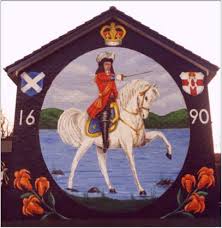

images-2

オレンジ公ウィリアム (Wikipedia)

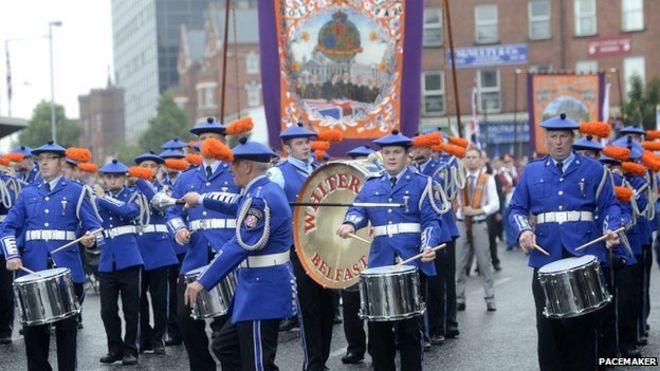
_84246836_12thindex


毎年7月12日はプロテスタントの多くが「栄光の12日」と呼ぶオレンジ党員やアルスター・ロイヤリストや何千人もの人々が通りに出て歴史的勝利を祝います。1690年、プロテスタントのオレンジ公ウィリアムは、カトリックのジェームズ2世をボイン川の戦いで破りました。ベルファストでは、プロテスタントの地域の赤いレンガ造りの家の2階の窓から、何千ものユニオンジャック(英国の国旗)が誇らしげにはためくのです。


行進する人たちの多くは、晴れ着と頭に山高帽、両手には白い手袋をはめて、美しく着飾ります。多くは誇らしげにオレンジ党のたすきを首にかけます。選ばれた「黒の王室勲章」をいただいた人が先頭を歩きます。アプレンティス・ボーイズや他の人たちは、先祖がアイルランドの歴史において、貢献したことに誇りをもって、ランベグドラムやバグパイプ、ティン・ホイッスルを持ちながら、音色に合わせて、行進していきます。どんな人もこの行進を止めさせることはできないのです!


220px-Shankill_mural

ベルファスト シャンキル通りにある歴史的壁画 (Wikipedia)


何千人もの行進する人や見学している群衆の上には、沢山の色とりどりの垂れ幕や飾りリボン、万国旗が2.5キロにわたって西に伸びる歴史的に有名なシャンキル通りに沿って飾ってあるのでした。シャンキル通りから分かれる多くの脇道には労働者階級のプロテスタント系過激派(ロイヤリスト)の赤いレンガ造りの家があります。棒にはカラフルで巨大な垂れ幕が他の太い隊列の中より空高く突き出しながら、軍服を着て、行進しました。生き生きした言葉や絵より行進する一人一人が人生に対する思いを持っているのです。


意気揚々とした勇敢さと元気の良さが特徴の闘志あふれる雰囲気が彼らの動きにはあり、太鼓やバグパイプ、フルートの楽団は活気にあふれていました。彼らは「グリーン・ベレーのバラード」や「父が着けていたたすき」、「デリーの壁」など沢山のロイヤリストの歌を生み出しました。楽器を鳴らして行進していると、皆歌を聞きたくて、寄ってきました。たくましい者たちが大きなランベグドラムを全力で抱えて、道路を行進していきました。


祝祭は、よく暴動を引き起こし、多くのカトリックはそのような人たちを実際は、視野が狭い至上主義者として見ていました。まるで決着していない得点を正そうとしているかのようなロイヤリストとカトリック両側の若い男たちの顔の断片さえ思い出すことができます。明らかに多くの人たちは自分たちだけが知っている敵意に満ちた過去の紛争の記憶を今でも持ち続けていました。暴動が悪化した北アイルランド紛争の間でも行進は続けられていました。好戦的な雰囲気はありましたが、行進は、大体は無事に行われました。


カトリック地域に深く根を下ろして住んでいた私たちには、騒動が行進をゴタゴタにするのを見聞きすることしかできませんでした。脇道をよく歩いて行きましたが、子供心には、探検したいという気持ちもありました。行進が、名誉革命の反革命勢力派であるカトリック・ジャコバイトのジェイムズ2世の軍勢を打ち破った時の歴史的勝利の一部であるかのように栄光を祝っている光景は見る価値がありました。


プロテスタントが、遠い昔のボイン川の戦いを壁画にカラフルに描き、大切に思い続けていることが、10代の終わりでも時々不思議に思いました。ずっと後になって、ボイン川の戦いの時期や1690年7月12日のオーグリムの戦いでのギンケル男爵の指揮下でのウィラメット軍の戦いについてもっと深く書物で読むようになり、毎年目の前で繰り広げられる行進よりもずっと意義深いことのように思いました。


重大であろうとなかろうと、オーグリムの戦いについて聞いたことのある子供は自分の周りにはそんなにいませんでした。ボイン川の戦いやウィリアム3世や彼の軍隊がカトリックのアイルランド軍を鎮圧したかということは何回も聞きました。毎年恒例の行進によって起こされた大騒動については忘れることはできません!


私たちの家の通りの4つの主なイベントは、子供の誕生、結婚、死と埋葬でした。父親たちは働いていましたが、家族は貧しかったです。一箱の煙草を買うことのできる人たちは、口に入れた吸殻を、ピンを使って、短くなるまで吸っていました。私が見かけた男性の多くは、長年タバコを吸う生活をしていたため、黒くて焦げた指先をしていました。子供の頃、通りではたった一人の若者がクイーンズ大学ベルファストに通っていて、フランス文学を専攻していたことを思い出します。彼は背が高く、ハンサムな若者で、流れるような金髪をしていて、言うまでもありませんが、若い女性に人気がありました。彼がある時、我が家に遊びにきたことがありました。すぐにライラ叔母さんと彼女の友達につかまって、当時アメリカも含めて全世界で流行っていたフランス語の「ドミニク(1963年)」の歌詞を訳してもらうように頼まれていたことが、その頃の記憶としてあります。


人々はさらに良い時代が来ることを待ち望んでいました。なぜなら、北アイルランド紛争が起こるずっと前より、厳しい時代を耐え抜いてきたからです。その一方で人々は自分たちにはどうすることもできないが故に、将来についてはあまり深く考えることはありませんでした。短期的な未来についても、です!来週あるいは来月がどうなろうとも構いませんでした。今の生活が全てでした。未来に向けての希望はありました。大部分の家庭の雰囲気は愛情にあふれた陽気なものでした。不幸な生活を和らげるために人々が交わしたウィットとユーモアに富んだ会話がなかったら、自分の人生がどうなったことか想像もつきません。小遣いなど耳にしたこともなかったですし、こすり合わせるだけのペニー硬貨が二枚もなかったのですから。だから、私たちはできる限り、お金のかからない娯楽の方法を作り出しました。


雨が降ろうが、みぞれや雪が降ろうが、私たちはいつも農園の中や沼地草原まで、自然の恵みの中を何も考えずに走り回っていて、それが無駄な毎日にとっては絶対必要なことでした。晴れた日には、農園に生えていた野生のベリーを繁みより摘みました。鋼のような木に登ったり、農家の酸っぱいリンゴを食べたりして、楽しい時を過ごしました。食用の海藻や乾燥したデュルセを祖母はよく家に持ち帰ってきて、チューイングガムのように噛んで食べるのが大好きでした。事実、通りの多くの年配のご婦人方は、晴れた天気の良い日には、玄関の前に座り、デュルセを満足げにずっと噛んでいたものです。若々しい想像力は、アイルランド人としてのアイデンティティの一部である幽霊やバンシー(アイルランドの民話に出てくる泣き叫ぶ姿をした妖精)、妖精、レプラコーン(伝説の妖精)、迷信など物語の題目を使って、簡単に物語を作り上げることができました。お金がなかったので、自分たちの生活のことを考えるだけで、精一杯でした。自転車を持っている人なんてほとんどいなかったですし、通りにはたった一台の車が止まったままで、ほとんど動くことがありませんでした。
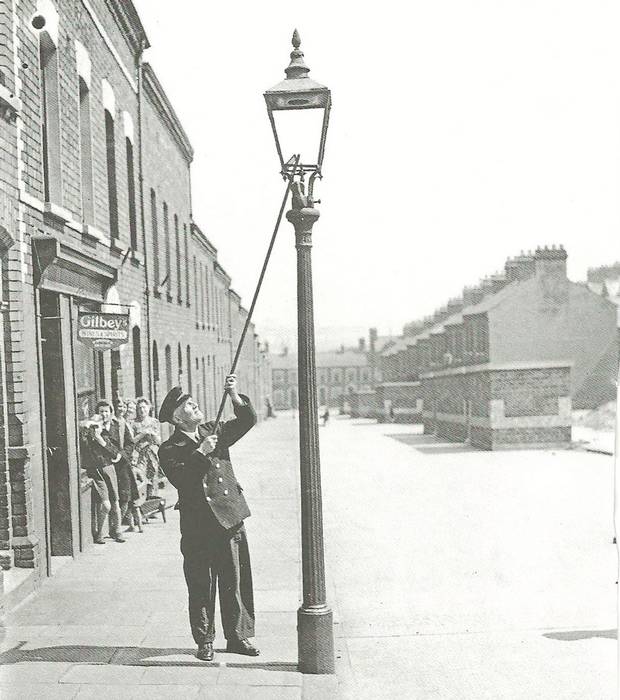

lamplighter

ガス灯に点灯する人(1957年ベルファスト)(Wikipedia)


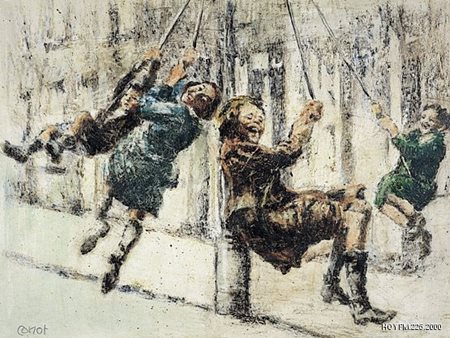
現代的なものが少しずつ生活に入ってきました。この例としては、ガス灯でした。その周りにロープを引っ掛けて、ブランコとして遊んでいましたが、すぐに電気製のものに付け替えられました。ベルファストには1万以上のガス灯がありました。その頃を振り返ってみると、古くてエレガントなガス灯と比べて、電灯にはロマンチックな雰囲気がなく、魅力に欠けていました。通りにあったガス灯には、人々や子供たちを惹きつける柔らかさと優しさがありました。多くの家庭で、ガスが暖房や調理などに、好んで使われたことには、なぜか興味をそそられます。ベルファストや他の地域の通りを再び美しく飾る最も有意義で実用的な方法は、他に想像ができないですし、ガス灯がこれから使用されることは、多分ないでしょう。
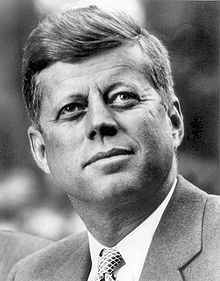


JFK_White_House_portrait_looking_up_lighting_corrected

隣の家がカラーテレビを通りで初めて購入しました。通りの人たちが皆、テレビを見に、絶え間なく来ていたので、テレビの持ち主であるオーグル家の人たちは、申し訳なく感じていたと思います。ほとんどの番組はまだ、白黒で放送されていました。自分の家の白黒テレビで見たニュースで今でも思い出すのは、1963年11月のジョン・F・ケネディ(John F. Kennedy)の暗殺で、皆びっくり仰天して、「どうしてこうなってしまったんだ」と自問していました。「彼はアイルランドをちょっと前に訪問したばかりなのに!」と通りの人たちは皆、ニュースを見て大変驚き、多くの人が涙していました!ケネディの死を冷静に受け止めなければいけないという現実があったので、苦悩と遺憾の気持ちは除外されるようになりました。通りには、不思議なまでの静けさがあり、自分の命についてもう一度感謝して、愚痴を言わずに、自分たちの苦しみを耐えるような機運が生まれてきました。


images-1


 images-2


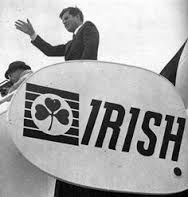
ジョン・F・ケネディ アイルランド訪問(1963年6月)(Wikipedia)


私にとってJFKは確信に満ちて素晴らしいリーダーシップを備えた完璧な存在でした。背が高く、強くて、男らしく、身なりが立派で、昼間ディスカウントチケットで映画館で見る悪者やインディアンをやっつけてくれそうでした。このように感じていたのは私だけではありませんでした。この若くて、ハンサムで、教養があって、自信に満ちた世界一偉大な国アメリカのリーダーであるJFKはアイルランド人を勇気づける存在だったのです。JFKはアイルランドのカトリック信徒をルーツに持つ偉大なリーダーだったのです。


ジョン・F・ケネディは自分のアイルランド人としてのルーツに誇りを持っていて、アイルランド人たちも彼のことを誇りに思っていました。アイルランド訪問中、彼はウェックスフォード州ダンガンズタウンの彼の祖先の家を訪問しました。彼の曽祖父であるトーマス・フィッツジェラルド・ケネディ(Thomas Fitzgerald Kennedy)は、1848年の大飢饉の時にアイルランドを離れ、アメリカに来て、ボストンに落ち着きました。

1961

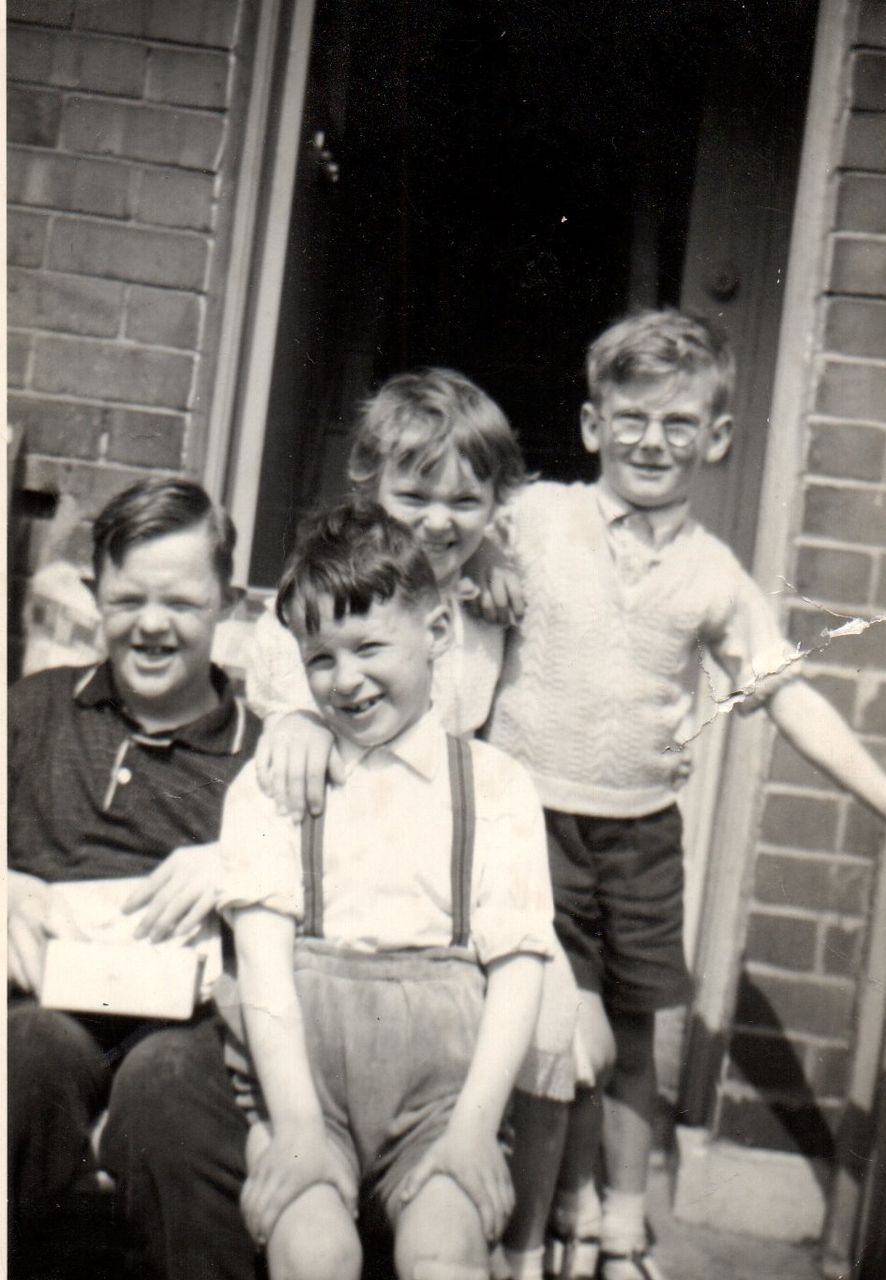
新しい眼鏡をかけているのが筆者(1961年夏に撮影)


そして、1,2年後に、向かいの家が通りで初めて電話を設置しました。これもまた誤りでした。通りの人たちは皆突然電話をかけたい人を思い、その家の電話から電話しました。不幸にも、この電話の持ち主は、電話がかかってきたことを告げるために、かかってきた人の家のドアを何回もノックしなければなりませんでした。子供だったので、私たちはそのような贅沢品に近寄ることは決して許されませんでした。私たちにとって、生活とは、通りの後ろにあった沼地草原の端に沿って沢山生えていたガマ草の中でかくれんぼをして屋外で遊ぶことでした。渡り鳥が熱帯地方の繁殖地に飛び立つまでの間しばらく羽を休めていたのが、その沼地草原でした。それにもかかわらず戸外での活動の中には、終わりがないほど長く感じられた週日に、致命的な結果にならないように、足にまかして学校まで走って通うことも含まれていました。私たち子どもにとっては、変化がないいつも通りの生活でした。

jpg

1957年ベルファスト ウィリアム・コナー(1881-1968)作 ガス灯柱ブランコ (Wikipedia)
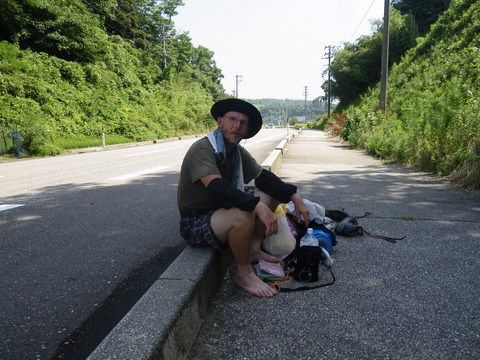

Irishman Walking (Stage 4 Chapter 9) Summer 2010

af7a420a


Irishman Walking (Stage 4 Chapter 9) is about my walking the main and coastal roads of Japan. Summer 2010.


5 Aug, 2010: Like my friend said, the Route Inn was new and modern, and luxurious in a simple sort of way. Just as I had expected my room, Room 705, was rather comfortable with all the mod cons. Just as you came out of the elevators, set a little machine that sold tickets.  For the cost of a ¥1,000 Yen, guests were able to tune into as many films as their brain could handle, all in the comfort of their rooms. A glance over a program pamphlet on the desk in my room told me that they were mostly American and more than likely 'B movies', with questionable acting ability and storyline quality. Then again, it was wrong to judge a book by its cover, as the saying tells us. There was a large growth in recent film releases, each year.  For example, there were 128 such worldwide Studio releases, in 2006. However, they did not only come from the big Hollywood studios, but there has been a growth in distribution from other countries, such as, Asian, and elsewhere. One of the reasons for this had to do with technological changes in supply and demand. Films were now not only easier and cheaper to make, but also to distribute. As for myself, or thanks to the Internet, I do not recall the last time I set in a cinema. If I had had access to the Internet, then I could have checked one or two to the films out that looked somewhat interesting. Some of the films came from Japan. Many more came from the big Hollywood Studies in California. The six major Hollywood studios were, Disney, Fox, Paramount, Sony, Universal, and Warners. I decided not to bother with buying a ticket. Instead I made my down in the elevator, out the entrance, and across the road to pick up an inexpensive bottle of red wine at a convenience store. Like a cigarette was to a smoker, a glass or two of red wine would help me relax and focus my mind. Usually before hitting the sack in the evenings, I liked to go over my maps and reasonably think about how far I could get when I hit the road again. Of course, it was not good to place too much weight on the wine, for fear of becoming frozen in my thoughts. The old waves of nostalgia never failed to glide over my thoughts. Tiny bouts of depression were usually lurking in the shadows of my mind, too. So I needed to keep the wine in check.Feeling a little drossy, I lay down on top of the bed with my eyes closed to take a nap for a wee while. After about 15-minutes, the sound that broke the silence of the room was the blearing away of the television set in the room next door. There was something fishy or valued about the noise, which I think sounded something like being changed from English to Japanese and back again. “Mmm!” Perhaps the occupant was watching one of the films, I thought, as I sat up and grabbed hold of my note-book to do some writing. On the whole, the changing of hotels and strolling about the city streets had not placed much strain on my body. The soaks in a hot bathtub and the short naps already made me feel well rested. The muscle pain in my legs was just about gone, and the blisters in my feet made a steady recovery, that I now felt positive and ready for the road once again. There was just one little issue that I needed to clear up between my friend, Riko, and myself, before hitting the road in the morning as planned. For a good while I was under the belief that she well understood my schedule and plans as clear as day. Earlier on the phone she appeared a little confused about my return times and dates.

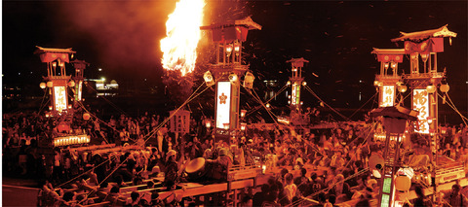
Providing all went well, my plan was to travel on a coach back in Tokyo on Thursday, 19 August, 2010. So I still had a good two weeks of tramping left to do. My tight schedule meant that my arse needed to be planted on the coach by Wednesday evening, on the 18 August. Somewhere along the line of our communication, my trusty friend had interpreted my words to mean that I would arrive back in Tokyo, on the 20 August, a day later than planned. What would I recall about my two-day stopover in Wajima City, other than it had a population of more than 27,000 inhabitants? The city was famous for its morning market, with around 200 stalls that lined the street. Visitors to the market were greeted with shouts in the local dialect, “Kote kuda!”, which in English meant: “Please purchase our products.” Then there was the Shiroyone area, just east of the city, famous for its terraced rice paddies. Rather, what I recalled, with some sadness were the things I was unable to see or experience in this city of attractions, which drew countless numbers of visitors. In the warm summer nights there was one festival in particular worth mentioning. There was the beautifully lacquered, kiriko lantern-floats that took pride and place throughout the city. The lanterns lit up the night as they floated down the Wajima River to the sea. At the Wajima Taisai Festival big kiriko lanterns could be seen being carried about the streets. It was believed that this would drive away evil spirits, and usher in successful harvests and an abundance of fish. At the Sanno Festival a large procession of boat-shaped floats decorated with colorful banners, bamboo and lanterns graced the streets. Clearly, Wajima was a city of festivals! Radiating out from amongst the main attractions, locals and visitors could catch the sound of the big Gojinjo Daiko drums. The drums were played by people wearing wooden masks and seaweed for hair. The scorching sun began to beat down on me the minute I set foot outside the hotel to continue my mission. By 12:30 PM my water was low, and rather than continuing along the road, I felt that it was better to escape the heat somewhere more comfortable, for an hour or two. “Mmm!” If only clean fresh water would run out from the rocks in a steady stream. Wishful thinking! Just then, however, the shade of a small concrete structure, looked too good for me to pass up on. Above the structure a sign read, ‘Zouzoubana Observation Deck’. As I lay down on my camping mat, four cars pulled off the road and stopped, and the occupants got out to view at the scenery. They did not seem to notice me as they climbed the steps above the place where I rested. All the same, it was not easy for me to doze off, so I lay awake with my eyes closed and imagined the visitors on the upper deck looking out over the vast watery landscape that lay below them. At times I could hear the voice of a father speaking to his child. "If you look carefully through the haziness, you should be able to make out seven tiny islands, each one looking back at us." Then I wondered what islands was he referring to? What were the names?  When they left, I turned onto my side and looked across to my backpack, propped against a wall. “Mmm!” It might be a good idea if I had a look at my maps before I left here, I thought. Japan was made up of so many islands, some were famous, whilst many others less so, if not unheard of by the average Joe Public.


In fact, the Japanese archipelago was made of around 6,852 islands, some 421 of them were, inhabited, whilst most of them were not. This made Japan the largest island country in East-Asia, and the forth largest in the world. Amazing that more than 200 beautiful islands lay within easy reach of the Tokyo Metropolis. The most notable of the islands being were perhaps, Oshima, Miyakejima, Niijima, Kozushima, and Nachijojima. Many of the islands were less than an hour away from the capital. One day in the not too distant future, I hoped to tramp around them, but I could no think beyond tomorrow. For the moment, I needed to stay focused on my current mission. When I first arrived at this concrete structure, to escape the sun for a while, I headed up to the main upper deck to take a look out over the sea. However, I could not make out any distant islands at that time. At least, I preferred to think it was because of the haze, like the man had told his child earlier. At least I hoped it was not because of some incompetence on my part. The scenery from the upper deck was absolutely splendid and overwhelming, that I momentarily froze in awe. It was only as the sun attempted, again, to work its evil tricks on me something terrible, when I returned to the cool shade, where I had left my backpack. At last I stopped at an out of the way place called, Nishifuta, just where the tiny Nametakigawa River meandered along, below where I stood looking about me. In addition to the mighty ocean, recent research had shown slow moving rivers to be a possible new source for energy, but a fat lot of good that was going to do me just now. Momentarily under a shade to looked at two narrow rivers that flowed next to one another. This was at the point where the rivers cascaded downwards, at a sharp incline of about 35-meters, or so it looked to me. Each of the narrow waterfalls had a name -- 'Metaki', the female cascade, because of the slow gentle flow, and 'O-taki', the male cascade, which was more rapid. They were said to be like a husband and wife. For sure, both of the cascades joined into one, on its way to the Nihon Kai. The cascades were designated as a natural monument of the prefecture, in March 1987. Even in the shade, the sweat poured off me! With the backpack firmly strapped in place, an added heat burned into my shoulders and sides. A call earlier from a friend in Tokyo told me that people were succumbing to sunstroke right, left, right, and center. Others were falling down dead, because of the heat wave sweeping the country. "Drink lots of water, an n stop and rest a lot, too.” She said, adding that I needed to add salt to my water. “Yes! Thank you!” I replied, with the thought of needing to replenish my water bottles as soon as possible. If one wanted to eat, it was said, they needed to work. Or in my case, to walk, which was work enough to me. After all, these days to work often meant to survive. It was very true, people could not live without water, food, and salt, even if my mind was more focused on my water needed to be replenished more sooner than later. Where to replenish the bottles, became my new concern  On closer observation, I could see that the two rivers converged, before splitting into two cascades. According to a sign nearby: ‘Ishikawa Prefectural Board of Education’, the Metaki and the Nemetaki Rivers reached to a height of 32-meters. 

No doubt it all had something to do with scientific interest, particularly at the point where both rivers touched, since 1987. However, no reason as to why this came to be, was mentioned. Such news was, however, of no interest to my very nonscientific brain, or at least for the moment. That said, both rivers looked rather spent forces of what they perhaps once were. With some dismay, It was also a little unfortunate that I was not able to tramp along a tiny footpath or dirt road, which wove along this segment of the coastline. Then again, there was good reason for not taking that route. One of the local people I stopped to chat to some kilometers back had told me that travelers had not used footpath in some 10-years. Portions of the dirt road, he told me, were not there anymore, and that much of it had been reclaimed by nature. “Mmm!” For a while I pondered the information as I continued my way on the main road. It was no secret to those who knew me well, also knew that I had a poor record of listening to such advice, and had paid dearly for it afterwards. The dirt road lay far below on the ground where I now stood. It seemed pointless to backtrack, or even cut down through the brambles and wave around the trees to get to it. Not to mention doing so with a heavy backpack in place! Besides, this was no time for such thoughts, for I still needed to find water, and my best chance for that was to stick to the main drag for a while longer. It was nearly seven o’clock when I began to keep an eye out for a good place to camp. The sun, like a burning coal, was setting the whole horizon on fire. Most of the nondescript buildings and houses in the area were only half visible in the night.

More on 5 Aug, 2010...  


6 Aug, 2010: It was a bit on the late side last night when I finally decided to pull up and made camp. It was on a disused piece of land stuck between the main road and a rice paddy, and close to long abandoned coffee shop or cafe. “Mmm!” Anywhere would do, I remembered telling myself, as I could only think of closing my eyes to sleep. Within minutes of pitching the tent and spreading out the mat and sleeping bag, I was in a world of dreams. Usually I never remembered any dreams that I had, and if I did they were much too fuzzy to make heads or tails of. However, it was comforting to learn later that I was not alone on this! There was not a person alive who did not dream. Many could not recall what or why they dreamt. Some notable research had been done on the brains activity with electroencephalography to help understand better. Of course, people were different in so many ways, and so I guess it was the same with how the brain operated. For what it was worth, the research showed that those who were able to recall what they dreamt the night before used more regions of their brains than those, like myself, who could not. “Mmm!” I was not quite sure I liked what the findings implied! For high recall-achievers, it all had something to do with an increase of the alpha waves in the brain, as well as good timing, like, when they woke up. One dream I could still recall well enough was when I awoke in the morning. The location of the dream was at a pub in Amsterdam where I lost my money-belt and backpack, with everything I owned in it. “What should I do?” I asked a person in the dream, for I seemed more worried about not being able to pay for my food and drinks, than worry about the lost cashcards and papers. I recalled feeling some pity on my plight. That was just as a tall skinny barman came over to my table and gave me a pint of Guinness, “Its on the house!” He said, in a strong Dutch dialect, and adding that it would do me good. I usually preferred to drink stout, if not ale, when I found myself in such places. Even in dreams, the pints I supposedly drank never seemed to last very long. Actually, I had even tried to think of how many pints I downed in the dream, but could not. Then I recalled one of the other customers giving me directions to a place run by the Good Samaritans, which was not very far away from the pub. He felt that I would at least have a roof over my head for the night. The man told me that it should be easy to find, especially as I did not have my heavy backpack to carry. This, caused me to wonder if all of this was some kind of satirical or candid joke, and even looked about for a hidden camera. Some of the customers in the pub looked about for the backpack in the half crowded pub, but could not find it. No sooner had I set foot outside the pub that the loudest and most annoying of sounds pulled me back into the real world. On poking my head out of the tent, I saw the source of the loud noise. A gray haired, middle-aged fellow, with an unfriendly air about him had just begun to cut the overgrowth around the edges of a rice paddy, not 20-meters away. Why the guy chose to begin with a handheld brush cutter on the sides of the embankment nearest to me, at 05:30 AM, I had not the foggiest. Clearly he knew that I was camped close to his paddy field, so I could only surmise that it had something to do with some fear and bad manners on his part.

Finding it a bit hard to comprehend for a few moments, I kept staring at my pocket watch to make sure the time correctly. There were some houses nearby, and I could only surmise that the occupants were not happy either. “Mmm!” Then again, they might all band together and blame me for being the source of their problems. Also, I wondered if perhaps the guy had a screw loose somewhere in his head, and that was why no one told him to shut up and fuck off. From time to time, the guy would look up and glance over in my direction, but continued to cut away at the overgrown grass and weeds like there was no tomorrow. Of course, only he knew the reasons for his actions, as he showed no signs of let up in his work, 20-meters from where I set brushing my teeth next to the tent. After a short while, the guy seemed unable to keep his eyes from me, not that I cared very much, for I was wide awake and now toying with the idea of upping came and moving off. After all, that was what the village idiot wanted! Besides, the gasoline powered brush cutter now kicked out fumes big time, which only drifted it the early morning air towards the tent. In fact, the guy was so close now, that I could even make out the maker of the damn cutter. Honda was one of the big manufacturers of those handheld camshaft brush cutters. “Mmm!” I then wondered why in this day and age that such machines had to be noisy. Then again, motorbikes came with silencers or mufflers, which did not completely drown out the noise of the engines. Perhaps a completely different kind of engine was necessary, like, something electric. Of course, I had a few inhibitions about dismantling the gear and moving off, especially at such an ungodly hour as this, but that was how it was. Therefore, it did not take me long, with some reluctance, to give in to the wishes of the old fool, and head off down the road. Some of the people I had met over the years had a kind of devil-may-care attitude about them. Somehow, I felt that this guy was one such person, only a bit more on the strange side. Most times when I got things ready for hitting the road, even during inconsiderate circumstances as this, I was never one for doing so in any great hast. Alas, it was nearly 07:00 that morning when I finally took my leave of the noise, and of course its source. By now, the guy had worked not even 30-meters of the way around the acre-sized rice-paddy. Clearly he wanted to stay as close to my tent for his presence to have effect. Just as I was rolling up the tent to put into the backpack, the guy dropped what he was doing and cycled over to the tiny parking area and stopped in front of the abandoned coffee shop. “Mmm!” Perhaps he was the owner of the place, I thought. After all, I had camped the night where once customers cars had parked. After dismounting his rusty old 50cc Honda Cub and parking it close to the wall of the closed up coffee shop, the man came around and set down on the overgrown grass that came up to his knees, and stared right at me. Rather that bothering to make eye contact, I continued to rollup and pack the last of the gear into the backpack. Just a little while earlier, the guy had operated the brush cutter like there was no tomorrow, and now he kept his eyes fixed in my direction. Thankfully, it was not everyday I came into contact with such a person, I thought to myself, as I picked up the backpack and strapped it in place.

As I did this, a second middle-aged fellow suddenly cycled up, and soon set down next to the other guy. Like old friends, both of them set shoulder to shoulder together in the grass. They did not appear to even chat, but sat looking across at me to see what I was up to. The Japanese were masters at observing one another. For all I knew or cared, perhaps they were old soldiers or retired policemen in their younger days. Regardless of what they were, both of them looked like the sort of characters that made up the frontline of a local Home Guard of yesteryear. To use the British sitcom term, ‘Dad's Army’, a home guard force setup during the Second World War to counter an expected German invasion, at the time. No doubt, the Imperial Army had such an organization back in those days, too. As a child I quite like tuning into the comedy sitcom series on the television, which incidentally ran from the late-1960s well into the 1970s. According to Wikipedia, the program had regularly gained audiences of around 18-million. The programs continued to be repeated worldwide, not to mention being available on YouTube. This encounter of mine was not quite as funny as the sitcom, as I turned a glanced across at the fellows sitting on the ground. "Mmm!” What on earth was that guy’s game? I wondered to myself. One of us was suffering from absolute paranoia, I thought, as I turned and made my way towards the road, a deprecating smile on my face for company. All in all, I may well have hit the road early anyway, even without the unnecessary urging to do so, for it had been a bit on the chilly side and it seemed pointless to stop long. At the same time, “I preferred it to be on my terms”, to use the remark Alan Ladd used in the opening scene of that great 1953 clastic Western film, ‘Shane’. Unlike the film,  however, the guy with the cutter was not going to let up one way or another, so without further ado, I turned and made my way back onto he main road, sooner earlier that later. Actually, I felt a criminal in their presence, and was not quite at ease at the sigh of either of them. The sight of the two guys sitting there filled me with a sentiment that embarrassed me. No doubt like many Japanese, they boosted that their ancestors were of historical importance, that they came from a long line of samurai worriers. Perhaps the guy with the brush cutter was not afraid of work, though he did not seem to get very much done even with his early start this morning. Then again, it took a certain amount of intelligence to appear to be busy, even if the opposite was the case. The guy’s behavior and actions were not all that one might wish, but still that was his business. They were quite charming sometimes, the local Japanese. They were often very kind, if not busy, yet I hardly knew them, for a wall that seemed to exist around them. It was as though they allowed you to go so far, but no further. It was as if they walked a different path through life to what outsiders trampled along. In away, it was a rather funny situation. Of all the years I had lived and worked in Japan, I still felt like a stranger in their presence. Then again, I guess I did not understand much of anything. Life could be so strange! Yes, I had a queer feeling that my mind was growing each time I came into contact with people who countered my positive view of the people at large.

Finally everything was ready, and I felt better for it, and even began to regain my spirits. With some surprise, I caught myself wanting to laugh, which began to seem quite a natural thing to do under the circumstances. The two guys sit and looked on, with indifference. It felt strange to look back and remember what a rude awakening the morning had been. Now I was free, I felt free at last, free to be away from that worthless creature and his malicious and disparaging behavior. Already with each step I took, I found it hard to stifle my laughter. Somehow, however, I ended up talking to myself on and off for some distance to come. For the most part, it gave me a calm confidence when I saw the bright early morning sky, even if it was quite evident that the sun would soon be up and about. The day had just begun, but it looked like being hot! Once on the road, I thought about the unfortunate encounter over and over again, and tried to make some sense of it all. In away, it was a case of unwanted intrusion for us both, I did not want him there and he did not want me there. Then again, if it was on his place that I made camp, then it surprised me that he had not placed a call to the police to do his dirty work for him. That was what some Japanese did, or so I was told by some of the police who had stopped me here and there for questioning. “They were nervous!” One of the policemen had even told me on one occasion when I asked why I was being stopped. Characteristically, it was perhaps a clash of two cultures, the well-established local norms of the Japanese guy, with my own disorganized way of life. All that I really wanted was to be left alone. My wandering may have led me unintentionally into that guy’s world, but was that reason for someone to behave in such away? Surely it was clear to guy in question that I was passing through, and had no intention of stopping like some unfortunate homeless person. Homeless people might well indulge in inexpensive red wine from time to time, but did they sleep in expensive tents, or carried expensive gear on their backs? The other man who suddenly appeared and set down on the grassy ground, also silently observed me heading over to the road. His stare was just as intrusive to me as his friends, who had a couple of hours cutting away at the overgrowth and weeds. Whom I should add, had not advanced very far in his work during the entire time he was there. Clearly both of them were trying to hammer home some point, like, my presence was unwelcome, and that I should clear off, or else. For me, it was all a little surreal, in that, not a word was uttered between any of us, or even the two old boys in question spoke a word to one another. Perhaps he had joined his friend for moral support, no more and no less.

Whatever this was all about, they had misinterpreted everything, for I was not there to do harm to anyone, nor damage or break into anything. The very thought of such a thing was a hind insulting. Besides, it would not have been very long until I would have left the place anyway to continue with my mission, spending my time and money tramping around their country. “Mmm!” This was, if seemed, an expensive venture, in more ways than one! Not long afterwards, numerous colorful posters that I passed along the roadside told me why perhaps the two guys had behaved in the way they had. A good number of the private properties and office buildings in the surrounding area, according to the posters, had experienced a series of recent burglaries. What that all this had to do with me I had no idea. “Mmm!” Still, I felt that perhaps the instances had caused some of the local people to become suspicious of strangers, big time. Then I began to wonder if being outdoors under the hot sun day after day had made me look like the sort of person who broke into houses and buildings? The elements had certainly not improved the state of my already battered rugged appearance, in any shape or form. Consequently, I was not so sure if appearances were good indicators to the quality of ones genes. Or like that pseudoscience, phrenology, had made a comeback in certain societies. After all, in the not too distant past, phrenology had helped some to justify racial discrimination, not to mention their own hierarchy or superiority for what it was worth, no more and not less. What did those who broke into private property really look like?  Cavemen? Animal-like? What? Did I look like the sort of person who would tramp along the coastal roads carrying a stolen television-set, or whatever, on my back? Suspiciousness, or paranoia, or whatever, all that I knew was my blood was still boiling with anger at this morning’s unwanted encounter.  Within only a few minutes after I left the waste ground, where I had spent the night, the elderly guy who had made the racket with the brush cutter also finished what he was doing. Not that he had achieved very much work! Now he set astride his rusty old beat up Honda Cub, with the cutter strapped on its rear, he waited for the traffic light to change to green. As if to force home some unspoken message, he gawked at me as I made my way over the tiny intersection. “Mmm!” Fuck the traffic lights, I though, for I was in no mood to wait when there was no traffic in sight. The sooner I left that miserable old sod behind me, the better I would feel. The blood boiled up inside me at the sight of him with ever step I took across the road, but I decided to keep my views in check, when I passed by. A little ways further on, I stopped a moment to dig into my pockets to see what change I had on me. A Circle K convenience store was just a few steps away. Just then a police car slowed down to a crawl as it approached me, but it did not stop. I could have sworn that the middle-aged policeman in the passenger seat motioned with his right-hand for me to keep moving. “Mmm! Surely I was seeing things!" I mumbled under my breath, feeling a little surprised.

Surely I was not becoming paranoid, as if to feel that the people in this part of the country was against me. Earlier the rush hour traffic had begun to built up and stayed that way until high noon. Now I found myself by the roadside for a break in the traffic to crossover, hopefully in one piece. Most road accidents, I had read, occurred near home or not far from the destination.The store was where I was headed and it stood just a few steps away from it. Therefore, I needed to keep a clear mind about me to get across this road for fear of becoming a statistic. All the same, images of the police car still hung about like a bad smell, as had the early morning noisy encounter with the local village idiot. At first there were only two cars in the parking lot, but that soon changed.  The distant sound of a factory horn told me that it was lunchtime. Soon a number of other cars began to slowdown and turn off the road and stop outside the convenience store, where headed to. "Fuck it!” I thought, for surmised that this was probably the only place of its kind around for some distance. So many cars showing up in such a short time was not a good sign! The parking lot was now full of parked cars, many with the engines left ticking over, the occupants hurrying into the store. Notwithstanding, I liked people very much!  After all, it was chatting a while with different sorts of people, here and there, along the way, that added beef to my mission, for me. Being out on the open road all day and every day was not always so good, for the loneliness that came with it. There were many times when I did not stop to chat along the road, when I talked to myself. Often such times tended to be fueled by reminiscing about people and things long gone from my life. There had been the odd time, too, at some isolated spot in the road, when I yelled out at the top of my voice. This was not done in a fit of rage to vent anger, or frustration, rather in a misguided attempt to burn off the stress I was feeling at the time. There was a time in my youthful naive life when I thought more negatively than not about people who talked to themselves. It was like they had a screw loose somewhere. When I did a term course in one of the areas of psychology at school a good while back, I was taught that every normal, healthy person talked to themselves, even if they were not always aware of it. For the most part, I did not care if  anyone noticed me talking to myself, after all, it was a very personal thing, like, part of life. According to those more in the know about the mind, thinking out loud was an essential part of the human cognitive process, not to mention, influence behavior towards others. Therefore, thinking out loud was nothing to be ashamed of, for it was more natural than met the eye. In my case, it was an effective for dealing with personal or important issues, as well as, encourage further learning. For the most part, people talked to themselves for a whole host of reasons, like, being depressed or feeling lonely, which at times was a big part of life on the road. One other reason for why I talked to myself was when I became confused about something, like, which road to take, or had I missed a turning, or how far I had tramped, or how further I had left to go, and so forth. Already a good while had passed since I last talked to myself. Almost a whole day to be precise. Come to think of it, I was not feeling any better for the lapse in time. The same was true if I got lost or turned on to the wrong road, and which included a few choice words into the bargain. The real loss, I guess, was the added time it took to get back on track, which could be measured in terms of hours. The stress was beginning to build up and I already felt depressed about something, but was not quite sure what. A road sign told me that I was approaching town of Monzen, where I felt confident of finding a shop or some place to pick up food. Monzen itself was located in the House District of Ishikawa, and had a population of around 7,500 inhabitants. By now I had already passed the old Sojiji Temple without really pausing to take it in, which I now regretted. Sojiji Temple was one of the oldest temples, it was founded in 1321, and was one of most important Buddhist temples in its day. It fell under the Soto sect doctrine, one of the top two sects of Zen Buddhism and oversaw as many as 16,000 other temples throughout the country. Emperor Go-Daigo was among one of the supporters of the temple. The emperor oversaw the country from Kyoto during what was called, the Muromachi Period (1333 - 1573), after overthrowing Kamakura Bakufu, in 1333. However, even temples fell on hard times! 


Much of Sojiji Temple was destroyed by a great fire, in 1898. As a result, the temples function as a head temple was moved to the Sojiji Temple in Yokohama. Still, after the disaster, many of its buildings were rebuilt and the temple continued to retain a place of importance. The temple was currently undergoing extensive restoration and renovation, which was estimated to last until 2021, after the Tokyo Olympics. When I thought about at, it was not so often that I saw shrines and temples undergoing restoration and renovation of any kind. Many of the shrine and temple buildings I stopped at on my mission around Japan appeared shady and neglected, if not cracking and crumbling in places. “Wild creepers would twine themselves about the dead images and the trees would grow in the courtyards.” These words were penned by William Somerset Maugham in his 1924 novel, ‘The Painted Veil’. Still, he might very well have been thinking about the Shinto shrines and Buddhist temples I had stopped a while at to rest or seek shelter. So many of the buildings were battered incessantly over the years by the fierce weather in Japan, as well as, besieged by the hand of nature. Only the quality trees about the grounds, where I had agreeably shaded awhile, remained supreme. There was a good bit of shade from the convenience store, which was good to sit under for a while. So I dropped my backpack by a wall outside and headed in through the sliding doors to see what I might fancy there. Once again, my stop at the store had something to do with what I had become good at, bad timing. The store was packed with people, and lines began to form at the two cash registers. After a wee look about, I picked up a carton of milk and waited in place to pay, like the other customers in line. Soon the milk was paid for, and I headed back outside, where I set down next to my backpack. No sooner had I taken a swig of the milk that a noisy young family of five sat down nearby to have their lunch. “Mmm!” Once again the thought of that thing that I was good at, entered my head again. Why did the noise of others bothered people? I thought. After all, I lived in Tokyo, a very noisy place to live indeed. One would think that I had become used to loud and annoying sounds. Back in Tokyo many people were subconscious to the noise going on around them, or at least they closed their eyes and ears to it, without complaint. “Mmm!” The irony of resignation! Somehow, it was not quite the same in local or isolated places, like here. Then again, I was sitting outside a busy convenience store during lunchtime. The young boys boisterously romped about the place. Each one of them in a fit of high spirits, chased up and down the crowded parking lot, in some mad attempt to outdo the other, in whatever it was they were trying to achieve in their glee. Whilst on the other hand, the parents looked on with indulgent smiles on their faces, with no sign of a thought about restraining them, at least for safety from the comings and goings of the cars. With the milk now drunk, it was time to get to my feet, re-shoulder the backpack, and extricate myself from the scene and wild shrinks of the excited little boys world of play. “Mmm!” Then again, I guess ones childhood was one of the most rare and precious of things, which should be enjoyed before the growing years had stolen it away.

With some sadness, the only thing I had left about my own childhood, was noting more than fund memories and some old photos. Like the ripples caused by a pebble dropped in water, all things lasted so short a time. Being alone on the road took its toll on you in one form or another, so it was nice to find a bit of piece and quiet when I could. Even the out of the way shops and restaurants that I had stopped at were usually not as busy as those in urban areas. Then again, during lunchtime they could be just as crowded! The only thing that I could do to escape the disorderly young children and their malicious little smiling, who were now arguing and half crying, was to drink my milk and get my arse back onto the sunbaked road, Route 249. Not far from the town of Monzen, I stopped once again, this time at a secluded section of beach. This was my chance, as I saw it, to strip my sweat-caked carcass naked and plunge into the clear and inviting foamy tidal waters. The timing could not have been better, for the pain from the blisters on the soles of my right foot had become unbearable. It would have done no good to try to carry on! The nice secluded spot presented me with the chance to properly fix the blister-problem once and for all. Soon the magic of the warm salty waters rushed over my body in such away, I could almost feel everything healing. It was as if I had been whisked up off the hot dusty road and woke up in another and more peaceful world. The muscle pain from tramping the roads this last few days had vanished, as if the pain had been a figment of my imagination. This was the life! The sea felt so good! Even while sitting waist deep in the water, like in a bathtub, I was able to easily deal with the blisters, thanks to my trusty old Swiss Army knife, a gift from an Australian girlfriend many years earlier. “Mmm!” What were you doing these days, Martha? It was given to me as a birthday present back in the early-1980s. Every time I used the knife for one thing or another, fund memories of Martha never failed to enter my head. I even wondered if she ever married and had children. When I knew her, she had told me that she badly wanted to have a child. However, being young and foolhardy, as I was in those days, such thoughts  or marriage , settling down, and having children, was not among my vocabulary. Looking back, I strongly believed that I had a respect and natural affection for her. Perhaps it would have altered everything if I had of agreed, or seen things the way she did, but I could not. If she had of craved help and consolation at the time, the timing could not have been worse. In those days I noticed little and cared even less, the cruelty of the time. We did not speak much about anything afterwards. With some sadness, our relationship fizzled out somewhere along the line, and we never met again. We had literally walked out of one another’s life, although in my case I carried with me a suitcase full of guilty thoughts. Like I said, the timing was all very much against us, for Martha was already in her early-40s whilst I was knocking somewhere around my mid-20s. In those days Martha had already lived in Tokyo for 15-years and taught English conversation for the language school, Berlitz, for almost as long. Of course, there was little else open to foreigners living in Japan other than to teach English.


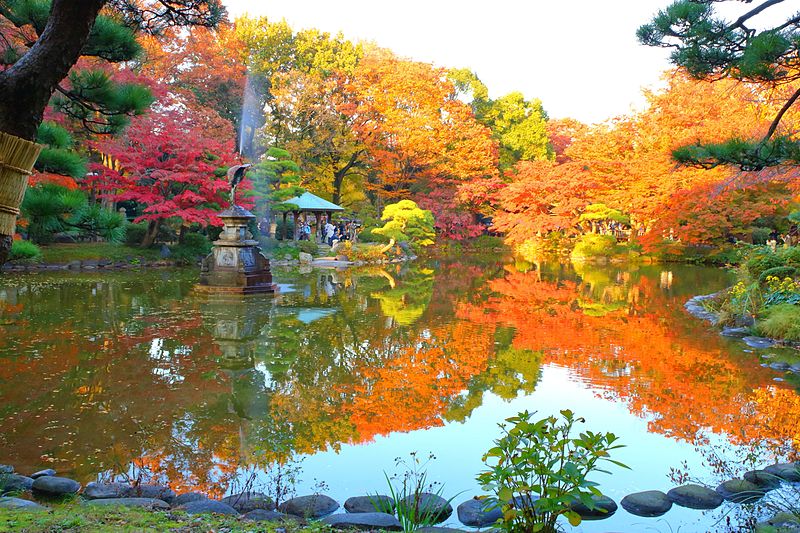
 Hibiya_Park_in_autumn_2


Hibiya Park in Autumn (Wikipedia)

Photos on Hibiya Park???


In more recent times, Japanese was gradually opening up its doors to foreigners, but still to only a trickle. Being newish to life in Tokyo in those days, I knew few people, so the breakup was a real ‘paradise lost’ for me, to quote the title of the famous John Milton poem. No doubt, thanks to the multi-purpose pocketknife, I shall continue to have fond thoughts of that attractive Australian lass. On an added note, the term "Swiss Army knife" was coined by American soldiers after World War II due to difficulty in pronouncing "Offiziersmesser", the German word for officer’s knife (Wikipedia). The knife was first produced in Ibach in Switzerland, in 1891. A few years later, Martha and I crossed paths by chance a few years later at a small bookshop in the Imperial Hotel in Hibiya in Tokyo.  She appeared just as attractive then as always, but not a word was spoken between us. She was dressed nicely, so I surmised she must have been on her way to work. As for myself, I think I had been killing a little time, as I was meeting someone for lunch at the time. That was the last time Martha and I would ever set eyes on one another again. Hibiya in Chiyoda Ward was my favorite place in Tokyo, and during my early life in the city I often would walk or cycle there to meet friends for lunch. This would often mean a stroll about the famous Hibiya Park, just over the road from the equally famous Imperial Hotel. The land had been opened to the public as a park since, 1 June, 1903. The park had seen its fair share of troubles and riots over the years, too, which I would not bother to go into now. The Hibiya Park was also home to a famous ‘Risky Ginkgo,’ an old ginkgo tree. To paraphrase Wikipedia: the Ginkgo tree was “about 500-years old and almost cost the park's designer his job when he fought to save the tree in 1901” (Wikipedia). In such a prime real-estate location, it was fortunate that the park survived at all. Even the Pacific War years had taken its toll on the park, for most of the trees and fences were acquired for the war effort. In more recent times, countless people flocked to the park to enjoy the many concerts that took place at the parks, Hibiya Open-Air Concert Hall, over the years. For me, the park was a kind of oasis, a place to feel calm in the heart of busy Tokyo. There were even some nice open-air restaurants worth eating lunch at, or just stopping to sip a cool beer at, in the hot summer months. The park was a good place to kill time to sit and watch the people go by. Back to the present, any love making was with the incoming waves that rushed over my naked body. There was noting better than laying on wet sand, being moved from side to side by the warm and powerful waves. “Mmm!” A massage from the heavens, I thought. For no particular reason, my eyes opened and closed with ever turn that my body made, over and back, over and back. Yes, this was the life! Avoiding the rays from the sun was on thing, but there were those times when its heat welcomingly added to the moment. With each turn I took, I glanced up at the white fluffy clouds in the bright blue sky, the pain in my body left me. When I was a child I used to see faces in the clouds, and being of Roman Catholic stock, I used to think they were the faces of people who recently died, kind of like the images of the bereaved on their way to heaven, a final resting place.

This may have been influenced by the fact that my own grandfather, Denis McAleese, had not long died. It was just as I was about to look up at the clouds to see if I could still make out faces, when I suddenly caught sight of a real face looking down at me. Up on a high grassy slop, not 300-meters distance away, my eyes fell on an elderly fellow. He was crouched over and moved from side to side, as if in some desperate effort to get a better look. The fellow looked right down at me, like he had seen something that did not seem right. Judging from his hasty movements, I felt he was uncertain about what he had stumbled upon lying in the foamy tide below. Was I a dead body he had seen, washed up on the dark sandy beach? Almost immediately, and just as shocked, I got to my feet grabbing what I could to dry myself off. At the same time, I found myself hastily casting my eyes about for the rest of my clothes, which were quickly gathered up and put on. By now, the elderly man had vanished, perhaps he realized that all was clearly not what it had seemed. Then I began to think at that moment that my privacy had been intruded upon, and even began to feel angry. Was nothing secret in this fucking country land? I mumbled under my breath, as I hurried to put on my short trousers, which I grabbed up from a rock where I had left them to air. With my body respectively covered up, I turned and made my way over the sand and up the slope to the main road near where I had seen the elderly fellow looking down at me. The backpack had been propped against a tree and out of sight. Of course, the old fellow saw me coming, as he had undoubtedly seen everything else. Whether or not he thought I was on my way up to confront him, he did not wait to find out. By the time I reached the crest of the slope, he was now standing up straight. Whatever his thoughts were, I would never know, for he turned around and hurried away, without a word or stop to look back. Just as I reached the top of the slope, I caught the sight of a car driving off. It was just as well he was gone, for I was a little unsure how I felt at my moment of tranquil bliss being suddenly interrupted. My love making with the warm tidal waters had ended before it had really began. In away, I felt a little cheated! Up near the road again, I picked up my backpack and retraced my steps over the hot grassy sand that ran along the side of the road. Somehow it felt good to be on way again. “Mmm!” Little unexpected encounters with people like this were not easy to forget, and so I found myself wondering about what had run through the man’s head when he saw me. Momentarily, I wondered if he, too, was part of the Home Guard or Dad's Army! I thought, as I tried to make light of it all. However, even trying to make light of it was not easy to do. “Mmm!” That was a very isolated and out of the way little spot, and not easy to see or get to from the road. Right or wrong, the sight of the elderly fellow up on the slope, kind of confirmed my own long held view that it was impossible to lose yourself in Japan. Prying eyes where everywhere! Soon I began to think, again, that maybe I really was becoming paranoid. Of course, people watched people all the time, and that was that! It was kind of just to see what the neighbors possessed or where up to. The Japanese never failed to amaze me in so many little ways.

Foremost among them, must surely be the way they stared at you for no particular reason. “Mmm!” Just then thoughts of Charles Jenkins again entered my mind. Keeping an eye on one another was much worse in North Korea where it was all part of the daily life. "Fuck it!” I began to feel better now. Unlike North Korea, things were not all that bad here in Japan, even at times the numbers of police amazed me. “Mmm!” If only I had tried that little bit harder to have met Mr. Jenkins when I walked around Sado Island! I thought. Soon I was able to focus my mind, and of course my eyes, in front of me once more. It would be surprising to some people how easy it was for the mind to wander, when on the road for long hours. How easy was it for drivers to fall asleep at the wheel? I thought. And how much of their brain was on the road, when they used their keitai denwa while driving? Nonetheless, it was very dangerous to drive and use the cell phone. This last few years, it was against the law to do so, in a good number of countries, including Japan. People caught while driving and using their cellphone, would be subjected to paying hefty fines. Even the hands-free phones being used in vehicles, was questionable. As of November 2004 the fine could be as much as ¥50,000 Yen. However, implementing the law was another thing. Not a day passed by when a car passed, then its driver was not using a cellphone. The paddy fields were now spread out like peanut butter on bread right in front of me. Far off to my right, six giant windmills were spinning away like there was no tomorrow. It was hard not to notice just how beautiful they looked, when the massive sails rotated. In time another little stop was made, this time at an out of the way local liquor store, or where the essence of sin was sold in cans and bottles. Needless to say, I treated myself to a nice cool bottle of beer. There was no better way to round off the long day under the hot sun, than with leisurely sit with a cool beer.  As far as I could make out, two friendly ladies with delightful smiles on their faces ran the store. One of the laddies I took to be a young mother, or so the sudden presence of a little child running about the floor, told me. No doubt the other lady was the child’s grandmother. Then again, one could never be too sure about anything these days. There was a good chance that both of the ladies were not related at all. They did not even look alike, not that that proved anything either. For some reason, I did not bother to ask them if they were related, perhaps for being tired. Besides, quenching my thirst with the cool beer, and taking the weight of my feet for awhile was all that I was interested in just now. After the beer, and speedy thank you and goodbye to the ladies, for being so friendly, I made my way back along the road, with the backpack strapped firmly in place. The new thing on my mind after leaving the shop was to keep both eyes wide opened for a good place to make camp at. Thankfully, this did not take me long to do. The dark clouds were passing across the moon and I could not even see the tent clearly. But the moon suddenly came out again, like it had been playing tricks on me. The fond thoughts of the people I met today or in the past, which often accompanied me through the lonely evenings, would have to wait another time, for now all I wanted to do was sleep.

Irishman Walking (Stage 4 Chapter 8) Summer 2010

af7a420a


Irishman Walking (Stage 4 Chapter 8) is about my walking the main and coastal roads of Japan. Summer 2010.


3 Aug, 2010: Last night camp was made at one of those quaint little parks, or Senmaida Pocket Park, as it was stated on a sign by the side of the road when I approached. The pocket parks were similar to the many little local parks dotted about Tokyo. But unlike in Tokyo, they were mainly for motorists to stop and rest awhile, and often without the tiny space for children to play in, with slide and swings. Just like the motorists, I would stop to rest awhile from time to time along the road. A number of the little parks had their share of quality trees to sit under and escape the sun rays for a while. In fact, it had been in a similar shady little park, where I had selected a spot to be the resting place of my trusty old boots. The Senmaida Pocket Park looked down over the vast open sea, and away on the horizon I could see that a mist had begun to form. Because of the mist it was impossible to see the stretch of coastline that I hoped to follow today. This did not bother me so much anyway, as I knew well that Kanazawa was a good few days away on foot, whether I could see the outline of my route clearly, or not. It was just nine-kilometers to Wajima City, and experience told me that it would take about 90-minutes. All in all, the old legs and feet had stood up well with little wear and tear on the body, even if I was weighed down by the heavy backpack. Even short distances in the height of winter, I well recalled, was more punishing and exhausting than in summer, so now was no time for complaint. Fortunately, the kilometers fell away like the pins knocked down in a game of ten-pin bowling. Although its true origin remains vague, bowling was believed to date as far back as the Egyptians, 3500 BC. Of course, that had little to do with the present, for I was more than contented with my pace and timing, which kind of countered what I had felt earlier, or that this would be a slow and lazy day. Last night, I had made up my mind to stop at a hotel somewhere soon, partly to escape the relentless sunshine, and to rest my body in a proper bed. Every part of my body was just about worn out and I felt that I needed a little bit of luxury in my life to hold my mind together. Most of all, I looked forward to a long soak in a hot bath. “Mmm!” Maybe even to rest up for two days, providing the place was good, I thought. This was not a bad idea, for l had learned from my friend in Tokyo by phone that heavy rain was expected to fall this evening. It was at a place called Nafune, where I made my final rest stop and second beer of the day, that I learnt about Senmaida Pocket Park. For me such a place was only worth stopping at if it had drinking water, and preferably a public toilet, too. The little parks had different layouts and designs, some with trees and some without, still they all had something similar about them that I could not put my finger on. What I did know was that every time I stopped at the little pocket parks, I would remember my old hiking boots again. They were good boots and I had successfully covered a lot of ground thanks to them, which included hard and happy times, too. After all, they had cost me a pretty penny! “Mmm!” Two-days had already passed by since I buried them. From birth to the grave, how time flew by.

Then there was the odd time along the road when I was hunted with the feeling that I was still wearing the boots. The inexpensive shoes and sandals that I now decided on, were usually comfortable, but I would be lucky if they lasted for the entire stage. Only  when I glanced down at the ground that I noticed I was not wearing the boots, and recalled that I had buried them. Very soon afterwards I reached the outskirts of Wajima City. The tramp into Wajima itself took me only a kilometer or so. Sometimes, however, the shorter journeys turned out to be the most problematic. The Senmaida Pocket Park was not 20-minutes away when I stopped a short while to look at an old grave, near the main drag, Route 249. The stop along the road to look at the grave was for no particular reason, other than curiosity, still, it caused me to think about my own situation. After all, there were only two things that one could be sure of in life, tax and death. Sometime in the future, I knew that I needed to see about my own grave. Most people, I felt, avoided thinking or talking about such things. It was too dismal a subject for them to think or talk about! Such things were often left to the remaining family and friends to deal with, and who were often too overcome at the loss to think clearly. For want of a better word, it was quite common, for Japanese families to have their own graves to hold the ashes of their bereaved, grandparents, parents, children, and so forth. This also kind of kept the family ties intact, for a while anyway. “Mmm!” Such planning far from cheap, which caused me to wonder what happened to the poor when they died? The grave near the roadside appeared alone and uncared for. For the overgrown of bramble and weeds, one needed to look really carefully to see the grave. There was something a little grand about the grave. Its occupant must have come from a family of means! Perhaps the person’s family, friends, and acquaintances, were also long dead. That sort of thing happened! In the West graveyards had changed little down through the years. A deep hole was dug, the coffin was ceremoniously lowed into it, and then it was filled in again. An arrangement of flowers or wreaths were often placed on top of the new grave. After a while when the ground settled a headstone was erected with some appropriate names and dates carved into it, again at a frightful cost. There were three things that cost the most in life, marriage, taxes, and death. Marriages and death in particular had become so commercialized and prohibitively costly, not only in Japan, but the world over. At times stopping to rest awhile proved a waist of time. At such times it was near impossible to relax for the smell and noise from the traffic that shot past, and I would still be tired whenever I started off along the road again. This was something I would kick myself for later on, especially if the day did not go as well as I had planned, or fell short of the distance covered the day before. With my curiosity at the grave now satisfied, I turned away and made my way back on to the road. Like the grave, the sides along the roads were often uncared for, too. At times the drain-gullies were not easy to see, for the overgrown brambles and bushes that grew about them.

The size of the drain-gullies was usually no more than knee deep and just as wide, so it was worthwhile being extra careful for fear of taking a tumble. Such concrete structures often ran all away along the sides of the countryside and coastal roads. They could be quite hazardous if one did not keep their wits about them, and not just for hikers, but cyclists, motorbikes, and motorists, too. This was in addition to keeping your mind focused on the road, which was not as easy as it sounded, with the old mind wondering from one thought to another. Tramping the long hard roads hour after hour really took its toll on the body, let alone on the mind. So when a tired mind tended to wonder off on all sorts of tangents or directions, accidents waited to happen. Some while back, I stepped right into a drain-gully that was blocked up to the rim with muck and slush. It may have cushioned the tumble, but the weight of the backpack only added to the mess. When I dragged myself from out of it afterwards, needless to say, I felt like the village idiot. The damn thing was not even hidden by overgrowth. And with carrying the heavy load on my back, any thoughts about keeping upright was quite out of the question. It had all happened so suddenly that it would have been impossible for me to stay on my feet, even if there was no load on my back. In fact, the tumble happened so quickly, it was not even a matter of falling down the best I could in order not to break any bones. In a word, I felt powerless! That was not quite how it appeared to be with the stunt men and women in some of the films I had watched. For example, the way the cowboys and Indians always landed on their backs after being shot off something high up. The only big difference was, they knew what was about to happen before hand, and their experience resulted in a happy outcome. Like I said, the drain-gullies along the sides of the roads were knee deep and just as wide, however, I till came out of it a mess. No sooner had the sole of my left sandal sunk into the muck and slush and touched bottom, when the weight of my upper body bent forward forcing me belly first into the drain-gully. Now with my arms outstretched before me, as if I was reaching for something, the weight of the backpack on top of me made its presence all the more felt. Like I just said, the whole thing happened so quickly that it was impossible for me to have done otherwise, but land the way I did. For a few moments, I lay where I was, with the wind knocked out of me, trying to recollect my thoughts. I do not think I swore at the time, but after a short while my mind began to clear. There was nothing left to do but pull my elbows under my chest the best I could and heave myself upwards onto all fours. Any unsuspecting motorist coming along the road would have been startled to see a head popping up out of no where. It was impossible to shift my body to the right or to the left, not that that bothered me much, for I could not have been more covered in filth. The state of my limbs was what matter most, and all seemed well enough. Now with my elbows under my chest, I needed to test my legs to make sure they were in order. With a deep breath pushed my hips upwards into the air and slowly inched my knees under me as far as I could get them.

The weight of the backpack made this all the more difficult as my knee began to hurt, but fuck it for what could I have done? I remembered thinking at the time that at least I was lucky it had not been raining, or the thing was not full of rainwater, like on so many other occasions. Most of all, nothing was broken or damaged! My clothes could be quickly washed and dried, if need be. The heat from the sun was already working its magic of drying the muck, which I felt could seen be brushed off. At the same time however, I was determined not to assume anything beyond the road ahead of me. I needed to stay focused! Only when I was able to pull myself up and onto my feet again, and take a few steps when I felt a sudden pain run through me. Thoughts of concern suddenly hit me. “My left leg! Not my left leg!” It all seemed so strange! “Surely it was not broken!” I mumbled to myself, sitting down by the side of the road to check things over. The pain did not seem so bad now, or such that indicated I had broken my leg. Still, there was a funny feeling that told me that something was not quite right. All the same, it felt good that nothing was broken, as I pondered my next move.  Even before the fall I knew that I was going to have to dump some of my stuff from my backpack the next chance I got. Perhaps at camp later on I would sort things out better and think more clearly about what to keep and what to dump. “Mmm!” Even the little army spade that I had used to bury stuff seemed more heavy than useful, or so I now thought. All that could wait! My brain felt clear and happy that I had not broken anything, at least I hoped that was the case. After all, my elbows and knees had worked well together to get by butt out of the drain-gully ad onto my feet, all in one piece. From where I set awhile to ponder my next move, I looked across the road at the traffic that whizzed past. I was in  position every time I crawled into my tent in the evenings, and I never thought about how difficult it could be when the circumstances changed against me. The weight of the backpack was clearly a problem, for I was still worried about any unseen damage. Even a serious sprain or fracture, would undoubtedly put an end to my mission, for a while. So it would help to have less weight on my back. After the tumble, it felt strangely good when I got to my feet and up onto the side of the road. Even if I dragging the backpack behind me, which I had with some difficulty, unfastened in the drain-gully. Also, it felt good, when I realized that noting was seriously damaged. Then again, the time it took me to get my mind focused had taken more time than I might have preferred. The fall had knocked the wind out of me. Father Time waited for no one, therefore it felt good to get my butt firmly in gear and off along the road again. Besides, there was no point in hanging around any longer. Getting back into my normal routine and back onto the road again could only be a good thing, provided I kept my eyes open this time. Clearly, I was still a bit shaken, as I tried to put things into perspective! There was no swelling around my left ankle, yet, but I needed to tread lightly just incase.

The traffic along the road was not as busy as it had been a while earlier, which was good. On the road I tried to look on the positive side of things, that even the heat from the sunbaked asphalt was of little concern. It seemed strange, but I felt happy, that I came away with only a slight pain in my ankle. Apart from a couple of scrapes, too, nothing was sprained or broken. It felt good that I was able to heave myself up with my hands and legs, and back on the road proper, as if nothing had happened. For a moment I felt as if I had just won the lotto. Not that I had ever won anything in my life worth writing home about. “Good! Nothing was broken!” I mumbled to myself, and looking up at the sky as if to thank someone from above. Just then at that very moment when I looked upwards, I felt an urge to shoutout at the top of my voice. The exhalation that I felt embarrassed me a little, for normally I was the quiet type, not much prone to speaking loudly, if at all. When I did swear from time to time, it was never directed towards others, but usually only under my breath at myself. As a young man, I had spent my teenage years in London, where I was an absolute bore, compared to my friends and acquaintances in those days. Some of my friend were the sort of young people who loved partying when the chance allowed and being among the crowds and glitter of the nightlife scene. A few of my friends, who knew me well enough, where themselves not the noisy types. As far as I could remember, I felt uneasy in the company of those who spoke loudly, or among large crowds. “Mmm!” Compared to my friends, I wonder if that was why I never really clicked among the girls who loved to go dancing? Just then, there appeared to be a complete letup in the traffic! This was my chance! At the side of the road, I howled at the top of my voice a series of words that had no particular coherent meaning to anyone but myself, and even then I was not so sure. "Fuck it! Fuck everything! Good! No problem! Bring it on!" I found myself yelling as loudly as I possibly could, but I was not sure just how many times I should the words out. In reality, there was noting much to remember or care about! All that I knew was it had been a good many times. Besides, it felt good that nothing was broken! Now it was time to move off, as time was not on mysids. Besides, the traffic was increasing once again. After sometime on the road, a sharp pain in my right hip began to needle me, and continued that way for the remainder of the day. “Mmm!” A thought came to me that if I was able to cope with long roads, heavy vehicular traffic, under a relentless sun, then I could coup with anything. Actually, all sorts of thoughts came and went, more in an effort to focus my mind away from the pain in my hip, but it was not easy. On my old monolog television set back in Tokyo, I had watched on a number of English Premier League games, football players running off pain they received from a heavy tackle, which seemed to work. "Could the same be said about tramping the long hard roads after a nasty tumble?" Surprisingly, even with extra stops to rest, a slight limp in my left ankle, did not prevent me from making up lost time.

This was partly because of extra care than any inner strength on my part. Earlier, some of the scrapes in my right arm and leg had begun to bleed, but soon stopped. All in all, I consider ed myself fortunate, for once the blisters had not been a problem. The problem of blisters on the soles of my feet, or behind the heels, had been painstakingly annoying at best. Mostly, however, I was able to deal with them before they became too debilitating. In the summer, I found that wearing sandals proved better and more comfortable than hiking boots, which caused the feet to sweat big time. And each time that I stopped to rest meant unfastening the boots and removing them to air the feet. This only added to the time lost. The sandals kind of lessened the friction, if not the moisture and dirt. The dirt helped cause the blisters to form, if I was not careful. When selected properly, sandals were comfortable from when they were just bought. Not always true with boots. Even good walking boots often needed to be broken in a bit before they became comfortable enough for the road. One good thing about wearing sandals on the road was that you could feel the air better. The difference with boot and sandals was like wearing socks and not wearing socks. Of course, this depended on the occasion or circumstances — distance, pace, and weather conditions, etc. One trick that I learnt on the road from experience was to cover parts of the soles of my feet with a zinc oxide tape, the sort hospitals used for bandaging. Fortunately I was able to pick up a few rolls of the stuff at one of the many ¥100 Yen stores in Tokyo, before setting off on the stages of my mission. Of course, whenever a blister did begin to make itself felt, it was important to clean the area well with soap and water. Preferably warm water, but on the road such a luxury was sometimes out of the question. If possible, I preferred to leave such things until camp was setup in the evenings. However, there was the odd time when I could hardly budge for the pain from the blister, so it needed to be seen to almost immediately. I was not always so well prepared at such times. Among the things I carried with me for good measure would be a few tubes of anti-bacterial ointment, which would often be used up by the end of the stage. A needle and a tiny spray of alcohol to sterilize the damaged area with were good tools to pack. However, even with experience, sometimes things were overlooked or forgotten at camp, or lost somewhere along the road. On more than one occasion I was forced to use my knife, or even a set of tweezers, and the odd time even a pair of pliers, to bust the blisters with. In other words, I was willing to use anything that worked! Once the pain was reduced or gone, the old mind would soon be searching for something else to focus on. In time much of my mind was focused on getting my arse past the city of Wajima. To do this in the time that I had planned, meant there had to be no more stops for rest. There was no shade along the road to entice me to sit under a while, so it was not so difficult to just keep going. Any attention given to the wounds I sustained in the tumble earlier, would have to wait until camp later on.

Just as I was getting into a fair pace along the road, a sharp pain, this time in my left leg from the ankle to the knee, began to make itself felt. The pain was not easy to shrug off, like I had seen professional footballers do, but only seemed to increase with the passing minutes. I had hoped that I could get a good number of kilometers under my belt, before I made camp. A slight limp had become more prominent and was now hindering my stride. At last I noticed a broad shade, cast out over the road, thanks to a cluster of trees, up ahead. Needless to say, I headed directly for the shade and set down under one of the trees, to size up the wounds. In the distance I could hear the wail of an ambulance siren. “Mmm!” If only there was someone professional to deal with me, I thought. Wishful thinking! Not a day went by whenever an ambulance did not pass me by in both directions, usually with the siren blearing madly away. The ambulances in Japan seemed to move more quickly than I had seen them do in films. Soon my mind was focused again on patching up my own weary body. Sitting on a grassy patch by the side of the road, Route 249, I quickly kicked off my sandals and dug about inside the backpack for my first-aid kit, and a few other odds and ends. Even while sitting, my found myself scanning the area for other hidden dangers, like things to trip over or fall into. There was an open drain-gully which, like all of them, ran close by the side the road, and only reminded me of my foolishness. "Don't worry! It won't happen again," I mumbled to myself, whilst at the same time turning my attention to the cuts and scrapes on both my arms and legs, reminders of the trials and tribulations of my mission. Apart from a couple of newly forming blisters on my right foot, the cause of the limp, my wounds were not as bad as I had thought. Furthermore, I could not quite see why I experienced the sharp pain in my left leg this last few kilometers, for it seemed to have completely vanished. At least I hoped it would stay that way. The way I saw it, my wounds were nothing that a dip in the Nihon Kai later on, would not put right. With the wounds cleaned and carefully attended to, the little first-aid kit stuffed back into my backpack, I was ready for the road once more. Back on the road again, I could not help thinking about my old boots. "If only I had them now!” I mumbled to myself, and wishing that if only I had held on to them for a few days longer. They had fitted so well, that any problem with blisters was few and far between. Even in their battered condition the old boots those old boots would have served me well on the road. They would have protected my feet and toes well, and had a good sturdy support at the sides for the angles. It was too late now! The Japanese tended to say, ‘Shoganai’, about something that could not be helped or beyond their control. Much of the road that led to Wajima City was up hill, which made me think that the road was doing its best to test my nerves further. The final number of kilometers were especially tough, and not helped any under the relentless sun. Not only was the incline so steep, there was not a single shade to duck under for awhile, anywhere about the road.

On the road, the sun continued to have a field day with me. Since the tumble that I took earlier on, the need to find drinking water soon, and the scorching sun, caused bouts of depression, and all kinds of negative thoughts to enter my mind. Such as telling myself that: ‘I must be fucking mad.’ And, asking: ‘Why on earth was I doing this?’ While at the same time longing to be back in the comfort of my place in Tokyo reading a book and drinking a cup of freshly brewed black coffee. At last I came to a local postoffice that thankfully had an ATM machine. "Good! That will save me the trouble of bothering about money when I got to Wajima." The postoffice was also a good chance for me to sit-down and write out some postcards and get them away. After giving a friendly nudge and smile at the staff behind the counter, I set myself down on a chair to get to work. Getting some of my postcards out of the way was one less thing to worry about. That was good since I had enough responsibilities to think about. The cool air hummed out from the air-conditioner to just above where I set. At my place in Tokyo, I never used the air-conditioner, unless a visitor wanted it. This time, however, the cool breeze on the sides of my face felt good. The cool air went some ways to southing my body and calming my mind, before heading back out again on the hot dusty roads and the uncaring sun. My sore feet and legs continued to trouble me all morning and much of the day. The short rest stops, which I had hoped to curtail, continued to come and go. The chance to sit down somewhere, or to stop off at whatever scenic  spot caught my fancy, were good chances to redirect my mind, for a few moments. By the time I tramped into the lobby of the Hotel Marucato in Wajima, my feet were absolutely killing me. At the counter, the details were given to me to fill out, my alien registration card was photocopied and returned, the room charge, ¥5,500 Yen, was forked out in cash. 

More on 3 Aug, 2010... 


Usually when I called it a day and made camp, the sun was on its way down. Now I could hardly stand up straight, let a lone walk with a heavy backpack strapped in place. How I looked forward to soak in a hot bathtub. Exhausted or not, however, check-in time was not until three o'clock, two and a half hours away. The only room open to me before then was the public toilet, located behind the check-in counter. At the toilet I pulled off the sweat soaked T-shirt and started to wash my upper body the best I could at the sink. The warm soapy cloth made my efforts all the more pleasing. All the same, it did not surprise me any that the dust from the road had blanketed much of my skin. There was noting better than slipping on a fresh T-shirt, the last piece of clean clothing I had to my name. When I do get that damn key for the room (#511), taking care of the dirty washing had to be on top of my bucket list, before all else. Until then, all that I could do was to take a dander about the town. Not far from the hotel, in the direction of downtown, two small eating-places stood facing one another. It was high noon and time to settle a rumbling issue in my stomach. The 'Cafe Bon Mger' looked a bit too pricey and upbeat side of things for my liking. It was too early in the day for me to consider anything other than something inexpensive. So, I sauntered over the road to the other place, '8 Hachiba Ramen', to see what it was all about. The '8 Hachiba Ramen', was a kind of family restaurant that offered eight different types of noodle dishes, if not more. The ramen restaurant seemed a good choice for the moment, besides, if I stopped a second day in Wajima, then perhaps I might try the other place, too. On the phone earlier with my friend, Riko, in Tokyo I learned that most of the other hotels in Wajima were full up. Hotels in Japan were normally busy on weekends, but this was no weekend. Being a Tuesday, we were not sure why the hotels were so busy, and thought that perhaps some big event or conference was going on. In my dander along the streets it was easy to see that there were a good few interesting places to visit and restaurants to eat at. Needless to say, I was in no mood nor condition to walk very far, for the next day or two, and was contented to sit down to rest my feet when I could. From the menu I ordered a cool noodle dish together with a plate of gyoza. It did not take long for both dishes to arrive. The cold noodles, and the piping hot gyoza, resembled the way my body felt, cold and hot. The pain in my body, told me that  needed to do some surgery and bandaging on my feel and legs before I hit the sack tonight. The blisters that were quickly forming on the soles of my feet, the worst of places to have them, would need to be burst open the moment I got back to the hotel. Most of the discomfort, when I walked, was mostly on the sides of both feet. So much had to be done whilst I had the chance. In good time, everything would be done and out of the way, and thoughts of a good long soak in hot water, cheered me up. Only God knew how I needed a hot bath!

More on 3 Aug, 2010... 


4 Aug, 2010: The first night in a real comfortable bed at the Hotel Mercato Wajima was simply bliss. After the badly needed bath I climbed had in between the sheets in the hope I would soon be asleep, almost up until checkout time the next day. That was until thoughts of my dirty washing suddenly entered my head. "Fuck it!" I said clambering out of the bed. After slipping on the hotel robe and stumbling into a pair of slippers, I headed out of the room and down on the elevator to the laundry room. As if it had anticipated my return, the elevator was waiting at the fifth floor. No one was in the lobby or behind the reception counter when the elevator door closed behind me, so I rang the tiny bell! The charge for the washing machine was ¥200 Yen. At other hotels that I had stopped in, the coins had to be inserted into a tiny slot on the top of the washing machines. Here however, the money was paid to the girl behind the counter. There was no extra charge for the soap powder, which was good. Soon I was back up in my room, Room 511, and sitting in front of the television set, whiling away the time, and uninterested in what was on the different channels. Thanks to the television's bilingual control turned on, however, I was able to catch the NHK seven o’clock evening news, which did not tire the old brain so much. It took 30-minutes for the washing to finish, and almost as much time to retrieve it and hang it about the room to dry, which saved a little money, if noting else. When I did stop at a hotel somewhere along the way, things did not always go as planned as they did this time. Following a good rest, I no longer felt tired, and with the pain gone, I looked forward to strolling about the city. The city of Wajima was a pleasant little place with lots of interesting and touristy sights to stop and look at. Not that I was ever into visiting those places that drew the crowds. Ever since I could remember, I had been contemptuous to places that people flocked to. There was also a wide array of interesting shops and restaurants dotted about here and there, which again were of little interest to me. One of the desk clerks at the hotel told me that bicycles could be hired for getting about on, which did interest me. Even with the pain that I had recently had in my feet, and leg muscles, not completely eased after the long soak in the bathtub, a stroll about the streets seemed as good an idea as any. Situated right on the Nippon Kai, Wajima was noted for its fishing and temples. Wajima was rather new, being given city status as recently as March, 1954. Today the city had a population of more than 30,000 inhabitants. Also in March of that year, the United States and Japan Defense Assistance Agreement was signed. The agreement allowed both countries to support one another’s militarily, and permitted American troops to be stationed on Japanese soil to help beef up the security of the region. This supposedly made Japan more obligated and responsible for its own defense. After all, the Korean War had ended less than a year earlier, so a threat remained. It was also the year when the film Godzilla was first released, in 1954. A massive earthquake hit the Wajima, in 2007, and caused much damage to the city and left one person dead.

Now I did not want to think of such things, but the present, which I also hoped would not include pain in my feet and legs. Even before I had arrived in Wajima City, I had come to the decision that it would be best for me to stop for two-days to rest my mind and body. This was not because of any great interest in Wajima, rather the blisters in my feet needed a little more attention, like, soaking in hot water and a little more rest. All the same, it was good that I did not bother to hire a bike. The stroll about the city allowed me to see how well my feet and leg muscles would standup, even without the heavy backpack. Tomorrow was another day and and I felt it pointless placing unnecessary strain on my body. So in the morning I decided to hire a bike this time to see a bit more of the place. For long I had wondered, with admiration, how homeless people dealt with their hard lifestyles. The average Joe Public did not know nor care what a barrier poverty was to getting back on your feet again. When I brought up the topic of homelessness with some of my colleagues, I was surprised at how they held the view that the homeless were that way because they wanted to be. This was probably true enough for a tiny few, but not for most of those who found themselves fallen on hard times. Many people had fallen on hard times entered into a completely new world, surrounded by others completely in the same boat. It was a lifestyle that was difficult to escape from. That said, my own financial situation had been on strained circumstances a number of times over the years, hence my respect for that thin line that existed between having a home and being on the streets. In a sense, I was once homeless, a situation that lasted for more than a decade. At least that was how I used to refer to myself during those aimless years when I galavanted around the world from country to country. Those were the years when I roamed thought Europe and slept literally in pigsties of filth and uncleanliness beyond description. Not to mention the many dirty, cheap, rundown hotels that young longhaired backpackers like myself gravitated towards. Those were the days when many young people often shared the same rooms to cut costs in our day to day lives. However, back to the present, life on the road was really an isolated thing, whether it was a drab existence or one that seemed like a heaven on earth. It was hard not to respect nature, not just for its beauty, but for its power over my feelings. Therefore, I lived pretty much the way I felt about the things around me. When the weather was miserable, then at times I felt miserable, if not depressed. Then when the scenery was magnificent and the weather warm and favorable, then I felt on top of the world. In a word, happy! Likewise, the evenings at camp could be either miserable or peaceful. When my plans went well and I was able to cover the distance I had set out to reach regardless of the weather, then that was good. In the evenings I often sought solace with a cup or two of red wine on a quiet evening with a campfire and the sea for company. The average Joe Public would not fathom what life was like on the roads. The many times I found myself having to sleep in damp clothing, or doze off for a while in the freezing wind and rain, tramping though blistering snowstorms.

What normal person would wish to put themselves through such misery and hardship? The homeless in Tokyo, or elsewhere, for they really slept out under the elements with little choice in the matter! There was one main difference that separated me from the homeless people I saw along the way, especially in Tokyo where there were so many. In my case, I was on the road by choice, and in a position to pursue my own sense of luxury when the chance allowed. One example of this was the warm comfortable hotel beds, and the choice of food and drinks, whenever I felt like it or when the chance allowed. When I first came to live in Tokyo, in 1979, my life was one of complete simplicity. There were few furnishings, and little else of anything in the little 4.5-tatami room I rented in those early years. What accumulated first, I still recalled the many books that lay about the floor, which gradually would come to be piled up against the walls. There were also a good few newspaper clippings that I kept here and there, to read again at a later date. Whenever I sat down and looked about my current place  in Tokyo, it never failed to amaze me at how so many things had been accumulated over the years. A humble and inconsistent lifestyle was nothing to be ashamed of. Nor was a life of simple means and tastes, for everything I once owned could be stored in a backpack. There was a time during the cold winter months when I was contented to crash out in my sleeping bag on the tatami mats, and in the summertime only a bath towel as a cover, did just as well. There were no cushions to lie down on or sit on during my first year in Japan, or until some young ladies I used to teach English conversation to, showed up one evening for their lesson, each  carrying a cushion, their gift to me. Part of the code of etiquette in Japan was gift giving, whether you wanted one or not. Perhaps I was the one who should have supplied the cushions for them to sit down for their lessons on in comfort. Rented or not, it was my place, and the students were paying me money to teach them.  In Japan when a gift was received, a sense of obligation came with it. The best was not to accept any gifts, but how to do that without offending was another thing. In this case the young women were just being thoughtful! Being a complete outsider in a country where just about anything was new to me, I was not aware of the rights and wrongs of the customs. The Japanese always seemed to forgive foreigners for forgetting to remove their slippers when entering a tatami room. However, not having even slippers in my place, such rules did not apply to me or worth thinking about. The Japanese needed cushions (or chairs like much of the world) to sit on, whereas, I did not give a damn one way or the other. Besides, I think I had a preference for the outdoors from the time I learned to walk. After the gift of cushions in those early days, which I was happy to get, were always produced whenever guests paid me a visit, which was not very often, I might add. Since that time, I had learnt quite a bit about Japanese cultural norms, and so forth. In the case of gift giving, for example, it was advised not to give someone something that in someway showed the number four.

A reading of the kanji for ‘four’ was ‘shi’, which to the Japanese, suggested death, and therefore such gifts might be considered impolite. Come to think of it, when I looked back on those early days, I was given four cushions, one from each of the young women, and an extra one for yours truly, the teacher. Then again, I was probably the least superstitious, and never batted an eyelid with I walked under ladders if they were in my way. Personally, I did not give a damn. In the weeks and months that followed, and my first winter in Japan setting in, a futon to sleep on, together with the necessary sheets and covers were bought. Not long after that, things gradually began to be accumulated bit by bit, and fill the place up. Not everything was bought new from a shop, like the kotatsu or low hot table I once owned. Likewise, a couple of bookshelves, a refrigerator, a television set, and a host of other household stuff, came right off the local dumps, all in good working order. That was how it was with many young foreigners new to the country. Even as things began to pile up, my tiny 4.5-size tatami mat room still looked rather barren to anyone who stopped by to visit. Strangely, they were happy days, not a care in the world, a head full of youthful thoughts about the present, in the belief that tomorrow took care of itself. Oh how I longed so much to step back into time, to enjoy the many splendid seasons again with people long gone from my life. They were the days, a time when the Japanese boasted lifelong employment. Times had certainly changed big time since my early days in the country, and not necessarily for the better. These days in Tokyo one picked up used and secondhand stuff at so-called recycling shops that had sprung up here and there, mainly in the big cities. The stuff such places sold was not exactly cheap neither. Unless of course, one lived in one of the more exclusive residential neighborhoods, such as, in Den-en-chōfu in Ōta Ward in southern Tokyo, where the odd bargain might still be scavenged from one of the many local dumps in the area. Somehow though, I was not quite sure I had it in me now to pickup some useful treasure like I did all those years ago. Those were the days when I was full of those animal instincts important to survival, hopefully found in any healthy youth. Of course, I was no longer so young for my years, but I was not too old either for my health. Thankfully, one thing that had not deserted me was a sense of adventure, perhaps more so than ever before. And why not, for life was so short anyway. What time remained had to be lived all the more. There were the many times when the road appeared to be beckoning me on, and even with my scant savings I answered the call. Thankfully, too, I had drawn inspiration and strength from the people I met along the way. Some of them thought I was brave to even attempt my mission, tramping around the main and coastal road of Japan. It was perhaps the fifth longest coastline in the world, at 29,751-kilometers. “Mmm!” Was it also a sign of bravery to sleep outdoors most of the time and in all weather conditions? At least I could not see myself in such a light, and only though about it when people I stopped to chat to from time to time mentioned it.

There was a thin line between bravery and stupidity. On a good few occasions I needed to gather within myself a courage I did not know I possessed, in order to push on regardless of what the weather had in stock for me. What was the alternative at my age, but to try and live my life to the fullest? Already I had missed the bus on a good number of important things in life. It was too late for me to reestablish myself somewhere and work hard, like make lots of money to build a strong and loving family home base. Like many other before me, I once had such a loving home base, but even that had not lasted until death do us part. Incidentally, I do not know a single family member, friend, or acquaintance who was not divorced or remarried. Ever since my youth, I could not say that I was driven by a single purpose, like, the accumulation of money, wealth, and property that so many people since the beginning of time saw in terms of being successful. Even in my aging years, it was impossible for me to relocate my arse back to Ireland to live out the rest of my days. Not only was this impossible, but why would I want to relocate? I owned nothing there, and most of the people whom I was close, had gone to meet their maker. Furthermore, although I was Irish in nationality, I was not by citizenship, which the Irish tax department knew only too well. Even when I studied at Queen’s University, Belfast years earlier I was classified as a foreign student and therefore was charged an arm and a leg to be there. It would have been nice if I had enjoyed the same privileges, immunities, and exemptions afforded to the Japanese, rather than being made to feel isolated without a legal leg to stand on, which was how many foreign residents felt in the country. On the roads I felt really free, or at least until the police would bother their butts to stop their cars to question me, a thing they had done so many times before. Other times too, an indifferent glance would be thrown my way, but they did not stop and merely drove on. My old brain did not let up working overtime, could be dangerous, for I might lose all sense of direction in which I was going. For a while I wondered what freedom was? Of course, I was not quite sure, but felt it had something to do with being your own boss, like, not part of the packing order, or being given a raw deal if you were unlucky at something. In this world, governments and bosses controlled what and how much was produced. In turn, the labor force did the hard graft, with little or no say in what they received in return, often long hours and underpaid. Of course, most paid workers had choices, namely, shut up and do the work or step aside and let someone else do the job. There was noting finer than not being controlled by the trials and tribulations of society. Then again, even being shipwrecked on an isolated island had its own trials and tribulations in the job of survival. Having a job was very important, and all the more meaningful to life if you really liked what you did. All the same, most people I felt, were slaves to society, with high mortgages to pay off, children to feed, to cloth, and to educate, to keep the family structure in place, and so forth. In away, that was all very nice and important, but it was no longer for me!

My time had come and gone, and that was that. These days, I saw myself as a tramper of the roads, a wanderer, a sojourner or sorts, where it was impossible for me to stay too long at any one place. Even in Tokyo I do not think I lived more than a couple of years in one location. In fact, I had lived in many different Wards since the day I arrived in Japan. In a word, restlessness! Besides, living out under the elements all hours of the day allowed me to gain a deeper understanding and consciousness of myself, or kind of define my identity, who or what I was in this world, and which I was not able to do when I followed the normal way in life, education, job, home, family, etc. Wishing to aim for more stable pursuits in life were not wrong either. Of course, I really hoped such a lifestyle went well for everyone, but it did not seem to fit with me. Not that I really had found what I was looking for, or even if I was still searching. Like the idiom said, ‘different horses for different courses!’ In away, the road was my course, and presently I was headed towards Wajima City on the coast of Ishikawa prefecture, and that was all that mattered to me just now. A room at the Hotel Marucoka Wajima set me back ¥5,500 Yen, and came with a rather minimal buffet breakfast, which consisted of a couple thermos flasks of hot black coffee, with jugs of orange juice, milk, and an assortment of bread to choose from. There was a toaster nearby, including margarine and butter, with an assortment of jam, all wrapped in tiny plastic packs. “Mmm!” Momentarily, I wondered if it was classed as stealing if I loaded up on some of jam to enjoy along the road later on? 

More on 4 Aug, 2010...  


After breakfast, I made my way back over to the reception counter to tell one of the clerks that I had decided to stop another night at the hotel. Actually, I had expected to pay the same room rate, and was a little taken aback to learn from an attractive young female clerk that it would be required to pay ¥6,000 Yen. "What! Why?" I asked. “I just told the room cleaner to leave me clean towels, and not to bother tidying the room or making the bed.” “Mmm!” Something seemed wrong, I thought. Of course, the difference was only another ¥500 Yen, but I took it more a matter of principal, than not. "Ah, I see!” I turned away from the counter and took the elevator back up to the room, my castle last night. Checkout time was at eleven, but instead of lying down on top of the bed for the last hour, I got on the cellphone to my friend, Riko, in Tokyo. Each time my friend received a somewhat unexpected call from me, the first words out of her mouth were: "What’s the matter?" Sometimes there would be no answer at the other end, which did not surprise me, for she was a truly busy woman. An account by trade, and the work at times took her across the Pacific to Hawaii. So it surprised me no ends that she was able to assist me on my mission, such as, giving me information and booking rooms, when I decided to stop at a hotel somewhere. Notwithstanding, I was unsure what we had in common, or why we got along reasonably well. To some extent we were both absentminded, which I guess was nothing to boast of, especially considering the nature of her work, mathematics, calculating numbers, and so forth. There were the numerous times she had forgotten where she left her cellphone, or left it in an upstairs room in her house not hearing it ring. Once my friend told me that she had thought she lost the phone only to discover later that she had left it at home. It was just as well that she had given me her landline telephone number just before I left Tokyo, which I now dialed. Riko answered! “Hello Riko, it’s me! I’m at a hotel in Wajima!” “What’s the matter?” She asked, in her usual authoritative or self-confident tone of voice. It did not take me long to fill her in on the current circumstances and told me that she would do some telephoning around and would call me back before 11:00 AM. Needless to say, I thanked her very much, for I really appreciated her help! The phone line went dead, and now all that I could do was to wait a while! In no mood to turn the television on, and merely lay down on the bed and closed my eyes. To put it plainly, my friend had kindly booked the hotel room for me for one night only, not for a second night, like today. If she had of been able to book a room via the Internet, as we had talked about a few days ago, then the cost would have been the same as the previous night. Then my mind momentarily turned to the young female clerk at the counter, whom I spoken to this morning. She seemed to be on a different wavelengths to what I was led to believe from my friend. Cash card in hand, I assumed nothing had changed and that everything was understood, and all that I had to do was to tell her my intentions of stopping another day. 

Clearly somebody was wrong! The desk clerk seemed confused at my being surprised at the change of the room rates. She had told me that the room price would have been different, even if I had paid for the two nights whenever I checked in yesterday. At being hearing this, my face reddened. The damage was done and there was noting I could do about it. The young desk clerk was only doing her job. What I needed to do now was to try and clear my mind, to relax for the next few minutes and cool down. It was pointless getting angry with anyone over spilt milk, I told myself, as I turned over onto my right side. My eyes remained closed, mainly to block out the sun that now shown through the window. “Mmm!” It was all part of my mission, I told myself, no more and no less! As I lazily waited, my friend in Tokyo was busy doing her best to help me, so I had to be careful to button my lip and not say something that I may regret later. She was the sort of woman that would bit my head off if I even implied incompetence over the room rates had taken place somewhere. There really was no mistake and that both women were right, and that they were using different Internet sites that boasted different prices for the same single room. Riko did not have to do what she was doing, for I was not exactly paying her for all of the time and assistance she had given me. In short, she was helping me from the kindness of her heart, during her own already busy time. It was my mission, so why should I burden others? Why should my own selfish interests on the road be of a concern to others? "What the hell!" I mumbled, as I rolled over onto my back again, and glanced up at the ceiling. “Shoganai!” The matter was closed, and in a little while I needed to get a move on. With that in mind, I began to feel better. After a short while, the room telephone rang! It was from one of the hotel staff at the front desk, telling me that I had an outside call. The call was from Riko that she had just finished talking with a clerk at a Route Inn, a business hotel that stood along the seafront. "You could have a single room for tonight for ¥6,500 Yen.” My friend went on to tell me that it was a newer hotel than the current place. In addition, it had more of the amenities and appliances, however, there was no computer area in the lobby for guests to use. She told me that they did have a rental service, whereby I could have a laptop for ¥1,000 Yen extra. “How do you think?" She asked. Needless to say, I asked my friend to kindly book me a room immediately, and that shortly I would make my way in that direction. Of course, I thanked her from the bottom of my heart, and added that I would return her call later when I got to the hotel. The Route Inn was one of a chain of hotels located nationwide, and it was not the first time for me to check into one on my way around Japan. It surprised me a little that this particular hotel had no computers in the lobby for guests to use, for I was hoping to send some emails. At the same time, I was damned if I was going to fork out ¥1,000 Yen extra for the luxury. Still, it was a good hotel and even if the cost was a bit higher than I would have hoped, it did not matter. My sense of principles were satisfied, even if doing so had an element of foolishness about it.


Irishman Walking (Stage 4 Chapter 7) Summer 2010

af7a420a


Irishman Walking (Stage 4 Chapter 7) is about my walking the main and coastal roads of Japan. Summer 2010.

31 July, 2010: It was with some regret that I left the pleasant little seaside town of Uchiura so soon. Uchiura Town was located in the former Suzu District of Ishikawa prefecture. According to the 2003 census, the town had an estimated population of 7,332 inhabitants. In early-2005, Uchiura, along with a number of surrounding towns, merged to makeup Noto Town, part of a newly formed Hōsu District. When translated, the kanji used in the name, Uchiura, may mean ‘town within a bay’. From the town, I made my way along what was called, ‘lover's beach’, a tiny sandy and partly grassy enclosure that faced one of the most enchanting of islands. It was at this place, Koiji Kaigan, the Love Coast, or so the legend portrayed it, that some 700-years ago a beautiful story of love began and ended. Back in those early times, Uchiura, which was perhaps a tiny fishing village, was called Mokuro. The main character in the story, Sukesaburo, had secretly arranged to meet his sweetheart, Nabeno of Tada (present day Noryu Town). The legend went that they would meet on the tiny island that I now set looking at. They would meet under the cover of darkness in order to avoid local gossip and scorn. From my own experience of growing up in a tight knit community in Belfast, secrets of any kind where nearly impossible to keep, love affairs among them. The secret rendezvous in the story ended in misadventure brought about by another who also sought the beautiful Nabeno's heart. No body won in the end, for Nobeno only followed her lover, Sukesaburo, swam into the depths of the sea they both perished. The kanji used for the beach, Koiji Kaigan, could be translated into English as 'The Road to Love'. Whenever I thought about this story, I also thought that if only I could have found such a road to walk on in the trials and tribulations of my own life, at least just to see where it lead. “Mmm!” Wishful thinking. Following a cold shower, and the first decent scrub down since leaving Tokyo, I set about rustling up my own hearty wee breakfast as best I could. First and foremost, breakfast was long considered the most important meal of the day, but I was not sure why it was that way, since all food was better than no food. Then again, what the hell did I know? People had their own different reasons for skipping breakfast, such as, no time, or to cut calories, and so forth. The times I had hit the road in the mornings without bothering about making anything to eat, was simply because there was nothing to eat. Or bad planning on my part. Going without breakfast, the most important meal of the day, kind of fucked things up a bit. Without the proper nutrition in me, the old brain and body got signals to conserve energy, when in fact it needed it to work, to move, to burn off what was not there to burn off. In turn, this caused everything to slow down, the metabolism, what calories I had left in me to be burned off in the course of the day. No doubt all of this greatly influenced my performance on the road. If that was not enough, there were bouts of depression and grumpiness that usually set in. The feelings were as if I had lost something valuable, which in a way I had, energy, motivation, time, distance, even o enjoy the nature around me.


Unknown


Koiji Kaigan, the Love Coast (Japan Spotting Website)


Perhaps I had some energy left in me, for at least I was still accomplishing my mission with clear goals. Being on the road all day meant that the mind and body needed to be working properly from the start. Therefore, a good a breakfast inside the belly got the old metabolism working well enough to raise the spirits and invigorate the body. Tramping the road not only helped the body to digest the food to all the right places, but set the mind on an optimistic path for the hours to come. Whenever I became hungry later on, my food cravings were not so misplaced, in that I would have something high in fat for lunch or dinner, which I might otherwise have done had I gone without breakfast. The healthier the breakfast the better! Like the bowls of muesli and milk, or the hot bowls of porridge, that I often prepared at my place in Tokyo in the mornings. Even on the road, my humble assortment of nuts with a few dried fruits, produced much more energy needed for the day, than a greasy Ulster Fry of bacon and eggs, which I used to love in my childhood. Or until Kellogg’s Corn Flakes came on the scene, a thing that I had not touched in years. Once on the road I stopped by at a local post office I came to so as to write out a few postcards to family, friends, and acquaintances. A heavy rain had miserably wet the postcards the other day. And the stamps needed to be glued on again properly. It felt good getting them written out and off to the assigned destinations once and for all. Or in other words, one thing less to bother about. What concerned me now, however, was to stock up on whatever food I might pickup along the way. The plan was to try and make sure I had at least something to put into me in the mornings. Even back in Tokyo, good brown bread was not easy to come by. Whenever I did find a bakery that had wheaten or wholegrain bread, tended to cost an arm and a leg. The shops inTokyo, or just about anywhere in Japan for that matter, usually sold white sliced bread, including a sort of sweet bread, all of which I considered among the junk food range. Until I hit it lucky somewhere, a main thing was to always keep the water bottles from going empty, which was a good starting point in itself. Someone I stopped to chat with along the way, had also warned me that there were no places along the road that sold food, which was the sort of thing I did not want to hear. The information, it seemed, had turned out to be very true! For a day and a half since leaving Suzu Town there was little of anything in the form of cafes, restaurants, or shops. Therefore, my growing hunger was slowly getting the better over my courage. So I found myself drinking water more to kill the hunger pangs, to feeling thirsty. As I made my way through Suzu earlier, it was easy to make it out to be an economically depressed little town. Even as I was approaching Suzu, I was under the impression, according to my friend Riko in Tokyo, that there were many places to pick up provisions at. It now seems, she could not have been more wrong! A quick look over my road maps also told me that I needed to tighten my belt for the next couple of days, at least.

Just as I tramped across a bridge that led into the town of Suzu, a dark colored shinny van slowed down. For a good while the road had dragged monotonously onwards, so I did not mind someone wanting to stop and chat awhile, at least at first. There were two young Japanese men inside it. "Hay! You!" the one in the passenger seat called out to me, along with a few other comments my brain was too preoccupied at first, to comprehend. The van moved along the busy road at walking speed. It was not as if they would follow me for only a few meets and take their leave. Like the guy parked in the park when I wanted to bury my old boots in peace, these guys appeared in no hurry to leave. At length, I became a little anxious about the little encounter. At first I had expected them to offer me a life, but none came. Not that I could have accepted if they had offered. All the same, it soon became clear to me that the young man simply wanted to practice his English on me, whilst the friend at the wheel giggled away as if he had just got the joke. The driver, I noticed, was also straining his neck to look at me. So it was a wonder that he was able to keep an eye on the road and the oncoming traffic safely.  The young man who did the talking had the tinge of an American accent, which told me he had spent sometime there, perhaps recently. The only problem was, his sentences made little sense, which caused me to think that perhaps this was some joke. Many young Japanese who had studied at an oversea college for a spell tended to come away with a bit of the twang. In fact, if it were not for the mistakes the young man made in his English, I would have almost mistaken him to be American. But which part of the country, I had not the foggiest. Unlike when I first came to Japan in mid-1979, many Japanese people these days found it easy to communicate with strangers from other countries. The schools were out for the summer holidays so it was very possible that the young man had returned home from attending one of the many colleges and universities in the States. Actually, I had spent about 10-years on and off in American, and had fond memories of the times I studied at a number of colleges there. That was before I finally decided to return to my own hometown, where I attended Queen’s University, Belfast. Sadly, I still considered my time studying in the States as waisted years. What I also noticed about my time in America was how people formed into groups, especially in the cafeteria at lunchtime and dinnertime. There were the African-American students tables. The white-Americans usually made up the majority of the student body at the colleges I attended in Texas and in California, occupied most of the other tables. The Oriental students and foreign Caucasian students usually sat at their own separate tables, or moved to one of the other tables from time to time. Things were again divided depending on which political (or religious) persuasion one aligned his or herself with. For example, ‘Young Republicans’, ‘Young Democratic’, or in my case, I think I was the only Irish, atheist, liberal, socialist that I knew about in those days. As a result, I was tolerated at just about any of the tables I liked on any given day.

Well, perhaps much depended on the political climate at the time. Those students who did not give a damn one way or the other, where labeled ‘Independents’, although I could not quite understand why. “Mmm!” Or was it because Americans had a great fascination about order? They needed to know who it was they were taking with. The man’s blabbering was going no where. They were merely following me in the van for no particular reason, other than trying to show off his English ability to his friend. “Mmm!” As to my two young Japanese pursuers, it was time for us to go our separate ways, I thought. The mouthpiece guy was not going to stop rambling on, half of which I could not understand, and appeared contented to continue had I not said something! Much of the short time, I walked on in silence, with the occupants in the van happy to follow me, regardless. Of course, I felt awkward with this unwanted presence. The whole thing seemed absurd! After five-minutes or so of them following me, I stopped in my tracks. After all, it seemed wiser to bear my own troubles than to take on new ones. The van also stopped! I stood looking at the van, anxiously wondering what was happening? What was the game? What was all this about? “In God’s name, what are you guys following me for?” And suggested that they fuck off. It took them a few seconds to contemplate my not overly difficult suggestion. What was the use of going into explanations? They would never understand! Neither of them said another word, the mouthpiece in the passenger seat merely shrugged his shoulders, motioned to his friend at the wheel and, and without so much of a goodbye, they drove away. The van sped away down the road, around a corner and out of sight, and out of my life for good. It had simply been a regrettable happening, if not a tiresome matter. They were gone! Now I breathed and tasted the joy of being alone again and lost in my own sense of freedom. Life when on again along the road as before, still hungry, still thirst, and always looking for forward to sitting down somewhere to enjoy a nice cool can or bottle of beer. “Mmm!” As I continued to tramp along the road, I momentarily wondered where they were going and why they had bothered stopping in the first place? Then I thought that things could have gotten nasty, or to a murderous fight. What if they had they been drinking? Perhaps things might have turned out worse for them than for me, for the umpteenth police car had just passed me by that day. Still, I was glad the note the back of them, for I hated unwelcome scenes. Now I did not care tuppence for the van or the guys in it. Later on, not long before I called it a day, I was able to stumble upon a local place in Suzu Town to pick up some provisions. On my way out of the town I again made a stop, this time to enjoy a cool can of beer before continuing on towards Wajima City, which was famous for its lacquerware and its festivals. There was still a good distance to go before getting there, so I hoped this would be my last stop to rest before making camp this evening. Since ancient times, beer was seen as something one could sit down with after a hard day of surviving the sun. The road was baking hot and at times I even felt that I was in a desert.

I was so thirsty in fact that the can of lager I set down to enjoy was good, even if it was one of the most tasteless of beers. Then again, lager was about the only beer one would be sure to find in Japan. That said, lager was not such a bad drink in the height of summer. “Mmm!” How I recall with fondness the summers I spent in London and the times when I headed to a pub for a pint or two of lager after a kick-about in Hyde Park with a friend. On the downside, drinking beer in Japan could be rather boring to say the least. Japan was said to be a sake country, not a beer, or a red or white wine country. Similarly with many countries, the beers in Japan were mass-produced by a small number of big companies, Kirin, Sapporo, and Asahi. In away this was sad. Even if Japan was thought of as being a sake country, drinking beer was the most popular amongst the Japanese. The Dutch traders first introduced beer into Japan in the seventeenth-century, and domestically produced beer did not appear until around the early-nineteenth-century, in Yokohama. In those days Japanese brewers gained knowledge from trips to Europe. Because of suitable weather conditions in Hokkaido, hops were found to grow in abundance, with encouraged Japanese brewers to set up business. Thanks to a series of new taxation laws that protected the local markets, the big Japanese brewers, well known today, had already established themselves, by the late-1800s. The tax laws also made it almost impossible for smaller beer producing companies to break into the market. Early records showed that the Sumerians had brewed at least nineteen beer varieties. In addition, female priests were said to be the first real official brewmasters. And why not? The first novels ever written in Japan were done by the female gender during the Heian period (710-1185 AD). This was not so surprising as the Heian period was a time when art, literature, and poetry, as well as religion. It was a period in Japanese history when overseas influences were at a peak. Even the kanji that made of the name, ‘Heian’ meant ‘peace and tranquility’ in English! One great example of this was, The Tale of Genji, written by Lady Murasaki Shikibu, in the 11th-century. Many other upper class female writers soon followed suit with their own works of literature. During the Middle Ages, the Christian Church oversaw the control of brewing. Long before then, however, the brewing of beer grew from among the greatest civilizations of the ancient world, and soon came to be regarded a staple of all classes. In ancient Greece, too, Herodotus, the father of history, wrote a lengthy treatise on beer, and Sophocles, the father of theater, argued on the positive aspects of drinking it, in moderation of course. During the Babylonian period, beer was said to be a gift from God. Therefore, the penalty for deviating from the approved methods of producing beer was death. The production of beer and its quality in Japan remained important. However, brewers who produced lousy beer, got off with a mere slap on the wrists. Japan remained a male dominated land of lager drinkers, especially in the summertime. Alcoholism was a serious problem in Japan, if not else where in the world.This was especially true among ‘salarymen’, as the the white-colored workersin Japan were called. 


800px-Bunratty_Park-60-Guiness_is_good_for_you-1989-gje


(Wikipedia)

There were figures to show that several millions of people in Japan had a serious alcohol problem. It did not surprise me to also learn that alcoholism was for the most part ignored as a serious problem, by the Japanese society at large. As I wrote earlier, the Japanese were masters at closing their eyes, ears, hearts, and minds, towards any unwanted thing around them.h his also seemed to include poverty and homelessness, a further big problem since the Bubble Econony burst, in 1991.The consumption of alcohol in Japan was often done on a social basis among coworkers, bosses, and clients. Around 70-percent of alcohol the Japanese consumed was lager, with the remainder being one brand of sake, or anotheer. One hard liquor concoction that was also popular in the country, called, shochu. Shochu, I found, was one of the most foul and revolting of drinks that had ever been produced, which the Japanese just loved. A host of different stuff went into to making it, such as, vegetables, grains, barley, rice, sweet potato, sugar cane, buckwheat, and so forth. “Mmm!” How the Japanese managed to pour large quantities of such stuff down their gullets never failed to amaze me. Then again, alcohol was alcohol, which interfered with the old liver in a number of damaging ways. Was the enjoyment worth it? Surely over drinking took years of a person’s natural lifespan, too. Long before the Greeks ruled the world, Egyptian physicians had listed more that 100 carefully formulated prescriptions for cures of one illness or another, with beer among them. Unfortunately, little information existed to say that the cures worked. These days, such medical practitioners would be seen more as quakes, than reonable humans beings. Some years ago British hospitals used to prescribe Guinness to post-operative patients, including pregnant women and blood donors. It was believed that the stout was high in iron. A popular advertisements at the time proudly boasted that, ’Guinness was good for you’, or so their very one advertising posters had proudly claimed for decades. Was this mearly a successful marketing ploy, more for profit than health? 
A number of studies by American universities, at the University of Wisconsin and the University of California, and at other places, found that drinking Guinness could reduce blood clots, and heart attacks, as well as, cell damage. I still well recalled  being offered a bottle of Guiness at a hospital some years back. That was when I was recovering from a bad motorbike accident, which kept me bedbound for almost a year, at the Saint Steven's Hospital, in London, in 1976-7. "Mmm!" I still sometimes wondered why I declinded the kind offer. My loss! Needless to say, I could not even imagine ever passing up on a bottle of the black stuff ever again. It was Christmas time, and I recalled that a lot of the other patients, were given permission to spend the holidays at home. A fair number of the staff at my hospital ward were absent, too. Like red wine, and dark chocolate, Guinness contained antioxidants which strengthened the body against cell damage. A pint of the good stuff contained a lot of Folate, a B vitamin that played a key part in the production of red blood cells. This was the sort of important cells that carried oxygen around the body, as wall as, turning carbohydrate into energy. 

Compared to other beers, for example, Guinness was low in calories, which was good for those who kept an eye on the old waistline. The soluble fibre in a pint of Guinness helped reduce bad cholesterol, as well as, a prebiotic-promoter of 'good' bacteria in the stomach. Surely someone would to be an alcoholic to benefit. Around 15-pints of Guinness needed to consumed to get the proper amount of iron that the body requited. In other words, the iron content in it was a myth, for a pint contained 0.3,mg iron, just three-percent of the recommended daily amount. Nearer to the truth, a pint of Guinness had less calories than other beers on the market. 
Guinness had just 1.9-grams of protein, thus a negligible effect on repairing damaged muscles in the body. Last, but not least, most of the calories in Guinness came from the alcohol. Then again, alcohol was alcohol, and Guinness was alcohol, so one needed to be careful. Heavy and binge drinking were a no no, and people with health problems, like, liver disease.blood presure, pancreatitis, including pragnent women, were advised to hold off from drinking. What was known was that alcohole was a teratogen -- could casue birth defects, like, damage the newborns brain, and other birth related setbacks that I will not go into here. Back to the present, a pleasant, but somewhat stern looking woman called Yoshiko-san served me at the shop. She had gentle eyes and an intelligent looking face, or so I felt as she placed a bottle of Asahi 'Dry’ beer on the table in front of me. During my short stop at the little local shop, I learned from the proprietress that she had never left her somber little town and had no desire whatsoever to do so. And, it puzzled her that so people wanted to visit even to Tokyo. “Mmm!” This caused me to wonder if Yoshiko-san was the only person in this modern country to harbor such views. In away, it was nice to be happily contented with where one lived. There were a number of elderly people I had stopped to chat to on the road, had told me that they had travelled to one place or another in their younger years. I did not dare to ask Yoshiko-san if she had discovered the meaning of life, the kind of happiness that just about everyone sought. What was the point of being philosophical? Yoshiko-san appeared happily contented with her lot. She told me that her children were successfully raised, educated, married, and employed. She had done her job! With the inefficiency of the Japanese government and the uncertainly of a fucked up economy, there was a lack of anything prosperous in the area, nor a future for young people. I felt a little bad that I only stopped for a beer, which was almost finished. Perhaps I should have ordered another, or anything to lengthen our little chat a wee bit more. In knew from previous occasions that my mind would remain preoccupied with the little encounter for a good while afterwards. When I left the little local shop to continue my tramp along the road, I did not know what to think about Yoshiko-san, other than I was glad I stopped. “Mmm!” Was Yoshiko-san really contented with her lot? Had she found what she was looking for? Then again, who the hell was I to be judgmental, for I had my own wows in life to sort out.


1 Aug, 2010: Last night it felt good to have a dip in the sea and to wash my body there, especially when I was not always so fortunate to camp on a beach. This time, the tidewaters, warmed by the power of the sun, ran freely over every inch of me. At times, I even felt that I was in another world, sprawled out on the wet sand and looking up at a fluffy white clouds pass by high up in the blue sky. Earlier this morning I had done a similar thing with similar positive effects. Not far from where I camped an elderly woman contentedly worked away in her field. “Mmm!” For a moment I wondered if she was happy with her life, as I had thought about Yoshiko-san the day before. I wondered what changes they made in their lives that helped them to achieve the ultimate level of happiness? I also wondered they just born that way, not to expect too much out of life and be contented with what you had? The old brain was funny, like thinking about stuff I could never know the answer to. Besides, I had other more important things to occupy my mind with just now. Soon all the camping gear was dismantled, rolled up, and put away in the proper places. Now I was ready for the road that awaited me, but before doing proper, I needed to fix one more little thing first. The woman was still happily digging away in her garden when I approached her. This was more for want of getting my water bottles filled than to talk to her. She stopped what she was doing and looked up, then came over to assist me. With a few little apologies for causing her any trouble, an.d handed the bottle to her, which she happily took from me. I watched as she made her way over the road towards the house, my empty bottles safely tucked under each arm. The house was no more that 15-meters on the far side of the road from the beach, Three large houses stood not three-meters distance from each other, each with a sizable plot of land, surrounded by an abundance of overgrowth, bushes, and a number of tall trees. “Mmm!” Perhaps they were in some way related, or farmers, I thought. Whatever their history was, living so near to the open sea was not the best of locations. For the life of me, I had no idea which of the houses the woman disappeared into. Now already 10-minutes had gone by and still she did not emerge from either of them. “Mmm!” Then I thought for a moment about how long it could possibly take anyone, elderly or not, to fill a couple of water bottles. Then I thought that maybe the she had had an accident, so I  left my backpack lying on a grassy tuff near the side of the road I headed across to see if everything was all right. The houses stood a little off the main drag, Route 28, which was clear and free from traffic, so I decided to return and get the backpack. It was just turned 07:00 and there was still no sign of the morning's rush hour traffic. With my backpack firmly in place, I then made my way across the main road, and turned onto a little dirt path that led to the rear of the houses. "Mmm! Which one did she go into?" I mumbled to myself. I sincerely hoped that she did not have some accident, or stepped and felt while filling my bottles. Fearing that something had happened to her, I made my way around to the other side of the houses to see if I could hear any signs or sounds.

Even to see if there was any sign of the tiny four-wheeled carts that had seats on them, which many elderly people in Japan these days often pushed in front of them for support. If I saw such a contraption outside one of the houses then I would take that to be the house I was looking for. Then again, the elderly women looked healthy. No sooner had I got that far, when suddenly out popped a small cart, the type used on farms to transport tools and things, from behind an unkept row of hedges. On the cart I could see two plastic two-liter bottles of water. A 500-milliliter bottle of sports drink, lay next to the larger ones. Next to the bottles were two large, shiny red tomatoes, and a small watermelon. What more could one hope for under the blazing sunshine? The sight of the juicy tomatoes caused the saliva to buildup in my mouth. The sports drink was still nice and cold and such was the heat on my body that I poured it down my throat within seconds of taking my leave of the kind elderly woman. The tomatoes would not last long either! On the long hard road under such hot weather conditions, I would surely have consumed everything the woman gave me within a couple of hours, including the water. Even during more favorable conditions it was really all too much weight to just carry with me. As much as I would have liked to take the lot, I sadly had to leave one of the two-liter water bottles where it lay, on the cart. After I thanked the woman profusely from the bottom of my heart for showing me such kindness, I needed to be on my way, for I had stopped longer than I should have. While on my way along the road again, I momentarily stopped a moment to look. Now the elderly woman had pushed the little cart across the road towards the plot of land where I had seen her at work. The backpack felt heavier, but being in a positive mindset thanks to the woman, the extra load did not bother me much. If I could look at myself, I must have resembled a Christmas tree, for the host of things that dangled from the backpack. The added weight was not the sole concern. In a little while I began to think less about the pleasant encounter with the elderly woman and focused my mind more on the road ahead and on the oncoming traffic, which now began to buildup.  The morning's rush hour traffic began to materialize and continued to increase with the passing minutes, even when the speed along the road did not. From experience on my motorbike, I knew well that not all drivers were good or considerate. It had something to do with the belief: 'once behind a wheel a person's personality changed. Making my way along a winding road towards the town of Noroshi, led through a mountainous pass that I had not expected. As I made my way in the off-line facing the traffic which by now had thinned out, two speeding vehicles soon came into view heading towards me. It was not so much the speeding car in front that caught my attention, but rather a small white truck that sped along close behind it. Like the traffic at large, both of the vehicles were going at a hell of a speed, with the little truck almost kissing the first car’s rear vender. By now the vehicles were close enough for me to see both driver’s faces.

A man in his 30s drove the car, whilst a woman, not many years younger than myself, was behind the wheel of the small white truck. For whatever the reason, the small white truck driven by the woman shot out from behind the leading car and suddenly came right along the narrow hard shoulder, or side of the road where I made my way along the road. The driver held her position as if I did not exist, in an effort to overtake the leading car from the inside. The distance between the first car and the side of the road was narrow enough, but if I did not make a move in the next few seconds, I had the feeling that this stage of my mission would be my last. Being hardheaded was one thing, but being stupid was another, and I did not feel that this was the time for being stupid, so I literally dove off the road and into a cluster of brambles and overgrowth, tumbling over and landing on my back. Such was the desperation to make my escape that I never noticed the weight of the backpack at all, which was still firmly strapped in place. This was just as well, for it cushioned whatever damage may have resulted from the sudden tumble. Whenever I rode my motorbike in Tokyo, it would not be long until some fool at the wheel of a car or truck did a similar thing to me. Needless to say, I a few words would be exchanged whenever we came to a stop at some traffic lights, and on a couple of occasions it almost resulted in fisticuffs. The whole incidence of spotting the speeding vehicles to picking myself off the ground and dusting myself off, all happened ever so quickly. Or such was how accidents, or unwanted encounters in life usually panned out. It was also true that I could not believe my eyes! The small white truck, driven by a woman with a Mona Lisa looking smirk on her attractive face. I could see the mornings newspapers now, ‘Homeless foreigner run over! Police looking for Mona Lisa’. ‘Man's final words Mona Lisa, Mona Lisa, Mona Lisa!' When it was all over I remembered thinking that the woman at the wheel may have had some kind of a death wish. “Mmm!” I guess it also had something to do with simply being in the wrong place at the wrong time. The thought also entered my head that had I not gotten out of the way of the speeding truck, there would be a new title to add to my academic ones, namely, the ‘late’ Mr. Michael Denis Crossey, 'Irishman Walking'. Just as I was making a few entries into my notebook about the incident, another somewhat unexpected occurrence happened. Two handsome young American men clad in sweat stained T-shirts and short trousers, or pants as American’s called them, stopped on the other side of the road. It was easy to see they carried bottles of water, which reminded me about replenishing my own bottles the first chance I got. They had stopped to look at a poster by the side of the road. The poster was just on the other side of the road from where I sat taking a rest and writing. If the real Mona Lisa had tried to run me down not an hour earlier was not surprising enough, the sudden appearance of the two foreigners only added to the realism. "Where on earth did they pop up from?" I mumbled to myself, as looked across at them.


Unknown-22


Empress Genmei reigned for eight years, 707-715 (Wikipedia)


The young men did not seem to notice me at all and chatted away merrily together in broad American accents, with just a tinge of Southern-ness in their voices. Somehow I had hoped that they had noticed me. Being on the road all day long was often boring and lonely. So it would have been nice to have chatted to someone in English, for a wee while. To exchange a few notes and learn a little about their plans, and so forth. Still, I was determined to get a snapshot or two, before the chance evaporated. Luck was not on my side, however, for the battery in the little digital camera I used was dead. Little encounters along the road were rather important times in my mission. Therefore, a feeling of depression began to seep in at not being able to come away with at least a snapshot of them. When traveling or sightseeing in the region, along Tsukumo Bay, a camera was essential. Both of the young men did not stop very long, and were gone before I finished jotting down some notes into my notebook! With my notes safely penned in place, I too had to get a move on. I headed across the road in the direction of the Suzu Cape also referred to as ‘Cape of Sanctuary’. Suzu City had a population of more than 14,500 inhabitants, and was located on the northernmost point of Noto Peninsula. For what it was worth, Suzu was also said to be the smallest official city, in all of Japan.To paraphrase Wikipedia, Suzu was thought to have been named after Suzu Shrine, an ancient Shinto shrine located in the Awazu area of the city. The name "Suzu" appears in Nara period records; however, the kanji for Suzu was not thought to have been in use until the early-Wadō era (707-715 AD). There was also the theory that the name originated from the Ainu language, as with several other place names in the Noto area. Incidentally, Empress Genmei ( 660-721), also known as Empress Genmyō, was the 43rd monarch of Japan, according to the traditional order of succession (Wikipedia). There certainly were many beautiful beaches popular for both bathing and camping. Each year, the cape draws countless visitor to visit the blue cave, Lamp no Yado, and the Aerial Observatory located close by, for a quick look about. That said, it was still much too early to think about making camp. Suzu had long been noted for its distinctive ash-black colored pottery ware, which could be dated to the latter half of the 12th-century through the 15th-century. At the Suzu Ware Museum, visitors were able to learn about the roots and history of Suzu ware, and look at many of the valuable items on display. Among the items were those excavated from old kilns and ruins from various sites around the city. A number of the items were from shipwrecks, as well as from sheds and barns of private homes. In addition, many salt-making operations had been uncovered in the Suzu region. The time-honored traditional method of salt making, known as Agehama-shiki, still exists today, but only in Suzu. This ancient way of making salt involved throwing sea water over a field and letting it dry. The technique had come to be recognized as an important national intangible cultural asset. Later there was another wee rest at a little village called Kinoura, a recently established lodging facility.

The cottages at the village looked out over the beautiful Kinoura Coastline. The sea water in this part of Japan was exceptionally clear and was therefore ideal for a scuba diving spot. There were also a number of parks, beaches, and observatories for visitors to stop by at, to enjoy. With a well-deserved mouthful from my fast emptying water bottles, I was soon off again along the road. For the most part, I tried to keep my rest stops at no more than 30-minutes. In away, less was better, since the time that I stopped to rest, might also be seen as the distance lost. It was never good to remain so long, for often I found that it was not always so easy to start off again. Thankfully this time, not long after hitting the road again, when I came to a local shop where I was able to buy food. When I set off on the road this morning I had not expected to find any shops or restaurants, or so a local man had led me to believe. At least, I was more than happy to chance upon this place.  Also to my surprise, an adoring little restaurant called, Tsubaki Chiya, stood a little away to my left. The restaurant was located on a steep hill that looked out across the Nihon Kai, offering a splendid view to visitors. The restaurant itself was run by a most attractive and homely young woman, who told me her name was Satomi-san. Satomi-san had a child called Mishiro-chan, a most delightful wee girl indeed. While I was at the restaurant, Far from being shy, Mishiro-chan danced about the polished floor, moving from table to table, eagerly keen to engage the other customers attention whenever she could. In turn, they took delight in communicating with the child when she presented herself at their table. The child did not remain long at any one table, but was sure to show her face again, in the course of her rounds. The restaurant menu, as far as my limited scope of interesting looking restaurants went, was of a most unusual kind. The menu consisted of a collection of little flat-like stones placed neatly  together in a tiny basket. Written in kanji on one side of the stones were the different dishes being offered.  On the reverse side of the stones, was the felt-tipped drawing of a tiny colorful flower. “Mmm!” What a splendid idea, I thought as I tried to understand the names of each of the dishes on offer. It was a little past lunchtime, when I set at one of the tables by a window. A set of the menu-stones was placed on each of the tables in front of the customers. One interesting little novelty was that the customers were free to select a stone they liked and keep it as a little reminder of their visit to the area, as well as their time at the restaurant, and which I also thought a splendid little gimmick of sorts. Naturally, like the other customers, I too made my choice of one of the stones, which happened to be the largest of the decorated stones in the little basket, before me. This was not because of any ingrown selfishness or greedy characteristic in my genes, rather simply felt it the more interesting among the stones. Stone or no stone, it was the kind of place that would remain among my memories of the road. “Mmm!” How could anyone for get such an adorable wee child. (Even today, the little decorated stone still held pride of place on a shelf in my apartment in Tokyo. In some ways I made the right choice. Every time I glanced at it, I could still hear the sweet sound of Mishiro-chan’s voice in my ears).


158363628_922800688457095_7778784181037502575_n


Tsubaki Chaya, or Camellia Teahouse


157842159_794112008128864_5986605330569668888_n


A parting gift from the proprietress, when I left to hit the road


2 Aug, 2010: The beach was lit by the last gleams of sunlight. It was a dark sandy beach not far from the still busy Route 28, and was as good a place as any to lay my tired head on for the night. Before that, a dip in the sea was called for! Later, after a good splash about in the warm and foamy tidal waters, my eyes felt heavy and sooner than I had hoped, sleep came calling. Only too often I would fall asleep while listening to the BBC on my little shortwave radio, which was not recommended as far as the batteries were concerned. Batteries were not cheap, and troublesome to replace! My plan was to do some writing, but before I was able to turn my attention to that, I  was dozing away in another world. The heat from the campfire had added to the drowsiness. Although the radio had been a good friend, I could never remember what it was that I had listened to. The times when I was fortunate enough to camp near the sea, the mornings were always the same as previous times. There was no better way to start the day than with my traditional dip in the Nihon Kai. This was usually followed by a humble breakfast, then with the laborious task of upping camp before hitting the road again. It was not necessary to bother about a fresh set of clothing, for the ones I put-on after swimming last night, would do just as well for hitting the road in. Far away in the distance, a fire burned away, the smoke rose up and disappeared into a heavily clouded sky. Looking through a pair of binoculars I carried with me, I could make out the figure of an elderly woman attending the fire. The woman dragged two long pieces of wood behind her. Soon the wood was placed on top of the raging flames. “Mmm!” The elderly people back in Tokyo did not seem so strong at all, I thought to myself, as I dropped the binoculars into the back, and closed it. You seldom saw such sturdy elderly people in the cities. Pushing on in years as I was, I wanted to stay in tiptop shape. Back in Tokyo, so many of the elderly people I saw where bent over their little three- and four-wheeled strollers for support, most with little padded seats on them. They were kind of like, chairs on wheels, so it was possible to stop and rest awhile. These days, it was impossible not to notice an elderly person in the cities pushing the stroller along the pavement in front of them. “Mmm!” Then I thought, that was just the way it was. Then again, what did I know? Who was I to see wrong in such contraptions? The strollers helped the elderly to get about more, and support in whatever form was better than taking a tumble. Clearly, the strollers were a good idea for some of the elderly, but surely not for all of them. Of course, I was not even sure if ‘stroller’ was the correct name, or what the history behind them was. The strollers were sturdy, usually made of aluminum, therefore lightweight and easy to push. In addition to being fitted with a padded seat, they many included a space to carry groceries in. So in away, they were kind of multifaceted, so that was good. In a word, useful! In one of my many dictionaries, the word ‘stroller’ itself, had a few other meanings, such as, vagrant, wanderer, itinerant, vagabond. Or words that could be related to something like what I was doing, tramping around Japan.


Unknown-23


The earliest wheels, made of a solid piece of wood (Wikipedia)


Unknown-24


Billy Bunter as depicted by The Magnet artist C. H. Chapman (Wikipedia)


When I thought more about it, perhaps a stroller-like container might not have been a bad idea among my own tools along the road. Such a contraption might well have prevented me in getting the sore back and sore knees that plagued me from time to time. After all, carts or vehicles on wheels had played a great part in civilization through history in transporting all kinds of heavy stuff. The earliest wheeled vehicles were uncovered in Syria and in Sumer, and were said to date back as far as 3500 BC. It was only a matter of time for wheels to spread beyond Mesopotamia to Caucasus, then on to Europe, and beyond. The music from the play, Madam Butterfly, was being played in the background of the reception area at Suzuseien, a salt producing factory that I stopped to look at. A grim faced looking follow behind the counter glanced down at my dirty hands, as I ordered a small carton of plain ice cream. It cost ¥300 Yen, which I felt was a bit on the steep side. The fellow continued to stare at me even when I set on a bench to enjoy it. The ice cream, delicious as it was, was of course salt based. Apart from the sad looking character, who found it hard to take his eyes off me, the other workers at the factory, who were mostly elderly, were friendly and provided me with helpful information on the history of the place. “Mmm!” Perhaps the grim faced fellow behind the counter was their boss, I thought. At least he did not wear overalls like the other workers, but rather sported a set of well-cut casual clothes, which also told me he was where the money was. Then again, it was not wise to judge a book by its cover. In Japan, few people were self-made.  Those with property and money, perhaps like the fellow behind the counter, inherited the wealth from their parents and grandparents. It was kind of an attempt to keep things in the family. To use the idiom, such people were often spoilt to the hilt, for much of their live. They knew no better than to turn their noses up at those less well off. Many grew up to become miserable, noisy, unhappy, and perhaps even cowardly people. Perhaps like in many countries, war often broke out between the different family members as a result. Boss or no boss, when I entered the place he asked me no less than five times, in an unfriendly manner, if I was going to order something and watched my every move. “Mmm!” Perhaps he was fearful that I was gong to pocket something before leaving. After jotting down a few notes, I finally decided on trading myself to an ice cream, which I may add was the least expensive of all the salt-based items being sold. I may even have caught an element of disappointment on his fat face. Of course, I was not overly perturbed by the fellows behavior, for I was hot and sweaty from hours under the sun. The fellow seemed irritated, and repeated the price of the ice cream no less than five times. “Mmm!” Perhaps he wanted to be done with me, so as he could get back into the workshop to bully the other staff. His fat figure reminded me of the fictional schoolboy character, Billy Bunter. Bunter's defining characteristic, were his greediness and dramatically overweight appearance. His character was, in many respects, a highly obnoxious anti-hero, obtuse, lazy, racist, inquisitive, deceitful, slothful, self-important, and conceited (Wikipedia).

The fellow’s appearance caused me to recall a school bully I once had fisticuffs with during my own distant past. The outcome of that venture was that we both got severely caned by the head teacher. What I remembered most about the cane was that the school bully yelled the loudest of both of us. Clearly my old brain was working overtime, which was starting to depress me. Therefore, I decided to leave the place and get my butt back out onto the road and under the hot sun again. By early morning, the seawater was scattered evenly over the sand. Tiny trenches ran from one end of the sand beds to the other, like little patterns woven into the ground. For centuries, a wooden tool called a ‘koma’ or ‘sachi’ was used to make these long narrow trenches. The trenches were important as they helped speed up the evaporation process of the seawater. Later on in the day after the sun had worked its magic over the ground, a high concentration of salt upon the surface was then raked up. The tool used for doing this chore was called, 'tarefune', which also helped remove the brine water. The whole coastline on this region of the peninsular was dotted with salt factories. It could be argued that most people, myself among them, had no idea about what went into yielding that little pot of salt placed next to the pepper on the dinner table that we had grown accustomed to eating at. Salt was the only rock that humans ate! Not only humans, but animals, too, needed sodium chloride to live. It was needed in order to breathe and to help digestion. Without the needed intake of salt, the body would be unable to function properly. It helped the movement of nourishment and oxygen, as well as the nerve impulses to operate the way they were supposed to. A healthy human body carried around 250 grams of salt, or equivalent to three big saltshakers. Being on the road to the extent I was, I would argue that I lost more salt from my body than the average person, especially when I sweated, which was literally nonstop from morning to night. So naturally, it was important for me to replenish the salt whenever I had the chance. To help me do this, I was now even adding a little salt to my drinking water, which I sometimes forgot to do. There was a time when salt was thought of as being almost as important as white gold, that thing we call ‘water’. Having plenty of water equated to having power over ones enemies. The first salt empire was believed to have been in China, during the Tang dynasty (618-907 AD). It was said that the 2,414-kilometer long Great Wall of China had been paid for in salt. A distance and directional road sign told me that Kanazawa was 145-kilometers away, and that Wajima was just 28-kilometers, a good day or tramping. In the evenings when I studied the maps a bit more I would try and think about how long it would take me to get to the bigger towns and cities, like Kanazawa, home to the Kenrokuen Garden with its ponds and streams, a 17th-century gift to present day Japan. The Kanazawa Castle, built in the 1580s, would be worth taking a look at when I got that far. Most of the smaller in between places did not matter much, other than just to be gotten through without too much ado.

Judging from the time, there was no way that I would be able to reach Wajima by tonight. Clearly I had been on the road long enough, for each step I took was now much slower than when I set off this morning. My mind was assigned to the fact that camp would have to be made soon. Far in the distance a cyclist approached, heading in the opposite direction. Soon he he drew near and stopped a little ways from where I stood. The bicycle was well loaded up with camping gear. The cyclist was a young man. He told me that he was heading around the Ishikawa peninsular and then back home. A couple of the customary snapshots were taken! Recently the little digital camera had been playing me up. Each time it malfunctioned it caused my blood pressure to rise, if not the hairs on the back of my neck to rise for the frustration I felt each time. It was not so long ago that I bought the damn thing! Fortunately for me, the camera was on its best behavior this time. It was not clear to me what caused it to malfunction when it did. Perhaps the freezing cold last winter had taken a toll on its inside. There was the sweat from my body when I tried to keep the camera warm close to my chest, at that time. Even still, I would need to eventually see about getting it put right, at least for the sake of my own health. Further along the road, Route 249, a fair number of cars and motorbikes passed me by in both directions. Many of the motorbikes in particular were loaded up with camping gear, just as the cyclist’s bike had been, whom I had earlier chatted to earlier. A couple of the riders waved to me, one of them was a female, clad in tight fitting black leather gear. “Mmm! Sexy!” I thought to myself, while missing my own motorbike back in Tokyo. Needless to say, the female took up the rear of the pack of riders, with her male companions looking every part the lords of the road. "Ah! If only I had my motorbike with me now," I thought again, as the riders disappeared out of sight. The faint sound of their motorbike engines could still be heard for a while longer. My mind returned to the road again, but soon turned to thoughts about food, which was a usual preoccupation of my mind this last few days. Up ahead I caught sight of a restaurant. As I drew nearer, I could see that the restaurant was called ‘Capotakimetai’, or one of those tongue twister names, or the sort that was difficult to remember. Regardless, I ordered a bowl of gyudon. Gyudon was a popular food in Japan, a kind of beef and onions dish, which was prepared in a sweet sauce, with everything placed on top of a bowl of rice. When the gyudon was placed on the table in front of me I could see that it was a level up from what I was accustomed to being served at restaurants in Tokyo that I was accustomed to. These days, there were so many fast food gyudon chainstore restaurants throughout Tokyo, and other large cities across the country; with Yoshinoya, Sukiya, and Matsuya among the most famous. Perhaps the oldest chainstore restaurant was Yoshinoya, and I read somewhere that it was established as long ago as 1899. In fact, its motto was, ‘Tasty, low-priced, and quick’, which could be said about the other big name gyudon chainstore restaurants.

Sukiya marketed itself under the slogan, ‘Save Time and Money’. After all, in the world of Capitalism, time was money.  From time to time there was a bit of a price war and a bowl of gyudon was at times as low as ¥280 Yen. Who wold argue about that? Personally, I thought it was not a bad deal, especially when I was on the road where prices for just about everything needed to be carefully considered, before splashing out. Back in Tokyo, a good few of the gyudon restaurants that I had stopped at on my may home from work over the years, lacked the quality that I was enjoying now at Capotakimetai. The taste was absolutely delicious, with an abundance of rice and onions, additional energy for the road. It would have been nice to have had a bit more of the tasty beef, which was not quite enough for a tired and hungry tramper like myself. Still, I should not complain, for he service could not have been better. The kind manageress of the place gave me four little booklets that contained photos and some information on the surrounding area, which I was happy to receive. Most of the photos in the little booklet were taken in the wintertime with snow everywhere. The photos that interested me most were taken just following an earthquake that hit the area not very long ago, in 2007. One of them showed the old tunnel badly damaged, and not far from the restaurant. Still, the damage bad enough that it led to the construction of a new tunnel and stretch of road, which ran close to the damaged one, and where I would shortly be headed. Another photo showed the new tunnel when it was opened, which was rather recently. The same photo also included the old tunnel just off to the side, kind of dead, if not forgotten. The Sosogi coastline had a scenic beauty about it. A fan shaped image that stretched from west to east, or from the mouth of the Machino River to the summit of Mount Iwakura. A touristy sign told me that if I stood there one thousand 500-million years ago I would be able to see the very same Sosogi coastline, with its huge rocks and precipitous cliff face. "Mmm! Amazing! Was that really true?" I thought, especially in a country like Japan where change was just about none stop in all directions. It was time I found a postbox to get off some postcards that I had written out the night before. After all, why carry them about with me when they were already addressed and stamped?  Sending them on their way meant one less thing to worry about! An element of absentmindedness with the previous lot of postcards resulted in getting them being drenched by the rain, which resulted with the loss of a couple of the stamps. Besides the current postcards, I needed to withdraw some money from an ATM machine, so finding an actual postoffice would be even better. As luck had it, I was able to flag down a postman riding a little 50cc Honda Cub, that Japanese postmen got about on these days. Surely the guy could tell me where the nearest postoffice was, for I needed to pick up stamps and withdraw some money. As it turned out, he was kind enough to tell me of two post offices, one was a tiny local place quite nearby, whilst the other was a much larger one. Both had ATM machines! The postman told me that the larger of the two was a good four or five-kilometers further along the road, just on the outskirts of Sosogi.

However, the postoffice was some three-kilometers further inland, which would have taken me unnecessarily out of the way from my intended target, the sea. The small local postoffice would have to do for now, I thought as I turned to make my way in that direction. An elderly customer was at the counter waiting to be served when I entered. The man behind the counter looked up from what he was doing and fixed his eyes on me as if he had not seen a foreigner there before. He was not clad in the usual dull and grubby uniform postoffice workers wore. I supposed him to be in some managerial position, perhaps a branch manager. The staff at most of the other post offices I had stopped at for one reason or another along my way had been very friendly and helpful. The tall thin fellow in question, appeared to be the only worker there, and like the guy at the salt factory where I bought ice cream earlier, he had a long sour, livid face that radiated an air of unfriendliness. Giving advice was never one of my strong points, or something I cared to do, and told my friends, and always avoided negative people to the best of my ability. Now here I was under the same roof of one such person, even if it was only for a few moments. “Mmm! What was it?” I could not help wonder, "That something that made people so down right cold?" Perhaps he was furious with his superiors at headquarters at being assigned to over see this small local and out of the way hole-in-the-wall joint. More than likely his big dreams of becoming the Post Master General were dashed! I had read about people being marginalized by their bosses and coworkers in Japan. Perhaps this was that what had happened here? It would not have surprised me any, if he had more than likely brought it all upon himself. Like, a roof crushing down around him! Then again, why should I care, as I tried to focus on my own reasons for why I was there, regardless of my mind working overtime! Besides, I was becoming restless, I wanted to continue my way along the road, in private, away from such people. “Mmm! Wasn’t that one of the main reasons why I embarked on my mission at the outset?” I thought to myself. “To clear my head of all the trails and tribulations of life in Tokyo!” The surroundings intimidated me! There was an air of uneasiness about the little building that housed the postoffice. Baring enough room to stand and wait, the only furniture consisted of the counter, with a couple of chairs and a long desk behind it. That said, I had not seen any other staff. The interior was depressing to say the least, badly in need of a couple of coats of paint to brighten it up a bit. His eyes wandered restlessly from one place to another. Even when he was dealing with the elderly woman in front of me, he could not keep his eyes on her. “Mmm!” Why did the guy behave like this? I thought to myself, while waiting my turn. There was not even the slightest formality in his manner. I had not the slightest inkling of what was in such a person’s mind. In many countries, the postoffice system was a great time and tested institution. Did he cease to respect his position in it because he had been treated badly? Certainly the guy’s behavior told me that he cared nothing for his job, or so the thought occurred to me.

The man spoke almost flippantly to the woman, with a gleam of mockery in his eyes. It reminded me of the way some of our teachers openly mocked us when we were children for not doing our homework, or for not being able to remember a passage from the Bible we had been assigned. A couple of us, I well recalled, were even hit over the head with the Book for out efforts, or lack of them. Clearly the elderly woman did not sense or notice the guy’s rudeness, or pretended not to. Rather, she had remained impassive throughout, and merely picked up her things from the counter, before turning to leave the premises. She turned away with the usual unconcern of the Japanese. Even though her face was not without charm, I wish I could have said there was a glint of amusement in her eyes, but there was not. All the same, the temperament of resisting was a true measure of character, I respectively thought, as I watched her turn away and walk to the door. In away, such self-control was inhuman. The guy did not even utter the customary: ‘thank you for stopping’ phrase to the culture. The guy now turned his steady, unblinking eyes full on me. His set and stern face told me it was my turn. For a long time I used to think the Japanese were so discreet and observed in their work, but the sight of this guy kind of turned my naive view on its head. In fact, his behavior was so unexpected that at first I could hardly believe my eyes or ears.  It was just as well things ended when they did, for I was starting to feel sorry for stopping there, and only stayed because of my own pigheadedness. Even when he served the women, his cold eyes continued to jump from her to me as if to size me up and down, like he expected something bad to happen at any moment. Most certainly his behavior made me feel a little uncomfortable, like a penniless fugitive still on the run. It was the sort of non-descriptive place where probably nothing ever happened, bad or good. At last it was my turn to be served! His head nudged backwards with a quick glance up at the ceiling, a rude sort of body language that people often used to indicate a reluctance to do something. My heart began to beat a little faster. It was not because of anger, but I did not quite understand what it was at the time. Even if I wanted to say something, no rejoinder came to me anyway, so I kept my temper in check. Besides, giving him a piece of my mind was not going to do either of us any good. Though I hardly knew why did not say something, for I was noted for being sharp to the point. “Mmm!” Then I thought that clearly the vulgar guy had not what was necessary to do such a job, and that he should move over and let someone better qualified to do it. I did not think the guy had any conception of social skills in him. In a way, it was not his fault, rather I blamed his superiors for letting him loose to oversee this little hole in the wall of a postoffice, without an ATM machine to its name. He waited for me to speak, but I did not want to have anything to do with the scoundrel. So I looked at the bottle of glue and reached for it without uttering a single word. Besides, I just wanted to re-stick some stamps back onto the postcards. Rude or not on my part,

I was in no mood to talk to the guy, for I was still annoyed with myself for not having taken better care of my gear and things when it rained heavily the other day. Without even looking at the guy, I picked the plastic glue bottle up and set to work! Soon all was well again, even if my tattered postcards looked like they had been to hell and back. All that remained was to post them, and picking the postcards up one by one to see that the stamps and addresses were in order, I turned for the door. The guy behind the counter had watched my every move, but I no longer cared. He might even have waited for me to hand him my postcards, however, I had no intention of doing that. In a word, I did not trust him. So I pushed the door open and headed over to the red postbox outside, and where I would face the heat from the sun once again. Shortly the non-non-descriptive building and its occupant would be left behind me. There was a time when I used to think of parting for good, as a sad thing, but now I was happy. Unfortunately, thoughts of the guy lingered in my mind for sometime. Back in Tokyo, I read incessantly, whilst on the road like the present, I was often much too exhausted  to even look at a book. However, if I may be so bold as to quote from a William Somerset Maugham book I just read recently (‘The Painted Veil’): the guy at the postoffice appeared “as industrious as an Eurasian clerk.”  All I knew was that I never felt easy in the company of such negative people, let alone trust them. Besides, I was too old to change the way I felt. With the postcards safely entrusted to the confines of the little red postbox, I turned eastwards along the long hard road, which was the only thing that seemed to make sense to me. I set off along the road pursing my own line of thoughts as if nothing and no one else was there. It felt good to be alone, again, I tramped on and on and the kilometers just fell away like there was no tomorrow. Now and again, I stopped to listen to some distant sound, before hitting the road again not knowing what or where it was. Often I would quicken my pace and try to turn a deaf ear to the noise around me, but that was not easy to do when you were alive and living. From time to time, too, I could feel the shocks and reverberations on the ground, but I was unsure it this was caused by earthquakes or an express train. Perhaps distant earthquakes, besides, nearly 15,000 earthquakes hit Japan each year. At Sosogiiriguchi, not so far down the road from the postoffice, I came to a not very prosperous looking little convenience store. The little establishment was just as dismal as the postoffice I had left earlier. Unlike most of the convenience stores I stopped at, there were only a few dimly lit lights burning inside. For the lack of proper lighting and activity about the place, one would have thought the store was closed. Excluding myself, there was not a soul costumer in sight, and even a staff member was not to be seen. Come to think of it, the place did not even have a shop name above the windows or entrance. If it had not been for the two young men sitting on the red Coca Cola bench outside chatting away, with cans of juice at the ready in their hands, I would have continued along the road without stopping.

What I really needed was to pickup some water! The weather was so hot that all the water in the world could not quench my thirst, for I could not stop myself raising the bottle to my lips. That said, I would not have said no to a nice cool can of beer neither. Inside, however, my eyes soon fell upon a middle-aged woman on a seat next to the cash register. There were signs of boredom on her face, as though she was counting the slow, monotonous minutes that passed one by one. Her eyes looked across at me, as if from slumber. All kinds of thoughts entered my mind as I looked over at the cans of happoshu, a beer-like concoction. There were bottles of beer behind a glass door of the cooler, but only a few. The prices of the cans and bottles of what there was appeared somewhat confusing, to say the least. Maybe during better times, this place had been a franchise to one of the big name convenience stores. The convenience chain store, Yamazaki, was often that way, run by private families. This too was a sort of family run business, with its better days long gone and fizzled out through the passing of time. Now, the place looked nearly dead, a shell of itself on its last legs. The half empty shelves, poor lightening, everything was now sort of just hanging on, taking up space on unkept shelves, so to speak. Then again, what did I care? There was no value on caring about stuff that had nothing to do with me, when on the road. It had nothing to do with me, for all that I wanted as a cool beer and to sit-down for a while outside somewhere, preferably under a shade to enjoy it. How much a can of beer was at this place was all that I needed to know for the moment. The few bottles of beer stood among the cans of various drinks, but I could not see any cans of beer, nor any price tags. The beer bottles stood side by side like good little boys eagerly waiting to be picked for the school football team. And with no sense of order, the labels faced in all directions. The price, was not easy to make out, but there it was after all. On the top of one of the 660-milliliter bottles of Kirin was a tiny sticker that read, ¥353 Yen. On a shelf just below the Kirin, there were bottles of Asahi "Dry" going for ¥320 Yen. "Mmm!” Even if it was the world's worst beer, I mumbled under my breath, it would be stupid not to go for it. Besides, there was little difference about the look and taste of any of the beers in Japan. Lager was lager, and that was that. "San-hyaku goju-san en desu!” The women said, as I placed the bottle of Asahi on the counter before her. "Don't you mean, ¥320 Yen?" I replied in Japanese. "No! That’s the cost for the cans of beer, but we don't have any cans in stock just now. So sorry!” She said, adding that the bottles of beer cost ¥353 Yen. It seemed pointless to ask why some of the bottles of Asahi beer had ¥320 Yen price tags stuck on the caps. It was clearly incompetence, besides I was well versed on the prices of beer sold at the different convenience stores and shops I stopped at along my way. "Oh! I see!" I said counting out the money. I felt like I had been caught out and reprimanded for doing something silly or childish. Perhaps if there had been bottles of water in stock, then I might not have bothered about the beer.

All the same, a tiny element in me wanted to say: “Fuck it!” Then again, I was not sure if swearing would have done much good at letting off a little steam. For myself, at least, I would never swear in the presence of a women. Outside of the place the two young men still occupied the only bench, not to mention the only shade from the sun. So I headed straight over to where I had left my backpack propped against a fence pole. Nearby I could see a tall rusty sign to another store that I had failed to notice, but I did not care to read it as I did not feel in the happiest of moods. The beer was nearly finished when the bench became empty, but it was time to turn my attention to the road ahead of me, and like the young men, I was soon headed on my way once more.

More on 2 Aug, 2010.. 

Irishman Walking (Stage 4 Chapter 6) Summer 2010

af7a420a


Irishman Walking (Stage 4 Chapter 6) is about my walking the main and coastal roads of Japan. Summer 2010.


28 Jul, 2010: It was almost 05:30 in the morning when I tramped out through the main front gate of the Notonakajima Auto Campground. Surprisingly, it had not been so easy to get away from the place for a lack of directional signs. Then there were the only other happy campers besides myself to keep in mind, not that I cared very much. My plan was just to slip away as silently as I had come. Even this was easier said than done, for talk about early risers. The father of the two young boys, that saw me last night, was sitting on a fold-up camp chair smoking a fag contentedly, when I passed. He sat with his back to the winding road, so I do not think he heard me. Besides, a morning breeze blowing though the branches of the trees drowned out any noice that I made. This was not right! What was the point! I never did like people sneaking about! "Good morning!" I said as I went by, still unsure if he heard me. "Good morning!" Came a startled reply as he quickly strained his neck to get a look at me. It would not have surprised me any if he wondered what the hell was that, that had just staggered past him? People think strange things when they face an sudden and unexpected encounter.In my effort to get onto the main road quickly, and avoid any further encounter with the elderly man last night, I did not stop to chat with the father, but kept on going at a brisk pace. Usually at the first week of each stage of my mission around Japan, I liked to get up at around the crack of dawn, but as the distance accumulated and the passing days fell away, the early starts got later. Once I had even started as late as high noon! So I was surprised to have covered a good 30-kilometers by evening, when I finally stopped to make camp. However, I do not think I stopped to rest for very long, which helped to notch up the kilometers. One good thing about the early starts on the road, was that it gave me more time to think and to enjoy the surroundings  passed, better. Even if I added up all the time spent on the roads to date, the total sum did not immunize me from the elements. When the weather was favorable, like, clouds to keep the sun of me, then things were simply heaven. On the road, this was often just wishful thinking. The numerous times when I woke early, well rested and greeted by a blue clear sky, when a surge of optimism suddenly ran through me. “Mmm!” The atmosphere felt perfect! In such a setting, the hours and the kilometers on the road rolled by, and almost without effort. “Mmm! What could possibility go wrong now?” I would tell myself, as I tucked the maps away into a special little bag after a short rest. The bag had been picked up at a shop in Tokyo, to keep my notebook, and a few other nicknacks, safe in. It did not take me long to discover that it was better suited for my maps. After a while I came to a shrine where I sat down on a stone step to prepare my meager breakfast of instant soup and a piece of dried bread to dip into it. Of course, there was my customary cup of hot tea, though minus the milk. Breakfast included a sugar cube to suck on, for added energy when I hit the road again. For the most part I tended to avoid sugary drinks and food, but that was not easy.


Unknown-20


View from the corner of town office intersection (Ishikawa JET)


Sugar was added to the different products by manufacturers, including by people themselves at home. These days, sugar was in  so many foods we ate. It was found naturally in vegetables, fruit, and dairy foods at large. All the same, I hoped the sugar cube would see me well for a wee spell at least, or until I could get something more substantial in my somewhere down the road. My tramp along the coastal road, Route 249, took me as far a little rest stop  place called, Neto Pocket Park in Anamizu-machi. Anamizu Town was located in the Hōsu region of Ishikawa on the southeastern coastline of the prefecture. The town had a population of more than 17,000 inhabitants, not that that mattered anything to me. Like the rest of this part of Japan, Anamizu enjoyed a humid continental climate, with mild summers. The average level of rainfall for the year was 2,352-milliliters, with September being the wettest month. The region was also fell within the Noto Hantō Quasi-National Park limits. On the whole, the morning tramp was quite pleasant, if only I could have shut my ears against the increase of traffic, headed in both directions. In time, I arrived at another little rest shop, this time called Boramachi Ichiban. The place was well stocked up with all kinds of touristy stuff and souvenirs of one kind or another. For a fair stretch of the way after leaving the rest stop, there was no pavement to walk on for safety. The traffic shot along the road in both directions at a brisk speed. Often at times, I had to squeeze in against the side of the road for fear of becoming a statistic. Needless to say, my efforts at this were hampered by the backpack. The heat from the morning’s sun also added to the discomfort. It was pointless even wiping away the sweat on my brow, for it would reappear almost instantly, so I kind of got use to leaving things alone. What I did know about life on the road was that you took your pleasure where you found it. Not that it was always there to be found. A good bit further down the road I decided to stop a spell at a bakery. This was more to escape the hot sun, than to treat myself to anything nice to eat. Once inside, however, it was impossible not to notice the mouthwatering sandwiches, among the other breads and pastries on the shelves. Marchen Bakery in Anamizu had a fair-sized selection of freshly baked goods of both Japanese and Western-style, such as, raisin bread, including whole-grain-rye non-white breads, chocolate ganache, pastries, croissant, and ring cakes filled with cheese, and so on. There was also a good assortment of pastries that I did not even know the name of, which would cause my mouth drool had I looked at them any longer. Then again, it seemed silly to leave without sampling something. Soon, I was sitting down at a table with a couple of sandwiches before me. Since I had not eaten much in the way of breakfast, I knew it would not take me very long to devour the ham and chicken sandwiches. A pastry bought and payed for , and tucked into my backpack for somewhere down the road later on when I stopped to make a cup of tea. Just as I was about to make a start on one of the sandwiches, a young fellow came over to the table where I was sitting and introduced himself to me in Japanese.

His name was to difficult for me to register in my brain, and I was not in much of a mood to ask him to repeat it. However, he asked me if I would mind being interviewed. This was the last thing that I expected to happen at a bakery, which seemed quite peaceful and empty of life when I entered. Through an open door, that led into a spacious kitchen area, however, a host of staff silently toiled away like there was no tomorrow. One thing that entered my mind just then was how young most of the staff appeared to be. “Mmm!” Thoughts of child labor, momentarily entered my mind. Then I remembered that it was quite common for Japanese high school students to take on part-time jobs for some added money. Actually, I had not set down five-minutes to a hot cup of coffee and the sandwiches, when the young fellow came over to speak to me. On his right shoulder was one of a largest cameras that I had ever seen. It must have weighted a fair bit, too. At least its size made my little digital job, on the table with my notebook, seem like a toy. The young man told me that he represented the Naoetsu News Nato, News Bangumi. Speaking in broken English, he asked me if it was okey if he could ask me some questions? At first, I was not sure how to react since I was more interested in eating, but what the hell, I was intrigued to know what he wanted to know about me. Even thought I suspected that his questions would be like the ones I had been asked countless times before. "Sure! Fire away, I’m always happy to talk about my tramping along the main and coastal roads of your country to any one who wanted to listen.” I said to him in English, not quite sure if he understood me. It was true, I did not mind stopping awhile to chat with people I met along the road. The unexpected encounter, or sorts, was no different. It only took me a couple of seconds to realize that the young reporter was not interested in my mission one bit, but had been waiting in a corner for customers to show up, so as he could interview them about the bakery and the things it sold. A local Japanese might have been better, I thought, placing the ham sandwich back on the plate. Instead, the first customer in the door just happened to be a scruffy looking foreigner shouldering a large backpack. I was not quite sure which of us was the more unlucky. "This first time this bakery. Right?" He asked, again in broken English.”You are welcome to speak to me Japanese!” I replied, smiling up at him. “Oh! Okey! Thank you!” he said, pausing momentarily, as if to think about what to ask me next. “What do you think of the bread here at this bakery?” He said, looking somewhat serious, while at the same time trying to keep the camera focused on me. “Mmm!” So, how should I answer that, I thought, also pausing momentarily. The young man must have been ordered by his bosses to get his butt over to the bakery to get some kind of a story about something. Or perhaps it was one of those lengthy, indirect kind of ads selling something. The kind that had groups of smiling faces in deep discussion about something that the audiences need to try. Such ads usually targeted the lunchtime television viewers.

No doubt money was made somewhere, even if I had not the foggiest how such programs helped to rejuvenate the local economy. Not doubt a number of other establishments would get the same assistance, a kind of kick start from local governments, assisted by local newspapers and television and radio broadcasting, etc. All part of helping Japan free itself from the economic hole it was in. “Mmm!” Any kind of assistance was better than nothing, I thought. Soon after entering the town of Anamizu I got a feeling that it was suffering economically, the dim lighting and dull appearance of some of the shops and businesses, and so forth. After all, if the machine of hope stopped working, then surely wealth and progress in the area would grind to a stop, too. Not just the farmers working in the farms that I had passed by earlier, but the whole peninsular at large would surely suffer. “Mmm!” What did I know about business? How to reinvigorate the economy that had given the Japanese government and business leaders a headache since the early-1990s. "Personally, I found it hard to stomach white bread almost since I was a child, but the sandwiches and the rolls here looked rather good, and being as hungry as a pig, well, what the hell!" I answered. Judging from the young reporter’s facial expression, this was not quite the sort of answer he wanted to hear from me. "You mean nice? Good? You liked the bread? You happy you come?" was his hurried reply, again in broken English. "Ah! Your English is very good!" I replied, not really caring whether it was or not. "Only a little," he answered, now with a shy smile. The Japanese always said to me that they spoke “only a little” English. Clearly the interview was not about me, but there were a few things I too wanted to know, on or off camera. "Tell me! The staff working in the back! In the kitchen I mean! Well, they kind of looked rather young!" The man told me that they were all from a local junior high school, and this was part of the social science class. Kind of given them an idea of what it was like to be part of the workforce. “I see!” Some of them would work at the bakery for three-days, so as to give them a sense of work related responsibility. A number of other students from the same school were working at different places around the town, like, restaurants, convenience stores, hairdressers, and so forth. Both of us agreed that it was a great idea as a school activity. There were no such things when I was a boy growing up in Belfast, other than a delivering newspapers a few mornings a week to earn a few bob. I had long held to the view that introducing kids early in life to various aspects of working could only be beneficial to them. Sort of learn about those parts of real life firsthand that they would be expected to do on a greater scale later on. Judging from some of the kids facial expressions, they appeared to be enjoying the job-experience. Or perhaps they were simply glad to be away from the classroom for a while. I then told the young reporter that it might not be a bad idea to incorporate such a thing into the school curriculum, perhaps even include military training. He nodded his head in agreement, but I was not sure if he was just being polite.

In Tokyo, I told him, a good number of my students had part-time jobs in similar establishments, to earn a bit of extra money. But added that it was not really an organized school activity, to the extent the junior high school kids here seemed to be doing. Soon our little conversation or meeting was finished, the young man headed into the kitchen to film the school kids hard at work in the kitchen. It did not take him very long to do that either, before disappearing out the door, without so much as a thank you, nor a goodbye. “Mmm!” As I watched him walking down the main road carrying some heavy looking bags, I thought that perhaps he was headed to visit another place, no doubt where some of the other kids were working. And perhaps try his luck at finding someone better to interview. As I tucked into the last of my sandwiches, I thought about the education system back in Tokyo. Many schools, I knew from experience, were not educating their kids for the their future, but to pass tests. Of course, some of my own students had an urge to improve themselves, if not their artistic passion that needed developing. It was also true that some of the kids I taught, or tried to reach out to in Tokyo had very low aspirations towards academic learning. In other words, they were not cutout for literature courses, but would most likely do better to pursue some line of vocational training. Not to mention learning about the virtues of hard labor, with programs like what was going on here in Noto. At least where I had stopped to eat in the town of Anamizu. One of the numerous questions on a Toeic test I recently asked a good number of my students went something like this: ‘These days many people do different kinds of volunteer work! Would you like to do volunteer work?’ To my surprise, a fair percentage of them answered, in the negative. Many of the schools I had worked at had scheduled their students to cleanup areas in and around their schools. For example, classrooms, corridors, as well as along the streets around the school perimeter, or picking up small bits and pieces of rubbish scattered about the neighborhood. “Mmm!” Then I thought why should a ruinous and time consuming educational system be continued?  Or so I thought, as I rose from my table, for it was time for me to continue tramp along the road. Before that, I made sure of getting a few snapshots of the kids at work in the kitchen.

More on 28 Jul, 2010...


29 Jul, 2010: It was almost 01:30 in the morning when I was awakened from a dream to the sound of rain beating hard against the sides of my tent. “Fuck it!” Everything seemed to annoy me easily, recently! Usually by evening whenever I searched for a place to make camp at, I was vexed beyond my strength. Even to find fault with a warm wind, which blew against my perspiring body earlier, seem right. Then again, there was the dust that it blew into my eyes, particularly each time a large truck passed me by. Being annoyed was not good, for I knew that I needed to stay positive regardless, especially about what lay ahead. When I did make camp, my face was blackened by dirt and my nose reddened by the sun. On the road I had lost count of the times I used my arms as a towel to wipe away the sweat from my brow. It was not as thought all of this was new to me. One thing that I could be sure of before setting off along the road each morning was to be bathed in a dusty sweat, kilometer after kilometer, from dawn to dusk. The situation was not helped any each time a keen north-east wind swept the dust off the road and into the air. Now, this was the first rainfall since starting out on this stage of my mission 12-days ago. So I guess I should not have complained nor harbored negative feelings about it. Worse had fallen during the Hokkaido stage last summer. “Mmm!” In away, it was good, for tomorrow should not be so hot, or so I hoped. “Was this just wishful thinking?” I thought again, half mumbling the words under my breath, as if someone nearby would heat me. There was no one nearby, for no one was mad enough to be out in this rain! In a little while I began to feel a calm come over me, and see things differently. There was something beautiful about the sound of rain on the side of my tent. The sound of the falling rain kept me awake for much of the early hours. It was not long after 06:00 AM whenever I did finally pull myself from a restless slumber. By then, the rain had stopped falling a couple of hours earlier. The tent was pitched on raised ground, and thanks to the cover of the overhanging trees, the surroundings were not flooded. Late night downpours on previous stages of my mission, usually meant having to stuff wet gear into the backpack in the mornings. This was something I never really got used to. The damp ground looked like it was in no hurry to dry up, so I decided not to bother with breakfast and make an early start on the road. My meagre amount of food was not much to miss anyway. The scant assortment of nuts in my pocket, did little more than kill the hunger pangs for a while. In the heat, keeping an eye open for a place to replenish my water bottles was often a main priority. At least I had enough to boil for a cup of tea or coffee, but felt it best not to use it just in case. There were a good few times when I tramped along the road for hours without seeing a stream or river, or any place where I might get water to boil, or even to wash some clothes with. Just as the thought of water was running around in my head, a small car drove up and stopped. At the steering wheel sat a young mother, her two giggling children where in the rear of the car.

At first I thought she was going to offer me a lift, but I was wrong. "Are you walking?" She called out to me, in what I took to be a local dialect. "Yes! All the way from Cape Soya!” I called back, as I struggled to adjust the straps of my backpack, to make it more comfortable at the shoulders. At hearing this, the young mother turned to her two little boys and ordered them to shake my hand, which we all happily did through the open window. The window had been especially rolled down for the occasion. “Mmm!” The boys appeared overjoyed at this chance to shake hands with a foreigner, regardless of who it was or whatever the reasons for doing so. Or such was how it appeared to me!  We did not chat for very long, and soon I was tramping along the road again. For a good while, thoughts of the mother and her little boys, replaced thoughts of finding drinking water. I wondered about what the children already knew about people from other countries. Surely they were much too young to be taught modern history classes at their school. “Mmm!” Learning about another country’s history and social sciences was not taught until they entered junior high school, I thought. At the same time, I felt that the mother was very correct! Why not! It was the right thing to start her children off on the right foot about making contact with foreigners. They boys were not 10-years old, and in away their whole life was ahead of them. They will see and experience things long after I am gone from this earth. They seemed nice kids and I thought about what they might have thought shaking hands with me? "What was this henna gaijin or strange foreigner standing beside our nice shinny car for? Why had mum stopped to chat to this homeless looking guy? Why did she tell us to shake his dirty hands?" Not all boys were spoilt or became mischievous brats, though I had taught both types in my time. At least the little encounter with a foreigner had brought a smile to my faces, including their attractive mother’s face. If the mother could read my mind, or knew some of the old secrets dotted about my life, she might not have stopped. Whatever it was that enticed her to stop, the boys now waved frantically to me as the car drove away. Not 10-minutes further down the road the young mother passed me again, this time she was driving in the opposite direction. Perhaps she was heading home, or to work. The boys were not in the car, so perhaps she dropped them of a juke school somewhere. After all, that was what many mother’s these days did. They gave their kids the best chance for the future, they knew how. To help further their education! With a wee wave of the hand and a bump of the car horn, she was gone out of my life for good. Upon reflection, little encounters like this were just about unheard of back in Tokyo, or in any big city for that matter. It kind of cheered me up! Back in Tokyo, an Englishman I had become friendly with and who lived in a tiny old house next to my apartment building once gave me a bit of advice. He told me that if I ever wished for a Japanese female to stop and talk with me, then get a dog. At the time Troy was out for a walk with his dog, and therefore more than likely talked from experience.

Of course, I told him that there was always room in a man’s heart for man's best friend, his dog. Dogs had been domesticated since the last ice age, hence, it was not just man’s best friend, but also his oldest friend. Unfortunately, as far as my apartment contract went, 'The keeping of pets was prohibited.’ Besides, I was not an advocate of keeping pets in such small spaces like many homes in Japan. Not to mention being away from my place for hours on end. That was how it was in cities like Tokyo, places of selfish madness! Some distance down the road I stopped again, this time to take a snapshot of a woman gutting fish. At first I moved silently, in the hope she would not hear me approach. The best photos, I felt, were those that were unexpected.  However, she turned just at the point when I was about to press the shutter of my little digital camera to get the shot I hoped. To my surprise the woman spoke English, or rather a word here and there, mixed in with Japanese. What surprised me even more was that she knew a thing or two about Ireland when I told her that I came from Belfast. She told me that she had never visited my country, but was up on the different kinds of fish-based dishes that people liked to eat in my country. She also said that she just loved the traditional Irish music and jigs, and the beautiful woolen Aran sweaters, among other things. In a word, I was ‘impressed’ at her knowledge of my country. The name of the weather took its name from the Aran Islands, just off the western coast of Ireland. The woman told me that she had always wanted to buy an Aran sweater, but had never got around to it. “Besides, they tended to be a bit on the expensive side!” She told me, in Japanese. To this, I told her that I had a couple of Aran sweaters back at my place in Tokyo, that I had for years and that they still looked pretty good. We both agreed that good things wore the years well, providing they were looked after. Time passed quickly when you were enjoying yourself! Still, I needed to get a move on, for I still had a fair distance to go before making camp. “Mmm!” Of course, I thought about the woman, and our little chat, had was impressed that she knew somethings about my country. “Mmm!” Perhaps I should have mentioned to her that my Aran sweaters looked the way they did in good nick, because I had hardly worn them. Perhaps the woman did not know was that from the earliest of days, the making and design of Aran sweaters were linked to some of the Irish clans. For generations, in fact, the different patterns used were zealously protected by the clans that produced them. Furthermore, it was noted by the wide range of stitches used in each of the sweaters produced, told its own story. In other words, it was said that the work put into each sweater reflected the life and background of the person who made it. Also according to my research, an official record keeping for these historical patterns, kept at the Aran Sweater Market on Aran, had long been established. So important was this record keeping, that the noted patterns helped to identify the bodies of drowned fishermen. “Mmm!” When I thought about this, as well as the woman and her knowledge of my country, I decided to treat my own woolen sweaters with respect by wearing them more often when I returned to Tokyo.

A little before I took my leave off this interesting little woman, she disappeared into her house only to emerge carrying a cool glass of milk. “Here, drink this!” She said handing the glass to me. And then added! that she had heard that Irish people just loved milk! Well, I knew that I certainly did, though if my father was here instead of me, he might have asked her for a glass of buttermilk, instead. Buttermilk was a most revolting concoction that I never was able to stomach to the extent my father could. Still, I fondly recalled those times he stood before me and spoke appraisingly of the stuff. The old man died a little while ago at the age of 79, but it was not the buttermilk that killed him, but rather cancer! The tramp from Kanami to where Route 34 joined up with a river, had been pleasant to say the least.  Kanami was located in Anamizu in the Hōsu region of Ishikawa. The railway station at Kanami was abandoned and long overgrown since April Fool’s Day, 2005. The town itself was also some 295-kilometers northwest of Tokyo. The tramp took me through numerous little villages with old wooden homes was like entering into a different world and time, which of course I had no complaints about doing. “Mmm!” If only we could return to the past again, if only for a short while, I thought was I made my way along the road. When I cycled around the country around three decades ago such, dullish looking wooden pieces and architectural encounters were many. Now I often found myself stopping for a moment just to take in the beauty, if not magnificence, of these dated buildings, becoming less with each step. A fair number of the wooden buildings I passed were well cared for and lived in. There was something even prosperous about the people who lived in them, well cared for gardens, the nice cars parked in the driveway, and so forth. Other old houses had become lone attractions to tramps on the road to stop at and ponder for a while before moving on. They most certainly seen better days, for they were nearly falling down in places, if not altogether abandoned to the elements. This was perhaps because the occupants were long dead. With little in the way of solid employment for young people to remain behind to make a future for themselves. Good-bye to Route 34, for I now tramped along Route 249!  It was at an Eneos gas station when I turned off the main drag and headed towards a little restaurant nearby. Soon after sitting myself at the counter, I ordered a tonkatsu teshoku dish for the umpteenth time on my travels. Tonkatsu teshoku was a lunchtime set-dish of deep fried pork in batter. A soft light filtered through the lace curtains, as I waited for the food. As usual, it arrived with chopped cabbage placed at the side of the main dish. There was also a bowl of hot steaming rice and another that contained miso soup, which I had grown to appreciate very much in recent times. Unfortunately for me, however, this time when the tonkatsu set was placed on the table before me, it turned out to be the worst such dish I had ever had in my entire life thus far. Not that this even bothered me, for I was very hungry and anything to eat wound have done the trick.

While eating a young staff member could not take his eyes off me for almost the entire time I was there. As far as I could make out, the fellow was in his late twenties or early thirties. The other staff paid him little attention, as they scurried about their work. This caused me to think that perhaps the young man was a bit on the simple-minded side. Not long after leaving the restaurant, it soon became clear that I was badly in need of a new pair of sandals, and stopped at a large general store called 'ALP', whatever that meant. Here I picked up the least expensive pair  of sandals I could find and placed the worn out ones in a bin. The new sandals set me back almost ¥3,000 Yen and even sported the same brand name that was printed in black letters on my little old trusty tent, ‘Dunlop’. While at the store I also decided to buy some bread and margarine, a bottle of Japanese red wine produced in Yamanashi, and, of all things, a couple of classic film DVDs at a few hundred Yen a piece. In the stores toilet I was able to wash a few bits and pieces of clothing, not to mention give myself a little rubdown, as best I could. One thing about being on the road all day long was that I never failed to work up and appetite, or be forever hungry. So it seemed a good idea to stop by at the eating area in the store, which was called Kanekoya, where I ordered, what the Japanese called, 'Hamburger Curry Set'. This time it tasted rather good, and beside the energy, and which kind of made up for what I was not able to enjoy earlier.

More on 29 Jul, 2010...


30 Jul, 2010: The sound of the cicada died away under the pure light of the moon. As I looked up, dark clouds scudded along before a wind high up in the sky, each rapidly followed the other. The moon would become vailed for a few moments at a time, only to reappear in its full brightness. Once more in the early hours, and my eyes still buzzing with sleep, a heavy rain poured down on top of the tent. The rain, which I hoped would peter out before morning, only kept me awake. It did not let up until 06:30, and in the early hours I looked over the maps and contemplated the road ahead. All the same, it was no good to make haste. On hitting the road as early as I could yesterday morning, the backpack had not been packed properly or evenly, which caused a pain that could be felt in my lower back from there on in. Now, in an effort to put things right, most of the contents of the backpack lay scattered about the floor of the tent. In the night as my brain drifted into a world that so little was known about, I was soon awoke. The heavy downpour had made an appearance through tiny holes at the bottom of the well worn tent. Some of the clothes and nicknacks that I had scattered around the edges of the tent floor were now soaked. This included a number of the postcards not yet written out. The stamps, which I had fixed to them before leaving Tokyo, began to come away from the cards. Also, a few of the newspaper articles on my mission around the country were soaked and breaking apart. I had hoped to give them to some of the people I stopped to chat with along the way. In short, things were not looking good. Needless to say, much of the morning was spent trying to get my stuff dry. Because of this, it was a wonder that I could make a start as early as I had on the road, as the clock approached 09:00 AM. Before I did hit the road proper, however, I needed to see if I could lighten my load. Now the proud owner of a new pair of sandals, I seriously considered digging a hole and giving my old boots a worthy send-off. No thanks to the rain, the old boots become heavier that usual.  They were also carried more than worn, but even the sandals that I used instead, were just about ready for dumping, too. Of course, all the gear did not have to get wet, for my own carelessness, a failure to cover cover things up properly. In away, the old boots and sandals had gone the distance, or had served a worthy purpose. They had literarily been on their last legs. The holes in the soles of both pairs could no longer even keep my feet dry and safe from even a light drizzle. I had grown rather attached to the boots in particular, for they had been with me since the start of my mission last summer. Because of this, I did not have the heart to simply dump something that had served me so well. “Mmm!” Momentarily I found myself wondering what would the old boots have said had they been able to speak? What I did know was that they reeked something terrible. Snapping back to reality, boots were boots, and that was that. Perhaps it may have been something like this: “Michael, we had been through so much together. Please, I beg you, don’t leave us here. Please reconsider, for there were still a good few kilometers in us!”

That was what made it so hard to dispose of the boots. They were like old friends, however, my mind was made up! The old boots had to go, and I would dispose of them in some place that I considered worthy. But not here! I must carry them strapped to the backpack, at least a little further. Surely I wold find a better resting place. On the long hard road there was little time for any kind of emotions. At the next available chance the boots had to go. Last night when I had made camp, it was not far from one particular worthy place to lay my battered old boots to rest. It was sometime in the late evening, I recalled, when I scouted about for a reasonable place to bury them. One spot I pondered about was by the side of an old wooden building that had some archeological character about it. Perhaps the building was a product of the times when the Japanese economy was on the up. I surmised it was one of those small local factories that had contributed greatly from the early post-war years through what was called, the Bubble Economy. The old factory building stood silent and dark, its windows boarded up and door closed to business for good. The building was not far from Route 35, and just a little ways past Ushitsu in the Hōsu region of Noto Peninsula. The Ushitsu Train Station that served the Noto Line, was abandoned on April Fool’s Day in 2005. Ushitsu Town was also the location of a North Korean abduction case, which occurred in September, 1977. According to the National Police Agency Website: A North Korean man living in Japan at the time, engaged in espionage for North Korea, enticed a 52-year old Japanese acquaintance, Mr. Yutaka Kume, who lived and worked in Tokyo, to visit the coast near Ushitsu with him. Mr. Kume was then believed to have been abducted by North Korean agents and taken to North Korea by ship. The North Korean resident in Japan was later arrested by the Ishikawa prefectural police. On a much more lighter note, the Abare Festival was held during the first weekend of July each year in Ushitsu. The festival was dedicated to Yasaka Shrine in Ushitsu. To paraphrase from the official Ishikawa tourist website: Fire was set to a huge wooden log-pillar at Ushitsu pier. After parading giant Kiriko festival lanterns through the town streets, 40 giant Kiriko lanterns were gathered at the pier to the tune of Taiko drums and bells around the fire. The men ran and danced around the fire as the flames and sparks rose all over the place as the Festival atmosphere reached its peak. The next day, two portable shrines were thrown violently into the sea after they are paraded through the town streets. After they had their 'rough sea bath', they were taken to the bonfire where they were smashed and thrown onto the fire. The section of the road near where I camped came with steep curves and busy with traffic. So crossing the road was rather on the dangerous side. The two most costly things in life, it was said, were marriages and funerals. Often people spared no ends on the most extravagant ceremonies when it came to tying the knot, or seeing off loved ones that had gone to meet their maker. For most people, it was easier just to toss a pair of old boots into a trashcan, but for me, my boots had to be properly led to rest.


Unknown-21


Mr. Yutaka Kume


Unknown-1


Abare (Rampage) Festival (Official Ishikawa Tourist Website)


This was done at Shiosai Pocket Park, some ways along Route 35, which proved to be the ideal spot for such a ceremony. A small car drove off the road and stopped about 100-meters from where I was about to dig a small grave for the boots. Clearly the driver had a good view of the park from were the car was parked. One did not need to live in a city to complain about having no privacy. Now I felt somewhat uneasy and began to feel that only in Japan did such things happen in such little out of the way places. It was nearly impossible to do anything in this country without being seen by somebody, somewhere. Now my uninvited visitor just set in the car, motionless. At first, it was not easy to make out if the driver was a male or a female. Or what part of my actions had caused suspicion enough for the driver to stop and see what was going on. It was not the first time that someone called the police. Clearly, the driver seemed in no immediate hurry to budge. It was pointless casting sidelong glances of disapproval, for he, or she, had as much right to be in the park as myself. Whatever reason the person in the cars had, I had wasted too much time already thinking about it all, and needed to do something fast about my battered old boots. Besides, it was a personal sort of thing, kind of between me and the boots, and no one eases. I did not feel comfortable about the presence of the car, or its occupant. Some people had nothing better to do than to look to see what other people were up to. The spot that I had chosen to lay my boots to rest would no longer be a secret, which kind of pissed me off. How the hell would I know that my old boots would not be dug up again, soon after I hit the road? "Mmm!" Things had to be made as permanent as possible, I remembered thinking to myself, as my mind began to work overtime. A sense of apprehension came over me, too, as I set about digging a hole, deep enough to bury the boots properly. Then I thought, why was I thinking so much at all? All I needed to do was to dig a little hole and then everything would be just about done. Then I thought about death, and if it was really an ultimate final. Death was said to be permanent, but the grave was not always that way. I remembered reading somewhere that poor people in a number of countries rented plots of land or graves for only a limited time, perhaps for five-years, or up until their payments stopped. This had noting to do with my boots. Then there was the weather, for I was just feeling tired under the relentless sunshine. According to the television news, people were falling like flies throughout the country. The stifling heat filled me with uneasiness. The very thought of it not letting up brought me out in a fresh sweat. In a word, I felt nickeled, or overcome with heat. My T-shirt, if noting else, seemed to be soaked, it clung to my skin. Since leaving Tokyo, I had drunk water like there was no tomorrow. "Mmm!” Then I thought if it was the sun that was making me feel so paranoid? My mind was clear enough to sense that something was not quite right about the way I felt. With the car parked nearby, I knew that I needed to reconsider or readjust my plans a little. After sitting down a while in the cool under a shade cast out by a quality tree, I could see that the car was not going to move anytime soon.

Photo of buried boots???

"What the hell!" I thought, besides, I could not really see the occupant, and wondered that perhaps he was sleeping. Anxious as I was, I decided to go ahead with my plans and began to dig the hole. After all, it was not so easy to find a suitable or worthy place to bury the boots. There was little point in holding on to them any further, and my mind was made up. The silence in the park was unbroken by the sound of my little army spade on the hard ground. It did not take very long to dig the little grave, thanks to the spade. Some effort was needed to brake open the sun baked soil, but once that was done, the rest of the work went smoothly. After placing the boots in the little grave, I stood for some time looking down at them. “Mmm!” The old boots had taken a lot of beating in their time, battered and bruised, that is surprised me how comfortable they were to the end. I even remembered the times we had had spent together. There was blood, sweat, and tears in those boots. In away, the boots and myself had been friends alone on the road together. The many good and bad memories, the sights, the sounds, the times, the distances, the people, and of course the weather, all good and bad memories. Because of such memories, it was not so easy to part from my old boots just like that. Saying goodbye to someone close, while knowing well you would never meet them again, that was how it was with the old boots. When I looked down at the boots, placed side by side in their final resting place, I knew that I needed to cover them over with the soil and be on my away. There was no point in carrying them back to Tokyo with me, for I still had a long way on the road to go before then, and things were heavy enough as they were. Reluctant to say goodbye properly, I wandered about the park awhile, looking at nothing in particular. All that I could hope for now was that any thoughts of the trusty old boots, would be left behind in the tiny grave with them. Or such was how I thought as I stood next to the little grave, which had just been covered over. The time was exactly 09:00 AM, Friday, 30 July, 2010. My old boots were now buried in a hole dug next to a set of wooden steps in the little Shiosai Pocket Park. It was time to go, determined to erase  the old hiking boots from my mind, but it was not easy. Every lengthy tramp across the hills, dales, valleys, and mountain roads, or wherever, a good pair of boot made the hardest of days good on the old feet. So good in fact, that I had hardly noticed them on my feet. They were like part of my body. What I had learned in the past was that it was not easy to get a good pair of hiking boots or shoes. Tramping the roads was not much fun in poorly fitting footwear, which I had much experience with, and did not really cut the mustard of long distance tramping. They did not fit to the nooks and crannies of my feet properly, and the ankle support was just was not there. This was particularly noticeable when I found myself on old abandoned roads, taken to avoid the many monster tunnels that I came to. The old boots that I buried had been with me from the start, so a sort of fondness had grown in me for them. So close was I to the boots that I had even pondered on what parting words should be made after I had buried them, but had said nothing in the end.

My water bottle was a quarter full, and in this heat I needed to find more soon. Better still, a nice cool pint of something in an Irish-like public house would be more than tempting. Strange how I still recalled the little local shop I stopped at awhile back that did not have a beer to its name. To me at the time, it was like a pub without beer. “Mmm!” Could the same be said about a local park without a water tap? Regardless, replenishing my water bottles was now the main thing on my mind. The boots were buried and gone. Or so I had hoped, but there was one other little thing that I needed to do first. So I picked up a twig that lay about the ground nearby and broke it in two. Being the Atheist I was, I felt that a grave without a proper marker of some kind, even a cross, was definitely not a proper grave at all. After all, graves were more for the living than the dead. Not that I had any plans of visiting the spot were I buried the boots. Because of circumstances at the time, I never got to know my mother, nor she the rest of her children. It would be too simplistic to say we were deserted by our mother. In fact, we did not know much about our father either, for that matter. As an adult, I now felt that she much have been in some despair. Somewhere on the grapevine a few decades earlier, I heard that she was buried at a cemetery in Peterborough in England, and that her grave was unmarked. Sometimes it was best to say little of the weight of thee past. What was wrong with me? Why was I thinking about such things? What was the point of chewing over old memories? Stuff that happened before I learnt to walk and could not be explained. “Fuck it!” I was beginning to I feel depressed! I needed to move on. With my backpack now firmly strapped in place I turned my sunburnt face to the road. The heat from the sun followed me everywhere I went, even in the shade. "No! Something was not right." I felt, as I stepped back out onto the asphalt, the park, the trees, and my old boots, behind me forever.  It did not take long before I found myself thinking about the boots again. There was no denying it, they had served me well in all kinds of weather, and for a good period of time, too. Now I regretted not saying something when I had the chance, as I looked down at the boots. At that time, I just wanted to get away and hit the road proper. The human heart was a strange thing, I thought. "Fuck it!” What was done was done! Besides, my youthful years did not turnout a discouraging period of my life, thanks to my grandparent on my mother’ side. It was at their home that I had spend the first 10-years of my life, along with my older sister Anna. And whom years later, I would come to name my own daughter after. At least I could pause one minute more, and inhale some long deep breaths, so as kind of to ready the old mind for the road ahead. Again my mind was on the boots, and I thought how quickly time had passed. It seemed like yesterday when I bought them at an outdoor store in Kanda in Tokyo. Even if I was, already well into this stage, Stage 4, of my mission, it was clear to me that it would be a fair while yet before any thoughts of the old boots were fad into insignificance.
 

Photos of children???


Unknown


Photos of ladies in car???? 


Whenever I was heading out of the park, I remembered glancing back at the wooden steps, where the boots were buried. And even called out in a loud voice: “May we walk together again, in the next life!” With that, I turned to face the road, and never looked back. By high noon the sky was nearly empty of clouds and, needless to say, the sun was having a field day with my nerves. At another little rest stop called Notomachi decided to make another stop. The rest stop area was not as far down the road as I would have liked, still it gave me a good chance to replenish my water bottles, and to get out from under the sun a while. Fortunately this time there was a public toilet, where I filled the bottles up with water for boiling later for a cup of tea or coffee. It was also a good chance to wash a T-shirt, a pair of underwear and socks. As luck had it, a nice breeze began to blow up, which would help dry my things extra quickly, for I did not care to stop long. Most of the toilets that I stopped at along the way were well cared for, clean and with rolls of toilet paper, if not soap at the sink. Like the sudden breeze, the clouds began to reappear almost out of nowhere, and soon the sky looked heavy once again. "Good!" I thought to myself, if it stays that way for the remainder of the day, then my time on the road should be a piece of cake. Even with the clouds, the sun continued to show its hot face at every chance. Just as I had predicted, my progress was surprisingly good with each kilometer falling away like ten-pins. The other in the day, when the temperature rose to scorching point, my motivation sank big time, and I moved like an old man. Just like one of those lazy days, that I sometimes had, there was no real urge to make ground anytime soon. The main thing was just to keep going, one foot after the other. My maps told me that the town of Suzu would show its face sooner or later, so there was no hurry. Escaping the heat from the sun every chance I got was all I wanted to do. Behind me a car pulled up and stopped, and a woman’s voice called out to me! It was the first offer of a ride that I had got in a long time. At the time, I had just stopped to take a few snapshots of a group of cheerful elementary school children, as they looked over a fence at me. The school was located on a high piece of ground above the road. Other children ran harum-scarum along the pavement opposite to me, pausing momentarily to  glance back. They were all merrily trying to talk at once. One little boy even looked as though he had something to say, but hesitated to say it and ran off to join the others. Clearly classes were done for the day, and everyone was on their way home. The woman got out from her car and came around to where I was standing. "Are you walking?" She asked me in clear English, as she approached me. “Mmm!” Surely it was obvious, I thought to myself, smiling at her as she came up to me. Whilst glad that I had not spoken the flippantly. It was not the first time that I had been asked the same question. Perhaps I was feeling a bit tired, and the little encounter had been a bit sudden. “Yes, that’s what my life was all about.” I thought to myself. All walk and no play made Mick a dull boy, and all that sort of stuff.

The woman had good grasp of the English language. All the same, I wondered if she understood what I had just said? She smiled and told me that she did and knew that being on the road must be head. ”If you want, I would gladly give you a lift further down the road awhile." The woman’s smile lit her kindly face. She was dressed quite fashionably and drove a nice red car, which kind of told me she was well to do. Her body looked nice and strong, so she clearly looked after herself. Actually, I had long been attracted to strong women. Of course, I did not know her from Adam, or Eve, but I was unwillingly attracted to her. If only we could have met at some other time and place, like in Tokyo, then things may have been very different. Then again, I was contented to live sensibly with what I got. Therefore, what was the point in bending things into a scandal of extravagance? As with all the other offers of a lift that I had received here and there on my mission, the timing could not have been worse. Everything about my being on the road had to do with being on foot. I guess it was very much do or die sort of thing, which I happily mentioned to her. Being an educated woman, she was not surprised, but wished me well. Before we parted, I asked if she lived nearby, or if she was on business headed to somewhere important. "No, neither! I was just waiting to pick my son up from elementary school. He should be here shortly." The sound of little children laughing never failed to cheer me up.Earlier in the day, when the temperature rose to scorching point, my motivation sank big time, and I moved like an old man. Just like one of those lazy days, that I sometimes had, there was no real urge to make ground anytime soon. The main thing was just to keep going, one foot after the other. My maps told me that the town of Suzu would show its face sooner or later, so there was no hurry. Escaping the heat from the sun every chance I got was all I wanted to do. Behind me a car pulled up and stopped, and a woman’s voice called out to me! It was the first offer of a ride that I had got in a long time. At the time, I had just stopped to take a few snapshots of a group of cheerful elementary school children, as they looked over a fence at me. The school was located on a high piece of ground above the road. Other children ran harum-scarum along the pavement opposite to me, pausing momentarily to  glance back. They were all merrily trying to talk at once. One little boy even looked as though he had something to say, but hesitated to say it and ran off to join the others. Clearly classes were done for the day, and everyone was on their way home. The woman got out from her car and came around to where I was standing. "Are you walking?" She asked me in clear English, as she approached me. “Mmm!” Surely it was obvious, I thought to myself, smiling at her as she came up to me. Whilst glad that I had not spoken the flippantly. It was not the first time that I had been asked the same question. Perhaps I was feeling a bit tired, and the little encounter had been a bit sudden. “Yes, that’s what my life was all about.” I thought to myself. All walk and no play made Mick a dull boy, and all that sort of stuff. The woman had good grasp of the English language.

All the same, I wondered if she understood what I had just said? She smiled and told me that she did and knew that being on the road must be head. ”If you want, I would gladly give you a lift further down the road awhile." The woman’s smile lit her kindly face. She was dressed quite fashionably and drove a nice red car, which kind of told me she was well to do. Her body looked nice and strong, so she clearly looked after herself. Actually, I had long been attracted to strong women. Of course, I did not know her from Adam, or Eve, but I was unwillingly attracted to her. If only we could have met at some other time and place, like in Tokyo, then things may have been very different. Then again, I was contented to live sensibly with what I got. Therefore, what was the point in bending things into a scandal of extravagance? As with all the other offers of a lift that I had received here and there on my mission, the timing could not have been worse. Everything about my being on the road had to do with being on foot. I guess it was very much do or die sort of thing, which I happily mentioned to her. Being an educated woman, she was not surprised, but wished me well. Before we parted, I asked if she lived nearby, or if she was on business headed to somewhere important. "No, neither! I was just waiting to pick my son up from elementary school. He should be here shortly." The sound of little children laughing never failed to cheer me up. Looking up again at the children, who continued to giggle and wave down at me, caused me to feel elated. “Mmm!” Then I wondered if the woman’s son attended the same school, I thought to myself, without asking her. After adjusting a couple of straps on my backpack, I decided to get a move on. “Well, it was nice to have met you! Thank you for chatting to me. Now I really must be on my way again. I have a long way to got.” "Be careful!" The woman called after me, as I turned right at the corner and back on to the main drag. Glancing back, I could see that her son had still not appeared. If the elementary school children were anything like what I was when I was their age, a pupil at Saint Kevin’s in Belfast, the mothers would be waiting a long time, or in my case, my grandmother. After a good distance along my way in the heat I set down at a shop to enjoy a nice cool bottle of Kirin beer that I had just bought, and to get some of my thoughts down into my notebook when another car stopped. Two attractive middle-aged women were in it. "Come on, come on! Get in, get in!” They called to me through the open window, "It's too hot! Hurry, hurry!” “Oh no! Not again!” I mumbled to myself, as I placed the bottle of beer on the pavement and got to me feet. It was another of those moments of bad timing, which was now beginning to depress me. Naturally, I stepped across to the car to greet the smiling ladies. ”Thank you for seeing me and stopping! I am so sorry, but I need to walk!” Needless to say, It was not easy to stop thinking about the two attractive women for the remainder of the day, as I made my way along the road. This included wondering what might have happened had I accepted their offer for a lift. Many years ago as I lay in my futon listening to a BBC Radio program one night, some famous guy told of how one cold and rainy night he stood waiting for a taxi, outside Chicago train station.

A taxi finally arrived, but instead of stopping to pick him up, it drove a little past to where a very attractive woman was standing. She got in and the taxi then started to drive away, it soon stopped, however, and the woman stuck out her head. “Hay! It’s late! It’s raining! Let’s share the taxi.” The man went on to say that he thanked the woman, but that he would wait and get the next one. The taxi started off again, but stopped almost immediately. The woman stuck her head out of the window again and called back to him: She said that because he refused to accept my offer, he would wonder for the rest of your life how things might have turned out. The man told the interviewer that this was all more than 20-years ago, but she was correct. He still thought about the encounter from time to time, and about the attractive woman’s words, and how things might have been had he taken her up on the kind offer. The moral of the story was to take the chance. My own tiny encounter with the two women who stopped to offer me a lift still-hunted me big time!

More on 30 Jul, 2010...

ギャラリー
  • Irishman Walking (Stage 20 Chapter 1) Summer 2017
  • Irishman Walking (Stage 20 Chapter 1) Summer 2017
  • Irishman Walking (Stage 20 Chapter 1) Summer 2017
  • Irishman Walking (Stage 20 Chapter 1) Summer 2017
  • Irishman Walking (Stage 20 Chapter 1) Summer 2017
  • Irishman Walking (Stage 20 Chapter 1) Summer 2017
  • Irishman Walking (Stage 20 Chapter 1) Summer 2017
  • Irishman Walking (Stage 20 Chapter 1) Summer 2017
  • Irishman Walking (Stage 20 Chapter 1) Summer 2017