Irishman Walking (Stage 10 Chapter 3) is about my walking the main and coastal roads of Japan. Spring 2013.
20 Mar, 2013: From the television I learned that today marked spring equinox, and that rain was expected to fall across mu ch of the country. This was also my second day in Okayama. As I set at a table in the lobby area having breakfast, the rain had still not fallen. When breakfast was finished, I returned to the room to watch a little of the BBC new on the television. Among the news covered, there was something on about the government of Cyprus voted down some attempt by European government to take money from people with bank accounts. Strange! Whilst other news talked about 17 miners trapped in a copper mine in Poland, the result of an earthquake there. “Mmm!” Things like that happened numerous times before, in China, I thought. Not just cave-ins, but flooding, and god knows what else. At least the world seemed to be uninterested. Almost as quickly as the news appeared, it would be heard of no more. Or pushed to the back of the shelf, for ever. Then again, what did I know? I cannot recall when I last read a newspaper. After taking a short nap, I then decided to go for a walk, but not sure where! Perhaps a visit to a museum might awaken up the old mind! First, a stop by at the lobby downstairs might be a good place to start, to see if there was something about places and locations in the city worth visiting. Once outside, the rain was not even what might be called a drizzle. Still, I was sure to bring along with me one of the umbrellas set aside near the entrance for the guests in case it really did come down. When I left the hotel to walk about the city, a feeling of happiness came over me. It just dawned on me that this stage of my mission, Stage 10, was now completed. Needless to say, I was soon began to feel proud of myself. A sense of achievement ran through me, like the blood through the body. Then again, I was not so sure that feeling that way was a healthy thing. Proud was a fragile word anyway, including having something narcissistic about it. Come to think of it, my favorite flower, the big yellow daffodil, was part of the narcissist genus, and which predominantly flowered in perhaps what was my favorite temperate season, spring. Most of the human population on this plant lived in temperate zones. The mass of land was greater in the northern hemisphere, and so it was there that most people came to settle, and where farming became a large-scale practice, and where weather had a huge impact on the land and on what was produced. The larger cities on earth grew up in the northern hemisphere, as did the burning of fossil fuels from buildings, asphalt, and vehicles, and factories. Regardless, spring was a time when the earth's axis increased and altered its tilt toward the sun. This was what led the way for spring to come. The weather along the hemisphere became warmer significantly, buds began to sprout, to introduce new life among the plant-life. Many other plants were already in bloom at the start of spring. It was a time, too, when the snows melted. Back to the present, being 'proud', like I was of yourself at times for performing well along the road, had actually been considered one of the seven deadly sins. As far back as the Anglo-Saxon times the word proud meant, splendid, or excellent, and even haughty or arrogant.
I certainly did not have a high opinion of myself, like the earth revolved around me. No, certainly not! “Mmm!” Since the word clearly harbors conflicting definitions, good and bad, it is perhaps advisable for me to use a different word to explain the feeling I was having just now. This was not easy to do! How does one genuinely explain the way he or she feels after achieving something, without appearing to be too big for their boots? It is hard not to make what I want to say sound like a line from a politicians autobiography with all their achievements and dreams, and with a wee bit of their setbacks and sad parts thrown in to make them sound as human as their readers. “Mmm! Fuck it!” Why did I need to explain or to prove anything to anyone anyway? I did not feel that I had anything to prove to anybody, not even to myself. Lunchtime came quickly, and so I climbed the steep steps up to a restaurant called ‘Aya’, almost next door to the hotel I was stopping at. There were no customers, but the two staff were sitting at the rear when I entered. They quickly rose up from what appeared to be their own lunch that they were eating, to welcome me in the polite way Japanese did, when a customer entered a restaurant. “Irasshaimase!” Surely everyone who has been to a restaurant in Japan had encountered this. Soon the “C-Lunch Set”, a chicken curry dish, was ordered from the lunchtime specials on the menu. It cost ¥1,000 Yen, the most expensive of the three specials on offer. Each of the lunchtime specials included a small salad, some pickles, and a drink. When it arrived it not only looked good, but tasted even better than it looked. It even tasted spicy hot, the way I liked my curries to be. Once the curry was finished, a cup of hot black was placed in front of me. It was not easy to find the Okayama City Museum, but find it I did. The museum was a located on the 4th and 5th floors of a rather old building, almost next to the NHK building. The relationship between the two was merely their closeness of both buildings. The only connection I ever know of between museums and broadcasting was when I lived in Atagoyama in Kamiyacho in Tokyo donkeys years ago. The old wooden apartment building was one of the first, so called, mansions built in Tokyo in the early-1950s. Though it certainly did not resemble anything like that when I rented some rooms there! Contented as I was with the place back then, I was only allowed to live there for two-years, for the building was due to be demolished. Now, the Atago Mori Tower (home to the NHK Broadcasting Culture Research Institute), takes up much of the site. My apartment was very close to the NHK Museum of Broadcasting on the top of Atagoyama. Broadcasting for the first time in 1925 makes it the birthplace of Japanese broadcasting. Of course, broadcasting has come along way since then, from radio to television, via satellites, High-Vision (HDTV), and digital broadcasting, and so forth. Consequently, nothing came in the form of rain after all, and the umbrella I carried with me at the ready, proved more an obstacle than an asset. Well, here I was, sitting in the warmth of the room at the hotel contemplating what to do next. Still avoiding the unpredictable weather, I was now beginning to feel bored.
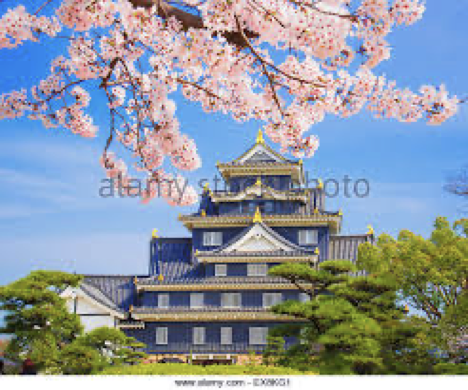
Okayama Castle seen in Springtime
20 Mar, 2013: From the television I learned that today marked spring equinox, and that rain was expected to fall across mu ch of the country. This was also my second day in Okayama. As I set at a table in the lobby area having breakfast, the rain had still not fallen. When breakfast was finished, I returned to the room to watch a little of the BBC new on the television. Among the news covered, there was something on about the government of Cyprus voted down some attempt by European government to take money from people with bank accounts. Strange! Whilst other news talked about 17 miners trapped in a copper mine in Poland, the result of an earthquake there. “Mmm!” Things like that happened numerous times before, in China, I thought. Not just cave-ins, but flooding, and god knows what else. At least the world seemed to be uninterested. Almost as quickly as the news appeared, it would be heard of no more. Or pushed to the back of the shelf, for ever. Then again, what did I know? I cannot recall when I last read a newspaper. After taking a short nap, I then decided to go for a walk, but not sure where! Perhaps a visit to a museum might awaken up the old mind! First, a stop by at the lobby downstairs might be a good place to start, to see if there was something about places and locations in the city worth visiting. Once outside, the rain was not even what might be called a drizzle. Still, I was sure to bring along with me one of the umbrellas set aside near the entrance for the guests in case it really did come down. When I left the hotel to walk about the city, a feeling of happiness came over me. It just dawned on me that this stage of my mission, Stage 10, was now completed. Needless to say, I was soon began to feel proud of myself. A sense of achievement ran through me, like the blood through the body. Then again, I was not so sure that feeling that way was a healthy thing. Proud was a fragile word anyway, including having something narcissistic about it. Come to think of it, my favorite flower, the big yellow daffodil, was part of the narcissist genus, and which predominantly flowered in perhaps what was my favorite temperate season, spring. Most of the human population on this plant lived in temperate zones. The mass of land was greater in the northern hemisphere, and so it was there that most people came to settle, and where farming became a large-scale practice, and where weather had a huge impact on the land and on what was produced. The larger cities on earth grew up in the northern hemisphere, as did the burning of fossil fuels from buildings, asphalt, and vehicles, and factories. Regardless, spring was a time when the earth's axis increased and altered its tilt toward the sun. This was what led the way for spring to come. The weather along the hemisphere became warmer significantly, buds began to sprout, to introduce new life among the plant-life. Many other plants were already in bloom at the start of spring. It was a time, too, when the snows melted. Back to the present, being 'proud', like I was of yourself at times for performing well along the road, had actually been considered one of the seven deadly sins. As far back as the Anglo-Saxon times the word proud meant, splendid, or excellent, and even haughty or arrogant.
I certainly did not have a high opinion of myself, like the earth revolved around me. No, certainly not! “Mmm!” Since the word clearly harbors conflicting definitions, good and bad, it is perhaps advisable for me to use a different word to explain the feeling I was having just now. This was not easy to do! How does one genuinely explain the way he or she feels after achieving something, without appearing to be too big for their boots? It is hard not to make what I want to say sound like a line from a politicians autobiography with all their achievements and dreams, and with a wee bit of their setbacks and sad parts thrown in to make them sound as human as their readers. “Mmm! Fuck it!” Why did I need to explain or to prove anything to anyone anyway? I did not feel that I had anything to prove to anybody, not even to myself. Lunchtime came quickly, and so I climbed the steep steps up to a restaurant called ‘Aya’, almost next door to the hotel I was stopping at. There were no customers, but the two staff were sitting at the rear when I entered. They quickly rose up from what appeared to be their own lunch that they were eating, to welcome me in the polite way Japanese did, when a customer entered a restaurant. “Irasshaimase!” Surely everyone who has been to a restaurant in Japan had encountered this. Soon the “C-Lunch Set”, a chicken curry dish, was ordered from the lunchtime specials on the menu. It cost ¥1,000 Yen, the most expensive of the three specials on offer. Each of the lunchtime specials included a small salad, some pickles, and a drink. When it arrived it not only looked good, but tasted even better than it looked. It even tasted spicy hot, the way I liked my curries to be. Once the curry was finished, a cup of hot black was placed in front of me. It was not easy to find the Okayama City Museum, but find it I did. The museum was a located on the 4th and 5th floors of a rather old building, almost next to the NHK building. The relationship between the two was merely their closeness of both buildings. The only connection I ever know of between museums and broadcasting was when I lived in Atagoyama in Kamiyacho in Tokyo donkeys years ago. The old wooden apartment building was one of the first, so called, mansions built in Tokyo in the early-1950s. Though it certainly did not resemble anything like that when I rented some rooms there! Contented as I was with the place back then, I was only allowed to live there for two-years, for the building was due to be demolished. Now, the Atago Mori Tower (home to the NHK Broadcasting Culture Research Institute), takes up much of the site. My apartment was very close to the NHK Museum of Broadcasting on the top of Atagoyama. Broadcasting for the first time in 1925 makes it the birthplace of Japanese broadcasting. Of course, broadcasting has come along way since then, from radio to television, via satellites, High-Vision (HDTV), and digital broadcasting, and so forth. Consequently, nothing came in the form of rain after all, and the umbrella I carried with me at the ready, proved more an obstacle than an asset. Well, here I was, sitting in the warmth of the room at the hotel contemplating what to do next. Still avoiding the unpredictable weather, I was now beginning to feel bored.
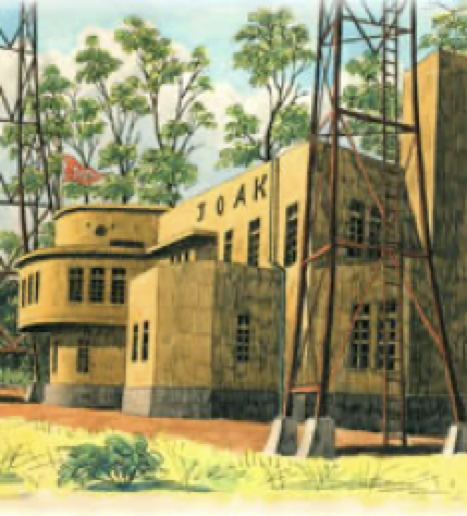
NHK Broadcasting, Atagoyama, Tokyo (Source: The NHK Museum of Broadcast)
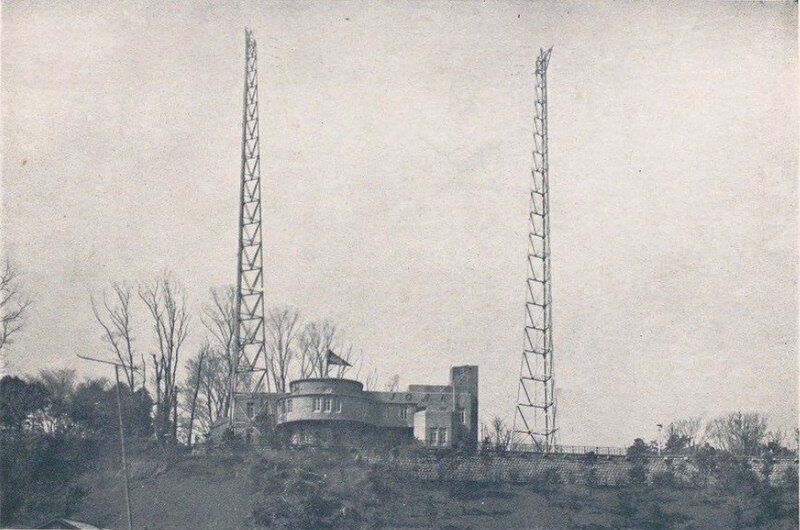
NHK Museum of Broadcasting, Atagoyama, Tokyo (Wikipedia)
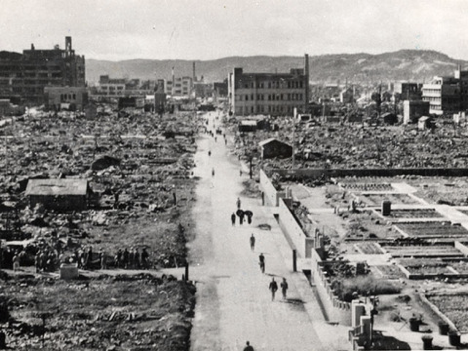
Okayama City after an air-raid, on 29 June, 1945 (Source: ‘The history of Okayama City')
21 Mar, 2013: It was another good day for walking, and so much of it was spent strolling about the main roads and side streets of the city with no particular aim in mind. When I first arrived in Okayama I expected the place to be like most other Japanese cities, much about the future and little of the past. However, I was pleasantly surprised to learn that nothing could be further from how I had thought. In short, Okayama was a rather attractive and well planned out city! The old trams were still running in many places, not that I was in any mood to board one and go somewhere on anytime soon. Not that I had any big reason not to, other than I was a walker at heart, or ‘Irishman Walking’ as I prefer to be remembered. Not the sole river, broad or narrow that flows through Okayama, but surely the most notable has got to be the Asahigawa River. The Asahigawa maundered from north to south of the city. It also made up a fair portion of the Castle moat, which must have been part of the defensive and supply strategy when it was built more than 400-years ago.There were also many leisurely foot paths that ran for many kilometers, and it was easy to see how visitors, and locals, were able to enjoy themselves on nice sunny days. The footpaths, or trails were often great places to view the sakura from at this time of the year. There were often countless numbers of cherry trees along or near the banks of rivers. Although I had seen the odd horse being ridden along them, the good old footpath was mainly used only by pedestrians. Perhaps cyclist were common users of footpaths, too, but then something seemed wrong, if the name, 'foot-path', meant anything. One thing about footpaths, unlike alleyways, lanes, streets, and roads, they existed just about anywhere. In my country, and no doubt in some other countries, too, a footpath also meant the pavement, or sidewalk. It also referred to a path or footbridge, that led over a river. In the way that everything had its own history, long or short, footpaths were naturally formed to different places by travelers, and therefore, singled the right of way. Some noted examples of the first footpaths might be to the local chapel, graveyard, marketplace, or school. According to Wikipedia, these paths were usually subject to restrictions". Such paths were "often closed at least once a year, so that a permanent right of way could not be established in law. It was on one of these footpaths that I stopped to take some snapshots of some people boating on the river. “Mmm!” What an ideal location to be romantic with the right person, too, I thought, as I put away the cellphone that I usually used for taking my snapshots with! There were also a good number of places that would be just ideal for camping, and conveniently close to shops and restaurants. Surely, peaceful in the evening, too, which was just as important after a long hard day on the road. Okayama was home to a number of large parks, called ‘koen’ in Japanese. The most famous and visited among them is the Okayama Korakuen Garden. In fact, this park was considered to be among the most famous in the country, in part because of its age, or planning that dates back to the Edo period.
Lord Ikeda Tsunamasa ordered the construction of the Korakuen to begin in 1687, so as to entertain important guests. Later, the ownership of the park was transferred to the local government in 1884, who then opened it up to the public at large. Sever flooding in 1934 and the air raid in June 1945 decimated the area. (This was at a time when social and political life of the nation was dominated by militarism or Nihon gunkoku shugi, or when the strength of the military meant the strength of a nation. The growth of Japanese military adventurism can be dated from the late-1920 to the close of the Pacific War). The Korakuen was later restored to its original setting based on paintings and diagrams of the Edo period. The parks garden was designated as a Special Scenic Location in 1952, some four-years before my birth. Walking about the Okayama Cultural Zone, of which the park or garden was a part, I stopped a good number of times to take my very unprofessional snapshots. Some of them were the tops of plucked flowers that someone for some reason had placed on the tops of fence poles. “Mmm!” At first I thought this might be the work of a romantic or jilted lover, for I could not think of a better or coherent reason behind such a time consuming effort. Often, beautiful acts, if that was what this was were mysterious. Near to the time when my long slow stroll in the zone was over, I decided to stop by at a cafe by the river to see what was on offer. Or should I say, it was the sudden appearance of an attractive waitress that proved the main influencing factor to stop. Curry was ordered! The second time in as many days that I eaten curry, though this time it was beef. And, like on the previous occasion, the curry was simply delicious. Needless to say, the young woman’s pleasant smile, added to the occasion. A man could walk to the moon and back for such a welcoming smile! Sometimes I found myself eating much too quickly for my own good, and often regretted it afterwards. Just as I was leaving the cafe I got talking to the young waitress. She told me that her name was Meili C, and that she was from Korea four-years ago to study and decided to stop longer and work. Meili C worked part-time at the riverside cafe. She had wanted to be an elementary school teacher, but I did not ask if she was still studying towards that goal. There was a sort spot in my heart for Koreans, but I did not tell Meili C that. Many years ago I had fallen in love with a Korean, a beautiful woman who had actually been born on the volcanic Island of Jeju in the Strait of Korea. “Mmm!” Come to think of it, I never found out why or how Sabina K became a Catholic! However, I had no good reason to ask Meili C where in Korea she came from. To this day, I still have not met a more generous woman like my dear old friend Sabina K. Before leaving the cultural zone to make my way in the direction of the hotel for my customary nap, I decided to give my contact information to Meili C, and tell her that she was more than welcomed to look me up if she visit’s Tokyo. The truth of the matter was, a ton of years separated us, so I did not expect we would ever meet again, or that I would ever see that beautiful smile of hers again.
22 Mar, 2013: Like with yesterday, the weather was just great for walking. Before thinking about that, however, I needed to move to another room. Stopping at any hotel in a touristy busy city for four-days often came with its problems, and moving to another room was one of them, and a smoking room (#502) at that. And like all the other hotels, the Abis Inn where I was now stopping, was packed to the rafters with guests, so I could not complain. My first two days in the city were spent in a non-smoking room on the third floor (#302), as was the fourth, but on the second floor (#213), not that I gave a damn. In normal circumstances, other guests might have found this annoying, or even threatened to move to another hotel. This was not normal times, and I was in no mood for talking such actions. Besides, it felt good to be shot of the heavy backpack for a while, and anyway, a rooms were guaranteed and paid for. The biggest problem for me, I guess, was that I need to checkout at 10:00 AM each time I changed rooms. For the most part, being a late-sleeper or riser when I stopped at hotels, it was nice to be able to return to the room after breakfast for a o do some writing or even for a nap anytime. So not only did I have to follow the checkout time rules, but I also had to wait until the checkin time, too, like all the other newly arriving guests. Soon after everything at the hotel was moved and taken care of, I again set out in the direction of the Okayama Cultural Zone, though this time I was careful to use a different route of main roads and side streets. My target was to visit the castle, and I tried to imagine about those time when the daimyo had it built for him and his family. The site chosen for Okayama Castle was once the location of Okayama Shrine, which was moved to its current location nearby. Japan was not the safest of places to find yourself in during the 1600s. Europe at this time was still in the Renaissance, a time of building cultural bridges between the past, present and future. Prier to these enlightened times, the continued building and use of hill forts became the center of local life. In time, houses were built within the hill forts and the local economy began to grow forming small towns that in turn became local economic centers in their own right. Today in Britain, for example, the remains of the early hill forts continued to attract endless lines of visitors and scholars, throughout the year. At some of these hill fort sites, annual fairs are still held. Even it his novel, ‘Far from the Madding Crowd’ that was published in 1874, the British author, Thomas Hardy refers to an annual September fair held at a Dorset hill fort. One of my regrets in life, when I was a secondary school student in London, was not reading this book when our English teacher (a beautiful Chinese woman) assigned it to us to read during the summer holidays. “Mmm!” In those days, reading was something that got in the way, whist now I would die for a good book. After all, Japan was experiencing feudal squeamishness, so a strong castle built on a high ground was a cleaver thing to do, I thought. The view from the castle offered an extensive view over the surrounding land and beyond. Even in modern warfare, dislodging an enemy well dug into a hilly or mountainous stronghold was not the easiest of tasks to accomplish.
During the long feudal period, the castle was inhabited from 1573 to 1869, which was the first year of the new Meiji Restoration. A town grew up around Okayama Castle and flourished and developed almost nonstop, to become the great little city it was today. Okayama Castle itself was built in 1597 under the instructions of the local ruler, Hideii Ukita, who governed from 1582 until his death, in 1600. The Castle tower, or Teushu-kaku as it was called in Japanese, together with the watch towers, were designated as National Treasures. They represented the Azuchi-Momoyama spirit and grandeur of the late-Sengoku period. It was a time of political unification, which ushered in the start of the Tokugawa shogunate. Like many other historical buildings and areas in the city, after its devastation in the 1945 air raid by American bombers, the current castle keep had been reconstructed, in 1966. Every time I saw that date, I reminds me of the summer of that year when my stepmother, Kay, and I stood among the crowds along Sandy Row, a notorious Protestant area, to watch Queen Elizabeth’s motorcade pass by the crowds. That was when she opened the new bridge, The Queen Elizabeth II Bridge, on the Ormeau Road over the River Lagan, which was named in her honor. Apparently, there had been a running disagreement over the name of the new bridge. The local Belfast councillors had hoped to name the bridge in honor of Edward Carson, the lawyer and fiery Irish Unionist Politician. Carson is also remembered for his cross examination of Oscar Wilde, which caused playwright to be sent Reading Gaol in England, from 1895 to 1897. It had been a dark time his colorful life that Wilde never fully recovered from. The Queen's visit to Belfast was also a time when a concrete block came crashing down from scaffolding that overlooked the route. The slab hit the front of the Rolls Royce the Queen and Prince Philip were traveling in. A bottle had also been hurled at the car on Royal Avenue. Of course, I never saw any of the incidents, nor even heard anything about them, or not until many years later. That was on a Monday morning. On the 4 July, 1966, to be precise, just weeks after my birthday. Not that I could recall my birthday, any. How could anyone with a stepmother like the one I had, a real 'woman-hitler' like the anagram put it. With a view that children should be seen and not heard, and so on. On be known to Key, it was because of her that a love for the outdoors was instilled in me. Like most healthy young boys, we were only interested in running about together, or until the mother's called and they would rush home for their dinners. Sadly, I did not have that experience. Being outdoors was the only place I truly felt at ease, or at home for that matter. That was from the age of 10 to about the age of 17, when I finally got my act together and left for the big world outside. My sister Anna, had already gone a year earlier, at just the age of 16. Our elder brothers, John and Paul, had left years earlier. Only in my adult life, would I learn, through reading books, that not all mother-in-laws were evil, and that only a few were. I learned that the ones that were wicked, had their reasons, like, insecurity and jealousy, for starters.
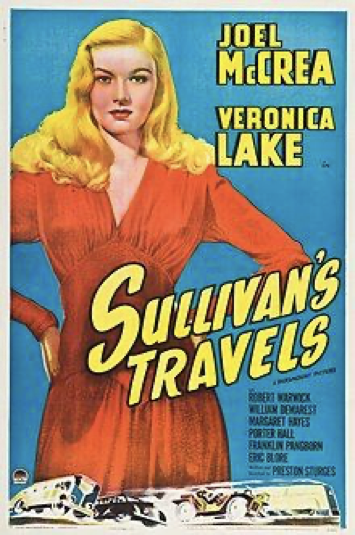
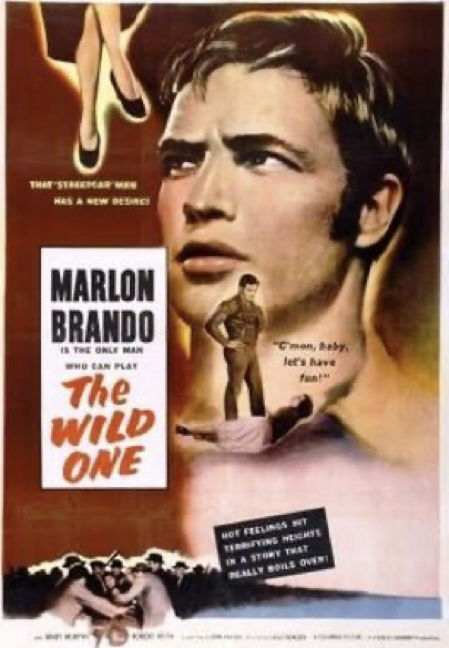
Theatrical release poster
23 Mar, 2013: Once again, the weather could not have been better for hitting the road at anytime. This also marked my final day in the city, and with that I set off to do a bit of window shopping. Visiting bookshops was something I used to love dong and was known to while away the hours in them. The problem was, I could never leave them without buying something of some interest or use. So I needed to keep bookshops at a distance, for my backpack was heavy enough as it was, even if I was on the verge of returning to Tokyo by coach. Back at my place in Tokyo there were already a pile of books still waiting to be picked up and read. So I had more than enough read and unread books in my life, rather than add to them there, too. Like a drug, the pull that bookshops had on me was beyond a joke. It was so hard to resist that I found myself wanting to break my rules of avoiding them, perhaps similar to how alcoholics faced when they passed a publichouse. Of all the many shops and stores that I might rather have visited, I soon found myself in a very large bookshop, more by accident than desire. It was the sort of place I could have spent hours in at an earlier part of my life. Fortunately for me, there were no books in English, in stock. This kind of surprised me a little, considering the size of the place. Of course, there were a good number of simplified forms of the great and famous classics. These were mainly for language students and other people who aimed to further their English skills. There was absolutely nothing in depth for the native speaker who loved a good story. The first big bookstore that I ever visited in Japan, as the Kinokuniya Shoten, in the Shinjuku area of Tokyo. The store was founded in 1927, four years after the Great Kanto Earthquake and just a couple of years before the Great Depression hit much of the world. Prior to entering into the world of books selling, Kinokuniya had dealt in lumber and charcoal business. That was until the earthquake struck, which forced the business to up its roots and relocate from Yotsuya, which was about five-kilometers from Shinjuku. The new bookstore building faired little better, when it was leveled by fire after American bombs fell in May, 1945. The current store building was opened in 1964, the year of the Tokyo Olympics. Today, there were Kinokuniya bookstore throughout Japan and in countries around the world, particularly in America where they had about 14-bookstores. There was one store, I recalled, which I wanted to visit. That was Big Camera, an electrical store, located across from the main train station. On the television last night, or the night before, I had heard something about a new iPad that just came on the market. Here and there on the roads I had passed so many people with iPads, or such like devices Some of the people I stopped to chat to seemed very much engrossed in them. One young fellow back at the hotel this morning spoke glowingly of his new Samsung device, on which I scribbled out my name and contact information for him. So I found it tempting to buy an iPad, since I was already a bit of a Mac enthusiast at heart. It was no lie to say, that I was never a high-tech-device-minded kind of man.
Photos of melted boots???
Thankfully, the different Macintosh computers that I had used for many years, were easy for me to navigate through. “Mmm!” Surely, one would be useful for the road, I thought, as I entered the store. As far as my road-notes were concerned, I preferred using a lead-pencil, or pen, on paper. So I could not imagine getting an iPad to replace my notebooks. Even during the times I stopped a night in my tent somewhere, or even at a hotel, I was not sure how much more quickly it would be for me to upload my road-notes onto the Internet. Would such a device be any quicker for me than my use of pen and paper? On the road, even in all weather conditions, it was not so difficult to stop somewhere to pen a few things into my notebook. The notebooks did not cost much and easy to replace should things get damaged, or lost. They were also accumulating. Anything that was expensive, would be one extra thing to worry about. I needed to be extra careful not to damage it! Already my track record with new purchased stuff was not good. A couple of years ago, a new digital camera I had on me, did not last the duration of the stage. The damn thing froze solid in the cold. Whenever I did manage to get it working again for the following stage, the sweat from my body finally stopped it working altogether. Even before that, there was the tiny wordperfect device that I bought in Niigata City one winter, and hoped to use for writing my road-notes on before uploading, also failed to work properly in the harsh winter weather conditions. It also did not survive the summer that followed. “Mmm!” The many times out of frustration that I wanted to dump it, to be rid of it once and for all, to have it out of my life. That summer, I still well remembered like it was yesterday, was the hottest Japan had experienced. in its 135-years of record keeping. Even the soles on my boots showed signs of melting on the asphalt road, or if I stopped too long in one place. The odd police car would pullover and stop, the window would roll down, and I would be asked if I was all right. Then I would be advised to drink lots of water. By then, many Japanese people were dropping dead of sunstroke, or god knows what related symptoms, all over the country. And there I was tramping around the country shouldering a heavy backpack. For my efforts, I did lose a lot of weight that time, too! Still, it had not been the excess sweat, as had killed the digital camera, but rather a freak heavy downpour that absolutely saturated the contents of my backpack including the Wordperfect device that I kept deep in the backpack for safe keeping. Not safe enough! After that, the thing never worked again! Not only had the element been an influencing factor on the demise of those devices, that had also cost me a pretty penny, too. So, now I could feel my mind pulling away from buying a new iPad anytime some. In the early stages, I found that I needed to get in touch with one of my computer-minded friends, Yuji-san, for added advice and information. This was also Saturday, a time when the shops and stores and whatnot were busy with shoppers. However, I could quite honestly say that the places I visited were no busy at all, like they were in Shinjuku or Ginza in Tokyo.
Then again, how the economy was doing in this part of the country, I had not the foggiest of ideas! When I thought about it from another angle, the people at large appeared to be dressed more prosperous looking than the people in Tokyo. Like I had said again and again, what the hell did I know? Later, the ownership of the park was transferred to the local government in 1884, who then opened it up to the public at large. Sever flooding in 1934 and the air raid in June 1945 decimated the area. This was at a time when social and political life of the nation was dominated by militarism or Nihon gunkoku shugi, or when the strength of the military meant the strength of a nation. The growth of Japanese military adventurism can be dated from the late-1920 to the close of the Pacific War. The Korakuen was later restored to its original setting based on paintings and diagrams of the Edo period. The parks garden was designated as a Special Scenic Location in 1952, some years before my birth. Walking about the Okayama Cultural Zone, of which the park or garden was a part, I stopped a good number of times to take my very unprofessional snapshots. Some of them were off the tops of plucked flowers that someone for some reason had placed on the tops of fence poles. “Mmm!” At first I thought this might be the work of a romantic or jilted lover, for I could not think of a better or coherent reason behind such a time consuming effort. Often, beautiful acts, if that was what this was were mysterious. Near to the time when my long slow stroll in the zone was over, I decided to stop by at a cafe, located along the river to see what was on offer. Another factor that caused me to enter the establishment, was the sudden appearance of an attractive waitress, with eyes like the actress Veronica Lake. Curry was ordered! The second time in as many days that I eaten curry, though this time it was beef. And, like on the previous occasion, the curry was simply delicious. Needless to say, the young woman’s pleasant smile, added to the occasion. A man could walk to the moon and back for such a welcoming smile! Sometimes I found myself eating much too quickly for my own good, and often regretted it afterwards. Just as I was leaving the cafe I got talking to the young waitress. She told me that her name was Meili C, and that she was from Korea four-years ago to study and decided to stop longer and work. Meili C worked part-time at the riverside cafe. She had wanted to be an elementary school teacher, but I did not ask if she was still studying towards that goal. There was a sort spot in my heart for Koreans, but I did not tell Meili C that. Many years ago I had fallen in love with a beautiful Korean woman who had actually been born on the volcanic Island of Jeju in the Strait of Korea. Sadly, I knew little if anything about North and South Korea, or Jeju Island for that matter. Only in recently years would I pick up information about this part of the world, and which included a couple of short trips I made to Seoul and Pusan, in the early-1980s. This was mainly to renew my visa, in order to remain in Japan. The island of Jeju had been ruled since premodern times and later by the Mongol Empire, and the Joseon dynasty, during the fifteenth-century.
Like in Japan during the Tokugawa period, a travel ban was enforced on the residents of the island, and lasted for nearly 200-years. Perhaps like Ireland and Japan, if not just about everywhere else in the world, Jeju had its fair share of mythology and legends. One legend had it that, a mythical box washed up on the shore, one day. The box contained some cows, horses, and agricultural seeds, such as, bamboo, barley, corn, grain, millet, rice. A local man called, Yang Ul-la, who found the box, also discovered three women inside it. This was said to mark the beginning of the Tamna Kingdom, and the establishment of the clan system there. This also marked the beginning of Jeju Island and its active trade with other countries in Asia, which included Japan, whom it enjoyed strong ties with. According to some thinkers, the early Japanese language influenced the name of the island. The old name of Jeju was , either ‘Tanimura' or ‘Tammura', which in English meant, 'Vally settlement' and 'people's settlement', respectively. “Mmm!” Come to think of it, I never found out why or how Sabina K became a Catholic! However, I had no good reason to ask Meili C where in Korea she came from. To this day, I still have not met a more generous woman like my dear old friend Sabina K. Before leaving the cultural zone to make my way in the direction of the hotel for my customary nap, I decided to give my contact information to Meili C, and tell her that she was more than welcomed to look me up if she visit’s Tokyo. The truth of the matter was, a ton of years separated us, so I did not expect we would ever meet again, or that I would ever see that beautiful smile of hers again. A glance at the way I was a dressed might lead someone to think that I was homeless or had fallen on hard times. “Mmm!” Perhaps I had, I thought to myself. Often I thought that there was little else for me to return to in Tokyo, like the main character, Joel McCrea, had in the 1941 classic film, ‘Sullivan’s Travels’, which also stared Veronica Lake. Materially speaking, excluding the clothes on my back, I owned nothing of value or worth! To me, window shopping was something to do for killing time before I got on the evening coach back to Tokyo. Another way that helped the time to pass was to occupy my mind with thoughts of people and things, and of which being on the roads had made me good at. One of the most precious thoughts were those about my daughter, Anna, who currently lived with her mother in Tokyo. Three-days earlier I gave Anna a phoned to ask how the public medical exam went. To cut to the chase, I was over the moon to learn that she passed! “Well Doctor Anna!” I said, placing a wee bit of humor on the call. “All that is left now is to attend the graduation ceremony. You mother will fill me in with the details when I talk to her later!” I told Anna that I would be on my way back to Tokyo shortly, and will stop by at the house to see her and her mother. After telling her that I was ‘proud’ of her, and a few other related words of affection, the call ended. I know that though the six hard years of studying at university were over for her now, and I felt she was glad abut that. Now, a harder life was about to start for her.
What happened in Japan and the world on this day????