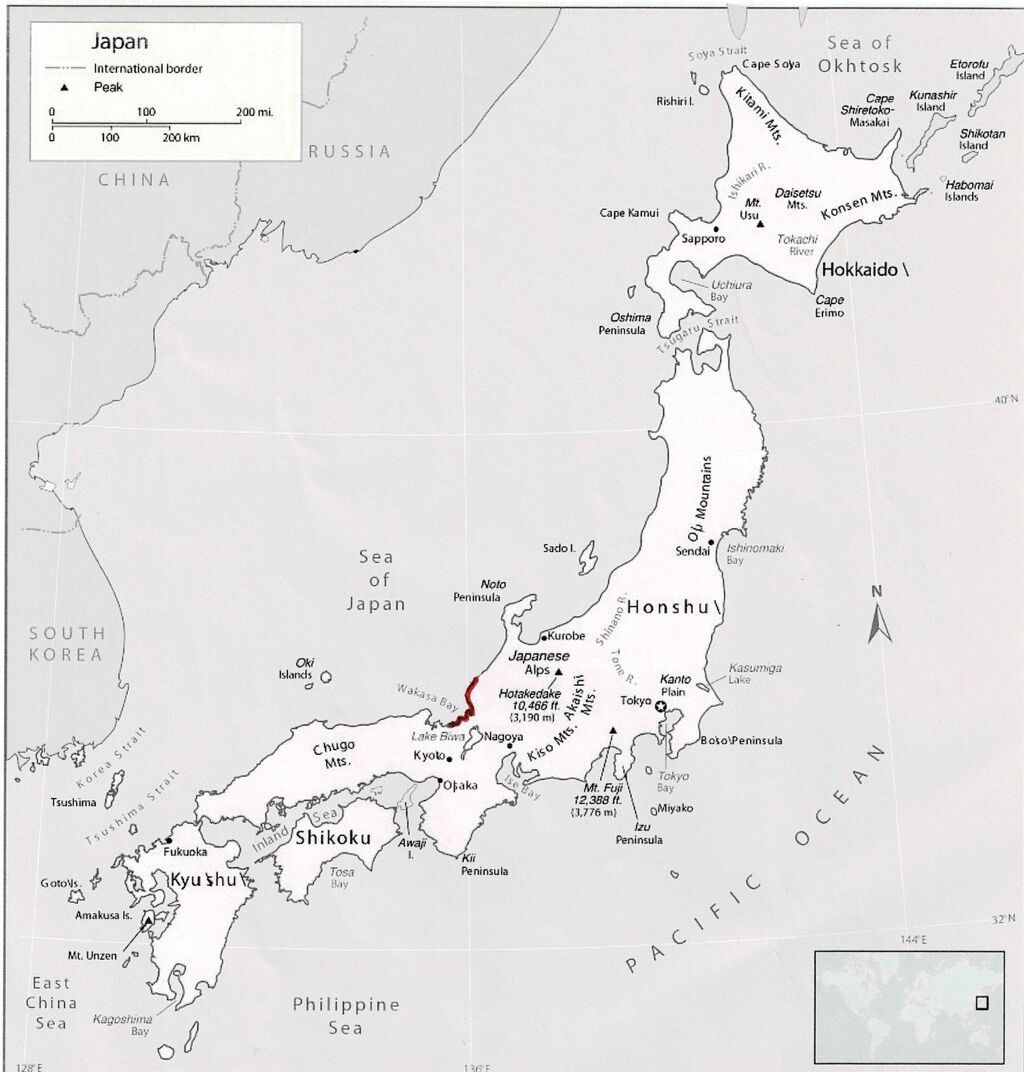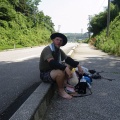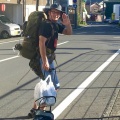
Irishman Walking (Stage 5 Chapter 2) is about my walking the main and coastal roads of Japan. Winter 2010-11.
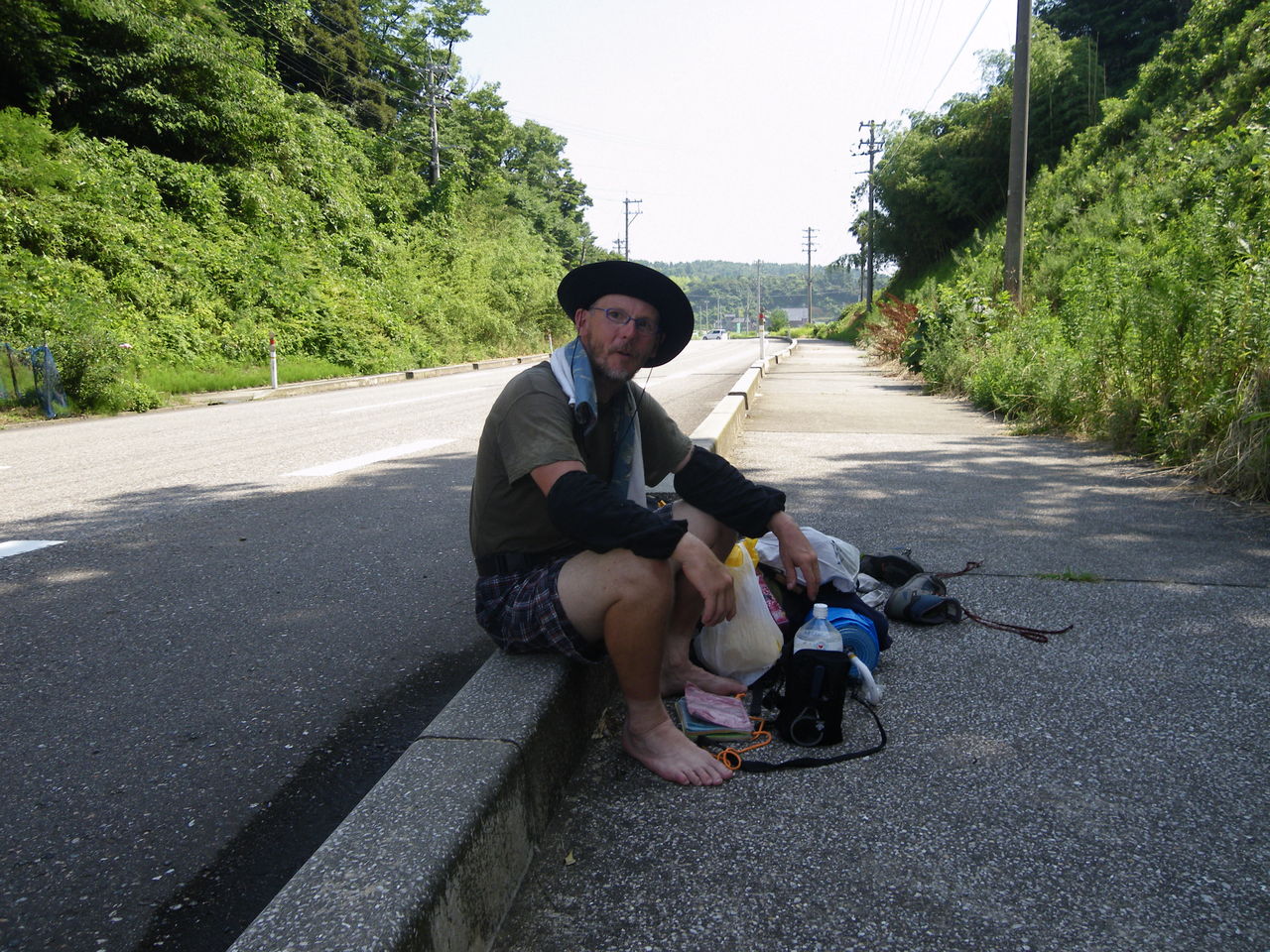
2 Jan, 2011: Last night the miserable elements forced me to take refuge inside a damp and dirty bus stop hut. The time had just gone four-thirty in the day, and still there was no sign of a let up in the rain.”What the hell!” I remembered thinking to myself, as I entered the hut. A quick look about told me that it was pointless continuing on the road. “Mmm!” It was better than pitching the tent in such conditions, I told myself as I set down on the dirty bench to collect my thoughts! From time to time I noticed the odd person saunter past, and I felt that their own minds must be more occupied with the holiday antics to notice or pay attention about me sitting there out of the rain. A glance up at the bus-timetable told me that a few more buses would make a stop, one shortly. If the buses that stopped here were anything like the many other buses that serviced rural areas, mostly empty, then I had little to worry about the onslaught of passengers coming and going. Rather than wait for the first bus to arrive, I decided to erect the tent and roll out the mat and sleeping bag. The way I saw it was, should one of the locals call the police, it was better got some shuteye before I did get moved on again. And, in no time at all I found myself drifting into another world of sunshine and smiling angles. A couple of hours passed when I finally awoke from a deep slumber! And glad, if not surprised I was for getting to sleep at all. Of course. I had long become used to the noisy traffic that shoot past, and the sound of the heavy rain falling, which would have kept an elephant awake. That said, crawling into a damp sleeping bag , and clad in wet clothes was usually potluck when it came to getting to sleep. Then, in the early hours, a visit to the nearest tree or bush to take a piss, only to have to crawl back into the sack again. Now, when I look back at earlier or similar times, I still have no idea how I managed to sleep so soundly in such conditions. Looking at it from a philosophical angle, I guess I brought it all upon myself. Such things were expected when you did not wrap up things properly to keep them dry, or as dry as possible. Part of me knew that tramping the main and coastal roads of Japan would not be as complete or fulfilling without such hardships. Another part of me knew that life was hard enough in normal circumstances, so there was no need to make it harder. Either way, what I really needed to do now, was to learn and relearn from my mistakes. As with finding a good place to camp for the night, so was the difficulty of finding places to rest or write a short while. The summertime was usually easy enough to sit-down and kick the boots off for a while, for just about any scenic spot was good. Not so in wintertime! Often it was the cold that kept you walking, or in this case the cold rain. Bus stop huts proved great places to stop at, especially if they were clean and in good condition. More often than not, they were damp and dirty, and neglected. These days in Japan, everyone strives to own their own car, even if they do not really need one, or use it just once a week, if that. So as it any wonder that a lot of the bus stop huts were in poor condition? There were a good number of bus stop huts that some people took the time to make them clean and comfortable places to wait in for the local buses to arrive.
Many even had clean cushions on benches, and clocks ticking away on walls. Of course, I was not waiting for any bus, but found them excellent places to stop by at to rest, and to boil water to enjoy a cup of coffee in, while escaping the heavy rain for a while. Good or bad, the location of these bus stop huts was something worth considering. On a number of occasions I had stopped at the odd one directly opposite a house, where the occupants found it hard to divert their eyes. Annoying! Unless you possessed the powers of ignoring people around, which was something the Japanese were masters at, then it was best just to pack up and move on. There were a couple of times when I found myself in an unwanted encounter, too. At one bus stop hut, I well recall, one particular elderly fellow staggered across the road to tell me in no uncertain terms, not to even think about stopping the night there. A foolish notion indeed, since the time on the cellphone clock had just gone 12:30, much too early to camp in any weather. When I turned my indignant eyes and camera upon that fellow, he quickly took to his heels when I started shooting. And at the same time asking him to repeat his words into the camera. My mind must have been tired, for I forgot to press the ‘0n’ button for the movie camera. Still, I was able to get a couple of snaps of him instead! The mistake disappointed me, for it was humorous to watch him legging it back across the road to his house. The job of a cameraman was to shoot regardless of cost. Some kilometers further along the road (Route 305) a stop to rest at a similar place once again brought prying eyes, this time of an elderly woman. Even though I was then absorbed in jotting down some stuff into my notebook, from the side of my eye I could not help but see that I was being closely scrutinized by an individual who felt had nothing better to do. Or to quote from Joseph Conrad, “the emptiness of their existence passes belief.” The building at which she stood looking at me from was a Japanese ryokan or minshuku of some dubious ranking. Fortunately or unfortunately, she withdrew back inside the building just as I was about to raise the camera to take photos of her. On the road, I like to take photos of anything and everything of interest that caught my attention. As the saying goes, a photo tells a thousand stories! It also came to my attention that the only good thing about walking the long hard roads of winter was the distance I could accumulate between myself and such rude people. That said, I felt a little surprised at such rudeness, since she lived or worked at such a place as an inn. Minshuku often tended to be a family operated business, or sort of Japanese-style bed and breakfast inns. They offered their guests a good opportunity to meet local families and experience the traditional Japanese lifestyle. Most of then tend to be located or near to tourist areas, such as, hot springs, mountainous areas, and ski resorts, or even by the sea, and even in small out of the way places. Minshuku were usually smaller and less expensive than ryokan with only a few guest rooms with all the basic amenities, small television sets, small table, tea set, heater, towels, and so forth.
Ryokan and minshuku were somewhat similar in that they both offered Japanese style tatami rooms. In the early evening, futon mattresses were taken from the shoji or closet where they are stored through the day, and neatly prepared on top of the tatami mats to sleep on. In both types of inns, the guests have the opportunity to relax in large Japanese-style public baths in the evenings, which the Japanese just love. Therefore, I was more surprised than annoyed that such a woman working at such a public place would stand and rudely stare at me like she had never seen a foreigner before. Maybe she thought the sight of me was not good for business. Or maybe I was just downright tired and miserable for the lousy weather, and a hundred other things that I wanted to complain about. All of which into the bargain was causing me to feel downright paranoid. The last time I felt that way was when things in my marriage turned sour. When we got divorced I needed a sense of movement in my life. As if like escaping, or running away from something that probably did not exist in the first place anyway. So I jumped on my bicycle in search of something that I felt was not there, like, retrace the steps of where I left off. At other times the motorbike did just as well, too. Whatever the true reason though, it seemed to bring a sense of contentment or normalcy to my life. Now I was walking! Shouldering a heavy backpack, the bus stop hut now behind me, I headed back out onto the road once more. On the road again, the rain was at long last downgraded to a series of intermittent flurries. Strangely, this little gesture from the heavens also made me feel better or more positive. Soon, the sun began to show its welcoming face through gaps in the clouds far out over the Nihon Kai. This was my first real sighting of sunshine since boarding an 0rion Tour coach in Shinjuku in Tokyo heading to Kaga City. In a better frame of mind and weather, I would gladly have set down awhile to marvel at the beauty of this view that now opened up before me. There was no time for this now, for I needed to reach Tsuruga by 4 January at the latest. Also, washing was something I was not able to do since setting off on this stage of my mission. Partly because I had forgotten to bring soap, and partly because the weather was trying to wash my clothes for me. Tsuruga was a fairly sizable city where I thought I would stop at a hotel for a day or two. What interested me most was the history associated to the city! Tsuruga, the largest city in Japan's Wakasa region, was located in Fukui prefecture. Matsuo Bashō (1644-1694) wrote his celebrated haiku on the moonlight over Tsuruga bay when he visited there on his journey around Japan. On July 1899 was Tsuruga was opened as an important trading port with the United States of America and United Kingdom. According to a quick reading of Wikipedia, Tsuruga was the only Japanese port opened to Polish orphans in 1920, and to Jewish refugees in 1940. This was thanks to the efforts of Dutch Public Servant Jan Zwartendijk, and Chiune Sugihara, Vice-Council of the Empire of Japan in Lithuania who issued transit visas for Japan, respectively. On an added note, Tsuruga was incorporated to city status on 1 April, 1937.
The main reason for wanting to stop was the thoughts of soaking in a hot bath, as well as the thought of swiping some soap to last for the remainder the time that it will take to the open arms of Obama City where I hoped to conclude this stage of my mission, Stage 5. Tsuruga was situated on Wakasa Bay, Tsuruga, just a day and a half walk to Fukui, 75-kilometers northeast of the ancient city of Kyoto, 90-kilometers northwest of Nagoya, and a good 115-kilometers northeast of Osaka. According to my maps, Tsuruga was the nearest city to the mighty Pacific Ocean. As to the climate at this time of the year, Tsuruga has cool winters, but rich in precipitation throughout the year, particularly in December and January. On the phone last night I jokingly asked my friend, Riko-san, what would my students say if I told them I walked into Obama? Would they think I was joking, or believe that I really met the President? She laughed, but I was not sure if she found my remark very funny. Ever since a TBS TV interview, in 2006, when Obama was a US Senato, the city certainly received a lot of welcomed publicity, because the shared name. "The Obama City Hall heard about the interview and the mayor, Toshio Murakami, sent Senator Obama a set of the city's famous lacquer chopsticks, a DVD about the city and a letter wishing him the best" (Wikipedia). In fact, 'Obama' was a relatively well known, if not overly common, surname in Japan. During the weeks of the presidential election, many people connected to the Obama City, even wore "I love Obama" T-shirts, sold at local shops, along with "Go Obama!" posters. Obama thanked the town for the gifts and for their support: "I look forward to a future marked by the continued friendship of our two great nations and a shared commitment to a better, freer world" (Wikipedia). My friend Riko had been a great help to me on my mission. This time she was able to quote me a few business hotel prices, as well as some of the pros and cons about them. In the end, the Route Inn seemed the better for having a few washing machines and dryers that guesses could use. There were also laptops in the lobby, where I hoped to check up on and forward a number of emails. Breakfast was included in the room cost, too, so everything was soon decided, for which I thanked my friend for her kind help. The distance to Tsuruga City was exactly 35-kilometers, or so a distance-directional road sign told me, which was just a days tramp during good times. The way it was, my boots were making mincemeat of my feet, and the pulled right calf muscle was killing me. So the remaining distance was not to be laughed at! There was no way I could make it in a day, and I now wondered if even two was enough. The way I also saw it, there was no point of checking into a hotel late in the evening, or when it was too late to enjoy what there was to enjoy. “Mmm! Fuck it!” I needed to think things through properly! Perhaps it I did my best to make an extra early start on the road in the morning I could get at least 20-kilometers under my belt by lunchtime. Suddenly, another reality hit me! Even if I was well rested, I knew that I could barely keep up with an elderly woman pushing one of those things on four wheels they use for support.
3 Jan, 2011: The sun was in full splendor when I hit the road. On the previous night I made the inside of a tunnel my home. Not like the dark damp things the traffic roared through, but a narrow side tunnel especially built for pedestrians. One good point about camping in the tunnel was the dry breeze from the sea that came in through the large gaps along the side of the tunnel walls, and which set about drying my things nicely. The evening hours ticked by comfortably enough, and I was able to jot down a good few notes that I recalled from the day. In time, I could feel my eyes becoming heavy, and I knew that sleep would soon come. A good sound slumber had escaped me this last couple of nights, so I was glad of it. God knows, my body needed to remain still so as to repair itself, if possible. A dip in the salty waters of the sea in summer would have worked wonders. But this was a different time, and I was not a big fat Russian bear! It seemed like only after a short while when the sound of the alarm woke me up at 6:10. Still feeling sleepy I tried to go back to sleep for a short while longer. A short time later I could hear the sound of someone’s footsteps nearby, which woke me up proper. It was a quick sound, not someone running at any great speed, but quick nonetheless. The sound drew nearer to the tent, then next to it, and almost as quickly the moving steps disappeared. I was time to get my butt up! Kicking the sleeping bag away me, I set up and zipped open the tent flaps. About 200-meters away I caught the shapely form of a female clad in a light green tracksuit. “Mmm!” It must have been her that jogged past the tent, I thoughts, while feeling a little sorry for not having seen her up close. “Mmm! It really was time that I got going, too!” I mumbled to myself as I searched about for my toothbrush. Along my way, the road took me through a number of little towns, of which the most economically prosperous looking one among them was Kano. An attractive town, too, and more sizable by far when compared with the other towns. That might have something to do with the fact Kano is the capital and commercial nerve center of that part of Niigata. My aim has been to strictly stick to the coastal roads, if at times that proved impossible. At times I also found myself tramping along an old track or abandoned road that once played in keeping the economic engine ticking over. This time, however, I decided to take the coastline road with all the scenery thrown in for good measure. The scenery was by no means as stunning or magnificent that had stopped me in my tracks to admire on previous long distance adventures, but after four-days of torrential rain , snow, or both, it looked just splendid to me. Even in my noticeably weakened condition, I found an enjoyment in each of the kilometers I tramped. There could not have been a better or more positive feeling running through my veins. This feeling even brought a kind of ceasefire between my walking boots and myself, for the pain in my feet was gone. At last, all good things must come to an end, so the peaceful Shiokaze Line now opened onto the busier Route 8 at Kashiwazaki and the local trains that joined it. Soon, the war with my boots began again.
At about this point on the road my eyes fell upon what looked like a coffee shop. Inside, I ordered from the lunchtime menu the soba teshoku dish. This was soon followed by a cup of hot coffee and pancake with syrup. During the hour I spent in the cafe, I was surprised at the number of other customers that came and went. “Mmm! A real goldmine!” Or so I thought. As I was paying the bill before heading out the door and back onto the busy road, Route 8, I presented a copy of the newspaper article I carried with me, hoping to reduce the weigh in my backpack any chance I got. Three friendly women worked at the busy coffee shop or cafe, two of whom were clearly in the 30s, whilst the other was a pleasant lady in her 60s. Some facial similarities caused me to surmise she was the mother of one of the other women. Their size, shape, and complexion for whatever that was worth, caused me to feel that they were not sisters. Clearly, it was her commanding presence that told me the elder lady oversaw this little goldmine, of sorts. She did most of the talking with some of the other customers, some of whom I suspected were locals. A little before, she thad old me that two other foreign people had stopped at her cafe earlier in the summer. They were a young newly married couple, and that he was from Canada and his wive from Japan. They were on a venture, perhaps somewhat similar to my own, she said, at least they were walking through Japan from top to bottom. She then told me that they were not exactly walking, but used pogo sticks, which was a kind of walking, I felt. Actually, it just dawned on me about then, that there had been something on the television news about a couple of people making their way through Japan on pogo sticks. This was at one of the business hotels I had stopped at earlier, but I was too tired at the time to notice, or care. Of course, I never imagined that I would one day bump into them, if in deed they were the same people. The idea behind pogo sticks, or the compression of the springs in them, was patented in 1891, by an American, whilst the name 'pogo sticks' was thought up by two Germans, in 1920, and had been improved ever since. What information I was able to pick up from the couple was sketchy. Where exactly they started from or where they had hoped to finish their mission at, somehow that did not seem to matter at the time. “Amazing!” I remembered thinking to myself at that moment, as I tucked into the delicious looking food placed on the table in front of me. As I grabbed onto the straps of my backpack to pull it out the door, I also remembered thinking that I was not exactly sure where even the cafe was located on the road, or on my maps. All that I knew, the cafe was somewhere in Ishiyama prefecture. What I did know, was that I had stopped at the cafe for far too long, but seemed in no big hurry to hit the road, again. A feeling of tiredness came over me, but I needed to get a move on. On the road I stopped to chat a short while with a friendly Japanese fellow who told me that a few years ago, he bumped into two German guys walking through Japan. He told me that they kept in touch, and became friends as a result of the little encounter. When they visited Japan a second time, he had arranged a barbecue party for them.
4 Jan, 2011: Even with my war with the boots, which I was at times losing, the 12-kilometer tramp as far as Tsuruga went surprisingly smooth. This was all the more encouraging, I guess, for it had been a restless night, and with the noise from the heavy traffic increasing by the hour. The fine weather that I woke to at 6:10 was also encouraging. It was only four or five-kilometers to my destination, a nice hot bath at the Route Inn, when the sky began to cloud over and soon it began to rain. One got used to many kinds of things on the road, but tramping in the heavy rain was not among them. Fortunately, the sight of a bus stop hut came into view, and with in a few minutes I was sitting in it boiling water for a cup of coffee. Fortunately again, the rain had stopped by the time I finished the coffee. Not taking any chances, I donned my rain gear before heading out onto the road again. Before heading out under the seeming clearing sky, I pinned one of my newspaper articles about my mission to a noticeboard for any interested parties to drool over. “Mmm!” Wishful thinking! Also on the noticeboard were a number of recruitment posters for the Japan Self-defense Force. One of the posters showed a tank, and if I was not mistaking, a battleship, as well as a photo of the current emperor and his good wife. In the short distance that remained to reach Tsuruga City in Fukui, the rain fell heavily again a couple of more times. On the road, the sight of a convenience store always had a cheering effect on me. One of the staff at the Lawson convenience store was kind enough to show get one of the city maps from the rack, which proved a good help on where the hotel was located. It was just as well I stopped at the store to get some picture of things, for the roads that I followed proved more complex than not. There were two aging tunnels that needed to tramp through to get to where I was headed. The longest of them was the Mariyama Tunnel, which ran for 623-meters. The sky proved as gray and as heavy as the tunnel entrance from the northern side, yet clear and sunny when I emerged at the other end. Not far after leaving the tunnel when I came to the second one, the Kanegasaki Tunnel, just 291-meters in length, and was constructed around the same time. Both tunnels, I felt, were among the oldest and still in use that I had ever needed to use during my mission to date. In some mad wee way, I felt rather honored to have this humble experience of tramping through these old tunnels, even if my boots had their own ideas about the outcome of my feet. For whatever the reason, or perhaps some custom with condemned tunnels, the iron name plates on the inner walls of the Kanegasaki Tunnel were gone. On some occasions I had camped beside blocked up or disused roads and tunnels that I had cycled along and through decades earlier. There was an element of sadness each time I came to one. An overview of the prosperous area around somehow told me that this was not the case. Then again, I was no engineer in any shape or form, so what the hell did I know? Also of the same name, and more famous than the tunnel, is the Kanegasaki Shrine in Tsuruga City in Fukui.
The Kanegashiki Shrine was built in 1890 to enshrine the ashes of Prince Takanaga, the eldest son of Emperor Go-Daigo. The shrine was famous for a fierce attack by the Ashikaga Army on the Kanegashiki Castle nearby, in 1337. As a result of the fall of the castle, Prince Takanaga was forced to commit seppuku, a form of suicide reserved for the samurai class. It was a kind of dying with honor rather that being murdered at the hands of the enemy. (Actually, the Prince’s younger brother, Prince Tsunenaga, who had also been captured by the Ashikaga Army was murdered by poison, and whose ashes have also been interned at the shrine). To paraphrase from Wikipedia, the act of seppuku was the ceremonial disembowelment, usually done as part of a more elaborate ritual and performed in front of spectators. It consists of plunging a short blade, traditionally a ‘tanto', into the abdomen and drawing the blade from left to right, slicing the abdomen open. If the cut, done by a single movement of the blade, is done deep enough, it can cut the descending aorta, inducing a massive blood loss inside the abdomen, resulting in a very quick death. At this time, number of prominent samurai supported Emperor Go-Daigo and sought to overthrow the Kamakura Shogunate. The quote from the Kanegasaki Shrine Website page, the site “gives anyone the impression this place is a tragic location, yet it's famous now as a power spot of love.” Actually, the shrine is located at the foot of Kanegasaki Castle Ruins, not that that matters any to a layman like myself. Emperor Go-Daigo assumption of power did not bring peace, rather it divided the samurai class even more leading to further years of unrest. The shrine’s Website page also tells us that a 'Flower Exchange Festival' started to be held there from around 1907. “At the time, society's attitude toward romance was quite conservative, and so people just didn't have a chance to express their love to others. But in this festival, people would tell one another, 'Let's exchange flowers', and each one handed his/her cherry tree twig to the one they loved. This could be called a modern version of a 'Match-making Festival'. The festival has continued to this day (annually held in spring), which has given this shrine its alias, 'Shrine for Love', and has made it a famous power spot of love.” Furthermore, although the location of the shrine has a tragic history, “it's good that many people got together here to find their better halves… some of them may learn the history of this shrine, give a thought to it, and pray for the Princes and soldiers who had died a tragic death here, right?” Sticking with history, Tsuruga Port has long been considered among one of the most important ports in Japan. A hub port, Tsuruga has played an important part as a prospering trading base with South Korea, China, and other nations on the Asian Continent since the Nara period. It also was a major transit base for the famous ‘Kitamaebune' or northern-bound trading ships between the mid-Tokugawa and Meiji periods. The trading route used by these ships with their cargos of coal and lumber, etc., ran from Osaka through the Seto Inland Sea and the Kanmon Strait, to ports in Hokuriku on the Nihon Kai, and north to ports in Hokkaido.
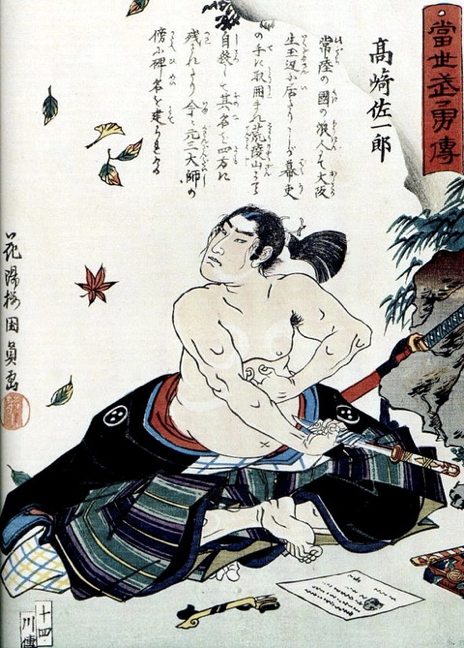
Samurai about to commit seppuku
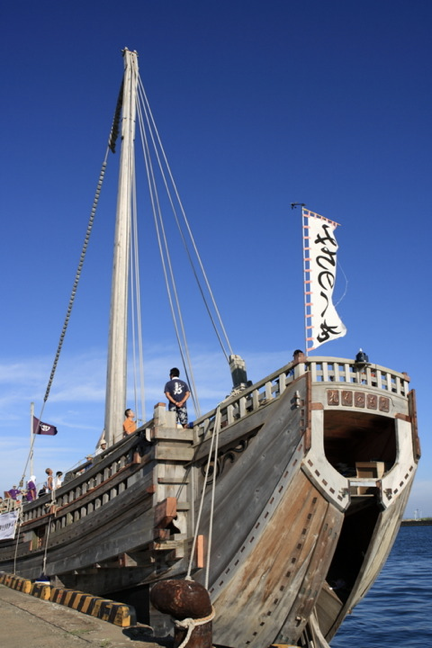
The Michinoku Maru, a modern reconstruction of a kitamaebune (Wikipedia)
Because of the harsh weather conditions in Japan, however, ships such as the Kitamaebune could only make one trip a year. This was up until the West the faster schooners, which came to grace the high seas from the Meiji period onwards. At this time, the schooners were able to make many more roundtrips each year. The Meiji Restoration meant an introduction to a large number of all sorts of new things, as well as an end to others deemed out of date The telegraph system was introduced to bring regional markets closer together, also helped by the construction of the railways. Conversely, it saw an end to the feudal system, lessoning profits for the shipping routes altogether. Needless to say, it hastened the demise of the Kitamaebune ship, for more modern engine powered ones. The name of these old northern bound sailing ships continued in the form of the Shin-Nihon Kai Furry, and is sometimes referred to as the modern Kitamaebune. Today, the ferry stoped along the old route at Maizuru, Niigata, Akita, Tomakomai, and across the water as far as Otaru, in Hokkaido. The city’s geographical characteristics made it the nearest port on the Nihon Kai, and well connected to the two other major economic areas, Hanshin and Chukyo. In the Meiji period, shipping routes between Russia and Korea operated out of Tsuruga Port, making it an important gateway from the Japan Sea coast. Today, active trade is still carried out with these countries and beyond, with plans to expend this important deepwater port to develop it further as an international logistics hub port. At the blink of an eye I caught sight of my hotel, the Route Inn. The time was gone one-thirty when I stood at the checkin counter, with an attractive young girl in bright clean uniform carrying out the necessary formalities. My room was to be #705, on a non-smoking floor. Checkin time proper was 15:00 hours, but this did not perturb me any, since I usually used the time to catchup on things, such as checking and sending emails, writing out postcards to family, friends, and acquaintances, and of course, jotting down some notes into my now fairly battered notebook. Such was how things normally went, however, this time things turned out differently. Whether the young girl felt sorry for me, or that a dirty, tattered, homeless looking appearance in the lobby did not look encouraging to other guests who came and went, or even if my body by now smelt of dried sweat, I was not sure. Regardless, after just a couple of minutes of completing my reservation details, the desk clerk then came over to where I was sitting and presented me with the key-card to my room. “Oh! Thank you so much!” I said, getting to my feet, with thoughts of soaking in a hot bath already consuming my mind over all else. At least I hoped it was not my unkept appearance that was behind my getting entrance to my room super quickly. Those who know me reasonably well also know that I hated lounging about in a bathtub for any lengthy period of time. Needless to say, the average Japanese Joe Public would find that difficult to fathom. They would not be Japanese without their public baths, or loved those hot springs, to soak in for hours.
There were around 3,000 hot springs, or spas, in Japan, most of which existed in the Japanese inns, or ryokans. Traditionally, men and women bathed together, but times have changed a lot since then. Mixed bathing still existed, but only in special onsens in out of the way, areas. Ever since childhood, I hated climbing into the old tin bathtub that was placed in front of the living room fire every Saturday evening. It took me years to shake off that feeling called shyness! Another reason for why I loathed public bathhouses or hot spring resorts was the sight of naked men flashing their bodies without a care in the world. Who said the Japanese were shy? Therefore, public bathhouses were avoided like the plague! On the road, things were different! It must have been a good 30-minutes or so that I soaked in the bath in the hotel room. Time-wise, a world record for me! Then after toying about with the television remote-control for a spell, my eyelids began to feel extra heavy. When I did finally wake up, the clock above the bed read six! “Wow!” I uttered, sitting up straight and plopping both feet on the floor. The television was still on and the news was blaring away about something. “Mmm! What to do?!” I had over slept, and had not even started to look about the city, I thought. What I needed to do for starters was to get my butt over to the big store I passed on the road coming here, or before it shut its doors for the day. For sometime thoughts of picking up a new pair of walking boots had been in my mind. This might be the time to put my mind into action! Besides, I needed to replenish my wee medical kit, too! It was not clear just how prosperous the city of Tsuruga was in todays recession climate that had long hung over this country. There were a good number of closed up shops and office space with for rent signs on the windows that I passed by as I retraced my steps to the store. Of curse, that was not much to go on for answers to anything. How many of the local people were dressed did not speak much of anything either. This was the winter season, or that time of the year when people least sported their more fashionable gear. There were a few business hotels located around Tsuruga JR Station area, so that was a sign of something. One thing I could not see about the city center was a language school, which might imply people do not have the money to spend on such luxuries. That said, I passed a good few hair salons and one Family Mart convenience store, with a Shell gas station nearby. The main social life of the city seemed centered about the AL. Plaza, inside which I found a very busy Heiwado department store and supermarket, and the floorspace of both took up most of the building complex. The Alex Cinema with a number of screens took up much of the 5th floor area. A McDonald's and a Baskin Robbin’s ice-cream place shared part of a large food court with a large number of other shops. Across the road from the AL Plaza stood a Gusto family restaurant. Back at the hotel again, I spent an hour, or so, playing with the television channels failing to focus on anything in particular. I was the least fan of Japanese television! Sleep was not long in coming, and I fell into the soothing arms of another world.
5 Jan, 2011: The Route Inn where I stayed the night was clean and comfortable , but my mind was already made up to move to the Toyota Inn, some five-minutes walk away for my second day in the city. The main reason being, it was a good ¥1,000 less per night. Following breakfast, I decided to write out some of the plain postcards carried in my backpack to family, friends, and acquaintances to fill them in about the ups and downs of life on the road. There was little else for me to do, but to leave my backpack with the other suitcases under a large green net in the lobby that waited the owners, and dander about the town. Like the day before, I tramped along some of the same streets, only at a much slower pace than normal. Walking was in my blood, and it felt especially good to be free of any weight on my back. There were three hours to kill before I could checkin at the other hotel, and I did not thing any old rules would be broken to let me have the room key before that. Besides, my appearance was a lot more respectable than the previous day when I just arrived in of the road after hours out under the elements. At the very least, the foul body odors of not having washed for close to a week, were now gone. “Mmm!” A good scrub down was a many splendored thing, I thought, as I tried to make light of things. One thing I was soon made sure about, however, there was little of anything of interest to do, see, or visit in this little city of clean swept streets. In fact, I began to feel that my second day here was a pointless waist of time. The weather proved good for walking, the new boots felt comfortable, and my body could not have been better rested. Why did I not just leave today?” I remembered mumbling under my breath. “The weather might be lousy tomorrow!” It was not long before three o’clock I got back to the Toyota Inn, and with a few supplies that I had picked up along the way, I got the card-key to the room. After a quick check on some emails on the laptop in the lobby for guests to use, it was up in the elevator to the room. Soon the television was on, water for tea was boiling, and the hot bathtub was filling, both of which I could not wait to enjoy. Later in the evening on the television, I watched a reply of an English Premier League game between Manchester United and Stock City, which ended in a 2-1 win to Man U, which cemented its place at the top of the league table! This was followed by a film called, ‘Miami Vice’, that seemed to go on and on and on! It was a television action, thriller, drama, first aired in 2006. It stared the Dublin born actor, Colin Farrell, one of Ireland's biggest stars, both in Hollywood and abroad.The film plot had a sort of documentary quality about it. It might even have kept the more interested views Well directed, the scenes were exceptionally well acted, with plenty of realistic action sequences, and so forth. But it was not my kind of film. “Mmm! When was this crap going to finish?” I again, mumbled to myself. With nothing else on the television worth bothering my butt about, I just set and watched it to the end regardless. In the end, sleep came knocking, for I only remembered waking up to a morning room call from the front desk.
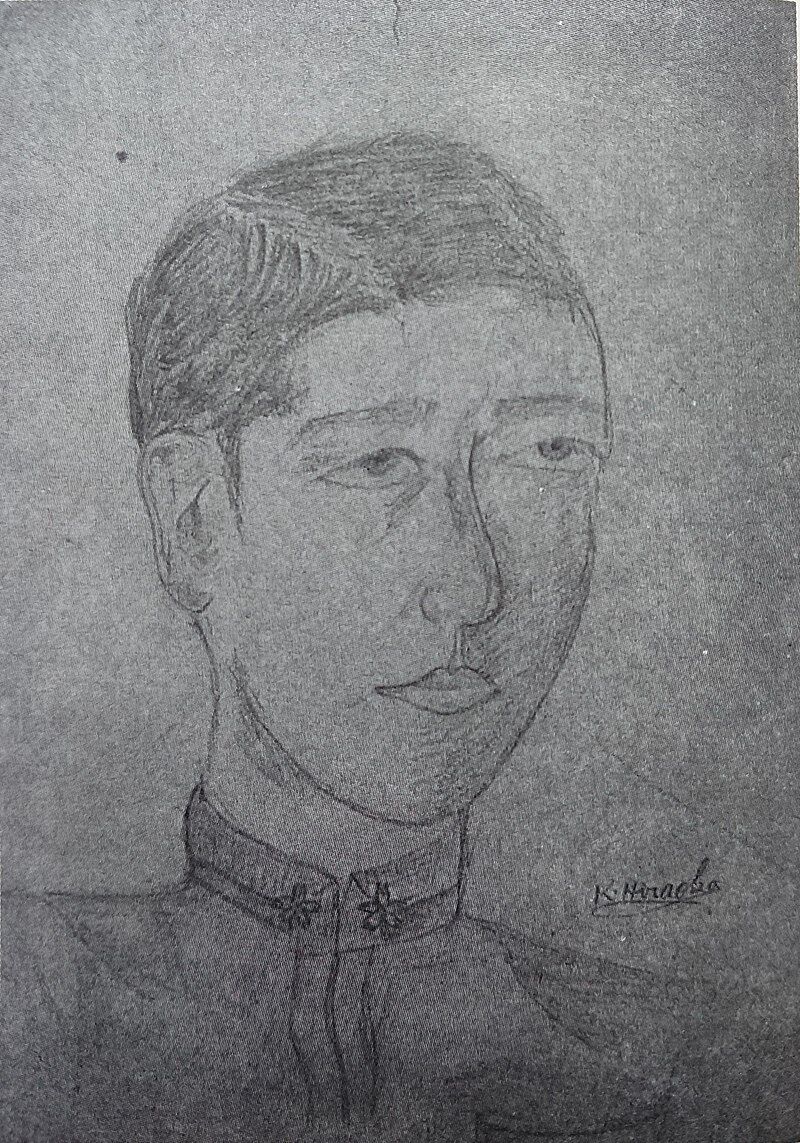
Mishima's self-portrait, done in his junior high school days (Wikipedia)
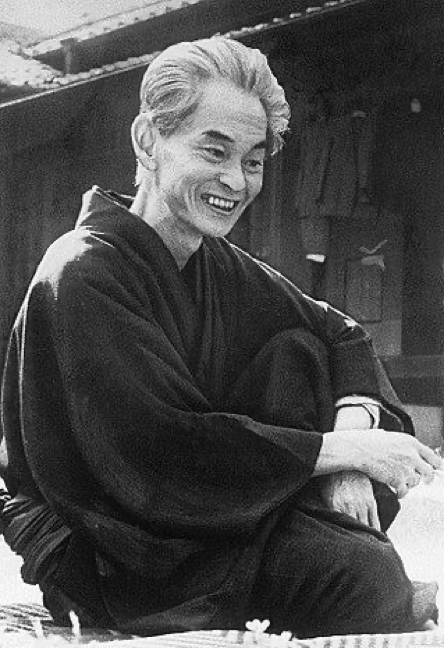
6 Jan, 2011: Breakfast at Toyoko Inn was a wee bit more simple than at Route Inn yesterday. Still, breakfast was breakfast and better than nothing! Also unlike the Route Inn, this time there was The Daily Yomiuri, an English language newspaper on the rack among the other newspapers. The Daily Yomiuri, or Yomiuri Shinbun as is called in Japanese is part of one of the country’s largest media conglomerate, and is published in many of the major cities, such as, Fukuoka, Osaka, with its headquarters based in Tokyo. It is also one of the big five Japanese newspapers in circulation today, with the others being, Asahi Shinbun, Mainichi Shimbun, Nihon Keizai Shimbun, and Sankei Shimbun. According to Wikipedia, in 2010, the newspaper was listed as the biggest selling newspapers in the world with a circulation of 10,021,000. By 2011, the Daily Yomiuri was printed two times a day with about 13.5-million readers. It surprised me to learn that one of my favorite Japanese authors, Yukio Mishima once wrote for this newspaper, as did Haruki Murakami, whose books and other works have been bestsellers at home and overseas, and translated into some 50 languages. A winner of many awards for his writing ability, including the Yomiuri Prize for best novel of 1995 for 'The Wind-Up Bird' Chronicle'. A prize that Yukio Mishima received on two occasions for best novel and drama, ‘The Temple of the Golden Pavilion’ and ‘The chrysanthemum on the tenth’, and ‘The day after the fair’ in 1956 and 1961, respectively. Then again, both this rag and Mashima lent towards the political right. Views that would lead this fine writer from taking his own life in the traditional samurai fashion, in late-1970! In later years, Murakami has been mentioned as a possible recipient of the Nobel Prize in Literature. In the 1950s the newspaper was a keen supporter of nuclear power in Japan. In more recently years, the Daily Yomiuri newspaper made a tie-up deal with The Wall Street Journal for editing, printing, and distributing purposes. The Daily Yomiuri front page headlines for this day were; ‘SDF to give disaster relief skills to S.E. Asia’, ‘Sengoku seen moving into top DPJ post’, ‘Govt to subsidize neophyte farmers’, ‘Government plans Japan’s own GPS’. Around the mid-1980s, I used to love lazing about in a coffee shop somewhere in Tokyo going through the morning newspaper. For a while it was the Daily Yomuirio, not that I cared much for its rightwing slant, but rather it cost a little less than the other English-language newspapers in circulation at the time. Sadly, those days have truly gone. Besides the miserable weather after setting out on the road this morning, my progress has been excellent, and with each kilometer falling away like tenpins. Crossing the Shono River I got a whiff of the industrial fumes, which in a way seemed out of place for the beautiful mountain range away in the distance behind me. Soon the heavy rain fell along with the snow, but not melted to form sleet. This did not bother me any, or or for the moment anyway, as long as the conditions did not become horrendous. In time I arrived at my first monster tunnel of the day, all 1,790-meters of the damn thing, the Hatagoyama Tunnel was opened to the public in, November, 1992.
Then the shorter Kuriyoshijo Tunnel, a 560-meter February, 2002 job also came into view. Soon it too was behind me and out of my life. Before the day was up, I expected to get a good 20-kilometers, if not more, under my belt. Energy, the desire or determined effort to succeed, all required fuel, yet the hunger pings had so far spared me. Even still, I needed to eat something, so a few kilometers further along I stopped in at a most interesting coffee shop-cum restaurant called, ‘Cafe de Rio’, and where I settled on the curry set, which meant if came with a cup of coffee. I did not feel hungry at all, nor merely stopping for a lazy rest. Experience on the road taught me to get something into my tank if my good form was to last. For what it was worth, my rainwear lay draped over a couple of chairs by the table in an effort to dry them. Outside, the rain, still peppered by snow, continued to fall. Earlier on I stopped on a dry spot for a while inside the Kuriyoshijo Tunnel to make coffee. Then the traffic continued to roar past, and even with my back turned against the sight and noise in a vain attempt to close my mind to it, there was no escape. Then again, I guess there is no getting away from the realities among us! Nor was it was easy to boil the water, but boil it I did, not that the taste or smell of the coffee was anything to write home about! “Mmm!” For a wee spell on the road once again, I wondered if the stop had been a waste of time, as the rain continued to fall. A few similarities that come to between I made in the tunnel the coffee I am drinking in this cafe, was that it rained outside, and my body felt cold. When I was planning this stage of my mission I knew well about my ability and felt very confident about reaching my goal before wrapping things up and returning to Tokyo again to plan the next stage of my mission. Now, suddenly and unforeseen, I found myself reduced to a near invalid. And after only a few hours of setting out on the road at Kaga. Every step I took was literally killing me! To have my colorful hopes of life on the roads dwindle away before my very eyes. To wake up and crawl out from under my tent every morning, only to question the outcome of everything, before even starting off on the road again. That was not good! In a sentence, I could feel my confidence quickly slipping away from me. Something had gone terribly wrong. What a comical sight I must have appeared to anyone who saw me hobbling inch by inch along the road. The road would finally lead me into the city of Tsuruga, my goal at that time. Then suddenly, again, what a big difference the new pair of walking boots made. Not only the new boots, but the time to rest and to attend to my battered feet the best I could. When I did leave Tsuruga I felt a different man! Not even the late-morning start, nor even the miserable weather was going to prevent me from my goal. By the close of the day, I had notched up a good 25-kilometers, and almost without so much of a sweat or rest. This was the cheerless reflection of a man of my age, there was no point nor benefit about being depressed! Like General Macarthur, had said in his famous speech he made in Australia after his escape from the Philippines: "I came through and I shall return".
7 Jan, 2011: On Route 27, I would have considered myself lucky to have come across a bus stop hut that offered some comfort and shelter. The few huts I did stop at were not the sort one would wish to stay very long in, for they were of the most part damp, dirty, missing windows, some with no doors, to say the last. Some had been used in place of toilets, thought clearly not so recently, but still the evidence was there. All of the bus stop huts were drafty to the bone, and I was glad to hit the road again each time! Last night, the rain finally stopped, or rather gave way to a heavy snowfall. The main danger was neither the rain or the snow, but the oncoming traffic that continued right on into the early hours. The chance sighting of a sign pointing blue towards a pedestrian underpass instilled in me some hope of at least being to call it a day. Besides, another 25-kilometers, if not more, had already been notched up. I felt contented with my performance, no thinks to the weather or the busy roads. Making my way along the snow covered tracks that led down towards the underpass was far from easy. Even then, I was far from sure as to what to expect, or if it was dry or wet, or if there was enough space to pitch the tent! Soon I found myself clambering up onto another snow embankment, and then across towards what I felt looked like the existence of a set of concrete steps, “Mmm!” If only it was not for the god damned snow that hid everything, I remembered thinking. At last, I came to the place I wanted, which turned out to be a good move! There was some runoff at both entrances, but I could see that a vast dry spot in the center was just perfect to make camp. And so, it was there on that spot that the tent was soon erected, and not long after that I was snuggly tucked up in the sleeping bag pondering the days ahead! The sound of footsteps coming down the snow covered steps, then hurry past my tent and up the steps at the other side, startled me. When I did poke my head out of the tent falls the person was well gone. By 7:30 I was awake proper and out of the tent brushing my teeth. Judging by the size of of the footprints in the snow, I surmised that they were made my a schoolboy, perhaps hurrying extra early to his school because of the snow. It was also a sign for me to pack things up and hit the road again. For my goal, the city of Obamas, awaited me! The snow began to fall as I climbed back up onto the road, Route 27. Obama City and busy Wakasa Bay in Fukui Prefecture! And should I decide to use the train back to Tokyo, then it will take four to seven hours, or providing the snow does not have a say in it. It should also be an easy enough place for me to return to when I set out on the next stage of my mission, Stage 6. In premodern Japan, Obama was once the capital of Wakasa Province, a gateway of cultural learning from across the sea, particularly China. Today, there are many buildings and houses in the Sancho-machi area of Obama City with designs of Chinese influence. It was for a time in the late-Asuka period (690-710), that lasted through to the Nara (710-794) and Heian periods, that the doctrine of Ritsuya was followed. Ritsuyo was a system of laws on politics and government, based on the philosophies of Confucianism introduced into the land from China.
Obama was also home to so many temples dating from the Yamato Dynasty, giving it the nickname, “Nara by the sea”. It has long been a prosperous port town through the 15th- to 17th-centuries. During the Edo period, fortifications were strengthened making it a provincial castle town as well. Still, Obama remained an important link for domestic sea routes on the Nihon Kai, and remained important to the economic development of the country during the early Edo period. This prosperous Obama port area has been inhabited for centuries, it was only granted city status on 30 March, 1951. On a sad note, Obama is one of the places from which a number of Japanese citizens have been abducted by North Korean agents, in July, 1978. Less than a year before my own arrival in Japan. Yesterday, for a while, I had toyed with the idea to leaving this madly busy road, and getting my butt onto Route 244. According to my maps, the change would lead me to Route 262 and on to Obama City, my goal. However, a young man working at a gas station who I stopped to chat with awhile told me to stick to Route 27 as the traffic was still moving fast and smooth, which was a good sign. Of course, he knew that I was not driving but walking, so I guess his advise had something to do with sticking with the devil you know as opposed to the devil you do not know. Whatever, the advice made sense to me! One thing I was to find out on the road, and with some dismay, was that convenience stores and restaurants were so few and far between. If it was only the snow that fell, then I would consider myself fortunate. Making my way along the snow-covered roadside would have at least been easy, regardless of having an empty stomach. Of course, there were times when only the snow fell, and lots of it, too. And how the dry wind carried it sideways at my face and body. The snow never settled long on me like the rain, but bounced off my clothes to settle elsewhere about the ground and around the trees or roadside. The good thing about the snow was that I never felt wet in it to the extent the rain made itself known. It was difficult to move in the snow in any great hast, which was good since it helped not to build up a sweat. Then again, one should not stop very long to rest for the fear of freezing your balls off. “Mmm!” The automated sprinklers installed along the roadside was a great idea to keep the snow from settling or building up, or so I at first thought! Or until I found my self being soaked by them, which proved annoying since I had survived getting overly thus so far! There was no escape from the sprinklers, like, simply going around them. For what they were worth, the damn things stretched along the road for kilometers at a time. The only way for me was to proceed through this dry-wet-dry-wet gauntlet that took it out on my previously dry feet and leg, and where soon became the wettest parts of me. Come to think of it, I could not recall a single moment since setting out from Tokyo when my feet and boots were ever dry. Of course, baring my short spell at the hotels in Tsuruga City. Some of my family, friends, and acquaintances have asked me why I bother with this mission at all.
Others added that: “No normal person would even think about covering such distances on foot, let alone in such appalling weather!” As in most instances, I never really bothered to answer such them in any satisfactory way. One annoying thing about being on the road to such an extent as this, was that when I did find a place to eat and rest for a while, the rain and the snow would stop falling, only to start up again the moment I hit the road to continue my journey. It was as if the gods were laughing at me! As I was tramping into Obama City, a small van driven by an attractive young woman with a smiling face stopped. She told me her name was Momo, and assumed that I was one of the many foreigners she had seen since her time living in Obama who was on their way to Bukkokuji Temple. Obama, where the tempe was located in southwestern Fukui, also bordered Shiga and the coolest of Wakasa Bay, and the Wakasa Wan Quasi-National Park. When translated into English, ‘Obama’ meant, ‘small beach’, which kind of made sense being on the coastline. For some years, foreigners had been arriving in the country to study or further their interests in Buddhism under the guidance and instruction of one of the main Zen teachers. Bukkokuji Temple in Obama was one of the main temples, in Japan, that foreigners visited and where they would stop for one-week up to one-year. Later I would learn from one of the priests at the temple that a few foreigners had even remained for as long as 10-years. Studying Zen at one of these famous temples was not for the faint hearted! I later learned that the practitioners rose at 03.50 in the morning. An average day meant ten hours of Zen meditation, or zazen, conducted in the lotus position. Literally, zazen means ‘seated meditation’, with folded legs and hands, and back kept erect. Nothing at all like what Auguste Robin had in mind when he created ‘The Thinker’. Rodin wanted his monumental bronze nude statue to reflect heroism, intellect, and poetry. In fact, it was initially named ‘Le Poète’, or ‘The Poet’, in English, when it was first unveiled, in 1904. The temple experience, usually included the study of other forms of meditation, too. The daily schedule included timeout for exercise and a run, followed by two hours for lunch and time to do other personal things. By nine o’clock in the evening the practitioners were usually fairly exhausted and more than read for hitting the sack early. Of course, the precise meaning and method of zazen varies from the school doctrine the temple followed, such as, the Soto and Rinzai schools. Ask any half decent poet, the beauty of nature is more moving than anything man can ever hope to achieve. So why would anyone wish or want to close their eyes to it, for what I felt to be, selfish reasons? To paraphrase Wikipedia, the significance of zazen is considered the heart of Japanese Soto Zen Buddhism. The aim is just sitting, that is, suspending all judgmental thinking and letting words, ideas, images and thoughts pass by without getting involved in them. Such was the paradox road that expressed the inner self and led to Enlightenment or satori! In this, Zen differed from the traditional schools of Buddhism in that it showed followers the way towards Enlightenment through the art of concentration.
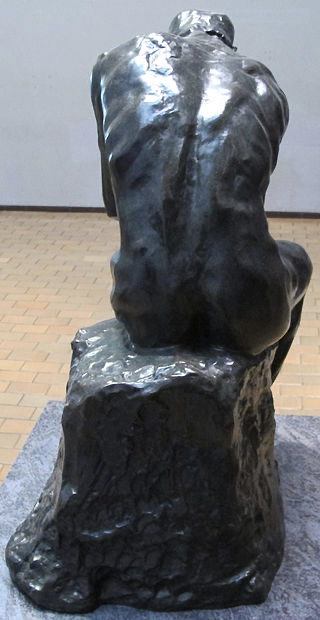
A rear view of Robin’s, The Thinker, at the National Museum of Western Art, in Tokyo (Wikipedia)
“Any manual or intellectual work that brings a person out of his state of passivity is part of the process of Enlightenment. It is for this reason that Zen monks sweep the courtyards of monasteries and devote themselves to the most humble tasks.” (Nelly Delay, ‘The Art and Culture of Japan’). Whatever it was that made these foreign practitioners pack up their bags to journey halfway across the world to one of these Zen temples or monasteries to practice zazen, among strangers in some drafty old meditation hall, to sit on the customary zendo and zabuton cushions for hour, they had balls made of steel. For myself, sitting in one place for any lengthy period could not be further from my own form of meditation. “Mmm! Hell, I needed to move, to walk, to get going, to kick up dust, to show the back of my heels!” I could not understand such people like those how gave up so much of their time to do such a thing as to shut themselves away from the real world! As I stood awhile near the steps and entrance to Bukkokuji Temple in Obama City, chatting away to Momo-san, it suddenly dawned on me that this very spot also marked the conclusion of this stage of my mission, Stage 5. Suddenly, too, I began to feel a wee bit sad! Soon I made my way up the stone steps and past the roofed gate that led into the temple grounds, a priest appeared out of nowhere and greeted me, in English. After giving me a wee look about the temple grounds, we set down a while by one of the sliding glass doors, were I was then given a cup of hot coffee, a couple of mandarin oranges, and a tiny sweet cake, the traditional sort that Japanese people sometimes ate when they drink ocha, or green tea. Before taking his leave to attend his humble chores about the temple grounds, the priest asked me if I cared to stop the night. Indeed, the chance to spend an evening at this famous old temple, and conversing with the other priests and the foreigners practiced there, would have been a great way to have rounded off this stage of my mission. Alas, and with some sadness, I told the priest that in a little while I needed to go and see about catching a JR Bus to Omi-Imazu, and that my schedule was rather tight! From Omi-Imasu, I hoped to catch one of the local trains as far as Kyoto, and then make my way back to Tokyo from there. It did not take me long to eat the sweet cake and drink the coffee, and with the mandarins pushed into one of the pockets in my down jacket, I got to my feet, re-shouldered my backpack, said my good-byes and headed back through the gate and down the stone steps that led to the road I needed to get onto. People in the area enjoyed a humid subtropical climate, and in this time of the year, it had cold winters and heavy snowfall. The average annual temperature in Obama was lowest in January, at around 3.8-degrees celsius. The average annual rainfall quite frequent, with September the wettest month. The average precipitation for January stood at around 207.8-millimeters, with 78-centimeters of snow, the most in the year. All that I could hope for was the both the rain and the snow would hold off. It was an interesting part of Japan, so it surprised me a little to learn that the population had declined steadily since the 1970 census.
What happened in Japan and the world on this day????