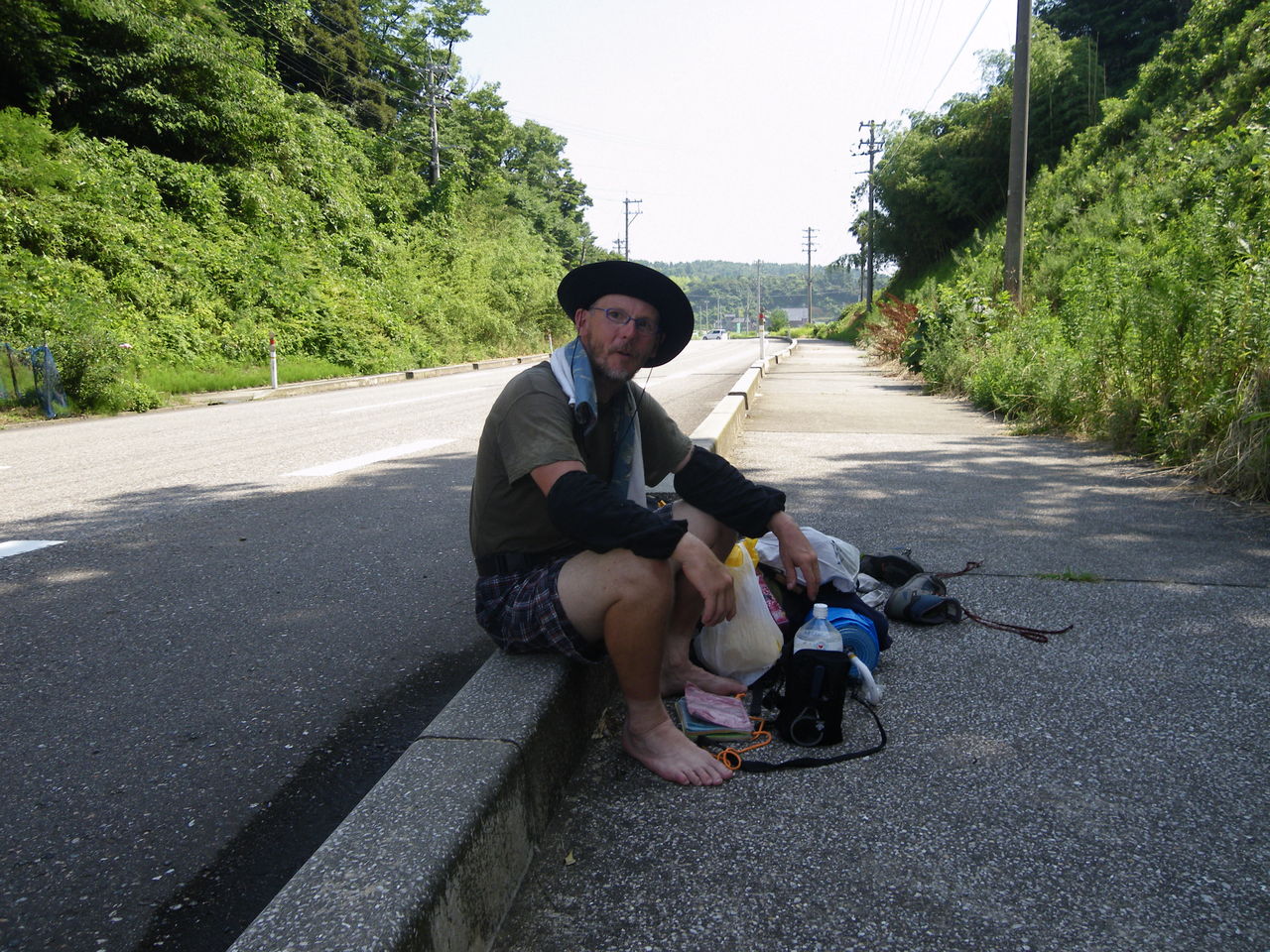
Irishman Walking (Stage 19 Chapter 6) is about my walking the main and coastal roads of Japan. Summer 2016.
19 Aug, 2016: The rain barely let up throughout the night. Even the couple of times I crawled out of the tent to take a piss it fell with gusto. I woke up early, in no great mood to make a move, but I knew that I needed to do something. Thoughts of breakfast were soon put into action -- muesli and a banana were soon readied. Healthy food worked wonders on the old body, and an even older mind. Then I took things down and rolled things up, and placed things on the hand-trolley -- the least intresting part of my mission. The damaged front wheel meant that I needed to rearrange the gear more carefully. Some of the gear would just have to be carried. All in all, I did not look forward to the tramp across the Shiretoko Pass, 740 meters above sea level, for fear the trolley would fold up on me altogether. If only things had turned out better -- my hand-trolley, the weather, my food, even myself. On the Kumagoe-bashi, over the Rasusu-gawa, I stopped a short while to take some snapshots of interesting statues of bears. The bridge carried its name, ‘kuma’, which meant 'bear'. The next bridge a plain and less interesting structure, was called Yumoto-bashi. The only thing that united the bridges was the fast flowing Rausu-gawa that folloed under them. Because of the heavy rain, the river level had reached near the top of the riverbank. Like the road, the bridges, me that bit nearer to my goal. Along the way, I passed a long low building with a sign above it -- ‘Yunosawa Salmon and Trout Incubation Place’. The fish incubation place covered a large area along the Rausu-gawa. The area also attracted bears, therefore, I needed to keep my wits about me. The island of Ireland, the country of my birth, was famous for salmon and trout fishing, but not for bears, nor snakes, for that matter. Visitors from all over the world visited the rivers in Ireland, to try their luck on the line. A few no doubt, talked about the fish that got away. As in Ireland, fishing was a big thing in Japan. Much of Japan, particularly Hokkaidō, was famous for hot springs. Like the bridges over the river, Kumanoyu, which meant, Bear Hot Spring, got its name for the bears that roamed about the area. A 14-meter high waterfall called, Kumagoe-no-taki, cascaded down the rockss, nearby. Autumn was said to be the best time to visit the waterfalls, when the green leaves changed color, to yellow, brown, gold, and red. Countless numbers of vistors traveled through Hokkaidō to capture this breathtaking gift of nature. Hokkaidō was an island of lush green rolling hills, rivers, lakes, and waterfalls, and home to 22-percent of the forestland, in Japan. A wooden sign I momentarily stopped to look at read: ‘The first bath (now the ladies bath) was built in 1978, since which it was further expanded to its current size. The bath is maintained entirely by a group of dedicated local volunteers.’ Just when the thought oabout the last public bath I set in had entered my head, a four-wheel drive truck slowed down and stopped.
Done
Locate Nozomi Kozawa????
A stocky young Japanese guy, with colorful tattoos all over his arms, got out and walked over to a rusty steel bridge that led to the bathhouse. The road was closed in winter, as a large iron gate, nearby, appeared to be testament to. Along the road I caught sight of a female cyclist. She pushed a well loaded bicycle up a steep segment of the road, Route 334. Soon our paths crossed, so we stopped at chat. She told me that her name was Nozomi Kozawa and that she came from Nagoya in Aichi. In the course of our chat, I learned that Nozomi-san had chucked in her job, to embark a bike-tour of Japan. Why not? She told me that she was 29. Later on the road, it bothered me that I had not asked Nozomi-san what her job was. And, if there was another reason behind why she quit the job. Even for me, it seemed a little hard to believe that she left her job, just to set off on a cycling venture. Come to think about it, it was not the first time that I had encountered such a woman. Something told me that it would not be the last time either. Apart of me wondered if I could quit a job to start off on my mission to make my way around Japan, on foot. Along the road I had seen many cyclists, that it seemed a kind of a trend. Many of them were young, and rode the classic or a infant in a child sling fasened to the mother's body., an ubiquitous city bike. Their bikes appeared a little out of place, rather than use the better suited, and more costly, touring bike. The mamachari was often used by housewives, to go to the shops. Often they had a basket at the front, and a child seat at the rear. The bikes were often desigened to carry two young children, or, a infant an sling fasened to the mother's body. It was illigal to carry three children on the bikes. All in all, the child seats had to be specifically designed, to fall within the law. Although the mamachar-style bikes that I saw on the road, had no child seats attached, they did have front or rear baskets. Even if the bikes were sturdy and reliable, they were, I felt, them contraptions for long distances. All the more so in a country of people who prided themselves on things done properly -- clad in the expensive and trendy gear, for good measure. In time, the road took me past a minor road, Route 93, on my right. The road headed in the direction of the five Shiretoko Goto Lakes, surrounded by a primeval forest and skirted the Shiretoko Mountain Range. The Kamuiwakka Hot Falls, a natural hot spring on the Kamuiwakka-gawa, in the Shiretoko National Park, lay further north along the road. Thanks to its volcanic origin, the water temperature of of the river averaged about 30°C. Unfortunately, a tight schedure prevented me to make a detour. After a time, I stopped at a nature center. The large restaurant at the center had tempted me more. Needless to say, I needed a bit of nourishment inside my body. The restaurant had a WiFi system, which I soon hooked up to, even if it was a wee bit on the slow side. Further along the road I made another stop, this time at a road sign -- ‘Shitetoko World Natural Heritage Cape Puyuni’.
Done
Puyuni was an Ainu word that meant 'a place with holes'. The cape proved an excellent spot to get a good look out over the region -- the port town of Utoru, and the Sea of Okhotsk. According to the road sign, the cape was “a fantastic place to gaze out at the sunset or drift ice". As I had penned previously, unless a place of interest fell right smack bang along my route, I could not possibily go there. The mountains range -- Iou, Chiembetsu, Okkabake, Sashirui, Mitsumine, and Mount Rausu -- were mountains that I would never see or think about ever again. The peninsular was home to many rivers and wateralls-- Aummori, Tappambetsu, Rusha, Kusa, Kamuiwakka, Kannesbetsu, Iwaubetsu, Sashirui, Rausu, Peneke, and Onnebetsu -- Furepe, Oshinkoshi, and Kamuiwakka. and others. Like the mountains, the names of the rivers and waterfall would soon be erased from my hard-headed brain.
Done
20 Aug, 2016: Put the tent up at an interesting touristy place called, Utoro-Shirietoko. It appeared to be a well-run place -- well stocked shop, tourist information, some of which touched on nature and wildlife conservation. While at the Utoro-Shirietoko, visitors were able to learn about the splendor of Shiretoko, from a display screen. They could learn a little about people's relationship with the sea, and the land and marine ecosystems. Utoro was the largest town on the western region of the peninsular, and home to naturel hot springs, and related establishments -- minshuku, ryokan, and so forth. Many of the visiters to Cape Shiretoko and Mount Shiretokodake, and other places of interest in the region, were hikers and kayakers. Away from the beaten trek, were the sort of places the average Joe Public never ventured to. The Shiretoko World Heritage Conversation Center also displayed life-size photos of brown bears, sika deer, and other wildlife found in and around Shiretoko. There seemed to be more pictures than words. One notice that did catch my eye was that camping was prohibited. A motorbiker had just pitched a tent a few meters away from my tent. Thankfully, the staff at the tourist center had by then locked up and gone home. After a short while, a group of about 10 students turned up, their bikes loaded with camping gear. Soon they set about placing mates on the ground to stakeout an area for the evening. Some of them did not have a sleeping bag or cover. Later, I could not even see a tent, or more importantly, a mosquito repellent. For some reason, the little buggers did not hover about this evening. By early morning, everybody was up and busy with the gear. By 05:30 sharp, the motorbiker was halfway through things, when I dragged myself from the tent. That was when I realized my outdoor knife was missing. Fortunately, it was still on the wooden picnic table around the corner, where I left it last night. The biker set at another table to cook something for breakfast on his tiny gas burner. I noticed that he had had his eyes on the knife, when I showed up. There seemed to be a disappointed smirk on his fat face, when I walked past him, with my knife in hand. It was just as well that I had retrieved my knife from the table when I did, for he might have pocketed it. Last night my mind had been occupied writing a number of postcards to family, friends, and acquaintances. This was just as well, for this stage of my mission was fast coming to an end. To save some time, jotted down the same stuff on the postcards — I tramped across Shiretoko Tōge and had seen no bears, etc. Normally, when I wrote postcards, I liked to put my heart into them. The main thing was, my knife had not been lost. Tired as I was, I needed to be more careful, as outdoor gear was not cheap. At one of the many Michi-no-Eki that I had stopped at along the road, I picked up a special kind of postcard. On one side, a safty message was printed for visitors to take heed of, and on the other, a photo of a bear that had been shot. Just about the photo a title informed visitors that: ‘A Fed Bear is a Dead Bear’.
Done
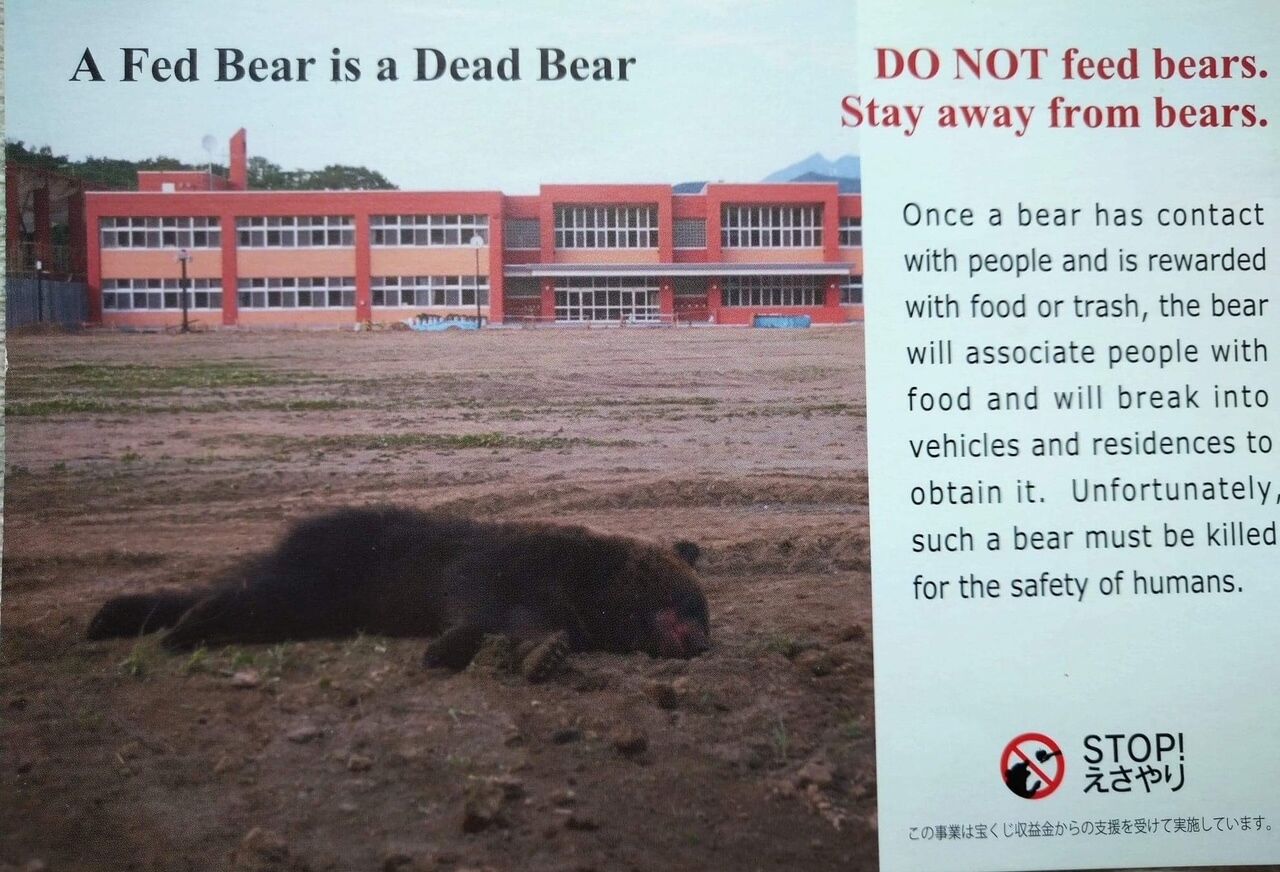
At the right, two subtitles read: ‘DO NOT feed bears.’ And, ‘Stay away from bears.’ The paragraph below read: “Once a bear has contact with people and is rewarded with food or trash, the bear will associate people with food and will break into vehicles and residences to obtain it. Unfortunately, such a bear must be killed for the safety of humans. Stop!”. There was a little story printed on the reverse side of the postcard, titled: ‘The Tragic End of Sausage’: “The code name was 97B-5 a.k.a. “Sausage”. We first met the bear in the fall of 1997; she had just become independent of her mother. The following summer she began frequenting [the] area of the park were humans were present. One-day, a park visitor fed sausage to the bear — a big mistake. As a result, the bear grew bolder. Humans and vehicles no longer frightened bears, and saw them as a source of food. Their sense of smell was 2,000-times stronger than that of humans. The bear constantly hung around where cars stopped, for handouts. This was a bad sign. There was a history of 'food-conditioned' bears in American national parks that injured humans, and some of the injuries lead to death. Attempts had even been made to discourage the bears to keep away from humans and roadsides. In the case of Sausage, the bear in question. she returned for more food, and even roamed into residential zoons. Even though the bear appeared tame, she was still a threat to people. According to the passage, the bear feasted on a deer near an elementary school. It was there that a decision was taken shot the bear, before children the childen arrived at their school. In the words of the riflescope, the bear appeared "to have a strained look on her face. I pulled the trigger, the rifle sounded, and Sausage’s life ended in an instant." Alas, she did not "live a long life and die a natural death there" (Shiretoko Nature Foundation). Sausage had been born in Shiretoko, and in away, her death came at the cost of a sausage. It begs the question, was it possible for people and bears to live in harmony? Already, many urban people could not live with trees, for the falling leaving. The trees were often trimmed, or cut down. The well lit Utoro Tunnel, a 378-meter job, with a broad pavement, greeted me on the way out of town. Soon after I emerged from the tunnel, an old cokgi dog, chained to its kennel, barked at me like there was no tomorrow. Even after a good distance, I could still hear the faint sound of the dog barking. The sky remained cloudy, but fresh. There was talk of another typhoon over Hokkaidō. Whatever the heavens had in wait for me, the sky, and the scenery, remained specular. At the Sandan-daki, a waterfall on the Ashibetsu-gawa, where I had stopped a short while, on the Sanju Bridge, to gaze down on a group of fishermen. It was the third lot of anglers that I had seen today. ’Sandan’ meant 'three steps', and 'daki', 'falls', was only about three-meters high. Hokkaidō was famous for its waterfalls. The main thing on my mind for the present, however, was how long the front-wheel on my trolley would hold. In time, I passed a touristy sign that told me that Oshinkoshin-daki -- was just one-kilometer further along the road.
Done
The tramp took me around the shoreline at Benzai Bay, and where yet another awaited me. The tunnel had the same name as the falls. A sign at the Oshinkoshin Falls was nicknamed the 'Twin Beauties Waterfall' ('Soubi no Taki'), as it separated into two flows. The name originated from the Ainu language, which meant 'a place where many Ezo spruce grow'. In 1990, Oshinkoshin-daki was selected as one of the most beautiful waterfalls, in Japan. Needless to say, I stopped to take some snapshots. Not five-minutes had passed after I had left the busy tourist spot behind me, it began to bucket down. For the remainder of my time on the road, Route 334, I was saturated. There were a few times along the road, when I stopped to shelter, and rest. At one place I even took a nap under a wooden shelter. As luck had it, a rest-house with a cafe, came into view. My mind quickly switched from the damaged wheel on the trolley wheel, and focused on food. The place was called, ‘Rest House AM’, where I ordered a chahan, a bowl of fried rice, which turned out to be one of the best I had ever eaten in all my years in Japan. The rain continued to beat against the cafe windows, and I dreaded that soon I would soon be back out under it.
Done
21 Aug, 2016: The rain, I once heard, was a great inhibitor to cover greater distances. How could that be? I loathed tramping in the rain. Who didn’t? It was nice to escape the rain to rest, for a while. Often on the road, for my mission, it did not surprise me to find myself in areas without shelter. In such cases, the best thing to do, was to just push on along the road -- in the hope that a nice dry spot would pop up, soon. It was important to accept that that was the way things were. Saturated or not, there was no way to beat nature. Life on the road meant that I had to face the facts, and cover as much ground as possible, without complaint. Hope on the road, was just as important as the distance covered. The last bus stop hut I stopped at for a while, had turned out to be as wet inside as it was outside. Each time I hit the road again, I always hoped that the next hut would at least be dry, if not clean and well maintained. And, with a nice long bench to sprawl out on. Likewise, shops and stores, were also good places to escape the heavy rain, for a while, particularly if I needed something. Each step I took, in the pouring rain, I also hoped that another wheel on my hand-trolley would not break. The previous one had fallen off some distance back down the road. The trolley ran surprisingly well on three wheels. Still, it meant that I had to stop, more often than not, to adjust the load, in the rain. At last, this hope came true at the top step of a small Shinto shrine in Shuen, about seven-kilometers short of Shari Town. Shari had a population of nearly 12,000, and located within the Shiretoko National Park, which covered most of the Shiretoko Peninsula. The park was also one of Japan's remotest of regions, and home of the largest brown bear populations in the country. It also boasted an aboundance of wildlife, marine animals, hot springs, waterfalls, likes, and forests. The Shiretoko National Park was designated a UNESCO World Heritage Site, in 2005. In 1945, during the final weeks of the Pacific War, Shari was targeted by an American submarine, the USS Barb -- the first submarine-based rocket attack on a surface target. The red torii gate of the shrine stood magestically by the side of the road, Route 334. A narrow dirt path, saturated with puddles, led up to the honden (also called shinden). The honden was the most important and sacred building Shinto shrines, and home to the enshrined kami. The area was overhung by shinboku trees, a devine feature in shrine grounds. Because of my poor kanji ability, it was only later that I learnt the shrine was called, Akagame-jinja. At the top of the small rise, the forth step, I found what I had hoped to find -- a dry, wooden platform, about a meter-wide, just perfect to spread my mat out on -- my bed for the evening. The architecture of the shrines (and temples are built) through the passing of time, and were often distinguished by their roofs. The long roof that fanned out over the steps, at Akagame-jinja, was wide enough to keep the rain well away from me, for once. The roof, I surmised was made from hiwada, or bark from Japanese cypress trees, called hinoki. The strips of hiwada were held firmly in place by a countless number of bamboo nails.
Done
The only thing that I had in common with Akagame-jinja, was that its thick rood was completely exposed to the elements -- the rain, snow, sun, and wind, took a toll. Birds were also known to make their nests in the roof of shrines. Somewhere deep inside the roof at Akagame-jinja, I could hear the tiny chirping a chicks. After a while, I saw, what I took to be, the mother sparrow. The bird flew out from under the shrine roof, time and time again. Each time the sparrow returned, it had something in its beak. Perhaps it searched for insects for her chicks. In away, today could not have turned out better, for me. Already I had more then 30-kilometers under my belt, even if it was in the heavy rain. The faucet, that stood next to the main shrine building, worked. That said, it was impossible to wash clothes, for the rain. Later, however, I could give myself a rub-down with soapy cloth. Access to the water gave me a chance to cook something. The traffic that sped along the road, had greatly lessened. Just as I toyed with food and the traffic, a police car turned off the road and pulled onto the dirt path, below. Its red lights flashed madly, like a Christmas tress. It was around seven-thirty in the evening. The car maneuvered slowly into a position that looked out onto road, and stopped. At first, I had expected a policeman to get out at any moment. “Mmm!” I was not a happy camper, and swore the ‘F’ word, under my breath. Momentarily, I thought some local bugger had noticed me as I prepared my bed for the night, and called the police. This was near the entrance to the shrine, where people pulled on the cord to rang the bell. Social scrutiny was a big thing in Japan. Thankfully, the policeman did not get out of the car. The police car remained there for over 30-minutes. The lights continued to flash away like there was no tomorrow. At the same time, I felt happy that nobody had noticed me. The moment the police car had pulled in off the road, its headlights seemed to be all over the place. Surely, speeding motorists could see the red flashing lights, from a distance. Or so I felt at the shrine, from my raised advantage point. Compared to earlier, the vehicles that passed by, had reduced their speed considerably. At around eight o’clock in the evening, the police car engine started up. The car engine idled for a couple of minutes, then it moved slowly westwards, in the direction of Abashiri City. If all went well, I hoped to head in that direction, tomorrow morning. Regardless, I hoped that this was the last time I would see a policeman. Around midnight, the rain stopped and stayed that way for some hours. However, by 05:30 AM it began to pelt down again, like it had the previous day. My plan was to get as close as possible to Abashiri City, which hoped to reach by Monday, sometime tomorrow. By then, I hoped to sit in a hot bathtub at the Toyoko Inn in the city. My aching body needed it, if not my mind. Another thing that I badly needed to do was to dump some of my gear -- worn-out clothes, a sun-chair that I had, foolishly, picked up at an outdoor store, a few weeks ago. One of its aluminium legs got bent the day I bought it, and did not function as it should have ever since. A call from a friend in Tokyo told men a typhoon (#11) was fast approaching. The rain remained heavy, with little sign of any let up. A cyclist shot past on his bike, loaded up with gear. Likewise, I needed to get my arse into gear and move on. By the time I hit the road, the time had gone 08:30 AM.
Done
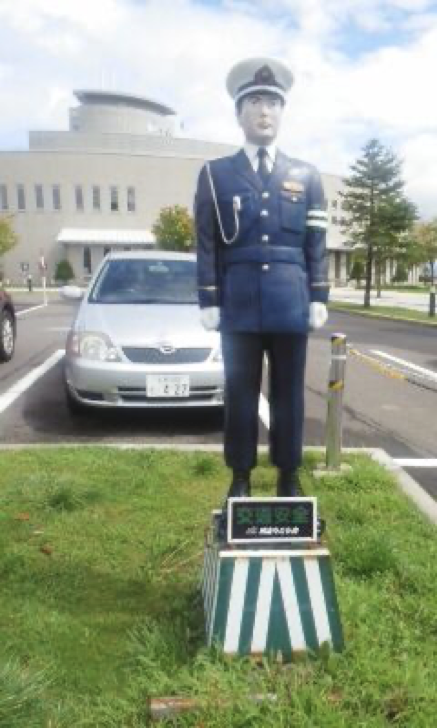
22 Aug, 2016: Camp was set up under a wooden wallless picnic shelter. Thankfully, it had long benches, secured to the ground, which skirted the inside edges. This was at a Michi-no-Eki called, Hanayaka Koshimizu -- a roadside station. There were a lot of local government-designated rest areas along the roads and highways, around Japan. They were places for travelers to stop and rest, and tended to promote the local tourism and trade to visitors. Therefore, the shops sold a lot of the local produce -- fruit, vegetables, food, snacks, crafts, souvenirs, and so forth. The roadside station was a connection to Hama-Koshimizu Station, on the JR Senmo Line, to the Abashiri Quasi-National Park. The park was home to Koshimizu Gensei-Kaen garden, a wild flower preserve. Hokkaidō was wet enough for plant growth at all seasons. The main drag, Route 244, also passed a host of scenic gardens and parks for nature lovers to visit. The wooded shelter, where I planned to stop the night, was idea for visitors to stop and chat under a drizzle. The belief was that the typhoon (#11) would hit the area very soon. Already, I had been advised to keep away from rivers and the coastline. To add to my mental distress, a second typhoon (#9) was also headed in this direction. “Mmm! What happened to typhoon number 10?" Momentarily, the thought passed through this hardheaded Irishman's brain. The typhoon season in Japan, peaked in August and September. About 30-typhoons passed over the Pacific each year. All the same, it was sound advise. The rain had mercilessly bucketed down this last week. In such bad weather, I expected there would be few people about, as the day drew to a close. So, I planned to peg down my tent, between the heavy benches, in a little while. It did not take me long to firmly pegged down the tent. A blue tarpaulin was fastened over it, for added protection. This included a double check, to make sure everything was in order. Father Time was my biggest enemy. Often when I tramped into such a place to eat or camp. The shops and restaurants were shut for the night. This was not a part of my plans -- save money, or camp with the least attention. I had not had anything to eat for hours. Tonight, I would hit the sack on an empty stomach, again. Fortunately, I did not feel hungry, and even if I did, I was in no mood to eat much of anything. There was a reason for this. A chanced encounter, of sorts, took my mind off food. A number of kilometers back along the road, before I had even thought of calling it a day and camp. My mind had been preoccupied with the deteriorating weather conditions. Therefore, I felt happy when the sun had broken through a gap in the clouds and lit up the road in a splendored brightness. The average Joe Public thought about, or took for granted, the daylight people enjoyed on Earth. How many people knew that the Earth's light was generated some 30-million-years ago? For myself, I tried to make the most of the sunlight, particularly on rainy days. However, it only took one unpleasent happening to go from being on cloud nine to being knocked for six.
Done
Along the road, I stopped at a vending machine, to treat myself to a cool can of beer. I then set down on an empty beer crate, next to the machine. The sunshine was just perfect, so I wanted to enjoy it for a while. In a way, my stop cost me more than the three ¥100 yen coins for the beer. Just as I had taken my first sip of the beer, a dog barked from behind me. It was not aloud or voracious bark, but weak and fearful sound. So, with my beer in hand, I got to my feet to investigate its source of the bark. A narrow alleyway skirted between two old dilapidated shop-like buildings, long closed for business. As I drew nearer, two eyes suddenly looked up at me from under a dirty old van. The dog had made its space under the van, a home of sorts. “Mmm!” The old proverb: ‘Its a dogs life’, entered my head. A thin middle-sized dog, its coat matted by dirt and neglect. It was easy to make out it had been a beautiful creature, in better times. When I glanced down at the unfortunate animal, I surmised it was not five-years old, which was not old at all. It's unhealthy condition made it appear older -- it could barely move. The dog then turned its eyes away from me. This I took to be more from fear than not. Heaps of broken discarded bits and pieces of unrecognizable junk. There were some rotteb cardboard boxes and rusty wires. Legally, there were around 500 neglected and abandoned cats and dogs putdown, in Japan everyday. The place were I stood was a complete mess, a real dump, another world. How could the poor animal be more neglected? A tiny and uninhabitable doghouse stood a few meters away from the old van. There were two holes in its roof, and puddles of water inside it and outside it. Perhaps it was just as well the dog had out grown the doghouse. For the life of me, I could not understand where the dog slept, or sheltered from the rain. The rain had stopped, so the weather, as well as the road, could not have been better for tramping. After a period of endless rain-laden wind, the warm sunny weather was gratefully welcomed. The rain in particular, was the sort of stuff I never got used to. Not that I ever really got used to the scorching sun either. Along this not overly congested road, everything appeared to be in the proper place. The horses on one side, did what horses did -- mostionless as they watched the world go by. In earlier times, horses played a symbolic role in Shinto religion. Even today, some shrines kept a sacred white horse. A body of water looked more like a painting than a lake. Lake Tōfutsu was set in the Abashiri and Koshimizu areas of Hokkaidō. From where I stood, the lake appeared like a giant mirror far off in the distance, because of the sunshine. Everything along the road seemed in the proper place, like a heaven on eaerth, the places were just perfet for a picnic. "Mmm!" If only I had a friend with me now, to share the time with, a place for lovers, a quiet time together. Lake Tōfutsu had a circumference of approximately 28-kilometers, from east to west. That was a good days walk, if I did not stop too long at the scenic spots along the way. The region was also home to invaluable flora and fauna.
Done
An absolute silence and stillness, a rare experience in the physical world that I was a cog wheel in. On the road, everything seemed to vibrate to one extent or other. The mighty Pacific produced its tides, the stars high up in the sky produced different states of brightness, the earth produced its earthquakes, and so forth. Thanks to the climate -- rainfall, light, wind, and fire -- the isolated regions of Hokkaidō had grown rich in plant life. Flora, fauna, algae, fungi, and bacteria, the simplest of all plants, abundant in moist environments, were also the earliest. Scientists had long held the view that the earliest plants evolved from algae. Green algae grew on and in the surface of water, and abundant in oceans, and freshwater. Fungi were ancient organisms, had been traced back some 1,000-million-years. The availability of water was vital for the survival and distribution of all organisms. Mosses and liverworts, for example, depended on a watery environment -- swamps, wetlands -- for normal growth, to form roots, produce stems and leaves. The coniferous trees that I passed on a daily basis, retained their green leaves all year round. The waxy surfaces on the leaves, provided a ready supply of water. Conversely, the pine trees were mostly found in dry locations. Their thin needle-shaped leaves remained open, so as to make the most of the sun light. Without the continuous energy from the sun, the ecosystem, home for much of the life on earth, would have collapsed long ago. There was not a large variety of habitat, animals, in the forests. A few animals fed on conifers -- red deer and roe deer, and the bear, which was an omnivore. The smaller animals native to Hokkaidō -- field mice, porcupines, Eurasian red squirrels. Also, the Japanese grass vole, found only in Japan. The forest were home to an abundant species of birds, too. Broad-leaved temperate woodlands of beech, elm, and oak -- were typical forests in eastern Asia, Japan included. The temperate deciduous forests were home to the badger, fox, deer, squirrel, and wild boar. Birds were the most common of predators in the deciduous forests -- the crow, hawk, magpie, nutcracker, rook, thrush, and the woodpecker. To survive in the animal world, most of the wildlife had a dull-brown color, to blend in with the surroundings, others changed color in winter. The insects, on the otherhand, existed just about everywhere. An oak, for example, could be home to as many as 50,000 caterpillars, which fed on the leaves. In turn, the caterpillar proved a rich food supply for the birds, especially in springtime when most abundant. Lake Tōfutsu was a salt lagoon, seperated from the Sea of Okhotsk by sand dunes. The lakes nickname -- ‘lake of the swans’ -- was a stopover for wintering migratory birds, from early-October through April. As many as 30,000 geese and ducks stopped for a spell every year. Whooper swans, stopped by at the lake in early-spring. Other birds spent longer periods -- mallard, merganser, and white tailed eagle. Another was the sea eagle, and other rare species of wildlife. Needless to say, the area attracted avid birdwatchers all year round.
Done
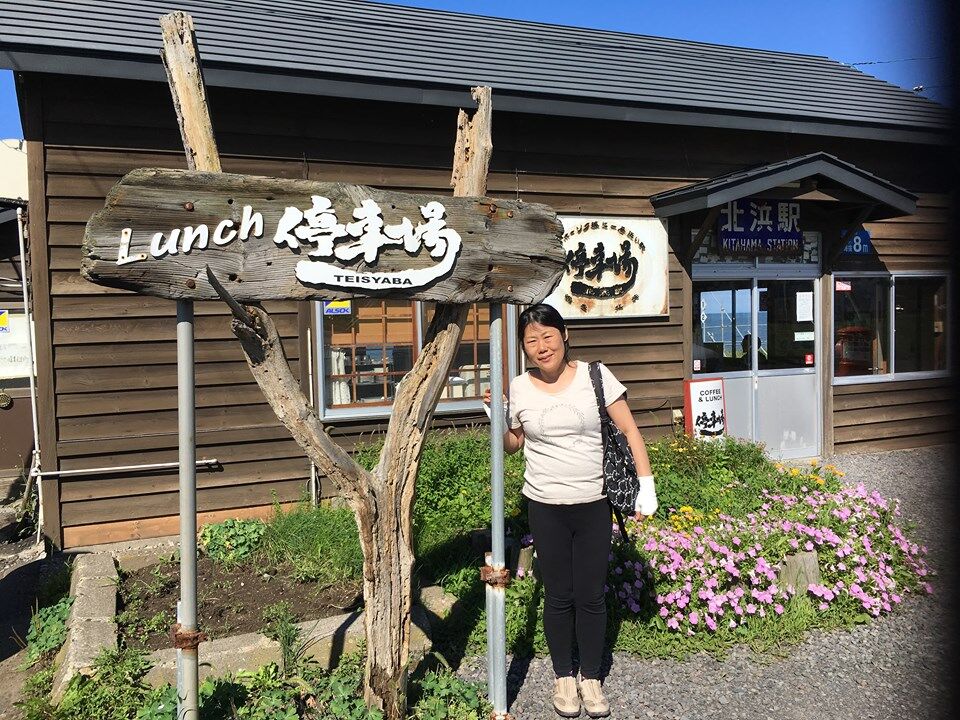
'Birds, Beasts and Flowers' a collection of poems written by one of my favorite writers, D. H. Lawrence, published in 1923. “Mmm!” Yet, I momentary wondered if the British author, DH Lawrence, would have been among them, had he been around. "I never saw a wild thing sorry for itself. A small bird will drop frozen dead from a bough without ever having felt sorry for itself." (D. H. Lawrence). True, small birds seemed not to fear death. On a visit to New York, Lawrence penned in an article (1922): "that birds were evidently no angels in America, and often came under the sights of the farmer’s rifle." Lake Tōfutsu was part of the Koshimizu National Flower Gardens, and famous for its natural flowers. A scenic spot that looked out on Mount Shari and Mount Shiretoko. The lake was certified an internationally important wetland habitat for waterbirds, in 2005. Not much further along the road I made a wee stop at the flower garden, on the lake front. At this very spot, visitors were treated to a wide variety of plants. That was if the condition of the soil was favorable, not to mention the right time in the year. The flowers along the shoreline were different to flowers in the garden, such as, irises in summer. An old railway station on the JR Senmo Line, along the Sea of Okhotsk, was a rather delightful place, in the historical sort of way. My stop at the station was kind of like a step back to the past. One of the stations I passed, Kitahama Station, had a small station-cafe. “Why not?” I mumbled to myself, and headed in that direction. For once, the time could not have been better, as lunch, or late-breakfast, was served. As I waited for my order to arrive, I thought about the road, and some of the things that I had seen. One building on a hill, above the main road that I had tramped past, interested me. At first I though the building had been designed by someone absent a screw in the head. Perhaps the occupant was an architect, or something of that sort. Later, as I flicked through a number of tourist pamphlets, I learned that the building was called, 'Furetoi Scenic Viewpoint'. The pamphlet referred to the building as: “This impressive white pyramid-shaped scenic viewpoint” which offered “sweeping views of the Sea of Okhotsk, Lake Tōfutsu and the wild flower park.” The viewpoint also boasted a distant view of the Shiretoko Mountain Range. All that I could think of was how I nearly broke my balls in my attempt to cross that highland range, in the heavy rain. Then again, I could not complain, as I was able to get over the mountain pass without an encounter with a brown bear. The region was the bears natural habitat.
Done
23 Aug, 2016: At long last, my legs carried me into Abashiri City, and headed in the direction of the Toyoko Inn. My mind was soon occupied with a soak in a hot bathtub. The plan was to stop for a couple of days and look around the place. And to catchup on some writing. According to The Japan Times, typhoon (#9) had kicked up one hell of a fuss, when it passed over the country. And, with record rainfall in places. Japan was a country of floods and landslides, and high tides, at the best of times. So, it was easy to imagine how things could have turned out on the road, during the typhoon. I never understood why today's issue of the oldest English-language daily newspaper (launched in 1897), on the newspaper-rack at the Toyoko Inn, was two days out of date. The Japan Times at the Toyoko Inns that I had stopped at, up and down the country, were usually just a day behind. The odd time, there had been no issue at all. Today was Tuesday, as I flicked through the Sunday issue. I liked to glance over the headlines first, if I read anything. Often, I prefered to give what time I had available to my own road-notes. A front page headlines read: ‘Bolt achieves historic triple-triple.’ This made Bolt the fastest recorded runner on the planet, over distances of 60 to 100-meters. A sub-headline on the following page read: ‘One-time abdication law weighed.’ Then on page 4: ‘Staff revamp over, Trump refocuses.’ Another sub-headline read: ‘No Clinton deposition in email lawsuit: judge.’ “Mmm!” There were a bunch of other sub-headlines, a good number of which seemed strange or ambitious, or difficult to make head or tails of without reading further. Regardless, I did not bother with the articles, for a lack of interest. With the rag back on the newspaper rack and breakfast finished, I decided to catchup on some of my plain postcards to family, friends, and acquaintances. I wanted to get them all posted, before I called an end to this summer stage of my mission, Stage 19. All in all, I still felt depressed at the chance encounter yesterday, with the unfortunate dog. I could not fathom the reason behind an animal kept in such a condition. Animal cruelty was a worldwide cancer. It was not the first time that I came across an unfortunate creature along the road. The animals had mostly been abandoned, and all of them were hungry and thiristy. There was little I could do, which only added to my depression. In a few days time, I would meet up with a friend, whom I planned to talk to, abou the dog. My plan was to report the dog-matter to the local police, to see what might be done. How could I live with myself if I did not do something? I needed to bring the dog’s predicament to the attention of someone who might be able to act. My friend would rent a car, which should make things easier for us. We had long planned was to spend a few days together, to visit here and there, in the car. Abashiri was the planned place to meet, so I needed to return to the city, when I wrapped up this stage of my mission. At times on the road, I felt less depressed, but I was not quite sure why. Perhaps this had something to do with my friend's visit to Hokkaidō.
Done
At least I would be able to tell my friend about my venture on the road, and of course about the dog, and find out what might be done. The car would give me a little more power, to visit a main police station, if necessary. Like many cities in Japan, Abashiri had its fair share of museums and parks. The regions culture once flourished along the Okhotsk coastline, during the Kofun period (250-538 AD). That was when recorded history began, in Japan. It was a time of mound tombs, the final place of rest for the elite. The burial mounds, called tumulus, were found throughout the Abashiri region. It was a burial culture that dated up to the early Nara period. Then the ancient culture vanished. In recent times, the Moyoro Shell Mound, among many artifacts, unearthed in Abashiri City, which dated to the Kofun period. The Ainu culture had overcome oppression down through the years, it survived, and thankfully, continued to grow. The Moyoro people, whose culture and background differed greatly from the Ainu, were less fortunate. Little was known about them, their activities and ways of life. The Moyoro Shell Mound Museum, with its unearthed human bones, was known worldwide as a Okhotsk cultural ruin. In addition, the Abashiri Municipal Museum, was home to natural exhibits and marine animals that inhabited the surrounding waters. The exhibits included terrestrial animals, a variety of wild birds and insects, that inhabited the Abashiri region. The artifacts dated back to the Paleolithic, which thrived until approximately 10,000-years and into the post-Jomon period. The period included the Ainu, and relative cultures of the Satsumon and Okhotsk peoples. The Hokkaidō Museum of Northern Peoples housed around 900 artifacts related to the past and present. A number of the artifacts covered as far away as Greenland to Scandinavia. The artifects displayed dealt with foods, clothes, buildings, and livelihood items. Much of the items were connected to the Ainu, Inuit, Koryak, and Okhotsk cultures. During the Jōmon period, the Okhotsk people were mainly hunter-gatherers and fishers, from the islands dotted about the Okhotsk Sea, around 600–1000 AD. During the post-Jōmon period, the Satsumon people, lived in the northern regions of Honshu and the southern regions of Hokkaidō, around 700–1200 AD. Both cultures were believed to have assimilated through time. At the museum, visitors learned about the development of the regions, from the Meiji period up until the present time. A museum in particular, which grabbed my interest, was the Abashiro Prison Museum, the largest and oldest of its kind, in Japan. After the collapse of the Tokugawa shogunate government, in 1867, one of the problems the new Meiji government faced, was the security of Hokkaidō. Effort and money was poured into strengthening the northern island, as curb Russian threats. At that time, Hokkaidō was made up of three prefectures -- Sapporo, Hakodate, and Nemuro -- a system that was soon abolished. On an inspection of Hakodate, Secretary Kentaro Kaneko proposed the establishment of a Hokkaidō government.
Done
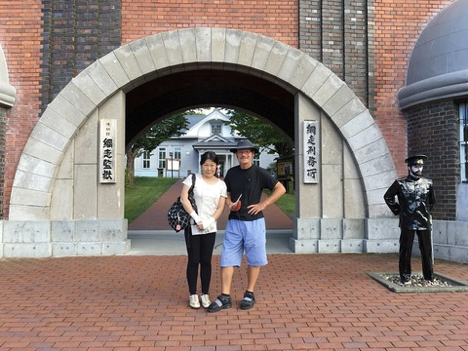
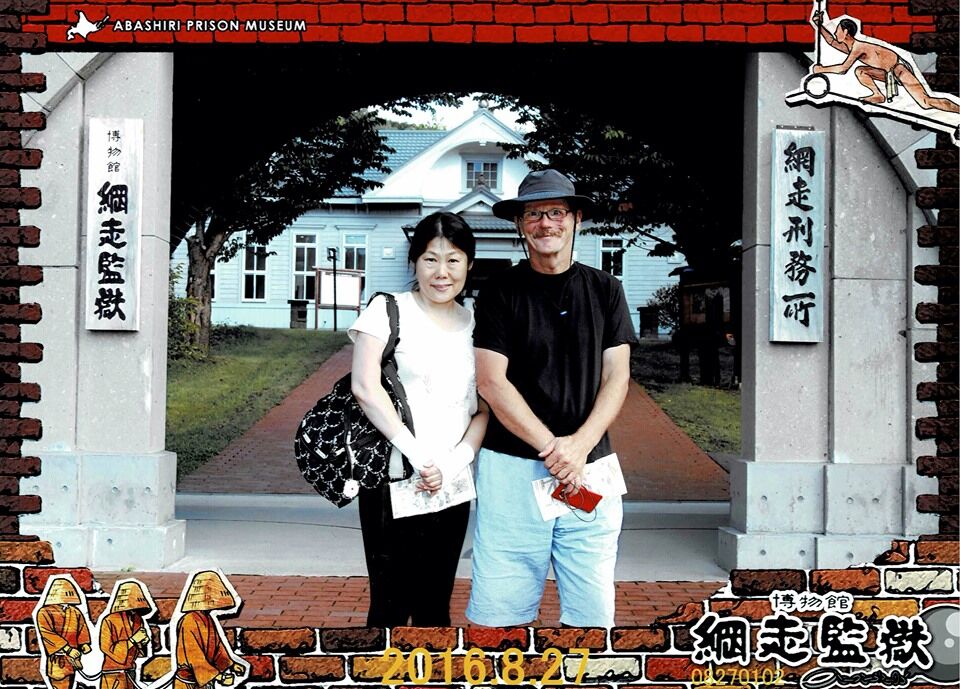
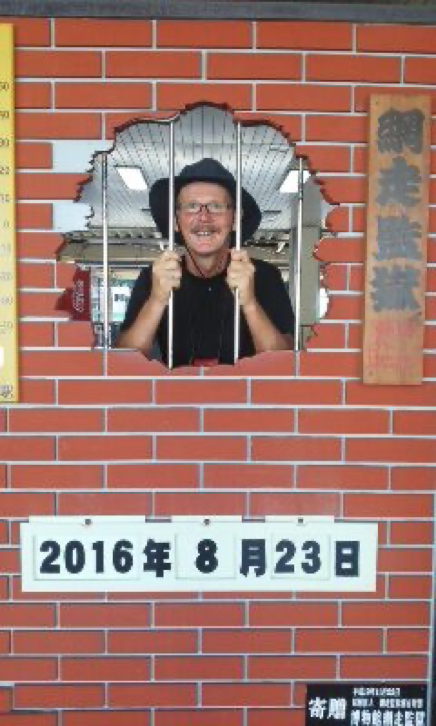
It was recommended at the time that by the use of prison inmates, development costs could be lessened. As a result, Abashiri Prison was built, in 1890, by the inmates. The new prison also served as an outpost for a second prison, the Kabato Prison, opened in 1881. Tsukihara Village that grew up near the Kabato Prison, was named after its first warden, Kiyoshi Tsukigata. The prison inmates supplied the labor for the building of local roads, which stretched from east to west. The Chuo-Doro Road connected Abashiri to Central Hokkaidō. According to a tourist pamphlet I picked up: “211 prisoners died from exhaustion caused by the brutal labour or malnutrition from the lack of adequate food supplies.” The turmoil of the Meiji Restoration saw a large increase in political prisoners. The prisons also housed serious criminals, mainly apprehended during in the civil war. The prison museums gave visitors an insight into the pioneering history of Hokkaidō. Existing prisons at the time were overcrowded, so Kabato Prison was built as a way to ease the problem. Abashiri Prison,was the only prison in Japan that incorporated a beef farming project as part of its rehabilitation program. The project was mainly for offenders that had served less than 10-years for their sentence. Many of the cattle produced in the project were granted the highest rank, A5, by the Japan Meat Grading Association, in Tokyo.
Done
24 Aug, 2016: The morning sun shown in through the window of the hotel room (#907), and bounced off the walls. A clear blue sky seemed to call to me to get my lazy arse out of bed, for the road awaited. In little time at all, I was under a hot shower to cleanse myself of any sleepiness. Then, it was down to the lobby area, for breakfast. Most of the tables were taken up by guests, the maority of whom were salarymen. There were a few elderly tourists. A couple of The Japan Times hung on the newspaper rack, one dated 22 August, 2016, the day that I tramped into Abashiri City. One of the Japanese newspapers had a colorful front-page photo of the Tokyo Governor, Koike Yuriko, who vowed to prevent: ‘white elephant’ venues. Another photo was of Japanese Olympic Committee President, Tsunekazu Takeda and Tokyo 2020 CEO, Toshio Muto. Both men promied not to saddle Japanese citizens with unused facilities. The other front-page headlines were: ‘Japan got ‘red line’ threat from China’, ‘Activists’ METI camp razed after years of Fukushima protests’, and ‘Clinton’s China talk key to forging global identity’. Back on the road, Route 39, which ran paralel with the Abashiri-gawa. Shortly, I hoped to say goodbye to the road, and get onto Route 239, if I did not make a mistake. The touristy sign pointed left in the direction of Okhotsk Ryu-hyo Museum, and right for Abashiri Prisonm Museum. Another sign told me that Lake Abashiri was two-kilometers to the left, along the same road. Alas, it was at this point along the road that I took my leave from Route 39, and onto Route 238, that led to Tokoro and Mombetsu. Notoro Fishing Port was away to my right, not that it mattered anything to me. Once again I felt alone, as if part of the road, again. A glancing over to my left, neaer the lake, ran 'Okhotsk Cycling Road', which ran parallel with the main drag. Just then, a cyclist pasted me by, but he was not on the cycle path. Further along the road, I noticed that the water in the lake seemed rather high, and that segments of the cycle path was submerged. All in all, it was a good idea that I kept to the main road, and it was not busy. On the road, little of anything passed by -- cyclists, motorbikes, cars, trucks, nor tour coaches. It was long planned to meet up and spend sometime together with a friend, Yumiko. She was a teacher at a special needs school, in Tokyo. The airport in Abashiri seemed as good a place as any to meet. We also planned to fly back to Tokyo on a flight from there. The date to meet was set for Friday, 26 August, and was made all the easier, by the rental of a car. In away, our planned meeting kind of kicked me into gear to make it to my goal, Okhotsk Mombetsu Airport, where I hoped to wrapup this stage of my mission, Stage 19. It also meant that I had to return to Abashiri, which was not the most interesting of cities. If all went to plan, Yumiko-san would pick me up at the airport, with the rental car. She told me that she had not driven a car for about 10-years.
Done
Her voice sounded a wee bit apprehensive, on the cellphone, but relieved when I told her that the roads were not busy at all. One problem that worried me, however, was that another typhoon was fast headed this way. As if out of nowhere, a Seicomart, a convenience store, popped into view. The first Seicomart convenience store opened in Sapporo, in 1971. Most of the chain store outlets were found in Hokkaidō. The times on the clock on the wall read 12:25. This was as good a time as any, to stop and pick up something for lunch. Outside the store, I sat on the ground to enjoy a banana with some bread, and washed down by a cool can of Sapporo. Back on my way, again, the road led me through the narrow Abashiri Quasi-National Park, which also had a number of places to camp. This did not matter much to me, as just about everywhere along the road appeared pleasantly similar. The road also passed a number of lakes. Away to my right, Saroma-ko shown like a mirror reflection in the sun. Saroma-ko was a 25-kilometer long coastal lagoon, about 150-kilometer-squared, which made it the largest like in Hokkaidō, and the third largest in Japan. (Biwa-ko in northern Kyoto, and Kasumigaura-ko in southeastern Ibaraki, were the first and second largest lakes, respectively, in Japan). The lake made up part of the Abashiri Quasi-National Park, and was noted for its floral display, particularly a silvery reed-like grass, native to eastern Asia. The name of the lake came from the Ainu word, ‘Saruomahetsu’, that refered to 'a place that had many reeds and rushes'. An anual foot race, called the Lake Saroma Ultramarathon, took place along the lake, every June. The foot race event was first held, in 1987. “Mmm!” For some reason, thoughts of a kayak venture, perhaps a new mission, momentarily entered my head. On the pavement and along the roadside, I passed the odd discared seashell, and wondered how such things came to be there. After a stop to enjoy a cup of café au lait, I came to a little sign that told me I was near Notoro-ko, another large lake. Clearly, it was not Saroma-ko, as I had first thought, another lake -- another mistake. My maps annoyed me at times -- difficult to follow. Unnlike Abashiri ko, Notoro-ko was connected to the Okhotsk Sea, it was a salt lake. It lay between the Abashiri and Saroma Lakes. One of the main attractions of Notoro-ko, was that it was home to the largest glasswort community, in Japan. The glasswort was a grass-like plant that thrived in salty marshland. In Japan, it was known as ‘sangosou’, which meant ‘coral grass’. In the autumn months, grass changed color, and carpeted the lakeside a bright red.
Done
25 Aug, 2016: Last night, I camped at the upper part of a mucky riverbank, close to a bridge called, Tokoro-bashi. Actually, I had not long crossed the bridge, when I decided to call it a day and pitch the tent. The typhoon had passed over, earlier, so the river was not so high. A glance about the place, reminded me how some of the rivers I had crossed, in Hokkaidō, had been high. So high, that they looked like they were about to burst their banks. All the same, it felt good that I had made camp at the top of the embankment, for a 7-Eleven was not 200-meters away, which I would pop into shortly. There was another reason to camp near the bridge. I had tramped much further than I had planned, so I was confident to meet my friend well in time. Or so I had thought, until a signpost put me right. From Abashiri to the bridge, where I pitched the tent, was about 31-kilometers. According to a call from my friend in Tokyo, the distance was a good 71-kilometers to Okhotsk Mombetsu Airport. Therefore, I needed to cover at least 35-kilometers on the two remaining days of the stage. If I had little of anyting, I had a good sence of distance. Today, the weather sould be good, even if rain was expected, on the final day. Either way, the information was not good news. The heat bounced off the tarmac, and added to the hardship of life on the road. A cool breeze suddenly hit my face, which I instantly welcomed. Cleary, Sonoma-ko was nearer than first thought. A tiny sign pointed in the direction of Cape Kimuaneppu, away to my right. There was also a campsite site there, but I had other things on my mind than to check it out. For a good while, the road, Route 238, ran parallel with Saroma-ko. For a while, the sun reflected of the lake, then it sunk behind a cluster of trees. The bends in the road veered left and right a number of times, accompanied with ups and downs. In time, the sun vanished for the night. A short stop was made at a Michi-no-Eki at Saroma, where I replenished my water bottles. It seemed as good a time as any to sample the local beer, before I got back on the road, and the hot weather. As things turned out, I was not so sure which I enjoyed the most -- a strange taste of the beer, or the cool breeze that blew in under the shade that I set under. Life on the road meant not only the heat from the sun to deal with, but the mosquitos, too. The only thing that pervaded the heat was the swarm of mosquitoes. The the little buggers seemed to be everywhere. The mosquitos did their their best to drain me of my blood, before what I had left, dried up. If the maps were to be believed, the road would soon rejoin the lake. The maps could lead me up the wrong track, if I was not careful. Still, I was in no great hurry to hit the road, I treated myself to an ice cream poke. As I set down at an outside table to enjoy the ice cream, a man sauntered over to chat. In the course of our wee talk, I learned that he was a salaryman in Sapporo, and was on a business trip to this region of the island. The man did not mention the company he worked for, nor the kind of business he did. The man told me that he had passed me earlier, and was interested in what I was up to.
Done
Life on the road had left me well versed on the usual rundown on my mission, which I was happy to esplain. My ultimate plan, I told him, was to reach Sōya Misaki, the northernmost point of Hokkaidō, where I started in July, 2009. He appeared impressed! “If the mosquitos did not cause my tragic demise first.” I added, with a smile. The man headed back to where his car wsa parked, but soon returned with a small jar of ‘Menturm', an ointment commonly used in Japan, to relieve muscle pain. According to the lable, the oitment was useful for a host of ailments -- scratches, cuts, razor rash, chaps, frostbites, insect bites, itches, burns, shoe sores, bruises, neuralgia, myalgia, and rough skin’. “For the mosquitos!” he said, and handed the jar to me. ‘Quick Relief’ the label boldly stated.
Done
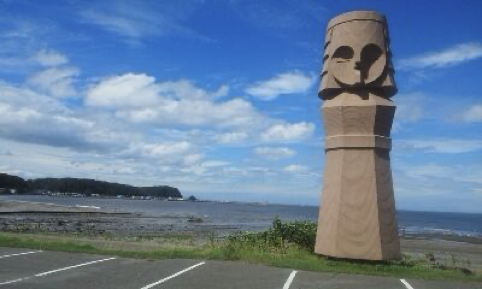
Photo of old locomotive???
26 Aug, 2016: There were so many fabulous places to camp at along this segment of the road, Route 238. Many of them had well maintained patches of land -- freshly cut grass, clean public toilets. There were a number of places with showers, and restaurants, ideal for a long distance tramper, like myself, to stop at. One such place I did stop at for a few snapshots, had an old locomotive engine, with two brown colored carriages, coupled to it. One of the carriages was covered had clean tatami mats, for travelers to spend the night at. The second carriage had its original seats to gave visitors a glimpse into the past. Just as I looked over the train, an elderly woman, ventured over. She was one of the caretakers. In the course of our chat, I learned that the local train service had ceased operation in 1987, or Shōwa 62, about 30-years ago. There was also a well maintained camp ground, just behind the locomotive engine. A part of me was tempted to drop everything and pitch the tent, for the night, as it had gone five o’clock. Another part of me knew that it served me better to push on, to knock off a few more kilometers. It would reduce the distance to Oskhotsk Monbetsu Airport, where I would officially end this stage of my mission. In the end, I decided to push on, but not before I had filled my water bottles first. Another good place to make camp, was at a Michi-no-Eki I came to, called, Ai Land Yubetsu. The roadside station boasted a small fairground, with a mini golf course, souvenir shops, and a restaurant, among other things. However, like before, I decided to push on. The time had gone seven-thirty when I did finally call it a day. This was at a bus stop hut, which needed a good sweeping out, before I spread out my mats and gear. The bus stop hut was located at a place called, Numanoue, which was about halfway along the northeastern Hokkaidō coastline, about 20-kilometers south of Mombetsu. Regardless, it felt good to have 44-kilometers under my belt. In an early-morning email, a friend asked if the bus stop huts had electrical sockets, to recharge my batteries? At first, I thought that my friend had joked, for usually they did not. This time, however, the hut not only had an electrical socket, but a public toilet, and a faucet that worked. On the road, this was a first for me. Normally, I considered myself fortunate if the bus stop huts were clean. By now, the traffic along the road had greatly lessoned. The vehicles passed in dribs and drabs, in groups of four or five at a time. The poorly lit lighting along the road, did not help any, under a moonless sky. Thankfully, my trusty little flashlight was soon pulled from the gear on the trolley. The traffic noise never bothered me. Each time a truck or car drew near, I dimmed the flashlight, for whatever good it did. It was a very bright flashlight, that anyone behind the wheel would notice, this included the village idiot. Some minutes after a particular group of vehicles had passed, I caught sight of the silhouette a large animal against the darkness the road. The animal had just emerged from a cluster of trees and brambles at the roadside. It did not appear to notice me, but kept its eyes fixed downwards, as it made its was to the otherside.
Done
Then, almost as suddenly at it came, the bear disappeared into the night, across a wet grassy field. The brown bear appeared to be headed in the direction of Sonoma-ko, not a kilometers away. It was only when the bear had disappeared from sight, when I realized what it was that I had seen, not 50-meters from where I stood. The bear was a beautiful and elegantly shaped creature. From the moment I saw the bear, until I hit the sack, I do not think that I turned my flashlight off once. One thing that I was determined to do, when I got back to comforts of my place in Tokyo, was to read up on brown bears, particularly in Hokkaidō. I knew absolutely nothing about this magnificent creature.
Done
27 Aug, 2016: All in all, my long hard tramp along the main and coastal roads of Hokkaidō, led me past farmland. Most of the farms in Japan were located near or along the coast. The land was usually more fertile and flat, with an abundant flow of water, compared to the mountainous central Japan. In recent times, the Japanese farmer was hit hard by a rise in grain and livestock feed prices. Japan was the world’s biggest importer of corn, most of which went to animal fed. It imported about 75-percent of feed stock from abroad Many of the farms I passed seemed to be rather prosperous, some with large houses and farm buildings, on well maintained grounds, modern machinery, and so forth. The petrol-driven tractor first made its apparance in Chicago, in 1886. It was soon followed by the Amercan Huber and the British Iver tractors, in 1898 and 1902, respectively. Farming itself, originated in western Asia, around 9000 BC. The use of new techniques -- irrigation and the plough -- soon followed. Many young Japanese viewed cattle farming as hard, dirty, and smelly work. Novel activities had been set up in a number of regi.ons, to help improve the image of farmlife. This may have been in the hope to encourage younger folk into the profession -- something to think about on another day. What was on my mind now, was to contact my friend, as I turned and made my way into the grounds of Okhotsk Mombetsu Airport. The airport also marked the spot that Stage 19, of my mission, ended. Often, at the conclusion of a stage, bouts of depression paid me a visit. At such times, I wanted to blockout all forethought and afterthought from my mind -- no past, no future, even no present, and the events that linked them. However, it was impossible to free myself, to stop the depression. Even the present, could not be ignored, it seemed to be everywhere, I was surrounded by it. As the past was linked to the present, so too was the present linked to the future, in some way. Man had long attempted to forcast the future -- the disposition of stars, or turn to their god for answers, or even the chance of luck, and so forth. Did everything have a cause? What I knew was that I wanted to be free -- free of a life that cost money, but not free of love. I wated to free myself of the fear a lack of money and love, brought. If only I could be indifferent to the vastness of the world around me, without connections. Like, withdraw from society, to stop the world and get off. If there was anything to write home about, I considered the time I spent in Hokkaidō, this time round, uneventful. From time to time, I wondered if the world had rotated without me -- my day had passed almost unnoticed. If anything of sugnificance occured, it happened in other places -- the Japan 2016 Summer Olympic team had not long returned to Narita from Rio de Janeiro -- with a bunch of medals; a massive earthquake in Central Italy (24 August) -- about 300 dead; Suspicions of a Russian interference in the 2016 American elections, to name a few.
Done
Rewrite the following below...
Then again, there was no point on a negative mindset in life.
Life was the creation of precious momeries, and the garbage can of bad ones.
Right?
My turbulent brain was overfull with fond memories, particularly of people and the times spent in their company. The days lapsed by, like step followed step, one after another.
Did I need to go with the times, so as not to be left behind?
Life could be at times burdensome.
It was to short not to want to live it to the fullest.
The future beckoned me to it -- like the scent of flowers drew bees to them from afar -- it awaited my arrival.
Like an isolated road at night instilled an element of fear, the future was so undecided.
The future was unseen, unknown, unheard, untouched, confused, a mere nothingness.
At any rate for me, at least until my path in life reached that far.
The future remained, as ever, a kind of absentness, faint, historyless, like a period or thing in exile.
It was a world in its own, parts of which could not be visited by everyone.
The future was like an unknown play that waited for the curtain to rise, after a certain number of seats became full.
Only until that time came, it was not real, not actually so, until you apart of it.
The best thing to do, I guess, was not to think too deeply or seriously about anything.
The future was one giant leap from the known to the unknown, a spacious spot in time that waited, hidden, suspended, and unresolved.
Was the future something to be yearned for?
Like the passion and yearn I should have felt, as I closed in on the final goal of my mission -- Sōya-misaki.
Although my limbs did not exactly virbrate with joy at the thought, in someway I felt a sort of connection with the future.
However, a stubborn consciousness, however, kept me pinned to the present time, like an unspoken intimacy.
On the road, I walked step by step with the present for comapany.
Often, but not always, time gathered speed, and grew smaller and smaller, then vanished, like the distance covered.
On the road, there seemed no connection with the future, its very nature was destined to disintegrate into the present and then sink into the past, a forgotten past.
The past was an endless black pit that began nowhere and ended nowhere.
Unlike the precious memories, the past was a pit full of forgotten and unforgotten lifenessness and dispair, with tiny bits of it remained embedded in the mind.
The present rushed meaninglessly down into this unliving endless pit, like a dark river that cascaded through a deep gorge, down a steep rocky slope to oblivion.
Only the historian had the power to reawakened the past, and bring it back to the present, to life.
It was good to think forward -- thoughts with a touch of hope in them.
A new end was now at hand, in the not too distant future.
The previoius stages of my mission had passed away -- part of the inevitable passing away of all things.
The stages had started and ended, as did any responsibility I had to make them a success.
I had fought the good fight.
Beyond that, I could not see my future clearly, if at all, other than I believed that something awaited me.
A change of some kind was near, perhaps a thing to be conquered, a new experience to be acquired.
Whatever it was that lay ahead, the unknown encouraged a firm hope in me.
The only thing I wanted, as the days went by, was more time on the road to myself.
The end was fast approaching, too fast, a fact that I was not indifferent to.
On the road meant out into the world.
In away, out in the open had not been altogether unenjoyable.
It had given me a delightful sense of space, a timeless silence, a remote heaven at peace, a passionate unborn yearning, like an unrisen dawn.
What had the past given me? besides a time of personal memories with a collection of trophies.
Memories that were not there any longer, as in a dream, they were things to hark back to, to compare what once was to the present.
There was something delightful and painful about the future -- fresh and new, and not of the now.
What happened in Japan and the world on this day????