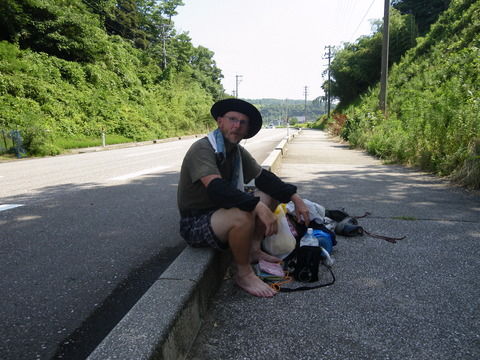
Irishman Walking (Stage 12 Chapter 1) is about my walking the main and coastal roads of Japan. Winter 2013-14.
*
Dear Friends and Readers:
Irishman Walking was about my walking the main and coastal roads of Japan, in a series of spring, summer, autumn, and winter stages. It took me eight-years to complete my mission. This winter-stage, Stage 12, began on 19 December, 2013, at Takamatsu Airport, in Kagawa prefecture, on the northeastern part of the island of Shikoku. It was also where the previous stage officially ended. The Japanese archipelago consisted of 6,852 islands, with 430 of them inhabited. An island was defined as being land with more than 100-meters in circumference. The five main islands, from north to south, were Hokkaido, Honshu, Shikoku, Kyushu, and Okinawa. Honshu was the largest and was often referred to as the Japanese mainland. After 20-days on the road, and the trials and tribulations that went with it, the stage was finally concluded on 8 January, 2014, at a rural, unstaffed, and single-tracked wee train station, called, Niida, some 65-kilometers from Kōchi City, in Kōchi prefecture. This was on the southern part of Shikoku, the smallest of Japan’s mainland islands. This out of the way train station, was opened on 12 November, 1951, and came under the control of JR Shikoku. The island of Shikoku was largely rural, known for its lush mountains, rivers, and inviting Pacific beaches. That was nothing unusual, for 45-percent of the humans on this plant lived in rural areas. It was, perhaps, more famous for its 88-temple Buddhist pilgrimage, in honor of a ninth-century monk, called, Kōbō Daishi. As for Kōchi City, it was home to one of the best preserved feudal castles in the country, Kochi-jo, built in the 1600s. It was also “the only castle in Japan to retain both its original tenshu (keep), and palace, the residence of the local daimyo. In fact, it was the only castle in Japan where all of its original buildings survived — the honmaru (innermost ring of defense. Last, but not least, according to a tourist pamphlet that I read a little while ago, the people of Kōchi were blessed with having an open and liberal attitude. “Mmm!” Quite unlike the remainder of this very conservative country, I should like to add. That said, I was glad to wrap up my mission at Takamatsu Airport, in Kagawa prefecture, for it should be easy to return to whenever the time came.
Be happy, keep smiling!
Yours sincerely
Michael Denis Crossey
From Takamatsu City to Kochi City, in Shikoku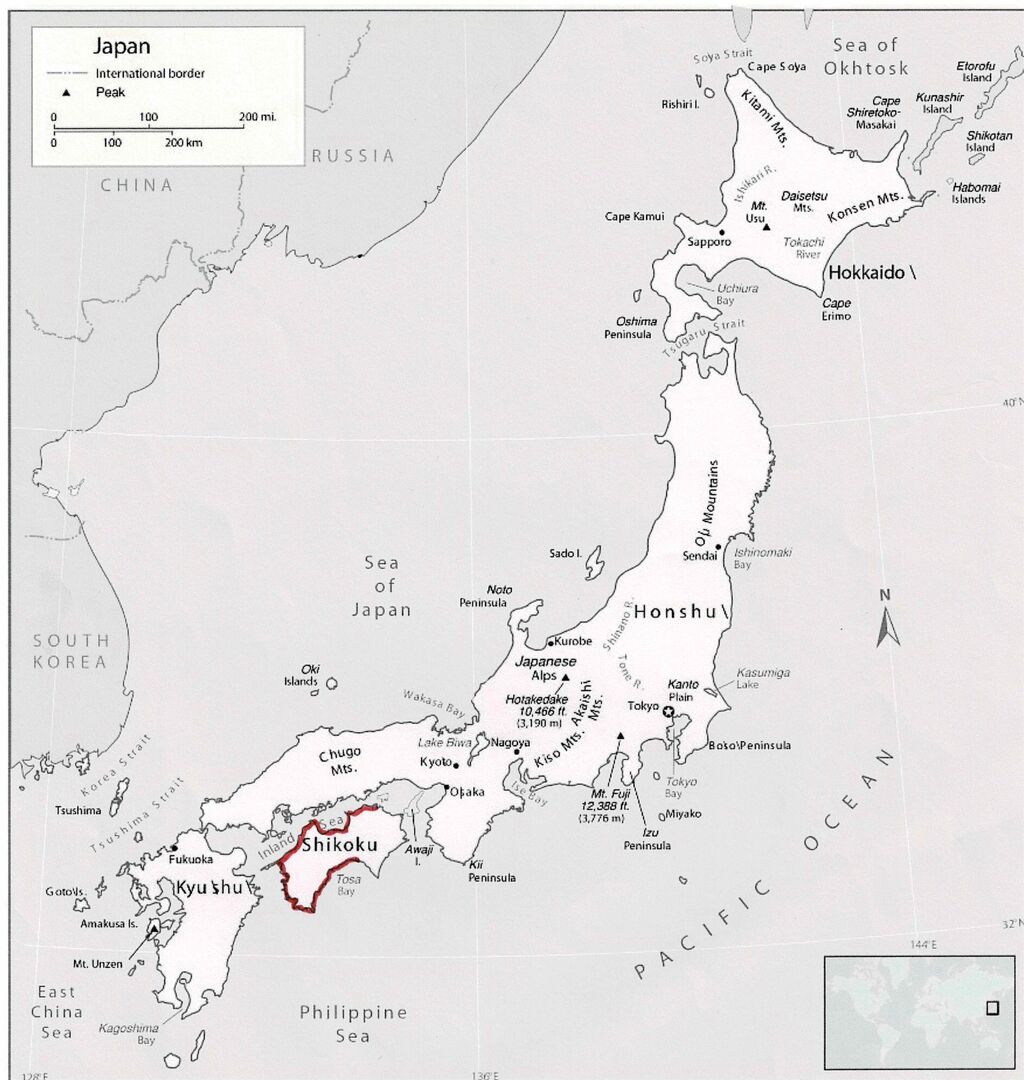
*
19 Dec, 2013: Apartheid freedom fighter, the first black president and unifier of South Africa, died on this day. Nelson Mandela died at the right old age of 95. Mandela had tried hard to free his people from the shackles of apartheid and steer his country towards a multiracial democracy. That said, it was not quite sure how things all turned out, for the country seemed more divided than ever. I just finished reading the thick paperback copy of Mandela’s ‘Long Walk to Freedom’ (1994), which a fellow teacher had given to me. Mr. Ishi who gave the book to me was Japanese, who perhaps found the thickness of the book a bit daunting to bother with, I certainly did not. In fact, I found the book a most interesting and enlightening work of literature indeed, and was more than happy that I had been given it. Another big name to bite the dust was the fabulous Irishman and poet, Shamus Heaney (1939-2013). Heaney died just a couple of weeks ago, on 30 August, at the age of 75. He was regarded by many thinkers as the greatest Irish poet since William Butler Yeats (1865-1939). Heaney’s poems and writings powerfully evoked much more about the modern Irish condition, than any of his predecessors. He was awarded the Nobel Prize in Literature, in 1995. Around that time, I saw Heaney walking ahead of me, in the direction of Queen’s University, Belfast (QUB) where he taught. Although I attended the university at that time, we never met. Heaney graduated from QUB, in 1961 with a First Class Honors degree, which was something that I could only dream of achieving. “Mmm!” How come I did not do that well when I graduated from QUB, years later? The Seamus Heaney Center for Poetry was officially opened at the university, in 2004, long after I had left there. Heaney graduated from QUB, in 1961. A year earlier, the last passenger liner, SS Canberra, built and completed at Harland and Wolff, in Belfast, was launched, in 1960, and made her maiden voyage in June of that year. The SS Canberra was commissioned to operate between the United Kingdom and Australasia and could carry 548 and 1,650 first and tourist-class, passengers, respectively. Among the many successful voyages, the 215-meter long SS Canberra was used as a troop carrier during the Falklands War, in 1982. The was a daring period that took the ship into the center of the conflict. In the same fashion, the liner, was nicknamed the 'The Great White Whale', and was used in the James Bond film, ‘Diamonds Are Forever’ (1971). This was the scene in the film were the fictional character, Mr. Wint and Mr. Kidd, attempt to kill Bond. More than a decade and a half later, a song was composed about the ship to mark her final voyage, in 1997. Up to the present time, a good number of shipping tonnage had sailed out of the Harland and Wolff shipyard, including the world's most famous, the 269-meter long passenger liner RMS Titanic, which was completed in 1912.
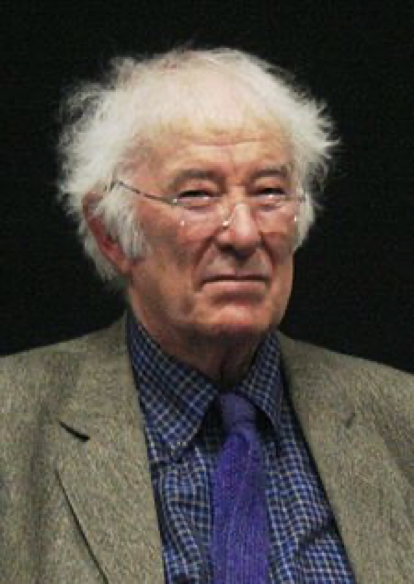
Seamus Heaney (2009) (Wikipedia)
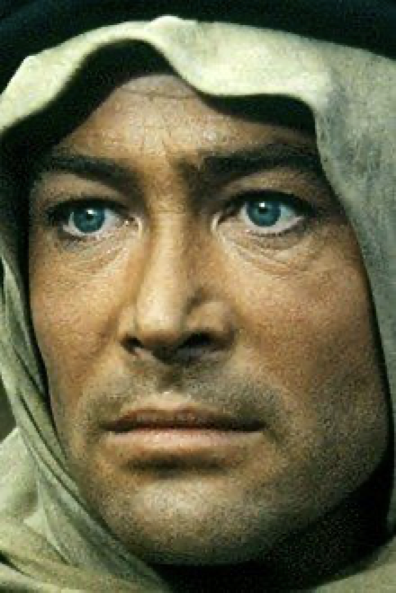
Peter O'Toole as T. E. Lawrence in 'Lawrence of Arabia' (1962) (Wikipedia)
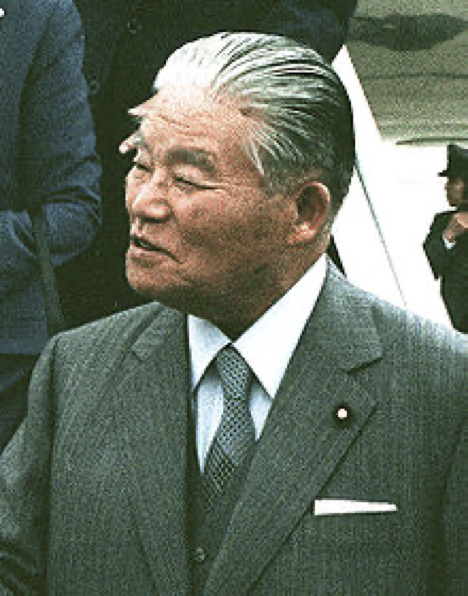
Ohira a little before his death in 1980 (Wikipedia)

Frederick Starr (1858-1933) clad in Japanese clothes (Wikipedia)
A three-meter tall monument stood a little ways from where my tent had been pitched. During the summer months, camping was really good, providing of course the location was good, too. For example, the scenery, a rich sandy beach, the warm salty water to take a dip in, the outline of the mountains in the distance to ponder, and of course, a store near by to pick up a few small necessities at whenever the need arose. Japan was a country of beaches, salty water, and mountains. It was also a country of convenience stores. The country boosted more than 50,000 convenience stores, each and everyone sought to win over their customers' hearts with new and innovative items of one type or another. In wintertime, too, camping could be good, if the scenery was nice, providing of course a good campfire blazed away nearby. This was especially important in the evenings as it warned up the surroundings, and with a cup of red wine for good measure, nothing felt better. In built up areas, a campfire was not always possible, for fear of drawing unwanted attention, inquisitive locals, if not the police. It was always best just to zip everything up and while away the remaining hours inside the tent, and doing some reading and writing, always in the hope that sleep would come quickly. For backpackers, including pilgrims, the temples tended to provide places to stop the night, and some even operated minshukus, Japanese inn-like board. That said, such places needed to be reserved well in advance. Some of the inns were family run, and offered breakfast, dinner, and a nice hot bath to soak in. The inns were usually easy to find, since they operated close to the respective temples. The ryokan cost much more than the minshuku, but offered a higher level of service and more luxury in food and board for the money. A good number of the temples had their own accommodation, called ‘shukubo’ in Japanese, though often not very private. Then again, what could one expect in a group-oriented country like Japan? After all, beggars could not be choosers, as the saying put it. In a way, travelers on the road, with nothing more than their own feet to carry them, were on par with the homeless. Then again, the homeless did not have the same sort of an end in sight. The shukubo did not only provide a warm place to sleep, with full board, but also religious enlightenment. Those stopping at such places could participate in both the nightly and the early morning religious services, called ‘otsutome’. During the otsutome servaces, the guests could tune into the Buddhist priests words, known as ‘howa’ in Japanese. In addition to the religious ceremonies offered, guests were able to marvel over the many artifacts and old Buddhist statues on display. Away from the temples and the henro, for those whom traversed Japan's vast road network, Shikoku Island included, dotted about the country there was no less than 1,100 roadside-stations, or Michi-no-Eki, with more than 80 of them located on the island of Shikoku. The roadside-stations were good places for henro and fellow backpackers to stop by at for a while. Mainly for people on wheels, the Michi-no-Eki were located at strategic points along the main and sometime lesser routes. Often there were roadsigns that pointed towards them.
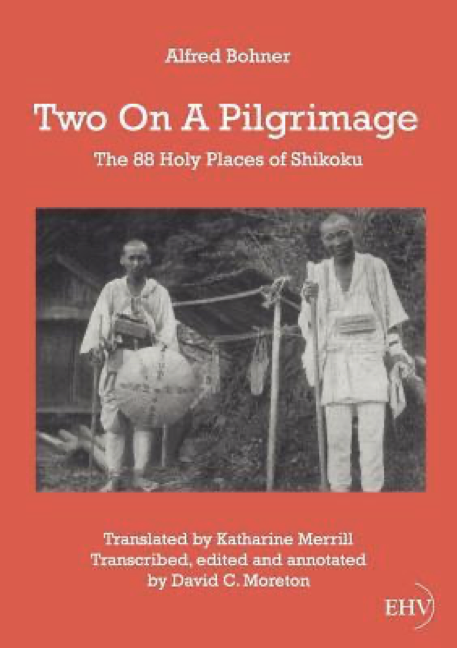
They often had distance next to the names, which even the village idiot would find it impossible to miss them. Besides the clean and useful public toilets, there were often shops and restaurants, too. Much of the food on offer at these places was prepared by vegetables, among other goods from the local area. “Mmm!” Somehow I knew that I was going to make use of the Michi-no-Eki, since my own travel plan would lead me along the main and coastal roads of the island. Talking about roads, the Shikoku-no-michi, or the Shikoku-road, was a walking and cycling course that led the weary travelers around much of the island. From time to time, the route would join onto the famous pilgrim trail that led to many of the temples. The Shikoku-no-michi was also divided into two areas of interest, namely, the nature route, and the history and cultural route. In more recent times, both of the routes experienced a boom. This was noticeable even among foreign visitors to this interesting island. Many of the foreigners in particular were more than keen to sport the traditional gear, than they perhaps were to venture off on the tough 1,200-kilometer journey to visit the 88 temples. Such an undertaking was most certainly not for the faint hearted. Of course, they were by no means the first of foreign visitors to make the pilgrimage. A number of noted foreigners made the pilgrimage nearly 100-years earlier. The American academic and anthropologist, Frederick Starr (1858-1933), walked half of the pilgrimage in 1917, and completed it on another visit to Japan, in 1921. On an added note, Dr. Starr happened to be in Tokyo when the Great Kanto earthquake struck and the subsequent fires that followed, in 1923. In a later to a friend in New York, he wrote: “We went to the temple grounds, but at midnight, the priests took us up higher and higher to the innermost temple. Here on the topmost step, I sat till morning, watching the brazen sky beyond the slope meaning ruin to millions.” At that time, Dr. Starr was believed to be in Japan researching Mount Fuji and the surrounding area. A year after the earthquake, his book: ‘Fujiyama, the Sacred Mountain of Japan’ was published, in 1924, not to mention many other earlier and later works, too. A school teacher at Matsuyama High School called Alfred Bohner (1894-1958), completed the journey in the summer of 1927. Four-years later, he co-published a book that included a history of the pilgrimage, as well as information about the temples, and various other aspects related to his pilgrimage. Bohner’s book was the first to be published by a Westerner on this popular pilgrimage route. “…if the pilgrimage is undertaken only for pleasure and without a loftier purpose, the pilgrim will soon lose the desire to continue. …ever year charitable hands are opened along the pilgrim road, giving to the pilgrims food, drink, and other gifts…this has been going on for centuries” (Alfred Bohner). It would have been nice to have got a peek at the huge sand picture that was constructed in the Edo period. The picture covered some 122-meters from east to west, and 90-meters from north to south, which was not an easy undertaking to complete.
23 Dec, 2013: I awoke tan early enough hour, partly to the bright rising sun streaming over my sleepy eyes, and partly by the exceeding restlessness in me, which caused me to sit up. I would probably have been aroused earlier still, was it not for being so comfortable. After rubbing my eyes again, I soon remembered everything, this was the land of the pilgrims, the henro, and as the atheist that I was, I did not want to be on the island of Shikoku longer than I had to. I did not belong here! Unlike on other stages of my mission, when I really felt free, free as a bird, now I just wanted to get this island over and done with, behind me once and for all. This was the way I felt recently, as I ambled along the side of the road, and even when I felt confident. On the road, the old mind often worked overtime. The words free and freedom, were among the many things that crossed my mind. “Free! The word and the thought alone were worth fifty blankets” (From the ‘Wind and the Willows’ by Kenneth Grahame). The sun rose up over the Motoyama mountain range, turning the made-made lake nearby into a giant looking-glass that reflected everything back at itself. Even the clouds high up in the sky became part of the picture. The majority of this picturesque island was mountainous, and with excellent hiking paths for those who thought outdoor pursuits. This was a perfect morning for being outdoors, pleasantly warm and a blue sky that was almost clear. This time the road, Route 11, down below was not so busy, for the rush-hour traffic had not yet shown its noisy face. Very soon, I would be testing my own efforts along the road. Yesterday, three large American-style motorbikes roared past me. All the riders were clad in Santa Clause outfits! Out here in the sticks, to see them shot past in such a way, was rather unexpected, that by the time I laughed, they were gone. The big Christian day was near at hand, with the New Year close behind. Already I knew just where I would be when the New Year holidays came about — in my tent. On the road once more, the kilometers fell away like dominoes, as did the blue in the morning sky when I awoke. The sky became dull and overcast and the air noticeably cool. “Mmm!” Soon I began to think about when the rain would start to fall. A touristy sign pointed in the direction of Kawanoejo Castle, just a kilometers off to the right. Another sign told me that a McDonalds was 1.5-kilometers straight ahead. This morning I hit the road without eating, but I was not so sure that I wanted to stop at a junk-food joint either. In time, I made to a little stop at Marunaka fresh food market to see what might be had in the form of something to eat. When I left the market, with some bread, I could not help feel how dirty the air seemed, and the reason soon became clear. Giant chimneys along the road ahead of me spat out industrial gray smoke. A road sign pointed left towards Miyoshi City, which was along Route 192. The town of Kawanoeshiko was away to the right. My destination was the city of Matsuyama, which according to the road sign, lay 89-kilometers away, or two and a half days. The road would take me past the town of Mishima, which was also the name of one of my favorite Japanese authors.
Further along the road, another road sign pointed right to Mishimakawanoe Port. There were so many ports, large and small, dotted about Shikoku, and from some of which many ports of Japan could be reached by ferry. Something told me that most people who visited Shikoku, including foreigners, did not want to go just anywhere, and that the head monks at a number of the temples marked out the travel agenda. “Mmm!” I also wondered if this enclosed the proper etiquette that visitors should adhere to. Surely even foreign henro knew that it was respectful to give a little bow before entering the temple grounds. That was not all! Before clipping on the wagesa, a sort of stole worn loosely around the neck, and was said to symbolize the original Buddhist robe worn by Gautama Buddha. Another item was the juzu, or prayer beads, similar to those used in other religions around the world. It was important for the visitors to wash their hands, and mouths, at the stone wash-hand basin. “Mmm!” One never knew where another hands had been. As a means to wake any of the gods from sleep, it was also necessary to ring the bell. This should be done only once, not twice nor trice, for fear of making the gods angry. I read somewhere that it was bad luck to ring the bell, if one was immediately heading off to somewhere else. Once the customary entrance ceremonies were done and polished, it was usually off to the main hall that the pilgrims and visitors headed for. It was also here that donations were offered. Among their gear the pilgrims carried a little box containing incense sticks, which were soon lit, perhaps accompanied by a little cantle, its flame flickered this way and that way, in a gentle breeze. The offertory boxes at the temples and shrines were so large, that they were difficult not to see. Once donations were dispensed with in the large offertory box at the entrances, the pilgrim joined hands in prayer form, and recited certain sutras, in a certain order. For example, first was the Heart Sūtra, a popular sutra in Mahāyāna Buddhism, then came the Gohonzon Shingon Sutra, which was followed by the Gohogo Sutra, and so forth. The Heart Sūtra in particular was the best-known and most popular in Buddhist scripture. No doubt the customary rules were bent to make things easier for the average no-nothings, like myself. In other words, it was all right to just pray silently, without embarrassment. The second set of worship, or prayer, was at the Daishi Hall, named in honor of the big man himself, the monk Kobo Daishi, who lived between the years 774 to 835. This was the fellow who started the whole Shikoku pilgrimage thing. Last, but no least, for those enlightened folk who wished to have their little pilgrimage booklets stamped or marked, this could be done, for around ¥300 Yen a shot. There was one other little thing worth keeping in mind, before heading off in the direction of the next temple, some kilometers away. It was important to give another little bow at the main gate before leaving, and to make sure that you were properly facing it when bowing. If the pilgrim or visitor failed to bow properly, there was a good chance he or she would not reach the next temple.
It meant nothing to me that I did not bow, or was heading in the opposite direction to the spirit of O-Daishi-sama, or the countless henro that I had passed me by. That was all very nice, but who was really the first pilgrim that visited the 88 temples? This honor, of sorts, first appeared in the legend of Emon Saburo, who happened to be the richest man on Shikoku Island at the time, an early Bill Gates of sorts. It was a sort of Ebenezer Scrooge-like storyline. Scrooge, the protagonist of Charles Dickens's, ‘A Christmas Carol’ that was published in 1843, was the cold-hearted miser who despised the Christmas festivity. “Mmm!” I wonder if Dickens’s had read this old Japanese legend before putting pen to paper? Perhaps not, for the world then and now had more than its fair share of tight-fisted and heartless characters. To paraphrase Wikipedia, a beggar once visited Saburō Emon’s house to seek elms. Emon was the richest man on Shikoku at that time. However, he turned out to be a kind of Shylock antagonist character at heart. Emon refused to aid to the unexpected visitor and even smashed his begging bowl in the process before chasing him away. In time, Emon’s eight sons fell ill and died. This brought Emon to his senses, and that the man he had so rudely affronted, was indeed the monk Daishi. realizing this, Emon set off on pursuit of the holly man, Kōbō Daishi (774-835 AD) to seek forgiveness for his selfish and careless action towards the beggar. Daishi was a well travelled man of many talents -- artist, calligrapher, civil servant, engineer, poet, scholar, and Buddhist priest, among other things. Having travelled round the island no less than twenty times clockwise, in vain, Emon undertook to do it in reverse. Finally, tired, exhausted, and aged, Emon collapsed. On his deathbed, it was said, Daishi-sama appeared and granted the dying man absolution. Saburo Emon's gravestone stood beside the path between Fuji-dera in Yoshinogawa and Shōsan-ji in Kamiyama. The two Buddhist temples, numbered 11 and 12, respectively, along the Tokushima segment of the henro pilgrimage trail. The grave-marker was close to the spot where Emon took his last breath. Near Joruriji Temple, number 46 along the henro pilgrimage route, there was a burial mound. It was said to contain his ashes of Emon's eight sons. The temple worshipped the 'Medicine Buddha', and was believed to cure suffering. The Shinto shrines and Buddhist temples had so many deities, or gods, that were for all sorts of things, that they kind of had all the bases covered. A fat lot of good the deity did Emon's eight sons, who died long before their time. Consequently, Emon’s adventure from place to place and temple to temple, in search of the monk, was said to have made him the first pilgrim to visit the 88 temples. The legend encouraged the custom of giving alms, and the belief that wealth should be spent on endowing the temples. Somewhere along the road, I learnt that the origin of pilgrims making the counter-clockwise circuit of the island, was an act believed to guarantee absolution. Therefore, my own personal desire not to appear as one of the henro, of not having a thread of white about me, and to follow the journey counter-clockwise, was not as authentic as I had hoped. “Shoganai!” Could not be helped!
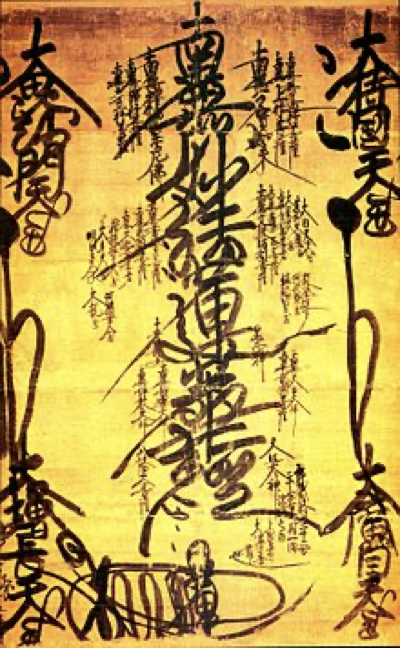
Gohonzon inscribed by Nichiren, in 1280.
The central characters are the title of the Lotus Sūtra
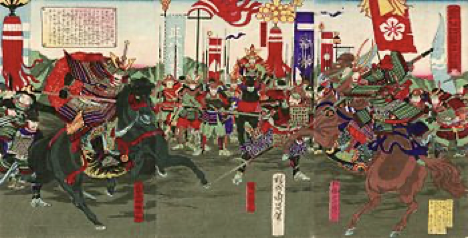
Hideyoshi's defeat of the Chosokabe, part of the Sengoku period (Wikipedia)