2018年05月

Irishman Walking (Stage 12 Chapter 4) Winter 2013-14

c57015ca-s

Irishman Walking (Stage 12 Chapter 4) is about my walking the main and coastal roads of Japan. Winter 2013-14.

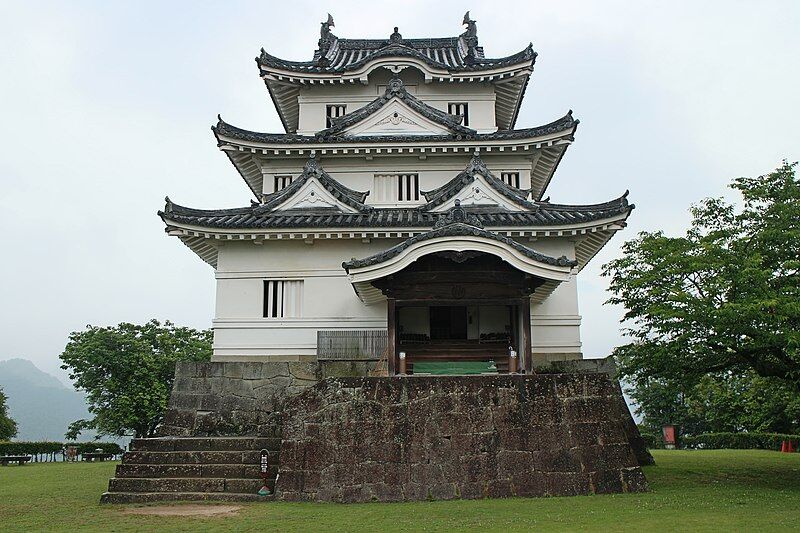
5 Jan, 2014: Across the way set the vast Shiroyama Park, home to Uwajima Castle. Th castle was just one of twelve Japanese castles with its original donjon tower, that dated just prior to the Tokugawa period, in 1596. The castle remained in use until 1889. The castle did will to survive the onslaught of American bombs during tail end of the Pacific War. The Ōte Gate at the castle, however, was destroyed in fire at that time caused by the bombings. A little ways along the road from the Uwajima Regent Hotel stood a Christian church, which I had no intention of popping into. The church bell sounded just as I passed it. Now, in a fresh spring-like morning, I was on my way along the winding Route 56 towards Shimanto City. Now rested as I felt, noting could have felt better. Heading out off Uwajima was a serious of sharp left and right turns, and past another park, in which I could see a small boy flying a kite. Kite flying was a thing I had not seen for a long time in this high-tech society. The road also led me past a good number of schools, and being Sunday, I was a little surprised to see that they were still quite active with young life. Soon I found myself tramping across the Merin-bashi that spanned the Jinden-gawa. The bridge itself was built in 1953, at a length of 21-meters, along the National Road, Route 56. For its manmade enclosure, that held the water in place, the Jinden-gawa resembled more of a broad canal than a river. The kanji that made up the name of Jinden-gawa, was the same as that used for the name of the more famous Kanda-gawa that flowed through Tokyo. The Jinden River flowed through Uwajima City on its way to the Uwakai Sea, an area famous for its pearls. A woman who was pushing her bicycle across the bridge, was kind enough to translate the kanji for me, so as that I could pen the correct name of the bridge and river into my notebook. I was not  overly hungry, but I decided to make a stop at a Gusto family restaurant I came to, to get something nutritious with a few calories into my body. Part of the Skylark group of family restaurants, the first Gusto was opened in the Kodaira area of western Tokyo, in 1992. On an added note, agricultural produce was only made possible in the area after the Tamagawa Aqueduct was built, during the Edo period. After the Great Kanto Earthquake, in 1923, did the population in the area begin to grow, and it became home to a number of universities, including Tsuda Universtiy, one of the oldest upper level educational institutions in Japan. In fact, the first Japanese girl I ever got close to, attended Tsuda in the early-1980s, a two-year woman's college at the time. She majored in English literature, but I could not say for sure. "Mmm!" It was not easy to forget such a lovely young women as Arimi-san, and of whom I only have fond memories. At the restaurant I ordered a hard boiled egg, with some toast and hot coffee, which was on.e of the, so called, morning sets on offer. Often at such places, the coffee was not so good, that I momentarily toyed with having tea instead. To make maters worse, the water at the drink-bar was not very hot, causing the Darjeeling tea to taste like warm piss. This was not to say that the actual Darjeeling tasted like urine. 


On the contrary, Darjeeling was one of my favorite exotic flavored teas, even if I found it just a wee bit on the weak side. There was nothing better than a nice hot cup of strong tea with milk. Darjeeling tea, it had been said, was good for a wide range of things -- immune system, the skin and bones, the body and mind, and also weight loss. Darjeeling even helped the body to fight heart diseases and cancer. In away, drinking tea had become a passionate part of the Belfast tradition that I had grown up with, and still continued to indulge in everyday. Apart from that, the morning set at the restaurant, I might add, did the trick nicely, and I felt more than ready for hitting the road again the moment I stepped outside. “Mmm! Fuck it” The first tunnel of the day turned out to be, what I called, a monster job, at an ungodly length.  The Matsuo Tunnel was 1,710-meters long! It was not the sort of thing I needed to face when everything up until now seemed to be going just dandy. In other words, the weather, my pace along the road, and my attitude about things around, and so forth, could not have been better. As I had penned before in my road-notes, I did not give a damn if I never saw another tunnel again. However, the dates on the iron nameplates had, on a number of occasions, proved food for thought. Where I was at the time of their openings, or what events were going on nationally and internationally, and so forth. The Matsuo Tunnel, for example, was opened to the public in June, 1978, about 13 months before I first set foot in Japan. After leaving the Matsuo Tunnel behind me, I stopped a while for a rest and to enjoy a cool can of beer, but only too soon it was back on the road once again. If all went well, and my condition held up, then there was no reason why I could not beat my tramping record of 41-kilometers. Such was how I felt, even if I was shouldering a heavy backpack, too. For a fair while, the broad and attractive Iwamatsu-gawa kept me company as I made my way along the road and through the Iwamatsu District. Iwamatsu was a port town on the island of Shikoku. Iwamatsu-gawa flowed into the Seto Sea, also known as the Inland Sea. The area had long flourished for the brewing of sake, since the seventeenth-century. Many old sake buildings and houses, once lived in by the merchants, survived to create a historic landscape that drew countless visitors to the town every year. However, Japan's drive towards modernization saw the gradual decline of business in the Iwamatsu District, not to mention in other places dotted about the country. “Mmm!” Any where along the banks of the Iwamatsu River might have been a pleasant place to make camp, but it was much too early to even think of stopping now. Such was how I thought to myself, as I turned onto the Tsushima-obashi and made my way across the river. A distance-directional road sign told me that the town of Ainan was 23-kilometers away. A touristy sign by the side of the road pointed towards Arashizaka Pocket Park Fuen, about one-kilometer further along the road. The kanji that made up the name of the park, 'Arashizaka' and 'Fuen' in English meant, 'stormy slope' and 'wind', respectively. 


Them main thing on my mind at the moment was if the park had public toilets, if nothing else. Like many parks, it was a pleasant place stop a while to collect my thoughts, if not pen a few things into my notebook. It was easy to surmise that many henro had stopped to rest along the Shikoku Pilgrimage, and with many shady seating areas, an ornamental pond to ponder over for good measure. There seemed to be no vending machines, but that did not matter one bit to me. The Arashizaka Pocket Park Fuen was less than two-kilometers from the coast, along Route 56, but not first before facing what looked like a long tunnel up ahead of me. The Arashizaka Tunnel was first opened in March, 1970, and ran for 307.5-meters in length. Next to the tunnel, there was tunnel called, Arashizaka Kaze-no-Torimichi, which opened in 2003. The name of the tunnel was chosen by local people. Whereas, the name of the pocket park, 'Fuen' was chosen by the students at the local junior high school. Both tunnels were a replacement for an earlier and abandoned tunnel, called, Arashizaka Zuido, opened in 1943, and ran for 266.5-meters. Already by that time, the Pacific War had turned against the Japanese Imperial Forces. The Battle of Midway, in the Solomon Islands, in June, 1942 was seen as the turning in the war. The Battle of Guadalcanal, which follow a couple of months later, kind of put the cherry on the cake for the Americans and their allies. Therefore, I somehow felt the building of tunnels and improving the country's infrastructure was the last thing on Japanese minds. 

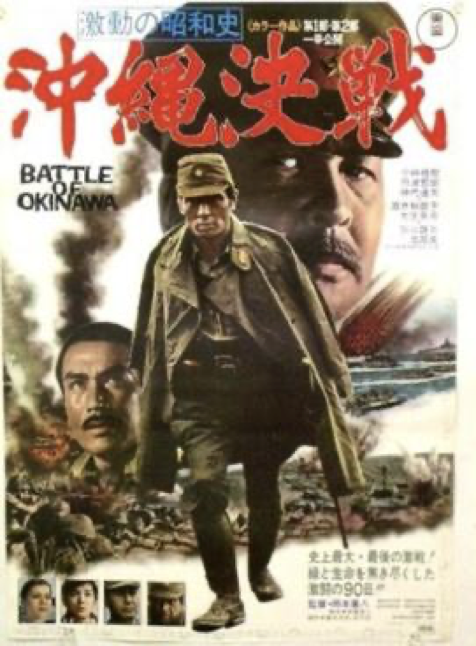
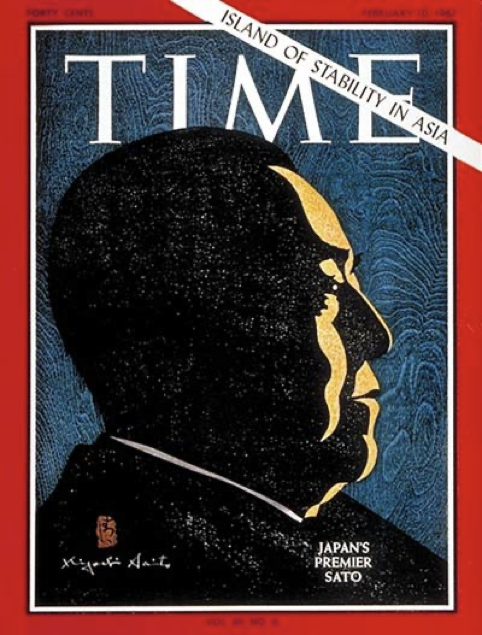
Nonetheless, I had had faced more than enough tunnels for the day, that they were literally coming out of my ears. "Mmm!" Japan would not be Japan without its many tunnels. Such were my thoughts when suddenly, my eyes caught sight of what looked like another tunnel in the distance. This time, fortunately, the Oobanohana Tunnel ran for only 161-meters, and was rather old as far as tunnels in Japan went. The name of the tunnel was taken from the area near where it was located, and meant 'nose of big or wide place'.  A glance at my maps showed me that the Tsushimachoarashi area poked out into the sea like a nose. It was opened in February, 1971. “Mmm!” What was going on in Japan at that time? I thought to myself, as I set about surfing through that useful internet site called Wikipedia. In 1971, Emperor Hirohito was sitting comfortably on his throne,  Satō Eisaku, was the 39th Prime Minister at the time, and would become the second longest PM in Japanese history. If that was not enough, Satō was also the only Japanese laureate of the 1974 Nobel Peace Prize. Incidentally, the Prize was jointly awarded to Seán MacBride, who received it for his efforts in human rights. Among other things, he was one of the founders of Amnesty International. MacBride was a resident of Ireland at the time. Satō was also the first post-war PM of Japan to visit Okinawa, and was instrumental on the islands return to Japanese rule. Connected to the current events or not, it was also the year that the Japanese war film, directed by Kihachi Okamoto, ’The Battle of Okinawa’ was first released, on 17 July, 1971.

98fcc190


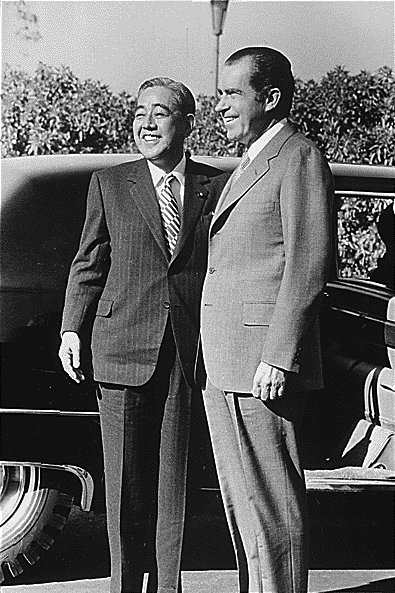
Satō negotiated with American President Richard M. Nixon for the repatriation of Oiknawa, 1969 (Wikipedia)


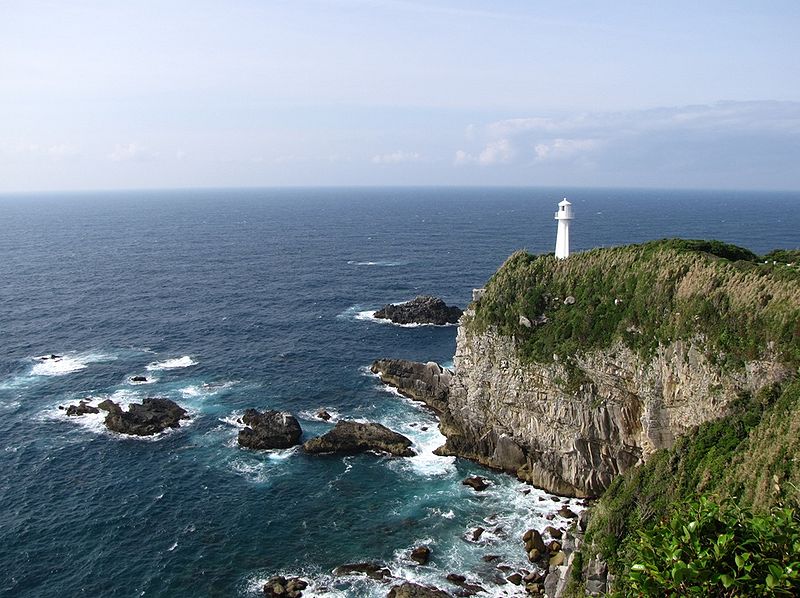
It film stared Keiju Kobayashi, Tetusro Tamba, and Tatsuya Nakadai. “The film was Toho's highest-grossing film of the year, and the fourth highest grossing domestic release of the year in Japan” (Wikipedia). On 27 April, 1971, a massive forest fire raging in Kure in Hiroshima caused the deaths of 18 firefighter. This was followed some months later by a couple of air crashes in July of that year. The first, was a To a Domestic Airlines Flight, which killed 68 people. The second disaster involved an All Nippon Airways Boring 727, which resulted in 162 deaths. On a brighter note, the first McDonald’s fast food joint in Japan opened its doors to the public in Tokyo’s Ginza district, on 20 July, 1971. Led Zeppelin's September, 1971 Japanese Tour made them the first English rock band to tour the country. It was also the year singer and song writer, John Lennon, released the fabulous hit song ‘Imagine’. The album was voted as Radio Luxemburg’s ‘Album of the Year’, on Christmas Eve, 1971. At that time, I was attending a secondary school in London, and free from the Troubles in Belfast across the Irish Sea. The worst rioting in years was being waged against the British forces in that year, with many dead. “Mmm!” Was there no end to these tunnels? I thought to myself, as another one popped up into view. The Torigoe Tunnel ran for some 259-meters, and like the previous tunnel I passed through, it was opened around a similar time, March, 1971. Also in that year, I was attending a secondary school in London, and my second-year of life in England. It was the year that Arsenal beat my team, Liverpool 2-1 in the FA Cup final at Wembley. In time, I came to another great place to setup camp, the Sunokawa Park, which was located in Ainan-cho, and was part of the Ashizuri-Uwakai National Park, a national park spread out over the southwestern tip of Shikoku between Ehime and Kōchi prefectures. The main feature of the park was the cape, Ashizurimizaki, the southernmost point of the island. The cape was particularly noted for its extensive subtropical vegetation and granite cliffs, which offered visitors a beautiful view of the mighty Pacific. Incidentally, Nakahama “John" Manjiro, who was the first Japanese to visit America was born, in the vicinity of the park. It was still too early to think about calling it a day, and after a short stop to take a leak at a public toilet there, it was back onto the road once again. Why stop too long when the going seemed so very good! In time, yet another tunnel showed its ugly face. The Uchiumi Tunnel was 859-meters long. Fortunately, a second tunnel by its side was for cyclists and pedestrians, which I headed towards. On a number of occasions the tunnels for cyclists and pedestrians also tended also tended to be little art galleries of sorts, which caused me to stop and take some snapshots of the interesting prints that lined the walls. Just as I was thinking about the number of kilometers that I had already got under my belt, a little ramen restaurant popped into view. And with the sun already gone down, I saw little reason in completing the final 10-kilometers, on an empty stomach. A 30-minute stop to eat a bowl of noodles, would not make much difference, even if I was determined to complete the distance before calling it a day.


Unknown-13


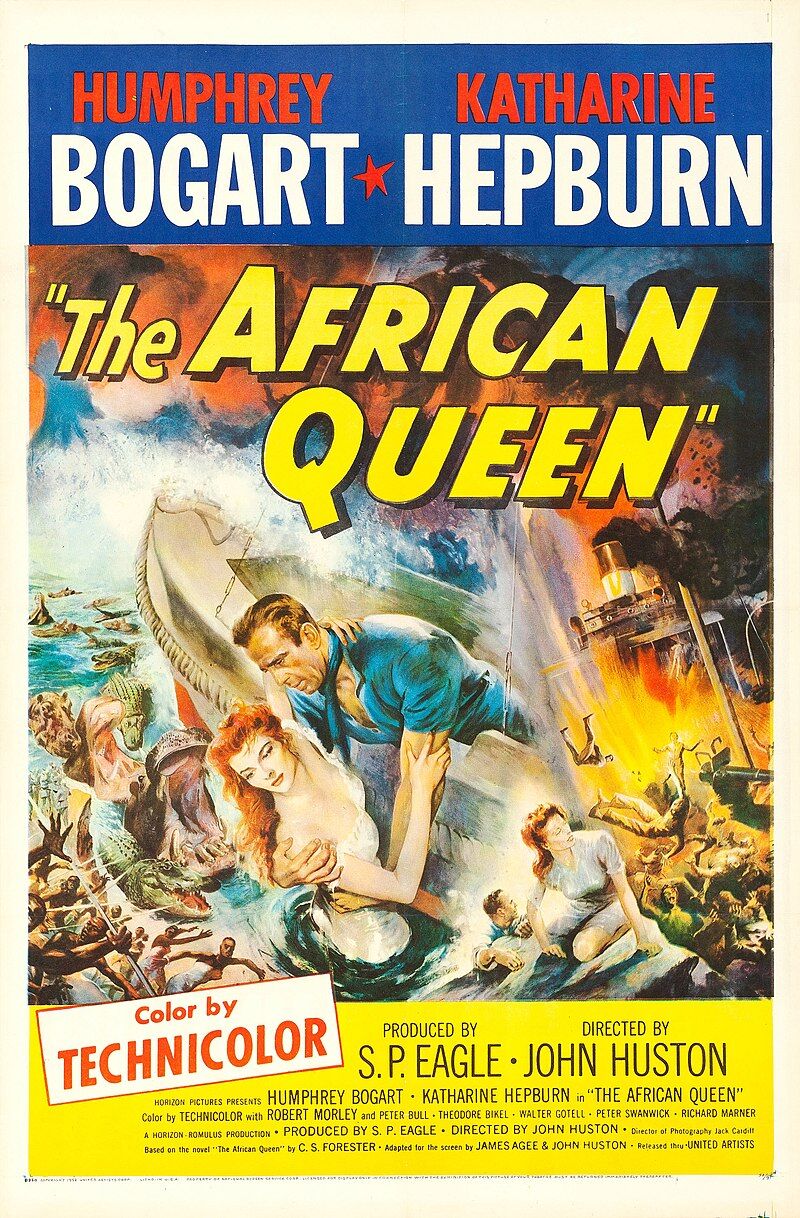
The Battle of Okinawa film, directed by Kihachi Okamoto (Wikipedia)

800px-Ashizurimisaki-cape_01


Cape Ashizuri, Ashizuri-Uwakai National Park (Wikipedia)

INOKASHIRA1


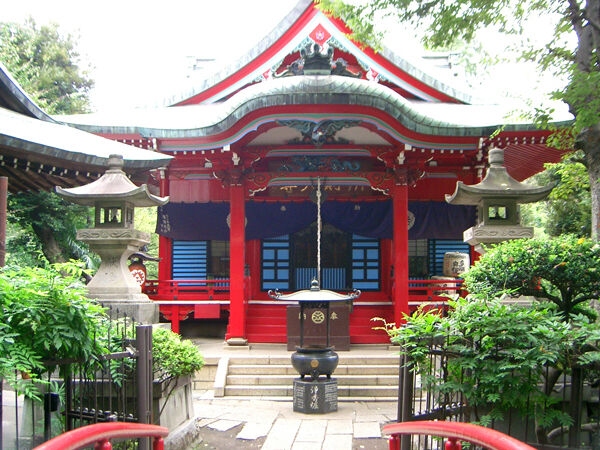
Benzaiten shrine located in Inokashira Park in Tokyo


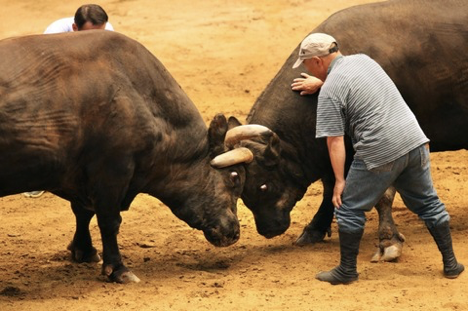
6 Jan, 2014: Ainan was located in between the mountains of southern Ehime and the Pacific Ocean, on the border of Kōchi prefecture. The time had just gone eight o’clock in the evening when I tramped into Ainan, a large town that had been, like many towns and cities in Japan, was made up by smaller village suburbs, a merging or growing process that continued still. Ainan had a population of around 22,000 inhabitants. Ainan was noted for fishing and agriculture products, which included red snapper, squid, and bonito and its mikan oranges. On an added note, Ainan was home to Kanjizaiji, a Shingon Buddhist temple, number 40 of the 88 temples on the Shikoku Pilgrimage list. The temple was said to date back to the year 807 when Kōbō-Daishi, the grand master who propagated the Buddhist teaching, visited the town. Emperor Heizei (773-824), and Emperor Saga (786-842), were also said to have been frequent visitors to the temple.There are From time to time, some events were held at the temple, with many booths on the street nearby. A small festival called O-daishi-sama, was held once about every two months to celebrate its connection to Kōbō-Daishi. Last, but not least, the temple was also home to Benzaiten, a female deity of treasure and arts. Benzaiten prevented natural disasters, and helped to bring rich harvest in the town and surrounding area. She also directed people to good fortune, though studying. There was also a shrine in Tokyo dedicated to the deity. It was also a place of festivals, including the Ainan Tairyo Matsuri held in May,  the Natsu Matsuri, and Aki and Obon Matsuri. The Obon festival was celebrated all over the region, when family members from all over country returned to their family homes in Ainan to prey for the souls of their ancestors.  The Aki Matsuri was a major event that was held in autumn, also through throughout the region. Many local people gathered and celebrated by watching the heavy and colorful mikoshi,  portable shrines, carried by mainly young townsmen. Of course, it was a time when a lot of drinking occurred, too. According to Wikipedia, the fall festivals often featured an ushi-oni, or cow demon, a large float that was pitted against the other mikoshi, in what was called shrine fights. The first convenience store, Sunkus, that I came to in a good while, or in more than 30-kilometers, stood nearby. Camp was made in a park just across the road from the Sunkus convenience store. The Shinto gods, too, must have been watching over me, for a little further along the road stood a Joyfull family restaurant, where I decide to head to for breakfast, as soon as I dismantled, rolled up, and put away the gear. “Mmm!” A feeling of contentment hit me! From the window of the family restaurant I could see distance-directional road sign, which told me that Matsuyama City was 134-kilometers behind me, whilst Uwajima, where I camped last night, was some 41-kilometers away. It felt good having done so well, and without any signs of blisters or muscle pain in my feet nor legs, nor in my entire body, for that matter. Of course, it was still much too early to begin feeling proud. My target was to reach Kochi City by Friday, 10 January, and where I expected to call an end to this stage of my mission. 


Then, and only then, could I begin to feel good. The sky yesterday had been the clearest since leaving Tokyo. This morning was also nice, but there were a number of clouds here and there in the sky that appeared a little concerning. “Mmm!” Rain? Winters in the Ainan region were relatively mild. It rarely snowed in the town, though some snow flurries were noted from time to time. Such was the heat in recent days that even the T-shirts that I picked up at ¥100 Yen stores, proved comfortable enough. Such stores had proven a wee bit of a god send for me on the road. The underwear, socks, and T-shirts that I picked up at them from time to time were just perfect for life on the road -- easy to wash, and dried faster than anything supposedly better quality-wise. Now, with the hearty nutritious breakfast inside of me, it was time to make my way back across to the park to retrieve some of my clothes and camping gear that I left there to dry. It did not rain last night, so how the things got so wet was a puzzle to me. The first tunnel of the day soon popped up into view. The Johen Tunnel ran for 532-meters, and was another job to come out of the 1970, or December, 1974, to be precise. The Japanese PM at the time was the Liberal Democrat, Kakuei Tanaka, who was replaced by Takeo Miki near years end. There was a massive earthquake that struck the Izu Peninsula, and which caused the loss of 30 lives, leaving 102 people injured. The earthquake measured about 6.9 on the unique seismic scale, called shindo, used in Japan to measure and record the degree of the shaking in certain locations. On the economic front, it was the year that saw the country’s poorest performance in more than two decades. Also in that year, I was still living in London, and had dropped out of school a year or so earlier, and just weeks before graduating. “Mmm!” The madness of my youthful life! My first ever job was in 1974 when I was about 16-years old. That was in the marketing department at Gestetner, located in Euston in London. An old company, Gestetner produced and marketed duplicating machines at the time, and where I worked for about two-years. I liked it there and still had some fond memories even after all those years. I can still even recall the department manager, whose name was Keith, calling me into the office to announce, with a smile, that I was being given a little pay rise. A happy time! Every time I thought of my times in London, I also thought of my elder brother John, especially since he died towards the end of last year. John lived in a lovely large house in the Notting Hill part of London for many years. None of use knew how he managed to do it, for he never worked a day in his life. Sometimes on my visits to London, years later, I stopped there for a few days before moving on to visit some other relatives. If one monster long tunnel was not enough in a day, often another long one soon popped into view. Fortunately as it turned out, the Renjoji Tunnel ran for 604-meters, so I guess it was not overly long, I was happy to report, but long enough. The tunnel was opened to the public in January, 1986. There was some work being done to parts of the roof of the tunnel, as I made my way through it. 


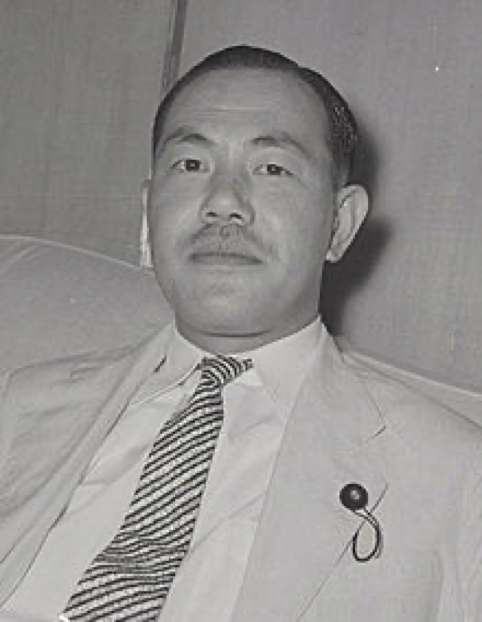
Naturally the two-way traffic had slowed down, and moved onto using one lane. The traffic in both directions was given turns to pass. In the year the Renjoji Tunnel was first used, the MP Yasuhiro Nakasone had already in his forth-year in Office, and was the country’s 44th Prime Minister to date. In fact, there had been 20 PMs in Japan, since Masayoshi Ōhira, who was in office when my flight touched down at Narita in the summer of 1979; or about 39 MPs since the end of the Pacific War. Nakasone in particular was best known for pushing for the privatization of a number of state-owned companies. One case in point, was the breaking up of the Japanese National Railways, best known simple in its abbreviated form, ’JNR’, and which operated the national railway network from 1949 to 1987. Naakasone was also instrumental in creating a sense of Japanese nationalism during his five-year term as PM, and which continued for many years afterwards, if not still. One month after the Renjoji Tunnel was opened, a large hotel fire in Higashizu in Shizuoka, on 11 February, 1986, caused the lives of 24 people. It was not be very long when I would be passing through that coastal town located in the Kamo District of Shizuoka prefecture. After a good 10-kilometers further along, I came to yet another tunnel. The Ipponmatsu Tunnel, which ran for 395-meters, and opened in March, 1972. This was also the year of the Winter Olympics, which opened in Sapporo in Hokkaido, lasting 10-days, from 3-13  February. There was also a large fire at the Sennichi Department Store in Osaka, on 13 May, which took the lives of 78 people, leaving some 118 others injured. Two-days after the Osaka fire-disaster, the island of Okinawa was finally returned to Japan after 27-years of the United States military control. The destructive power of nature from 3 July to 13 July, was another story. According to a Fire and Disaster Management official, heavy torrential in Kyushu and parts of Shikoku left 447 people dead, with 1056 others injured. Japan had two Prime Ministers in the year, 1972. The Liberal Democrat,  Eisaku Satō held Office from November, 1964 to July, 1972, following his reelection in 1967. This made Satō the second longest serving PM in the country’s history, as well as being the first leader to be born in the twentieth-century. And, as I penned earlier, Satō was the only Japanese laureate of the Nobel Peace Prize. In that year, 1972, Satō was then replaced by the infamous  Kakuei Tanaka, also a Liberal Democrat, who would hold Office for a little over two-years, until 9 December, 1974. Tanaka had long been a central figure in several political scandals, including the Lockheed bribery scandals in 1976. This ultimately led to Tanaka’s arrest and trial, in which he was found guilty by two lower courts. The case reached the Supreme Court and remained open right up until his death, in December 1993. Japan has had its fair share of scandals down through the years -- political, diseases, and sports, to name a few. Then, after only about 200 to 300-meters after leaving the Ipponmatsu Tunnel behind me, another popped up into view. The Masaki Tunnel was only 226-meters long, and was somewhat recent, in that it was opened to the public on March, 2006.

Unknown-14


Kakuei Tanaka (Wikipedia)


By now Emperor Akihito had long been on the throne, since 7 January 1989 to the present. Japan also had two Prime Ministers in 2006. The Liberal Democrat leader, Junichiro Koizumi, was the 56th PM in Japan, and sixth longest serving PM in the country’s history. Koizumi was PM from 26 April 2001 until 26 September, 2006, until he was replaced by Shinzō Abe, the 63rd and current PM, and who like many Japanese politicians, came from a politically prominent family. The year also saw Japanese tiger skater, Shizuka Arakawa one a Gold medal in the Ladies’ Singles at the Winter Olympics held in Turin in Italy. The Bank of Japan abolished the zero interest rate policy, on 14 July. An article published in the Nihon Keizai Shimbum newspaper by an Imperial Householld Agency official reported that Emperor Hirohito had refused to visit the infamous Yasukuni Shrine after Class A war criminals were added to its rolls. “Mmm!” Really? Hard to believe! Last, but not least, on 14 August, there had been a serious blackout throughout Tokyo, Chiba, and Saitama in the morning rush-hour. It was believed to have been cased by a barge-mounted crane touching a high-voltage line. However, I could not for the life of me remember the occurrence. Along the way I came to a large sign suspended over Route 56. The sign told me that I was now entering into Sukumo City in Kochi prefecture. The Sukumo Tunnel soon came into view, and like some recent ones, it was built in the early-1970s, or on November, 1971, to be exact. Thankfully, the tunnel ran for only 250-meters. A little further along I came to where the road vied away to the left, a minor road that headed to Sukumo City Center, and just about then, the Yoichomyo Tunnel popped into view. A little smaller that the one before it, at just 210-meters, it was opened to the public on March, 1992, or into the fifth-year of my marriage at the time. “Mmm!” For some reason, so many tunnels were opened during the month of March, regardless of the year. The Prime Minister at that time was the Liberal Democrat, Kiinichi Miyasaki, from Fukuyama in Hiroshima. That was also the year when the American President at the time, George H. E. Bush, became ill during a state dinner (on the 8 January) and vomited over Miyasaki’s lap. During the Pacific War, Bush was nicknamed 'skin' because of his lanky physique. On an added note, the future president flew some 58 missions against the Japanese, let along shot down somewhere along the line. To paraphrase Wikipedia: a number of the aviators shot down during the attack were captured and executed. Their livers were reported to have been eaten by their captors. Bush's survival after such a close brush with death shaped him profoundly. "Why had I been spared and what did God have for me?" He was later awarded the Distinguished Flying Cross for his role in the mission. Among other things, Miyasaki’s government passed a law for sending its Self-Defense Force members overseas for peacekeeping missions. For what it was worth, civil servants were also granted a two-day weekend for the first time in the country’s history, on 2 May. It was also a time when Emperor Akihito visits the People's Republic of China for the first time, 23 October 23. 


Along the road, another road sign pointed left to the city center, to the left of the sign, another Joyfull family restaurant came into view, and being a bit on the hungry side, I decided to head for it. Just as the convenience stores had proven useful, the Joyfull chain of family restaurants were popping up regularly, too. Even if at times, the timing at arriving at them could have been better. The weather remained fair to good, with the odd surprisingly warm spring-like spell. It was manly cool on the mountain passes, but good enough for long distance tramping. The road led me last a good number of road sign signs, one that I passed just now pointed to Katashima and to the ferry port near there. Sakumo train station was some 600-meters away to my right, not that it mattered anything to me. Even though I had not given much thought about how best t return to Tokyo at eh end of this stage of my mission yet, it was reassuring to know that the trains ran close by. As I entered onto the Shinsukumo Bridge, I caught sight of a henro or pilgrim clad in the traditional white garments making camp on the other side. The man had already erected his time under a wooden structure with a strong roof, the sort of thing one saw at large parks r picnic areas. I had camped under such structures myself, and they were particularly useful should it rain, for the added protection they offered. Unfortunately, four-thirty in the afternoon was too early for me to even think about making camp. By now, the warm sun was sinking fast right behind me, and for a while it looked as if I was following a long gray shadow. “Mmm! Come on legs, don’t fail me now!” I said to myself, the muscle pain, now making itself felt. Even when I at last reached the outskirts of Sukumo in Wada, I could still see road signs that pointed to the city center. “It must be a hell of a size of a city!” I mumbled to myself, as I wondered when I would get there. Another sign pointed the way for Enkoji Temple. Just one-kilometer further along, the temple was #39 on the pilgrimage list. The Nakasuji Damn was off to the right, some four-kilometers away, not that I cared one way or another. Another thing that I did not need was Hirata train station, just 200-meters away. On the road, I had given up counting how many karaoke boxes or places that I passed along the way. One karaoke place I passed an hour ago had five or six cars parked outside its little building, which I should add, was literally shaking from the thumping of music inside it. The time was six-twenty and I still had a good 10-kilometers to go at that time, before calling it a day. All in all, I needed to do at least five-kilometers to reach the 40-kilometers that I hoped to cover before evenings end..A clock on a shop wall that I passed read seven-twenty, which told me that my pace remained good and steady, considering the load on my back. About this time, I could feel the first signs of feeling exhausted. A road sign pointed to the right for Arioka train station. A little passing by the station, a three carriage local train rattled past. “Mmm!” Bound for Kochi, no doubt! I mumbled to myself, as I tramped along and watched the train disappear from sight. I also knew that I needed to stay focused, as  made my way along the dark unlit pavement.

Unknown-15


A few more trains passed, headed in either direction. This time only single carriage trains.Camp was at long last made next to a small bridge, that spanned an equally uninspiring river. Kunimi Bridge, as it was called, was opened to the public in December in the year of Showa 42, or better known to me as 1967. Which incidentally, was also the Chinese Zodiac of the Goat!  In that year, I was still a young child growing up on a red bricked street in west Belfast. My grandfather had died four yers earlier, so my sister Anna and I had moved back to live with our father the Oldpark district in the north of the city. A move that meant attending a second primary school, too, which I felt was not an easy thing to do for any young child. In Japan in 1967, the Liberal Democratic leader, Eisaku Satō was in his third-year as PM. On 10 July, 1967, torrential rain in the Kobe and Kure region, caused landslides, that cost as many as 371 fatalities. More than six weeks later, on 29 August, torrential rain again caused heavy mudslides in the Oguni, Shibata, and Murakami area of Yamagata and Niigata prefectures. According to the Fire and Disaster Management Agency, as many as 142 lives were lost. I do not think a year passed without a landslide in the country, that did not claim the life of someone, particularly during the rainy season. Actually, at different segments of my mission, I had come to landslides some hours after they had occurred, and were the roads were surrounded by streams of mud and debris. It went without saying, I found myself having to clamber up and over the fallen rocks, trees, and muck, in order to continue my way. Landslides were a constant risk in those mountainous, and often crowded parts of Japan. And were many homes were often built on or near the steep slopes. Even despite extensive work carried out to stabilizing many of the slopes, damage from land and mudslides had increased in the country over recent decades, because of frequent heavy rains. In the past decade there have been close to 1,200 landslides in a year. According to a land ministry official, this was up from an average of about 770 per year in the previous decade. For example, in October, 2013, multiple mudslides on Izu and Oshima Island, just south of Tokyo, caused the lives of some 35 people. Four of the bodies were never found. Apparently, the landslides were caused by a passing typhoon on that day, which dumped a record 824-millimeters of rain. All that I could hope for was that the rain would hold off! A little sign at the center of the Kunimi Bridge told me that Kochi City was 120-kilometers further along Route 56. The sound of a bell at a crossing announced the approach of a train, was clearly heard. After tramping more than 40-kilometers, I knew that nothing was going to stop me from sleeping, not the bell, nor the trains, or even the traffic on the road nearby. On a much lighter note, the legendary folk trio, Peter, Paul and Mary visited Japan in early-1967 and gave a live concert. Among the songs that they performed, was the Bob Dylan hit, ‘The Times They Are A Changin’. The times, I guess, were indeed changing in more ways than one, even in this very conservative nation.

7 Jan, 2014: The mornings sky was very cloudy. The white fluffy clouds were darken at the lower edges. The sun was doing its best to shine through the tiny gaps that appeared from time to time, but nothing as telling as on previous days. By 09:00 AM, a couple of workmen had appeared out of no where to carry out some work on the bridge. With my meager breakfast of bread and hot tea over, I set about dismantling the gear and rolling things up. The gear was still not fully dry, which caused me to swear. “Where the fuck is that sun?” Hight above, the dark bottomed clouds moved slowly away, perhaps in the direction from which I had come, and in time, beautiful white fluffy clouds replaced them. The warmth from the sunshine, too, became more prominent! After an hour along the road, or five-kilometers, I caught sight of a Mister Donut, where I decided to stop and do some writing for a while at. The Mister Donut fast food franchise was founded in the year that I was born, 1956. For some reason, it was headquartered in Osaka in Japan, where there were more than 1,300 stores, all of which offered such things as coffee, muffins, bagels, and pastries, and of course, doughnuts, and so forth. And I was happy to note that the cups of coffee were bottomless! The fast food franchise also maintained outlets in a number of other Asian countries, such as, in China, Philippines, South Korea, Taiwan, and Thailand, among other places. Then it was across the 495-meter long concrete and steel Wataigawaohashi Bridge that spanned the pleasant and winding Shimantogawa. The Japanese kanji used for the river’s name meant, ’forty-thousand-and-ten’ in English. Had the timing been right, the riverbank near the bridge would have been a great place to have made camp at. Both torch fishing and Glass Eel fishing were popular on this river in autumn and in winter, respectively. “Mmm!” I wonder if the noise from the traffic effected the fishing is some way? “Good morning!” I said with a smile, to the young female staff behind the counter. “Do you have any morning specials?” She looked puzzled! “You know, egg, toast, coffee?” I added. I felt my question had muddled the poor girl’s mind, as she stood momentarily open mouthed, or bewildered. Clearly she did not understand English, so I repeated the question in Japanese. I did not know if the young staff member was pretty or not, but she had a pleasant face, something child-like, with brown wondering eyes, as if searching for the right word. “No!” She finally replied. “I see! Then just give me a cup of coffee, and two of those.” I said, pointing to the cheapest donuts on the bight display shelves. Soon the coffee and the donuts were placed on the counter in front of me. After paying, I left counter area with the tray with coffee and donuts in hand, feeling in perhaps an equally bewildered state of mind. “Mmm!” What a shame the young people working in these places did not speak or understand English. Japan had come along way since the late-1970s when I first came to Japan. Thought the large windows, I could see that the sky was becoming heavy again with dark clouds, if not overcast in places. 


This was not a good sign! On both of the large glasses doors, I could make out the words, ‘San Francisco Chinatown’. “Mmm!” I wondered what the connection meant? Was that were the outlet was founded? The soft background music being played was from an English language channel. The music was quite pleased, with a wide mixture of oldies. It also reminded me of my early days in Tokyo when I used to tune my radio into the American Armed Forces network, 810 AM, with American disc jockeys , like, Wolfman Jack. His famous gravelly voice once said that his job kept “meat and potatoes on the table for years for Wolfman and Wolfwoman.” When the young staff member came over to my table to pour me my third cup of coffee, I asked her the name of the radio station. She did not know! “Well, it seems very good!” I said, smiling up at her. When she left and returned behind the counter to serve other customers, I though that it made sense to me, even if my mind began to work overtime. “Mmm!” Why should she know or care about the name of the channel? How did she know the name of the DJ. It sounded like an early recording of the Wolfman, who was long dead. The whole sky was overcast now, and looked like rain was eminent. The clock on the wall read 11:00 AM. Now I had two things to concern myself about, could I make the 40-kilometers I planned to, and when it would rain. Like I wrote earlier, could the fish hear the noise of the traffic up on the road? Or that of the trains that clattered across the bridge? If so, surely the noise influenced how well the fishermen applied their trade. The fishermen I saw appeared very very much at peace and satisfied with their lot. The busy National Highway, Route 56, was just off to my right, the train tracks of the Kuroshio Sukumo Line also crossed the river to my left. Thankfully the beautiful mountain ranges in the distance appeared to be all around me, with rich forests that covered the river's headwaters in abundance. Soon I was across the bridge, and heading through the Fuba area, and closing in on the township of Shimanto and onto the much larger Kochi City. High up above, the sky was doing its best to clear and let the sun shine through, although I had no desire for that to happen any time soon. Thankfully at least there was no sign of rain either. In time, I passed by Uyama and Nakamura train stations away to my right, beyond lay the city center, not that it mattered much to me, for I had little time or desire to visit the place. The famous Shimantogawa River ran for a good 196-kilometers, which made it the longest river on the island of Shikoku. The river had been considered to be the country’s last pristine river. “Mmm!” How that could be in this day and age of change beat me? On nice clear sunny days, many people came to boat on the river, or to enjoy a ride on one of the Yakatabune tour boat cruises. In spring, visitors would be treated to seeing fishing men using the traditional net method of Goby fishing. A newish looking business hotel called, Crown Hills Hotel stood away to my right. Clearly this was yet another sign of bad timing, a thing that I was rather good at. A slightly older looking hotel called, Kokomo Business Hotel stood nearby. 


The sighting of any hotel never failed to leave me with the thoughts of soaking in a hot bath. Like so many times previously, it was a good place to make camp, even under a bridge, especially when it rained. The 148-meter long Nakamuraobashi Bridge, not to mention the Ushirogata River it spanned, seemed a nice peaceful spot to spend the night near. A female dentist I spoke to in Tokyo some years back, told me that her family name was Nakamura, and added that her name had nothing to do with the name of the town. The kanji for her name may have been different, but I could not recall one way or another, and cared even less. At the time I had not heard of a town called Nakamura, and wondered what she was talking about. What I needed to do was to keep my mind focused on the present. Thanks to a signpost, it was now that I learned that Nakamura was also the name of a town that I was heading towards. One notable figure who came from Nakamura Town was the socialist, political anarchist, and journalist, Kōtoku Shūsui, who was born there on 5 November, 1871. In November 1905, Kōtoku travelled to the United States where he was able to air his views on the Emperor of Japan as being little more than vital cog in the Capitalist machinery. During his time overseas, Kōtoku became exposed to the philosophies of Communism and other European anarchists. Kōtoku’s way of thinking was greatly influenced by European anarchists. In his time he translated the works of the Russian activist, Pyotr Alexeevich Kropotkin, into Japanese. Kōtoku also played a main role in bringing anarchism to Japan in the early-twentieth-century. He was executed by the Meiji government on suspicion of his involvement in, what was known as, ‘the High Treason Incident’, that was aimed at the assassination of the Emperor. One of the 12 people executed for involvement in the incident was a female journalist,  called, Suga Kanno. This made her the first female political prisoner to be executed in the history of modern Japan. Each year, many people continued to pay a visit to Kōtoku's grave on the anniversary of his death, in 1911. It would not be for another 60-years when the Nihon Sekigun, or in the wider world known as the Japanese Red Army (JRA) would raise its Maoist leaning head. The JRA was a communist militant group founded by a female called, Fusako Shigenobu, and who led the  communist militant group, with Anti-Imperialist  views, together with fellow conspirator, Tsuyoshi Okudaira, from February 1971. The groups existence lay in the roots of the militant New Left Communist League of the late-1960s, which advocated violent revolution. My own socialist connections at the time that the JRA was up and running, was that I had just moved to London to live, the final resting place of Karl Marx. Like Marx, many of the JRA members soon found themselves locked up behind bars. After the Lod Airport massacre made the JRA the most infamous armed leftist groups in the world, and would aline itself to the Popular Front for the Liberation of Palestine (PFLP), founded four years earlier, by George Habash, in 1967. Habash went on to have a very successful career in Palestinian politics.


Another anti-Zionism, the JRA sought training and financing from was Wadie Haddad, one of the leaders of PFLP, and founding fathers of the Arab Nationalist Movement. Other than the students riots through the late-1960s, life in Japan has been peaceful and economically on the way up. Organized crime, if I was not mistaken, was on its way down, to say the least. The elegant city of Shimanto was located in the Nakamura region, and was referred to as being the little Kyoto. There was the grandeur of nature, with the pristine clear Shimanogawa River flowing through it. Another interesting place to visit was Ashizuri, not so far away, if you had the right sort of transport. Through the course of time, the shape of the cape had been caused by, the Pacific Ocean Black Currents. A sign told me that the Tosa-Seinan Great park lay away to the right, and a motor campsite was eight-kilometers in the same direction. Not far from the sign, I decided to stop in at a Sunkus convenience store to buy one of the little hamburgers there, as well as a cool can of Kirin beer to wash it down with, plus one or two other little things. The main point for my stopping was to see about getting a little washing done. Just when I loosened the straps of my backpack to prop it against a wall, I noticed that something was missing. One of the socks I had washed yesterday had fallen from my backpack some ways back along the road. This left me with two and a half pairs of socks, and with the odd sock being the only clean one. Soon some underwear and what was left of my socks were washed and hung nearby to dry. Up until stopping at the convenience store, I had felt satisfied to tramp along in the sun, taking advantage of the shade when it presented itself. Now I found myself trying to forget how long it had been since I last had a good square meal inside me. By now, the hamburger was half eaten, and the beer almost gone. Soon I would be back on the road, and I knew that it was not belong before I felt hungry again. After finishing the last of the beer, and gathering up the few rags that I had washed, I turned towards the road again. Once beyond the city limits, the buildings faded away from view on both sides of the road, and were replaced with farmland, the open fields, home to the life and smells of nature. With Shimanto City with all its long history, already behind me, the first tunnel of the day came into view. The Osaka Tunnel that was opened to the public in February, 1992, was 212-meters of cool breeze. Just as I emerged from the tunnel, a sign told me that I was in Kuroshio Town, but there did not seem to be any sign of buildings. Often I came to such signs announcing that I was entering into such and such a town or city, when I actually still had a good 10-kilometers to go before reaching the town or city centers. Looking down from the road, I could see a farmer pulling a wheel barrow over a dry paddy field, and not far away I could see what looked like Ukibuchi train station on the Tosa-Kuroshio Railway Line that passed through the Hata District in Kōchi prefecture. As of fiscal, 2011, the Ukibuchi train station was used by an average of around 40 passengers daily.


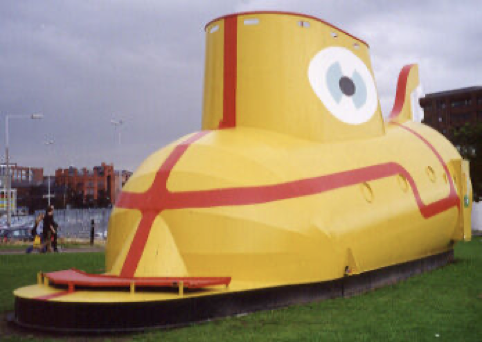
This little uneventful and unstaffed train station stood on an embankment above the main road, Route 56, some 500-meters away, and with farmland on either side. A Michi-no-Iki, or Bios Oogata Road Station, was a service area with food, parking, and public toilets, was only one-kilometer away, on Route 56. Up ahead of me, I could also see that I was getting nearer to Tosa-Seinan Great Park, where there could be found the Irino Matsubara Campground. High above, the sun appeared to be on its homeward stretch, which also told me that it might be a good idea to keep my eyes open for a place to make camp at. The mighty Pacific was once more a fixture in my life. My pace along the road remained good and steady, but I also felt hungry and tired. When I was weary, or aching with fatigue, it was easy to loss all count of time on the road. As I was tramping near Ariigawa train station, a one-carriage train pulled up and stopped. “Mmm!” God forbid, I suppose I could use a train should the old legs give out on me, I mumbled to myself, as I drew up level with the station. Tired as I was, I could not even recall how many tunnels I had tramped through, it did not matter for they just popped up anyway. Now here I was standing momentarily at the mouth of Ida Tunnel, a 172-meter long job that was opened to the public in October, 1968. That was during the Bubble Economy years. Then came Innmisaki Tunnel, opened in March, 1969, and ran for 320-meters. That was also the year when I first went to live go to school in London, a happy-go-lucky period of my life. The Troubles in the north of Ireland had just begun. Public houses were among the many buildings and business that were being attacked and blown up during those sad years. Being a publican at that time, my father uprooted and carted us all across the Irish Sea to London where he set up home. During the seven-years that I spent in London, I would attend no less than four secondary schools in different parts of the city. So I guess it was there that I got the ceaseless taste for moving, or in other words, itchy feet! The Beatles hit song, ’Yellow Submarine’ had just be released in January of that year, was often heard on the morning radio programs. The song first appeared as the soundtrack to the animated film with the same name, which also premiered in London, in July, 1968. There were so many great places to camp at along the Shirahama coastline. Unfortunately, it was usually too early to think about making camp, and the only thing I had time for were the momentary pauses to stop and point Percy at the Pacific t relieve myself.  Then I was past Ino Misaki and then a tiny Shinto shrine at Nada in the district of Hata. In time I came to Tosa-Shirahama train station, where I did stop to rest a while on a bench. There were so many signs warning of tsunami. Away to my left stood Saga Park train station. “Mmm!” Did the name have something to do with the? Or so the thought went my head. The I was taken by the mesmerizing scenery, but by now the sun had long gone done. Then came the 624-meter long  Yokohama Tunnel, opened in February, 2002, which I remembered thinking was not the best of ways to wrap up a long day on the road with.

Unknown-16


The Yellow Submarine sculpture, in Liverpool (1984) (Wikipedia)


8 Jan, 2014; Again, camp was finally made in the evening in pitch black, but this time on a mountain pass surrounded my nothing but trees of numerous species. The day had seen me tramping 39-kilometers, just two short of Karina train station , which I knew the exact distance of when I set off along the road in the morning. During the evening, a steady rain began to fall, and did not let up for even a minute. There was still no signs of it stopping as I set about dismantling camp. By the time I was ready to hit the road once more, the rain was down graded to a steady drizzle, and would remain that way for some hours to come. As expected, the damp mountain pass wound upwards, and downwards, and upwards again, as well as veering left, then right, and then left again. Just like the drizzle, the pass continued that way for what seemed like a long time. At one lengthy point along the way, I found myself tramping through a damp mist that still had not lifted even when I reached the uninviting Katasaka Slope, and still very much part of the pilgrimage trail. The steep mountain pass took me through an area called Ichinose, where I began to see signs of the air clearing. Not meaning to make a play on words, but my nose was really Itchy, for the touch of the cool damp air with the sweat that ran down my face. Heading over a series of long bridges that took me further away for Ichinose, and then through the 62-meter long Katasaka Daisan Tunnel, completed in February, 1971. “Mmm!” Now that was the length I liked tunnels to be, I told myself, knowing well that others awaited up ahead. The word, ‘daisan’ in Japanese meant number three. Just as I had expected, Katasaka Daini Tunnel, which ran for 130-meters, soon came into view. Before entering the tunnel and make my way through it, I could see a third tunnel up ahead. Thankfully, Katasaka Daikichi Tunnel was also not very long at just 80-meters. This time, the iron name plates were missing, which kind of told me that their days were numbered. When I tramped into the town of Shimanto, the time was 12:00 noon, and I was really hungry. Breakfast came in the form of a cup of hot tea, the last of my oranges, and nothing else since upping camp this morning. Even still, I had managed to clock up a good 11-kilometers so far, which felt good. Caught sight of a cafe, and decided to stop by there for something cooked to eat, and no doubt energy for the road. The little cafe that I settled on went by the name, ‘Cafe Ten’, and was run by five or six attractive young women. Looking through the menu, I decided to try the katsudon dish, the picture of which looked good. The cost, too, was not bad at ¥800 Yen. Just as I was shouldering my backpack to leave and hit the road once again, one of the young female waitresses presented me with a ticket. “This will entitle you to a free drink, when you come here next time.” She said, with a broad smile on her beautiful face. “Thank you!” I said, taking the ticket and smiling back at her. There was little point in telling the girl that it would not be for a long time before I found myself in these parts again. By then, if ever I did return, everyone would have forgotten me anyway. Not far away stood Iwamoto Temple, number 37 on the pilgrimage trail. 


On the celling of the main hall of the temple there were no less than 574-pictures, a one of a kind, no doubt, for visitors to marvel over. No less than 16 of the Buddhist temples on the pilgrimage were located in Kochi prefecture. The sky remained miserably overcast and damp, and the road and surrounding area dried slowly. Then, after leaving the town with the Irish sounding name, Shimanto, another tunnel popped up. The Kubokawa Tunnel ran for 280-meters, and was opened to the public in November, 1977. That was the year I left London to try my hand at life in the Big Apple in the good old USA, but that was another story. It was also the year, that the other big apple, Apple Computer, with Steven Jobs and Steve Wozniak at the helm, was incorporated! Soon afterwards, Apple produced the Apple II, making it the first pre-assembled, mass-produced PC. Whenever the tunnel I passed through were short, they were also soon forgotten, but when they were monsters, like, ran for more than 1,000-meters, then they remained on the mind for ages. The more than 3,000-meter long tunnels I tramped through south of Otaru in Hokkaido, in the summer of 2009, had remained on my mind ever since. A road sign told me that I was 165-kilometers Kochi City. Near the road sign also pointed towards another Michi-no-Ike, called Aqurikubokawa. The touristy rest stop was just one-kilometer down the road, and where I planned to pay a visit. The sky remained heavy, and I expected it to open up at any minute. By the time I did reach Aqurikubokawa, I felt so worn-out, and my feelings were not helped any by the miserable weather, so I decided to make camp earlier than usual. Just about one-kilometers had been covered today, so I could feel elements of depression seeping into my mind, too. In a word, miserable! Earlier along the road, I stopped by at a convenience store where I also hoped to dry the wet camping gear. This proved a waste of time! Five-minutes after spreading everything out on a vacant piece of ground, the rain began to fall. Back on the road, alone female henro clad in the traditional gear, came into view. We were on opposite sides of the road heading in different direction. She walked at a brisk pace, clearly unperturbed by the falling rain. The wide sugegasa that she wore on her head was doing its job as well as any umbrella. As we drew up along side each other, she waved her long staff, or kongozue, and called out to me in Japanese. “Gumbate kudasai!” “Anata mo!” I shouted back! Although I would have liked to have chatted a while with the women, we did not stop! This was just as well, for the rain was really coming down now. At Niida train station, about 65-kilometers from Kochi City, I stopped to rest. But looking at the weather, I decided to officially call an end to this stage of my mission. The next stage, Stage 13, will start from here in the summer.  The stop to rest now involved a wait for the local train that would carry me to Kochi, where a hotel and a hot bath awaited. That said, I had not yet booked a room at any hotel, and being a weekday, I felt I might just leave that until I got to Central Kochi. Another part of me hoped that finding a room would not prove too difficult. 


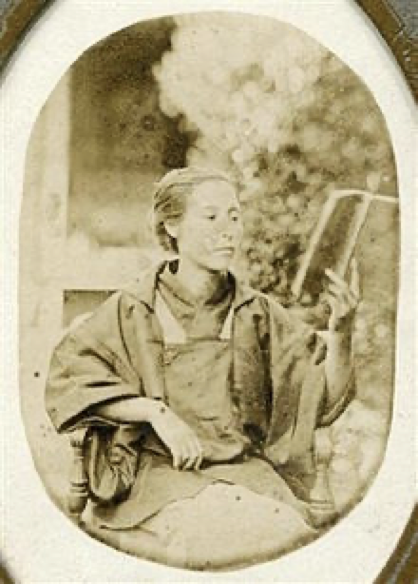
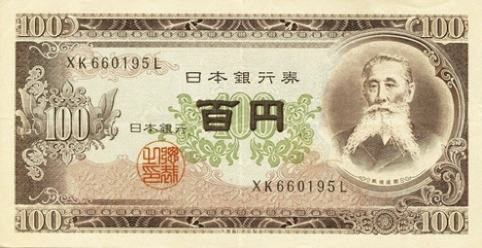
Often whenever I did stop at a hotel in a city somewhere, I preferred to arrive just on time, so as to get my money’s worth. The next train was scheduled to arrive at 16:36, and the ticket cost ¥1,240 Yen. If all went well, I should reach the city of Kochi by seven o’clock sharp. When buying the train ticket from a machine and checking the train times was quite done, I set down on a bench before the door reflecting deeply. Soon I was on the cellphone chatting away with a friend in Tokyo, and telling her where I was and that I had decided to bring a close to Stage 12. This last three-days I covered exactly 134-kilometers, including the 15 that I had done today. This was nothing to be proud of, for I was really feeling the pains in my muscles. Actually, I felt rather low and despondent, or perhaps after a hot bath, or when I got back to my place in Tokyo, I shall be quite a different animal. Life in the road had left me looking very shabby and unwashed. There was still an hour to wait, and with no other passengers about, so I lay down on the bench to take forty winks before the train arrived. Of course, it was pointless complaining, for I knew that I had done my best, especially when the weather was good, though perhaps I could have done better when it was not. Today was a case in point. Then again, the cold and the snow never bother me much, like it might with some people I know. Tramping in the rain, not to mention the problems it brought with it, was something that I never got used to. Because of the rain, I decided to call it a day at Niida, whilst telling myself that it was as good a place as any to call it a day until next time. With the help of my friend in Tokyo, a room had been booked for me at a business hotel in downtown Kochi. Before long, I was sitting comfortably on a seat in a train that sped along the tracks. The rain was still pelting down when the train pulled into the station and stopped. At the train station the only thing I could think of now was filling a bathtub and soaking in it. Kochi Castle was structural masterpiece! The castle was one of 12 castles in Japan to retain its original complex structure with its stone walls, its wooden otemon. From both a historical and an architectural viewpoints, the entire castle and adjacent buildings were in perfect condition. With many of the castles throughout Japan, they were defensive structures designed with enemies in mind. Unlike other castles, however, Kochi Castle was never really tested. Baring that is, a small force of Meiji Reformers in their pursuit to rid the country of anything feudal. The castle was designated a National Treasure as early as 1934. In 1950, a good number of the buildings were reassessed as Important National Cultural Assets. According to one touristy poster that I stood looking at, this whole area was designated as a historical site, in 1959. Perhaps thanks to its founder, Katsutoyo Yamauchi, today the castle symbolized the cultural spirit of Kochi, if not the entire country. There were so many notable figures who graced historical Kochi. In political terms, there was no one more so than Count Taisuke Itagaki (1837-1919), who was born in the Nakajima-cho area of the city. Itagaki was a politician and leader of the Popular People’s Rights Movement.

Unknown-17


(Wikipedia)


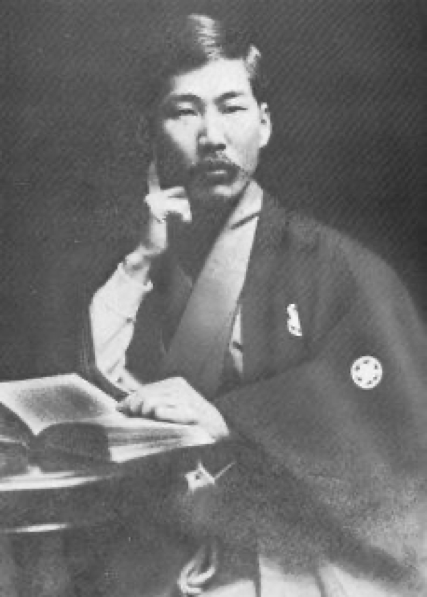
The Movement became in fact, Japan's first political party, thus crediting Itagaki as being the first Japanese party leader. Count Taisuke Itagaki image was on the old 50-Yen and 100-Yen banknotes, issued by the Bank of Japan. An anti-Tokugawa government activist, Itagaki was made one of the main councilors of the newly established Meiji government. He was also one of the founding fathers of Rishisya, or Self-help Society, which later became the Jiyuta, or Liberal Party, the name of the first genuine political party in the county. In the spring of 1881, Itagaki was nearly killed following a knife attack, and was believed to have said: “Itagaki may die, but liberty never!” During his lengthy retirement years, Itagaki put a lot of time and effort into promoting social improvement movements, and traditional sports, such as, Sumo. “Mmm!” A most interesting chap in deed, whenever I returned to Tokyo, I looked forward to reading one of Itagaki’s works. There was a hardcover book called, ‘Bushido’, which was now collecting dust on one of my bookshelves, so I planned to take it down and dust if off. Count Taisuke Itagaki closed his eyes for the last time on 16 July, 1919. He was awarded the Grand Cordon, of the Order of the Rising Sun with Paulownia Flowers, posthumously. A statue was erected, of Itagaki in the grounds of Kochi Castle. Kochi was also the birthplace of another notable figure called, Sakamoto Ryoma (1835-1867). A stature of Ryoma stood in the town of Katsurahama and majestically starred out over the mighty Pacific Ocean, as if watching the passing ships. The position of the statue was believed to be dedicated to Ōwatatsumi-no-kama, who was one of the gods of the ocean. Number of Shinto shrines were dedicated to this god. For example, the Watatsumi-jinja in Kobe, the Ōwatatsumi-jinja in Osaka, and the Watatsumi-jinja in Kitakyushu, among others. It was said that when Ryoma returned to Japan after a long absence, Katsurahama was the first place at which he slept. There were a good few must-see touristy sites near where the statue stood. Not far from the statue was the Sakamoto Ryoma Memorial Museum, where visitors were able to learn about him and his achievements, not to mention learn about his troubles, and so forth. Katsurahama was home to a gorgeous rich sandy beach, a good place for young lovers to walk hand in hand as they viewed the stars and moon together. The beach was also a good place for tramps of the road like myself, to make camp at for the night. The  Katsurahama Aquarium was located just south of the beach. Here, visitors could view more than 6,500 fish of 210 species. Of course, the highlight of the aquarium were the dolphin and sea lion acts, which I was sure children loved to see. In ancient times there was a traditional cultural event that involved around fierce dog fighting, the Tosa-dogs. Like Sumo, the dogs were ranked in terms of their wins. According to one touristy pamphlet I read, there was still a Tosa-puppy dog patting area. “Mmm!” I wondered if visitors needed to wear protective gloves when they stroked the pups? In ancient times, this region on Shikoku was called, Tosa, today’s Kochi. Tosa itself, was originally called ‘Kawauchi’, which in English meant ’inside the rivers’.
 

Unknown-3


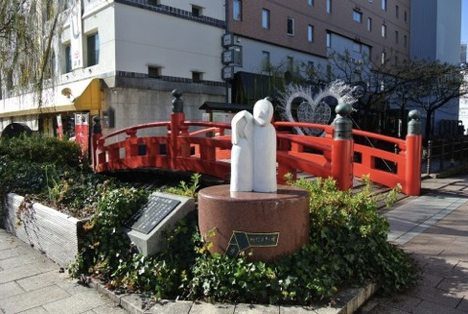
Along the roads, I passed many places that used the pre-fix ‘Tosa’ to their names, such asl, Tosa-Irino, Tosa-Yamada, and so on. There was also the Tosa-Kuroshio Railway, and even one of the oldest existing tram systems in Japan that ran with the name, ‘Tosa-Electric Railway. The first tram to run in Kochi began operations in 1904, which was a time of frantic modernization. It was a time when a new Japan strived to imitate the "modern" transport systems of the western world. Kochi was the capital city of Kochi prefecture, with its classic looking trams that carried passengers about the city, near and far. With 76 stations that covered a distance of 25.3 km, it was the second longest tram network in Japan, after the one in Hiroshima. Therefore, with the frequency of the vast train and bus system, too, getting about the city was not a problem at all! The center of the city was located around the Harimaya-bashi, some 10-minutes on foot from the main train station. The bridge is the city’s most recognizable landmark.The Harimaya-bashi Bridge itself, had a sad story behind it. The story had something to do with a love-affair between a woman called Ouma, a merchant’s daughter, and a Buddhist monk called Junshin, from the Chikurin-ji Temple. In the mid-nineteenth-century when this love affair happened, it was thought to be entirely inappropriate, for a monk to love a person in such a way. Junshin was undeterred, and as a token of his affection, was said to have bought a kanzashi, a hair-pin, for his sweetheart, Ouma, from a shop near the bridge. Unfortunately for the both of them, their secret was discovered and the monk was forced to leave his temple and move away. In an effort to make sure they never meet again, Ouma was sent far away. This sad love-story was immortalized in the lyrics of Kochi City’s Yosakoi Festival song. In English, Yosakoi, means ‘come at night’. Much later, the story was made into a film was made about it, in 2009. These days, the bridge was a popular meeting point for young lovers, as well as, an attraction for tourists. An ancient folk song told the tale of a love between a young Buddhist monk and a merchant’s daughter:


土佐の高知の                                              In Kochi of Tosa

はりまや 橋で                                            At Harimaya Bridge

 坊さんかんざし買うを見た                     saw a monk buy a hairpin

よさこい よさこい                                  Yosakoi Yosakoi


Another must see for visitors was the open Sunday Market that dated back more than 300-years. The market took up space for more than 500 booths. The booths sold a wide range of goods and items from antiques, to food, including fruit and vegetables, and a seafood. According to a tourist pamphlet that I read a little while ago, the people of Kochi were blessed with the open and liberal attitudes typically found in southern countries. “Mmm!” That sounded a bit of a generalization, after all, the Japanese were famous for being very conservative lot.  Was that another generalization? What about the Irish? Could they be described in a word or two? That was the beauty of reading, it left the old mind wandering, if not confused! What interested me the most was that the female gender in Kochi were absolutely beautiful. “Mmm!” What! Another generalization? It was impossible to say exactly how many annual festivals, or matsuri, were held in Japan. There were around 190, 000 Shinto shrines and Buddhist temples throughout the county, and most of which championed their own festival each year. Therefore, it might be surmised that there were approximately around 200,000 festivals. Like many Japanese cities, Kochi was no different when it came to holding festivals. The Yosabori Festival, for example, was held between 9 and 12 August, each summer. Visitors to the festival would be able to see nearly 20,000 dancers with their ‘naruko’ clappers in hand, move about the city streets demonstrating their energetic and colorful dancing skills. There were quite a number of dance areas held in Kochi. The main one amongst them being Ohte-suji, a street that stretched some 350-meters. Here, and elsewhere, boisterous dance teams could be seen showcasing the well orchestrated moves. There were other street-areas and shopping arcades of interest to dander about at. For example, Obiyamachi, Kamimachi, Yanagimachi, Kyomachi, Central Park, Kochi-ekimae, Masugata, Umenotsuki, Asahi, and Chiyori-cho, which was also referred to as ‘Yotteko Hiroba’. In my early days in Tokyo, donkeys years ago, I participated in a big festival, in a small way. I was one of the many young men, and perhaps the only foreigner that carted about one of those unforgivingly heavy mikoshi, or portable Shinto shrines, on our shoulders. Sadly, I do not recall very much about that time, other than we carried the  mikoshi  from its main shrine, around the neighborhood, before returning it again to its designated place of rest at the shrine. What I do remember was the it tool a long time afterwards for my shoulder to fully recover. Since that time, I lost interest in such things. Besides, I preferred to avoid  large crowds, when possible. There was no other country in the world, I felt, that had as many festivals as there were in Japan. Many of them were held on the island of Shikoku. The Ashizuri Festival was held in August, the Kashima Shrine Festival, was held twice in the year, in February and again in October, which to me was for no particular reason other than enjoyment, with a spectacular fireworks display. In truth,   prayers were said at the shrine for the safety of fishermen and bountiful catches. The Camellia Festival was also held in February, each year. The festival also included a haiku contest, which was not surprising.


Without the simple and complex beauty of nature, there would be little else to write about. Since ancient times, the camellia tree was a symbol of the Cape Ashizuri region, and grew just about everywhere through winter and into spring. Like the famous Rio Carnaval in Brazil, the Yosakai Festival participants were free to select or design their own costumes, as well as choreograph the form their dances took.That said, the Japanese performers did not move as sexually as they did in Rio. The Yosakai Festival first began in 1954 as a commercial venture to help breath new life into the city’s main shopping arcades. What did grow out of the festival, if nothing else, was the enthusiasm, which influenced many of the other festivals throughout the country. Most festivals were took place in honor a particular god or thing, such as, good harvests, health, and god knows what other somewhat selfish desires that their organizers could come up with. Back at the hotel, there was something on the BBC television news that had something to do with new single-decker electric buses to be used on the streets of London. “Mmm!” Would it not have been better to reintroduce the famous Routemaster buses, using similar electric technology? Buses: It would have been for nice to see new clean version, but identical looking appearance of them on the roads again. I had long stopped being a fan of television, and soon took myself off to buy a newspaper. It was the first in years, and perhaps the last in as many years, to bother with newspapers, which I used to love reading in many a morning over a cup or two of tea or coffee. These days, for whatever the reasons, the Japan Times came incorporated with segments of the International New York Times. The headlines in this mornings newspaper were: “Pesticide dose in croquette massive”, “¥50 million payment to Inose to be probed”, “Tamogami pledges SDF disaster prep”, “Remote, unowned islets targeted for state control”, “Al-Qaida gains inside Iraq threaten Obama’s top foreign policy success”, “Green energy gains ground in factories across Asia”, “Yellen wins backing of U.S. senators to run Fed”, “Run Run Show, 106, film of TV mogul’, “70s precursors of Snowdon come out of the Shadows”, and last, but  not least, “Baseball diplomacy that skirts into the bizarre”. At the airport I downed a couple of small glasses of Sanukiji Beer, a local concoction, which I felt was rather like the German-style of beers. Not so bad! The beer was made all the more enjoyable by the attractive young woman, Navi-san, who served me at the kiosk. On the flight back to Haneda in Tokyo, I was handed a little slip of paper, which read: “If you are assigned to exit row seat you will be required to assist your crew members in the case of emergency evacuation. … Keep other passengers away from the Emergency Exit Door until the crew members securely open it.” “Mmm!” What if the crew members were killed? I remembered thinking to myself, after glancing over the slip of paper, which was not a very nice thought at all, for there were so many wee children on the flight. As things turned out, the flight was delayed for nearly an hour. “Mmm!” One thing to look forward to was the coming 2014 Winter Olympics, in Sochi, or so the  thought crossed my mind.


What happened in Japan and the world on this day???? 
Irishman Walking (Stage 12 Chapter 3) Winter 2013-14

c57015ca-s


Irishman Walking (Stage 12 Chapter 3) is about my walking the main and coastal roads of Japan. Winter 2013-14. 


1 Jan, 2014: The final couple of hours of the old year were as good as expected, the stars sparkled in a clear black sky. The temperature, too, was the warmest evening since leaving Tokyo on 19 December. There was a phone call from my daughter Anna, or rather a return call, at a little after 10 o’clock in the evening. At first I called to wish her the best for the New Year, since I hoped to be the first. There was no reply, and I assumed that she might have been at some place partying with friends, or at work. She was now in her second year of becoming a doctor, currently at the Kasukabe City Hospital in Saitama. Kasukabe was not so far from Tokyo as the crow flew, and only about 30-minutes by train. Then, after about 30-minutes, the cellphone rang, and low and behold, it was Anna. “What’s the matter?” “Nothing’s the matter! I just wanted to be the first to wish you a Happy New Year!” I replied, only to be told that it was not the New Year yet. “Thank you!” She said for the call, and also for the money I left with her mother to give to her. I told her that I was sorry it was not more, but that I was not a rich man. “What are you doing now? Working?” “Yes, on evening duty at the hospital!” Being on duty at the hospital meant that our little conversation, of sorts, soon ended, but not before a few closing New Year salutations were expressed between us. The time was nearly 09:00 AM, everything was dismantled, rolled up, and stuffed away in the appropriate places. Then it was across the road, Route 378, in the direction of the Joyfull family restaurant for the second time in 12 hours. The restaurant was a great place to kill a few hours, and pen a fair bit of stuff down in my notebook. The restaurant chain had existed in Japan since 1979, the same year I first arrived in Japan. It felt good the previous evening at not having to worry about preparing something to eat over a campfire. The colored photos on the menu made the morning breakfast set look nourishing, with 761 kcal. The eggs and bacon, included a tiny piece of fist, which I would not usually touch with a barge pole. The fish meat was not so bad, but not before removing the skin first. On previous days during my anti-clockwise tramp around and main and coastal roads of Shikoku, my plans led me along the old Shikoku-no-Michi, which also covered part of the pilgrim trail. In a way, the walking trail that looped around Shikoku, showcased both the temples, and the natural and historical places of interest. The pilgrim trail was a 1,637-kilometer long nature walk that started from the town of whirlpools, Naruto City in Tokushima, and ended in Itano in Tokushima. Naruto was the nearest city in Shikoku to Osaka and Kobe, and the whirlpools were among some of the largest in the world. The Naruto Strait from Awaji Island on the Inland Sea was also the narrowest, at a width of only about 1.4-kilometers. One regret that I would surely have when I completed this part of my mission must surely be not taking the time to visit some of the designated temples along the way. God knows I passed a good few already, but did not even stop and awe a while at their architectural splendor. The many times that I had relied on them for rest and shelter from the scorching sun during the summer months. 


Conversely, being that time of the year, I expected the temples and shrines to be very busy places indeed. “Mmm!” Enough on such thoughts, it was time for me now to get my arse out on the road, for I had a long way to go. Kinzanshusssekiji Temple was some distance away to my left, but I simply was uninterested in paying a visit there. There was another temple by the roadside, where I momentarily stopped to take a few snapshots, but was not sure why I bothered. One old house that I passed by, had a large Japanese flag flapping madly in the breeze. “Mmm!” Although I did not stop, I could not help thinking that patriotism was a disease in many countries, including my own. An attractive young woman passed me by in the opposite direction, wrapped up from head to footy in warm winter clothes. I smiled, but she seemed not to notice and return the gesture. After some steps, I glanced back at her, only to see her standing looking in my direction, clearly taking a photo of me with her cellphone camera at the ready. “Mmm!” The Japanese never failed to amaze me! Up the road ahead of me, I was able to see that I was approaching a tunnel, the first of the day. As I drew nearer still, I was able to see another tunnel to the right that was especially for pedestrians and cyclists, so I headed in that direction. The Nasakahodo Tunnel was constructed between Showa 55 and 57 (1980-82), and ran for 461-meters. Not long after emerging from the tunnel, the ugly Ozu-Yawatahama Expressway came into view. Just east of Yawatahama, lay the castle town of Ōzu, which the highway connected. Ōzu was the government office of the Ōzu Clan, during the Tokugawa period. Ōzu was awarded city status in late-1954 following the merger of a number of villages and towns. As of March 2012, the city had an estimated population of 47,601 inhabitants. Yawatahama was a city located in the southwestern part of Ehime prefecture, and were the largest fish market on Shikoku could be found. Yawatahama's fishing and marine products industry had prosper for many years. However, the main agricultural product in the region was citrus, or mikan, a kind of a seedless and easy to peel orange, grown on hilly terrain. As of March 2012, the city had an estimated population of 38,307 inhabitants. It was said that the name ‘Yawatahama’ derived from long ago when debris from a festival at the main Hachiman Shrine in Osa, floated up on the beach. Mountains covered about 20-percent of the Earth’s land. Japan in particular, was as much as 70-percent mountainous. That said, mountains were not as solid or as permanent as many of us may think, but constantly changing. There were so many varieties of landscape in the Japanese countryside as there were layers of history. The Shikoku landscape, in particular, reflected the complex geology and varied weather conditions of the island. The shoreline and the roads that led down to it, had changed, too, perpetually bringing the presence of remote places nearer to it. Not only on Shikoku, but throughout much of the mainland, the population as a whole was unevenly distributed,  from Osaka, to Nagoya, through Tokyo, and all the way up as far as Sendai. For much of the country, the Pacific side of Honshu was more densely populated than on the Nihon Kai side. 


On the Inland Sea side of Shikoku, located to the south of Honshu and to the east of Kyushu.Today, Shikoku had a population of more than 3,845,000 inhabitants. Matsuyama was the largest city in Shikoku, and with a with a population of around 516,000 inhabitants, it was located right smack and bang on the Inland Sea. In time, I came to a large blue and while directional road sign that pointed left along Route 197 for Misaki Port, as well as, for Honai, from whence I had just come. The road sign also pointed right to Route 249 for Yawatahama Port. “Mmm!” There were so many active shipping ports on Shikoku, that the island could have been renamed, ‘Shipkoku’. Then again, I did not give a damn what the place was called as long as I was able to reach my goals, the old castle towns of Uwajima and Ōzu, which were located along Route 197. In Europe, the fortified hill forts were said to have been characteristic features of the iron-age, even if they existed in earlier times. As with Uwajima  City, located in Ehime prefecture, with a population of close to 87,000 inhabitants, in the city center stood the centuries-old Uwajima Castle. The castle was said to be among the best 10 castles in Shikoku, and cost visitors ¥200 Yen to enter. The region was overseen by the Date clan, who from the early-1600s, keenly promoted industry, education, and culture. At the Date Museum, visitors can see vintage armor and scrolls from the region’s feudal-era Date family. The region had a humid subtropical climate, but Uwajima was also noted for its cool winters, and precipitation that was significant throughout the year. Nearby, just north of the city center, set the Taga Shrine, where people visited to pray for longevity, good health, and particular for fertility. The shrine was known for its wide collection of fertility symbols and a museum of erotica, which showcases a wide collection of international and domestic pornographic materials. This includes, ukiyoe adult oriented illustrations, as well as, other items of interest from around the world. Actually, explicit objects of fertility were once common at shrines around the country, or until puritanical requests fro, m the West led to their removal, during the Meiji period. Just southwest of the Taga Shrine, sat the vast Nanrakuen Garden, the largest Japanese garden in Shikoku, covering an area of some 153,322-square-meters. The garden was famous for its many plum and cherry blossom trees, and thousands of irises, a highlight of springtime. The garden was also a heaven for birdwatchers. There was also the Umemi Teahouse, where visitors can try the free plum tea, or sample the amazake and red bean soup, for a price. Fun events in the garden included umeboshi seed-spreading tournaments. All in all, it was a large and well planned Japanese landscape garden, and cost ¥300 Yen to visit. Also located in Ehime, Ōzu was a small city with about 48,000 inhabitants. Ōzu Castle was built in 1331 by Utsunomiya Toyofusa, and was the ruled over by the Ōzu clan during the Tokugawa period. The castle structure as seen today, was built sometime between 1585–1617, and was controlled by a number of different lords between that time. However, remained in the hands of the Katō clan, from 1617 until the Meiji Restoration, in 1868. The keep was destroyed by a fire, in 1888. The two yagura, or towers, to the keep were saved. 


Surprisingly, the remains of the castle survived the Pacific War, even though Ōzu City and the surrounding area was heavily firebombed in the closing months of the war. Reconstruction continued at the castle until 2004, when the keep, and adjoining corridors that connected it were completed and opened to visitors. Today, Ōzu Castle is said to be among the best 10 castles in Shikoku. Unlike the weather yesterday, however, the sky had become clouded over and the temperature rather cold, which soon reminded me that this was wintertime. Both the road and the expressway wound down towards the town of Ohira, where soon, I was happy to note, the two would part heading off into very different directions. Away to the side, I could see that a new expressway was under construction. Almost immediately after passing the construction site, another tunnel popped into view. As I drew nearer still, I could make out its name, Atagoyama Tunnel, but unlike before, this time I had to tramp through all 650-meters of it. The name of the tunnel also caused me to think back to when I used to live in Atagoyama in Kamiyacho in Tokyo. That was in the mid-1980s. There was a little tunnel there with the same name, as well as the old NHK broadcasting station on top of the small mountain. The location was once considered the highest place in Tokyo, or until Tokyo Tower was completed in the 1950s. These days, the top of the Skytree was now home to the giant broadcasting antennas. Familiar names always waylaid me on people, places, things long gone. Such were my thoughts as I made my way towards the tunnel entrance. The Atagoyama Tunnel here in Shikoku was opened to the public in February, 1976, and was rather old for tunnels still in use in Japan today. Another road sign kind of told me that I was heading in the right direction, or did not need to make any turnings, but continue heading straight. A ferry port away to my right on Route 27 awaited passengers who wanted to go somewhere by ferry. Not me! I liked traveling by ferry and sometimes needed to use on to cross to some place, but not this time. A beautiful and newly reconstructed temple up ahead, caught my eye, and so I decided to stop there a while to boil some water for a cup of tea. One elderly visitor there, who came with his extended family, told me that the temple was called Daijingu. For some reason, the temple was not included on the pilgrimage list, and knew not the foggiest way. Then again, many temples were not mentioned amongst the 88 temples on the list. After a short while, I was able to ask another man, perhaps the son of the elderly man way this important looking temple was not on the list in question. He told me that though it looked like a temple, it was in fact a Shinto shrine, which might have explained everything. However, I now found myself wondering why a Shinto shrine was built to resemble a Buddhist temple? Shintoism believed that there were spirits in the trees and rocks, and in all of nature, or associated with secret places next to streams and woods, and so forth. At the time of Caesar, it was believed the Druids, said to have originated in Britain, had shrines in the countryside in “groves of oak”, and worshiped the moon and the trees, which played a part in their religious rites. 


The moon dictated their calendar. (The time unit, the fortnight, continued to be used to this day). That was a time when people preferred life in the countryside to the town. Then again, town and countryside became interdependent. To some extent it amused me how still the rites of Shintoism and Buddhism encompassed the main events in the life of the individual and the family. For example, births, marriages, deaths, all with their own particular rituals. The boundaries between the religions and the superstitions were indistinct, and were images were often believed to have magical efficacy. The different images, like rocks or trees, or whatever were a familiar feature of the Shinto rural landscape. “Mmm!” Thought I never quite worked out how the rituals and beliefs could be adapted to the needs of everyday life. A result of a lasting recession, many of the towns I passed thought appeared to be languishing, with roads unmaintained, the local economy severely strained. Although not everywhere in Japan, the misfortunes of a lingering recession could be seen even by the village idiot. The many businesses and shops boarded up, houses dilapidated or abandoned. As I had penned earlier,  the long term consequences of the recession had been much debated. Many of the towns varied in site, size, appearance, and of course, in fortune, too. They were physically unattractive places, filthy from the outside. Few of the buildings with any signs of care about them, few boasted quality roofs to cover them. Regardless, however, the delights of nature continued to invite exploration. Even in me, there was an amateur enthusiasm for archaeology. What made the shrine building fascinating, however, was not just the sense of the very distant Japanese past, but rather, the strong sense of nature itself. Often the shrines were located on grounds that were home to massive old quality trees. And which, needless to say, were a heaven from home for me, when I stopped and rested awhile under, during the hot summer months. Even in wintertime, like the present, they were great places to camp near, especially if there was fresh running water to wash at or use for cooking or making tea or coffee. Before leaving to hit the road again, I decided to remove my boots and take a look inside the Daijingu, and pay my respect to the god or gods that resided there. When I reached the town of Anai, a little while truck stopped and the male driver handed me an orange. At the rear of the truck I could see two boxes that were loaded up with oranges. “Only one?” He asked me, indicating with his forefinger. “Yes! Alone!” I replied, thinking him for stopping and forgiving me the orange. “Well! Good luck!” He said, and soon the man and his friendly dog that was fastened next to the boxes of oranges, were gone. Before arriving in Shikoku, I had read about the hospitality of the people here and how they welcomed visitors, particularly the henro. I had also heard from other people here and there that the people of this island often bestowed gifts of food and drink to them. When I drew near to Arai Town earlier, another fellow had stopped his car and given me an orange, and even repeated the kind act on his return journey. 


In fact, I had not long finished eating the juicy orange, when out of the blue he stopped his car a second time. The poor dog appeared a little puzzled when it saw me a second time, as if wondering what was going on, but soon began to wag its tail when I patted it on the head. Like before, not wishing to exploit the man’s kindness, I only took one orange from the boxes. And like before, as quickly as the small truck had come, it vanished up the road and out of sight. A couple of hours later on, or about 10-kilometers more under my belt, a very attractive young woman stopped to chat, and asked me where I came from, to which I told her that I was from Ireland. “An island! I’m from an island, too.“ She said, smiling from ear to ear. Of course, the Emerald Isle was an island, but I felt she did not quite understand what I had said. “Ireland! I-R-E-L-A-N-D.” And adding that my country was in Western Europe, just west of England. “Oh! I see! Sorry!” She then told me that she would love to visit that part of the world one day. As it turned out, the girl spoke quite good English. “Where are you sleeping tonight? Or on other nights?” Glancing at my heavy and battered backpack, which now lay one the ground by my legs. I happily told her that I camped most evenings, sometimes liked to stop a night or two at a hotel in the big cities, while also adding that much depended of timing. “What do you do if you cannot stay at a hotel?” “Well, I just keep on walking through the cities in the hope that I can find a large park or river.” Of course, much depended on chance, and I told her that. “What I really was looking for now, was a place to buy food.” I said, in the slight hope that she might know of a place, for the shops I passed all seemed to be closed for the holidays. The convenience stores remained open, but I had not seen one in ages. The woman told me that they should remain closed until at least the 3 January, which in a way told me that she did not know where one might be open. It was time to get a move on! “Well! Thank you for stopping to chat a while with me! I should continue, for I still had a good few kilometers to get out of the way before I thought anything about camping.” With a smile and a wave, we both turned and headed off in our different directions. Perhaps the girl was heading back to her home, and me to mine, where ever that was to be this evening. 10-minutes after hitting the road, I heard the sound of a car fast approaching from the rear, and moved well out of the way to let it pass. The road, Route 378, had become very narrow for a good 20-kilometers, and the two-way traffic really needed to slow down to pass safely. Some kilometers further back, I had passed a dark blue van that was smashed up badly after crashing. If it was not for the white barriers at the side of the road, it would surely have gone over the side and fallen. Many police did what police did, when I passed by, directed traffic. An ambulance had not arrived yet, but I thing no one was badly injured. The barrier had been pushed a good meter to the side, and the front of the van was badly damaged. The car drew near, but did not pass, but rather sounded its horn and came to a stop, its two left wheel resting on to the pavement. 


When I glanced back, I was surprised to see that it was the very same young woman who had stopped to chat with me in English, a little earlier. “Hop in! I’ll give you a lift!” She called to me, as I retraced my steps towards the car, and the young woman who was now standing on the pavement. My heart sunk, for I could not accept the kind offer! “Mmm!” If only the offer had been at another time. How many men were offered lifts by attractive women? “Please forgive me! But I really need to walk!” And set about giving her a quick rundown on my mission of walking around the main and coastal roads of Japan, etc. Leaning back into the car, she pulled something out. “Here!” She said, with a smile. “These are for you!” Inside the little back I could see two bars of Lotte ‘Ghana’ Black Chocolate, three mandarin oranges, and a little cake in the shape of a heart. “I made that!” She said, pointing at the cake. “Wow! Thank you so much! You are so kind!” I said, with my face all agape with broad smiles. There was not too much said, and with a wave a wishing me good luck, she was gone. “Happy New Year!” I called after her, not sure she heard me. A little further down the road I could see her car slowing down, doing a U-turn, and then approaching again, in the opposite lane. “Mmm!” Wow! Clearly the young woman, Miss Nakagawa-san, was going to drive me for some distance out or sheer kindness. Kindness in action! With the newly acquired food, I then decided to make camp early, next to a sizable fishing boat harbor in the town of Nigyu. This was not the best of places, for it proved not so easy to pitch the tent for the steady southerly wind that blew in over the water. The ground proved to be so hard, that it was unable to use the tent-pegs. The only thing to be done was to use some of the heavy equipment nearby to fasten the tent-ropes to, such as, old tires, a heavy bamboo pole, and a large rusty anchor, which took some effort to budge into place. Once the tent was pitched firmly and with most of the gear tossed into it, I set about heating some water to wash my feet with, the best I could in such circumstances. Just as I was doing this, a sudden wind gust lifted my sleeping bag up into the air and deposited a couple of meters away, right plunk into the sea. Jumping to my feet, I rushed over to the edge of the harbor and looked down, where I saw my poor sleeping bag sitting on the water. With the aid of a stick, I was able to bend down and lift the wet bag from a near watery grave. The damage of sorts, was not so bad, and fortunately, the same wind that caused my heart to lose a beat, would also help to solve things. Everything about the well-insulated and lightweight sleeping bag was soon dry again, and soon, I began to feel relaxed. A waterproof bivouac sack, or bivvy bag that I sometimes used for the sleeping bag, was at the ready, just in case I needed it in the early hours for added warmth. By and by it was a relief knowing that the night would not be a sleepless one. On the road, you needed to be prepared for unforeseen hardships. There was almost no touristy information available, in English for those on the road like myself, who preferred to camp instead of having to look for lodgings. Camping was obviously cheaper than staying at a minshuku or ryokan, or business hotels each night. 


2 Jan, 2014: I awoke to the loud, but joyous sound of two elderly voices as they walked along the sides of the harbor. The fishing boat’s stern and bow lines were still safely secured to the  mooring cleats spaced along the harbor edge, so no work for the fishermen today. Fortunately, this mornings weather seemed warm and sunny like in spring. “Mmm!” Something told me that this was going to be a good day on the road, or providing the weather remained that way. My humble breakfast was in the form of hot tea, muesli, and the last of the three oranges that the kind young woman gave me yesterday. It did not talk long to finish eating and putting away the gear. Now it was time to get this unwashed body of mind back onto the road. The New Year holidays brought with it the merry sound of children’s voices in laughter here and there as I tramped along the side of the road. From time to time, the sound of the young women’s voice offering me a lift to the nearest town yesterday, entered my mind. She was sure that there was a convenience store there. It was always a joy to rub shoulders with positive-minded people on the road, for most people, I would surmise, were still in the gray side of life. Or recovering from the holidays and preparing their minds for returning to their jobs shortly. The first tunnel of the day soon came into view. The Asadatsu Tunnel was constructed rather recently, or one-year before I began my mission in the summer of 2009. The iron plate at the mouth of the tunnel told me that it was opened to the public in March, 2008, and ran for some 387-meters. As luck had it, however, there also appeared to be a minor road just off to the right that seemed to skirt along the shoreline. After all, I would never forgive myself if I did not give the road a try. Fortunately, the sudden appearance of a man out walking his dog, a most attractive black Labrador, assured me that the road was fine and open. Along the road, I passed a couple of old houses that appeared lived in. There also appeared to be some work being carried out on the sides of the step hills to secure them against the occurrence of landslides. A threat indeed in hilly places! Then my ears caught the sound of a strong male voice singing some Japanese number, I knew no what. As we drew nearer to one another, a stocky long haired shabbily dressed chap called over to me. “America?” “Yes! A little part of me!” I called back, not caring to stop and chat, which I regretted not doing for sometime to come. For a short while the man appeared to follow some meters behind me, still singing as he went, but soon he turned away and headed in the other direction, in an aimless sort of way. “Good luck!” He called out after me. “Thank you!” I shouted out, glancing back at him. Downwind as I was, I could still hear the man’s singing voice for some distance. A rusty old road sign told me that the road was once a segment of Route 378. The splendid weather and magnificent scenery led me through a quaint little seaside town called Aragiro Mikamecho in Seyoshi. After a while, I came to a little shop in the town of Minaye that was open. The shop was run by a friendly elderly lady who presented me with three mandarin oranges soon after entering. 


At the shop, I bought a 500-milliliter carton of milk and a little box of biscuits, or Bourbon Butter Cookies, as it said on the box. Besides the biscuits, and a few other little odds and sods, here was not much else in the way of food, not even bread. Besides, a lot of water had passed under the bridge since I last dipped a biscuit into a hot cup of tea. “Mmm!” Before hitting the road again, I thought to myself, why not? In addition to the milk and biscuits, a small 300-milliliter can of Asahi ‘Dry’ beer was bought. The hunger pangs were not so extreme, so I did not bother about a midday meal, even if it was a fair time past noon. As I set outside the shop sipping away at the beer, the elderly proprietress came outside and chatted to me. She told me that her name was Yamauchi-san, and was 82-years old, and that she had lived in Minaye Town all the time. The shop had been a feature in the town for donkeys years, and that her parents ran the shop before her. A local community center stood next to the shop, and just over the road a number of small fishing boats with their lines secured to some iron rings along the quay. “Mmm!” There was nothing more pleasant than journeying in a boat up a winding river or along a lovely coastline, and passing by the busy and not so busy little towns and inland farms, I told myself, lifting the can to my lips to taste the beer from it. She was a gentle, meek, enduring old lady, she spoke with tremulous dignity. Yet, there was a little saddened expression that shadowed her aged, but attractive face. Clearly she had experienced a lot of things, good and bad, in her long life. Still, it was easy to see from her face that she had been stunningly beautiful when she was a young lass. Clearly her character remained so! However, if anyone offerers me more oranges, I might have to refuse them, for the weight. I still carried a few others in my backpack, and did not need anything more to carry. With the milk and biscuits added to the backpack, I was beginning to regret picking up the beer. Since yesterday, Route 378 remained rather narrow, for the two way traffic. It was  the sort of road one found in the countryside, like, when I was a child growing up in Ireland. Soon the road began to wound up and around the side of a mountain pass, leaving the sea far below. Sometimes I stopped here and there to take a couple of snapshots of the beautiful scenery below. Not that I intended to show them to anyone in particular, other than to file them away amongst the thousands of others that had taken. Still, beautiful all the same! There was also a little stop on a pleasant spot along the side of the mountain pass to boil some water for a cup of tea, not to mention get stuck into the little box of biscuits, my lunch of sorts. The tea and biscuits, and an orange, were not so bad, but I knew that I needed something more nutritious in me, for life on the road demanded it. Therefore, I could not wait for these silly holidays to end, when things will get back to normal, like, more shops and restaurants open. Many of the attractive little fishing villages and towns that I tramped through were devoid of shops. One such wee place, with a beach, if I was not mistaken, that I passed along the way, was called Tanohama. 

There was a beach area called Tanohama in Kōchi prefecture, where I had once stopped at a short while to rest the last time I was in Shikoku. It was already quite dark when I finally stopped to make camp at the seaside town of Miyanoura, next to a gorgeous and colorful Christmas lighting display, showing a Santa with some reindeer. The exact number of Christians in Japan was unclear. but about one-percent of the population were that way inclined. The number appeared much smaller when the different minority persuasions were looked at individually. Currently, there were some 16-dioceses, which oversaw more than 510,000 Catholics in Japan. The Church in Japan had its own patron saints, Peter Baptist and Francis Xavier. Xavierin was the first Catholic missionary to the Japanese archipelago, where he introduced Christianity almost as soon as he arrived, in 1549. Peter Baptist symbolized the 26 Martyrs of Japan, who like the great man himself, were crucified for their beliefs, in Nagasaki in winter of 1597. Christianity was already suppressed by the Japanese government, around that time. Those who continued to follow the faith, did so underground, hence the name, 'hidden Catholics'. This was called, 'Kakure Kirishitan' in Japan, which literally meant 'hidden Christians'. Since the Bubble Economy days, the majority of Japanese couples, typically included a Christian wedding ceremony when they tied the knot. This was also believed to be a good thing for Christianity in modern day Japan. "Mmm!" I used to know a fellow native speaking English teacher who earned a bit of money on the side for playing the part as a priest at such ceremonies. The main faiths in the Land of the Rising Sun was were Shintoism and Buddhism, which kind of wove in and out of the Japanese culture simultaneously. Around 80-percent of the Japanese adhered to both faiths, and worshiped the Shinto rituals -- ancestors, domestic and public altars -- to one eclectic or personalized degree, or another. At the same time, I never fully understood why many in this country went to all the trouble and expense to give the appearance that the Christmas was celebrated in Japan. Just about most, if not all of the shops and stores had something about them that had something to do with Santa. Even the staff at convenience stores and delivery services were clad in red, many with tiny Santa-like hats on their heads. So it was clearly a commercial choice, any even that got the money rolling in. The Christmas period rubbed shoulders with the New Year holidays, a time in Japan when people got together with loved ones, like, close family members. Just as I had finished erecting the tent and dumping my whatnots into it, a middle-aged woman sauntered past carrying a tiny toddler on her back. She stopped and chatted a while, and I found myself answering the usual gauntlet of what, when, where, why, sort of questions, which I happily answered leaving her perfectly awe stricken. It did not amuse me to learn from the woman that there was not a single shop nor store in Miyanoura to be had anywhere. Already, two-days had passed and I had not seen a decent shop or restuarant anywhere.


3 Jan, 2014: Another beautiful morning and things could not have been better. On problem was, however, I did not sleep overly well last night. This was in part, I guess, because a car that contained some noise young folk was parked a bit too close to my tent, and remained where it was for a quarter of an hour, before finally moving off. Actually, I had been chatting away with a friend on the cellphone when the car showed up, and so noisy was the laughter, that it caused my friend to comment. “Mmm!” I sometimes wondered how people could talk or converse coherency if they continuously howled with laughter? My friend offered to assist me in anyway, should I need it, but I could not help thinking how that might be, after we hung up. The friend lived in Tokyo. “Mmm!” A call to the police? Soon I was eating my humble breakfast of muesli, with its raw oats and various other interesting ingredients, like, grains, with fresh or dried fruits, seeds and nuts, and so forth. Back at my place in Tokyo, not a morning passed when I did not start the day with a nice bowl of muesli directly out of the packet, with fresh cold milk poured over it, first. Unless of course, I decided to have a bowl of thick hot porridge instead. Muesli was believed to have first made an appearance, around 1900. It was believed to have been the brainchild of a Swiss medical doctor and nutritionist, called, Maximilian Oskar Bircher-Benner (1867-1939), who prescribed it to his patients as part of the therapy. Bircher-Benner's Legacy, though not shared at the time, highlighted the health benefits of eating fruits and vegetables. On a visit to Switzerland, the German novelist, Thomas Mann once described the doctor's sanatorium as a 'health jail'. Regardless of any criticism, seemed that Bircher-Benner was a man before his time. After breakfast, the next thing was usually to dismantle the camping gear, rolling things up and putting them away deep in the backpack for safe keeping. Just as I was doing this, a little gray colored car stopped. A middle-aged man got out of the car, he was clad in shiny black leather pants, and a black polar neck pullover. As he was about to use his cellphone when I approached him from the side, my open maps in hand. The man was kind enough to put me right as to where we stood, and the name of the place I had camped at. “Look!” Hi said, pointing beyond a somewhere hidden directional-distance road sign that I had failed to notice. “That’s Mount Takayama! So you are here!” He said, pointing with his forefinger at the map, and which I quickly marked with my pen. One thing I liked to do was to carefully mark on the maps the place names and dates where I spent the nights. Clearly I could also see that I had not gone as far as I had thought, yesterday, and an element of depression began to make itself felt. At least, the 35-kilometers I had thought I had tramped now looked much less, for the turns and bends on the road. Just as we had finished chatting and I set about getting my gear in order, a second little car pulled over and stopped. An attractive looking middle-aged woman, got out, the man gave her a torpid smile of welcome. A very present looking woman, she was dressed with chaste elegance and propriety.

Almost immediately, the woman began unloading packets of expensive looking sweaters, and handing them to the other man, who quickly put them into the back of his car. The women did not appear to smile, and after exchanging a few words, she drove away. The man’s car remained parked for a short while, before it too moved off back down the road as he had come, like a whisper in the dawn. It was also time to lick my own wounds, and with that, I made my way back onto the road, tightening the straps of the backpack as I went. The road signs pointed towards the towns of Uwajima, Takayama, and Yoshida. The town of Uwa was on Route 344, away to my left, whilst Akehama Seaside-Sun Park was just 2.5-kilometers was up ahead in the direction in which I was headed, on Route 378. Now I was dying to go to the toilet, which was one of the fast occurring setbacks about eating heavy roughage, such as, muesli in the mornings. As luck had it, I soon found a place to relieve myself in Seiyo City in Akohama-cho, or so a large touristy map informed me.  Seiyo was a city located in Ehime prefecture, and according to an early-2012 censes, the city had an estimated population of 42,600 inhabitants. The public toilet area was also a good place to get some washing done, and to hang it over a wall outside to start drying. “Mmm!” And why not go the whole hog and boil some water for a cup of tea, too? I thought to myself, looking about for  a good place to sit down at. Besides, the cellphone battery was already being recharged, and it gave me a good chance to study my maps better. The bouts of depression still lingered about my performance on the road yesterday.  There was some concern about the long distance it really was to reach Kochi City, compared to how things looked on the maps. What I needed to know about now was the possibility of a shortcut somewhere up the road ahead of me. One other thing that added to my feeling was that compared to the remaining days on this stage of my mission, there were not so many empty pages left in my already battered notebook. Therefore, I needed to keep an eye open for a shop or store where I hoped to pick a new one up. In addition to being a profuse reader, I loved writing! “Mmm!” What happened to those days when people spent hours penning letters to each other? The last letter I wrote was about 10 or 15-years ago, when I set down to pen a long letter to a favorite cousin of mine, Roseanne, who I recall lived in Birmingham in England at the time. A week or so later, I received a short email from her wishing me well and thanking me for the long letter. Since then, the closest I have come to writing letters were the plain postcards that I liked to send to family, friends, and acquaintances here and there, along the course of my mission. There was a time when letters were once exchanged with some frequency between family and old friends. I cannot quite remember the date when the letters ceased! Of course, it had had something to do with progress. The old fashion writing and posting of letters did not stop over night. Rather, there was a gap, or in that people wrote less, then it noticeably dropped off, before finally stopping all together.


These days, people hardly, if at all, wrote letters to one another, for the easiness and speed of emailing. The kids I taught at school could not even imagine doing such a thing, when the time factor seemed to be ever so important to their lives. “Mmm!” Where were my old friends now? For a while I was lost in my thoughts, then I decided not to bother about making tea, but to move on.  Besides, it did not take me very long to go over my maps. According to the maps, and the time I had left on the road, there was no need to make any changes to my plans. Or at least, such worries could wait a while longer, until I was able to get my arse back on to Route 56. Along the way I caught sight of a young man, a cyclist, standing close to a vending machine sipping a cool can of sort drink. My plan was not to stop, but push on by with a wave and a smile. However, I could see that he was not Japanese, and could not stop myself for making some comment along those lines, as I drew near. “I’m not!” He replied, smiling from ear to ear. “I’m from the Philippines!” The people from the Philippines aways had such beautiful welcoming smiles when they met someone for the first time. Stopping to chat a short while, I dropped my backpack to the ground, and walked over to take a quick look at what the vending machine had in stock, more of an aimless interest, than want. Then, recalling the high sugar content in such beverages, I did not bother popping in any coins! I then told the young man that I had an old friend who, about five-years ago, moved back to his hometown part of Manila in Southern Luzon to live. And that my old friend, Cesar, had worked for about 30-years as an editor at the Japan Times. It depressed me a little when I thought about how much water had passed under the bridge since our first meeting in 1986, at the famous Imperial Hotel in Hibiya in Tokyo. Back then, the hotel cafe, was called ’Cycles’ , a name that I quite liked, since I had already peddled around Japan then. Being a Sunday, I remembered how busy the place was, and we were both standing in line next to each other waiting for a table. That was until Cesar proposed, with a warm friendly smile, that we share the table. Hence, a long and lasting friendship was born. The young man then told me that he was only in Japan on a temporarily basis, and planned to return to the Philippines once his contract was up. However, I would never have guessed that he currently worked in the fishing industry. We did not talk  for very long, perhaps because he appeared to me to be a wee bit on the shy side, or the sort that preferred to smile, not speak. Or perhaps he felt that his English ability was lacking. I still well recalled how my old friend Cesar like to talk, and could converse quite well in a few languages, Japanese, German, French, English, and of course, his native lingo, Tagalog. Actually, the Philippines was a nation with many native languages. “Mmm!” I  momentarily wondered if that was the reason why Cesar picked up languages easier than the average Joe Public. Within a short while I was on my way with energy and heartiness. However after only a few kilometers, I stopped once more in the town of Karie, where I boiled some water for a cup of tea. 


This time I decided to make the tea stronger than usual, dropping two teabags into the cup, and waited a while for it to take form, before adding the last of the milk to it. In a way it was funny how little things reminded me of yesteryear. When I was a growing up in Belfast, my grandmother always brewed strong tea in a teapot. Everyone on the street did the same, and would buy small packets of Tetley loose tea from the little shop on our street, and pour into the tea canister when they got home. Of course, I could not recall why Tetley tea was so popular among the people on our street. Perhaps it was reasonably priced, since money, or lack of it, was an important factor to living in those days of give and take, or constant lending and borrowing. The popular British singer, Petula Clark, had a single titled, ‘Anytime is Tea Time Now’ that was constantly aired on Radio Luxembourg, and which worked quite well in Joseph Tetley & Company, Wholesale Tea Dealers’s favor, during the 1950s and 1960s. Incidentally, Tetley was the first wholesale tea dealers that sold its tea in those horrible teabags. Clearly Tetley had grown considerably since it was originally founded in 1837. It had become the largest Wholesale Tea Dealers in the United Kingdom, Canada, and currently the second largest in the United States. Amongst the many kinds of tea that Tetley marketed, could be found Tetley Green Tea. One of the Tetley websites claimed that: the company master blenders hand selected the finest tea leaves from around the world to guarantee the same great taste in every cup. And that green tea was naturally low in sodium/salt, which reduced consumption of sodium contributes to the maintenance of normal blood pressure. “Mmm!” I still loathed green tea, regardless of who made it or where it came from. The only green that I cared about was when the surrounding area was composed of fields that were fallow and held by morning dew, when everything was a marvelous green. All the same, the short stop allowed me the chance to spread my wet clothes over an iron grating nearby, in the hope that it might speed up the drying process. Then I devoured the final orange and the onigiri or rice balls that the kind woman with the child fastened to her back, had made for me the night before. When I did hit the road at last, my clothes were that much more drier, and lighter. I was also determined to make no more stops until I made camp later. A distance-directional road sign told me that the towns of Yoshida and Uwajima were 13 and 25-kilometers away, respectively. By one-forty-five PM, the sky had become a bit on the cloudy side. Although the weather was suburb for tramping the roads, the day so far had been slow and a little depressing, to say the last. In time, the first tunnel of the day popped into view. The Tonoe Tunnel was built in March, 1993, and thankfully ran for only 215-meters. My course along the road led me through Tarazu Town, and where I decided to make a quick stop at a little local shop run by an elderly fellow. At the shop I picked up some sweet bread, some chocolate, and a few other little nicknacks to tide me over for the remainder of the day.  


Not very long after hitting the road again, another road sign pointed to the right for Yoshida, as well as left for the town of Uwa, and where Route 378 would merge with Route 56. Uwa was one of the towns and districts that was merged to form the new and modern city of Seiyo, on April Fools Day, 2004. Uwa was more noted for its natural spring, known as Kannon Spring Water, which was designated as one of Japan's 100 best water sources by the Ministry of the Environment, in March 1985. The Kannon Spring Water region had many hiking trails along the mountain rivers and was a popular destination in the summertime. The hiking trails were good for hungry hikers, for the spring water was also used for preparing somen nagashi, a cold Japanese noodle cuisine, in which bundles of noodles were placed into the cool flowing water. In Nomura, also part of Seiyo, held an annual sumo competition for children and amateur adults known as the Otoi Sumo Tournament. The amateur tournament was held soon after the Kyushu basho and usually attracted a number of the professional sumo wrestlers to it. Not far from sits a castle, built on the side of a mountain near the Nomura Dam, by a wealthy Japanese eccentric. The castle “was originally a retreat for parties, complete with overnight lodging facilities. It never achieved any measure of popularity, and the owner eventually donated it to the city of Seiyo. It now lies uninhabited and largely unused” (Wikipedia). Seiyo City limits also fell within the Shikoku Seiyo Geo Park, a wide and unified body of land set aside for its protection and use of geological heritage, as well as, to promote the economic well-being of the people who lived in and around the region. Soon the road would take me though the second tunnel of the day. “Mmm!” These days, there were not so many really old tunnels in Japan. The pavement-less Tamatsuzuido Tunnel was build in December in Showa 24 (1949) and ran for 300-meters. To make maters worse, the tunnel was barely wide enough for two cars travel side-by-side, or overtaking would mean slowing down first. Another tiny sign welcomed me to Yoshida Town, but if experience was anything to go by, I knew that I still had 5 to 10-kilometers to go before reaching the town center. The third tunnel that I came to, called Fukaura Tunnel, and ran for 197-meters. Perhaps because it was somewhat new, opened in 2005, it had a nice broad pavement on one side. By and by Route 378 bent sharply towards right towards Yoshida, and where another road side reminded me that I was getting closer to Route 56. Good! At about this time, I began to feel positive once again. With the kilometers falling away like dominos, it was like things were falling nicely into place. After some time, I took my leave of Route 378 and turned onto Route 271, which led to Route 56, just two-kilometers further on. It was not very long when the forth tunnel of the day showed its dark face. The Kona Tunnel took nearly three-years to build, before it was opened in Showa 58 (March, 1983). The tunnel ran for 262-meters. A road sign told me that I was fast approaching the cities of Shimanto and Ainau, as the road curved away to the right. Shimanto was a city in southwestern Kōchi with a population of more than 34,000 inhabitants.


Located on the famous Shimanto River, the city was rather modern since it was established only on April 10, 2005, after the merger of number of areas. The city’s population was spread out over a large area, broken up by a number of rivers, mountains and uninhabited or sparsely inhabited areas. The Ushirogawa River also ran through the city. Shimanto was a city that had a wet subtropical climate with hot humid summers and cool to cold winters. Thankfully I was not here in the summer months when the humidity levels were rather high. Thankfully, in winter snow was rare and occurred only once or twice in a year. However, rainfall is significant throughout the year, a bit of which I experienced during the early hours. The rain was heavier during the rainy season, such as, in June and July, or in September, when typhoons hit the country. To paraphrase from Wikipedia, Norifusa Ichijo, an aristocrat, fled Kyoto with his family to escape the chaos of the Onin War, which devastated the city, in 1468. With his family and followers, Norifusa settled in Nakamura in what was now part of Shimanto. The family established a stronghold in the region, and modeled Nakamura on Kyoto, giving it the nickname of ‘the little Kyoto of Tosa’. Tosa was the former name of Kochi prefecture. Nakamura maintained itself as a small castle town, until 1689. In that year, the head of the Nakamura fief was punished for the offense of turning down a post on the Tokugawa Junior Council. The local castle was destroyed, the fief's finances were confiscated, retainers were stripped of their incomes, and the samurai dwellings were destroyed, forcing them to scatter in search of other employment, like, farmers or merchants. As a result, the Nakamura lost much of its wealth and independence, and became a rural region of little significance. On an added note, the noted radical thinker, Kōtoku Shūsui, was born in the town of Nakamura. As radical journalist and Marxist socialist, Kōtoku Denjirō played a key role in introducing anarchism to Japan in the early-twentieth-century, for which he was finally hung for treason, on 24 January, 1911. Kōtoku Denjirō, together with fellow journalist, Toshihiko Sakai, were the first to translate Karl Marx’s ‘The Communist Manifesto’ into Japanese, which appeared in an issue of the Heimin Shimbun and which got them heavily fined. Kōtoku went on to translate a number of other works with a Marxian Socialist leaning. In November 1905 Kōtoku travelled to America where he openly criticized the Japanese Emperor, whom he saw as the linchpin of capitalism in Japan. While overseas, he was further exposed to the philosophies of anarchist communism of and European syndicalism. Much more recently, Shimanto was almost entirely destroyed by the 1946 Nankai earthquake. Today, visitors to the city museum were able to see photographs of the area following the earthquake. Unfortunately, very few historical buildings  remain. The Daiki Home Center stood along a corner of the main road, where I was about to turn right. The DIY, or outdoor kind of stores, had for a long time been about my favorites type of places to kill time at. However, a home center was not what the doctor ordered, for I really needed a place to eat at. All the same, things continued to look up.


Unknown-12


Kōtoku Shūsui (1871-1911)


4 Jan, 2014: With the sun still well in the sky, camp was made about five o’clock, by a small, but well contained river that ran parallel to Route 56. Across from the river I could see a high school. It was fortunate that this was Saturday, with only a tiny number of students, who appeared to be about to leave. Perhaps they had been attending one of the many club activities that went on at Japanese schools. Whatever the reason, they were too busy to notice me or the tent that I had just finished erecting. Now the morning sky was so cloudy, that there was no sigh of the sun rising in the East.  The camping gear was still dry from a sudden down pour in the early hours, and looked in no hurry to dry. Just as I was brushing my teeth, a jolly looking elderly fellow sauntered by in the opposite direction. He stopped to chat, but his Japanese dialect seemed like another language that I could not make out a word. There was a phone call from a friend who lived in Chiba, to see how things were going. Recently, the places where I made camp were for some reason hard to place calls with the cell phone, so I was a little surprised when the phone suddenly rang. There were a number of reason for why there were problems with the phone. The main  problems on the road, I felt, was dropping the cell phone and breaking it. Also, getting the phone wet from the rain, or even from my own sweat, or what ever other things likely to occur outdoors. In fact, during an earlier stage in my mission, the sweat from my body seeped into the working of a new digital camera and ruined it. In this case, however, the cell phone was simply not  connecting to the WiFi. This was not a problem in the cities, or towns, where the connections were stable. There seemed to be no response even when I restarted the device. This was so annoying. In other words, I was no Mr. Know-it-all when it came to fixing common problems with such devices. My only hope was that the damn thing was not seriously broken. On the road again, I turned off Route 56 and onto Route 274 in the direction of Uwajima, along the seashore where I was headed. Naturally, there were many great beaches around the Shikoku coastline, so I expected to come to one sooner than later. The scenery along the minor road that I had just turned onto now began to improve, or a more pleasant one to tramp along. For a good length along the road I was accompanied by the gentle musical sound of a narrow river that flowed nearby. The road wound upwards one way and then another. Each curve in the road left the sea, something to stop and gaze at, far below. A good number of citrus and mandarin orange trees also accompanied me for much of the way. Known as the ‘Citrus Kingdom’, the region was one of Japan’s leading producers of citrus. The region produced many varieties of oranges throughout the year, which included the popular mandarin, beni-madonna, iyokan, and setoka. Each year on 14 April, Ehime prefecture celebrated what was called, ‘Orange Day’. In fact, the mikan, mandarin oranges, were the most popular of Japanese oranges. These seedless oranges also peeled easily and were widely popular as a dessert or snack when in season, in early winter. 


This variety of orange was first introduced to Japan from China around 400-years ago, before making its way to the West, where it got its name, ‘mandarin’.  Besides Ehime, Wakayama, just east of Shikoku, was the other major producers of the mikan orange. Because of the orange, the best known agricultural product of Shikoku, the Saijo-based Shikoku Kaihatsu Ferry (Orange Ferry) operated ferries on its Osaka and Kobe routes. Needless to say, from time to time, I was able to help myself to the oranges for free. All that I needed to do was stretch out my hand and pluck one or two off one of the trees I passed by. Usually, however, I tended to stoop down and pick one up from the ground, so I did not see it as steeling. Actually, I found the fallen oranges to be sweeter than the ones on the trees. Was it possible to survive on only oranges? I tucked into one that I had just picked up near the side of the road. I guess only the Shinto gods knew the answer! Not long after I arrived in the town of Oura, I came to a delightful little cafe called, ‘Otsuki Sama and Ohoshi Sama’, and where I decided to pop into to find out what might be had in the form of food. The cafe was run by an even more attractively delightful woman, who took my order. If I was not mistaking, the plate of Yakiniku teishoku was the first hot cooked meal since the New Year holidays had begun Yakiniku Teishoku was a sautéed beef and vegetable in garlic sauce, which I hoped would reinstall some of the badly needed energy in my mind and body that had in recent days been lacking. What I did know was that it made my mouth water when it was placed on the table in front of me. It looked and tasted delicious! Two hot cups of coffee were also ordered and drunk during my time at the cafe, one when the meal came, and the other after I had finished eating. From experience, such little out of the way eating places that unexpectedly popped into view, usually made being on the road more worthwhile. The proprietress, who was called Yoko Kubo-sama, told me that the cafe was in its thirty-third-year, and that it name were those of both her husband and son. She told me, with a smile, that her son was also 33-years old. In Uwajima, some little sign posts pointed towards places of touristy interest, such as, the castle, Date Museum, Tenshaen Park, Masuyama Park, and the Bullring. As for myself, I really preferred to keep moving along the road, Route 56, in the direction of Shimanto and Ainan. One thing about the human mind was that it could be changed so suddenly. Many times on the road I had a feeling of detachment from people. Heuman had the ability to adapt to whatever environmental conditions they found themselves in. Being on the road, it was an asset to be flexible than to strictly stick to any plans or schedule, especially when it came to camping or finding a place to stop the night. As I turned a bend on Route 56, the Uwajima Regent Hotel hit me square in the face, and just 550-meters from the center of town. “Mmm! Fuck it! Why not? What was the hurry?” I thought to myself, loosening the straps of the backpack, as I drew nearer to the hotel. The hotel provided free bikes, which sounded good, and free WiFi, which meant little to me. It also featured a 24-hour front desk, and a restaurant for guests. 


The nearest airport to the hotel was Matsuyama Airport, some 69-kilometers away, a good two-days tramp, but that did not matter one bit to me. It felt good thinking about a warm comfortable bed and soaking in a hot bathtub. Kochi was too far away to think about or working up a sweat hurrying to now. Even with the good hearty lunch at the little cafe inside me earlier, I needed to slow down. Besides, I needed to give my body a good scrubbing, if only to feel clean, and the clothes needed a good washing, too. Soon many things shot through my mind with every step I took towards the hotel. “What was there to loose?” I thought to myself, knowing well that if a single room cost was too much, then I would just move on. My mind was still working overtime, as I made my way across the busy road. “Nothing tried, nothing gained!” I mumbled to myself, as I made my way through the glass door and into the lobby and over to the front desk. An attractive young female clerk looked up from what she was doing when I entered. Then, when I got to the front-desk, I said: “Good afternoon! A non-smoking, single room for the night! How much?” I asked, smiling across the counter. Then, picking up a calculator and quickly pressing a few keys and turning its tiny screen for me to see. “¥5,300 Yen!” She replied, smiling back at me. “Did that include breakfast?” “No! Breakfast was extra!” She answered, pointing at some pictures of food on a wall nearby. “Oh! I see! Alright! Just a single for now, I'll think about food in the morning!” Soon I was standing in the elevator to the forth floor, and then at the the door to room 417. Being a business hotel, the room was small, clean, tidy, and had a reasonably sized bathtub, which was in no time at all full with hot water. All else would just have to wait until I had a good scrub down and sit awhile in the bathtub to get my money's worth out of the experience. Unfortunately for me, the television was not bilingual, or rather, the remote control did not seem to have the appropriate change over button on it. After sometime, I again made my way back down in the elevator to the lobby, with the television remote controller in hand. The rooms in the larger hotel chains all had bilingual televisions sets in them, but that was not necessarily so with the Japanese privately run business hotels. “Sorry! All the rooms were the same, televisions included!” Was all that the counter staff, this time a middle-aged man, could tell me. At least he appeared polite and friendly. With this new and unwanted information in mind, I turned and headed back up to the room, to sit a while longer in the bathtub. Needless to say, the hot bath felt absolutely fantastic on my body and painful knees. After soaking a fair while in the bathtub, it was down in the elevator again, this time with my dirty clothes rolled up under my arm. The washing machines were located in a room near the lobby. As I tramped into Uwajima earlier, I noticed that a T-shirt I had washed at a sink in a public toilet sink had fallen from my backpack, where I often hung clothes to dry. The lost T-shirt was not yet dry, for other odds and ends, also fastened to the backpack, had kept it from getting the full effects of the beautiful sun.


Unknown-2


(Official Uwajima City Sightseeing Webpage)


Uwajima was once a prosperous castle town, and like many of the historical towns dotted here and there along the old highway, it was a good place to rest up in for a while. The region had a humid subtropical climate with hot summers and cool winters, and with precipitation throughout the year, the highest from June to September. Tenshaen Garden was located further along the main drag, which was once part of the private residence of the daimyo of Uwajima. The garden boosted a wide variety of bamboo, Japanese irises, and wisteria, which could be viewed in full bloom, in the spring and summer months. In addition, a bullfighting tournament was held at a special location five times during the year, thought they could not be more drastically different from the sort of bullfighting that Spain and Portugal were famous for, or were the unfortunate beast usually ended up dead. Conversely, the bullfights at Uwajima, and in other places in Japan, called Tōgyū in Japanese, had more to do with brute strength, a somewhat bloodless sport, with bull against bull, with heads pushing against heads, and horns locked against horns, each in an effort to force the other to give up ground. Victory was achieved when one the bulls forces the other down on its knees, or for it to turn tail and flee from the ring. In a way, Tōgyū was a kind of 'wrestling' match’ between two very powerful animals. Perhaps stemming from its early prosperous castle town days, Uwajima was also one of nine locations, in six prefectures, Kagoshima and Okinawa among them, where visitors flocked to each year, to watch bullfighting. Organized bull fighting as a proper venue first began in Uwajima in the 1800s. However, the exact year in which the bullfighting events started in the region was unknown, but it was believed to have been around the early-seventeenth-century. "Mmm!" I momentarily wondered if it was a spectator event even earlier? Uwajima grew out of a village called, Itajima, in 1595. At the time the Uwa region was ruled by a local lord, called Takarora Tohdo, who was keen on restoring the castle there. It became popular enough in a number of cities during the early-1900s, particularly in Okinawa. Competitive bulls were categorized on a similar hierarchical structure to sumo, or ranked with names that mimicked sumo wrestlers. One exception being, that the top-ranked bulls were referred to as ‘champions’, rather than as ‘yokozuna’. As with weightlifting, or amateur and professional boxing, a weight class was a factor in bullfighting,  such as, middle weight and heavy weight classes. Sumo had no weight class! Fights were held on 2 January, on the first Sunday of April, on 24 July, on 14 August, and on the fourth Sunday of October. The tickets were available at the arena, for ¥3,000 Yen per person on the day of the fighting. All seats are non-reserved. However, if purchased at least a day in advance, they would cost ¥2,500 Yen. Further, online reservations were possible from up to one month, to two-days in advance. Thankfully the bulling fighting events in Japan were bloodless, unlike in countries like Spain. At least in Japan, the bulls were able to live. 'He who fights and runs away, lives to fight another day', as the idiom put it. 

Irishman Walking (Stage 12 Chapter 2) Winter 2013-14

c57015ca-s

Irishman Walking (Stage 12 Chapter 2) is about my walking the main and coastal roads of Japan. Winter 2013-14.


7 Dec, 2013: Thankfully, the rain stopped some hours before I was getting things ready for hitting the road. This mornings NHK news spoke of a dip in the temperature, with the possibility of snowfall and a cold wind. There was no serious icing on the power line, yet. “Mmm!” Snow was much better than rain, or so I thought. Soon after leaving the hotel, at 09:50 AM, a road sign told me that Imabari was 18-kilometers away. Along the way there were a  some little flutters of rain, but nothing that caused me to duck into somewhere for shelter. At a little rest stop place, I decided to boil some water to make a cup of tea and to tuck into the remainder of the bread I bought at the little bakery-cum coffee shop I stopped by at yesterday, near the Nyūgawa train station. The rest stop place was a good place to stop awhile, for the public toilets, if nothing else. There was a good wooden table and bench to sit at, with a beautiful like. As I set drinking the tea, the clouds opened up and revealed a beautiful blue sky. Even with the warmth of the sun being felt, it still was a welcomed change indeed. If things stayed that way, then the tramp to Imabari City should be enjoyable. As I drew nearer to the city, a strong cool wind began to blow with gusto. A wind chill temperature, if I stopped in anyone place for too long, I would soon feel the cold everywhere in my body. As expected, the kilometers fell away nicely like dominos, and when I did at last reach Imabari at one o’clock, I was not tired at all. This told me that it was going to be a good day, and I was ready for kicking up dust before making camp in the evening. “Mmm!” For the life of me, I still was unsure what worked up an appetite, this cold wind or the kilometers that I tamped? Up ahead, a Moss Burger popped into view, and there I stopped to sample one of their burgers and a small portion of chips. There was no let up in the cold steady wind, but the sun was doing its best to make itself felt. Still, I suppose I should be contented that my knees have held up well, and that my feet were blister free. Soon after crossing over the Sojagawa Bridge and the river with the same name, I began to feel the strain of the day. All in all, I had done extremely well, with close to 35-kilometers under my belt. By now, too, a light drizzle began to fall, which caused me to think of this mornings news, still fresh in my mind. The NHK news made mention of snow and a cold wind, which I had already experienced for much of the day. Soon found myself wondering when the snow would fall? The drizzle did not look like it was going to stop, and with thoughts of snow, I decided to keep an eye open for a place to pitch the tent. Regardless of the elements, I felt good, though just about worn-out, too. Even soon after leaving the Moss burger place, I began to feel hungry again, and when I reached the town of Ōnishi-cho, I stopped by at a Joyfull family restaurant to see about settling the hunger problem. Not long after leaving the restaurant, and feeling all the better for it, the road, Route 196, sloped downwards in the direction of the Itsuki-Nada Sea, and the tiny islands that appeared to float on its surface. The Myōkensan burial mound was located only 15-minutes from the Ōnishi station, on foot. The sun had long gone down when I did finally get around to making camp. This was done overlooking the sea. As the luck of the Irish had it, soon after tossing the gear into the tent, a heavy downpour began to fall. A strong wind blow in from the sea and caused the rain to slam sideways into the tent. Thankfully, the rain stopped falling after only 10-minutes, for half the tent was wet from a puddle that had formed under it. It took another 10-minutes, to reposition and peg down on a higher piece of ground, and some dirty clothes were used to mop up the wet as best as possible.


28 Dec, 2013: The rain stopped falling in the early hours. By morning, or when it was time to drag myself from the sleeping bag, everywhere was nearly dry. There was nothing more fresh than waking up to a good sea breeze creasing your face, not to mention its magic on making the wet gear and clothes nice and dry. Three large container ships set anchored out on the inlet waters. The ships were near enough for me to make out the names on the stern sides, ‘Chise Balke’, ‘Charmroad Polaris’, and ‘Aspri’. “Mmm!” Momentarily, I wondered how the names for large ships were decided? Was there some policy or rule behind the naming of the ships? I knew that when the ships changed ownership, they were often renamed. Come to think of it, the passenger liner, RHS Titanic, and her sister ship, RHS Oceanic, were given names that had ‘…nic’ endings. Actually, the name, ‘Titanic’, derived from a Greek mythology and meant gigantic. Built by the White Star Line in Belfast in Ireland, the ship was the second of the three Olympic-class passenger ocean liners—the third was the ‘RMS Olympic’ and the third was the ‘HMHS Britannic’. Over the years, three ships under the White Star Line were named Britannic, the second being HMHS Britannic mentioned above. More interesting still, was why the names of ships played such an important part by authors. One name in question was the classic fictional 19th-century Nantucket whaling ship the ‘Pequod’, in American author Herman Melville’s ‘Moby Dick’ (1851). Another was the ‘African Queen’, a great 1951 film of the same name, that stared Humphrey Bogart and Katharine Hepburn. On an added note, the boat used in the film was originally called the ‘Livingstone’. According to old records, the boat was built by Lytham Shipbuilding and engineering Co., in England, in 1912, the year the Titanic sank. The Livingstone transported cargo, and hunters along the Ruki River, the Vitoria Nine, and on the Lake Albert in Central Africa, for the British East Africa Railway. The boat was renamed for the film, which was made in this location, in 1950. She remained in service up until 1968, before being found in Cairo in Egypt in the 1970s, where she was purchased and shipped to her new home in the United States. The African Queen was added to the United States National Register of Historic Places, in 1992. After a succession of owners, the Africa Queen was currently held in trust. She was refurbished in 2012, including a new steel hull frame and boiler. She currently works as a tourist boat in Key Largo in Florida. The mountains and islands appeared to look like picture postcards that had come to life, with the greenish-gray of the water rolled onto the stoney beach. Had this been summer, or even a little warmer, they I would most certainly taken a dip before hitting the road. The scenery was absolutely studding along the way. High above, fluffy white clouds with gray bottoms, sailed along in a world of their own. The cool steady breeze blew up from the Inland Sea. On the road again, two young women cycled past me heading in the opposite direction. They looked young enough to be students. These days there were cycling clubs at a number of the colleges and universities.
 

800px-The_African_Queen_(1952_US_poster)


Both of them greeted me with their beautiful smiles and even called out in happy loud voices as they shot past me. “Ohayo gozai masu! ganbatte kudasai!” And which I, of course, replied in kind! Unfortunately, they did not stop and were soon gone from sight! “Mmm!” School was said to be the best day of ones life. Along my way around Japan, I had passed by so many elementary, junior, and senior high schools, public and private, here and there. The island was home to several long established schools and universities, too, and a fair number of them were quite famous. A good number of times, too, I would find my old mind  begin to work overtime, if not, evoke a sense of nostalgia in me. Particularly about my own early school days, at Saint Kevin’s Primary, on the Falls Road in West Belfast. As I passed the schools in Japan, I some times I thought about the kind of  kids that attended them. Often I would wonder if they had specific goals in mind for their future? And if so, what their goals were, and what hardships and setbacks they faced during their school life? Through these experiences at school, it was hoped they learned about  responsibility and the value of doing things well in life. Especially as there were few, so-called, ‘second chances’ when Father Time was looking over your shoulder. Elementary schools in Japan have come along way since the terakoya or temple schools during Edo period, where they taught the children reading, writing, and calculation. Education for young children became compulsory in Japan, in 1886, and for older children two-years after the Pacific War ended. During and before the war, education in Japan was used as a means for propaganda by the fascist government. These days, virtually all elementary school education took place in public schools, whilst less than one-percent were private. Tuition to the public elementary schools was mostly free, but for families being required to pay for school lunches, supplies, and other non-school expenses, such as, school outings, etc. Needless to say, education at private elementary schools came at a considerable expense. Today, all elementary schools served as a kind of first step to the next, and usually more intense level. Classes at elementary schools were often large, with about thirty and forty pupils each.  Often the pupils were organized into little work-groups, that mattered to both academic and disciplinary functions. When the school days were long behind you, it became difficult to recall them even if you tried, apart from the odd time you got flogged for something. Then again, it might not be easy to remember the reasons you were sent to the principle’s office for six of the best. I think the only memories I had of my younger school days was getting myself into scrapes for some wrongdoing, and each time promising one teacher or another that I would be a better boy. My school friends were equally fond of mischief, some of which were not at all trivial or trifling issues at the time. Perhaps our school days were not very much removed from Natsume Sōseki famed novel ‘Botchan’. “Mischief by the students turns out to be just the first salvo in a broader web of intrigue and villainy.”


Like in the novel, our young lives were certainly not pleasantly mapped out for us by doting mothers. Nor did we process superior acquirements and intellectual hopes for the future. Few among us saw education as a worthwhile thing for the future. “Mmm!” Looking back, I dare say we richly deserved being flogged. Well, most of the time. All the day, I could not have envisioned in those days that I would one day graduate from two of the finest universities in the world, Queen’s and London, as a mature student. Up ahead of me, the first bridge of the day soon came into view. As I drew near, I could see the name of the bridge, including the river it spanned, was Togayama, and ran for some 59-meters. There was no footpath! Two young boys passed me by in the opposite direction, one on foot and another a few minutes later on his bicycle. “Konichiwa!” Both of them said, with a cut little bow of their heads. By now, the schools were out for the New Year holidays! Later on along the road, I made a little stop by at Kazahayanosato Fuwari, a Michi-no-Eki, or rest stop area. Luckily, cooked food cold be had! However, the restaurant proved a bit too crowded for my liking. Across the main drag, I saw another restaurant, and headed over to it. Here I ordered a plate of katsu curry, a savory and hearty curry dish made with beef, potatoes, carrots, mushroom, and Japanese curry roux. Good for badly needed energy! Up in the sky the blueness was shut out by heavy clouds, still the sun did its best to shine through at every chance it got. What warmth the sun did offer was little match for the cold wind that blew in from the sea, which continuously made itself felt. By the time I finally came to the 443-meter long Awaizaka Tunnel, a double barrel job, I felt myself feeling very tired, and my eyes were open only as if to find a place to make camp. It had been a long hard day! After emerging from Otani Tunnel, the second of the day, I felt really cold. The tunnel was 581-meters long, and freezing for the cold wind that blew through it from beginning to end, so I decided to make camp quickly. This was finally done, some eight-kilometers from the city of Matsuyama, on a high piece of ground that offered a most splendored view that overlooked the sea. However, the cold weather made it nearly impossible to enjoy the view. There were a few little odds and ends that I needed to take care of before calling it a day, which included penning some plain postcards to family, friends, and acquaintances. When that was done, I glanced over the maps to get some idea about the road that lay ahead, for when I hit the road tomorrow. Tomorrow would be 29 December, and the idea of stopping a day or two in Matsuyama City to have a look about the place, would be nice. Of course, if the hotels proved to be full up, then I would just have to push on. Matsuyama City had a population of around 450,000 inhabitants, with its name meaning ‘pine mountain’ in English. Matsuyama was the capital city of Ehime prefecture. The winters in the city were cool. Whilst, precipitation was significant throughout the year, it was heavier from April to July, and again through September, which meant that I did not have much to worry about. 


Matsuyama City was noted for its central Dōgo Onsen Honkan, a public spa with its ornate wooden buildings, said to date back to the Meiji Period. In fact, the hot springs were said to be amongst the oldest in Japan with some history behind it. A semi-legendary regent and politician of the Asuka period (538-710), called Prince Taishi Shōtoku, visited Dōgo Onsen, in the year 596. In someways the Dōgo Onsen had an unending fame bestowed upon it, for being mentioned in the classic piece of Japanese literature, entitled, ‘The Tale of Genji’. An epic work that was still widely read, studied, and talked about by scholars  to this day. The Tale of Genji was written by the Japanese poet and novelist, Murasaki Shikibu, a noblewoman and lady-in-waiting, in the early-years of the eleventh-century. In addition to the famous Dōgo Onsen Honkan, stood the restored, Matsuyama Castle, located in the western part of the city, an important strategic area during the feudal period. The location provided a key link to both the mainland islands off Honshu and Kyushu. Matsuyama had several important museums. For example, near the spa stood the Shiki Memorial Museum, dedicated to the haiku poet, Masaoka Shiki. The Museum of Art, Ehime was the city’s main art museum, which mainly housed the works of regions top artists. Beyond the castle and spa, there were a number of famous Buddhist temples and Shinto shrines in Matsuyama. For example, Ishite-ji, Jodo-ji, and Taisan-ji, and others, with histories than can be dated back as far as the eighth-century. The most famous of shrines of Matsuyama was Isaniwa Jinja include, which was built in 1667. Therefore, Matsuyama drew many henro to it, for it was home to no less that eight of the 88 temples listed on the pilgrimage route. These days, visitors were able to enjoy the castle surroundings, with hilltop gardens and seasonal cherry blossoms. For some reason, Matsuyama had inspired a good number of writers to use it as the backdrop for their stories and plots. Down through the years, a good number of famous haiku poets visited Matsuyama, these included Kurita Chodo, Kawahigashi Hekigoto, Takahama Kyoshi, and Taneda Santoka, whose house remains a tourist attraction in the city. The plot of one of the most popular novels in Japan, called, ‘Botchan’ penned by novelist Natsume Sōseki and published in 1906, was set in Matsuyama. Today, many sites and locales in and about the city were named after the books main protagonist. Even though Sōseki was bon and grew up, in Tokyo, the plot line in his story was based on his personal experience as a teacher sent to work at a middle school in Matsuyama. Matsuyama also featured in a number of works by author, Shiba Ryōtarō, most notably among his books was the popular 1969 novel called, ‘Saka no Ue no Kumo’, or ‘Clouds Above the Hill’. Later, an NHK televisionTaiga drama was made based on the story. Later still, a museum was established in Matsuyama to honor the writer and his works, in 2007. Clearly poets and authors remain intrigued by the city since it continues to be the setting for a number of historical and social plots and dramas.


29 Dec, 2013: A very cold night for sure, but what a gorgeous morning I awoke to, for there was more blue than white or gray in the sky. Still, there was a tiny hind of a cool breeze blowing in from the sea. A phone call from a friend living in Fukushima told me of snow falling over Kitakata, so I felt kind of glad to be where I was and not there. All that I really needed to think about was getting my butt across a set of railway lines and onto the road, this time Route 347. A road sign told me that Matsuyama was only eight-kilometers away. It was going to be a slow day on the road, for I was in no hurry to get anywhere quickly. It had something to do with bad timing! The New Year ravelers were spending to their hometowns to spend the holidays with their families. My friend agreed with me on the phone about the hotels in Matsuyama being fully booked. Being a Sunday, too, meant higher prices to stop the night at them. Even the convenience stores were busy as were the public toilets here and there, which meant that my dirty washing still had not been seen to. The only thing good was the weather. Yesterday, so many joggers passed me, in both directions. In fact, just was I was penning this into my notebook, another jogger went past, a middle-aged man. Usually 10-minutes would not pass when I did not catch sight of at least on man or woman out jogging. “Mmm!” Why was it that only adults went jogging? The local people appeared to be a healthy lot of people, but how would they hold up to tramping 30 to 35-kilometers everyday, including roughing it in a tent in all sorts of elements? I wondered. By and by, I stopped in at a Circle K convenience store, a chain of stores that I was not overly familiar with, even though I had seen the odd one here and there, and even stopped by at one here two to buy something. A quick research on the Internet told me that Circle K was an international chain of convenience stores, and was founded in El Paso, Texas in America, in 1951. This time the main reason was to pay a visit to the John. Before hitting the road again, I decided to get some hot water from one of the thermos flasks, which such stores kept at the ready for customers to use, or in my case for a cup of tea. Like I mentioned earlier, Emon Saburō, a rich and powerful overlord, lived in the castle town, Matsuyama, where I hoped to reach shortly. Saburō, was also known for being stone-hearted man, utterly lacking in compassion for others, especially for those in need. One such man at the time was  Kōbō-Daishi. In other words, Saburō was a Scrooge-like sort of fellow who had given the Buddhist monk, Kōbō-Daishi, a hard time. After experiencing a number of personal tragedies, Saburō spent the rest of his life attempting to track Kōbō-Daishi down, and beg him for forgiveness. A quest that he finally achieved, but not until he was on his death bed. Another touristy sign pointed to the right, in the direction of Taisan-ji and Enmyō-ji Temples, 3.3 and 1.6-kilometers, and numbers 52 and 53 on the pilgrimage route, respectively. Viistors to Taisan-ji payed prayed to Guanyin, the  'Goddess of Mercy', whilst at Enmyō-ji to Amitābha, the 'Buddha of Immeasurable Light and Life'. A distance-directional road sign I passed a little while ago, told me that Uwajima City was 99-kilometers away.


That was a good three-days of tramping. Another road sign told me that Matsuyama Port was also away to the right, or along a minor road, Route 39. It was a large trade, industry, and ferry port located in the center of Ehime prefecture at the northwestern region of Shikoku. Not only was it a strategically located port since ancient times, it also acted as a gateway to Matsuyama, the capital of the prefecture, and to mainland Honshu and beyond. Stopping to look over my maps told me that Route 347 would soon rejoin Route 196, which should lead me past Dōgo Onsen, the hot spring in the city of Matsuyama City. In time, another road sign pointed to Route 187, away to the right for Dōgo and Matsuyama Port. Earlier, a number of police cars followed by an ambulance, shot past me headed in the opposite direction. “Mmm!” A serious accident, no doubt. Not 15-minutes passed, when I again heard the sirens blazing away in the distance. The driving tests in Japan were quite tough to pass. Despite this, the country had more than its fair share of serious road accidents, and where data on them first became available, in 1948. A white paper proposal was put forward in 2013, for better and more effective measures for elderly drivers, to ensure safe driving. This included the promotion of traffic safety education for the elderly. In addition, the white paper highlighted the promotion of vehicle safety measures, and the overall improvement of the road traffic environment. Nonetheless, I still needed to keep my eyes open and wits about me. After a while, the ambulances shot past me again. In time, I turned onto Route 56, and where yet another road sign told me that Iyoshi was 11-kilometers and Uwajima was 92-kilometers. I knew also that another quick look over my maps would tell me if these places were important to me, like, headed along the route I needed, or off on a route best avoided. When I did find myself tramping through a city, I planned to keep an eye open for a business hotel to stop a night or two at. After a couple of hours, I set down on the ground, with my back propped against the side of a Lawson convenience store, where I enjoyed a nice cool can of Sapporo beer that I had just bought there. Just then, the sun peeked through a heavily clouded sky, and momentarily I began to feel comfortably warm. After only a few minutes, the sky clouded over, and I began to feel cold, again. With the beer finished, it was time to get back onto the road again. Ironically, the slow paced I chose for tramping the road, proved to be more tiring than the fast paced days I liked to do, when the kilometers dropped away like dominoes. The time had just gone three o’clock in the afternoon and already my eyelids were feeling heavy. “Mmm!” If only I was stopping at a hotel, then I could return to the room and have a nap. Not until after a wee soak in a hot bathtub first, of course. Or so I thought, as I made my way long the gray pavement. Neither a nap, nor a bath were to be had! Why was it so difficult in Japan to find a hotel room on a weekend? This was more than just a weekend, it was the New Years holiday time. It all boiled down to bad timing, which was something that I appeared to be good at. What I was able to find was a place to stop to eat that went by the name, ‘Rose House Restaurant’.


800px-Matsuyama_castle(Iyo)6


Matsuyama Castle Tower (Wikipedia)


It was also a good place to catchup on some reading and writing, or jotting down some stuff into my notebook. According to the travel guide book, ’Japan for the Impoverished’, Matsuyama City was perhaps the most interesting city in Shikoku. I was not so sure, in that there were so many interesting cities, as well as, not so interesting ones. In fact, the same could be said about all of the large and not so large cities, throughout Japan. Historically, Matsuyama had been a prominent castle town, its castle still stood 132-meters high and proud, and in a near original condition, since it was first built. The castle was ruled over by a branch of the Matsudaira family, and  was related to the Tokugawa shogunate. The castle remained in their hands until the close of the feudal era. On the whole, the Tokugawa government ruled from 1603 up until the beginning of the new Meiji government, in 1868. Not only was the castle was a symbol of Matsuyama City, but it was one of the three most famous, large, multiple-wing castles, in Japan. The castle was also one of Japan's twelve original castles that survived intact, since the post-feudal period. Matsuyama  Castle was constructed between the years 1602 and 1628, on top of Mount Katsuyama, which to me was more a steep hill than a mountain. Actually, the castle was build on top of two high hills, at great expense. Much of the cost and effort went into filling in the gap that separated the two hills. “Mmm!” What was the point of doing that? Surely there were better locations! I thought to myself, just as the spaghetti that I ordered arrived. Surely building the castle proved a great feat of both infrastructural and architectural wonders, at that time. The Castle Tower burned down, in 1784. When it was rebuilt, in 1854, great effort was taken to use the traditional materials and carpentry techniques of the early period. Many of the castle buildings have since been designated as Important Cultural Properties. To quote from a travel guide book: “There was an interesting well which was built from the bottom up as the filling process took place.” Regardless, a ropeway and a chairlift made visiting the castle easily accessible, for those who were not into making the hike. Now, with a very delicious spaghetti bolognese, with a very badly needed bowl of fresh salad in side of me, it was time to leave the restaurant and get my butt back out on the road again. The road, Route 56, was bound for the town of Iyoshi, just eight-kilometers away. By and by, I found myself tramping along the Ozu Highway, and the Shikenobu River. As with many of the large and long rivers that I had crossed along my mission, Shikenobu River appeared as thought it had undergone some kind of river engineering narrowing process or riverbed encroachment. This was the manmade or human intervention of a rivers course, its characteristics, or flow with the hope it would produce defined benefits. In a word, it had something to do with progress. Wetland and river restoration had long proved a worldwide phenomenon, if not profitable business. Up until quite recent times, Japan lagged behind America and European countries on restoration practices. It had carried out about 23,000 various restoration projects, since about the early-1990s.


In Japan, restoration is a daunting business because of the high human population density, urbanization, and harsh environmental conditions. Here we provide an overview of the various restoration activities in Japan and discuss the lessons that we can draw from them. Near the banks of great rivers were excellent sand peaceful spots to make camp at in the evenings. This was often done beneath bridges, should the weather be against me. Of course, much care needed to be taken just incase the flow of the river had its own ideas. Unfortunately in this case, time was against me. Too early to even think about pitching a tent. Not only had I missed out on the chance of looking about Matsuyama City, but also of visiting one of the public spas. The historical spas were the sort of places so many Japanese tourists went out of their way to enjoy. Mmm!“ Japan would not be Japanese without the spa and sento, or hot public baths. To paraphrase from the travel guild once again, the resort town of Dogo had claimed to be the home to the oldest spa, established more than a millennium ago during the Nara period, and where royalty were said to have gone to savor the natural waters. Even as visitors strolled through the narrow streets they were see the steam issuing from the drains. In the Dogo area could also be found the Ishite Temple, which was number 51 on the pilgrimage list. The temple was established in the year 728 on the side of a small hill. It was considered attractive by those much more knowledgeable on temple architecture than myself. Its oldest surviving buildings could be dated back as far as the fourteenth-century. This was part of the reason why I considered not being able to spend a day or two in the city, my loss. On my tramp though Matsuyama City, from north to south, I passed by only two rather upscale hotels, as well as one, so-called, capsule hotel,  whee visitors could stop for around ¥3,000 Yen per night. As I made my way past the capsule hotel, I remembered thinking that my one-man tent was capsule-sized enough for me, and free. The time was now gone six o’clock in the evening, the twilight on the horizon was gone, when I finally made camp on a piece of waste land near one of the many tiny little manmade lakes that I passed by on this stage of my mission, on the island of Shikoku. Like the humanitarian miracles that  Jesus Christ was said to have performed, it was said that a miracles took place at Jo no Fuchi Park, in todays Matsuyama City. The monk Kōbō-Daishi, it was believed by local people, to have saved them from an impending famine. After striking the ground with his staff, fresh water subsequently jetted out, by and by causing a pond to form. Today, the spring was located inside the Jo no Fuchi Park. Because of the transparency level and abundant volume of the lake, its source was thought  to be the same as that of the long Shigenobu River. Not far from the lake, stands Sairin-ji Temple, numbers 48 on the pilgrimage list. It was said that the temple buildings were moved to the parent location on the instructions of Kobo-Daishi, at the start of the ninth-century. “Mmm!” Clearly, Daishi had left more than his mark, in the island of Shikoku.


30 Dec, 2013: In the evening, even with heavy eyelids, the stars high up in the black sky were a magnificent sight to behold. Tramping along the road, Route 56, was surprisingly not so difficult. At least I felt good for having reached Iyoshi Town, near where I made camp. Whenever morning came, however, things seemed less kind. It was not long before a light drizzle started to fall from the low overcast sky. This morning was not as warm as previous times, which undoubtedly had something to do with the hard steely sky overhead. Sticking my head out through the tent flaps, I examined the muddy surface of the ground around the tent. “Mmm!” This was going to be another slow day, I thought to myself, as I set about getting things ready for the road. Soon after making a short stop at a Sunkus convenience store to use the toilet and to pick up a few things, a road sign I came to pointed to a minor road that led in the direction of Nagahama in Ozu in Ehime. Nagahama had a population of close to 9,000 inhabitants. Being located on the coastline, the industries naturally included fishing, and was renowned for its fugu, or blowfish sushi. Logging was another money spinner, and was especially home to a traditional wooden sandal factory. An observatory in Nagahama offered a splendid view of the Hijikawa River that flowed into the Seto Sea. Incidentally, the Nagahama was also home to the oldest drawbridge of its kind in the country, and was still in use today. The drawbridge had featured in a number of Japanese films over the years. A glance over my battered maps last night also told me that Route 378 ran through there. The word ’hama’ meant beach, in Japanese. There was a beach resort there, and some parks, either of which might offer good spots to camp, but it seemed silly to think of camping when I was not long back on the road. Regardless, if all went well, I should be able to rejoin my old friend, the sea. The maps also told me that the sea would keep me company for a good distance to come, as would the local trains that ran along the Yosan Line. “Mmm!” Then I wondered if the weather would fair off with the passing of the hours. At least I hoped so, or would find out first hand. The pace was going so smoothly along the road, and with the kilometers falling away one after another, I was happy. Even my knees held up well, considering I shouldered a heavy backpack. When I came to a direction-distance road sign that told me that the town of Nagahama was only seven-kilometers away, I felt even better. Sort of like a young child who had been praised by his teacher for doing a good job. Of that was until a police cars slowly passed me by. There was a lot of traffic on the road this morning, all of which moved at a crawl, including a police car with its red roof lights flashing like there was no tomorrow. Not a day had gone by when I did not catch sight of a passing police car. Only this time, the police car pulled over some distance up ahead of me and stopped. “Mmm! Fuck it! Now what? What the fuck do they want?” I mumbled to myself, as I made my way toward it, relishing the idea of being stopped, again. Just as a got to about five-meters of the police car, the front doors opened, and a couple of policemen got out and made the few steps towards me. 


Whether I walked briskly or slowly, with the main idea of arriving at the places that I had planned  to arrive at, and at an allotted time, safely, made no difference to the police. On the road to the extent I was, I knew what to be frightened at, and what not. In other words, I needed to keep my wits about me. More often than not, drivers drove at such a slaughterous and indiscriminate madness, and could rush at me from out of the blue if I was not careful. “Mmm!” Such drivers were the people that the police should be stopping I thought, as I got nearer to the parked police car, its lights no longer flashing. Getting stopped by the police at any moment, was part of being on the road. When I caught sight of a police car in the distance or one driving past me, often slowly, I knew that they would pull over and stop. This was a slight inconvenience to my plans, or a cause for anxiety about losing time. Now here I was, expected to say a word or two about myself and what I was up to, again. The idea of any dignity of silence was quite out of the question. At the same time, I would not say that the sudden police presence excited my curiosity any, as I lifted my gaze to the sky in amazement and lowering it again to the ground, whilst at the same time giving a deep silent breath. “Mmm!” This was a sort of madness! I thought, and momentarily, wondered why the Japanese police waisted so much time stopping innocent people? Getting stopped by the police at least once, had happened in just about every stage of my mission. “Mmm!” Stopping me for questioning! Surely stopping this was a waste of public taxes! Didn’t these chaps have something more important to do, like, giving real criminals a hard time? After all, the police were the defenders of law and order!Either way, it was hard upon a humble man, as earns every penny, or yen, with the sweat of his brow, to witness firsthand, his taxes being wasted before his very eyes. Gun-deaths rarely rose above ten per year. The murder rate in Japan, was among the lowest in the world, and roughly half Ireland’s rate. Petty drug offenses were targeted with forensic rigor and effectiveness. Hard hit by rising costs and falling pension payments, senior citizens now accounted for about 20 per cent of arrests and detentions, which continued to be on the rise. Confessions, made under duress, formed the basis of nearly 90 per cent of criminal prosecutions, in Japan, which was nothing to be proud of. Conversely, the number of police personnel had risen to more than it had been a decade ago, when the crime rates in the country were far higher. This was particularly true in Tokyo, which was home to the world’s largest metropolitan police force. In parts of the world, one could never find a policeman when needed, but not in Japan, which may have far too many of them. There were the usual apologies for stopping me, as if that made me feel better. The younger of them asked me if I understood Japanese. “Joto!” I replied, raising my left hand a little with my thumb and forefinger a little apart to indicate, a little. “Do you have your passport with you?” The more senior policeman asked me, keeping his eyes fixed on me. It did not take me long to dig into a small pouch that I kept fastened around my waist, and pulled out my gaikokujin tōroku, or alien registration card, and gave it to him. 


And which he appeared to examine with a puzzled, doubtful air about him. The alien registration card was a system used by the authorities to record information regarding foreigner residents in Japan. Foreigners were required to register at the local public office within 90-days of settling in the country. This included filling out an application form, and providing a passport and other important information if required. An alien registration was very important for living in Japan, such as having a mobile phone, opening a bank account, and obtaining a driver's license, and so forth. (The alien registration system was replaced with a foreign residents' registration system on 9 July, 2012. The new system of foreign resident registration was passed from the local municipal level to the national level). A penny for the young policeman’s thoughts, for he was now turning my alien registration card absently over in his fingers. Clearly he was waiting for someone at the head office to confirm that everything was in order. Now I could make out a sorrowful look upon the younger policeman’s face. They were clearly looking for someone. Perhaps a little disappointed at the information they had received earlier, such as, keeping an eye out for a suspicious person up to no good, or burglar who was active in the vicinity. For all I knew, which was not very much, they had been acting on some exaggerated rumor, whether real or assumed, I was the unfortunate person to be stopped. Kind of like, being in the wrong place at the wrong time! In a way, they had also wasted their time in stopping a completely innocent man. Or so I tried to tell myself, whilst at the same time wishing that they would make haste and be gone. “So! You live in Tokyo!” The older policeman said, looking sternly at me and smiling, as he handed the card to his older colleague. “Yes, for the moment!” I replied, smiling back at him, while also wondering when the usual sort of questions people often asked me, would follow. After looking over the alien registration card, the older policeman handed it back to the younger one, while also telling him to jot down a few things into his notebook. “What do you do there? What’s your job in Tokyo?” The older policeman asked, stepping forward after handing the gaikokujin tōroku to the other policeman. I told them that I was a travel writer, and as soon as I returned to Tokyo, I would have to spend a lot of my time rewriting my current road-notes and uploading them here and there on the Internet, with the appropriate photos. And adding that it was not easy work! “What sort of things do you write about?” The older policeman then asked me, the younger one was engrossed in relating the details on the card to someone back at the police office. “I write about everything!” I replied, mustering a smile. “You know, the weather, the food, the type of industry in the area, what the places I passed through were famous for, and so forth.” Of course, I told them that I often liked to comment on the diffident kinds of people I had stopped to chat with, along my way. “You know, about being stopped and questioned by the police, the sorts of questions that I was asked, and such like.” I said, this time smiling at them both.  


Last, but not least, I also told them that I sometimes thought about a good number of the people I chatted to and the scenes, surprisingly well. Of course, I could not recall out of hand the exact dates, but I still from time to time lamented about the little encounters. With equal sincerity, I also thought that their life on the road was in a way similar to mine. After all, they often made their daily reports about what they did, about the instances that they were involved in, about the things they saw and heard, and of course about the tickets they dished out to unsuspecting motorists, and so on. Like myself, their writings and encounters in a way marked the accomplishments of their career. Before heading off in our different ways, I pulled the old cellphone from my pocket and asked if they would mind if I took a couple of quick snapshots of them. No doubt my request was very opportune, for it was flatly rejected by the senior policeman, with a little quick wave of his right hand from side to side, and with a few words of apology thrown in for good measure. “Mmm!” That was a shame, for most of the policemen who had stopped me to date on my mission, did not mind my taking a quick snapshot or two of them. The very same policeman then asked me when I entered Ehime, to which I replied that I had not the foggiest. Not perturbed at all by my answer, he than asked me when and where I started my walk in Shikoku, which I told them, with little thought like it was still fresh in my mind. By and by it did not take overly long for them to get around to the usual, what, when, why, who, and where gauntlet of questions that so many people had asked me countess times along the way. The flow of questions must have been similar to being examined and cross-examined by a couple of court barristers. It seemed that the police were certainly not at all shy or scrupulous in asking me leading questions. Or was that the effects of the morning sun working its spell on me? Already this morning, I had been feeling a little perplexed, for the early signs of a couple of blisters began to form on the soles of my feet, again. That was not the end of it! The slim young policeman, who by now was doing most of the talking, suddenly asked me for my business card, called meshi in Japanese. His older and taller colleague stood nearby, smiling from ear to ear, as if he was enjoying the whole event. The younger policeman’s eyes now dwelt on me with a lingering light, as if he was trying to read my mind. “Mmm!” Even if I had them with me, I was very certain that I would not have given him one, and almost laughed at even the thought. “Sorry! I do not have any with me!” I replied, adding that he could find me here and there on the Internet.” If he cared to look, and told him, in Japanese, to just key in my full name, including ‘Irishman Walking’. Just then, the senior policeman whispered a word or two across to his younger colleague, who was still turning over my alien registration card between his fingers. He then handed me back my card, while at the same time listening to the other policeman who mumbled something into his ear. Both of them then gave me the customary little salute, and turned in the direction of the police car. I needed to get a move on, too, if I was to lose no more time. 


Before that, however, I could not help but ask them why they had stopped me in the first place. And adding that Shikoku was famous for welcoming foreign visitors and pilgrims, or henro, which I said, as plain as words could speak. The older policeman stopped in his tracks and stepped towards me, again. He told me that he thought it looked a little strange or alien that I was heading in the opposite direction to just about everyone else, and pointed southwest down along the road, Route 278, as if to indicate the correct direction. The police also appeared now clearly in a hurry to get a move on, and turned and made their way, at such a merry pace, back towards the police car. And with that, we bade each other good-bye, as I set off afresh, while alerted again about the growing pain in my feet. All in all, rural police who stopped me for questioning, tended to be very good tempered and kind-hearted. When the police car was gone, I endeavored to submit into calmness, but remained annoyed at the loss of time and distance. It was not easy to ignore the whole affair, even if I thought the less said about it the better. After a while, I began to see things a little differently! The policemen were just doing their job the best way they knew how. When I thought more about the encounter, I felt that the senior policeman had a noble, lofty spirit about him, and with well polished manners, whilst the younger appeared less refined, but certainly not the arrogant type. Then again, what the hell did I know about such things, nor care, for I was happy to see the back of them. Behind any looks of silent gratitude, I was ashamed to admit, with an element of forced composure, I felt rather vexed and annoyed at this unwanted encounter. Each time I was stopped, I had felt a sense of degradation, never, of course, outwardly. When I did recover my senses, I tried to see the moment as an experience and fuel for my pen later on, if little else. Most times I found the police to be polite, gentle, but aloof, like, part of an impenetrable Japanese culture, which I had until now forgotten. With the police car now gone, and after jotting down a few quick notes first before I forgot, I took to the road with a forced cheerfulness, which I might add, soon became real with the passing of time. On the whole, this had not been as good a day as I had though, with time and distance lost. To me, the 30-minutes, or so, that such stops by the police for questioning tended to take, if not longer, could be seen in terms of the distance lost. Back to the present, there was another abandoned dog, lingering about a Lawson convenience store I stopped by at. The unfortunate creature was begging for food, from the uninterested customers who entered and left. It broke my heart to know that I was helpless, for there was nothing I could do for the dog. Before hitting the road to cover the remaining distance towards Nagahama, I went back into the store, where I bought a large cooked sausage. It was a gift of sorts, for the poor dog with its hungry eyes that looked in at me, from outside. “Mmm!” Of course, I had little insight to animal etiquette, but clearly this was a cleaver dog, I thought, for it did not enter the store. This had been my second similar experience with an abandoned dog, in as many days.


31 Dec, 2013: Once more, this evenings moon and stars shown and twinkled, magnificently. A sturdy wind kicked up in the early hours, that I complemented myself at having pitched the tent at a good spot, with the pegs hammered well into the ground. Battered as it was, the tent was mainly warm and comfortable, a protection from the keen wind. Camp was made on the southern side of the great Higigawa River, not a 100-meters away from the Shin-Nagaham Ohashi Bridge that spanned it. The location also offered me a splendid view of the Inland Sea. Unfortunately, the weather outside the tent was too cold for me to relax and enjoy the view, and I was in no mood to bother about getting a campfire going. After finishing the can of tuna, and some bread rolls with raisins, and of course, the customary hot cup of tea, it was time to get things ready for the road, Route 378. Soon, everything was carefully dismantled, checked, completed, and put away, and I tramped forth into the heartening morning sun, confident and hopeful. All negative thoughts were dispelled once and for all. Even the thoughts of being stopped by the police yesterday had faded into insignificance. Or so I felt, after a good sleep, I had the road all to myself, mine to do with as I like. This was a little surprising, for it was gone 11:00 AM when I did get going, and a very late start at that. “Mmm!” Perhaps my positive feelings had something to do with it being  that time of the year! A New Year was something people looked forward to, even if alone. Or was it because of this spring-like weather? It was indeed a warm and pleasant December day. Of course, it was not as if the spring was just around the corner, nor that the spring fashions had arrived. Still, the appearance of people here and there, wearing T-shirts, myself included, were, in the words of  the author Mrs. Elizabeth Gaskell, “ungracious receptacles of the bright suns glancing rays.” No doubt, a visible sign of the purposed change in the weather. “Mmm!” If only the days were longer and more cheerful, I  thought to myself, as I made my way slowly along the gray pavement. The thoughts of being stopped by the police and the abandoned dogs, were still fresh on my mind. After hitting the road, I came to a good place to get some of my dirty washing done. However, how long it would take for them to dry in the light sea breeze, was food for thought. Just as I had hung the last of my washing across a bamboo pole to dry, a small boy about 10-years old appeared and then disappeared. A few minutes later, an attractive young woman came walking down the steps, holding the smiling boy by the hand. The woman stopped to chat a short while. I learned that she was a student studying business at Matsuyama University. I asked her if she spoke English, to which she smiled and signed. “I’m afraid,” she replied, hesitating, “I cannot!” So she did not speak English, but I told her that mastering the language might help her in the world of business, to which she agreed. Then again, I could not pretend to understand the workings of business, and even as a child I never could do sums smoothly in my head. Turning to look at him, I then asked the young boy if he enjoyed learning English at school.


His answer took me back a little. He that there were no English lessons at his school. Still, I knew that it was only a matter of time when more and more elementary schools would formally add English lessons to their school curriculums in the not too distant academic years. From my own experience over the years, many Japanese-English teachers lacked confidence in their English ability, from vocabulary to grammar, to expressing themselves in the foreign language, as well as, in poor pronunciation. Already, the ministry of education and a growing number of local education boards were expanding teacher training programs. These days, however, there were a lot of excellent native teachers who spoke English very fluently, if not better than me. She told me that the weather was so nice that they decided to take a walk to enjoy the sunshine. A few minutes later, I saw a young girl coming down the stone steps and turning onto a narrow path that ran past what I learned was their home. Not first until glancing shyly about, from under her narrow eyes. The young woman told me that that was her younger sister. The young girl did not stop, nor look across at us, perhaps she had more important things on her young mind. “Mmm!” What was there for young people to do around here? I thought to myself. There was noting of interest, but the nearby sea. Then I thought about my own childhood growing up on Saint Katherine’s Road in West Belfast. In those days, we had no trouble making up our own fun, of running and jumping, climbing, and hiding among the tall bullrushes that skirted the edges of the bog meadows at the back of our street. On the road once again, a directional-distance road sign told me that the town of Honai was 20-kilometers away, and I knew that if I could reach there by early evening, then all should be fine. Also, both Yawatahama and Ikata were 25-kilometers away. “Mmm!” The same distance! How could that be? I wondered. Perhaps one of the towns turned off onto another road further along. Either way, I did not care much. As of March 31, 2012, Yawatahama an estimated population of 38,307 inhabitants! Honai was a town that dated from the Meiji period. The historic townscape offered a nostalgic insight of a bygone era. The town’s streets were still lined with red-brick and wooden buildings that dated from the Meiji and early Showa periods. A dander about the streets offered visitors a glimpse into the past, a view of life and industry during those days. Honai Town’s maritime trade prospered in the Meiji period. Last, but not least, among the traditional buildings and samurai dwellings, an old sake brewery was still in operation. Not far from Honai Town was Yawatahama, a port town in Ehime in the lee of the mountainous Sadamisaki Peninsula on the westernmost part of the island of Shikoku. It was also Japan’s longest and narrowest peninsula. The Cape Sada Lighthouse and cliffs on which it stood, marked the westernmost point of Shikoku. From there, visitors were able to see Kyushu across the Hoyo-Kaikyo on clear days. The lighthouse was a good 20-minute hike though the woodland and foliage, from the nearest car parking area. Away from nature,  Ehime prefecture was also home to the Ikata Nuclear Power Plant.


Unknown-11


Shiimoto Ine (Wikipedia)


The Sadamisaki Peninsula on the westernmost side of Shikoku, extended into the Uwakai Sea, a body of water between Shikoku and Kyushu. Yawatahama was really two separate places, namely, the original port city and the nearby town of Honai.  Although both towns were recently merged, Honai and Yawatahama remained separated by a long tunnel and a mountain road. Because of the merger, it was debatable which of the two locations had the honor of being where the first spinning factory began in Shikoku, in 1878; or where the first electric lamp was lit, in 1889; or where the first bank in Ehime was opened, in 1878. (Incidentally, the Dai-Ichi Kangyo Bank, was Japan’s oldest bank, which was established in 1873. It was a state financial institution that granted long-term loans to industry and agriculture). Like Honai, Yawatahama welcomed many respected European engineers and other experts as advisers during the Meiji period. Because of the regions drive to modernize in those early days, Yawatahama’s industry was referred to as being the “Manchester of Shikoku”.  Today, the Mikan was the featured agricultural product of the region and had the largest fish market in Shikoku. Along the road, I stopped by at a little shop, which I at first thought was closed because of the New Year holidays. As luck had it the shop was open, and the kind lady there was kind enough to direct me a shelf to where I settled on a packet that contained two crumpets. When I was a young child I loved eating crumpets, which were small griddle cakes made from unsweetened batter mixed with water or milk, and yeast and flour, and which I recall were very popular in Ireland. Unfortunately, there was no milk sold at the shop. However, I was pleasantly surprised to see a second lady emerge from another room carrying a 200 milliliter carton of milk, which she handed to me. “Dozo! Dozo! Omiyage!” She said smiling from ear to ear. In Japan, an omiyage was a little gift one give to family, friends, and coworkers, after returning from a trip. On the road, all sorts of little gifts were a many splendored thing. Of course, the little packet of crumpets cost me ¥150 Yen. A little further along, I set down somewhere off the road to enjoy the cool milk and crumpets, with the remains of some ham that I bough yesterday. The water, too, was soon boiled, and soon everything around seemed perfect, including the weather. Not many kilometers further down along the coastline road, Route 378, I made another stop, this time at a cafe, which was indeed closed for the holidays. Near here, I was able to recharge my cellphone battery a little, as well as stop long enough to hang the washing over a fence to dry. And why not? The weather was magnificent! The main reason for the little stop was not so much to dry the clothes or recharge the battery, but to head down towards the inviting seashore to receive myself. Making my way down to the sea and a secluded spot, was made easier by a flight of concrete steps, and where, thanks to some overgrowth, I was able to dig a small deep hole. After that, it was back up onto the not so busy road, for it was that time of the year when people would be about enjoying the reunions with their families.

With my clothes just about dry, it was time for me to hit the road again. On the road not a single jogger passed by in either direction. Earlier whenever I upped camp, there were a number of men fishing. The plain postcards that I had written to family, friends, and acceptances last night had still not been posted. There were no postboxes insight! No sooner had I finished penning some stuff into my notebook when a jogger finally passed me. He gave a little nod and a wave when he when by, which I gladly returned in kind.  On my left, by the side of the road, a touristy sign pointed in the direction of Ninomiya Keisaku Commemoration  Park. Ninomiya Keisaku, the first female doctor in Japan, was born in the summer of 1804, spent periods of time in the Unomachi district, where she enlightened others in the field of medicine. Perhaps one of Ninomiya Keisaku’s more famous female students, was the physician, Shiimoto Ine (1827-1903), who was from Nagasaki. Ninomiya Keisaku died at the age of 58 in Nagasaki, in 1862. Along the road, the lovely sound of young children’s laughing was heard. About that time, the first tunnel of the day popped into view. Fortunately, the ????? Tunnel ran for just 54-meters in length. According to its iron nameplate, the tunnel had opened to the public in March, 1991, a time when the country’s bubble economy was still going strong. In time, I came to the much longer Kikitsu Tunnel, some 615-meters in length. Unfortunately for me, I had not very long emerged from the tunnel when the ugly face of first monster tunnel of the day came into view. The Goze Tunnel ran for no less than 2,156-meters. “Fuck it!, I swore to myself, as I entered into the damn thing! And once again, with the thoughts of the numerous monster tunnels that I faced south of Otaru in Hokkaido. “Mmm!” This was not a good sign. During the final 150-meters or so, of this dark hole of architectural magnificence, a lone cyclist entered the tunnel, and approached me at a fair speed. There was a wave and a smile as he peddled his way in the opposite direction. On the road, it was cheering to be noticed in all those little ways! Finally, at the southern mouth of the tunnel, I momentarily stopped and looked back from whence I had come. The tiny red rear-light of the bicycle could still be made out.  A glance again at the iron nameplate on this end of the tunnel told me that it was opened in February of 1999. Perhaps the tunnel was a marvel in its time, but not for someone tramping the roads as I was. It was also around the time when the Japanese economy literally short itself in the foot and everything fell. Needless to say, the recession that the country still had not recovered from. Even now, the long term consequences of the recession had been much debated. Just as I reached the mouth of the long Goze Tunnel, and decided to sit down awhile to pen a few notes again into my well worn notebook, an elderly chap popped up out of no where. Judging by his sports clothes, the man was clearly out for the exercise. “Are you camping?” He asked, to which I replied in the affirmative, but adding that it was still a bit too early to even think about doing so  now. The man then inquired as to the sorts of places I camped at.

Just about anywhere, I replied, and pointed to a number of places nearby, by way of examples. “I much preferred to make camp on isolated beaches, to most other places, but of course, much depended on luck more than not.” “There was a good sized park further down the road near the Honai town area.” Or so he mentioned, as he turned to make his long and brisk exercise walk back in that direction. In fact, about seven-percent of the total land area of Ehime was designated as National Parks, April Fools Day, in 2012. So I wondered if the chap was referring to either the Ashizuri-Uwakai National Park, or to the Setonaikai National Park? There were number for other prefectural national parks, including the Ishizuchi Quasi-National Park. “Thank you!” I replied, and adding if there might me something in the way of a shop or convenience store, too? “Yes, there is one there, too! A Lawson!” He called back, with a smile and a wave. The elderly chap had not been the first person, whom I had seen out for a jog or a brisk early morning walk. There were a good number of them, which kind of told me that I was getting nearer to a town. In fact, one such person called out hello to me, just was I stopped down momentarily to pick up a couple of ripe oranges that had fallen from the trees. Many of the oranges on the trees along the side of the road were covered with little white sacks. This also told me that they much be good to eat, for the trouble the orange growers must have gone to in order to protect them. And I could only imagine at the cost once the oranges reached the shelves. This really was ‘orange land’ the oranges were in every direction that I cared to look. Through the course of the day, I lost count of how many of the delicious fruit that I had eaten. Incidentally, I found the oranges that I picked up off the ground to be much sweeter and juicer than the ones that I from time to time stopped to pick from the trees. Not so many kilometers after leaving the monster tunnel, I arrived on the outskirts of Hotai Town in Ehime. Ehime prefecture had its fair share of high mountains in the inland region and a very long coastline along the Seto Sea, home to many islands. By now, the sun had long gone down, and I had for sometime kept an eye open for a place to make camp. This was at last done close to the back of a narrow river that made its way thought the town. Also nearby, stood the Lawson convenience store, which the elderly chap had mentioned a good while earlier. What he did not mention to this hungry Irishman Walking, was the abut the Joyfull family restaurant, that stood close by. Then again, I guess I had not asked him about any restaurants. This was therefore as good a place as any to pitch the tent for the evening, to see in the New Year. However, pitching the tent would have to wait, while getting something hot to eat inside of me seemed more important. Among my gear, I still had a couple of drink-bar coupons for earlier Joyfull family restaurants I had stopped by at. Not long after choosing a place to make camp a little later on, I made straight towards the restaurant, with thoughts of drinking the cool juice and hot coffee there. Soon I was sitting down at a table, the food already ordered, and thinking about my day on the road.


800px-Uwajima_Castle_Keep_Tower_20170611


The original wooden tenshu, or keep, at Uwajima Castle (Wikipedia)


It did not take long for me to dispose of quite a mixture of soft drinks, and cups of hot coffee down my throat.  A glance over my tattered maps, told me that the road, Route 378, would follow along the coastline or along the Ewa-Kai for a good distance to come, and which needless to say, cheered me up no ends, for it kind of made my time on the road more enjoyable, if not easier. Providing, of course, the weather remained suitable like it had for much of today. The sound of nature on a good day never failed to sooth one into calm silence. In the right sort of weather, you were never disappointed with the faint and pleasant smell of nature. The scent that lay about the many places I found myself at in the past, often left me feeling melancholy. For it was also at such times that I reminisced about people of yesteryear. “Mmm!” Of perhaps I should get down on my knees and prey to the monk Kōbō-Daishi for such weather, and of course to watch over me. That was the sort of thing the henro did. One thing I had noticed along the road, was how many of the pilgrims’ wore placid, satisfied expressions on their faces. A happy sort of smile, I guess! I knew also that when I was done and dusted with Shikoku, I could safely say that I would never again meet with people like the henro again. They had given so much of their life and time setting out on a quest to accomplish their goals in life. Still, I had no idea of what it was inside of them that necessitated the undertaking of such an enormous venture. Most among us, would have shrunk at the dread of such an undertaking. Or the ordinary Joe Public could not even imagine or comprehend doing what they were doing. When I first landed on Shikoku, the henro, clad in their white colored sweat stained rags, or whatever they wore for that matter, meant little to me, but now they could only be admired. Already I was closing in on the final legs of this stage of my mission, but all the same, I was not exactly sure if all would go to plan, for the road had its surprises waiting in the cracks to happen. What I did know was that I needed to make earlier starts on that road than I had been doing in recent days, if I was to make distance covered a main factor among my plans from now on. If all went well, then  there was no reason why I should not reach Seiyo at Hokkezu-Wan, or Bay, where I hoped to sleep soundly tomorrow evening. But first I needed to cross the Miyauchi River. Unfortunately, this meant that I would have to give the long trail that led as far as the mountainous Sadamisaki Peninsula on the westernmost part of Shikoku Island, a miss. Good timekeeping was now important! If all went well tomorrow, on the road during the New Year, hopefully with less traffic, then I should be able to get my arse well past Uwajima City. Uwajima was a small castle city that dated back to 1665, during the first half of the Tokugawa period (1600-1868). During much of the Tokugawa period, Japanese subjects were prohibited from traveling to (or from) overseas. They were also forbidden form building ocean-going ships. Between the years 1633 to 1639, the Tokugawa shogunate was dismayed by demands by Europeans already in Japan -- a threat posed by Catholic missionaries, and how best to lesson threats from outside.

Contact with foreigners was limited to Chinese, Koreans, and Dutch merchants, with permission to trade through the southern port of Nagasaki on the island of Kyushu. During that time, the Dutch East India Company was the only outside trading company permitted to operate from the port of Nagasaki. Much emphasis was soon placed on agricultural production, including the expansion of commerce and manufacturing. This in turn stimulated the development of urban growth, most notably, Edo (Tokyo), as well as Kyoto and Osaka, among other urban areas. The period saw the production and growth of fine silk and cotton fabrics, paper, porcelain, and sake brewing which flourished in the new cities and towns. Likewise, Uwajima, which was nicknamed, ‘The Spreading Peace Island’, also flourished during those early years. Uwajima Castle, was also called Tsurushima-jō, and stood on a wooded hill in Shiroyama Park. Even thought the castle had been rebuilt with various modifications and additions down through the years, it remains one of twelve castles in Japan that still had its original donjon, which dated back to the early-Tokugawa period. Earlier records make mention of a castle on the same site, in 1546, however, the current castle was constructed between the years 1596 and 1601. The daimyo at the time, was called Todo Takatora (1556-1630) was particularly noted for the building of castles. This was especially after the Battle of Sekigahara in 1600, preceded the establishment of the new Tokugawa shogunate. As a result, the shogunate, Tokugawa Ieyasu, redistributed the lands and fiefs of the defeated lords, including rewarding land to those who sided with him. Not to mention punishing, and exiling those who fought against him. The daimyo, Todo Takatora and his army, had supported Tokugawa Ieyasu in the decisive battle. Not very far from the Uwajima Castle, was a garden called Tensha-en, both of which were on the road that I was expected to tramp along, so even the village idiot would find it hard to miss them. Not that I yet sure I had much time to linger about them, for time appeared against me. Whenever I had hit the road earlier this morning, which I may add was later than I had hoped. Now, far in the distance, I could make out the sound of a bell being slowly rung, again and again. This was the New Year countdown. Whenever I stained my ears further, I could also pick up the sound of another bell far off in the other direction, doing the same thing. A little earlier I had made a few phone calls, including one to my ex-wife to wish her all the best for the coming New Year. Luckily for me, I was able to chat a short while with my daughter Anna, too, who laughingly reminded me, after I wished her a Happy New Year, that this was not the New Year yet. To which I replied, with a giggle, that I just wanted to be the first to say it to her. After the call, I must have dozed of a little, for according to the cellphone-clock, it was already some minutes into the New Year, but that did not stop me from pouring a cup of some inexpensive red wine that I had picked up earlier for the occasion. “Mmm!” Only the road awaited me later on in the morning!

ギャラリー
  • Irishman Walking (Stage 20 Chapter 1) Summer 2017
  • Irishman Walking (Stage 20 Chapter 1) Summer 2017
  • Irishman Walking (Stage 20 Chapter 1) Summer 2017
  • Irishman Walking (Stage 20 Chapter 1) Summer 2017
  • Irishman Walking (Stage 20 Chapter 1) Summer 2017
  • Irishman Walking (Stage 20 Chapter 1) Summer 2017
  • Irishman Walking (Stage 20 Chapter 1) Summer 2017
  • Irishman Walking (Stage 20 Chapter 1) Summer 2017
  • Irishman Walking (Stage 20 Chapter 1) Summer 2017