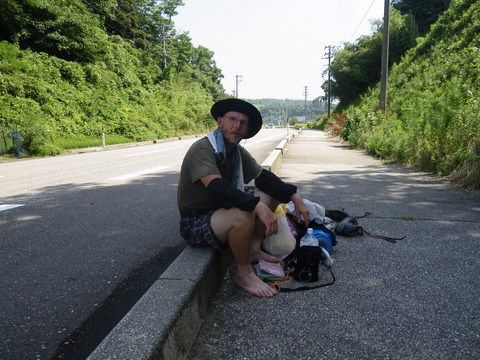
Irishman Walking (Stage 4 Chapter 12) is about my walking the main and coastal roads of Japan. Summer 2010.
12 Aug, 2010: As good as the man's word, a strong wind was soon followed by a heavy downpour, at around 04:00 AM. Experience, had taught me of the importance of pitching the tent on the sand when rain was expected. Not so this time, for being in favor of a scenic grassy spot that over looked the sea. Soon the whole inside of the tent began to feel damp, and puddles began to form all around the tent. It was not easy to find where the leak was, or if the rain had seeped in through the zips or seams on the sides. Previously, while planning for this stage of my mission back in Tokyo, I had gone over the tent very carefully and made any necessary repairs and alterations. By the time I boarded the bus in Tokyo, which took me to the starting point, Noetsu, I had confidence that the tent would withstand anything, baring a Tsunami. Now, what I did know was that I would not be able to get back to sleep, for the remainder of the night. Lots of mapping up needed to be carried out. There was no point in getting annoyed about it all. Of course, I would have to make sure that next time I would camp on the sand, where the puddles would not form. To hell with pitching the tent at more scenic locations! Much of the time was spent checking up on the gear and rearranging things about the tent in an effort to keep everything dry. Thankfully, most of everything was kept dry as the morning drew on. My maps and some of my newspaper articles, however, got a good soaking and even started to fall apart, when I tried to save them. Important as the maps were, I did not want to cry over spilt milk. It was important to stay positive, and to see storm as part of my mission. After all, what got wet could be dried later on when the sun showed its face again. At least I hoped so. It was a little after 06:00 AM when the rain finally stopped falling. Seizing the initiative, just in case the sky opened up again, I decided to up camp and hit the road as quickly as my legs would allow me. Rustling up something for breakfast would have to wait! As luck had it, a public toilet stood on the other side of the road, a short distance away. Thankfully, a cold-water tap sat in the center of the little pocket park. A quick look about the place told me there was not a soul in sight. In less than a minute, I had stripped the damp clothes from my body. With a bar of soap and flannel in hand, and the cold water cascading over my body, I set to work scrubbing myself down as best I could. Just as I was reaching into my backpack for a dry T-shirt, a few cars and trucks roared past, on the way in a hurry to somewhere, along the Hokuriku Expressway. Clad only in a clean T-shirt, and unperturbed at whether any locals saw my half naked body or not, I set down to on the grass to wash my feet, legs and private parts, under the cold tap water. The scrub down and change of clothing did not take me 10-minutes to accomplish. Getting into clean clothes after a scrub down never failed to instill a positive feeling of freshness. Even in the absence of breakfast, I felt good and ready to hit the road proper. That was until my eyes caught sight of a man standing next to my unattended backpack, that I had propped up against a wall near where I had camped.
The guy did not notice me looking across the road at him, and momentarily I did not say anything. The man turned is head from left to right as if to see if anyone was about, like, the owner of the gear. To my surprise, and anger, the guy crouched down next to the backpack and set about undoing its straps. Almost without thinking, I shouted at the top of my voice at him. "Fuck off you bastard!” Needless to say, this startled the man, who quickly jumped to his feet, as if he had just set on a pin. Without turning round to see where the loud shouting came from, he turned and headed down the road as quickly as his middle-aged legs would carry him. The guy murmured a few incoherent words to himself as he went, but I could not catch any of it. There was a time when one could leave just about anything of any value, anywhere and at anytime, in Japan, without attracting attention. Sadly, those days had long gone! Later on as I made my way down the road, I found myself laughing about the little unwanted encounter, of sorts. There was absolutely nothing of value worth stealing in my backpack. Well, at least of use to anyone else, but myself. What there was in the backpack, was worn and battered, and needed replacing. Since setting off this morning, a typhoon, the fourth of the season, followed me overhead. The rain continued to make sudden downpours. Even when I set down to jot some stuff down in my notebook, the rain started falling, which annoyed me no ends. In Japan, the rainy season (called tsuyu also pronounced baiyu in Japanese) it began in early-summer, from early-June to mid-July. In fact, June was the wettest month. Therefore, being mid-August, this was definitely not part of the rainy season. The northernmost island of Hokkaido, as well as the Ogasawara Islands, did not have a rainy season as such. Nevertheless, the rain brought memories of my time in Hokkaido back to me all over again. That was when record rainfall hit the northern island like there was no tomorrow. September to October was the time in the year when the weather in Japan was so unpredictable, which included the greatest risk of typhoons. “Mmm!” The typhoons seem to have hit the country early this time, I mumbled to myself, as the rain started up again for the umpteenth time. In Atakanoseki, the rain splashed off a statue with a rock over its head. The sky remained heavy and just as gray. Atakanoseki was also home to a large park that was host to a number of historical monuments and places of interest. “Mmm!” If only I had arrived earlier, I thought to myself, for it would have been nice to dander about this interesting place, to learn something interesting. However, time always seemed to be against me. At last I had arrived at the town of Neagari, a few kilometers after a pocket park I had stopped at for an hour to rest. At the park I heated up the packet of pre-cooked rice and curry that the sweet young girl, Wakano-kun, had kindly given to me a couple of days ago. The girl’s welcomed food gift did the trick, for I no longer felt hungry. The town of Neagari had a population of around 16,000 inhabitants. Neagari was merged with other towns to create the new city of Nomi, in February, 2005.
For bonsai enthusiasts, Neagari was also the name given to a style of bonsai. The roots of the Neagari miniature tree were free from soil, so as to give an appearance of being exposed to the elements. Through time, the roots developed bark, thus, harden, giving a distinctive appearance of age. To paraphrase from an interesting website about Neagari style bonsai: In this style of bonsai, the roots of the tree were exposed as extensions of the trunk, free from soil, and grown in a harsh environment conditions. Representing old trees which over time wind and rain exposed the trees grasp on the earth. In Neagari style the roots extended as far as one-half to two-thirds of the total tree height. Classic rules eliminated any crossing roots to show elegance and allowed the eye to move freely with the tree from top to bottom with no distractions (<ofBonsai.org>). That said, I had no idea why this style of bonsai was called ‘Neagari’, or if it was first developed that area of Ishikawa. For sports lovers, the former baseball player, Hideki Matsui, nickname d ‘Godzilla’ was born in Neagari, in June, 1974. Matsui went on to have a successful career with number of Major League Baseball teams, until his retirement (in 2013). During his time, he won the Central League Most Valuable Player Award three times, in NPB, and also the World Series Most Valuable Player Award, in MLB. One good thing about tramping along the roads was the expected chance of spotting a public toilet, and many of which were quite well cared for. Unlike in Tokyo where public toilets often smelt, the toilets had no shortage of toilet paper, though often lacked hand soap. That did not matter much, since I was usually came well prepared. Not far from one such ‘outhouse’ where I stopped to point Percy at the porcelain, my eyes fell on an inflated ring, or 'ukiwa' as they were called in Japanese. It was the sort of thing that beach-goers, especially young children, played about with in the foamy tide. It had perhaps drifted away from the merrymakers it belonged to, before being deposited up on the sandy beach, stuck amongst other odds and ends of junk that the tide had washed ashore. It was in marvelous condition, still full of air. The spot of beach in question, was near a little coastal path, in a place called Atakanoseki, located roughly between the cities of Kanazawa and Kaga, in Ishikawa, where I was headed. Further inland still, the distant peaks of Mount Oizurugatake and Mount Dainichi could barely be made out. Actually, the inflated ring looked new, or too good to just leave where it was. And so, it did not take me very long to push the air out of it and fasten it to the outside of my backpack. Of what use it would be to me, I had no idea. Usually when I did go into the sea, it had noting to do with mere enjoyment, but more to wash away a days dirt from my body. Then again, it was all a matter of changing the old mind-set. Why should I not stop and enjoy myself? There were so many times when I could hear roar of the sea calling me to take a plunge, as if to tell me that the road could wait.
At times in the evenings after making camp, when I was able to swim in the sea a while, I did not see it as beyond washing or even fixing the aches and pains. Usually on the road, a part of my brain urged me that I needed to stick to my tight schedule, if I was to achieve my mission at all. So it was never easy to get into the right sort of mind to just stop for a swim for the enjoyment of it. Perhaps I could make better use of the inflated ring at some other time. Even when I went somewhere on my motorbike in the future, I could take the inflated ring along with me. Just as I was leaving the toilet, my mind still somewhat preoccupied with my recent find, a man coming out of one of the little cubicles almost bumped into me. We had both turned just in time to avoid colliding. “Mmm!Where did he come from?" I remembered thinking to myself, as I headed outside to retrieve the backpack. The chap happened to be a rather muscular looking Japanese man, though far from what I would consider handsome. HIs rough face sported a morning shadow, but of all things, he wore a bright colored female summer dress, black stockings, a pair of high heels, and a long flowing dark brown wig to add to the look. We both left the gents toilets almost shoulder to shoulder, or me slightly leading the way in my hurry to get out of the place. Just as we stepped outside of the toilet, a middle-aged man and a woman passed bye. It was hard to gauge the mind of the Japanese, or if they saw things as I had. Either way, I did not care to glance back to see if they had stopped to look on in surprise. What was the point? Just now I was unsure why, but I felt an element of embarrassment run through me, and I could even feel the heat across my face. "Mmm!" No doubt, the old blood pressure was on the rise. Such things happened only when least expected. For donkeys years I had long considered myself a liberal-minded fellow. But I was not sure if that took into consideration such the unexpected appearance of a Japanese guy clad in female clothing. Then again, it was not everyday I literally rubbed shoulders with a crossdresser, especially in the middle of nowhere. Not a word passed our lips, and in fact I felt there was some effort on both our parts to avoid making eye contact. If the man had of been an attractive and more feminine looking woman, I most certainly would have said something complementary. The ladyboys whom I had chatted to in Thailand, for example, were so attractive and femininely convincing that I was really convinced they were truly female. The odd crossdresser that I had seen about the streets of Tokyo, or on Japanese variety shows on television, sported hard looking faces, with fake mannerisms. Not feminine at all! A number of the Japanese crossdressers I had observed on streets and on television programs, tended to have sturdy appearances that may have been better suited to a job on a building site, like, brick hod carriers. In fact, some of them sported faces that resembled two of the most famous brick hod carriers in British history, Albert and Ebenezer Fox.
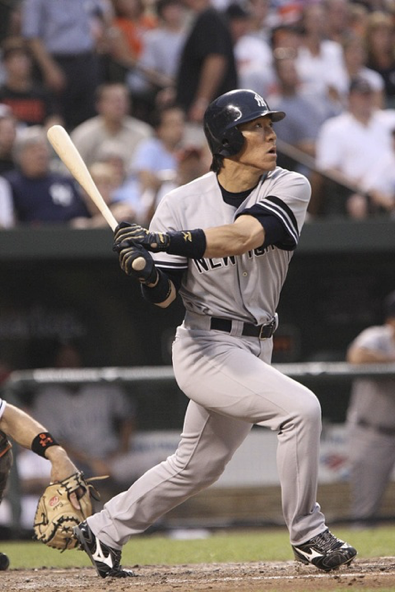
Matsui with the New York Yankees in 2007 (Wikipedia)
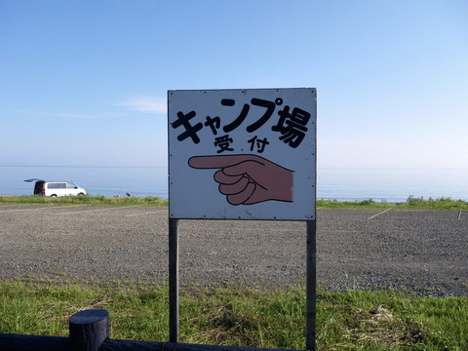
A little ways outside the toilet I could not resist looking back. Just as I did so, I could see a black stockinged leg being raised and then a car door closing. The car turned onto the road and was gone. “Mmm!” Who was that guy kidding? He did not even look famine. Perhaps he was on his way to some crazy costume party. All sorts of stuff went through my mind. "Was it a cultural thing that made it so difficult for Japanese crossdressers to appear truly famine? Would it have helped if money for lessons was invested in how to behave or act?” It was not so easy for me to get the little encounter with the rough looking crossdresser out of my mind, no matter how hard I tried. Without going too much into things, Japan was one of the least tolerant countries in Asia. To my knowledge at least, there was no thriving LGBTQ scene like there was in many other countries. Japanese society was not overly tolerant to sexual differences, or to gay-friendly venues. With regard to LGBTI rights, as I penned above, Thailand was perhaps the most progressive of countries in Asia. The ladyboys in Thailand could not be more convincing, but that was another issue for another time. Along my way I passed a middle-aged woman, a real woman. Our paths had crossed an hour or so earlier. She had passed me by while I stopped to rest at some place I could not recall. A little later on I called in at a Circle K convenience store to see what I might pick up by way of food and drink. When I sat outside the store the woman, whom I had in away been leap-frogging with, finally stopped and entered the store. After about five or so minutes in the store she came out and headed down the road. This time she carried a Pet bottle of Japanese tea. After about 10-minutes I got to my feet, re-shouldered the backpack, and headed off down the road in the say direction as the woman. It did not take me very long to catch up with the woman and overtake her. Considering our close encounter, not a word passed between us. The people whom I passed along the way never failed to fuel my mind with useless thoughts. For a woman in her mid-40s, she walked surprisingly slowly. In her hands she carried a tattered handbag and the pet bottle she picked up at the convenience store a couple of kilometers back. The loose plastic sandals on her feet were far from suitable for long distance walking. Clearly this woman had a story to tell! Perhaps she had fallen on hard times. “Konichiwa!” I said, and raised my hat as a sign of respect, when I passed her. There was no reply! The distance between us grew wider and wider. The segment of road remained straight for quite a long time, and each time I glanced back over my shoulder, her figure grew smaller and smaller. After a while, I could not see her at all. As luck had it, a sign by the road directed me to Fureai Kanko Hiroba, a campsite not far from the noisy Komatsu Airport. Needless to say, it was not long before I heard the screeching noise of airplanes intermittently rising up over the pine trees. Then I began to wonder that if I had not stopped to rest, I would have been past this noisy place sooner
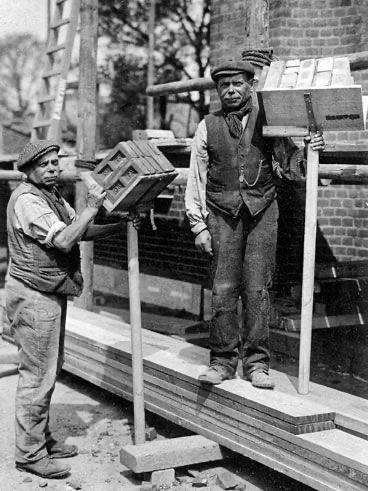
The infamous twin brothers, Albert and Ebenezer Fox, each holding a hod (Wikipedia)
The noise of the low flying aircraft was not the only thing that bothered me. The cars and trucks on the Hokuriku Expressway, not a 100-meters away, sped along in both directions like there was no tomorrow. All the same, my stop at the campsite turned out not to be such a bad choice. The place was well looked after and to stop the night was rather inexpensive. Not to forget a very competent young caretaker, called Junko Kitazaki, and I was glad for her help and kindness. Normally I hated even the idea of paying to camp anywhere. Having the ability to select a good and comfortable spot to pitch the tent was a useful skill for any backpacker. The same was true at some unprepared site at some natural location. For me, a rich sandy beach somewhere off the road usually did the trick. At a good campsite, if I was lucky enough to arrive at a suitable time, like, not too early or too late, which was not an easy thing to do when tramping the road. How a nice hot shower always felt, and was the first thing that I would do on my agenda before even pitching the tent. The cost for the night was based on the size of the tent, which in my case came to ¥300 Yen. The hot shower, which lasted a generous five-minutes, was another ¥100 Yen. Usually the hot showers lasted just three-minutes was usual at other campsites. Therefore, the five-minute long hot and soapy shower proved to be quite a luxury for my unwashed body just in off the road. With the typhoon all but gone, the evening passed by pleasantly enough in the company of an elderly Mr. Tani, whose tent was not far from my own. During our little chat, I learned that Mr. Tani was a retired salaryman, and was now traveling around Japan on a large motorbike. He had acquired the motorbike from his son, who no longer used it. This was good, for he had long wanted to see his country by motorbike. The motorbike, as I recalled it, was twice the size of Mr. Tani. For sometime we set around a little campfire that we had got going. We talked about a wide range of topics on life in Japan and happenings in the world, and about the times he had travelled overseas on business. Soon the fire was raging away in a life of its own. We talked about the things we saw on our travels, and interesting people we had met. What little food and drink that we had among our things was shared between us. Or more in the form of drink from my side and food from his. Before our evening together had ended, we had consumed a fair concoction of stuff, such as, sake and shochu, then lager and finally the last of my red wine. In the course of our talk, I learned that his family name Takehara. He gladly told me that the kanji used for his name meant 'bamboo field', whilst the kanji for Tani stood for 'valley'. As to the name of the campsite 'Fureai Kenko Hiroba', there were two meanings for the kanji that made up 'Fureai'. One possible meaning, he told me, had something to do with ‘touching the elbow’, whilst another represented ‘friendship’. For some reason, I liked the later meaning better. 'Kenko' meant ‘health’, whilst ‘Hiroba’ had something to do with ‘an open public space’, like a plaza or market.
13 Aug, 2010: Today was Friday, thirteenth day of August, a day that began with a heavy overcast sky, which caused me to think of rain. The temperature was not as warm as I had expected. Still, if it remained that way, it would be ideal for tramping the roads. My early start on the road began at a slow pace. The date of my initial plans, drawn up before leaving Tokyo, was now shattered.
Being well ahead of where I had first thought I would be should have made me feel good. However, I did not have any particular or positive feelings about it. Somehow it placed an added pressure on me. There was a fear of letting the good progress slip away in the days that remained. There was a fear in my veins, like being slowed down by some unforeseen injury. Apart of my brain told me it was time o wrap up the current stage of my mission sooner than later. The city of Kaga was as good a place as any to do that at. A quick glance at my tattered maps told me that Kaga was about 20-kilometers away, not a days walk and well within reach. After a while, I began to feel good again. “Mmm!” Yes, I decided that Kaga was a good place to wind things down at. Why should I bother to push on further? I knew from research about a good coach service between Kaga and Tokyo. That meant that Kaga was a good place to return to for the next stage of my mission, Stage 5, perhaps this coming winter, the coldest season of the year. Of course, my plans needed to consider the level of snowfall and the state of the roads, but I did not need to think about that now. It was good that I was able to rent a bicycle for ¥300 Yen at the campground. It would help me to look around the area, while taking the weight of my sore and tired feet. As I was cycling out past the front gate I could see hordes of young people staking out spots to pitch a some tents. It was not clear to me if they were planning to camp the night or if they were day-trippers about to enjoy a barbecue party together. There seemed more cooking and food things scattered about the ground than actual camping gear. No doubt I would find out more whenever I returned in a while. Komatsu City was located in Ishikawa prefecture, between the cities of Kanazawa and Kaga in the Hokuriku region of Japan. The city had a population of around 108,000 inhabitants, it was given city status on 1 December, 1940. The year also marked the fall of France to Hitler’s Germany, and a time when the Japanese occupied French Indo-China. By that year, the Japanese Imperial Army had already achieved large-scale military successes in China, and beyond. In a little more than a year, Japan would awaken a sleeping giant by its attack on Pearl Harbor, on Sunday, 7 December, 1941, the start of the Pacific War. Even prior to the attack, Japanese expansion into southeast Asia and the Pacific region, was opposed by the United States of America.
Since the Meiji Period, the Japanese economy and growth was on the up and up. For example, Komatsu Ltd., a multinational corporation was founded in Komatsu in 1921. The company manufactured construction, mining, forestry, and military equipment, such as, press machines, lasers, and thermoelectric generators (Wikipedia). Komatsu City was also long known for the production of Kutani ware ceramics, as well as, fine silk. With a growth in tourism, Komatsu City gave visitors a peek into its historical past, from its old charms, traditions, and festivals, to its ancient temples and shrines, not to mention, a love for kabuki. Komatsu was said to be a Kabuki City, a culture that included staging children’s Kabuki plays, especially during the Otabi festival in May, each year. During the festival, a number of towns were represented by special floats that resembled small kabuki stages. Children taking part in the festival were dressed in kabuki actor costumes, performed their parts splendidly. Komatsu was once a castle town in the Tokugawa Era, however, only its gardens remained, now Rojou Park. The extensive park grounds included a library, a traditional tea house, and several museums. Designed in traditional Japanese style, the park was also home to ponds, miniature waterfalls, and a vermillion bridge. It was also one of the popular spots where thousands of visitors came to enjoy the cherry blossoms, in spring. The city was particularly famous for its old hot spring inns. Komatsu was home to a traditional Japanese inn, called Hōshi Ryokan, located in the Awazu Onsen area of Komatsu. The ryokan was founded in 718, making it the second oldest hotel in operation today. Around 1,300-years old, the ryokan had been owned and operated for forty-six generations of the Hōshi family. (The oldest inn was the Nishiyama Onsen Keiunkan in Yamanashi, it was founded in 705). To paraphrase from the inns official Website: Hōshi was the oldest onsen in the Hokuriku area. Awazu Onsen was said to have been founded over 1,300-years ago by the great monk Taicho Daishi under the command of the mountain deity Hakusan Daigongen. These hot springs were a gift from the Hakusan Mountain gods to relieve and cure the injuries and illnesses of humans. In the past, many people traveled here to have their infirmities treated with these holy waters blessed by the gods that lived around Awazu. Hoshi had a humble beginning as a sanitarium lodge, but the 1st generation owner Zengoro believed that Hōshi should become a proper hot spring inn to soothe both the body and mind. It was our honor to continue this tradition for posterity. In modern times, few people used hot springs as treatment for injuries and illness, but the beneficial effects were still significant and real. We wished to share the proper ancient method of 'taking the waters' with our guests so they could fully enjoy the healing properties of natural hot springs.
Hōshi was founded in the year Yoro 2 (718 A.D.). (The Official Website). For the most part, Komatsu had a humid continental climate, with mild summers, even though it was currently experiencing record high temperatures. Actually, August was the hottest month, at around 26.8 °C. The average annual rainfall was around 2,521-milliliters, with September being the wettest month. Thankfully it was not raining on my return to the campsite a couple of hours later. It did not take me long to see that the people were day-trippers, a group of friends spending a few hours eating and drinking together. The noise they kicked up did not bother me a bit! The roads were long and lonely, so it felt kind of good to have some sort of company, even if I was not part of their group. There was a lot of laughter, perhaps more than any meaningful exchange of words or talk. The eating had just finished, and some of the group ran about, a few meters away, enjoying a game of badminton together. An attractive young woman, who was sitting on a bench chair, looked on, as she cuddled a tiny dog. The more vigorous among them, mainly young men, had gone down to the sea to splash about in it, which they enjoyed no end. That said, I did not think swimming was a good thing to do after drinking alcohol. After a couple of hours, half of the group set about packing up the stuff. The time to leave was near at hand! As far as I could make out, some of other people, not part of the larger group, where no where to be seen. Perhaps they had gone somewhere to eat. Their tents were already irrupted about 100-meters from me, so I know they would stop the night at the campsite. After an hour or so, this second group returned and lazed about in camp chairs whiling away sometime before hitting the sack. The dull gray sky had long threatened to rain. By late evening, the sky opened up and released one god almighty down pour, if ever there was one. Everyone about the campsite, without the luxury of a well tied down tent or canopy to shelter under from the rain, soon wished they had. Fortunately for myself, my tent stood on a grassy rise, which prevented the buildup of puddles. On looking out over the campsite grounds, I saw some less fortunate people. Just minutes earlier they had lazed about in camp chairs, now there was a mad rush to get the perishable goods into their tents. Just to the right of their tent the guy was still chopping, pulling, and poking seriously at what remained of the campfire, tossing out bits and pieces that were too wet to burn. At first I was not quite sure if he was helping to put the fire out, or doing his best to keep it going, util I saw him place some rolled up paper and dry branches on it. At the same time, there was an anger that showed in every move he made. The poor fellow seemed anything but satisfied, as his facial expression at the time denoted. I hoped that the rain would not spoil the fun, I mumbled to myself, beginning to feel a little bored. Besides there won’t be much of anything left dry in this weather.
My own campfire had long burnt out. I set looking out the tent flaps for a little while longer, half laughing in some pleasant agitation. My own confused consciousness not wishing to appear intrusive or reproachful, even if I could not figure the guy out. Not only was the campfire seriously under threat of going out, but his clothes were completely drenched through. “Mmm!” The Japanese never failed to surprise me. Even after all my years of living in this country, what I knew about the Japanese was astonishingly vivid, like, fragments of this and that only half understood, if not long forgotten altogether. “What was the matter with the guy?” His whole effort not only bewildered me, but seemed perfectly unintelligent. Unless of course, he was trying to burn off some sort of stress. What kind of people suffered stress during a break away from the riggers of school, or work, or whatever? Then again, stress happened at anytime for a wide array of reasons. Under the circumstances, it was all a little unusual, and I wondered why he bothered. Surely he could see that for himself. In such crazy weather, his efforts obviously involved a lot of work and energy. Therefore, I even wondered if the guy was drunk, or some kind of idiot, or both. That said, I had my own fair share of defects, which I need not go into right now. To hell with it all, I could not look at him anymore, for he was wasting his time and I hated losers; so I turned my eyes to my tent and looked at the gear and clothes scattered about. So altered it all seemed, my things where no longer in their usual neat and tidy places. What had happened to my own sense of discipline and self-respect? The rain remained heavy and relentless for sometime afterwards. Then a strong wind soon slammed sideways against my tent. Had the wind been just a little bit more forceful, the tent poles would almost certainly have snapped on me. A couple of the tentpoles were bent, and on their last legs, so to speak. My plan was to replace the tentpoles when I returned to Tokyo, if not the entire tent. Until that time, it was better for me to make the most of what was available. Usually I preferred to leave the tent flaps open, so as to let the sweet-smelling sea air circle about, but the damaged tentpoles and the strong wind and heavy rain, had made that impossible. On looking out across the rain swept campgrounds one last time, there was not a sole anywhere in sight. This included the fellow I had seen earlier, who had desperately fought to keep his campfire going, for he too had by now gone. Perhaps he finally came to his senses and felt the campfire to be a lost cause in such weather. Any person with a sound mind would have retired to the warmth and shelter of their tent. The guy in question was part of a group who shared a rather large tent together. There was little else for me to do, other than to turn in for the night, in the hope that the rain clouds passed over in good time, before morning came.
14 Aug, 2010: At first I stared apathetically at the remains of the campfire that the young man had given up hours earlier, as a lost cause. To my surprise, the fire was still smoldering away after the heavy rain. There was no other sign of life, but myself. The other happy campers must be still sleeping. Some tents nearby appeared unruffled by the storm, my own included. Both the wind and rain, which let up not two hours earlier, had been fierce. Then I turned and glanced across the wet grassy campground at the fire, again. “Mmm! Look at that!” I mumbled to myself, as the coal smoldered away in the fire grate. “Why let a good thing go to waste!” Soon the fire glowed and flickered, and a pot of water that I placed next to it would soon be boiled. A dry breeze blowing in from the Nihon Kai had begun to work its magic on the shinny wet grass. It was a good time to see what it could do on my washing. A line that I had earlier stretched out between a couple of trees, when I pitched my tent, could now be used. The warm breeze against my cheeks told me that this was going to be a good day. One by one, the occupants of the large tents began to show sleepy faces. “Mmm!” Six in all! Perhaps they were college students, I thought to myself, as I hung the last of my washing over the line. "Oh! Look! The fire was still raging!” On of the young me said, in Japanese. “Wow!” The others replied! “Well-done Ichiro-kun. Well done!" They said in unison, bending down and calling into the tent. That same young fellow who I had seen in the rain last night poked his smiling face out through the flaps of the tent to look for himself. “Still I shouldn't have left it unattended!” The hot tea tasted especially good. Perhaps the change in the temperature played tricks on my mind, for a tea bag was a tea bag, no more and no less. It was not like a nice hot flavory soup or a nice hot cup of Blue Mountain. It did not take long to see that the breezes magical powers on my washing. There was nothing worse than to pack away wet gear or clothes. Some years ago, someone had defined 'boredom' as similar to watching clothes dry. As I sipped away at my tea, I watched the drying process happening before my very eyes, nor was I bored either. The T-shirt danced about on the line as if it was alive. “Mmm!” Then I wondered about going to the trouble to dry the clothes. For if the rain did not get me, then the sweat did. Usually just within five-minutes after putting on the clean clothes, the sweat would be dripping me. In a word, I would be ‘saturated’, and soon after hitting the road. Everything would soon be dry, and ready for the road. It was only a matter of days when this stage of my mission would be wrapped up. Strangely, this was not a particularly joyous feeling. A humdrum nine-to-five lifestyle back in Tokyo awaited me. If only a change in lifestyle was as clear and easy as the changing of the seasons. My favorite season, the summertime, as I knew it, was drawing to a close. Shortly I would be boarding a coach that would take me back to my, so-called, ‘normal life’. "Was that what life was all about?
Work to live or live to work?” I wondered, as I made a move to retrieve the dry washing. My mission had created a stepping in and stepping out, sort of lifestyle. A stepping in and stepping out that went on and on and on, season after season, year after year. Almost subconsciously, my mind was no longer on the washing, but focused on the road that lay ahead of me. All the same, the old mind still found time to deviate onto other things. “Noting lasted forever! Endings came and endings went, and it did not matter much to me one way or another. As long as things passed by properly, or without too many setbacks. Much of the day on the road was spent dodging and sheltering for a series of down pours, which only lasted a little more than a few minutes each time. When the rain did fall, though, it did so with great gusto, and it was not so easy to take shelter in time. Earlier on at around 01:00 AM, when everyone slept, great flashes of lighting appeared far off over on horizon did no. For a while it did seem to be accompanied by thunder. Or like the saying goes: there was no smoke without fire. After a spell, the lightning was followed by the cracking sound of thunder. This morning I could see how the rain influenced people's plans. One of the young women working at the campsite told me that many people had phoned to cancel their reservation, and that appointments to hold open-air meetings and events where also postponed.Some die hearts still trickled in as planned, but by and large, the place still looked fairly deserted. Some tents that had been pitched over on the other side from where I had pitched my own tent, were now gone. As soon as the wind and rain let up, it was a good chance to up camp and leave, which they did. Conversely, the atrocious weather, told me that it was best to stay put a while longer. After all, I was well ahead of my schedule, so there was no hurry. The unpredictable nature of things often meant the annoying task of either retrieving or hanging the washing, for the umpteenth time. Some of the gear had to be hung, or dried enough to be packed away, before hitting the road proper. Even though the miserable weather followed me everywhere, it was a good enough reason to stay where I was. The weather had influenced my mind to call it a day when I got to Kaga City, which was less than 20-kilometers away, if a glance at my maps was anything to go by. There seemed little point of pushing on immediacy, for I had dallied with the though that the end was near at hand. Any need to make camp somewhere else along the road, had all but burnt itself out. Even the daily necessity of taking a dip in the sea did not have any particular meaning any more. Besides, the hot shower at the campsite was a good enough alternative. At the campsite, I was relax like never before, as well as, to treat myself to decently cooked food at a restaurant, nearby. A large shopping complex, located just a couple of kilometers back up the road in the direction I came, was useful, thanks to the rented bicycle.
15 Aug, 2010: The rain held off for the duration of a restless night that I was glad to see the back of anything that resembled it. There had been a short opening in the sky, when the stars made a sparkling appearance. The campsite was by now deserted of life, and the flapping sound made by the wind against the side of a tent, had lessoned up. One good thing about the summer months was that things did not stay wet for long. Now a light warm breeze quickly dried the few clothes, which I had hung out on a line some hours earlier. “Ah ha!” The place was not as deserted as I had thought. A couple of cars entered the carpark and stopped. The doors opened and pair of young lovers stepped out of the cars. The first of the young couples walked hand-in-hand across the shinny damp grass, past my tent and up a small hill nearby, which divided the campsite from the mighty Nihon Kai. The other couple headed along a different path that led them around the side of a hill towards the sea. At top of the hill, the young couple stopped and looked out over the vast, shinny gray carpet of water that spread out before them, as far as the eye could see. The second couple soon disappeared behind the hill, and I surmised that they, too, were standing hand in hand gazing at the first sun of the day, rising out of the orange colored horizon. No doubt they, too, had done what I had imagined they would do. Young lovers the world over embraced and kissed and watched the sunrise and thought abut their future together. After a little while, the second of the couples reappeared and made their way, hand-in-hand, back along the same path to their car. The other couple continued for awhile longer to look out over the sea below. Actually, I did not notice them leave, as I was now more focused on my own gear, for it was time to pack up had hit the road. As I was doing just that, a couple of other cars drove into the car park and stopped. A group of young girls in their late-teens or early-20s got out. Soon they were letting off an assortment of fireworks that they had brought with them. If the laughter were anything to go by, I would say that they were really enjoying the moment together. Perhaps they were students from a university somewhere nearby. It was not often one watched fireworks being let off in broad daylight, but there they were, preparing to set the damn things off. The smell of gunpowder was not so bad, but the smoke that those things kicked out had begun to drift across the campsite grounds in my direction. I was sure that the young girls were so wrapped up in their moment together that they did not notice or care about me. Likewise, I did not care much either, I would soon be on my way down the road proper, as contented as Larry. After taking a nice hot shower to wash away the previous evening's sweat, and to kill a little time before I got onto the final stretch of road, I stopped into the campsite office. This was more to see what was on the television. I had wanted to see the daily news and weather, but there was a high school baseball game on the box instead.
My talk with some people the previous evening, informed me that I was much nearer to Kaga City than previously thought. Good! In fact, the Daishōji JR Station was to be my exact target, which was only about 15-kilometers away, if that. It was helped to choose the best road to take. In other words, Routes 20, 148, and 19 should be clear of Obon travelers who had already begun to make their presence known. Away to my left lay the beautiful Hakusan Mountain range. The mountain range lay along four prefectures, namely, Ishikawa, Fukui, Toyama, and Gifu. I read in a tourist broacher somewhere that on a clear day, visitors to Hakusan Mountain could see the most written about and photographed mountain in Japan, Mount Fuji. As I looked towards the mountain range, to the side of where sun had rose, I could feel a light and welcoming breeze touch my face. It was clearly an easterly wind that came from the mountains. Overhead, some birds flew in from the sea, as if to meet the wind. On the television, Hotoku were leading Fukusho 4-2 in the ninth inning. Still, my brain was unable to focus on anything, but the road ahead of me. One thing was sure, I needed to get my brain in tune, and get away from this air-conditioned oasis of sorts. Back outside the building the hot backing sun awaited me, the first real sunshine in days, not that that was a good thing. As I was heading along Route 20, I stopped to look at some strange looking houses. The name of the company that designed and built the houses was appropriately called, 'Japan Dome House'. Here I stood for a while to take in the different sizes of model houses on display and to take a few snapshots of some of them. I even tried to imagine the kind of people who would live in such giant golfball looking things. Surely the sight of such an eyesore popping up in the neighborhood would change a few attitudes among some neighbors. Especially if they thought it influenced the value of the their property. Then again, how would anyone know until such a building was erected? Similarly, I could not imagine what it would be like to have lived in such a building, or close to one. Should one were given to me by a rich friend, I may have changed my views towards the crazy design, to hell with the neighbors. Somehow thought, I could never see such a thing ever happening. There were many so called eyesore buildings in Tokyo where I lived. Then again, would people lives be any better without crazy buildings? Just like narrow-minded mother-in-laws and noisy brainless people, literally coming out of the cracks, people had other problems to occupy their minds. It had been said over and over again, that we were able to choose our friends, but not our neighbors. Neighbors from hell could be a real pain in the butt, regardless of the reasons. Architecturally speaking, Tokyo was in a rather ugly mess, where, baring perhaps the Imperial Palace grounds, nothing even quaintly elegant about the place existed. The countless ugly old wooden buildings that took up most of the side streets, when I first came to the mid-1979, had long left a favorable impression on my mind.
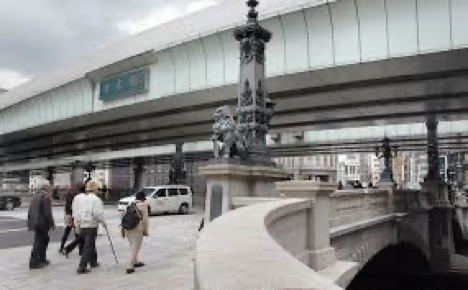
The eyesore expressway, across the famous Nihonbashi Bridge (japantimes.co.jp)
Now, most of the old wooden houses back in those days were all but gone. Like then, still the wires from electricity pylons hung everywhere about the city, and with little vegetation or greenery in sight, or of any worth. In a jungle of concrete monstrosities in the form of modern shopping centers, pachinko parlors, and love hotels, and so forth, it was “hard to hear the birds and insects, let alone the gurgling of mountain streams or the sounds of the wind talking to the grass and trees, above the roar of traffic on the modern road” To paraphrase further, that roads, and more so the toll roads that went directly through from Osaka to Kumano — showed the contempt that modern Japanese bureaucrats, and their political and corporate construction allies, had for the natural environment. They had bulldozed remorselessly across the countryside and gouged deep wounds through the hills. Where nature had hit back with the threat of landslides, the construction companies had tried to suffocate it by plastering hillsides with concrete. (‘Why’s Japan grown so ugly?’ From an online article by Kevin Rafferty, which appeared in the Japan Times in Feb 28, 2008). The ultimate accolade of archeological stupidity must surely be warded to the planners of the eight-lane motorway flyover that passed over the Nihonbashi Bridge, located in the heart of busy Tokyo. The bridges ornate structure dated back as far as the seventeenth-century, and from which much of the country’s commercial history could be traced. It was also from here that distances to and from the capital (the old city of Edo), were measured. The motorway flyover itself was a proud symbol of the Tokyo Olympic Games of 1964. It was true, it was near impossible to escape the despoliation and encroachment of modern life, I thought to myself, as I continued my way along the road, and with the old brain working overtime. Along with the traditions, crafts, and cultures, all but vanished, which created the local environment and atmosphere. Those quiet little wooden dwellings were quickly demolished and replaced concert constructional eyesores of various shapes and sizes. The tall apartments and skyscrapers proudly stand today, dotted about Tokyo and beyond, unnoticed by even the people that lived in them. Many of these massive buildings were designed by famous prizewinning architects, and a good number of their works were considered important landmarks today. “Japan has become famous for its addiction to pouring concrete. There are bridges to nowhere, and 70-percent of Japan's coastline has been covered in concrete” (Japan's high-spending legacy” By Rupert Wingfield-Hayes BBC News, Tokyo). Another eyesore was the abundance of thick, black overhead power lines that crisscrossed just about anywhere in and around the cities. In fact, the majority of the country’s power grid remained above ground, making them a common feature of the landscape. One reason for this was cost, over any consensus for another option. One thing that I recalled about my time in Otaru in Hokkaido, was the absence of the overhead cables, thanks to the underground lines.
Less than five-minutes of starting off along the road after a short rest, a white family sedan pulled up and stopped. A beautiful, yet somewhat persistent woman in her thirties jumped out just as I drew near. A man around the same age, did not budge, but set at the steering wheel. A boy about twelve set in the rear seat, unperturbed by the sudden stop, did not seen to notice anything beyond a hand-held video game he was engrossed with. "It's hot!" the women said to me, "Get in." The whole thing was so sudden and unexpected. Or ’Just like that', to use the words of the great British comedian, Tommy Cooper. "Thank you!" I replied. Of course, it was very kind of them all to offer me a lift, especially in such weather. However, I told the woman that I needed to walk! "No! No! It’s much too hot. Get in!" Had this not been part of my walking mission, the woman’s persistence, if not her charm and beauty, would almost surely have won me over. Nonetheless, tramping the roads was what my mission was all about, and that was that. "You are really very kind.” I said, “But you see, I have to walk." The woman looked at me a little puzzled, as if the word refusal was not in her vocabulary. “You see, it’s kind of like this" I added. “I’m walking around the main and coastal roads of Japan, over a serious of stages. Walking! No other forms of transportation! Only walking!” Of course, I told her that this was Stage 5, and that I was about to finish wrap things up in Kaga City. I also told her that if all went as planned, then Stage 6 would begin at the exact same finish-point, sometime soon. The woman was quite like my hardheaded self, not one for giving up so easily. "Are you sure?” She said. ”It’s very hot! It could be dangerous!” Some minutes earlier, when the white family sedan pulled up and stopped, about 20-meters a head of me, the women walked towards me. There was an air of confidence in her stride, which told me that she in charge. She was a real Jo O Sama, to use the Japanese honorific for such women. “Mmm!” Perhaps the woman had not met a hardheaded Irishman like me before. The short, but welcomed encounter, of sorts, was conducted almost without a pause to breathe between sentences. At last, the woman turned and jumped back into the family sedan. Needless to say, I nodded to the man at the steering wheel, and told him that I appreciated them for stopping. The young boy was so engrossed with his video game that I do not think he noticed what was going on around him. Three was a final wave, a beep of the horn, then the sedan was gone, as quickly as it had stopped. As always, thoughts of the people I had just met ran through my brain, and what we might have talked about, had I been in a position to accept the ride? Finally, these thoughts were pushed onto a back shelf deep in my mind, at least for the moment. The next hour along the road was spent thinking about tentative sub-headline names or titles, for this stage of my mission. That was for whenever I found the time to do some proper writing. 'Under the Heat' was one title that I kind of liked.
After all, Japan had been experiencing record summer temperatures, which claimed the lives of a good number of people across the country. At times it was good to keep my mind preoccupied with all sorts of stuff, especially during a brisk stride along the boring tarmac pavement. The hard-surfaced road was smooth and undistinguished, another word for ‘boring’, for some distance it was flanked by hedgerows and evergreens. There was little else to concentrate on, but the bare-arsed road, which was part of a good road network, even if it ran monotonously straight. It was easy to become impatient when I found myself on such roads. The old mind tended to wander, which was not good. There were a few times, too, when bouts of depression began to set in. Such negative thoughts always left me feeling slightly suspect afterwards on what a good outdoorsman should be like. Still, I needed to keep my wits about me, to keep in tune with the things going on around me. Either way, it surprised me how quickly I had reached the Shiomibashi Bridge. The Shiomi-bashi over the Shinomi-gawa, was not old, but opened in Heisei 8, or in 1996. The Shinomi River had long been a source of water for the rice farming in the region. At first I thought the bridge spanned its same-named river, the Shiomi River. A glance at my maps told me otherwise. The Shiomi River originated from Iwami Fukube, from a hight of a 388-meters. Iwami was a district in eastern Tottori prefecture, and had a population of about 26,000 inhabitants. On the other hand, Fukube was a village located in Iwanmi District, it had a population of about 3,400 inhabitants. In late-2004, Fukube, was merged with other villages and towns in order to expand the city of Tottori. Clearly, I was no where near Tottori, which I expected to pass though during the following stage of my mission, hopefully in the not too distant future. The Shinohara Pond Area appeared to be nearby, or so a sign informed me, and just where I stopped to take a leak against a tree. Unfortunately for me, a restaurant called 'Hopp Hopp' also nearby, appeared to be closed, for good. No doubt it was another of the many victims of the continuing recession that Japan was unable to free itself from. Although I was far from feeling hungry, it may have been nice to set somewhere out of the sun, and start on some writing, for a while anyway. The towns and places of some significance seemed to come and fall away quicker than usual. A little while after turning onto Route 148, when I gladly met my old friend the sea, once more. Soon I passed by Hashidate Fishing Port in Kaga, which seemed more a matter of minutes to get to, rather than hours. Hashidate Fishing Port was the largest of the three main ports in the Kaga region. A picturesque rural place that blended nicely with the red tiles on the roofs, the exquisite houses and buildings. Once the town was home to both samurai and seafarers. Still, many of the house were lived in by fishermen, and protected from the strong winds that blow in from the Nihon Kai, by sturdy timbers.
A busy fishing town, a wide variety of seafood could be purchased, all year round, particularly it was famous for its juicy, Zuwaigani, called Snow Crabs in English. In fact, the consumption of crab in Japan was one of the highest in the world, particularly in wintertime.The snow crab fishing season began on 6 November, every year. The winter season was a time that brought visitors from around the country just to enjoy the delicious snow crab. Actually, snow crabs were caught in many areas around Japan, and each of which had long established its own unique menu. Today, Hashidata Fishing Port was one of the most famous snow crab production areas in the country. Not a lover of fish food I did not care any to partake in this delicacy any. Still, I was my final day on the roads and I was for the most part happy and contented. Yet, I also imagined that my old brain was playing tricks on me. Whenever I arrived at Jigehama Beach, its tiny size amazed me somewhat. The beach was quite well known, however, it was nothing like the glowing things I had heard spoken about it. Unlike the many beaches I had stopped the evening at to date, the beach was so tiny, it was unwise to even think about trying to pitch a tent. Not only was it so tiny, but the tide looked really threatening. Therefore, as this was my final day under the elements, I was no mood to have anything go wrong now. As I set by the winding side of the road, well above the beach, some cars stopped and people got out. Of course, I thought this was more because of the picturesque scenery, than look at this famous little place below with sand on it. Looking down at the incoming tide, a young family were enjoying the moment together, as they splashed about in the water together. As I set on the bench resting and pondering whether or not to find a place nearby to pitch the tent, or to move on, 10 people, mostly male, stopped their cars to look out over the sea. “Mmm!” Perhaps they were romantics at heart, I thought, not really caring one way or the other. Numerous cars slowed down, but did not stop. Of course, I was unsure if they slowed down for look-see at the beautiful scenery, or to negotiate the bend in the road. However, some of the drivers strained their necks to breaking point, to get a good look at whatever it was they were looking at, as they passed. When I thought about it later, pitching the tent on a piece of high ground that overlooked the sea, would have looked bit on the strange side. The tent would have given the occupants of the vehicles something else to glance at. Then again, I was too tired to care what other people thought. Down through the years, Jigehama Beach had also been a key stopping point for sailing ships laden with goods. From around the early-1800s to the early-1900s ships sailed between Osaka and Hokkaido used to stop and unload cargo onto waiting barges. The barges then ferried the goods into Jigehama. The ships that made the run in those days were called 'kitamaebune'. The owners and crew of these early ships mostly lived in and around the village of Hashidate, and perhaps their families still did.
After resting for a spell on the bench I decided to pitch my tent and throw the gear into it. Before the night fell proper, it would be nice to take a dander about the side streets of this interesting little seaside town. There were numerous little touristy signs, each pointed in the direction of some place of notable interest. The Kitamaebune Heritage Museum was still open, so I stopped to look around. Of course, there were many other interesting old houses and various buildings to be looked at, but they could wait. It was nearly six-thirty in the evening when I got back to the tent. A man in his late-20s or early-30s stood looking out over the sea below. He was slowly sipping something from a tiny bottle when I arrived back. Perhaps it was one of those vitamin packed energy drinks that I saw being drunk here and there, by elderly men and stressed out salary workers. I really did not care much to take too much notice of the fellow. Besides, he seemed pretty much wrapped up in his own world or thoughts. After a further 10-minutes or so, the fellow changed his position a little and looked leftwards out over the sea. His left shoulder pointed in my direction, so it was easy for him to notice my tent, if he wanted. The sport baseball suddenly entered my head. Even thought baseball was a game that I could not stomach, I knew enough about it to know that the fellow appeared as if he was about to make a pitch a ball. Just then, the fellow’s actions took on a keener and more emphatic look. It was not easy to read anything troubling on his face, with high eyebrows and narrow eyes. As I had surmised, the fellow hurled the empty bottle, at great speed into the evening air. No doubt, he had hoped for the bottle to clear the beach and land somewhere in the sea. Like all baseball pitchers at one time or another after they had made a pitch, the ball did not reach its intended target. In this case, the bottle smashed against some rocks on the beach below, finally settling on the sand, in countless pieces. Had the young family still been playing on the beach, an uproar of some level would have resulted, for the fellows mindless act. Clearly unrepentant, the bottle-top was almost immediately sent flying in the same direction, but I could not see where it landed. Then, as if nothing had happened, the fellow turned and walked back to his car and drove off down the road. “Mmm!” Of course, I thought that the fellow was well aware of my presence, but that would matter little to anyone with a troubled mind. It must have been one of those tiny energy drinks that cost about ¥200 Yen. What good such concoctions did for the body was more a matter of chance, than scientific. When I thought abut it, the guy did not have a happy face. And may well have attempted to punch my lights out, had I ventured to say something to him. Momentarily the thought had crossed my mind, but I think it was best I did not add to his troubles. Or was it the yellow streak down my back that I had long grown attached to, which kept me from opening my mouth? For as long as I could remember, silence and gentle kinds of people attracted me.
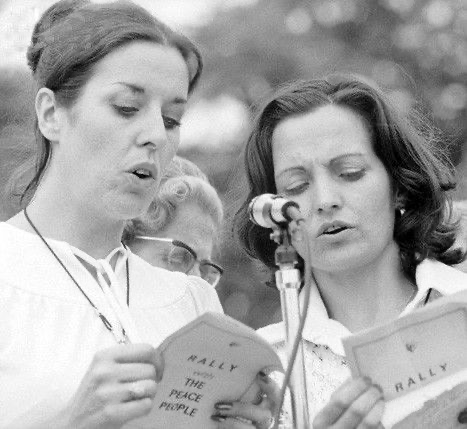
Betty Williams (left) and Mairead Corrigan during a Peace People march (Wikipedia)
Soft spoken people were more interesting to converse with, I believed, and they listened better. They tended to be more academic thinkers that noisy people, who often had noting of value to say. There was a certain art about keeping ones mouth shut, which I learned from experience. After all, everyone loved a good listener! Especially, growing up on the troubled streets of Belfast where asking questions often led to suspicion. During my childhood years, I remembered how the women were much more vocally outspoken than their male counterparts. One example that came to mind were the Community of Peace People in the North of Ireland, in 1976. At the head of the movement, which attracted global recognition, were Mairead Corrigan and Betty Williams (including Mr. Ciaran McKeown). Both women went on to receive the 1976 Nobel Peace Prize for their efforts. They were the youngest recipients of the award at the time. A second movement was also formed, called, Women for Peace, was formed. Thoughts of the mindless behavior hung about my brain for a while, and whether I had done right, not commenting to the fellow who throw the bottle away like that. How would I have acted if someone said something tome and I took it in the wrong way. That was a long time ago! The passing of time, if not education, kind of mellowed me out. “Mmm!” The foolish behavior had nothing to do with me. Or so I reassured myself, as I straightened out the gear that I had tossed into the tent. The fellow’s self-discipline, or lack of it, was his problem. The Japanese at large possessed great self-discipline, and they were overburdened by the social demands and local rules and laws around them. Japan boasted a society that had long prided itself on being stable, with an adherence towards orderliness. Then again, things were not always the way they seemed to be. The daily pressures of life, in an already constraining social environment, had caused some people to boil over, or commit suicide, or murder, and so forth. Stepping down from my soapbox, despite my own hardhearted views, it was wrong to say that the fellow's foolish behavior was a result of his social setting. Surely every able bodied person did a foolish thing, at least once in their life. Of course, I did not have the foggiest idea about what heavy burden that particular fellow incurred to make him toss the bottle away. Or to leave it where it landed, smashed into pieces to cause danger to others. Whatever his problem was, he lacked that inner calmness that professional pitchers in baseball strived for in their game. Needless to day, the fellow’s behavior was not a very nice thing to witness at the conclusion of this stage of my mission. How could anyone be so uncaring to this quaint little spot, Jigehama Beach, in Hashidate, once so very important in earlier days. Of course, there were bigger problems in Japan. By the time the heat wave began to dip, 307 people had died from heat stroke related incidences across the country, of which 118 occurred in Tokyo.
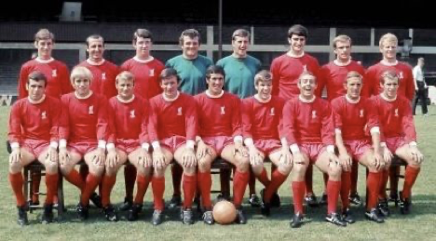
Liverpool FC, 1969 (Wikipedia)
16 Aug, 2010; At last I fell asleep while listening to 5-Live, one of my favorite BBC channels via the Internet, thanks to an iPad and WiFi that I bought in Tokyo not long before this stage of my mission began. On the downside, the batteries on both devices were as dead as a door nail when I awoke. There was something on the channel, however, about Liverpool’s new signing from Chelsea, Joe Cole. Receiving a red card in the first half for a reckless tackle on an opponent, was not the best way to win over the herts of the new fans. Liverpool had been my team since I first became interested in the game, in 1969. The year before they finished runner-up to their archenemy at the time, Don Revie’s Leeds United team, and just short of a record eighth league title. About that time, the young Ray Clemence had not long replaced Tommy Lawrence in goal. I just started attended secondary school in London then, which incidentally was the first of four such schools that I would attend there. At the time, Liverpool were managed by Bill Shankly. The team did less better in the 1969-70 season when they finished fifth in the table, the old Division One. That was also the season one of my favorite players, Roger Hunt, left Liverpool after 404 appearances and 245 goals for the club, to join Bolton Wonderers, a Division Two team at the time. Among the many feathers in his cap, Hunt won a 1966 World Cup winner’s medal. There was a second-half commentary that I had hoped to listen to. To my dismay, because of contractual rights, the channel went off the air when the damn program started. Not being one to give up without a fight, I frantically fiddled about with the dials for another frequency, but alas nothing happened. So I switched over to the World Service channel instead. My eyes soon began to feel heavy and sleep soon followed, even in the absence of a glass of red wine to help settle my nerves at the end of one hell of an uneasy, if not frustrating day. Sleep came quickly, as did the morning when it was time to get my arse in gear and on to the road. The morning traffic on the road began as solid as the sun rose. When I dragged myself the world of dreams, and as I packed away the camping stuff, a good number of cars pulled up and stopped. Like the night before, the drivers walked to the edge of the hight piece of ground near where I had pitched the tent, which offered the best spot to view of the sea and beyond. The people remained for not much more than a minute or so, before they returned to their cars and drove off. “Mmm!” This kind of made me wonder what was the point of stopping in the first place? What difference did the minute long stop make to their lives? Or perhaps they were romantic buggers at heart, I mumbled to myself, as I tried to keep my mind on what I was doing. Undoubtedly they were on their way to work, perhaps in the city, Kanazawa or Kaga, or somewhere. Each time the men turned to make the way back to their cars, they would turn and look over at me for a split second. Surprisingly, there were no women! Surely I was not the sole reason for their stopping? The hardship of my mission had taken its toll on my mind. Tramping along the main and coastal roads of Japan had become a bit of a drug, like, addicted to it. God-forbid, I could not give it up. Was I becoming paranoid? Was this a side effect of being under the elements hour after hour? What I needed to do was to make my way down the road to Daishōji JR Station, which first opened to service in late-1897. Before that, it might be a good idea to hang around a bit until the museums opened at 08:30 AM. The train station was a couple of hours away on foot along Route 19. Then it was back to Kanazawa City. There I would check into a business hotel, where I hoped to spend a couple of days and look about the city. It would be nice to act like a real tourist for once, to get some nice snapshots and eat some good food and drink some good wine. When evening came, I looked forward to just plunking my butt in front of the television set and relax with a glass of red wine in my hand and think about nothing in particular. I could not wait! Another thing that I looked forward to, the Winter Olympics in Vancouver, which kicked off on 12 February, 2012.
What happened in Japan and the world on this day????