2019年10月

Irishman Walking (Stage 17 Chapter 3) Summer 2015

56439087_2291153687790871_6976789749440708608_n


Irishman Walking (Stage 17 Chapter 3) is about my walking the main and coastal roads of Japan. Summer 2015.


11 Aug, 2015: Camp was made at around seven o’clock in the evening, right next to Kazuma JR Station. This was not two-kilometers past the Naruse Ohashi and the two rivers the bridge spanned. Kazuma JR was a small station, opened to the public in 1929, and serviced the Senseki Line, in Miyaki, much of it along the coast. Much of the line took a battering by the 2011 Tohoku earthquake and tsunami, and was only fully returned to service in May, about three-months ago. The train line was completed in 1928, less than a year before the Wall Street Crash, in 1929. The Great Depression, an economic crises that affected most of Europe, particularly Germany, with repercussions across the world. Though the country's economy shrank to around eight-percent, the depression did not affect Japan, like it did in other countries. This may have been in part true becasue of the person in charge of the money. The Finance Minister during the depreesion years was a man called, Korekiyo Takahashi. Takahashi was involved in a number of controversial, but successful financial policies --  he did away with the gold standard, devalued the Yen, and reduced interest rates, among other things. The policies proved especially effective in textiles and light industries -- industrial production doubled, through the 1930s, and by 1933 the econom was on the up. In the 1930s, however, the climate in Japan drifted more towards nationalism -- a greater military influence in the government. According to Ben Bernanke, chairman of the United States Federal Reserve from 2006 to 2014, commented favorabaly on Takahashi's efforts, for "brilliantly rescued Japan from the Great Depression". Conversley,  Masaaki Shirakawa, who served as Bank of Japan governor from 2008 to 2013, saw Takahashi's policies as a "bitter experience", and "the bank's biggest mistake in its 100-year history". Even if the jury on the country's hisotry was still out, Takahsshi paid the altomate price for his believes he was assassinated by a group of disgrumpled military officers, in 1936. “Mmm!” There could not be a more local looking train station than Kazuma, I thought to myself, as I set about erecting the tent. By now, the sky was heavily covered in clouds, and ideal for tramping along the road, as long as it did to rain. It was the sound of the first train of the day that I woke up to, in the morning. My ears were also wide open to the beautiful sound of the birds that chirped away like mad. If only I knew what the birds communcated about, high up in the trees. If only alarm clocks sounded like the birds. It was the kind of morning call any positively minded human would be happy to get awake to, without complaint. I read some time ago, that birds with the least color, or prettiest of plumage, sang the sweetest. The sound of the birds never failed to give me a new lease of life feeling. What mattered now, was to up camp and hit the road, just the rain started to fall. The new hand-trolley proved a gift from heaven. Life on the road seemed easier for it. 


Done


The morning sky indicated that rain was expected, it certainly took its time, as things turned out. The clouds appeared to get lower with the passing of time. Thankfully, the morning air remained warm and comfortable, with a gentle, but unsteady breeze. The weather, I hoped, would continue this way, even if a feeling lingered in me that it would not. Made a stop at a Lawson, at a place called Higashimatsushima. At the store I picked up something that might do me good for breakfast, if not for life on the road -- a  large banana and a 500-milIliter carton of milk. The milk went down well, together with the last of the muesli, which I brought with me from Tokyo. A good thing about stopping a convenience stores was the hot water in the thermos flasks, they kept at the ready. Such stores were even better if they had a place to sit-down at, too. Most of them, however, did not seem to have any such luxury. A cup of hot tea, or coffee, was a good way to round the morning off with. A place to sit, also allowed me the chance to pen a few things down in my notebook. Just about every part of Japan had some ancient history to write about. Higashimatsushima in Miyagi Prefecture was no different, first settled during the Jōmon period. The area on which the city now stood was part of the ancient Mutsu Province, in todays Tōhoku region -- Aomori, Fukushima, Iwate, and Miyagi, and a  host of municipalities. Like many modern cities, after the merging of towns and villages, the modern city of Higashimatsushima was established on April Fool’s Day, 2005. Today, the city had a population of around 39,000, a bit of a drop from earlier figures. The population grew steadily since 1970, but had declined this last few years. In addition to tourism, Higashimatsushima was traditionally a center for commercial fishing, particularly the cultivation of oysters. The Japan Air Self Defense Force Base, was located nearby. 
Higashamatsushima was severely damaged by the Tōhoku earthquake and tsunami, in 2011. After some hours of tramping along the road, under a heavy and depressive sky, it was time for me to get my arse off Route 45, with the four-wheeled hand-trolley in tow, and onto Route 398. The new road would take me closer to my old friend the sea, or in this case, the mighty Pacific. Needless to say, I hoped the road would not be as difficult, or as busy, as Route 45 had been, which was now well behind me. The first signpost of the day told me that I would soon pass Saint Juan Bautista Park and Ishinomori Manga Museum, which sadly, I had not the slightest intention of stopping. Saint Juan Bautista was also the name of a Japanese galleon, which made a couple of voyages to Eurupe, between 1613 and 1620. It was hoped that the voyages would help to open up Japan to the outside world --  A group of Franciscan missionaries were among the passingers on the return journey, in the hope of establishing a religious order, in Japan. In addition, around 50 specialists in silver-refining, and mining were also invited. This was to help develop the mines in the 
Tōhoku
 region (e.g., Sendai). The plans failed, and a long period of isolation ensued upon the galleon's return to Japan. The galleon was built for shōgun by the English pilot William Adams.

Done


This Tokugawa period of isolation was called 'Sakoku', or 'locked country', and lasted for 214-years, from 1603 to 1868, when the Meiji period began. 
A Japanese replica (1993) of the seventeenth-century galleon, San Juan Bautista, dislayed at a theme park in Ishinomaki, in Miyagi, not far from it was originally built, in 1613. The giant lumber used for the galleon's masks, came from British Columbia in Canada. As with much of the region, however, the San Juan Bautista sustained structural damage in the powerful earthquake and tsunami, in 2011. The dury, therefore, was still out as to what to do with the galleon  -- reconstitution or dismantle it? Ishinomaki's economy had long been connected with the sea -- commercial fishing, such as, the cultivation of oysters. The nearby town of Ayukawa, a town in Oshika, was once a main bases for whaling ships. The town of Ogatsu, long famous for the production of inkstones, held an annual scallop matsui, or festival, every summer. Today, Ishinomaki had a population of around 140,000, which had beenon the decline, since 1980. Manga was not only a massive moneymaking enterprise in Japan, but had left a wide mark on many countries, too. Ishinomori Manga Museum, also called Ishinomaki Mangattan Museum, was opened in 2001. This was to commemorate the works of the Japanese manga artist and author, Shotaro Ishinomori, who was born in Ishinomaki. Like any able child, I enjoyed art-class, at school. Not that I had any natural aptitude for drawing and painting, compared to a lot of kids, whose works I had admired over the years. My first ever encounter with a comic, which I joyfully read again and again, was 'Orr Wullie'. Although I could not recall the time or what I was up to, or even the exact year for that matter, I do remember that it was a miserably wet day. Drizzle was a common part of life in Belfast, a small city with few umbrellas. I had been walking along out street at the time, and something on the pavement up ahead of me, caught my attention. As I hurried nearer, in case another kid might get to it before me, I saw that it was the back-half of a tattered comic book. To cut to the chase, I quickly picked it up and ran home. That was what kids did, they stood or ran in the street, or squatted at their doorsteps. And, when I did not run, it was my habit to walk swiftly in the street. Always hurry and scurry, looking for someting, but never finding it. There was no doubt about it, the youth always seemed to be going somewhere, and never coming from anywhere. If you wanted to succeed in life, you had to leave and go away. I think most of us knew what it was like to be corner boy, destined to become one of a band of tramps, huddled over some fire together to keep warm. Those childhood days were tempered with recurrences of simple joys, and at a time when the future would just have to wait until it came. The remains of the comic book was a great find, which occured in the early-1960s, and I think the great man, JFK, was still alive at the time. Whether or not someone had lost the comic, or thoughtlessly discarded it, did not matter one way or another, for I was happy at my unexpected find. 

Done


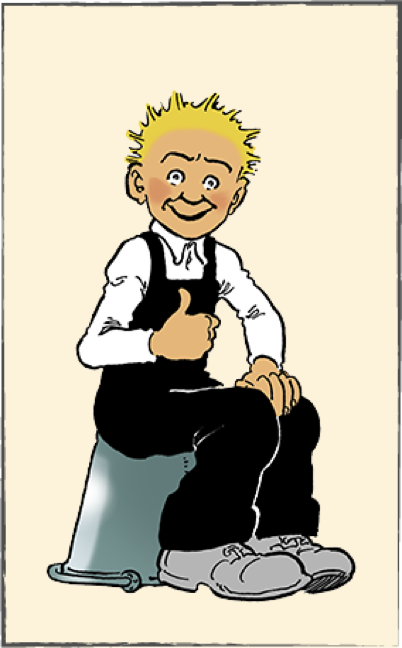
For the most part, people, mainly Chatolics, were poor in my part of west Belfast, so finding anything of value or interest, was rare to say the least. At the time, I remembered how unsure I had felt when I entered the house, the comic stuffed up under my pullover for good measure. I was worried my grandparents, who raised my sister Anna and me, would think I stole the comic. Or whether I should tell them about my lucky find, at all. Had I told them, they might have said that some boy may have dropped it, and was looking for it. Shyness had always held me back, so I harbored a fear that they would tell me to take it back to where I found it. Other than an old Bible, I could not recall a single book on the shelves in our house. The streets in Belfast were so close-knit, everyone knew what everybody was up to, and if they did not, they would soon find out. In spite of this, I remembered that I said noting to no one. In those days kids could not afford to buy anything, let alone on such luxuries as comics. Kids were aquatinted with comics, they came across the odd one from somebody somewhere. As far as I understood the youth culture on our street, none of us bought one. Even the bigger boys, spent what few coppers they had on a loose fag, or two. Back in the day, people, regardless of age, bought cigarettes in ones and twos. The local shops sold cigarettes in packets of five, ten, and twenty. Smoking was a cool thing to do. Why not? All the film stars and artists did it. That said, I never smoked a fag in my life. The luxary of pocket money was unheard of, and if I got any money, it was barely enough to get me into the pictures. The odd newspaper comic stripe, did come my way, but seldom complete. As far as I understood things, most people could not afford to buy newspapers. Therefore, it had long remained a mystery to me how we came across newspapers at all? Newspaper cuttings hung on the back of toilet doors. The toilets were located outdoors, usually in a far corner of tiny yards. So, blocked up toilets were common on our street. For Orr Wullie was a popular Scottish comic that first appeared in The Sunday Post, in Dundee in Scotland, in 1936. Not that I ever read any of the comicstrips. There were no Orr Wullies among the newspaper clippings that hung on our toilet door. I still recall the upturned bucket, Orr Wullie set on. The comicstrips were first created by the Scottish editor Robert Duncan Low and English cartoonist Dudley D. Watkins. Like most kids on the street, we were more familiar with the Beano and the Dandy. If my research was not barking up the wrong tree, the Beano was the longest running British children's comic magazine in history, whilst the Dandy, the world's third-longest running comic. The Japanese, regardless of their age, loved their manga. In recent times, the manga or comic book industry had made similar inroads in Europe and beyond. To quote from the New International Version of the BIble (1 Corinthians 13:11): “When I was a child, I talked like a child, I thought like a child, I reasoned like a child. When I became a man, I put the ways of childhood behind me.” That was how I thought about comics.


Done 
 

Unknown-16


‘Orr Wullie’ (Natural Library of Scotland)

Unknown-1


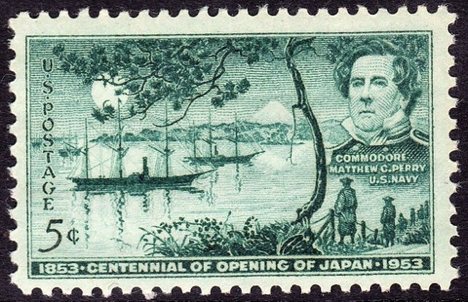
Commodore Matthew C. Perry on a USA postage, 1953 issue (Wikipedia)


Nothing lasted forever, particularly 'time', or Father Time, to use the personification term; or what the presence of the 'Grim Reaper' implied, each time he appeared to collect his victom's soul. Therefore, I preferred to give what free time I had to reading good books, not comics. The Tokugawa government's policy of isolation, ‘Sakoku’, came to an end, in 1853. Even if it was helped along by Commodore Matthew Calbraith Perry, (and the presence of his Black Ships), which forced the country to open its doors to outside trade. The weather continued to hold nicely, no rain, not overly hot, and a welcominng breeze graced my body. “Onagawa here I come!” I mumbled to myself, afher I passed a signpost. This segment of road, bound for Onagawa, was called the Cobalt Line. Onagawa was first established as a village, in 1889, and granted town status, in 1956. This was part of the new municipalities system, enacted at the beginninng of the Meiji period. For reason or another, a lot of the villages, towns, and cities, had been elevated to their status, on an April Fool’s Day. Onagawa was enclosed by a deep harbor that not only proved important commercially, but also militarily. The port became a target for American air raids, and had several ships sunk, in the closing days of the Pacific War. The port was, incidentally, bombed on the same day the second atom bomb (‘Fat Man’) exploded over Nagasaki. A memorial was unveiled in the town, in 1989, for a Canadian pilot, called Robert Hampton Gray, who died during one of the raids. Today, the town had a population of around 6,000, but on the decline, since 1970. Economy, commercial fishing -- coho salmon, pacific saury, including the cultivation of oysters. The kanji used in the name of the 'pacific saury fiah', meant: 'autumn knife fish'. The shape of the fish was said to resembl a katana, a traditional Japanese sword. The Onagawa Nuclear Power Plant, once a major source of income for the town, has remained offline since the 2011 earthquake. Onagawa JR Station fell within Onagawa Town, located on rugged Sanriku Coastline, and the the Kitakami Mountain range that extended some 250-kilometers to the west. Japan was a country of national parks. Much of the town bordered along the Sanriku Fukkō National Park, created in 2013. Onagawa boasted a humid subtropical climate. With its mild summers, it was a great season for hikers. Presently, dark clouds sailed slowly across the sky, and appeared to nest, momentarily, on the tops of the mountains. The deep water port, home to many fishing boats, played a key role in Onagawa's local commercial fishing industry. The port was housed the Onagawa Nuclear Power Plant, the most hastily constructed nuclear power plant, in the world. Fortunately, the plant escaped damage from a powerful earthquake, in 2005. However, the plant was shut down for about a year, as a result. Onagawa Nuclear Power Plant was shutdown a second time after the 2011 Tōhoku earthquake and tsunami. Requests were made by the plant owners, Tohoku Electric Power Co., Inc., to restart the plant, in 2013. 

Done 

The Japanese Nuclear Regulatory Agency, however, pushed for newly required safety measures to be implemented, before any decision could be made. 
In the 2011 desaster, the Onagawa area, was one of the most heavily damaged oceanfront locations, in the Tōhoku region. The tsunami reached as high as 15-meters in places; with many evacuation sites inundated. Around 70-percent of the buildings in the town were distroyed, this included the train station and the tracks.

Done 


12 Aug, 2015: Camp was made in Sawada Town on the coasline. It was a silent enough spot to pitch the tent at, just off a not overly busy road, Route 398. The odd local train shuttled along the tracks, that ran between the road and the shore. The clouds were heavier than on previous days, which caused me some concern. My thoughts were well justified. Not long after the tent had been securely pegged down, the rain came down like there was no tomorrow. The rain did not let up until the early hours. When I got off the mat, it stopped altogether. A well tented, was an art in itself. If not, all hell could break loose, and no one but myself to blame. It was easy to be sloppy, if you were not careful. That was part of the trials and tribulations of life on the road, all day long, On a number of occasions, the tent had to be erected on a concrete surface, not for the faint hearted on a windy or rainy day. To cut to the chase, it did not take long for puddles to form here and there, and in no time at all, the water to began seep in under the tent. Once the tent's interier got wet, it became just about usuless. If it had not been for the mat I lay on, I would have been soaked. By the time I did realize what had happened, much of my gear was inundated with rainwater. Thankfully, the clothes that I wore, where dry. A satiated tent was a bummer to get dry. After some hours later, the rain had finally stopped, and then I was able to make an effort at putting thing right. This segment of the road, Route 398, was devoid of shops, restaurants, and people. The only sign of life came in the form of passing cars, but not so many. There were a good number of birds high up in the trees. The road could be a lonely place at times, if it was not for the pleasant sound of the birds for company. A road sign told me that I was heading towards Ishinomaki. Hopefully I could pick up something for breakfast there. The region was part of ancient Mutsu Province, once controled by the powerful Date clan. For years, Ishinomaki prospered as a major port and transshipment center from northern regions to Edo (Tokyo). Ishinomaki was granted town status, in 1889. It became a city on April 1, 1933. This was a time Japan freed itself from the Great Depression, when other countries still felt the affects. Today, Ishinomaki had a population of around 150,000, on the declin, since 1970. The city was known for manga lovers, of whom I was not among them. It was also home to the Ishinomori Manga Museum, opened in 2001, and dedicated to the work of Japanese manga artist and author, Shotaro Ishinomori, who came from there. The window-like eyes of this rather strange looking museum building, looked out over the Pacific, and the majestic Tashirojima, an island, about 11-kilometers in perimeter in size. The islanders were merely elderly, and an untold number of feral cats that had been there for donkey’s years. The feral cat population outnumber humans 6 to 1, which did not bother visitors to the island one bit. "Mmm!" I wondered why there were no pet dogs on the island? The human population dwindled from 1,000-residents, in 1950, to fewer than 100-residents, today. 

Done

The island’s last school, Tashiro Elementary School, closed its doors for the last time, in 1989. The two villages on the island, Oodomari and Nitoda, were said to be ‘threatened’, and refered to as ‘terminal villages’. Tashirojima and a neighboring island, Oshika, merged with Ishinomaki City, on April Fool’s Day, 2005. The livelihood on the island was geared toward the sea -- fishing and ospitality. Fixed-net fishing became popular during the early-Meiji period. For many years, silkworms were raised to produce silk for textiles. Rodents were natural predators of silkworms. The cats, therefore, were kept mainly to keep the rodent (mice) population down, and lesson any damage to the silk. There were around 10 cat shrines in Miyagi, and many more cat-shaped stone monuments. There is a small cat shrine located in the middle of the island, called Neko-jinja. There was a story that in the past, rocks were being collected, by the fishermen for their fixed-nets. One of the rocks fell and killed a cat. The death of the cat affected the fishermen so much, that its body was enshirined around the same location where Neko-jinja stood. Today, Miyagi had more shrines and monuments to this small carnivorous mammal, than any other prefecture in the country A Fuji television series (2006), directed by Terebi Asahi, had been shot on the island. The theme focused on a droopy-eyed cat, one of the many cats. A BBC television program series (2012), called: ‘Pets, — Wild at Heart’, featured the feral cats on Tashirojima. This was followed by a documentary (2015), entitled: ‘Cat Heaven Island’. It focussed on human life on the island, past and present, which included the cats. Thanks to media interest, photo contests and exhibitions about cats, had become popular events on the island. A large number of tour-groups visited Tashirojim,  just to see the cats. The hospitality on the island forcused on lodging (B&B) and tourism. The hospitality on the island forcused on lodging (B&B) and tourism. Tashirojima was known as ‘Manga Island’, for its strong connection with Shotaro Ishinomori. The lodges were also manga-themed based, hence The Hyokkori Hyōtan Tashirojima Marathon --  six and 10-kilometers long -- was held on the island, in 2007. In Shintoism, cats harbored good luck, or wealth and good fortune. Although much of Tashirojima was extensively damaged by the earthquake and tsunami, in 2011, the feral cat population survived relatively unscathed. The cat population fled further inland to escape the advancing water. Through time, fishermen developed a fondness for the cats and would observe the cats closely, to interpret their actions as predictions on the weather and fish patterns. Something told me that I was going to go to sleep hungry this evening. A glance over my maps this morning, told me to expect a long tunnel. Each time a long tunnel popped into view, I was reminded of the monster tunnels I faced south of Otaru in Hokkaido, in 2009. Back then, the long tunnels popped up one after another. At time, the maps could be so deceiving. 

Done


After a while, I came to Wakenami Tunnel, opened to the public, in 2006, it was just 
462-meters long. “Mmm!” Surely this was not the tunnel in the map? Or so I thought, as I headed entered, the hand-trolley pulled carefully behind me. It certainly was the same road, Route 398. The tunnel was located in the township of Ogatsu-cho, part of Ishinomaki. It was not the monster tunnel that I had expcted, but a series of tunnels close together. Almost immediately, I entered a second tunnel, Mizuwake Tunnel, only 186-meter long, and opened in Heisei 15 (2003). "Mmm!" Surely the other tunnels were nearby, I though, as I set down a moment to jot down a few lines into my notebook. "Where were the hell where they? The road curved this way and that way, for some distance, but  I could see nothing in the form of a tunnel up ahead of me. After a good distance along the winding road, which by now slanted upwards and downwards, I arrived at a place called Ogatsu, a Michi-no-Eki, or roadside rest stop area. Like the other Michi-no-Ekis, it had its restaurants, shops, and public toilets, regional-tourist information. There were more than 1,000 Michi-no-Eki-like reststops located throughout Japan. Ogatsu was one of a group of small towns located in Miyagi, that were absorbed into Ishinomaki City, in 2005. Ogatsu had historically manufactured ink-stones, a stone mortar for grinding and holding ink. The inkstone was intoduced into Japan from China, and dated back for thousands of years. Later, the inkstone was not only produced in stone, but also from bronze, clay, iron, and porcelain. The tool still played an important part for artists, and others, in calligraphy and painting. 
Also, a scallop festival was held in the town every autumn. Today, Ishinomaki City had a population over 141,000. It's residents enjoyed a humid climate with mild summers. The highest average temperature was in August, like the present, at around 24.2°C. It certainly seemed a lot hotter pulling a four-wheeled hand-trolley behind me. And, undoubtedly even hotter with a heavy backpack. I stopped a while, to rest and make a cup or two of coffee. Also, to take stock of my location on the map. According to a
touristy map nearby, the monster tunnel, still lay up ahead of me. 
When would I come to the tunnel? was another question. As I waited for the water to boil, I began to feel tired. It was not easy to stay focused on things. This was my first stop in four-hours of tramping. The last number of kilometers had slowed to a crawl. I rea somewhere that slower walkers showed signs of aging, faster than those who walked fast. This was the twilight of my years, so I was no spring chicken, even at the best of times. The thought of a nap, crossed my tired mind. If only I felt contented, or proud of myself for a job well done. Life in the open was unaccompanied with problems. The times when I had fucked up somewhere a long the road -- had not tramped as far as I had hoped, misread the maps, taken a wrong turning, lost bits of the gear. Even the times I had neglected eating, and covered long distances on a near empty stomach. Life on the road was not for the faint hearted. Only after eating, did I feel, if not see, a change over my body.

Done 


Thanks to the rest and replenishing the old body, I at last found myself at the mouth of the monster tunnel. Thankfully, the Kamaya Tunnel, was not as long as the maps implied. Opened in 1986, the t
unnel was 995-meters in length, so not quite a 'monster tunnel'. According to a couple of tales, the Kamaya Tunnel was said to be hunted. The ghost of a woman was believed to hunt the tunnel. At times, a hand was said to touch the windscreen of a passing car. In another tale, a red car, it was noted, moved slowly in front of some of the cars, only to suddenly vanish in front of them. That said, I did not notice anything spooky appear in front of me, as I tramped through the tunnel, with the trolley close behind me. The Kamaya Tunnel stood between Okawa East School and the old town of Ogatsu, at a raised point, called Kamaya Toge. The word 'toge' refered to a mountain pass, or a winding narrow road. More than 80-percent of Japan was mountainous. Kamaya Toge was a mountain pass where many locals sought escape, during the Tōhoku earthquake and tsunam, in 2011. Unforetunately, 70 out of 108 students and nine staff members, perished when they sought safety on the Shinkitakamiohashi Bridge, nearby. The bridge over the broad Kitakami-gawa, had become engulfed in the flooding waters. On a lighter note, after I left the tunnel, I was happy to see that the road, Route 398, started to head downwards. It led me across the Kitakami River, where I took a sharp right, towards the towns of Minamisanriku and Kitakami. By now, the sun had long gone down, and darkness was fast falling.


Done 


13 Aug, 2015: Not two or three-kilometers after l left the Kitakami-gawa, behind me yesterday, my tired mind and body told me to stop and make camp. It was dark by the time the tent was finally pitched. On the shoreline, not 200-meters away, two fishermen stood on a recently constructed quayside, to applied their honorable trade. From inside the tent, the wizzing-sound of the casted lines out over the water, could be heard. The sound, I remembered, resembled that of a bullwhip, wizzing through the air. Regardless, I felt too tired to care, and it was not long before I drifted off to sleep. My eyes opened around 04:30AM. It was never easy for a hungry man to just dilly-dally about and do nothing. Food, and water, was foremost in my mind. A look at my maps last night, did not exactly leave me feeling optimistic. I had a funny feeling that I would not come to a shop or restaurant anytime soon. This was Obon, a time when many places were closed for the holidays. Signs of the country's long recession, caused me to wonder how any of the businesses in the area, survived at all. By 06:00 AM, I was back on the road, again. The road seemed lonely and devoid of traffic. It was just as well I headed off when I did, for not much later, the sky darked and the rain suddenly began to bucket down. After about an hour of tramping along the road, in the rain, I made a stop at a building site. The site was no different to the many I had passed along the road yesterday. My aim was to shelter from the heavy rain, for a while. Tap water to drink, and replenish the water-bottles, would have been ideal. If not, the traping some rain, was just as good. The tasks were soon accomplished. In no time at all the water was boiled, and the coffee ready. For what it was worth, a cup of hot coffee or tea for breakfast, was better than nothing. Not long after getting arse back on the road, the building site left behind me, I came to the first tunnel of the day. My mind had a habit of going off in tangents, a common occurrence of life on the road. This was particularly true, as far as my love of modern history was concerned. Getting water was at times easier said than done. Thankfully, the time had long gone in Japan, when getting water to drink, was truly problematic. The more fortunate households, in the Tokugawa period, got water from fixed pumps. Much of the water in the Meiji period, was fetched from shallow wells and springs. In some instances, the water was piped through wooded pipes. In Victorian London, the main water supply was the River Thames, which over 230 sewers emptied into. Such unsatisfactory arrangements served a similar purpose, in Japan. The less foretunate among the Japanese got their suply of water from nearby rivers or steams. The rivers were often polluted and had to be boiled before drinking. The first modern piped-water system was setup in Yokohama, in 1887. In more recent times, Tokyo had faced a chronic water shortage, in the early-1960s. The supply of water in many households, had to be rationed, during the 1964 Tokyo Olympic Games. Hence, the city earned the nicename, ‘Tokyo Desert’.

Done

Lake Miyagase, in the picturesque district of Aiko in Kanagawa, was the main source of drinking water for the Greater Tokyo and Yokohama areas. The lake was a purposely built dam, completed in the millennium. Back to the present, the 465-meter long Shirahama Tunnel (1992), where I stood, was located in a place called Jusan-hama in the township of Kitakami in Ishinomaki. There used to be a thriving fishing port, as well as, a popular beach called, Shirahama, famous for its white sand. In fact, the kanji in its name meant: ‘white beech’. Land erosion, however, had narrowed the beach area. A sole survivor was a gasoline station, but severally damaged by the Tōhoku earthquake and tsunami. (The beach was reopened to the public, in 2018, and the nearby Shitahama Beach Park, in 2019). The land used for the park was where a small village, with around 200 people, had previously stood. The village had been completely destroyed with the loss of life. There were a number of beaches in Japan, that had the same name, Shirahama. Not long after passing through the Shirahama Tunnel, the rain finally stopped. Soon after that, I made a stop a long the road to jot down some notes, before I forgot. No sooner had I set down by the side of the road, pencil and notebook in hand, the rain started up again. "Mmm! This was not good." I mumbled to myself. Earlier at a building site, I made a stop to wash clothes. I had hoped to hang them out, for the warm breeze to work its magic on. Near where the Kitakami-gawa joined the mighty Pacific, I spotted a scenic spot to pitch the tent for the night. It would given me the chance to splash about in the sea. Becasue of the dismal weather, however, I was in no mood to do either. Later, a road sign pointed right, for Shirahama. The second tunnel of the day popped into view. The Jusan-hama Tunnel (1995), ran for only 537-meters. Therefore, I was soon back out in the rain. The only good thing about very long tunnels was to escape the rain for a while. A glance up at the sky, told me that the heavy rain had not plan to letup anytime soon. Another stop was made at the northern mouth of the Jusan-hama Tunnel. There I decided to make my third cup of coffee in an hour. Coffee or not, I still had to continue along the road, in the rain. There was no point in bitching about the rain. The different weather conditions was what my mission was all about, if it was about anything. The Jusan-hama Tunnel  tunnel was a good dry place to stop at for a while. Thankfully, the breeze was not very strong, like the entrances of tunnels often were. It was not damp, nor busy with traffic, like so many other tunnels I had passed through, the sort that I needed get through and leave behind me, as quickly as possible. If only the rain would stop, or lighten a bit so that I might enjoy the final days on this stage, Stage 17, of my mission. At long last, the first restaurant, since I left Route 45, two-days before came into view. It was a ramen joint, called ‘Tsunomiya Daishizenjyuku’ in the village of Tsunomiya. It had a strange name, part of which meant: ‘big nature school’.

Done

The building was donated by a NPO volunteer group, JAPAN TEAM OF YOUNG HUMAN POWER (JHP). 
There was a photo of Japanese actor, Shōhei Hino, who had stopped by at the place. Hino played General Hideki Tojo, in the film 'Emperor', in 2012. The only thing that I knew about the actor was the popular television traveling program, ‘Nippon Judan Kokoro-tabi’. The couple who ran the restaurant were very friendly, with a sort of kindness that softened the hardship of life on the road.

Done


14 Aug, 2015: The rain really did a job on me yesterday. The state of the sky this morning, looked like I was in for another drenching. The rain had not let up thought the night, before it finnaly stopped some minutes earlier, at 05:00 AM. Thankfully, the camp gear was folded up and stuffed away, when the sky opened up, and the rain fell with gusto. Last night, camp was made near a 7-Eleven along the road, on Route 45. It was in the evening, when I rejoined the road after making a detour along a minor road. The camp site was under a large roof, part of an old  fish factory, closed for the Obon holidays. Therefore, I felt that I would not be disturbed by any workers. It proved a good place to hang the gear and clothes to dry. Although I was aware that the police could show up unexpectedly, and charge me for trespassing, I still drifted off into a comfortable sleep. All the same, life on the road was about taking chances. Perhaps the same could be said about life at large. The way I saw it, the rain was going to be a start-stop affair, and there was nothing I could do about it. At times the rain was heavy, at times light, and at times even nothing at all. Then it would start to fall all over again. By the time I decided to hit the, at 07:30 AM, it started to fall, again, with gusto. The first sign post of the day, not long after hitting the road, read: "End. Past Tsunami Inundation Section". This was not the first time that I was reminded of the dangers of the region, and no doubt it would not be the last. It was nice the road ran beside the railway tracks, again. The tracks kind of told me that this stage of my mission was nearly ended. The easiest way was to return to Tokyo by train. The train passed through Sendai, where I planned to make a stop for a while. It seemed a little strange that no trains passed by, as I made my way along the road. At least I had not heard any, during times with the tracks disappeared from view. It was not until some kilometers along the road that the reason became clear. Two sections of a railway bridge had vanished, the handiwork of the Tōhoku earthquake and tsunami. “Mmm!” That was three-years ago, I thought, as I looked up at where the trains once shuttled past. Much of the coastline was under redevelopment, but the railways, at least for the moment, appeared neglected. Something told me that any plans to return to Tokyo by train, were dashed. What I needed to find out where I might get a local bus to Sendai City. The trains out of the city were running. A glance over my maps told me that I should be able to get a bus from Kesennuma City in Miyagi; where the Ōkawa River flowed into Kesennuma Bay. The area was also home to Mount Ōmori, some 711.9-meters high. If all went well, Kesennuma would officially mark the end of this stage of my mission, Stage 17. Kesennuma, was a port city, which bordered two bays -- Hirota and Kesennuma, which touched the Pacific. Kesennuma had a humid subtropical climate, its highest temperature on average was in August, at around 23.3°C. Kesennuma was also located on part of ancient Mutsu Province and had been settled since the Jōmon period, around 1000 BCE. Kesennuma became a town, in 1889, the same year the Japanese emperor proclaimed the Meiji constitution. The town was granted city status, in 1953. Today, Kesennuma had a population of around 61,000, in decline since 1990. Much of the regions economy relied on commercial fishing and associated industries, as well as, tourism. What I did know was that memorial services took place for the victims of the earthquake and tsunami were held throughout the country, including Kesennuma. My brain worked overtime at the thought of how easy it was to return to Kesennuma, this winter, for Stage 18 of my mission.


Done
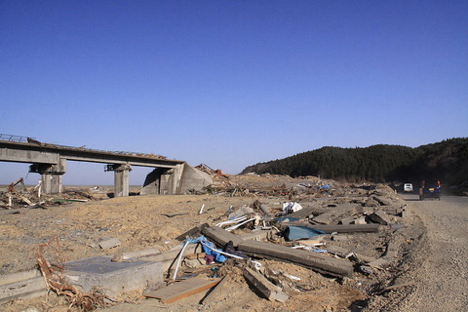

Unknown-18


Rikuzen-Koizumi Station after the 2011 earthquake and tsunami

(Wikipedia)


15 Aug, 2015: Camp was made a bit early at four o’clock. This was at a place called Rikuzen-Koizami, about 20-kilometers from Kesennuma. Actually, Rikuzen-Koizumi was located in Hiraga, which fell within Kesennuma  City boundaries. The Rikuzen-Koizumi train station was completely destroyed by the earthquake and tsunami, in 2011. A number of stations along the line were severely damaged, or destroyed. The train services were replaced by a provisional rapid bus service, along the narrow road that replaced the tracks. Therefore, any traffic jams that hampered the roads, during Obon, was not an issue. An eye out for a post office was easier said than done. Because of the disaster, many businesses in the Tōhoku region were closed, or shutdown for good. The spot where I decided to pitch the tent proved to be a good choice. A local family invited me to their home to use the hot shower. Such a luxury had not been enjoyed in a good while, and had nearly forgotten what a soapy scrub-down felt like. The prefab houses were supposed to be temporary shelters for the victims, left homeless after the natural disaster. A good number of the people continued to live on the site. They kept for the most part to themselves, so I was unable to talk to them. Thousands of people lived in similar sites dotted about the region, if not further afield. Even four-years after the disaster, many people were still confronted with the problems in rebuilding their lives. In Kesennuma, around 9,500 homes were destroyed, with more than 1,000 lives lost. There were a couple of businessmen I met, from Tokyo and Yokohama, told me that their company was instrumental in the recovery. They also told me that they were in the city to attend a thank you party, orgnized by local people. They invited me to join them at the party, but as I was pressed for time, I declined the kind offer. I needed to hit the sack as soon as possible, for I was exhausted and needed to be up extra early, at sunrise. The site was run by a delightfully friendly fellow, who introduced himself as, Mr. Takahashi. He and his wife, oversaw the running of the site. A JR bus left Kesennuma City at four-fifty-six in the afteroon. If all went well, I should reach Sendai by five-twenty-seven. According to the bus timetable, I had to make a couple of changes first. The bus retraced much of the journey that I had trampled. From the windows, I was given a glimpse of some of the places where I camped along the way. Thankfully, the road, Route 45, appeared devoid of the Obon traffic. This surprised me a bit, for I still recalled the traffic jams I had tramped past. After a while, the bus turned off the main drag. It was a pleasant surprise, seated on a bus that sped along the Kesennuma Line, with its narrow train tunnels. At times, it amused me to observe the bus driver navigate carefully, though not exactly slowly, through the dark narrow tunnels. Obon was a time of many travelers and bus roads. Therefore, I was a little worried if the bus would arrive on time, for me to change buses for Sendai. Fortunately, there were no problems.

Done 


16 Aug, 2015: Camp was made on a rich grassy-green patch, along the banks of the 45-kilometers long Hirose-gawa. The river flowed by Atago Green and through the center of Sendai. The source of Hirose-gawa was the 650-meter high Sekiyama-toge, a pass deep in the Ōu Mountain Range. The  Ōu Mountain Range was the longest in Japan. It stretched some 500-kilometers south from the Natsudomari Peninsula, in Aomori, to the Mount Nasu volcanoes, in Kantō. Mount Nasu was located in the Nikkō National Park, with Sanbonyari Peak, its highest major peak, at 1916.9-meters. Atago Green  was home to Atago Shrine, with a winding staircase that led through a forested greenery. The shrine was built on a large hill, with a panoramic view over the city of Sendai. The shrine was built around 1591. The shrine was home to the Shinto deity of fire, Kagutsuchi. Kagutsuchi was a favorable god to have on hand, in a country with a long history of structures made from wood and paper. The main shrine was designated a tangible cultural asset, in Sendai. According to a nearby sign, this was a designated disaster refuge area. It seemed a strange, to me, a disaster prevention center set next to a river. There was not much I could do before heading back to Tokyo. There were a number of postcards to sort out, and get off to a number of family, friends, and acquaintances. A dander about the city and do a bit of window shopping, was a good way to kill some time. This included keeping an eye open for a postoffice. The Sendai JR Station complex, with its many shops and food outlets, might be a good place to start from. So, I headed in that direction. Along the way, I stumbled upon a ¥100 Yen shop, where I ducked into to buy a T-shirt and a pair of socks. The clothes from such places were great for the road, easy to wash and quickly to dry. Sendai JR Station bordered Aoba-ku and Miyagino-ku, wards in Sendai. It was a major station for the Akita and Tōhoku bullet trains, as well as, the Senzan, Senseki, and Tōhoku lines. The station was opened in 1887, in the nineteenth-year of the Meiji government. In that year, Tōkyō Denkō (Tokyo Electric Lighting) introduced an electric lighting system. to the public. At that time, the Imperial Palace, in Tokyo, switched to electric lighting. This made it the first electric power company, to supply electricity, in Japan. Like other countries in Europe at that time, Japan was keen to make a transition to electric lighting. The first electric street lighting appeared in relatively well-to-do areas, like status symbols. The very first electric street lamps appeared in Ginza in Tokyo, in 1882, in Kyoto, in 1883, and in Osaka, in 1886. As the first electric street lamps were being installed in other parts of the country, Hirobumi Itō, became the first Prime Minister, in Japan. His four times in office, made Itō one of the longest PMs in the country’s history. Itō played a main part in creating the first modern constitution, in 1868, which defined Japan as a modern nation, capable of playing an equal part among  the other powers. Unfortunately, the PM was assassinated by a Korean nationalist, in 1909.

Done  
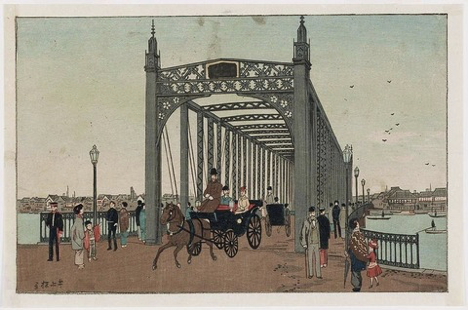

Unknown-17


Azuma Bridge, and note the street lamps in this woodblock print (1887), by Inoue Yasuji (1864-1889) (Wikipedia)


A ride on the Sendai Sightseeing City Loop Bus to Aoba Castle, seemed a good idea. An interesting bus service, affectively known as ‘the Loople Sendai’. Thanks to a one-way bus pass, visitors were able to use the buses in any direction, at a leisurely pace, as often as they liked. The bus routes covered many tourist attractions. One attraction I stopped at, was the Zuihoden Mausoleum, where the remains of Date Masamune and his heirs, were housed. Unfortunately, most of the original monuments at the mausoleum were destroyed by American bombs, in 1945. Like much in the city during the postwar years, the mausoleum, and monuments, were subsequently rebuilt, in the original style. The bus made a short stop at Sendai City Museum, the site of Sendai (Aoba) Castle, Botanical Gardens, Museum of National History, Miyagi Museum of Art, and other places of interest. It was not always easy to find the damn bus stops. When I did at last arrive at one, a hell of a long queue op people waited for a bus to arrive. Needless to say, I was not able to get a seat when I climbed a board the bus, and stood packed shoulder to shoulder, as far as the castle. It was just as we that I did not have a full backpack with me. The roads that the driver skillfully maneuvered along, were busy with traffic. The bus moved at such a slow speed, it would have been better had I saved the money and walked. Unlike the heavy rain the day before, the weather was perfect for walking. When the bus did finally pull up and stop at the castle, I felt disappointed. There was nothing what looked like a castle in any shape and sizeeen. The Aoba Castle grounds were well planned and led out. The castle had been built on Mount Aoba, hence its name. During the Kamakura period (1185-1333), Aoba Castle acted as a fortified residence of a branch of the Shimazu clan. After the Battle of Sekigahara (1601), and a visit by Ieyasu Tokugawa, the area was renamed, Sendai. The castle fell to the Date clan, and Masamune Date (1567-1636), became the first daimyo, or feudal lord, of the Sendai Domain. Around that time, reconstruction was carried out on the castle.


Done 


Work on the castle was finally completed, in 1637, by Date’s son, Tadamune Date (1600-1658). After the surrender of Senda, Aoba Castle fell into the hands of the new Meiji government. Work to dismantle the castle was carried out, in the 1870s. Much of what remained of the castle was destroyed by fire, in 1882. Two of the few original structures of the castle remained-- the Wakiyagura tower and the Omotemon Gate -- were designated as National Treasures, in 1931. The castle grounds became a military base for the Imperial Japanese Army. That was up until American bombers destroyed what remained off the castle, in the final weeks of the Pacific War. The America occupied the castle grounds, before it was finally returned, in 1957. Soon afterwards, work began on repairing the surrounding area. A number of quality trees survived the war years, whilst others had since been planted. “Mmm!” The trees caused me momentarily to wonder if this was why Sendai got its nickname? -- ‘The City of Trees’ -- a pleasant spot to stroll about in. More recently, Aoba Castle and its surrounding grounds, efforts were made to beefi up the Aoba Castle grouds to appeal more to tourists. The site was designated a a national historical site, in 2003. The castle was deemed one of the 100 fine castles of Japan, in 2006. According to a touristy pamphlet that I read at breakfast: Sendai (Aoba) Castle Guidance Facility was opened in 2006, to teach visitors about the original structure of the castle. After a lazy stroll about the castle grounds, next was to pay a visit to the near by Sendai City Museum. The museum had stood on the site of the San-no-Maru enclosure, since 1961. It was home to a host of interesting cultural assets. Many of the artifacts on display were lnked with the Date clan. Why not? After all, the Date clan was responsible for building Sendai Castle, if not putting Sendai on the map. Another tourist pamphlet told me that the museum building was designated by the Japanese architect, Toyo Ito, and was awarded the World Architecture Award. It was designated the best building in East Asia, in 2002. The museum building was multi purpose -- gallery, and studio for various venues, and so forth. The building did not cause me to pause in awe, not even for a second. I found design of the building similar to discarded trash by the roadside. On countless occasuaions,  -- unwanted furniture dumped down hillsides -- the handy work of mindless fools, who had more than likely stopped their vahicles along the roadside in the dead of night. Like discarded items were blots on the landscape, ugly buildings, too, just seemed to pop up everywhere. This was not the first time that I had jotted something down in my notebook about ugly buildings. The tall buildings stood in many towns and cities, and in isolated areas along the roads. Architects were enamored with their building designs. This had something to do with the 'Modern Movement' school of architecture. Formost among the players in this field were Dankmar Adter, Louis Sullivan, and Frank Lloyd Wright. It was such people that brought the skyscraper to the world.

Done

Towering modern structures of reinforced-concrete, their recurring theme of  glass and steel, and with walls that could be discribed as "a veneer of masonry hung on a steel fraim." (Readers Digest Library of Modern Knowledge). One of Wright's many achievements was the world's very first reinforced-concrete structure -- Unity Church in Oak Park in Chicago, in 1906 -- the same year of the Great San Francisco earthquake. Modern architects overlooked or justified any shortcomings, which at another context and time, would have been deplorable. They defended their buildings, nor ever referred to anything wrong or misleading about them. Most architects were impelled by a desire to get their ideas off the drawing boards and creat a reality. In a worst-case scenario, the so-called expected 'big earthquake' could occur right under Tokyo. Should that happen, thousands would undoubtedly die, and buildings completely leveled. The economic damage would be unmeasurable. Would the new buildings going up truely withstand such a massive earthquake? How many architects had been arrested for fake earthquake-resistance data, for their buildings the designed? On the road, I was at times lost for words, about some of the buildings I tramped past. Tall buildings darkened the appearance of towns and cities. I would have surmised that the state of the Japanese economy curbed the building boom. In away, the towns and cities had become dumping grounds of ugly building. The local authorities seemed to be asleep -- devoid of planning schemes that avoided piecemeal building. Many of the cities and towns had delightful and quient little spots dotted about here and there, with delightful building strudtures. In Tokyo, the Imperial Palace area and the old British Embassy nearby, were great places to take a stroll around on a nice sunny day. Not a kilometer away, a quick glance about the roads and side streets revealed a clustered hotchpotch of ugly buildings. They were eyesores that appeared so out of place. Cercumstances had allowed me to live and work in a number of foreign cities with beautiful old buildings. Even with my smattering of knowledge on city planning, I considered Tokyo an ugly city. Many cities in Japan boasted the largest number of tall buildings, on the smallest possible plot of land. For skyscrapers in Japan, the sky was truely the limit -- for structures far beyond the principle of rational toleration - without order, logic, or elegance. In other words, Japan had turned its back on the past. Old atractive cities, like, Otaru in Hokkaido, were few and far between. Tramping the road, had allowed me to make a stop in Otaru for a few days, during Stage 1 of my mission, in summer 2009. That time in Otaru was now a happy memory, thanks to a friend, Riko-san, who was kind enough to accompany me there for a while. Many of the Japanese towns and cities that I had passed through, since my visit to Otaru, symbolized an amalgamation of confused and disjointed vulgarity, buildings devoid of taste or genius. "I could not express my astonishment more." I mumbled to myself, as I penned this into my notebook.

Otaru photo???

Done 
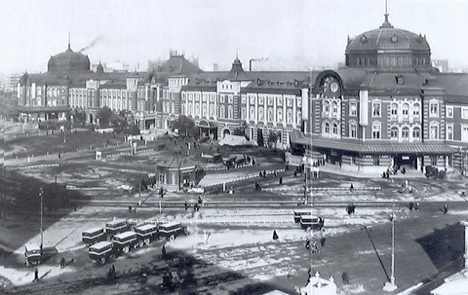

Unknown-16


The original brick Tokyo Station (Marunouchi Building) in 1914 (Wikipedia)


When I tramped through the different places, it was impossible not to see change going on all around. Old buildings disappeared, new ones replaced. It was as if a war was being fought in the streets. A building boom, had been waged in the streets around the residents, with concrete pillars and walls enclosed around them. The buildings were objects of compassion and heartfelt pride in the inmost soles of the prime instigators -- architects, building contractors, and local government officials. A play on Winston Churchill’s wartime speech: ‘Never was so much damage done on so many, by so few. They bestowed the ugly new buildings with all the foundation and permanency, across the country. Such people had even focused their attention on the famous Tokyo Station. Not just on the station, but its history and what it meant to the area, and to Japan. Plans had been drawn up to demolish the iconic station building -- all in the name of money and profit. The plans were to demolish the station and replace it with a multi-complex. The Tokyo Station stood on prime land, near the downtown Ginza commercial district. There was no profit in history. In 1983, construction on the new Narita Shinkansen Line, found itself on the shelf. This was in part becasue of a series of protests from farmers, who refused to sell their land for the project. In my eyes, each newly errected skyscraper, widened the distance between Japan's past and presen, that bit further. The train platforms at Tokyo Station in the Chiyoda area of Tokyo, dated back to 1914. In that year, around 553,000 used the train service. The station building stretched some 335-meters. The Tokyo Station Marunouchi Building opened at a time of rebuilding. When it was opened, Tokyo Station became a showcase for the nation's ever-expanding rail system. It survived the Great Kanto Earthquake, in 1923, and close to being firebombed and completely demolished, in the closing months of the Pacific War. In more recent times, the old Tokyo Station's days had been numbered. Already, building contractors were glorified at the prospect of replacing it, with a new massive multi-complex box-like concrete structure. No doubt, with a few trees added for good measure. Good sense won out, for the present. The Tokyo Station building had got a reprieve, the local harangue had been heard, at least for the next couple of decades. The Marunouchi side of the station had undergone renovation, in 2009. This was not far from where Japanese Prime Minister, Osachi Hamaguchi, was shot, in 1930. A metal plaque marked the attempted assassination. It was not the fist time at the Tokyo Station a politician fell victim to an ultra-rightist attack. Some nine-years earlier, Takashi Hara was stabbed to death in front of the South wing of the station. At the time, Hara had just arrived on a train for Kyoto. In the year of the murder (1921), around five-million passengers used the station. Today, it was the main intercity rail terminal station, in Tokyo. In terms of the number of commuters, it was the busiest station in the country. It served the Shinkansen (bullet train) high-speed lines, in addition to a host of Tokyo Metro and regional commuter lines.

Done 
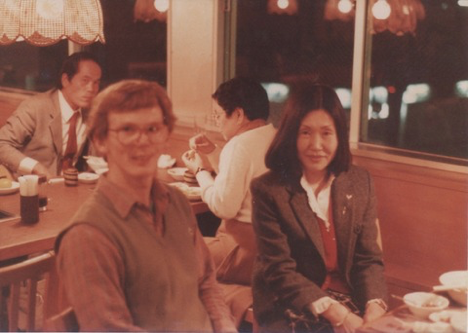

Unknown-15


With a friend, Sabina, at a Korean restaurant in Ginza, in 1984

Unknown-14


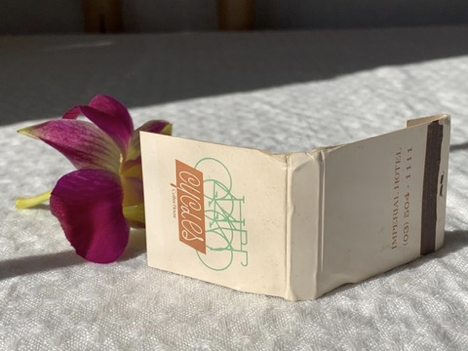
Imperial Hotel ‘Cycles Cafe’ matchbox, 1980s


Which was the most important, to shake hands with the future, or wave good-bye to the past? Frank Lloyd Wright designed the old Imperial Hotel, which once stood across from Hibiya Park, in Tokyo. As for sweet memories, I used to be a regular Sunday morning customer at 'Cycles', a gourmet cafe on the ground floor of the hotel's annex building.The current hotel annex building had replaced Wright’s architectural wonder, in 1967; the year the James Bond film, 'You Only Live Twice' hit the big screne. Once the buffee breakfast was finished, I used to sit and read the morning newspaper, and drink bottomless cups of coffee until it came out of my ears. My sweetest memory of the lot, were the Sundays I met my Korean friend, Sabina Kim, at the cafe. Among my little treasures, was a tiny book of Imperial Hotel 'Cycles' matches. A strange little thing to hold onto for so many years, for I never smoked in my life. In those days, many Japanese did. The cafe in question had long been replaced by a number of gourmet cafes and restaurants, some of which I sampled to try the delicious local and international cuisine. In addition to the book of matches, I still treasured my memories from those days. Ironically, the Wright-designed Imperial Hotel, officially opened on the 1 September, 1923, the same day the Great Kanto Earthquake struck, but survived with minimal damage. A telegram to Wright from entrepreneur, Ōkura Kihachirō, after the earthquake stated: “Hotel stands undamaged as a monument of your genius hundreds of homeless provided by perfectly maintained service congratulations”. Wright had left Japan, in 1922, more than a year before the opening of the hotel. The hotel was the most famous of his works, in Japan. Much of the hotel was destroyed  by incendiary bombs in the closing months of the Pacific War. Wright learned of the damage to the hotel, but chose not to return to Japan to oversee repairs. The hotel was occupied by the Occupation Forces, up until it was returned to the rightful owners, in 1952. Time and events had taken a toll on the hotel's foundations, and its days were numbered. The plan for a new high-rise structure was being batted about. The (Second) Imperial Hotel building, finally closed its doors to business, in 1967. Soon afterwards, the wracking ball went to work on the hotel building. Much of the old hotel and the courtyard entrance, had been dismantled and relocated to the Meiji-Mura Museum, near Nagoya. The current (Third) Imperial Imperial Hotel that replaced the old one (in 1968), was not worth penning in my notebook. On the road, I passed a countless number of other buildings, no less apparent than the current Imperial Hotel. The damage was done, the past was the past, and ‘let sleeping dogs lay’, as the idiomatic term advised. There was no space for structural works of art these days in Japanese cities and towns. The mindset was for buildings to be more suitable to the needs of the time. It was not important that buildings be a part of a city's history and culture, and a thing to be proud of in the future. There was no need any more for Pyramids, or Taj Mahals, or Château Frontenacs, or Casa Milà, or whatever.

Done

Unknown-13


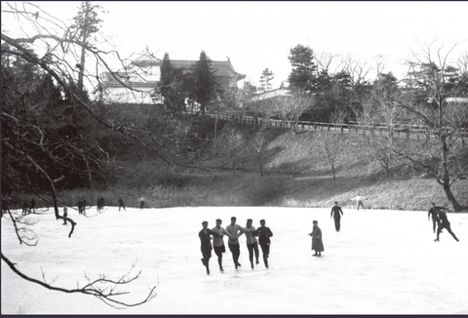
Daini high school students skate on Goshikinuma Pond, 1924 (Tohoku University Archives)


Not only did these imposing iconic buildings stood out for all to see, but they blended superbly and complimentary to their areas, they were part of the history, the environment, the culture, and of course, the future. Long gone were the  days of great and beautiful buildings, if not architects, like, Frank Lloyd Wright. A short walk from the castle grounds took me, unexpectedly, to the Goshikinuma Pond. Goshikinuma Pond meant, ‘Five-colored Ponds or Marshes’. This pleasant spot was located in Kita-Shiobara Village in Yama in Fukushima. Even with a little l sign, and sculpture, it was easy to miss the pond. Thankfully, I kept my eyes open. Sendai wsa said to be the place where figure skating was born, in Japan. During the Meiji period, a German missionary called, Georg Würfel (1880-1936), was credited for the introduction of figure skating, to Japan. He taught figure skating to local residents, including his students at Daini High School, in 1909. There were other larger and more famous ponds called Goshikinuma in Fukushima. Goshikinuma Pond, of figure skating fame, was once surrounded by a grove of trees, in the 1900s. Today, the pond still froze over in winter, but because of safety hazards, iceskating was prohibited. In addition to his missionary work, Würfel taught German at a theological school in Koishikawa in Tokyo, for a couple of years. He taught at other schools in Tokyo, including the famous Waseda University, before moving to Sendai, in 1908. Needless to say, the rest was history. Würfel lived in Sendai for close to three-decades, until an untimely death, in 1936. He had worked in Japan through the Meiji and Taishō periods, and was one of several native foreign teachers, in Japan during that time. One of the more noted was Irish-Greek author, Patrick Lafcadio Hearn (1850-1905), who had arrived in Japan years earlier than Würfel, as a newspaper correspondent. Like Würfel, however, Hearn did not hang around for long, and was on the move soon after his arrival. After advice of an Englishman friend, Japanologist and Professor Basil Hall Chamberlain, Hearn became a teacher. In his day, Hearn came to love, marry, and raise a family. He also settled comfortably into Japanese ways, where he gained inspiration for his writing.. Hearn was known in Japan by his Japanese name, Koizumi Yakumo. Hearn's acquaintances, Chamberlain, played a key role in the earliest translations of haiku into English. Haiku was a short, highly structured form of traditional Japanese poetry. Among a diverse range of interests,  Chamberlain was best remembered in the literary world for his one-volume encyclopedia -- ‘Things Japanese’ -- published in 1890. One thing foreigners during the Meiji period, in Japan, had in common, was that they were likely the first contacted workers. Fgure skating had come along way since the German, Georg Würfel, first brought it to Sendai. Japanese figure skating champions, Yuzuru Hanyu and Shizuka Arakawa, were born in Sendai, where their illustrious careers started. Another sport was baseball. An American English teacher called Horace Wilson, was accredited with introducing baseball to Japan, in 1872.

Done

The first baseball teams in Amcerica, began to appear around 20-years earlier. The first baseball team in Japan --  the Shimbashi Athletic Club -- was started in 1878. However, it took longer for the sport to catch on, and for other teams and clubs to be established -- Yokohama Country & Athletic Club, in 1868; Keio  and Waseda Universities, in 1903. A few days ago, I learned from the NHK TV news that Sendai Ikuei High School reached the finals of this summers national baseball championships at the famous Koshien, a baseball stadium near Kobe, that hosted the games since 1924, when it opened. Sendai blitzed Waseda from Tokyo, 7-0 in the semi-final. The news also spoke of the nuclear reactor in Sendai to be restarted. When I opened the door of my place in Tokyo, the only thing on my mind was to turn on the TV and watch the national high school baseball finals -- Sendai Ikuei faced Tōkaidai Sagami from Kanagawa. Tōkaidai had got off to a good start, and led 2-0 by the first innings. Tōkaidai Sagami went on to win, 10-6. This was the 97th championship since it began in 1915. The 61st Summer National High School Baseball Tournament, in 1979, at the historic Koshien Stadium in Kobe, was the first game that I ever watched, not only on television, but in my life. At that time, I lived in Tobunirima in Saitama, not long after I came to Japan. The final, was between Minoshima High School and Seiryo High School, from Wakayama and Ishikawa, respectively. It was a nail-biting game, which went well beyond the allotted time. Minoshima went on to win 4-3. A number of changes came out of this 18-innings event. Today, high school baseball games did not stretch beyond 15-innings. Should the score be tied, it was rescheduled for another day. That said, I did not care much for television programs. Thanks to a friend, who lived nearby, I was able to watch English Premier League games, with a cool beer. in hand  


Done


What happened in Japan and the world on this day???? 
Irishman Walking (Stage 17 Chapter 2) Summer 2015.

56439087_2291153687790871_6976789749440708608_n

Irishman Walking (Stage 17 Chapter 2) is about my walking the main and coastal roads of Japan. Summer 2015.


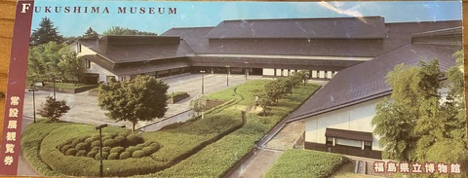
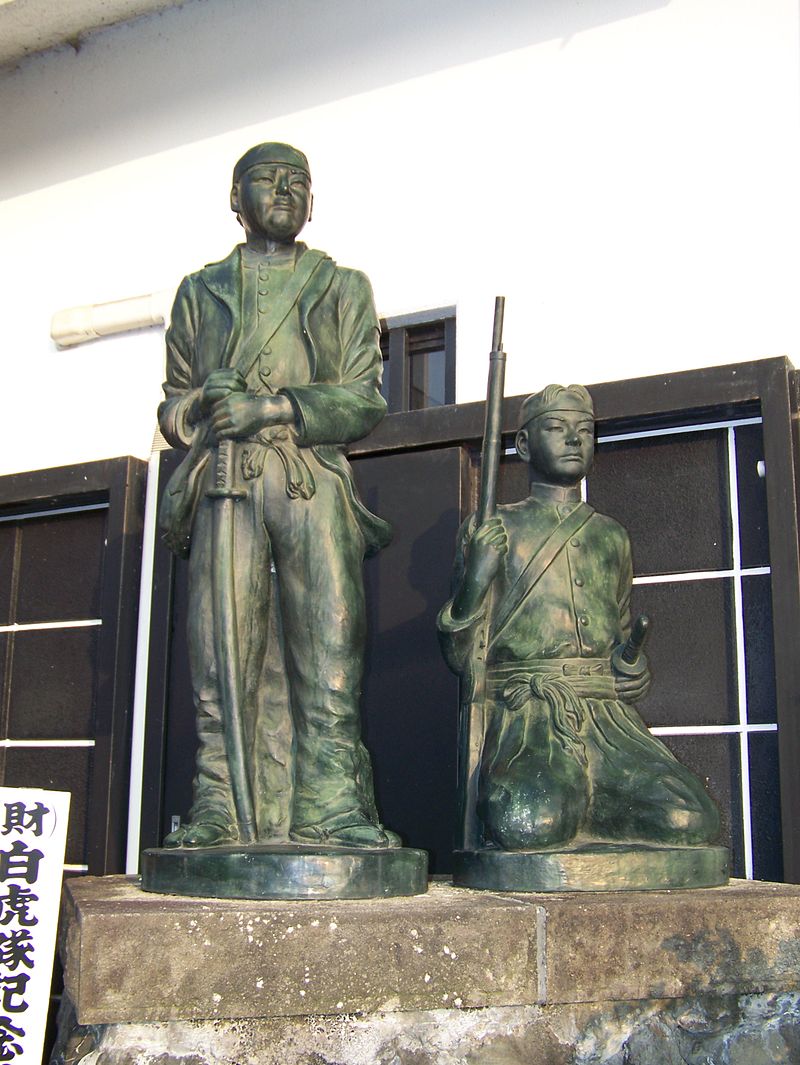
2 Aug, 2015: Work duties had kept my friend busy for a good while, and it was not until close to midnight when we finally met. Therefore, I had plantey of time to get to the Higashiyama Grand Hotel, where my friend had booked a double room. The hotel was tucked a wee bit out of the way, especially on foot. The hotel was so far in the sticks that even my WiFi failed to work. In the absence of the BBC news, I turned on the television set to see what was on. It was the usual lighthearted boring programing. If it had not been for an international football game -- Japan verses North Korea, women's teams , I wold gone fallen asleep. As it turned out, North Korea were simply superb, with a 4-2 win. The time had gone midnight when my friend's car drove into the hotel carpark. About that time, an interesting bilingual documentary was about to begin. We were both too tired to watch anything. There were a few weary words of welcome, and an agreement to leave our plans until tomorrow. Formost on our minds was to call it a day, and hit the sack. After a hearty breakfast my friend drove me to a number of touristy places, which included the Fukushima Museum. It was my second visit to the musuem, but that was a good eight-years ago. So I could not remember anything about it. What I did learn was that a moving pathway had been installed since then. The pathway was installed to assist visitors to the top of Iimoriyama, at a hefty price. Although, Iimoriyama was not far from Aizuwakamatsu, it was still a good drive for my friend, to set up our meeting, so I was more than grateful. The elderly, in particular, could now reach the top of the mountain, without much of an effort. Being in the prime of my life, I found Iimoriyama to be more a hill than a mountain. A the top, visitors payed their respects to the 19 young samurai, referred to as 'Byakkotai'. In English, the Byakkotai were referred to as, ‘the White Tiger Unit’, a force of few hundred young warriors of the Aizu Domain. The samurai warriors attempted to reestablish the traditional society they knew. This was called 'Sakoku' -- a government policy of near total isolation, from foreigner interference and influence. It was a period when foreigners could not enter Japan, nor Japanese leave the country, on penalty of death. Needless to say, their hopes and desires were dashed. Some chose to commit seppuku, a ritual suicide, rather than surrender to the new Meiji forces. Any plans for victory must have appeared a forlorn hope to the young samurai. The through themselves gallantly into the task at hand, and fought bravely in the Boshin War, 1868-9. What could one say about such young men? Being part of the Byakkotai, went beyond any boyish love of adventure. Where they truly receptive of a revolution? Was it impossible them to steer an alternative course? Rather than to stand and fight, and to give their lives for the Tokugawa shogunate. The persuasiveness of their cause, and optimism, to turn the clocks back, must have been unbelievebly strong. To take on the better equipped and modern Meiji government forces, was definitely not for the faint-hearted. Many myths expressed the belief in an honourable death, and many samurai even welcomed and sought it in battle. One example of this were the young Kamikaze pilots who saw themselves as modern day samurai.


Done

800px-Byakko-tai_statues


Statue of Byakkotai warriors at Iimori Hill, Aizu-Wakamatsu in Fukushima (Wikipedia) 


Unknown-12


Victory, as it emerged, was not the outcome the Tokugawa government, nor the confident young samurai, had hoped for. What the Meiji government needed to do was to take swift action to restore order, and get the country out of its economic slump. Gradually, the cogs of trade and industry began to move. The following years brought drastic change to the political system. It was a time that placed importance on the working classes, particularly the merchant-class, noted for their enterprise. During the early-years of the Meiji Emancipation, however, violence continued sporadically here and there. Still, the old ways of life were never the same. The ancient rights and dreams of conquest, among the old samurai society, were shattered and dead. It was a call not to dwell on the past, but pay more attention to the future. The principle and conviction at the time, was to welcome and accept new enterprise. The young warriors, who had fought vigorously for those ideals, must have anticipated the consequence of capture. The leaders, who commanded their obedience, had fallen dead around them. Those that survived the wounds in battle, found their hopes blighted. Some lived long enough to see any return to the good old days dispelled, and their previous victories turned to dust. The Byakkotai were teenagers. The Tokugawa shogunate, therefore, could not be looked back on in terms of  nostalgia, a yearning for the chivalry of the samarai. Those who survived the battle, paid a heavy price for their defeat -- unemployed, poverity, emancipated on the verge of starvation and disease, politically powerless, and alienated from the new ambitious society. This was what confronted them. In short, the doctrine of the ‘good old days’ had been turned on its head. In the course of time, any incongruous alliance with the Tokugawa shogunate past, became less. There was little choice, but to accept the new political order. There was no where for the young warriors to turn, but to climb over the barrier of their past that obstructed them -- come in out of the cold. The time had come to accept the new Meiji government and to assimilate into a new way of life that had been met with an enthusastic response from the common people. In the first 10-years of the nineteenth-century, trade with the outside world increased considerably in Japan, and more rapidly than it had in previous decades. A little below the Byakkotai graves stood the Aizu Sazaedo Temple, located in the Oaza Yahata area of Aizuwakamatsu. Its old wooden building was three-storied, 16.5-meter high, with a hexagonal Buddhist pagoda, built using early Japanese woodworking  techniques. The official name of the temple was ‘Entsu Sansodo’, which literally meant, ’three full turns’. This was in reference to its winding staircase. The spiral-staircase led visitors past some 33-Kannon statues. The building, with its unique double helix-shaped staircase, was built in 1796. Therefore, it was no surprise this unique temple was designated an Important Cultural Property. To an interested layman like myself, it was of a somewhat unusual design, more like a set of stairs incased in an outer shell. Then again, what the hell did I know about Japanese architecture?


Done

What I did know was that I would more than likely come to regret not forking out the ¥400 Yen entrance fee, and look about the place better. It was believed to be the oldest wooden structure in Japan. When I visited eight-years ago,  it cost ¥800 Yen to enter, which at the time surprised me. Now the entrance fee was half that, which I still found was a bit on the steep side. It was not an overly large building, with lots of things to offer its visitors. What interested me more, was our visit to the Fukushima Museum, opened to the public in 1986. The Fukushima Kenritsu Hakubutsukan, to use its full name, was situated in the old Aizu-Wakamatsu Castle grounds, now a large park. It saddened me a little that nothing of the original Aizu-Wakamatsu Castle remained. When the castle was first built in 1384, it was called Kurokawa Castle. Up until 1868,  was the main Tokugawa administrative and military headquarters of the Aizu and Tōhoku regions. That was before castle was demolished by the new Meiji government, six-years later, in 1874. The tenshu, the castle's main tower, was rebuilt using concrete, in 1965. There was a museum inside, and an observation gallery that offered visitors a panoramic view of the city. An old tea room, called Rinkaku, had also been restored. It was designated an Important Cultural Property by the local Aizu governemnt. This was not the first visit to the museum. The previous time was on my Dragster, eight-years earlier. For the life of me, I could not recall anything about that time. People visited museums for different reasons all year round. For me, I simply wanted to learn something about the local culture and history, and the many local crafts the region was noted for. After all, that was the mission of a museum, to highligh the natural history and culture of the prefecture. Hopefully, in the company of my good frind, I will not forget what I learn, so easily this time. Long gone were the youthful days, when I saw visits to museums only in terms of fun. Fukushima was a large prefecture, divided into three main area -- Hamahori, Nakachori, and Aizu. It was also home to the Ōu Mountain Range and the Abukuma Highlands, with  Mount Ōtakine its hightest peak. Stretching some 500-kilometers north to south, made the Ōu Mountains the longest range in Japan. Together, the mountains played a great part in the different climates in the prefecture. Over the years, Fukushima barely had its fair share of natural and manmade disasters. Unfortunately, the damage casused by the 2011 Tōhoku earthquake and tsunami, forced me to take a lengthy detour inland on my own narrow road to the deep north. The coastline and surrounding areas of the nuclear reactors remained closed to the average Joe Pulic. Of course, that was neither here nor there, for nothing was going to prevent me from accomplishing my mission.

Done 


Unknown-11


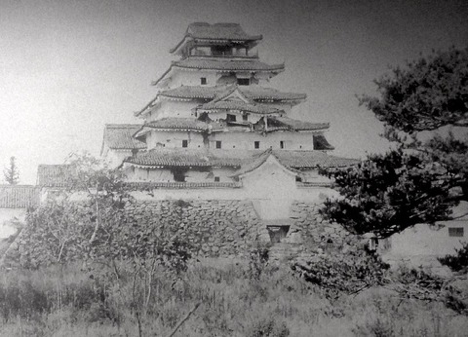
The original tenshu of Aizuwakamatsu Castle, 1868 (Wikipedia)


3 Aug, 2015: We left the Higashiyama Grand Hotel, a good hour before checkout time, to give us a wee bit more time out and about together. This was our final day in Aizuwakamatsu, or when I would soon be back on the road proper. The interior of the car felt like an oven, just as uncomfortable as tramping under the sun all day long. According to the NHK news, the weather woould hover around 36°C. What little time we had left together, before I headed back to Koriyama, to restart my mission, where I left off, we decided to go to Aizu-Wakamatsu Castle. For some reason the castle was also known as, Tsuruga-jo Castle. Like before, I could not recall anything about my last visit there, eight-years earlier. “Mmm!” I momentarily wondered if this had something to do with getting older, or a mental condition that I should be more concerned about? At the castle, a pamphlet in English was pressed into my hand, along with the two tickets, which came to ¥1,020 Yen. Two highlighted sentences on the pamplet caught my eye: “A roof of Tsuruga-jo Castle is the only red roof in Japan,” and “The inside of the castle tower is a museum.” The castle dated back to 1384. Since that time, a number of notable historical, encluding mythological, figures had held positions of one level or another. Unfortunately for the castle, its rulers had placed their money on the wrong horse in the civil war, historically refered to in school textbooks as the Boshin War. That was when the Meiji Imperial Army defeated the Tokugawa Shogunate regime in a series of battles. The Tsuruga-jo Castle was finally demolished, in 1874. Today, there were only 12 extant feudal period castle keeps, in Japan. Just over double of that number (25) of castle grounds still had structures that dated to tte 1600s -- buildings, stone walls, gates, moats, etc. Most of the castles, however, that visitors took photographs of today, were mainly concrete replicas of what once was. Some of them were precise replicas of the original plans, built with the same original methods. Others were little more than tourist traps. Many of the concrete replicas had been poorly planned -- keeps that were out-of-scale, and walls that did not exist in the original structures. This seemed quite a stepdown from the 171 castles that existed, during the Tokugawa period, 1600-1868. The Land of the Rising Sun was once boasted more then 3,200 castles, including forifications, in the Sengoku period, 1467-1600. "In 1870 the Meiji government ordered that all remnants of Japan’s feudal past be demolished including castles, tower fortifications, samurai quarters, and armouries. Over the next four years, in their fervour to forget their feudal past and embrace a new fresh modern nation, the Japanese demolished all but 19 main castle keeps. Many hundreds of stone walls and moats surrounding castle baileys however remained, as they proved far too difficult to demolish. Many of these became public parks, private residences, or had government buildings built within them. All but only a few moats were filled in to make way for roads and public buildings. Quite a few castle grounds soon served as new locations for Japan’s new modern military forces, with their gardens levelled, trees felled, and moats filled in to provide parade grounds for the new western style military drills." (nisshinkankobudo.wordpress.com).

Done
 

The location of the old Aizu-Wakamatsu Castle was declared a National Historical Site, in 1934. The 1930s, one of the godforsaken blackest times in Japanese history, a time when rightwing fundamentalists ran the roost. The onslaught of the Pacific War, claimed countless casualties and brought despair to the Japanese people. My friend and I spent a good hour and a half looking about the castle inclosure, created in part by the financial support of local citizens, in 1965. “Mmm!” When the time at last came to head back over to the train station, I could not help wonder why I had forgotten just about everything I had seen on my previous visit. Perhaps I really was getting old, or the years were creeping up on me without noticing it. Surely everyone remembered visits to museums and tourist spots. Another thing that bothered me, were my books, for I could not remember most of what I read for the life of me. This was especially the case with the books I read at university, let alone the topics debated about them. At one time I even wondered what was the point of going to university in the first place? Alas, time waited for no one, and after a nostalgic few days with my good friend, we parted, and headed off in our opposite directions.


Done


4 Aug, 2015: Slept well, as usual. The mornings, as was often the case, came too quickly for my liking. The NHK news reported no letup in the sweltering heat. This was not the worst of it. I left my maps and a book inadvertently, in my friend’s car. The moment I reached Koriyama City, I headed for map section at the nearest bookshop. The plan for this morning, after leaving the Toyoko Inn, was to head for the Showa dori, segment of road along Route 4. In Tokyo, I knew Route 4 better by its name, the Nikko Kaido. Over time, nothing lasted forever, including roads, let alone their names. All the same, it was good idea for me to stick closely to Route 4. The road gradually drew nearer to the southern part of Sendai, where I was headed. There I hoped to get my arse onto Route 6. By then, I should be able to get a better idea of what roads I needed. Communication with another friend, Sean, opened up the possibility of meeting up for awhile, perhaps somewhere along Route 4. This would need to be before the Obon holidays. At Obon time, just about everywhere in Japan was crowded with merrymakers, not to mention the roads with traffic. Sean was an Australian friend of mine, who had, to use the idiom, 'married into money'. Among his manu interests, he had setup his own Website, that included the word -- backpackers -- in its name. My friend told me that he wanted to get some photos and make a short video of me tramping along the road, with my backpack. There was talk of the possibility to camp awhile together. That said, I had a feeling that our meeting would not materialize. My friend was a busy man, and things always seemed to pop up for him to take care of. Sean was the sort of guy who had a mind that changed like the wind. That was his character, and there was nothing I could do about it one way or another. My big problem now was the relentless sun, which beat down on top of me like there was no tomorrow. Any shade to shelter under, seemed to be few and far between. As a result, the thoughts of laying down in a cool isolated spot for a nap, plagued me no end, for a good while. Thankfully, the kilometers fell away like dominoes. This was along a dusty hot asphalt road, with only passing vehicles for company. Another thing that occupied my mide, was keeping an eye open for drinking water, or 'akua' in Japanese. Needless to say, akua was the most important of drinks, for animal life and nature, even if it was tasteless. So hot was the weather that people forked out their hard earned money for bottles of water than usual, at shops or vending machines. The farmers, too, were surely pissed off with the stifling hot days of summer. On the road again, I found myself at Nihonmatsu-jo, the site of a castle located in the Kakunai area of Nihonmatsu City in Fukushima. The castle was ruled by Mitsushige Niwa, the first feudal daimyō of the Nihonmatsu Domain, in 1643. Like many castles during the Meiji Restoration, the Nihonmatsu-jo was dismantled -- the grounds transformed into a park (now the Kasumigajō kōen), in 1872. The park landscape was noted for its nature and seasonal beauty, and a National Historic Site, since 2007.

Done 


Around April, the castle grounds were ‘embellished with some 1,700 cherry blossom trees in full bloom -- like a snow in spring. An abundance of pink and while petals was said to resemble a cloud, hence the castles’s nickname, ‘Castle in the Mist’. “Mmm!” A castle in the mist, was a sight to behold, even if only for a brief moment. In addition, countless visitors flocked to the park to enjoy the country's largest chrysanthemum doll festival, in autumn. Visitors were also able to view Japanese sculptor, Kentaro Hashimoto’s iconic statures, erected in 1996, of the young Byakkotai warriors, of the Boshin War. They were members a a grounp called the: 'White Tiger Brigade’, which numbered around 300 young samurai, aged between 12 to 17-years old. A tragic story that involved ritual suicide that had long become immortalized in Japanese folklore. Today, many Japanese nostalgically saw the period as the golden age of their country's past. They saw the young samurai’s actions in terms of courage and dignity, held them in great esteem. For whatever the reasons, many Japanese were proud of their own family’s ’samurai' background. “Mmm!” For a moment, wondered if the way the samurai were protrayed on the big screen, or in television dramas, had something to do with it? In away, their suicides removed any responsibility they had for the military catastrophe. The park was open 24-hours a day. Therefore, had the time been right, it would have been an excellent spot to pitch the tent for the night. Adachigahara Furusato-mura was a kind of theme park located in Nihonmatsu City. It was not far from the Abukuma River, which wound its way northwards around the park. The park was home to Adachigahara Furusato-mura Village -- a traditional Japanese village -- that give visitors a glimps into the past. It was part of a large open-air theme park, of the same name. In Japanese folklore the area was home of 'Onibaba', a female demon that lived in the mountain, and feasted on humans. There were a series of Onibaba stories, including a 1964 Japanese psychological horror film, directed by Kaneto Shindo. The film-plot was based on an old Buddhist fable, set during the feudal period (1400-1600). The two female protagonists in the story survived by murdering wandering soldiers, returning home from the bloody battle field. Their armor was removed from their dead bodies and sold to a dealer in secondhand goods.


Done 


5 Aug, 2015: Camp was finally made at a place called, Chieko-no-Sato, a touristy rest stop area, with a public toilet and places to eat and shop. There was a 24-hour convenience store, located in Adachi in Nihonmatsum, and which I expected to pay a visit to. Thankfully, sleep came quicker than usual that even the wine went untouched. A glance at my maps told me that I should reach Sendai in four-days time. The hot weather could could wear down the devil if given the chance. For the average Joe Public, the possibility of heatstroke was always a main concern. Fukushima City drew nearer with each step that I took. If all went well, I may be able to stop the night at a business hotel there. What I needed was to escape this damn weather for a while, however, any such plans were soon quashed. All the hotels around the train station area were full, and this was not even a weekend when I expected them to be. My membership card at the Toyoko Inn proved useless at cutting a few corners. The schools were still out for the summer holidays period. To make matters worse, Obon was fast approaching. It had been a slow lazy day on the road, but I still felt tired, no thanks to the stifling sun. The sun had not finished with me yet. There were still a few more hours of sunshine left. What was the point in bitching about it? All that I could do now was to stop by at any hotel I saw on my way out of the city to see if they had a room. What I needed was a wee bit of  the luck of the Irish. At one of the many convenience stores I passed along the way, I stopped and chatted with a young fellow. He told me that his name was Masahiro, and that he was hitch-hiking form Tokyo to the Sendai. In away, I envied Masahiro-san, for having the balls to do it. In ths 70s and 80s, hitch-hiking for me was like a food, something that had to be done. In my advancing years, I still recalled a good few fund memories of my hitch-hiking days in Japan. Thoughts of a number of the people I I met all those years ago, still burned like an eternal flame in my heart. Once during the New Year holidays in 1980, I hitch-hiked from Tokyo to Kobe with a girlfrind at the time, Toshiko. Out journey to Kobe inclued a series of local buses and trains, thrown in for good measure. In Kobe, we stopped at her younger sister's home. The sister's husband was a muscular Japanese man, who was a keen rugby player. They were a nice and homely couple. It was also the first and last time I drank Japanese sake, or rice wine. The jusband and myself mush have polished off three bottles of the stuff that night. Needless to say, I could not remembered much about that time, other than I was as sick as a dog. When I first met Toshi-san, to use her nickname, she worked at Keio Hospital in Tokyo, as a nurse. Back then, I taught English conversation lessons to doctors and nurses at Keio, and at the Cancer Certer in Tsukiji, also in Tokyo. Toshi-san hasd been one of my students, before we started to fall for eachother. As we drew closer, we planned a number of daytrips together -- the Fuji-Hakone-Izu National Park. I recall that another nurse, from the same hospital, came with us to Hakone. There was a bit of drizzle that day, and thanfully we had umbrellas. There was the time when we stood on the deck of a sightseeing ship on Lake Ashi, umbrellas in head, and had our photo taken. Unfortunately for the life of me, I could not remember the name of the other nurse. Sadly, the time came for us to head off in our different directions in life. From time to time, Toshi-san pops in to my mind, and  each time I wonder what she was up to these days.


Done


Unknown-10


Toshi-san and yours truly, in Kobe, New Year, 1980


6 Aug, 2015: After my failure to find a hotel for the night, camp was finallymade on a piece of ground just off the main drag, Route 4. The tent was pitched on the banks of a river, called Matsukawa. A pitched battle, called Matsukawa-no-Tatakai, was fought on the banks of the river, in 1600. One of the most interesting historcial Japanese figures, was a local daimyō, called Masamune Data. Date, a one-eyed ruler, whose army invaded the Fukushima region, on learning of the victory of his leader, Ieyasu Tokugawa. Following the Battle of Sekigahara (1600), Ieyasu became the first shōgun of the Tokugawa Shogunate. The Tokugawa shogunate ruled Japan for around 250-years, until 1868, the beginning of the Meiji period. In the course of his rule, Ieyasu outlawed and persecuted Christianity. Masamune on the other hand, sympathized with foreign traders and Christian missionaries in the region. He also worked to open up relations with Christian envoys in Rome. He sent expeditions to a number of countries -- Mexico, Philippines, Spain, and Rome. More recently, Masamune was portrayed in a number of Japanese period dramas, and by Japanese actor, Ken Watanabe, in the popular NHK televeion series Dokuganryū Masamune, in 1987. The Matsukawa flowed from Mount Azumayama, eastwards through the residential area of Fukushima. At Fukushima, the river joined the Abukuma-gawa, a river that made its way through Shinobu-ga-oka Sogo Undo Koen, a large athletic park. The Fukushima Hanabi Taikai, a fireworks festival, was held at the park every July. This year, 2015, was the thirty-seventh anniversary of the festival. The 234-kilometer long Abukuma-gawa was the second longest river in Tōhoku. It was also the sixth longest river in the country. The 234-kilometer long Abukuma-gawa was the second longest river in Tōhoku. The river flowed into the Pacific. I liked to camp near rivers, and usually found them peaceful places. Of course, I needed to be aware of the dangers -- sudden floods, slippery banks, etc. The sound of moving water could be very southing. That said, sleep did not come as easy as I had hoped. This had nothing to do with the noise from the passing traffic, for I slept well even in the worst of conditions. Rather, I had a feeling that I caught a cold. Much of the night was spent searching for tissues to blow a continuously runny nose with. It never bothered me during my childhood days, for just about every boy on our street, used their sleves. Was it possible to catch a cold in such hot weather? Contrary to popular belief, or so I had just read, the common cold was just as easily cought in the summertime, as in winter. Rhinovirus was main reason for the common cold, regardless of the season. According to my research, the virus infection in the nose seemed to proliferate more in temperatures of 33–35°C. The traffic along the road was never ending, that I could not think of a busier and more dangerous road since I left Tokyo. This was all the more annoying in the day, when I needed to find some shade to escape the stiffling sun for a while. There were times when the traffice prevented me from crossing the road, to be in the shade.

Done

In unforgiving weather conditions, part of my mind was taken up with how best to avoid the sun. Another part reminded  me that I had a tight schedule to stick to, and that stopping to rest was out of the question. Besides, much of the road was devoid of quality trees, or places to seek shelter under for a while under. The Shinto shrines that were home to tall quality trees, and shade in abundance, however, they appeared few and far between. Many Shinto shrines were known for their centries old sacred forests, or other ‘yorishiro’ -- trees, rocks, waterfalls, mountains,  -- natural object that attracted spirits or kami. In Shinto terminology, kami were found in nature, a physical space on Earth, called ‘shintai’. Back to the present, my head felt roasted and preoccupied about finding some air-conditioned spot to kill time at for a spell. If only I could find a shade to lay down and take a nap under, or wait for the sun to sink a bit deeper in the sky.


Done


7 Aug, 2015:  When I crossed the border into Miyagi Prefecture, about 10-kilometers south of Shiroishi, I had a feeling of relieve to have left Fukushima behind me. It gave me a sence of progress on the road. The people in Fukushima were kind to me, so a part of me felt sad. They had cheerful smiling faces. Their kindness was a thing that I seldom experienced in Tokyo. The time was by no means late, but the sun had really worked hard on me. So much so that I found myself stopping at just about every convenience store I came to. This was mainly to enjoy the cool air-conditioned interior, for a spell. Only God knew how many lollypops I must have ate in a crazy effort to cool my body down. The problem with drinking cool sports drinks was that they were gone in minutes. Camp was made at the top of a steep flight of stone steps, which led to an isolated Shinto shrine. After pitching the tent and tossing the gear into it, I continued my way further upwards. The path led me through brush and brambles, past unkept trees, and around large rocks. After a short distance, I stopped at the little shrine. There was no sign of a freshwater tap. There seemed little need to pull the rope at the haiden -- the hall of worship -- to awaken the Shinto diety and ask for help. Traditionally, tugging on the rope to ring the bell was to ward off unwanted spirits, or to purify the surrounding space for the kami arrive. A strange act for any atheist, I clapped my hands together a few times, like the Japanese did when they paid respect at shrines. “Mmm!” What sort of stuff did the Japanese pray for? I momentarily wondered. Many were anxious for something good to happen for someone, if not for themselves. Others prayed to distance themselves from something dreadful. The power of prayer was not to be scorned or laughed at. Religious literature awakened intellectually aware minds, particularly those who felt wronged in someway. Thanks to a strict Roman Catholic upbring, religion of any donomination or spiritual conviction, was well beyond my own intellectual capacity. All the same, it seeemed strange that there was no Shinto literature per se, such as, the Koran and the Bible. Faith in a god, or gods, was perhaps the most powerful of all emotions known to man. These days, however, the hold that religion, or sects, had on their followers, was less firm than previously. Most anything that lent towards religion, or supernatural ways, was not the kind of thing that I needed on the road. Any Irishman who was true to himself, harbored an inferno of emotions. The last time that I seriously attended mass -- dipped my fingers in holy water, knelt at an alter, or sat my arse down on a shinny church pew -- was as a young child growing up in Belfast. Since that time, I cannot think of any personal identification with religion or the church. There were more pressing issues on my mind, and spiritualism was not among them. Morning came soon, and once again, I was more than ready for the road ahead. An orange sun rose from the eastern horizon, and graced the road, Route 4, that I would shortly follow. Unlike previous days, a broad shade fanned out over the righthand side of the road. “Mmm!” If only the shade from the trees and bushes could accompany me as far as Sendai, or so the thought crossed my mind.

Done

Just as I contemplated the best way to deal with the sun or the heat, I caught sight of a tall slim Caucasian man up ahead. The man appeared to be waiting for me to draw nearer. His truck was parked by the side of the road. “Ah! A gaijin!” I said with a smile, as I got closer. “Ha! Yes! I’m from New Zealand.” The man introduced himself as John. And told me that he had seen me tramping along the road, when he past, back down the road. "So, I decided to stop and say hello". John added. In the course of our chat, John handed me a 250-gram bar of chocolate -- Whittaker’s Almond Gold Milk Chocolate. “Don’t worry, it’s real quality chocolate, so it won’t melt so easily". Of course, I was happy to get the wee out of the blue gift, regardless of its quality, for kindness was a many-splendored thing. Perhaps John knew something that I was not sure of, or what melting had to do with quality. When I was given the chocolate, I did not have the slightest of appetites -- no thanks to the stifling weather. Still, I knew that I needed to eat more than my usual morning rationing of muesli. The chocolate treat would more than do the trick. Before heading off down the road, we exchanged the necessary contact information. It was be nice to keep in touch, and look John up, when I next passed through Gumma Prefecture, where he lived with his family. “Why not!” I replied to his kind offer. “It might be nice to make the trip through Gumma on my motorbike”. By now, the sun was really worked its evil on both of use. It was time to get a move on. “A nice cool beer might have been better than a bar of chocolate.” I jokingly commented, as we turned to take our leave. “Yes, a cool beer! Nice!” He replied with a smile, as we shook hands and parted company. Further along the road, I made a stop under a shade to boil water for a cup of tea. As I waited for the water to boil, I took out the business card John had given me earlier. ‘Tracking vehicle diagnosis a quantum leap forward’ was printed on the face of the card. “Mmm!” What did that mean? I did not have the foggiest what John did for a living.


Done 


8 Aug, 2015: Just like yesterday evening, camp was set up near a small out of the way Shinto shrine. Likewise, it was not until I dealt with another steep set of stone steps first. The traffic along Route 4, about 50-meters below, sped past like there was no tomorrow. "Mmm!" This segment of the road, I thought, was the busiest national highway, in Japan. The noise from the passing vehicles did not let up for much of the night. From time to time, I got a glimpse of the distant lights of a Shinkansen train, in both directions. Each time a bullet-train passed, to use the colloquial name, the ground where I lay, vibrated a wee bit. From time to time, there was the cracking of twigs and ruffling of branches, which caused me to imagine a wild animal was on the move. A part from a few birds, I could not see any animals. Most of the birds were in the warmth of their nests, high up in the trees. Not a daring feral cat would chance its luck to get at them. The nights entertainment, came from the sound of the cicadas. Needless to say, sleep did not come as quickly as I would have liked. This may have been the result of a lazy day on the road. An eye open for a shelter from the relentless sun, took precedence over distance. When I did decided to call it a day and pitch the tent, I was far from exhausted. When morning came, I was happy to see that the sky was overcast, providing it was not a sign of rain. An overcast sky was perfect for being out in the open all day. Along the road, not far from Kitashirakawa JR Station, I made a stop at a 7-Eleven to pickup a spots drink. One good thing about stopping outside such places was that it gave me a good chance to look over my maps and get an idea of things. My initial plan was to get my arse onto Route 6, which was not so far away. Plans were not incased in concrete, at least as far as being on the road was concerned. After going over the maps, I decided to stick to my current route to Sendai. This was a good day to be on the road -- good weather, no rain under a cloudy sky -- pregress was good. The clouds were like friends, to turn to for shelter. At around one-o’clock, however, the sun made every effort to rule the sky. Its rays penetrated every gap in the clouds. At times it looked as if the clouds would win the battle above, but for how long that would be, was another story. Part of me did not care one way or another, so long as the rain held off. This last couple of days a good number of long distance cyclists passed me by, in both directions. One young fellow whom I chatted to yesterday, for the best part of an hour, told me that he was on a cycling trip from Canada, where he lived. He told me that his name was Mizael, and that he was currretly studying in South Korea. As school out for the summer holidays, he decided to pay a visit to a neighboring country to look around. Before Mizael boarded the ferry at Pusan, he told me that he invested in a secondhand road-bike. He told me that he arrived in Fukuoka on a ferry, from Pusan; and from there he proposed to cycle to Sendai. When we met, I had not long entered a large Co-op supermarket that sold a wide range of stuff, which I did not need. On the road, I needed to be frugal in all things, and keep what I did buy down to the lowest yen.

Done

After getting what I wanted -- a cool watermelon and yoghurt -- and set down on a bench close to a rear exit. 
Mizeal sauntered over, with what looked like a package of suchi, and set down on the bench, about two-meters away. In the course of our chat, I learnt that he had suffered for sometime from a lack of appetite. This he put down to the relentless heat. Thankfully, Mizeal was cleaver enough to know that he needed to eat something. In this case, a little sushi, and ice cream for dessert. Interesting as or char was, it had little to do with life on the open road. We spoke, lightheartedly, about politics, of all things, and views on an independent Quebec. Mizeal was from Quebec, and though I visited Canada a couple of times, he was much better versed on the 'La Belle Province', than me. For some reason our talk turned to the American businessman-cum television personality, Donald Trump. 
Trump had just entered the race for the White House. We could not stop ourselves from bursting into bouts of laugher about the madness of the world. This caused a number of the other customers to glance our direction. From my point of view, I felt that someone like Trump was just what the American politics needed, kind of shake things up a bit. We both agreed that Trump did not have a hope in hell in the election, when the big day came. No one would be more surprised that Trump, should he find himself in the Oval Office. Surely tossing his hat in the presidential election ring, was some kind of costly window dressing for his own business ventures. Unlike the others the presidency race, Trump seemed less
 ambiguous, he kind of spoke directly to people's faces. That was how Trump appeared to me. Despite the fine talk, I liked to read between the lines of what the politicians rambled on about. Trump, I felt, was a no nonsence sort of guy, who did not seem to care how man bridges got gurned down behind him. His words resonated an enthusiasm that left people feeling hopeful. One thing was clear, Mizeal-san and me agreed that Trump was the most interesting runner in the race. Many in the American senate and congress were elegant speakers. All the same, it looked like Hillary Clinton, was well on her way to the White House. Being a socialist at heart, however, I preferred Bernie Sanders, however, American was not ready for the likes of a leftist like him at the moment. Like Trump, Sanders had no chance. What was the point of wasting your nomination on no-hopers? When the delegates spoke to their supporters, it was often with sharp wit and suave inventive language. They used an aggressive language, often contrived by the delegates and speechwriters. They were acutely aware of the powor of their words. They knew that the right sort of words enlivened their listeners, amid scenes of intense enthusiasm. 
They used live music, often with ticker-tape and colorful lighting, and balloons. A few guest speakers were invited for good effect. Every single one of them played to the television cameras and reporters. They did their utmost to take the edge off their opponents arguments -- to thin their ranks, and break their strengte -- through one slander, or another. The debates included a few well chosen and well timed phrases, to excite an emotional counter-response.

Done

The delegates had an ability to deliberately stoke the emotions and awe their audiences. 
They spoke lyrically in support of what views it was they wanted to get across. This was achieved in the light of one campaign slogan, or another. For Sanders -- ‘A FUTURE TO BELIEVE IN’, whilst  for Trump -- “MAKE AMERICA GREAT AGAIN” . Trump stood out the most. He not only liked to be the center of attention, he was the center of attention. Trump enjoyed the fame and adulation that the White House brought with it. It was hard to believe that the successful candidate swore an oath prior to entering the Execution Office: 'I Michael Denis Crossey do solemnly swear (or affirm) that I will faithfully execute the Office of President of the United States, and will to the best of my Ability, preserve, protect and defend the Constitution of the United States.' Alas, this was not the time for Mizeal and me to waste our energy on political matters, for time waited for no man. We agreed that we could have spent more time chatting, for I enjoyed the humor. The time had arrived to head off in our separate directions along the road, Route 4. Mizeal planned to head south on his bike for Tokyo, and yours truly on foot northwards towards Sendai. Just before hitting the road, we exchanged our contact addresses, and a few snapshops were taken. My parting words to Mizeal were to let me know what he did with his bike when he got to Tokyo. Earlier, he told me that he planned to dispose of the bike, before flying back to South Korea, but was not sure how. He had even offered to leave it for me at an approprate location, but I declined the kind offer. Besides, I already owned a good road-bike. When the time, and weather, allowed, I loved to cycle off on the odd camping trip somewhere. All the same, I wondered if the young man was destined to become one of the confused memories of so many fine people I met along the way.

Done


9 Aug, 2015: A gentle pitter-patter on the sides of the tent told me it was a good idea to up camp before the rain really bucketed down. Thankfully the rain had not fall in any big way. Still, the going along the road was smooth, thanks to the heavy cloud cover. A main concern this morning was getting my arse onto Route 45, a turning that I almost missed. It was so easy to take a wrong turning, let along the right one. The old mind ofen headed off on meaningless tangents -- about past, present, and future things. To add to the problem, the roads ofte seemed not to have been built for people on foot. Even taking a left or a right turn, was a task in itself. Getting onto the right road often involved taking the long way around, or crossing over a busy road. Just as I was standing at a traffic light to cross the road, Route 45, which I was at last able to get onto, my focus caught a window display of an outdoor shop. Through the shop window, my eyes fell on two small four-wheeled trolleys. “Mmm! Now, that was what I needed.” I mombled to myself. The light changed and I headed across the road and into the store, for a look about. The four-wheeled trolley that I liked most, had a camouflage or military-like pattern on its basket. The trolley was by no means as tough and sturdy as the military might use. The cost was a bit on the steep side -- ¥16,000 Yen. Still, the sead had been planted. So, the trolley that I decided on, was a family outing kind of job. The sort families might use to cart their gear on, from the car to the beach or campsite. It cost ¥10,000 Yen, which was not exactly cheap neither. The new trolley, I felt, would do the trick, for life on the road. At least it would take the weight off my back and knees, or so I hoped. It was not long after I had left the store, the four-wheeled hand trolley in tow, the backpack and water bottles in it, that I realized what a fool I had been. It was the sort of thing I should have bought before, particularly at the start of my mission at Soyamisaki in Hokkaido, in 2009. My body would have been better for it. And, I could have carried more gear, with less concerns about food and water. The new trolley was like a new friend, a sheer delight. That said, I needed to be careful not to forget that I owned a trolley, for fear of leaving it behind on the road somewhere. The gear on the trolley felt so light, I hardly knew it was there. "Mmm!" How better life on the road might have been, I thougth, if I had had a four-wheeled hand trolley earlier. The sun did its best to reflect its deadly at me. Thankfully, the clouds were plentiful enough to keep things in check. At times, long distance cyclists, their bikes loaded up with gear, passed me by. For much of today, however, I saw just few tourist coaches on the road. Many people continued to avoid the Tōhoku region. The hotels were fully booked, a good sign for the local economy. The sun continued to beat down on me, like there was no tomorrow. How this could be, for the abundance of clouds in the sky, I did not have the foggiest idea. Thankfully, a hearty appetite returned, a sign that I was keeping on top of things. Up the road, my eyes fell on a ramen restaurant, and where I ordered a bowl of miso-ramen, for lunch.

Done 

10 Aug, 2015: After only a few kilometers up the road I came to a Family Mart, next to a neglected local park.
This was at a place called Shiogama. It was as good a spot as any to camp for the night. It did not take me long to pitch the tent. A look about the park told me that the tsunami that hit the Tōhoku region three-years earlier, had left a calling card here, too. Shiogama, a city in Miyagi Prefecture, had a population of more than 52,000. The population had been on the decline since 1990. Commercial fishing -- tuna, and fish processing -- was a big part of the local economy. The city was also famous for its sushi -- the highest density of sushi restaurants, in the country. It did not surprise me to learn that August was the city's hotest month in the year, at around 24.6°C. The next month, September, was the wettest, so I guess I was just as fortunate not to be out under the elements at that time. The kanji that made up the name, Shiogama, meant ‘salt furnace’. The production of salt from seawater, in July, was a local Shinto ritual. This morning, not long after getting up, a pleasant elderly fellow, on a brisk morning walk, stopped to chat. He told me that the tsunami had greatly damaged to the area. The water, he said, was only one-meter high, but high enough to leave its mark. “This used to be a beautiful park”, he continued, “but just the trees and tall bushes survived.” It was easy to see that the flowers were gone, replaced all around by various species of weeds. The man added that the park was popular, and was created around 30-years ago. So, it was a great loss to the local township. After an hour or so on the road, I came to the first tunnel of the day. However, the Sukadaichi Tunnel was soon followed by a second, the Sukadaini Tunnel. Thankfully, both of the tunnels came with little side tunnels, for pedestrians and cyclist to use safely. The area or space between the two tunnels was not a bad place to make camp at, had the time been right. However, it was much too early to even think of such a thing. Had the time been right, the quality trees offered a perfect spot to stop and relax under. The moonlit sparkling waters of Matsushima Bay, would have been a sight to behold, on a clear evening. All the more so with a cup of red wine. A little after I had pasted Ruzen-Hamada JR Station, another tunnel came in to view. Though there was no side tunnel for pedestrians and cyclists to use, the Hamada Tunnel did have a good wide pavement. However, just before making my way through the tunnel, I made a stop in at a local post office, only to discover that it had no ATM machine. It was the old face to face and filling out of forms kind of thing, which I should add did not take very long. The postoffice was a friendly little place, and with the withdrawal stashed away, I was back out the door, and on my way again. Back on the road, I soon noticed that the weather no longer seemed hot. I had not noticed the sky clouding over. Now, a fresh easterly breeze blew in across the coastline. A signpost at the roadside told me know that I was past the tsunami inundation section. Acording to a second sign post along the road, I had just entered the Matsushima Township.
 

Done 
 

The local economy was largely based around tourism, commercial fishing, and farming. Located on the picturesque Matsushima Bay, Matsushima Town had a population of around 13,500, a decline since the 1990 census. It was also home to the Buddhist temples, Entsū-in, Zuigan-ji, Godaidō, and Kanrantei, a Momoyama-style Japanese teahouse. Entsū-in, founded in 1647, was popular for its gardens -- a Japanese rock garden, a Western baroque-style rose garden, and a moss garden and pond. The rock garden symbolized heaven and earth, whilst the rose garden was believed to be inspired by Date's connection with Christians. He was also known for his refined aesthetic tastes. The temple inclosure was noted for Japanese cedars and Japanese maple trees. Entsū-in was home to a mausoleum where Date Masamune's grandson, Mitsumune, was enshrined. He was just 19-years old when he died. Date Masamune was a powerful daimyō in the Tōhoku region, during the Azuchi–Momoyama Period (1568-1600). It was a period of political unification. Becasuse of his progressive nature, Masamune was believed to be the founder of the modern-day city of Sendai. Entsū-in was also the frst temple on the Sanriku 33 Kannon pilgrimage route. Zuigan-ji was founded in 828, during the Heian period (794-1185). It was a period when Japan's influence from China was on the decline, and when its one national culure grew. It also included the rise of the warrior class, who patronised the temple. On the orders of Date Masamune, work was started to rebuild Zuigan-ji, in 1604. Work on the main building (Hōjō), was completed in 1609. The Date clan worshipped at the temple until the Meiji Restoration. The lumber used for the work, came from Mount Kumano in Kii Provance, in todays Wakayama, Mei, and Nara Prefectures. The Kii Mountain Range, located on the Kii Peninsula, was also known for its sacred sites and pilgrimage routes. The work was carried out by skilled workmen from Kii Province and Kyoto. The haiku poet Matsuo Bashō wrote about the temples' golden wall interior. Due to its protected location, Zuigan-ji  escaped much of the damage of the Tōhoku earthquake and tsunami, in 2011. Kanrantei was a Japanese tea house, of the Tokugawa perioddesigThe teahouse and a number of the fusuma panels had been designated as prefectural and cultural properties. It was the only building from Date's mansion complex in Matsushima to survive. Matsushima was a pleasant town in northeastern Honshu, and had a humid subtropical climate. Its coastline was particularly noted for the natural beauty, which included about 260 little islands that dotted Matsushima Bay. Incidentally, the word ‘Matsu’ meant ‘pine’, and many of the islands were forested with pine trees. A number of picturesque hiking trails, for example, crisscrossed the pine forest on Fukuura-jima Island. The poet Matsuo Bashō (1644-94) was captivated by Matsushima’s scenic beautiful. Bashō referred to the beauty in his famous travel diary -- ‘Oku no Hosomichi’ or 'Narrow Road to the Interior'.

Done

Bashō was perhaps the most famous poet of the Tokugawa period, and wrote extensively on his travels. As for myself, I happily quoted bits from Bashō's writings in my own road-notes -- “The temple bell stops but I still hear the sound coming out of the flowers.” The cost seemed to be of little concern -- about 130 master craftsmen worked on the rebuilding; the materials used were of the highest quality; and, the five-years it took to rebuild the temple, must have cost a pretty penny. Today, the main building, and other parts of the temple, was designated a national treasure. More recently, the structure underwent a major six-year renovation, completed in 2016. Today, visiters can enjoy the temple's decorative rooms, sliding doors and alcoves -- embellished in gold leaf, and many paintings of floating celelias beings, peacocks, red and white camellias, and pine trees. First founded in 807, the Godaidō Temple, set on an islet that overlooked Matsushima Bay. Partly hidden by a cluster of trees, the temple was located on the islet since the ninth-century, and got its name from the five Buddhas of wisdom, enshrined within. The deities were displayed to the public every 33-years. The last time was in 2006. A series of curved vermillion bridges led to the temple inclosure. The temple exterior was decorated by small carvings, symbolic of the twelve animals of the lunar calendar. Because of its location, Godaidō did not suffer major damage by the Tōhoku earthquake and tsunami, in 2011. Thankfully, the public toilet also survived the tsunami, and was a good place for me to get my washing done, and dried quickly in the hot sun. I was able to sit a while in the shade, and boil water for cup of coffee, tasted good. The traffic along the road had slowed to a crawl. “Mmm!” The movement of the vahicles caused me to wonder if there had been an accident. Hopefully not! No doubt I would find out in the not too distant future. Work was being carried out on the tiny harbor. There was not a fishing boat in sight. There were so many tiny fishing harbors dotted around the country. With my washing dry, and neatly folded away in my brand new four-wheeled hand trolley, I made my way back up onto the road. The first tunnel of the day I came to was Matsushima Tunnel. It was a short tunnel, at just 125-meter long, it was opened in 1988. The road ran through the Matsushima National Park. A large touristy-like map at an entrances to the park, told me that I was still within the Matsushima Bay area. "Mmm! Good!" I mumbled to myself, as it was nice to know exactly were I was. Across the bay set Oku-Matsushima, an island with rich sandy beaches, with many great places to pitch the tent for the night. The island’s coastline was chosen as one of the top hundred beaches, in the country. The Land of the Rising Sun was not short of beautiful coastlines, great places to stop to ponder over for a while. The islands that poked out of Matsushima Bay drew countless tourists throughout the year. The view was said to be one of the three best picturesque scenic sites, in Japan. There was a host of water activities to do throughout the year -- swimming, wind-surfing, and drag-net fishing, and so forth.

Done 

For keen hiking, there was the Oku-Matsushima Trail, which started at the Selco Home Aomina Visitor Center. Segments of the hiking trail were believed to date back as far as prehistoric times. Back in those days, the only way for getting about from village to village, was on foot. The route took me though the Satohama Historical Park, and then past the Satohama Shell Mound. The mound dated back to the Jomon period (14,000-300 BC), and one of the largest archaeological sites of its kind, in Japan. At Inagasaki Park and on top of Otakamori, visitors enjoyed a 360-degree view over Oku-Matsushima’s landscape. It was one of the four panoramic views of Matsushima. This route also allowed visitors to sample the delicious seafood and the local hospitality. A chain of small islands added to the beautiful landscape -- Karatojima, Sabusawajima, Katsurashima, Nionjima, Nonoshima, Omorijima, and Hojima -- many with beautiful sandy beaches. The water that surrounded the islands was said to be as calm as a lake. The ferry bound for Shiogama sailed past the islands. The Shiogama Port was only slightly damaged by the Tōhoku earthquake and tsunami, in 2011, however, three people in Matsushima died. It was believed the chain of islands protected the area from greater damage. The local economy was largely based around commercial fishing -- oyster, swordfish, and tuna. Shiogama City also boasted of the highest density of sushi restaurants, in the country. The Urato Islands, a group of five small islands, four of which weere inhabited -- Katsurashima, Nonoshima, Sabusawajima, and Hojima. Katsurashima boasted the popular Katsurashima Beach on one side, and the 61-meter high Mount Tsumori, the highest point in the Urato Islands. The island had been inhabited since the Jomon period. Today, Katsurashima was the most populated of the Urato Islands. Nonoshima, in particulaer was famous for its mysterious caves and camellia tunnel. A part of the island was closed to visitors, because of reconstruction after the earthquake and tsunami. Visitors were also discouraged from visiting the islands when the rapeseed were in bloom in springtime, in order to protect the plants from contamination. Sabusawajima was especially noted in other countries for its oysters -- America and Europe. The island thrived as a port island during the Tokugawa period, and was also the birthplace of Tsudayu and Sahei Watanabe, the first Japanese to travel overseas. There was a monument on the island dedicated to the first western-style warship built in Japan --  the Kaisemaru. The ship was built on the orders of the Date clan, in 1856, and in the final years of the Tokugawa period. The Treaty of Shimoda was signed in Febuary, 1855, the first treaty betwee the Russian Empire and the Tokugawa Shogunate; and the Kanagawa Treaty with America, a year earlier. The treaties effectively brought an end to Japan's 220-year isolation policy -- 'sakoku'. It was also a period of catastrophic earthquakes in Edo (Tokyo), in 1854, in 1855, and in 1858, collectively refered to as the Ansei great earthquakes. It was also a time of a major cholera outbreak that left more than 100,000 people dead.

Done

Hojima was the smallest of the Urato Islands, and fewest residents. 
Its natural beauty, was the islands main attraction. The first kanji in the name, ‘Ho(u)’, meant 'treasure' -- a mythological bird called ‘Houou’. A houou was a mythological Chinese phoenix. The kanji also meant, 'beacon fire', seen from a great distance. It was said that the Date clan used the island to hide portions of their wealth, perhaps to buy weaponry.  Nearly 40 other shell mounds were uncovered on a number of the Urato islands. In more recent times, a shell mound that dated back to the Jomon period, called the Katsurashima Kai-zuka, was unearthed on the island. The shell mound was designated a national heretage site, in 1969. The island was noted for a number of matsuri, including a popular summer firework festival was held in August, every year. The main industry was built around fisheries -- the production of seaweed and oysters. A kind of white fish, called Shira-uo in Japanese, was caught at nighttime, under the light of flames. A fishing fire, as it was termed, also signaled the coming of spring. All in all, the islands dotted about the bay were formed of sedimentary rocks and had become eroded by the elements and waves. Many of the islands were named by locals, because of their unusual shapes. The tiny islet Niojima, for example, resembled the statue of a deity, called Nio Guardian: a statue that stood at the entrance of many Buddhist temples, in Japan. Likewise, Futagojima, two tiny islands close together, resembled the shapes of a whale and a turtle. The hand of nature may be noted on the island of Kabutojima, shaped like a samurai helmet. In English, the name refered to a type of helmet used by ancient Japanese warriors. Senganjima was said to have been Masamune Date’s favorite islet, where he was said to have viewed the moon. In Japanese this was called, ‘Otsukimi’, a popular activity in Japan, on the night of the full-moon, around mid-September. The name, 'Osukimi' refered to celebrating the harvest moonl, an old Japanese custom. The custom, introduced from China, and mainly enjoyed by aristocrats during the Heian period. The islet’s name meant ‘a thousand coin island’. For myself, I preferred to think of islands for their natural beauty; a thing to be enjoyed at any particular time, day, or season; not to tack the islands to some manmade nickname. There was also the Kanrantei, built during the sixteenth-century, which the Date clan used as a guesthouse. This gorgeous building was originally located in Kyoto, then ruled over by the feudal lord of Fushima Castle, Toyotomi Hideyoshi. The building was later dismantled and moved to its current location. At that time, Date Masamune ruled Mutsu Province (today's Tohoku region). The relocation of Kanrantei was overseen by Masamune’s son, Tatamune, during the Azuchi-Momoyama Period  (1568-1600). The period was credited after two main castles -- Azuchi Castle, in Shiga and Momoyama (also Fushimi)) Castle, in Kyoto. It was a time of political unification, which led to the beginning of the Tokugaya shogunate (1603-1868).

Done 

Momoyama Castle was dismantled, in 1623, and parts of it were used on other castles, and several temples, in Kyoto -- Yōgen-in, Genkō-an, and Hōsen-in, among others. Hōsen-in boasted a blood-stained ceiling, previously the floor of a corridor at Momoyama Castle, where the daimyo Torii Mototada, and his followers, were believed to have committed  seppuku, or Japanese ritual suicide. The tomb of Emperor Meiji was constructed on the original castle site, in 1912. That was, incendentily, about three and a half months after the disastrous maiden voyage of the RMS Titanic. One of the passingers to survive, was a man called Masabumi Hosono, the only Japanese among the passingers. Hosono lived his life under the cloud of a false accusation that he had gotten aboard a lifeboat disquised as a woman. Back in Japan, he was condemned as a coward by the newspapers, and at one time even lost his job. He was seen as having betrayed spirit of the samurai through self-sacrifice. The current Fushimi Castle that visitors took their snapshots of today -- a concrete replica of the original design -- built in 1964. According to my research, about 20 provinces provided between 20-30,000 craftsmen and labors for the construction of the castle. The castle was originally intended as the location for Toyotomi Hideyoshi's peace talks with Chinese diplomats, to end to the Seven-Year War in Korea. An earthquake, however, destroyed the castle just two-years after its completion (Wikipedia). The Matsushima Museum stood next to the old Kanrantei. Visitors to the museum were able to look at early writings, paintings, tools, armor, among many other exhibits, which dated back to feudal times. The Kenrantei was designated an important cultural heritage asset, in Miyagi, in 1953. A good distance up the road, another touristy looking signpost pointed to a number of places of interest -- Oku-matsushima Jomon Village, Mount Otakamori, Sagakei Pleasure Boat, and Oku-matsushima Park, 14.2-kilometers,  13.7-kilometers, 12-kilometers, and 11-kilometers away, respectively. The northeastern coastline of Miyagi, was home to natural parks, hot springs, and oysters. The area also boasted one of the largest prehistorical sites, in the country. The Oku-matsushima Jomon Village gave visitors a glimpse back to the first civilization, in Japan. An ancient people of hunter and gatherers, who mainly survived on wild plants chestnuts, acorns, and food from the sea. This part of Japan’s ancient past dated around 12,000 to 300 BC, before the advancement of settlements and agriculture. The Jomon Village Museum stood, on the banks of the picturesque Matsushima Bay, offered information on a wide array of artifacts -- bones of wild boar, deer, and different species of birds. Several shell mounds had also been unearthed in the area. Once I read in a book that burial mounds were associated with fairies and mythical heros. In Japan, the word was 'Yōsei', 
synonymous with the word 'fairy' in Irish folklore. In addition to their mischivioius harmless pramks, the yōsei, it was said, possessed the power to resurrect the dead. God forbid, that was the kind of people I did not want to hang around with.

Done

Ireland, the country of my birth, had its own fair share of faries and mythical heros -- 
Cú chulainn, Dagda, and Lugh, among others. Cú chulainn was an Irish mythological demigod who single-handedly defended the Kingdom of Ulster, with his magical powers. Dagda was a one of the leaders of a mythological Irish race, who was believed to be able to slay nine of the enemy at one stroke with his club. Another prominent god in Irish mythology, was called Lugh. Lugh won battles through the use of magical owers, which he passed on to his son, Cú chulainn. Lugh also possessed the powers to bring his comrades back to life. Many fishing hooks, tools made from stone and whale bone, and a large array of pottery, were displayed at the Jomon Village Museum. The Jomon period was particularly known for the pottery-making craftmanship, with intricate patterns. To help people connect with the pas, the Oku-matsushima Jomon Village hosted various events and culture classes, throughout the year. Visitors learned how to build a fire, make pots, and create jewelry by grinding stones, just as the Jomon people had done a millennia ago. The shell mound was designated an important cultural site, in 2000. Mount Otakamori, located on Miyatojima in the Higashimatsuhima part of Miyagi, was a not overly elevated mountain, at just  105.8-meters high. Although technically an island, Miyatojima was more like a peninsula than an island. The Island jutted out between two bays -- Ishinomaki and Matsushima. A panoramic view from the peak of Mount Otakamori, a 20-minute hike, over the bays, was simply splendid. Oku-matsushima Park, on the eastern side of Matsushima, was referred to as the land of whispering winds and blue seas. The park overlooked the largest of the islands in Matsushima Bay, Miyato Island, and its beautiful Nobiru coastline. The area was a paradise for poets and painters, as well as, for the common Joe Public, out on a weekend getaway. The Oku-Matsushima hiking trail started from the Selco Home Aomina Visitor Center. The start-point dated back to Jomon times. The relatively mild climate in the region and calm waters in the bay, enticed visitors all year round for wind-surfing, and various forms of fishing. Matsushima Bay was a fertile fishing ground that provided an abundance of seafood. The cultivation of  oysters, shipped allover the country, was a big part of the local economy. The sun had almost gone down behind a steep hill, carpeted by trees and shrubbery. Further along the road, Route 45, I came to a road sign that pointed in the direction of Oku-Matsushima and Nobiru, on Route 60. The road that I was on made a sharp left for Ishinomaki and Kesennuma. The road led me across the Naruse Ohashi that spanned two rivers, the Yoshida-gawa and Naruse-gawa. Many riverside scenic spots had thier attractions, in this case, the Narusegawa River Canoe Race. The road went past the site of Nobiru-chikuko, a port project built in the early-Meiji period in Momoo-gun, present-day Higashi-Matsushima City. The old port faced onto Sendai Bay, also refered to as Ishimaki Bay. 

Done

The construction of the port, included the infrastructure -- new roads, railways, and canals.
 By the time the the Nobiru-chikuko was opened to shipping, was it was the first modern port in Japan. Not long after the port was in use, a strong typhoon hit the Tōhoku region, and severely damaged the jetty. More recently, the old port-site was designated a civil engineering award, by the Japan Society of Civil Engineering. The old port site also earned the nickname, ‘Phantom Port’. "Mmm!" This was as good a time as any to think about keeping an eye out for a good place to camp. The port area was a good place to make camp, providing of course, one understood the dangers of being too close to the waters edge. Should push come to shove, an escape route was a many splendid thing to have nearby. 


Done

ギャラリー
  • Irishman Walking (Stage 20 Chapter 1) Summer 2017
  • Irishman Walking (Stage 20 Chapter 1) Summer 2017
  • Irishman Walking (Stage 20 Chapter 1) Summer 2017
  • Irishman Walking (Stage 20 Chapter 1) Summer 2017
  • Irishman Walking (Stage 20 Chapter 1) Summer 2017
  • Irishman Walking (Stage 20 Chapter 1) Summer 2017
  • Irishman Walking (Stage 20 Chapter 1) Summer 2017
  • Irishman Walking (Stage 20 Chapter 1) Summer 2017
  • Irishman Walking (Stage 20 Chapter 1) Summer 2017